Business
IMF Ranks Nigeria Among World’s Top Growth Drivers, Places Country Sixth for 2026 GDP Impact

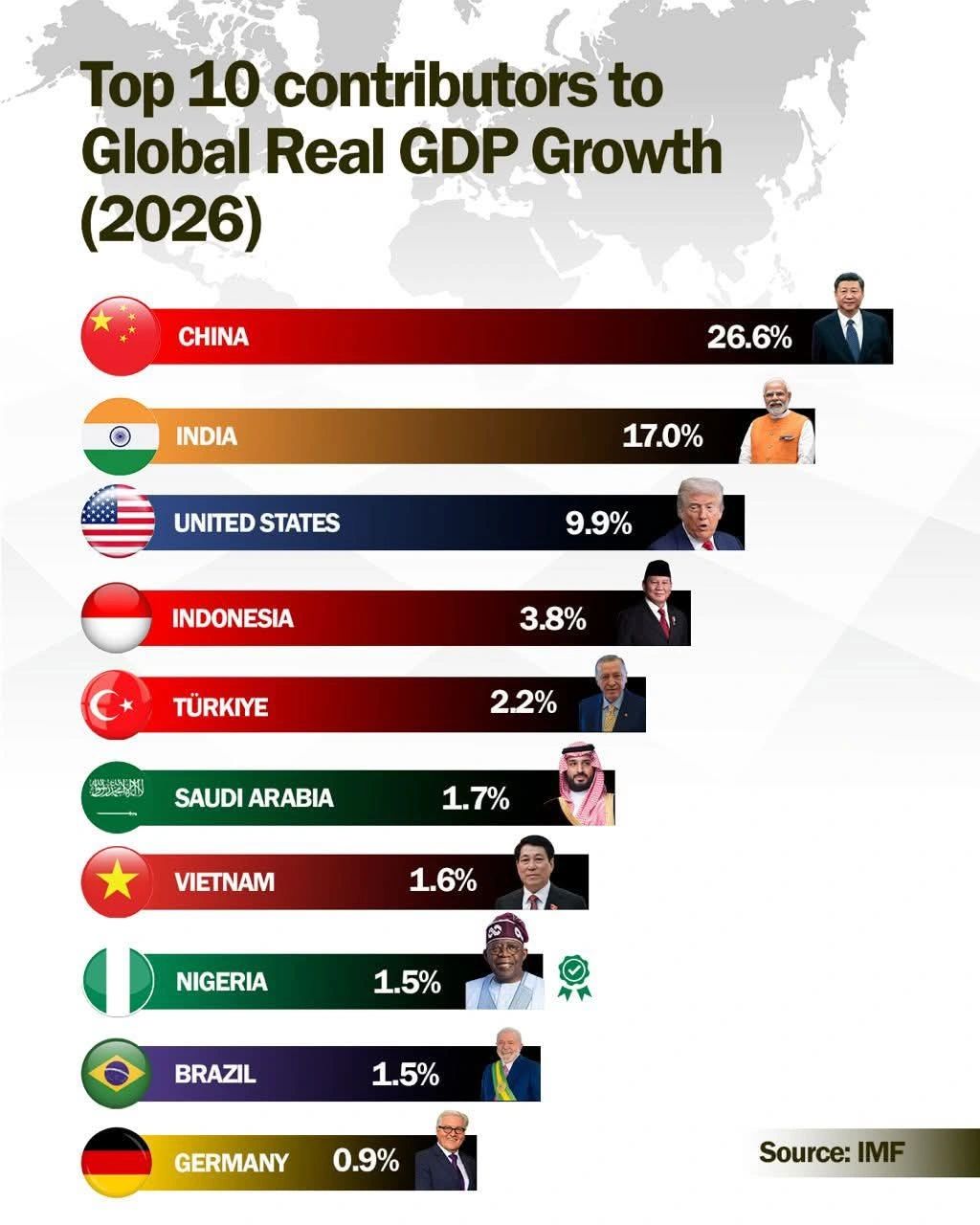
Nigeria has been listed as the sixth-largest contributor to projected global real GDP growth in 2026, according to the latest figures released by the International Monetary Fund (IMF), marking a significant endorsement of Africa’s biggest economy.
Data from the IMF’s newly published World Economic Outlook indicate that Nigeria is expected to account for about 1.5 per cent of total global real GDP expansion next year. This positions the country ahead of several advanced and emerging economies and underlines its growing role in shaping worldwide economic performance.
The report highlights that emerging markets will be the main engines of global growth in 2026, as many developed economies continue to grapple with sluggish expansion, elevated interest rates, and lingering post-pandemic pressures.
Experts attribute Nigeria’s ranking to a mix of demographic momentum, increased productivity in key non-oil sectors, and gradual economic reforms aimed at restoring stability. Although Nigeria’s growth rate may appear moderate compared to some peers, analysts note that the size of its economy means even small improvements have a sizable effect on global output.
IMF data place Nigeria among a select group of countries projected to have a notable influence on global economic trends in 2026, reflecting its rising relevance beyond the African continent.
Recent gains in telecommunications, agriculture, financial services, and the creative industry, combined with efforts to boost oil output and enhance foreign exchange market operations, have helped strengthen economic activity. These advances have partly countered persistent challenges, including high inflation, currency fluctuations, and infrastructure deficits.
However, the IMF and local economists caution that maintaining this positive trajectory will require steady policy execution, higher productivity, and strategies that convert macroeconomic growth into tangible improvements in living standards.
Despite these caveats, the sixth-place ranking is being hailed as a positive signal to investors and development partners, many of whom view Nigeria’s youthful population and vast consumer base as major long-term advantages.
As global growth increasingly tilts toward emerging economies, Nigeria’s projected contribution in 2026 reinforces its standing as a key economy to watch, both within Africa and on the global stage.

FOLLOW US ON:


