News
PHOTOS: Looting, Pillaging and Attacks on Police: Protests Turn Violent Across France as Tens of Thousands Take to the Streets

More than 270 people were arrested as tens of thousands joined nationwide demonstrations; a protester lost a hand to a police crowd-control grenade amid clashes, vandalism and attacks on public buildings.
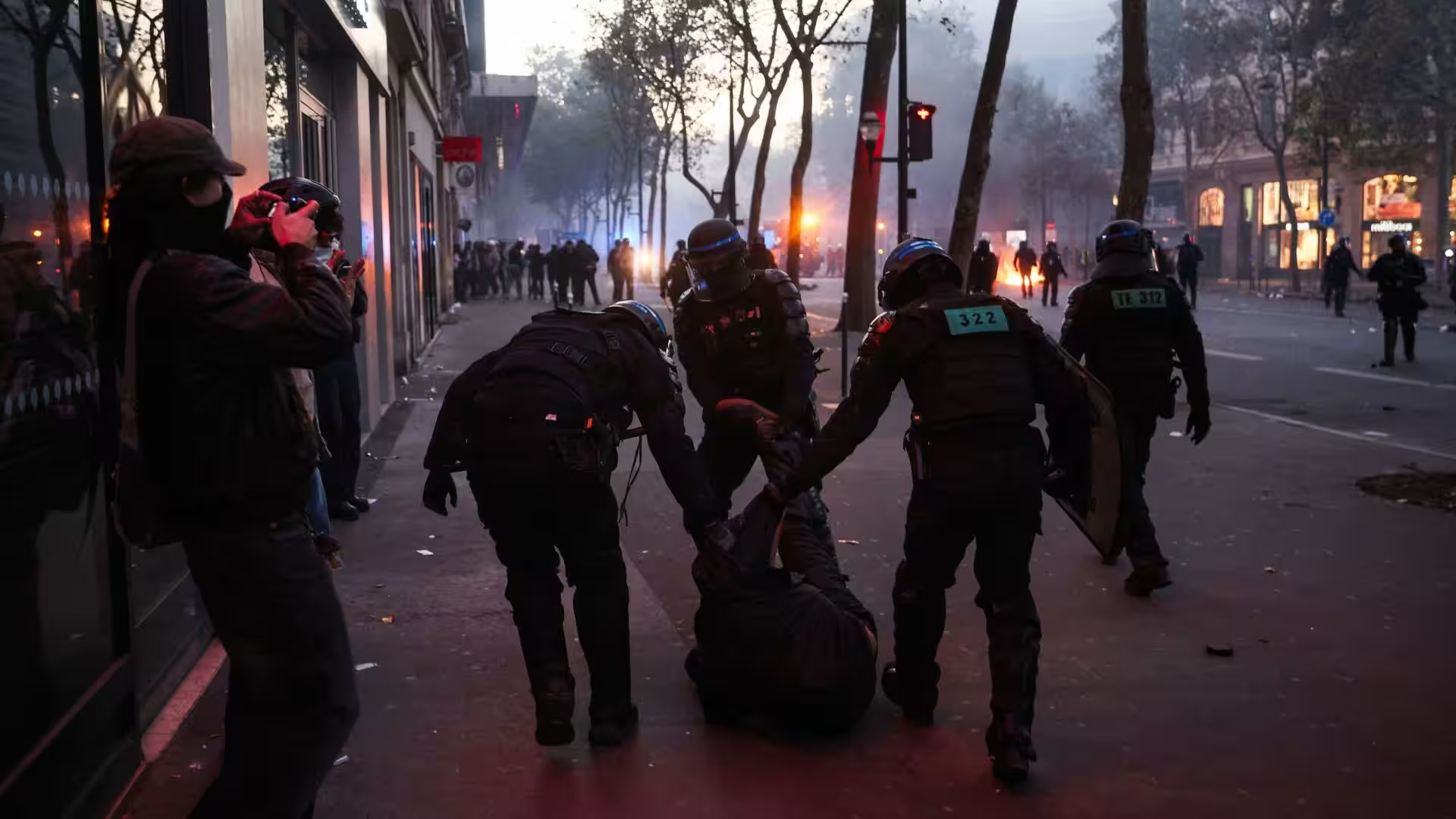
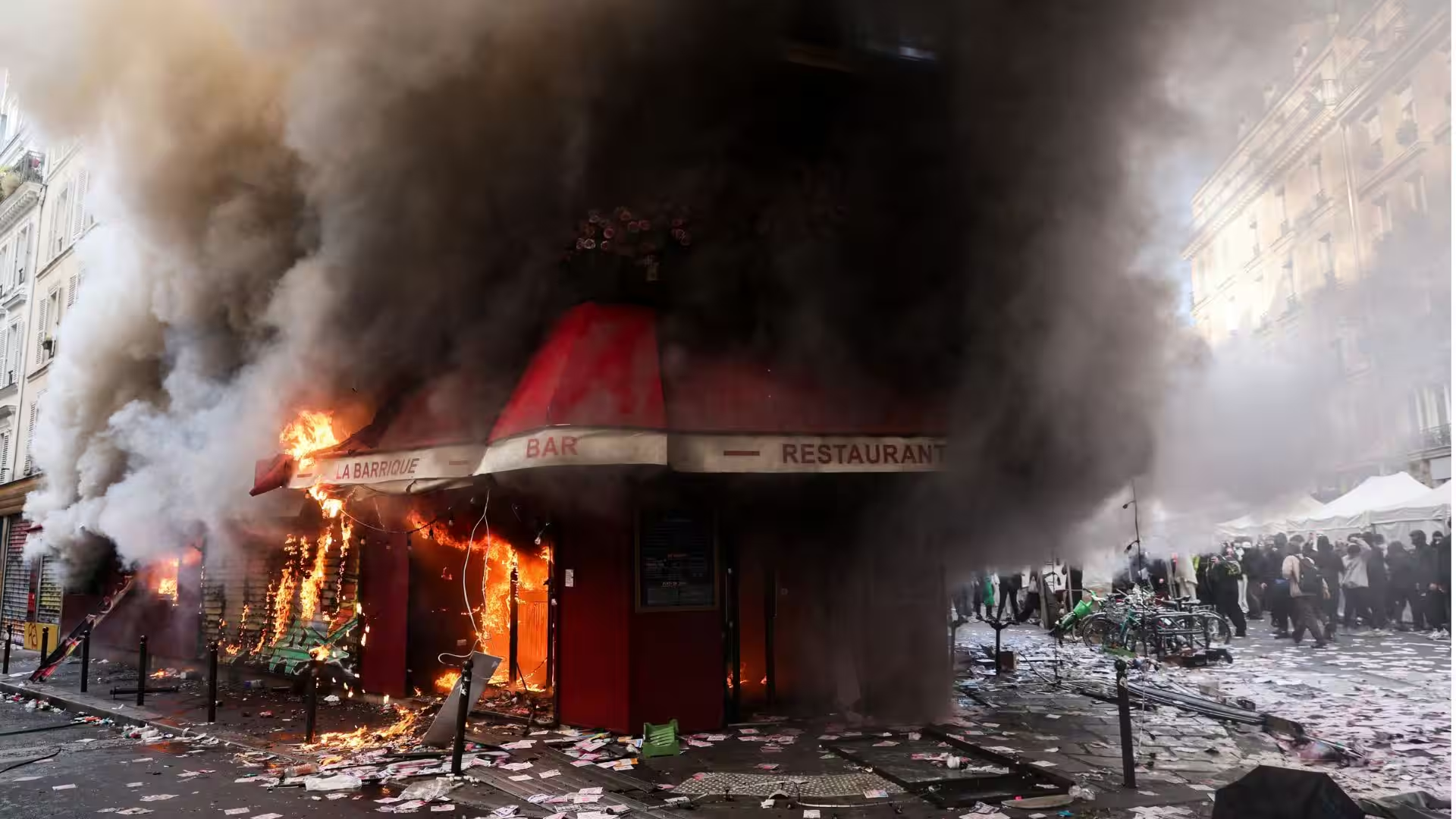
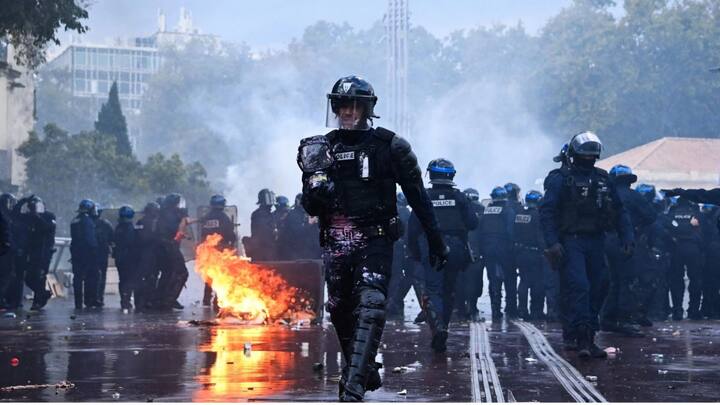
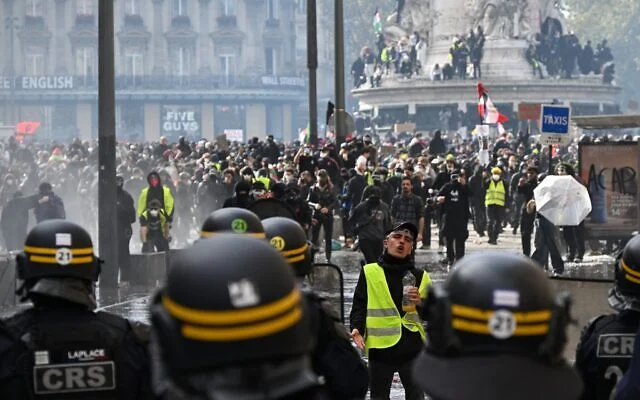
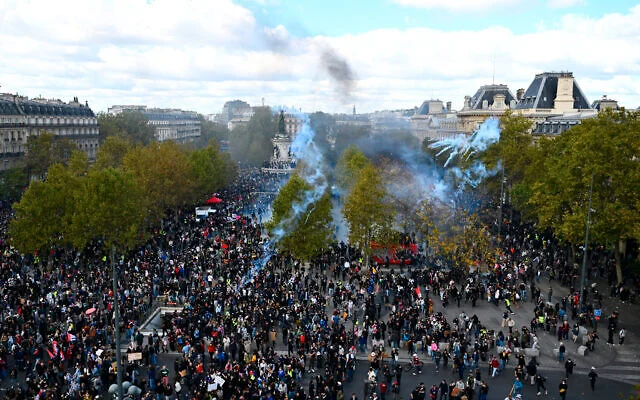
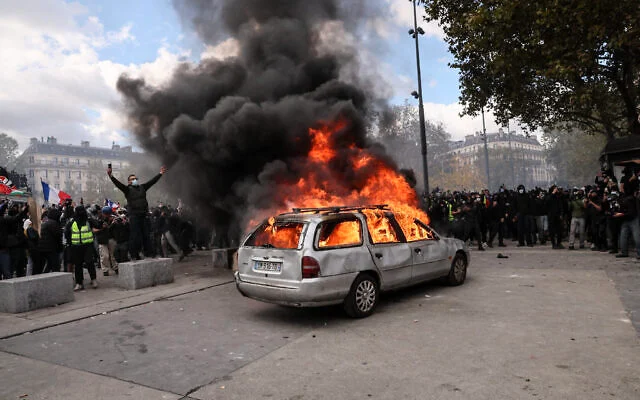
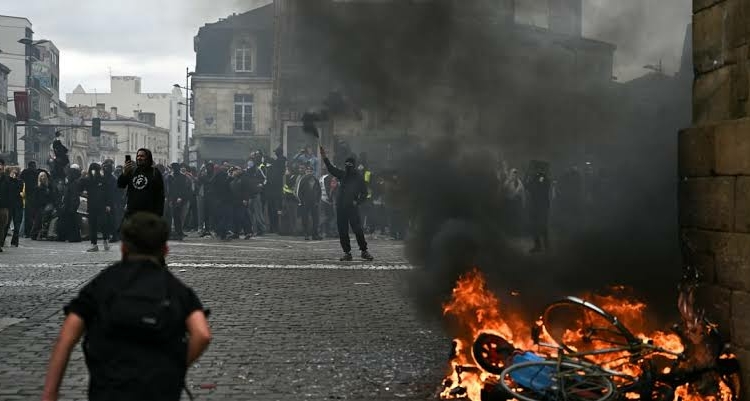
Tens of thousands of protesters took to the streets across France on Saturday to demonstrate against the rising cost of living, with rallies turning violent in several cities. Demonstrators clashed with police, looted shops, set fires and stormed public buildings, while authorities reported more than 270 arrests nationwide.
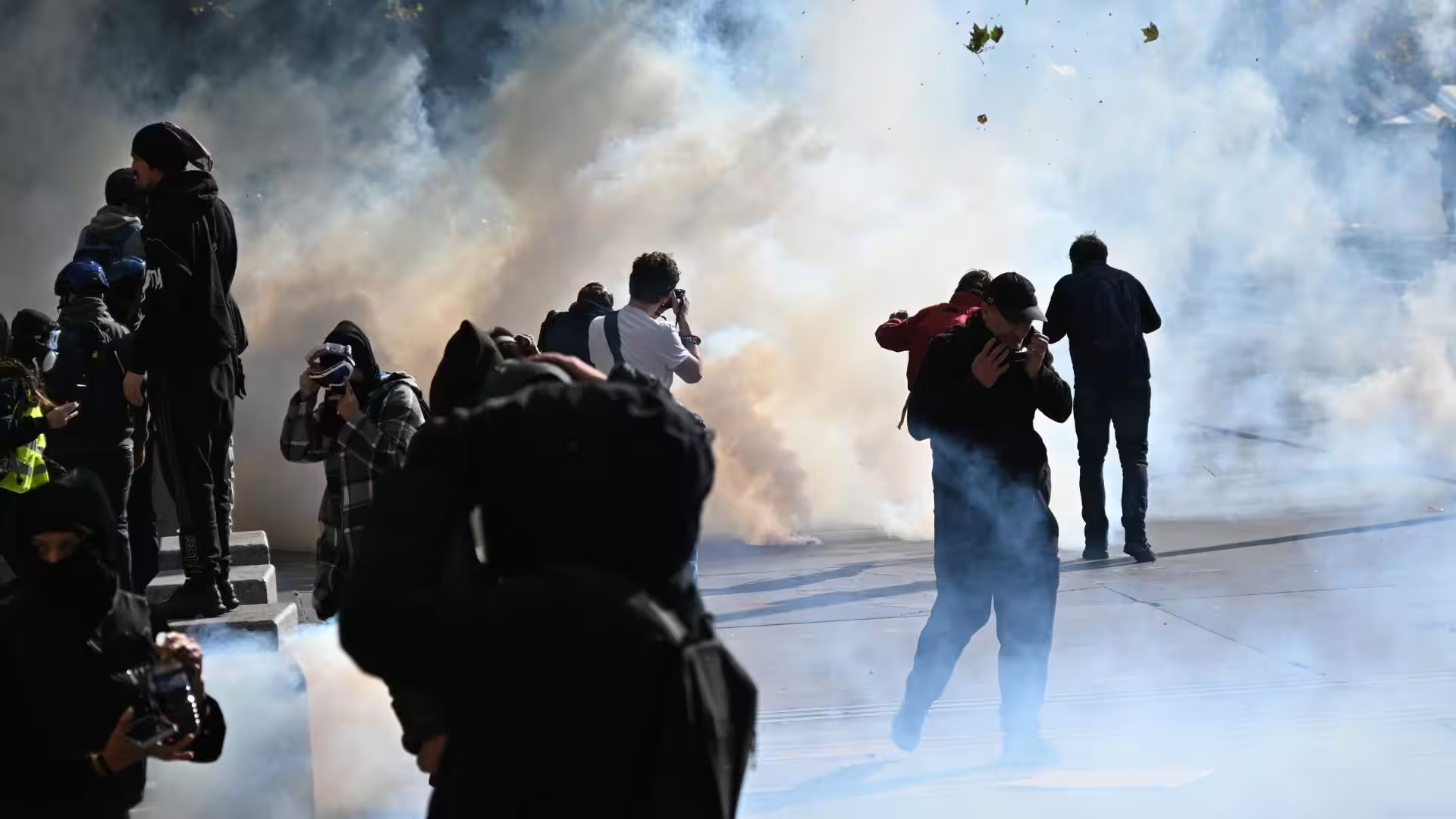
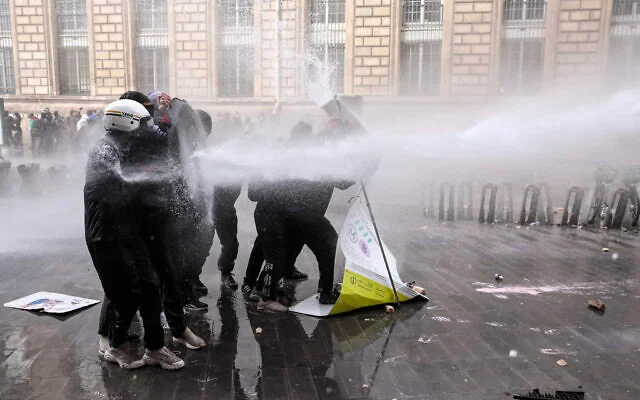
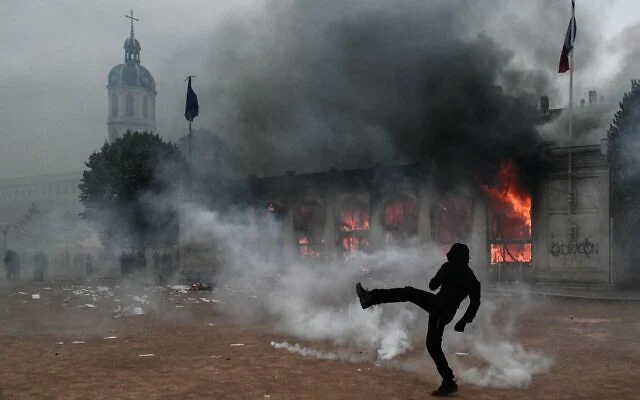
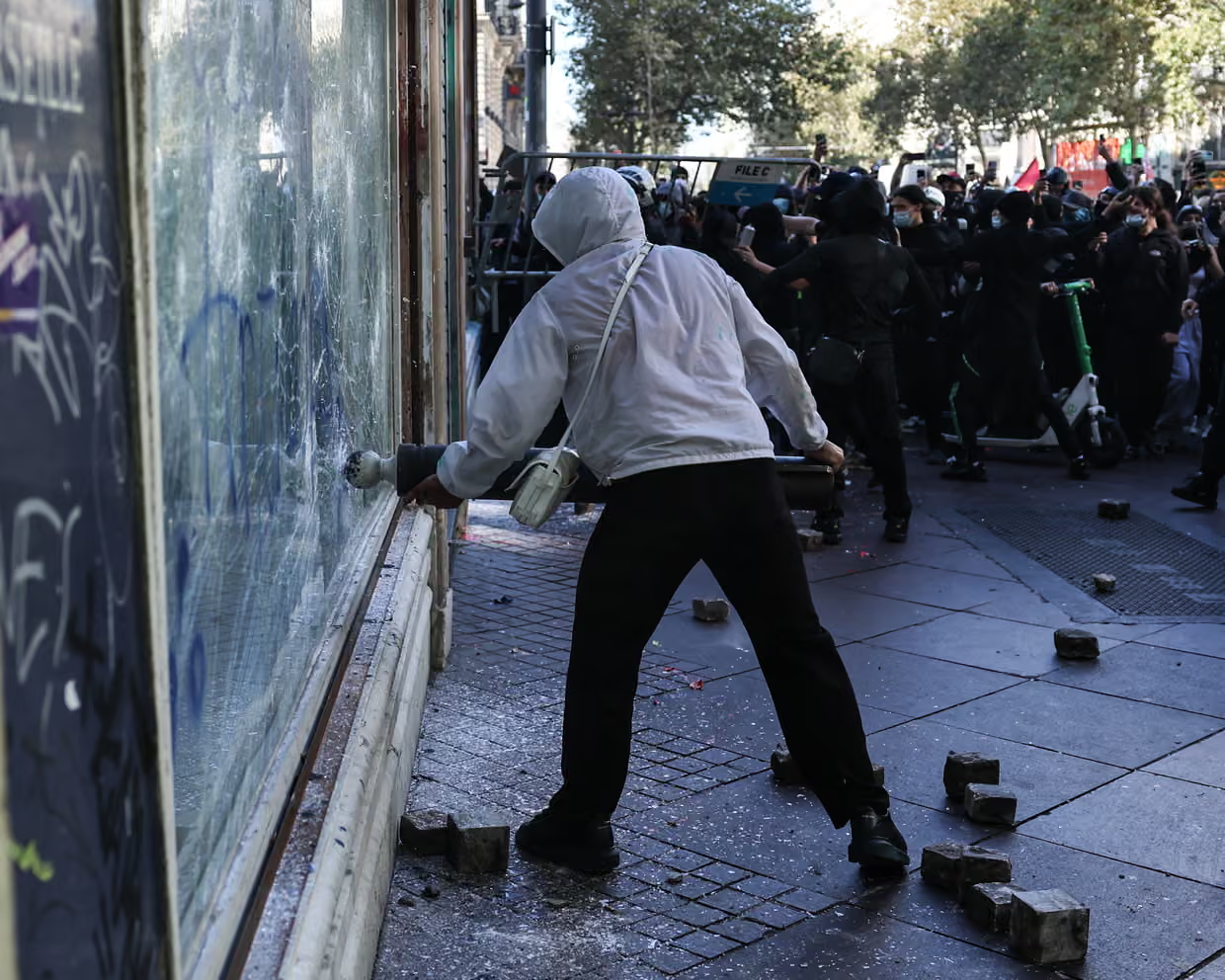
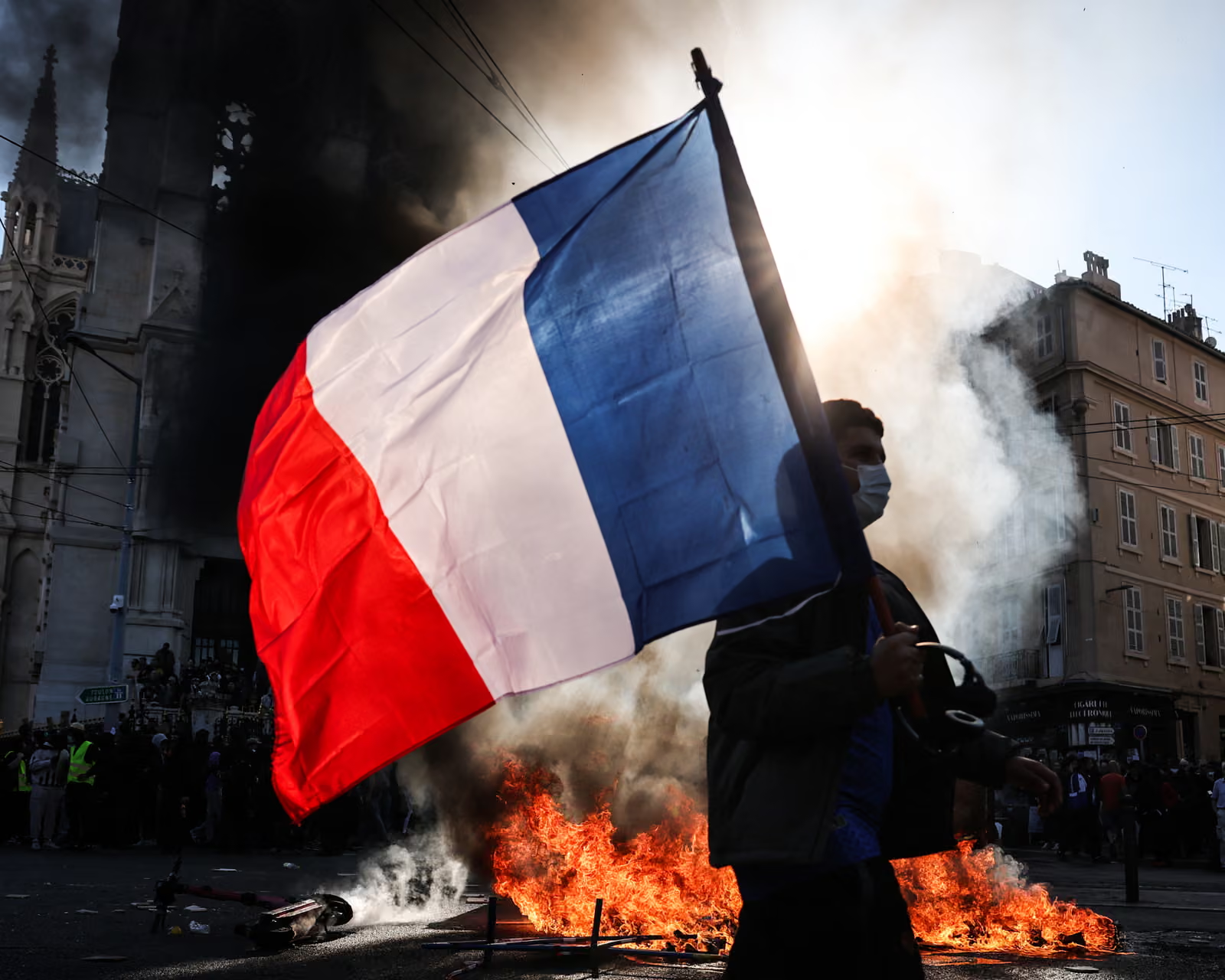
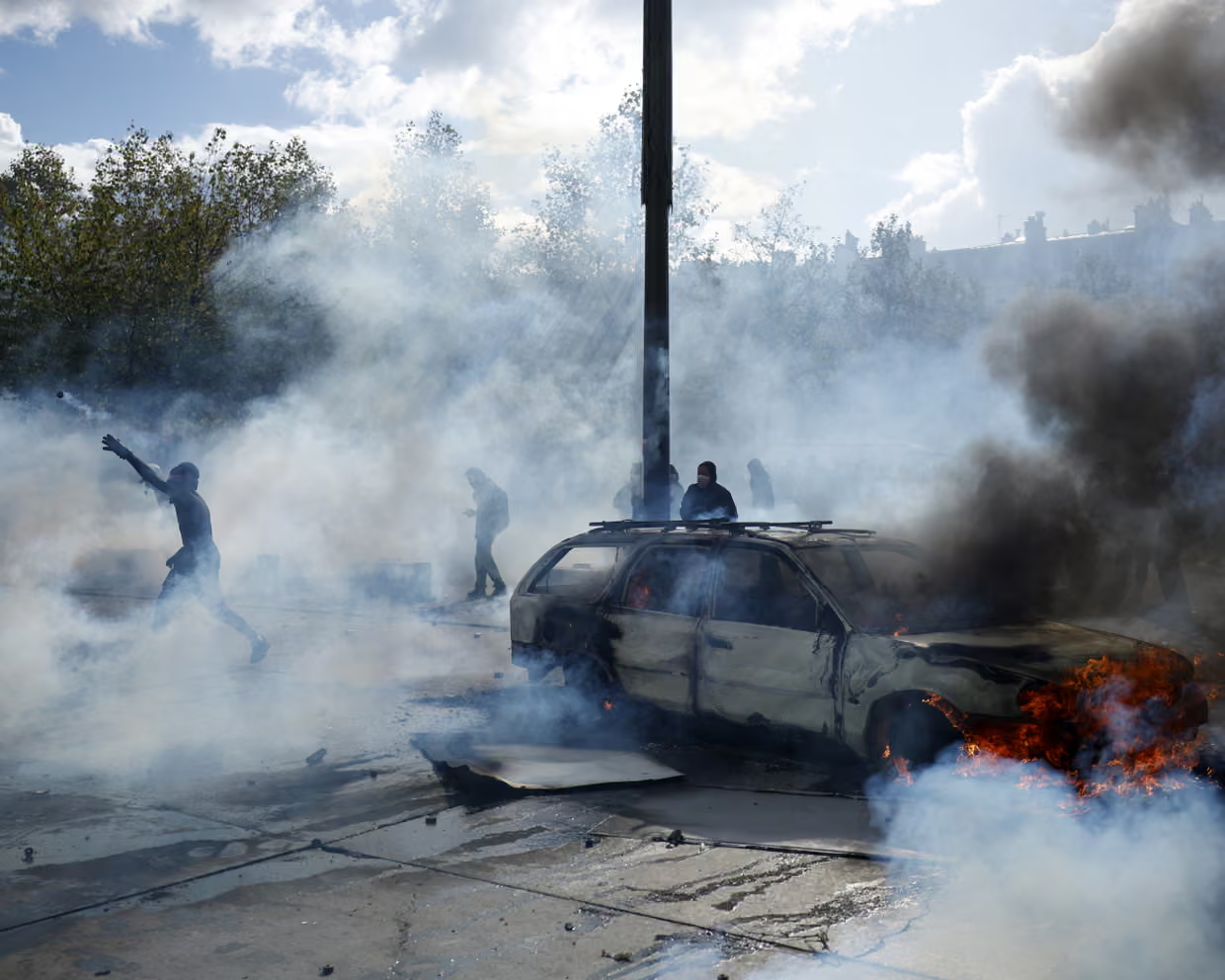
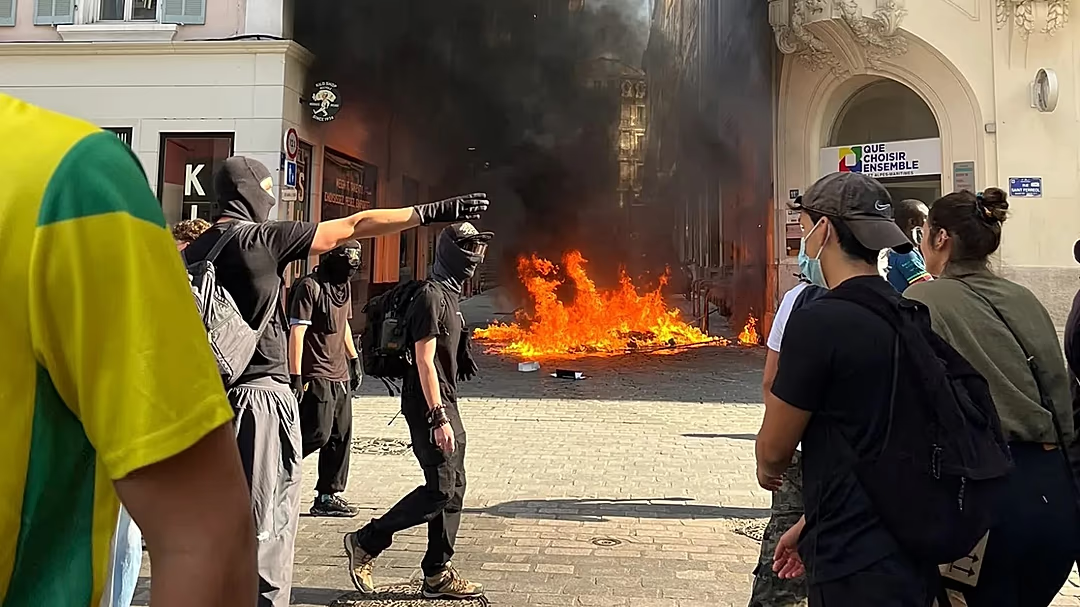
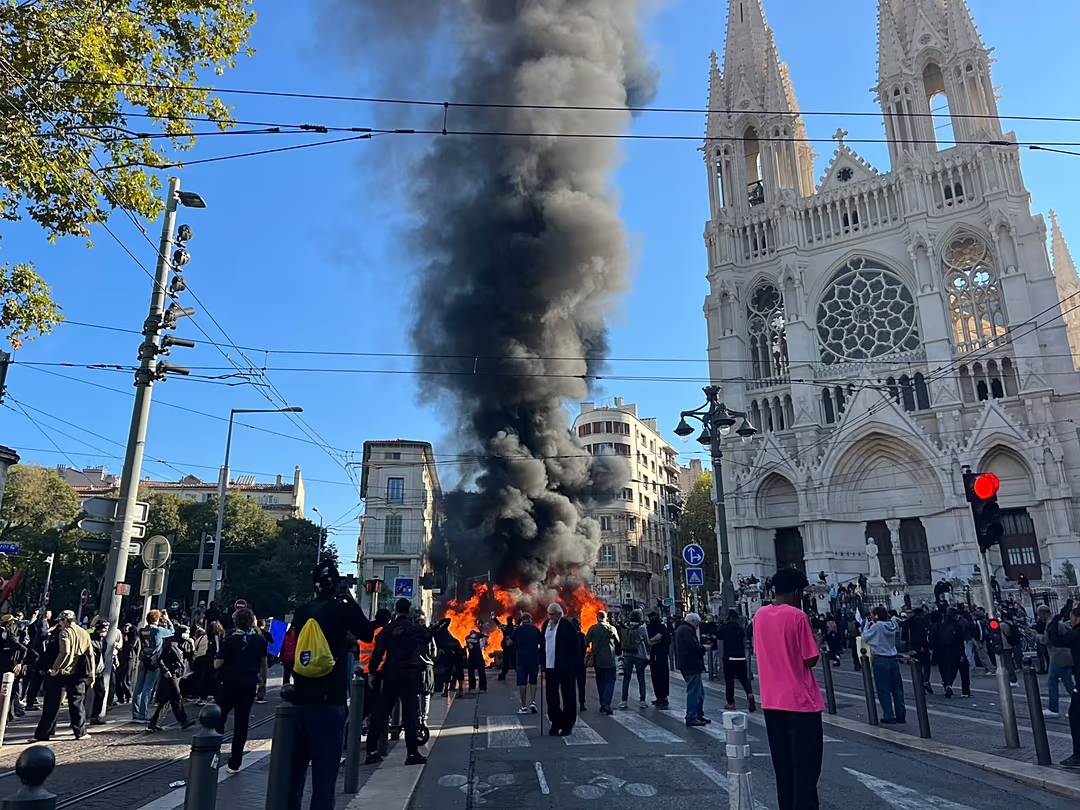
The demonstrations, which brought together students, trade unionists and supporters of the Yellow Vest movement, were marked by violence in several cities including Paris, Lyon, Marseille and Lille. Police deployed tear gas and water cannons to disperse groups involved in confrontations, while fires and vandalism were reported around protest sites.
A protester in the southern city of Saint-Étienne had a hand blown off by a police crowd-control grenade, a police source told AFP. The source did not specify whether the device was a stun grenade or a tear gas grenade.
The incident was the second such case in less than two weeks. On October 5, a 15-year-old student lost his left hand when a stun grenade exploded outside his school in Lens, which had been blockaded by student protesters. The injuries have added to scrutiny of police tactics during the unrest, which has prompted clashes between demonstrators and security forces in several parts of the country.
Town halls stormed as violence spreads
In the northern city of Lille, protesters forced their way into the town hall, smashed their way inside and vandalised the premises before leaving, an AFP reported. Riot police entered the building shortly afterwards and confirmed that all the protesters had left.
The incident followed a similar intrusion in the southern port city of Marseille, where protesters rammed their way into the town hall before police forced them out. Reports from the city also described damage to shops and a municipal police station.
In Lyon, France’s third-largest city, a fire broke out at the tourist office as masked protesters confronted police. Officers used tear gas and water cannons to push back groups involved in the clashes.
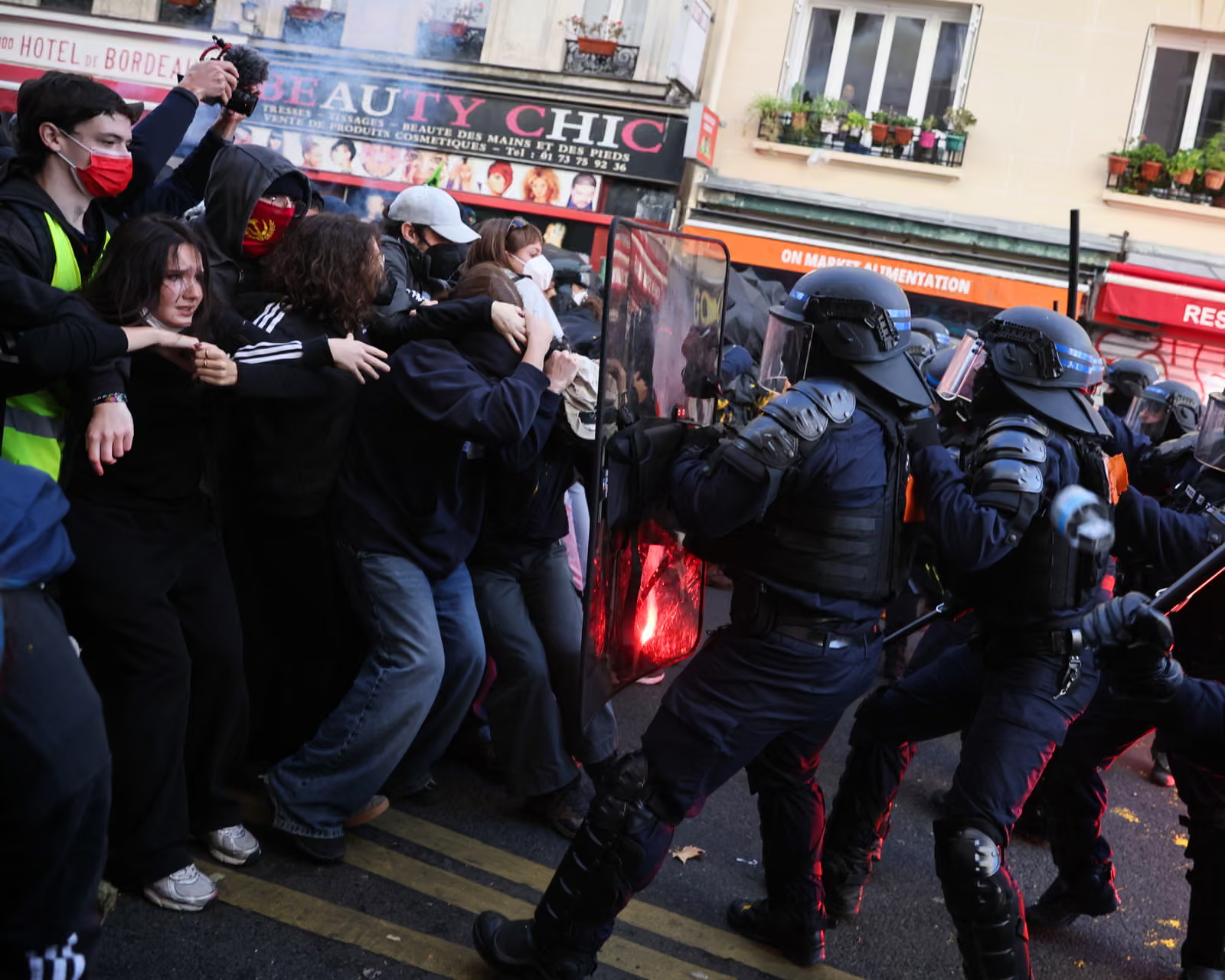
Paris also witnessed confrontations, with masked demonstrators setting vehicles and street fixtures on fire, damaging property and attempting to loot shops. Police responded with tear gas as unrest unfolded alongside larger marches.
Marine Le Pen blames ‘rioters’
France’s far-right presidential candidate Marine Le Pen condemned the violence, arguing that those involved in looting and attacks had undermined the demonstrations’ original demands.
“Looting, pillaging, attacking police — rioters have once again sullied the October 17 demonstrations over the cost of living,” Le Pen wrote on X.
She added that protesters’ demands had been “hijacked by the far left”. Her remarks came as the unrest raised questions over public order and the direction of a movement that has brought together people with varied economic and political grievances.
The protests come months before France’s presidential election, scheduled for April and May 2027, and have added to pressure on the country’s political leadership over living costs and public services. The demonstrations’ scale and the violence reported in several cities have made the unrest a significant test of the government’s response to mounting social discontent.
Union puts turnout at 500,000
France’s main CGT trade union said around 500,000 people had participated in 1,750 rallies nationwide to protest the rising cost of living.
“The government must stop its repression and respond immediately to the social demands,” the union said in a statement sent to AFP, after police used tear gas, crowd-control grenades and water cannons during the demonstrations.
The protests have drawn together people concerned about rising prices and deteriorating public services, alongside students who have been blockading schools in recent weeks over their grievances.
The mobilisation has also revived the Yellow Vest movement, which emerged in 2018 amid anger over fuel prices and broader economic inequality. Saturday’s demonstrations brought together different groups seeking to channel their grievances into a nationwide show of discontent.


Credits: FIRSTPOST.COM
FOLLOW US ON:


