News
PHOTOS: Artemis II Astronauts Return Safely After Historic Deep Space Mission

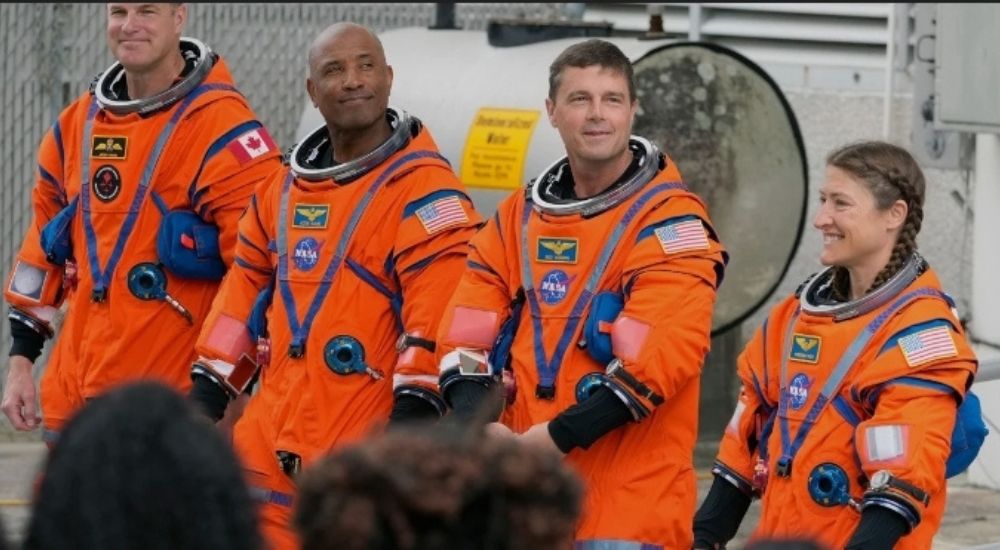
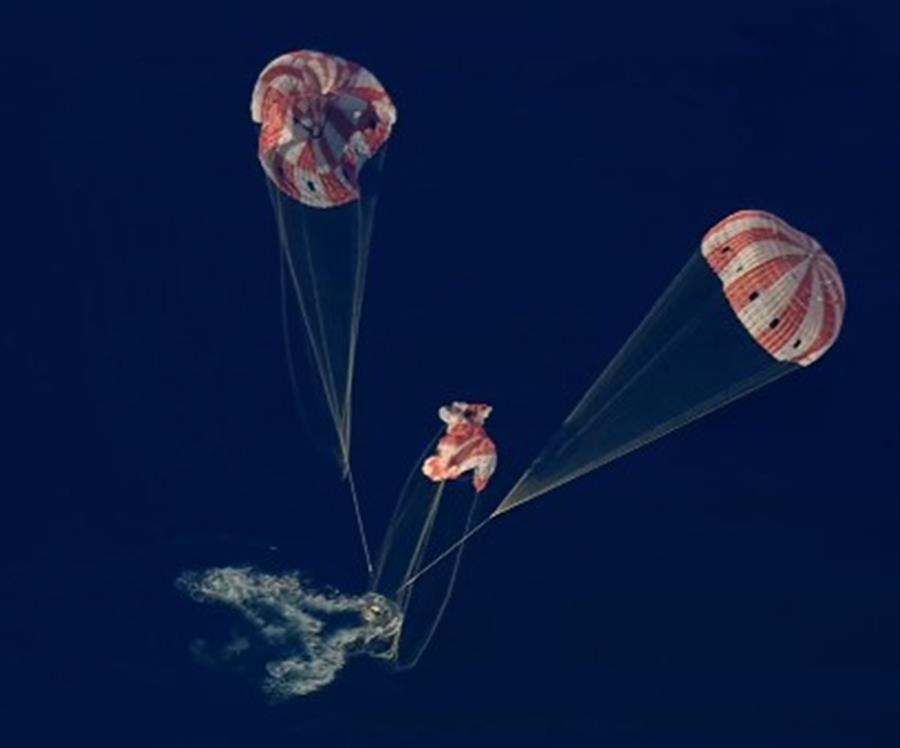
The Artemis II team touching down in the Pacific Ocean using parachutes.
Astronauts aboard Artemis II have safely returned to Earth after a 10-day mission that took humans farther into space than ever before and revived momentum for deep space exploration.
The crew splashed down in the Pacific Ocean at 00:07 GMT, concluding what officials described as a “textbook touchdown” following a carefully choreographed re-entry and descent sequence.
Commander Reid Wiseman confirmed shortly after landing that all four astronauts were “healthy,” while officials from NASA told a press conference the crew were “happy and in good condition” after the demanding mission.
“This is the start of a new era of human space exploration,” NASA said, stressing the mission’s role as a precursor to future crewed lunar landings and deeper journeys into the solar system.
A defining milestone came on April 6 when the Orion spacecraft carried the astronauts 406,771 kilometres from Earth during a lunar fly-by. The distance broke the record for the furthest humans have travelled into space.
The return journey involved precise and high-risk manoeuvres. At 23:33 GMT, the Orion capsule separated from its service module before beginning high-speed re-entry at more than 35 times the speed of sound.
Communications were lost for six minutes as plasma built up around the spacecraft. Contact was restored as the capsule descended further into the atmosphere.
Parachutes were deployed in stages, slowing the capsule to under 200 feet per second before splashdown off the coast of San Diego within a mile of its target.
Recovery teams moved quickly. By 00:34 GMT, the astronauts exited the capsule and were transferred to a recovery boat, then airlifted to a US Navy ship for medical checks.

Rescue squad helping the Artemis II team after touching down in the Pacific Ocean.

The crew included Christina Koch, Victor Glover and Jeremy Hansen alongside Wiseman.
“We have you loud and clear,” mission commander Wiseman said after landing. “What a journey. We are stable.”
The mission also faced a wave of misinformation online. False claims circulated across platforms, including 𝕏, TikTok and Facebook, ranging from allegations that the lunar fly-by was staged to claims that the footage was artificially generated.
An image viewed more than a million times on 𝕏 appeared to show the crew floating before a green screen, but a digital forensics expert told fact-checkers from Agence France-Presse the image showed signs of AI manipulation.
Another widely shared video suggesting the flight was staged was traced to a failed text overlay by a news station using the official feed.
Despite the false claims, the mission’s success is seen as a major step towards returning humans to the Moon, building a sustainable lunar presence and preparing for future missions to Mars.



FOLLOW US ON:


