Connect with us

Business

Customs dismiss smuggling, revenue leakage allegations

Published

on

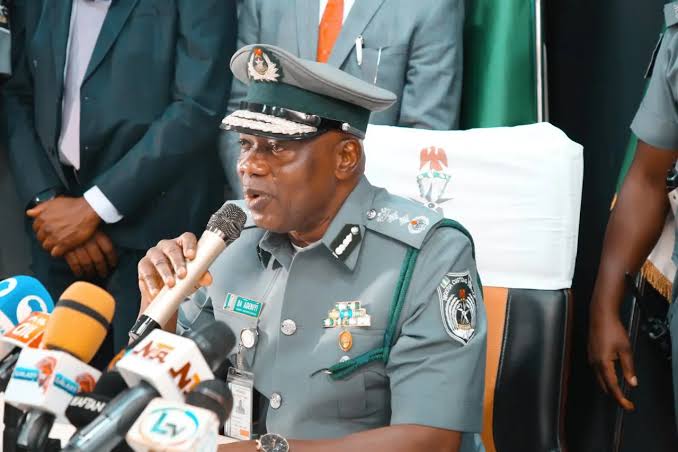
The Nigeria Customs Service has dismissed allegations of increased smuggling, revenue leakage, recruitment impropriety and manipulation of succession within the service, describing them as a misrepresentation of its operations and administrative processes.

The service’s National Public Relations Officer, Deputy Comptroller Abdullahi Maiwada, stated this in a response released on Thursday to an investigative report published by a media outlet (not PUNCH) on August 7, 2026.

The report had alleged intensified smuggling along the Seme, Idiroko, Ilaro, Ipokia and Igbeti-Kishi corridors, as well as manipulation of the 846 valuation code at the Apapa, Tin Can Island and PTML Area Commands.

Maiwada said the claim of a surge in smuggling was inconsistent with the service’s enforcement activities, pointing to regular seizures recorded along the affected corridors.

“Our responsibility is to reduce smuggling to the barest minimum, not to claim that it can be completely eradicated,” he said.

On the 846 valuation code, the NCS explained that it was a digital tool designed for vehicles with non-standard or non-compliant Vehicle Identification Numbers, including specialised heavy equipment, classic vehicles and customised models.

“The 846 code is an established digital valuation code within the Customs portal, specifically designated for vehicles with non-standard or non-compliant Vehicle Identification Numbers,” Maiwada said.

He added that standard vehicles were assessed automatically through manufacturer-linked databases, while 846 applications were subjected to secondary approval by valuation officers and Area Controllers.

Maiwada said discrepancies discovered through post-clearance audits could lead to Demand Notices for the recovery of short-collected duties and sanctions against offending operators, adding that revenue collections at major ports had reached historic levels under the digital framework.

On the recruitment of Assistant Superintendents of Customs II, the Service said the exercise was conducted under the authorisation of the Nigeria Customs Service Board and in line with the NCS Act 2023 and Federal Character Commission guidelines.

See also  Court fixes date for ruling on Sowore’s bail application; read details

It said successful candidates were issued provisional offers subject to medical verification, background checks and formal acceptance.

The Service also rejected allegations of succession manipulation and favouritism among officers, saying promotions were determined by seniority, merit, promotion examinations and available vacancies in accordance with established regulations.

“Succession and promotion within the Service are governed by established rules and career progression structures, not personal preference,” the Service said.

Maiwada said leadership training for Deputy Comptrollers was part of the Service’s human capital development strategy, aimed at strengthening trade operations, intelligence management and executive leadership.

He explained that approved training programmes and international exposures were funded through budgetary allocations or formal technical assistance arrangements with partner institutions.

Responding to calls for independent investigations, the NCS said it remained subject to oversight by the Federal Ministry of Finance, National Assembly, Office of the Auditor-General for the Federation and anti-corruption agencies.

“The management maintains a firm, intolerant posture toward corruption, revenue leakage or administrative misconduct,” the Service stated.

It added that any officer or stakeholder found culpable would face disciplinary action and prosecution in accordance with the law, while assuring Nigerians that the Service would cooperate with any legitimate investigation by statutory authorities.

Source: punchng.com

FOLLOW US ON:

FACEBOOK

TWITTER

PINTEREST

TIKTOK

YOUTUBE

LINKEDIN

INSTAGRAM

Business

Dangote emerges recipient of 2026 Ọbafẹmi Awolọwọ Prize for Leadership, read details

Published

on

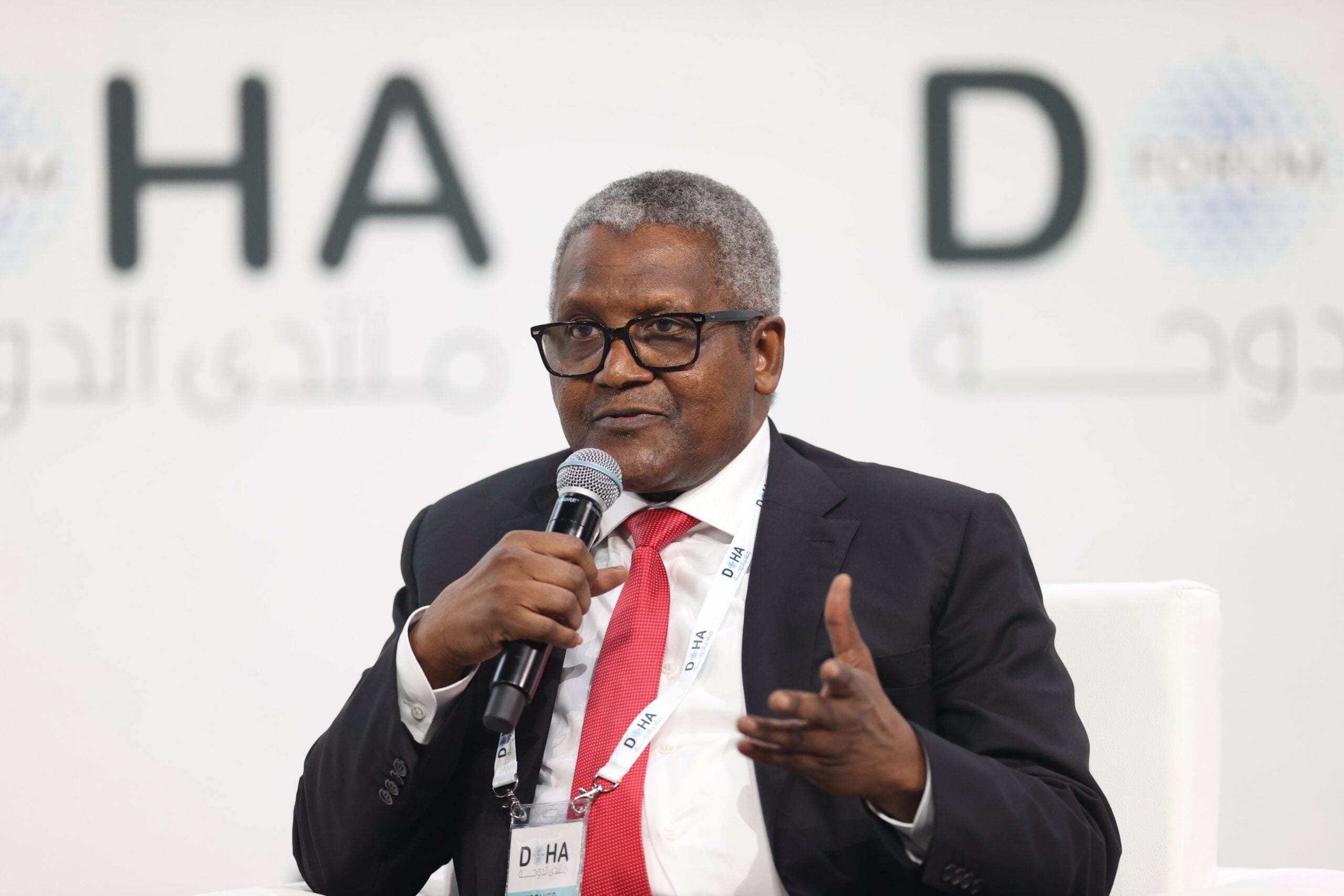
Alhaji Aliko Dangote, President of the Dangote Group, has emerged the winner of the 2026 Ọbafẹmi Awolọwọ Prize for Leadership.

The African industrialist and philanthropist was announced winner among many nominations received for the prestigious biennial global prize in celebration of the democratic and development-oriented ideals of a foremost Pan-African nationalist, Chief Obafemi Awolowo.

Unveiling the winner for the 2026 edition, the Ọbafẹmi Awolọwọ Foundation, in a statement on Monday signed by its Executive Director, Ambassador Dr Ọlatokunbọ Awolọwọ Dosumu, said a distinguished Selection Committee chaired by former Commonwealth Secretary-General, Chief Emeka Anyaoku, GCON, GCVO, CFR, “recognised Dangote’s extraordinary contributions to entrepreneurship, industrialisation and economic development in Nigeria and across Africa.

“Through decades of sustained investment in manufacturing, cement production, fertiliser, petroleum refining and other strategic sectors, he has demonstrated remarkable vision, courage, resilience and tenacity of purpose, while helping to expand Africa’s productive capacity and advance the prospects of economic self-reliance.”

The Foundation explained that the biennial prize, established in 2012, followed a special dialogue organised by the Foundation on Transformational Leadership and Good Governance: Lessons from the Awolọwọ Example, which seeks to recognise, reward and celebrate individuals whose leadership exemplifies the values and ideals for which Chief Awolọwọ was renowned.

According to the statement, the selection process involves public nominations, rigorous screening, verification and careful evaluation against established criteria, including integrity, vision, courage, discipline, accountability, people-centred leadership and demonstrable contributions to societal advancement.

Continuing, the Foundation explained that the Committee also placed considerable emphasis on Dangote’s commitment to philanthropy and human development through the Aliko Dangote Foundation, established in 1994. “Its interventions in education, healthcare and social welfare reflect a recognition that economic growth must be accompanied by meaningful improvements in people’s lives,” the statement added.

See also  States hold N264bn UBEC funds as schools struggle, read details

The statement further disclosed that the Prize will be formally presented on Saturday, March 6, 2027, the anniversary of Chief Awolọwọ’s birth, at a ceremony which will also feature the Ọbafẹmi Awolọwọ Prize for Leadership Lecture, to be delivered by the laureate, in keeping with the tradition of the Award.

FULL TEXT:

ALIKO DANGOTE EMERGES RECIPIENT OF 2026 ỌBAFẸMI AWOLỌWỌ PRIZE FOR LEADERSHIP

The Ọbafẹmi Awolọwọ Foundation has announced the recipient of the 2026 Ọbafẹmi Awolọwọ Prize for Leadership, instituted in honour of one of Africa’s foremost statesmen and advocates of visionary, people-centred governance.

Chief Ọbafẹmi Awolọwọ, first Premier of the Western Region of Nigeria, was widely acclaimed for his visionary leadership, integrity, discipline and commitment to social and economic transformation for the citizens. His pioneering programmes in education, healthcare and rural development, together with his advocacy of federalism and economic self-reliance, remain enduring landmarks in Nigeria’s developmental history.

Established in 2012, following a special dialogue organised by the Foundation on Transformational Leadership and Good Governance: Lessons from the Awolọwọ Example, the biennial Prize seeks to recognise, reward and celebrate individuals whose leadership exemplifies the values and ideals for which Chief Awolọwọ was renowned.

The selection process involves public nominations, rigorous screening, verification and careful evaluation against established criteria, including integrity, vision, courage, discipline, accountability, people-centred leadership and demonstrable contributions to societal advancement. The process is overseen by a distinguished Selection Committee chaired by former Commonwealth Secretary-General, Chief Emeka Anyaoku, GCON, GCVO, CFR.

Following the conclusion of the selection process, the Foundation is pleased to announce Alhaji Aliko Dangote, GCON, President of the Dangote Group, as the recipient of the 2026 Ọbafẹmi Awolọwọ Prize for Leadership.

See also  TCN declares force majeure as rainstorm collapses Lagos-Osun power line

In arriving at its decision, the Selection Committee recognised Dangote’s extraordinary contributions to entrepreneurship, industrialisation and economic development in Nigeria and across Africa. Through decades of sustained investment in manufacturing, cement production, fertiliser, petroleum refining and other strategic sectors, he has demonstrated remarkable vision, courage, resilience and tenacity of purpose, while helping to expand Africa’s productive capacity and advance the prospects of economic self-reliance.

The Committee also placed considerable emphasis on his commitment to philanthropy and human development through the Aliko Dangote Foundation, established in 1994. Its interventions in education, healthcare and social welfare reflect a recognition that economic growth must be accompanied by meaningful improvements in people’s lives.

Of particular significance is the Foundation’s ambitious educational initiative launched in 2026, designed to support 45,000 students initially, with plans to extend its reach to 1.3 million students by 2035. The initiative places special emphasis on science, technology, engineering and mathematics (STEM), closing the literacy gender gap, teacher development and improving the transition from education to employment.

Dangote’s description of this commitment as a “strategic investment” resonates strongly with Chief Awolọwọ’s conviction that education and human-capital development are fundamental to national progress. His declaration that “Every child we keep in school strengthens our economy. Every student we support reduces inequality” is particularly significant in this regard.

The Committee considers Dangote’s combination of visionary enterprise, industrial transformation and commitment to human development a compelling demonstration of leadership whose impact extends beyond individual achievement to the wider society.

The Prize will be formally presented on Saturday, March 6, 2027, the anniversary of Chief Awolọwọ’s birth, at a ceremony which will also feature the Ọbafẹmi Awolọwọ Prize for Leadership Lecture, to be delivered by the laureate, in keeping with the tradition of the Award.

See also  No southern candidate can unseat Tinubu, Atiku camp warns ahead of 2027

Source: tribuneonlineng.com

FOLLOW US ON:

FACEBOOK

WHATSAPP CHANNEL

TWITTER

PINTEREST

TIKTOK

YOUTUBE

LINKEDIN

INSTAGRAM

Continue Reading

Business

CBN may hold interest rate over naira pressure, read details

Published

on

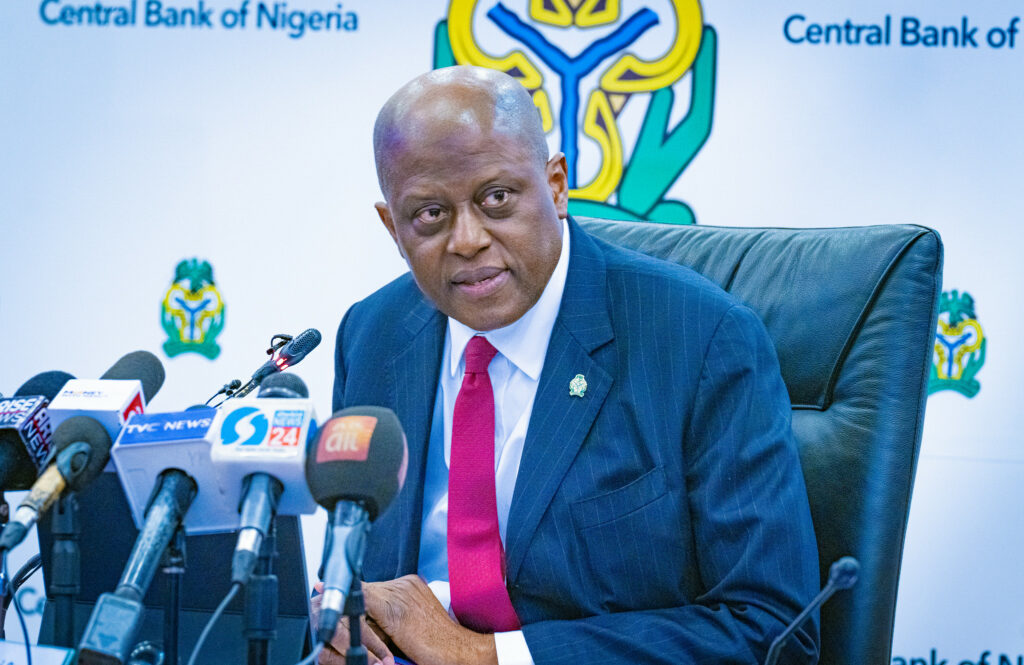
Financial market analysts have warned that renewed pressure on the naira, declining foreign exchange reserves and rising global interest rates could prevent the Central Bank of Nigeria from implementing further monetary policy easing, despite the continued decline in inflation.

The analysts, in separate pre-Monetary Policy Committee reports obtained by The PUNCH on Monday, projected that the apex bank would retain its Monetary Policy Rate at 23 per cent during its 308th MPC meeting scheduled for 23 and 24 November, 2026.

The PUNCH earlier reported that the approaching 2027 general elections and the Christmas season are adding pressure to the naira, with the currency depreciating to N1,394/$ at the official market on Friday and N1,460/$ at the parallel market on Sunday.

The naira lost N6 at the official market on Friday, extending its depreciation streak after weakening by N8.01 on Thursday to N1,388/$ from N1,379.99/$ recorded on Wednesday.

In its report titled ‘MPC to Hold Rates as Naira Pressure Builds’, Cordros Securities warned that additional interest rate reductions could trigger capital outflows and further weaken the domestic currency.

The investment firm said, “In our view, the naira has become the binding constraint on the MPC’s policy rate decision.”

It added, “With the parallel market premium exceeding NGN100.00/USD, gross FX reserves declining and the carry on short-dated naira instruments narrowing towards estimated breakeven levels, a further rate cut could weaken the attractiveness of naira assets and increase the risk of foreign portfolio investment outflows.”

Similarly, the Financial Markets Dealers Association, in its November 2026 pre-MPC analysis, assigned a 60 per cent probability to the committee retaining the benchmark interest rate and a 40 per cent probability to a reduction of not more than 50 basis points.

See also  No southern candidate can unseat Tinubu, Atiku camp warns ahead of 2027

The association explained, “Monthly inflation rose in October, the naira is weaker, reserves are off their peak and the Fed is expected to hike in December.”

The projections followed the MPC’s September decision to reduce the benchmark rate by 350 basis points from 26.5 per cent to 23 per cent.

According to Cordros, the naira depreciated from N1,329.16 per dollar at the end of September to N1,346.26 on 31 October, before weakening further to N1,389.73 on 20 November.

This represented a 2.5 per cent depreciation since September, although the currency remained 4.7 per cent stronger than at the beginning of the year.

The firm reported that the gap between official and parallel market exchange rates widened to approximately N107 per dollar.

Foreign exchange reserves also declined from $55.26bn on 27 October to $54.65bn on 19 November, representing a reduction of $610m.

Cordros disclosed that the CBN reportedly supplied $6.66bn to the FX market since September’s MPC meeting, including $3.38bn between 1-20 November.

Despite these interventions, FX conditions deteriorated, with the Nigerian Foreign Exchange Market recording net outflows of $1.41bn in October, compared with net inflows of $1.03bn in September.

The firm also reported that foreign portfolio inflows increased by only 3.4 per cent month-on-month, while domestic foreign exchange inflows rose by 148.1 per cent to $5.11bn.

The FMDA separately observed that weekly FX inflows declined to $808m from $2.48bn, highlighting concerns about dollar availability.

Both institutions identified global monetary conditions as another constraint, particularly the narrowing interest rate differential between Nigeria and the United States.

See also  TCN declares force majeure as rainstorm collapses Lagos-Osun power line

The FMDA reported that the gap between Nigeria’s benchmark interest rate and the upper limit of the US Federal Reserve’s policy rate had narrowed from 22.5 percentage points to 19 percentage points.

Meanwhile, annual headline inflation declined for the fifth consecutive month to 14.06 per cent in October from 14.63 per cent in September.

Cordros projected that annual inflation could moderate further to between 13.30 and 13.90 per cent by December.

It nevertheless cautioned that rising input costs and persistent food inflation justified maintaining the current monetary policy stance.

The FMDA acknowledged that declining inflation provided room for additional easing, noting that the real policy rate remained approximately 8.9 percentage points.

It explained, “The case for a cut is real, inflation is down from 18.97 per cent a year ago to 14.06 per cent, and the real policy rate is about 8.9 points.”

On domestic liquidity, Cordros reported that banking system liquidity averaged N5.43tn between 1 and 20 November, while banks’ deposits with the CBN’s Standing Deposit Facility averaged N5.46tn.

The firm suggested that the CBN could consider reducing the deposit facility rate rather than cutting the benchmark rate.

An Abuja-based economist, Chukwunonse Iheoma, said: “This captures the policy dilemma: the CBN may be moving towards lower interest rates to support economic activity, but renewed pressure on the naira could limit its ability to ease monetary policy without risking exchange-rate stability and inflationary pressures.”

Continue Reading

Business

Read how 2027 politics, Christmas spending is squeezing naira

Published

on

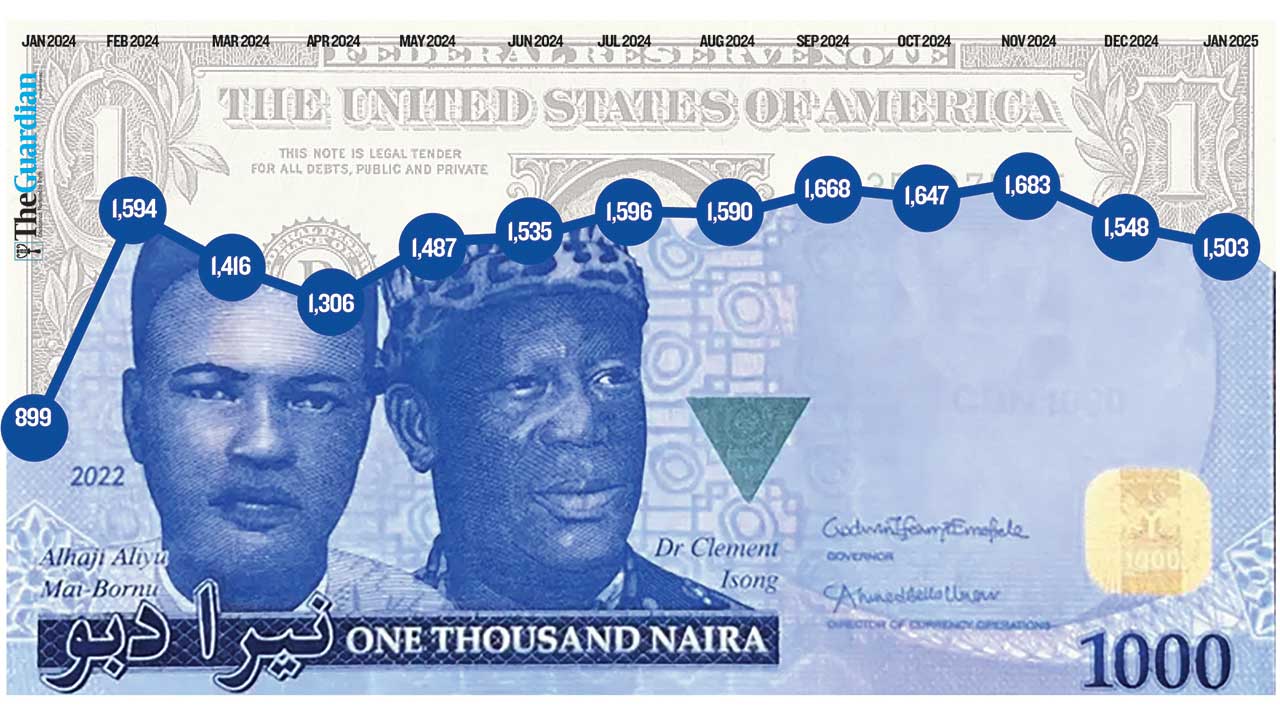
The approaching 2027 general elections and the Christmas season are adding pressure to the naira, with the currency depreciating to N1,394/$ at the official market on Friday and N1,460/$ at the parallel market on Sunday.

The naira lost N6 at the official market on Friday, extending its depreciation streak after weakening by N8.01 on Thursday to N1,388/$ from N1,379.99/$ recorded on Wednesday.

On Wednesday, the currency had depreciated by N16.99 to N1,379.99/$ from N1,363/$ on Tuesday, highlighting renewed pressure in the official foreign exchange market.

At the parallel market, the naira traded at N1,440/$ on Thursday, compared with N1,375/$ a month earlier, while some currency traders said they were willing to offer lower rates to buyers purchasing large volumes.

However, currency demand has intensified in recent weeks, with traders attributing part of the pressure to political spending ahead of the 2027 elections and increased foreign exchange needs during the festive season.

A parallel market trader in Abuja, Haruna Ibrahim, said some customers were purchasing dollars on behalf of politicians preparing for the elections.

“There are people we see here who say they are politicians. They come here to buy dollars, claiming that they were sent by their bosses. I do not know which parties they belong, but they come here regularly,” he said.

Another Bureau de change trader in Lagos, who identified himself simply as Ahmed, said traders in Zone 5 believed political activities were contributing to increased demand for dollars, as politicians sought to accumulate foreign currency ahead of the elections.

See also  Medical tourism spending drops by 52% under Tinubu – CBN report

Speaking in a phone interview with The PUNCH, the Chief Executive Officer of the Centre for Promotion of Private Enterprise, Dr Muda Yusuf, said domestic factors could be contributing to the successive decline of the naira against the dollar.

The economist identified political spending, capital flight and policy uncertainty as possible factors behind the weakening currency and declining foreign reserves.

He said political spending could inject liquidity into the economy and put pressure on the naira, noting that the Central Bank of Nigeria had previously raised concerns about the impact of political activities on exchange rate stability.

“The political spending liquidity may be already putting pressure on the naira. The CBN had expressed that fear before during the latest Monetary Policy Committee meeting,” Yusuf said.

He argued that foreign exchange demand associated with political activities could be channelled through the parallel market because such transactions might not be formally documented or conducted through official channels.

Yusuf also warned that political uncertainty and statements by some politicians about reversing the economic reforms of the President Bola Tinubu administration could trigger capital flight.

An emerging markets expert and economist, Ike Ibeabuchi, attributed the weakening naira and declining reserves to reduced dollar supply and rising demand for foreign exchange.

He said lower inflows from exporters, investors and other sources might be reducing dollar availability in the market, while demand for foreign currency to finance imports and international transactions continued to exert pressure on the naira.

“Lower foreign exchange inflows from exporters, investors and other sources reduce dollar supply in the market, while demand for foreign currency for imports, international payments and other transactions continues to exert pressure on the naira,” Ibeabuchi said.

See also  States hold N264bn UBEC funds as schools struggle, read details

He said the festive season typically increases demand for foreign exchange, while the influence of election-related spending on the currency could be greater than initially anticipated.

The combination of higher seasonal demand, political spending and weaker dollar inflows could further test the naira’s stability as the country approaches the 2027 elections.

Meanwhile, the reserves stood at $54.65bn on Friday, shedding $60.630m from Thursday’s $54.713bn.

Source: punchng.com

FOLLOW US ON:

FACEBOOK

WHATSAPP CHANNEL

TWITTER

PINTEREST

TIKTOK

YOUTUBE

LINKEDIN

INSTAGRAM

Continue Reading

Trending