Nollywood actress and filmmaker, Funke Akindele, has recorded a strong box office outing with her latest film, Behind The Scenes, which has crossed ₦200 million in its opening weekend.
The film, whose storyline centres on black tax, features Scarlet Gomez in the lead role, alongside Iyabo Ojo, Funke Akindele, Destiny Etiko, Tobi Bakre, Uche Montana,Uzor Arukwe, Ini Dima-Okojie, Adebowale ‘Mr Macaroni’, Ibrahim Chatta, Kamo State, and reality TV stars Handi and Wanni Danbaki, among others.
According to the film’s distributor, FilmOne Entertainment on Monday, Behind The Scenes recorded the biggest opening weekend of 2025, becoming the first Nollywood film this year to hit the ₦200 million mark on its opening weekend.
The movie was also described as a five-time box office opening weekend record holder and the biggest weekend admissions of 2025.
The film had its advanced screening on December 10 and 11, before officially opening in cinemas nationwide on December 12.
Announcing the milestone in an Instagram post, FilmOne wrote, “We call her the Queen of Box Office for a reason! Thank you, Nigeria, for showing up, filling cinemas, and spreading the word. Behind The Scenes crossed ₦200M in just one weekend, broke five opening-weekend records, and became the biggest opening of 2025! It’s your love that made this possible.”
The distributor added that the film is still showing in cinemas across the country.
The latest achievement further cements Akindele’s dominance at the box office. Her previous film, Everybody Loves Jenifa, became Nollywood’s biggest opening weekend of all time, surpassing her earlier record set by A Tribe Called Judah, which opened with ₦113 million.
Everybody Loves Jenifa recorded an admission count of 38,353, including advance screenings, and went on to become the highest-grossing Nollywood film ever, earning over ₦1.8 billion in Nigeria, alongside additional revenue from international markets.
The film crossed the ₦1 billion mark in late December 2024 and continued its cinema run into early 2025, drawing massive audience turnout and setting new box office benchmarks for West African cinema.
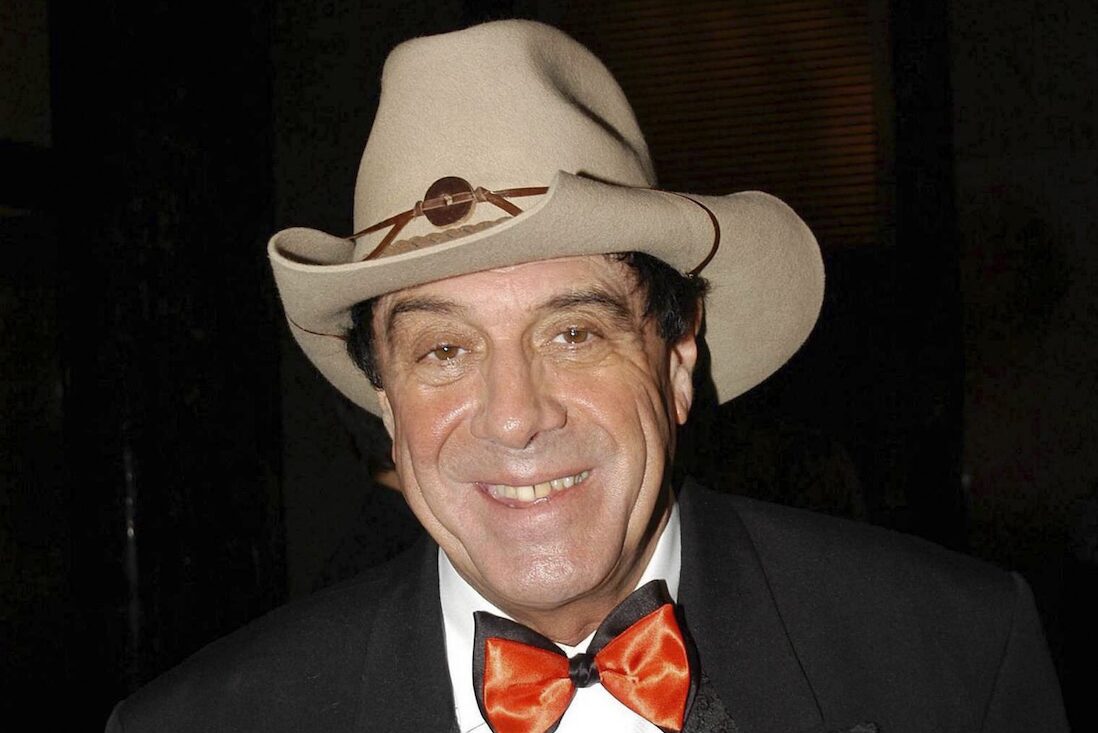
Australian music legend Molly Meldrum has died at the age of 83 following a long illness.
The veteran music promoter and broadcaster, whose real name was Ian Alexander Meldrum, passed away peacefully at a hospital in Melbourne in the early hours of Monday, his family confirmed in a statement.
Meldrum played a major role in shaping Australia’s music industry over several decades, championing local acts such as INXS and Kylie Minogue while promoting international stars, including ABBA.
Affectionately known as ‘the Guru’, he became a household name through his energetic personality, distinctive Stetson hat and remarkable contribution to music broadcasting.
In a statement announcing his death, his family described him as the heartbeat, champion and spirit of Australian music.
“Affectionately dubbed ‘the Guru’, Molly was the heartbeat, the champion and the spirit of Australian music,” the statement read.
Throughout his illustrious career, Meldrum interviewed several international celebrities, including King Charles and British music icon Elton John.
John once described him as the “single most important influence in Australian pop music”, recognising his enormous contribution to the country’s entertainment industry.
Meldrum rose to national prominence as the host of the Australian Broadcasting Corporation’s music television programme Countdown, where he helped introduce audiences to emerging Australian artists and international music stars.
He later featured on the popular variety programme Hey Hey, It’s Saturday, further establishing himself as one of Australia’s most recognisable television personalities.
One of his most memorable moments came during a 1977 interview with King Charles, then Prince of Wales.
Clearly nervous during the encounter, Meldrum stumbled over his words before famously admitting: “Your Royal Highness… Oh, oh, I’m sweating like a pig”.
Reflecting on the interview during Countdown’s 40th anniversary special, King Charles joked: “There is an old showbusiness saying which warns never to work with animals or children. But nobody prepared me for Molly Meldrum”.
Born in Victoria in 1943, Meldrum developed a passion for music from an early age and went on to become one of the most influential figures in Australian popular culture.
His life was marked by health challenges after he suffered an acquired brain injury following a fall from a ladder in 2011.
In recognition of his contribution to the music industry, Meldrum made history in 2014 as the first person who was not a recording artist to be inducted into the Australian Recording Industry Association (ARIA) Hall of Fame.
Australian Arts Minister Tony Burke also paid tribute to the late broadcaster, describing his death as a significant loss to the country.
“One of his greatest legacies will be the generations of Australians who grew up with his unmistakable enthusiasm and love of music. A true champion of Australian talent, you will be missed, but never forgotten,” Burke said.
Meldrum leaves behind a lasting legacy as a broadcaster, music promoter and passionate supporter of Australian talent, whose influence helped shape the country’s music scene for generations.
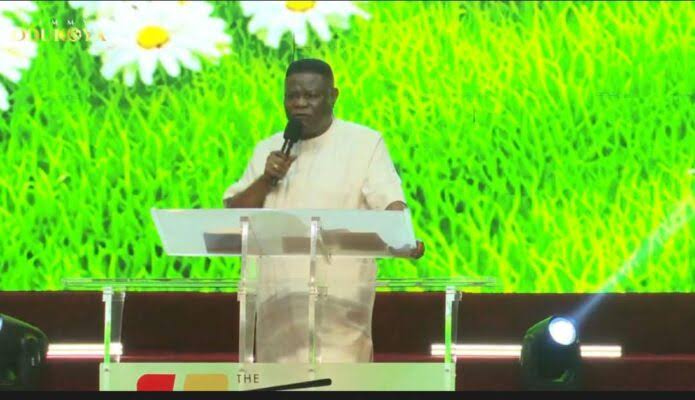
The Fountain of Life Church, Ilupeju, Lagos, on Sunday received an intervention from one of Nigeria’s prominent Pentecostal leaders, Bishop Mike Okonkwo, who, amid the escalating leadership crisis rocking the church, urged members not to take sides but to protect an institution he said was built on the blood, sacrifices and lives of its founders.
Okonkwo, founder of The Redeemed Evangelical Mission, said he had been prompted by the Holy Spirit to visit the church and bless its congregation after his telephone was inundated with calls over the preceding week, with people demanding to know why he had remained silent as the dispute between Pastor Jimmy Odukoya and his sister, Tolu, threatened the church’s unity.
But Jimmy, who also spoke during the service, addressed the interim court order restraining him from presenting himself as the church’s Senior Pastor and Spiritual Head, saying he had heard about the injunction but had not been formally served.
Okonkwo, in his sermon, said, “I have not slept since 1.30 am.
The Holy Spirit said to me, son, go to the Fountain and bless them. That’s why I am here,” he told the congregation.
Senior Pastor of The Fountain of Life Church, Pastor Jimmy Odukoya during his church’s Sunday service in Ilupeju, Lagos
His appearance and sermon, titled The Glory of the Church, were an attempt to redirect attention from the personalities at the centre of the dispute to the institution they inherited from their late parents, Pastor Taiwo and Pastor Bimbo Odukoya.
But beneath his generally conciliatory message were pointed admonitions that appeared to address the warring parties, the congregation and a wider public that has followed the controversy, cautioning against turning a leadership disagreement into a battle capable of destroying the church.
Opening with an assurance that “all is well”, Okonkwo recalled the traumatic period following Taiwo’s death, when he had addressed the congregation and urged members to preserve the legacy of the deceased founder.
“I remember when Pastor Taiwo passed, it was a traumatic time and experience. We cried, we wailed, we blew our noses and dried our tears, and the responsibility fell on me to come here to talk to us,” he said.
He said he had reminded the congregation at the time that the greatest honour it could pay the late pastor was to ensure that his life’s work continued.
“And I know one of the things I said that day is, please, the only honour we can do for the sacrifice, the price, the pains and everything… that the only thing is that the legacy must continue. And I told you that day that Fountain will never die.”
Pastor of the Fountain of Life Church, Jimmy Odukoya, and his sister, Tolu Odukoya
The bishop said he remained personally invested in the church and could not be indifferent to developments there.
“For the past one or two weeks, we have been literally battered on social media. There’s nothing that has not been said, both the ones that are true and the ones that are not true. Phone calls from far and near: ‘Bishop Mike, where are you?’” he said.
“You can’t separate me from Fountain because it is a covenant that God himself created by himself, so what happens to Fountain affects me. So don’t think that I am just aloof.”
However, the central thrust of his message was that the church was bigger than the individuals currently fighting over its leadership.
Drawing extensively from biblical passages on redemption, the value of the church and the sacrifices behind its establishment, Okonkwo argued that the institution could not be reduced to a human organisation whose survival depended on the fortunes of particular individuals.
“The church is not a human institution. It is God’s house. It belongs to him. Think of the price that God had to pay for his church,” he said.
He subsequently made one of the most direct references to the leadership dispute, telling members that their allegiance should not be to either of the Odukoya siblings or the church’s governing board.
“Every one of us, from myself downwards, should know: you are not for Tolu or for Jimmy or for the board. None of them died for you. Church is not a political party. The blood. Life was involved. The church is not an ordinary thing. God could not redeem the church with anything other than his life,” he said.
“We must be careful so that none of us will be an instrument of destroying the church of Christ.”
The appeal appeared directed not only at the two sides in the dispute but also at members whose public declarations of support, social media exchanges and competing narratives have increasingly made the crisis a subject of wider controversy.
Okonkwo’s emphasis on the sacrifices of the founders also appeared intended to remind the contending parties of the responsibility attached to the institution they inherited. He insisted that the present difficulties were not evidence that God had abandoned the church, arguing that its challenges had already been anticipated in God’s plan.
Using Jesus Christ’s illustration in Luke 14:28 of a builder who must first calculate the cost of constructing a tower, Okonkwo questioned why members would allow the present crisis to unsettle their faith in the church’s future.
“Question, Fountaineers, are you saying that Jesus did not factor in the challenges you will go through? He is saying that if I want to build a house, I will first of all be sure that I have all that is necessary, and he is the builder of the house, we are the building. Are you saying that all the crises, all the gossips, all that is happening to you individually is taking you by surprise?” he asked.
“He has already factored all those in even before you were called. He has already taken care of business. That is why I know without shadow of doubt whatever the devil does, he is already a failure. The believer never ever ends in shame.”
But while assuring the congregation that the church would survive, the bishop also warned against reactions that could aggravate its problems.
“Do you know the challenges of the believers? When trials come, temptations come, difficulties come, we fall apart, we forget what he told us, we begin to run helter-skelter, and many times we do the things we are not supposed to do and further arm the devil,” he said.
“If there was a time Fountaineers needed to chill, it is this time. Let God perfect what he has started.”
He declared that the church would eventually surpass the achievements of its late founder. “This church is going to do seven times more than Taiwo left it,” he said.
“The game is not over. You are still in the will of God. You are still in his hands. God has not left this church. And can I tell you, he will never leave this church; the glory of God remains in this house.”
He ended with a call for collective responsibility, assuring members that the church would not be destroyed by the present controversy.
“Be assured. No matter what anyone says, that is not your business. We will build this church. Together we will build this church.”
Jimmy’s personal battle
But the atmosphere that followed Okonkwo’s sermon suggested that the bishop’s appeal for a collective response to the crisis might not have entirely displaced the personal dimension of the dispute.
Jimmy, who addressed the congregation after Okonkwo, appeared to frame the unfolding controversy more directly around his own predicament, a departure from the senior bishop’s sustained emphasis on the survival of the institution beyond its current leadership.
He mounted the pulpit and sang the popular hymn It Is Well with My Soul before moving to gospel musician Dunsin Oyekan’s My Worship Is My Weapon, whose refrain declares worship as a means of winning personal battles.
The choice of songs, coming immediately after Okonkwo had urged members not to identify with either of the contending parties, shifted the emotional emphasis towards a personal struggle and appeared to reinforce the perception among his supporters that he was fighting an unjust campaign against him.
Jimmy was the only party to the leadership dispute who addressed the congregation during the service.
He subsequently addressed the interim court order restraining him from presenting himself as the church’s Senior Pastor and Spiritual Head, saying he had heard about the injunction but had not been formally served.
“I heard that there was an injunction against me. I heard. I’ve not seen it. But I heard. But I’ve not been served. So, legally, I’ve not been served,” he said.
He also thanked members for remaining at the church despite the controversy and assured them of his continued commitment to their interests.
“In spite of everything, you are still here,” he said. “There is no Fountain without you. You are Fountain of Life. And as long as you are with me, I will continue to speak for you. I will continue to stand with you.”
While the remarks were likely to reassure his supporters, they offered little indication of an immediate willingness to de-escalate the dispute or pursue reconciliation with the opposing side.
Towards the end of the service, as the choir continued singing, Jimmy walked up to the choir leader at least twice to whisper instructions. On one occasion, the choir subsequently sang the popular gospel song in Pidgin by Bidemi Olaoba, Who Dey Talk Wetin God No Talk, a primarily individualistic chorus that became the closing song.
The choice of song, with its message about disregarding declarations contrary to God’s will, added another layer to the service’s underlying contest of narratives.
Jimmy also appeared determined to maintain his position as the church’s leader despite the legal challenge, leaving the question of reconciliation unresolved.
The Odukoya legacy
The controversy has also revived questions about the personality, public conduct and religious identity of the Odukoya family, particularly as Jimmy’s unconventional appearance and style of ministry continue to attract criticism from sections of the Christian community.
Tattooed, dreadlocked, fond of swaggering dance routines and wearing earrings, Jimmy has attracted considerable attention for a public persona that departs from the conventional image of a Pentecostal pastor in Nigeria.
But the apple did not fall far from the tree.
His late mother and co-founder of The Fountain of Life Church, Bimbo Odukoya, also faced considerable criticism during her lifetime for challenging the conservative social conventions and strict codes of appearance that characterised much of Nigeria’s expanding Pentecostal movement in the 1990s and early 2000s.
At the time, many Pentecostal churches maintained restrictive expectations around dressing, hairstyles, jewellery and other forms of personal adornment, reflecting a broader doctrine of separation from worldly influences.
Pastors’ wives were generally expected to dress in long skirts and modest clothing, often complemented by church hats and restrained accessories.
Bimbo, however, cultivated a considerably different public image. Her fashionable outfits, shorter skirts, wigs and jewellery attracted criticism from conservative Christians who considered her appearance inconsistent with the standards expected of a pastor’s wife.
Yet, her appearance was accompanied by a formidable preaching ministry. Her sermons, which frequently focused on purpose, relationships, leadership and personal development, established her as one of the more recognisable female Christian voices of her generation.
She was also known for her forceful, scripture-based responses to criticism, challenging interpretations of biblical doctrines that she considered unnecessarily restrictive.
Her ability to combine an unconventional public image with an intellectually engaging preaching style helped distinguish her from many of her contemporaries.
Jimmy’s public persona, however, has generated a different kind of debate. While his appearance and contemporary style have endeared him to a section of younger Christians, questions have persisted over whether his public responses and conduct consistently reflect the temperament, depth and intellectual maturity expected of someone leading a large congregation.
The distinction is particularly evident in the way both generations have approached public criticism.
During Sunday’s service, Okonkwo used a football analogy, drawing on the nature of a Manchester United match, to explain that conceding a goal did not mean the referee would immediately end the game. The match would continue until the allotted time elapsed before the final result was determined.
The analogy was a measured attempt to contextualise the reputational damage the church might have suffered, reminding members that the present controversy was not the end of its institutional story.
It contrasted with Jimmy’s own much-discussed social media engagement with Manchester United, in which he adapted a popular Christian song, invoked the name of Christ while praying for the club’s victory, and danced before the camera.
The performance attracted criticism from social media users who considered it unbecoming of a pastor of his stature.
The criticism raises a broader question about the boundaries between contemporary Christian expression, personal branding, and the public responsibilities attached to pastoral leadership. While younger audiences may appreciate Jimmy’s informality and entertainment-oriented presentation, the same approach can be received differently by members of a religious institution whose identity was shaped by more conventional standards of pastoral conduct.
Indeed, Nigerian Pentecostal churches are increasingly confronting the challenge of negotiating these competing expectations.
The country’s large youth population is growing up in an environment shaped by the internet, international entertainment, social media and cultural influences that increasingly challenge traditional assumptions about dressing, music, personal expression and religious identity.
Tattoos, dreadlocks, earrings and contemporary dance styles, once widely regarded with suspicion in conservative Christian circles, have become increasingly common forms of expression among younger generations.
Some Pentecostal leaders have argued that these practices are not inherently sinful and should not be confused with a person’s spiritual disposition.
Even traditionally conservative denominations, including the Deeper Christian Life Ministry, have over time deemphasised or relaxed some of their earlier positions on aspects of dressing, hair covering, jewellery and contemporary music.
The challenge for churches is how to accommodate a changing generation without losing the doctrinal identity and institutional traditions that defined their establishment.
For The Fountain of Life Church, this generational transition is history re-unfolding alongside a particularly sensitive leadership dispute involving the children of its founders.
The immediate legal battle remains unresolved. The Lagos State High Court, presided over by Justice O.O. Adewunmi-Oshin, issued an interim order on Wednesday, November 18, restraining Jimmy from presenting himself as the church’s Senior Pastor and Spiritual Head.
The order followed an application by the Incorporated Trustees of The Fountain of Life Church. The court also restrained him, either personally or through proxies, from interfering with or disrupting the church’s activities, governance and other business.
The matter was adjourned until December 1 for mention.
Sunday’s service offered little indication that the dispute was nearing a resolution. While Okonkwo sought to redirect the congregation’s attention to the church’s founding vision and collective future, Jimmy’s address placed his own position and relationship with members at the centre of the unfolding controversy.
For a church founded on the ministry and public identities of Taiwo and Bimbo Odukoya, the crisis is now testing not only the succession arrangements but also the meaning of the legacy they left behind.
Okonkwo’s message was that the church must survive its present troubles and become greater than it was under its founders. Whether those now contesting its leadership can subordinate their differences to that vision remains the more immediate test.
Nigerians have reacted with mixed feelings after a female tourist accused the Emir of Daura, Faruk Umar Faruk, of touching her inappropriately during a visit to his palace in Katsina State.
The allegation, which has sparked debate on social media, followed the circulation of a video appearing to show the traditional ruler interacting with the tourist during her visit.
The woman, who identifies herself as @beduinqa, made the allegation in a post on Instagram on Saturday after completing a 30-day tour of Nigeria.
She said she waited until she left Nigeria before making the claim public.
According to a series of posts on her Instagram, the tourist was on a world tour with Nigeria as her 184th of 197 destinations.
She announced her arrival on October 19, 2026 and documented visits across the country, including a trip to the Oba of Benin’s palace on October 24.
She had also posted a video of her attendance at the 10th coronation anniversary celebration of Oba Ewuare II on October 25, her time at the Kala Kuta shrine and Makoko in Lagos, as well as stops in Kano, Katsina and Bauchi, where she met the Emir of Bauchi at his palace.
Recounting her experience at the Daura palace, the tourist said she was taken into an elegant room where she sat with the Emir and had a conversation with him.
She alleged that the traditional ruler held her hand and began playing with it before hugging and kissing her on the cheek.
She further alleged that he touched her breasts, an action she said shocked and disturbed her.
In her Instagram post, she wrote, “That was a shock for me. I told him, ‘Emir, no, no, no, no, Emir, you cannot be touching’, but he was just laughing about it.”
She said she had travelled through different parts of Nigeria without experiencing sexual assault in public spaces, making the alleged incident at the palace particularly disturbing.
“I wasn’t sexually assaulted at any moment when walking through streets of Nigeria, even in busy crowded places, but to my shock, I was assaulted in a palace by a traditional leader who should be behaving in an exemplary and dignified way,” she wrote.
The tourist described the experience as disgusting, adding that she had continued to relive it in her thoughts.
She said the incident happened on Saturday, November 14, but she waited until she had left Nigeria before making the allegation public.
She also suggested that other women might have experienced similar treatment from the Emir, although she did not provide evidence to support the claim.
“I suspect I wasn’t the first woman he assaulted but probably the first one with proof recorded. I have Meta glasses and quickly turned them on,” she added.
The allegation has generated reactions on X, with several users expressing outrage and calling for accountability.
Amnesty International Nigeria called on the authorities to investigate the allegation, describing it as deeply disturbing.
In a post on its X account, the human rights organisation said the Katsina State Government and the police should conduct a transparent and independent investigation to ensure accountability.
It said, “The Nigerian authorities must immediately and effectively investigate strong allegations of sexual assault on a female foreign tourist by the Emir of Daura, Faruk Umar Faruk.”
Amnesty added that the incident presented an opportunity for the government to demonstrate that nobody was above the law.
Another X user, identified as @mairowashere, described the alleged incident as appalling and expressed relief that the tourist had recorded the encounter.
“What a shame. Truly appalling. I’m really glad the woman managed to get it on video because, had she simply come forward to say she was assaulted, people would have demanded proof, questioned her account or dismissed her altogether,” the user wrote.
Similarly, @Bashir_GS called on the Katsina State Government to consider removing the Emir, describing him as unfit to occupy the throne.
Another user, @Nawas_masood, said the allegation had damaged the reputation of the traditional institution.
“It is really painful to watch this. The Emir of Daura has done serious damage to the dignity and standing of the Northern Emirates. What hurts most is that the damage goes beyond one emirate. It affects the image of our traditional institutions and the respect they have earned over the years,” the user wrote.
As of the time of filing this report, neither the Daura Emirate Council nor the Katsina State Government had issued an official response to the allegation.
PUNCH Online could not independently confirm the claim.
Meanwhile, a source in the emir’s palace has denied the allegation
“There was nothing like that. She visited the palace, but how she got that information cooked up still amused us in the palace.
“Meanwhile, an official statement will be released, while I advise you should not write the story or wait for the official statement,” the source, who spoke on condition anonymity because he was not authorised to speak to the press, told our correspondent by telephone on Sunday.
When contacted, the Katsina State Commissioner for Information, Culture and Tourism, Dr Bala Zango, said he had not seen the video and would watch it before responding.