Connect with us

Business

13% derivation not enough for oil-producing states – Obasanjo reveals

Published

on

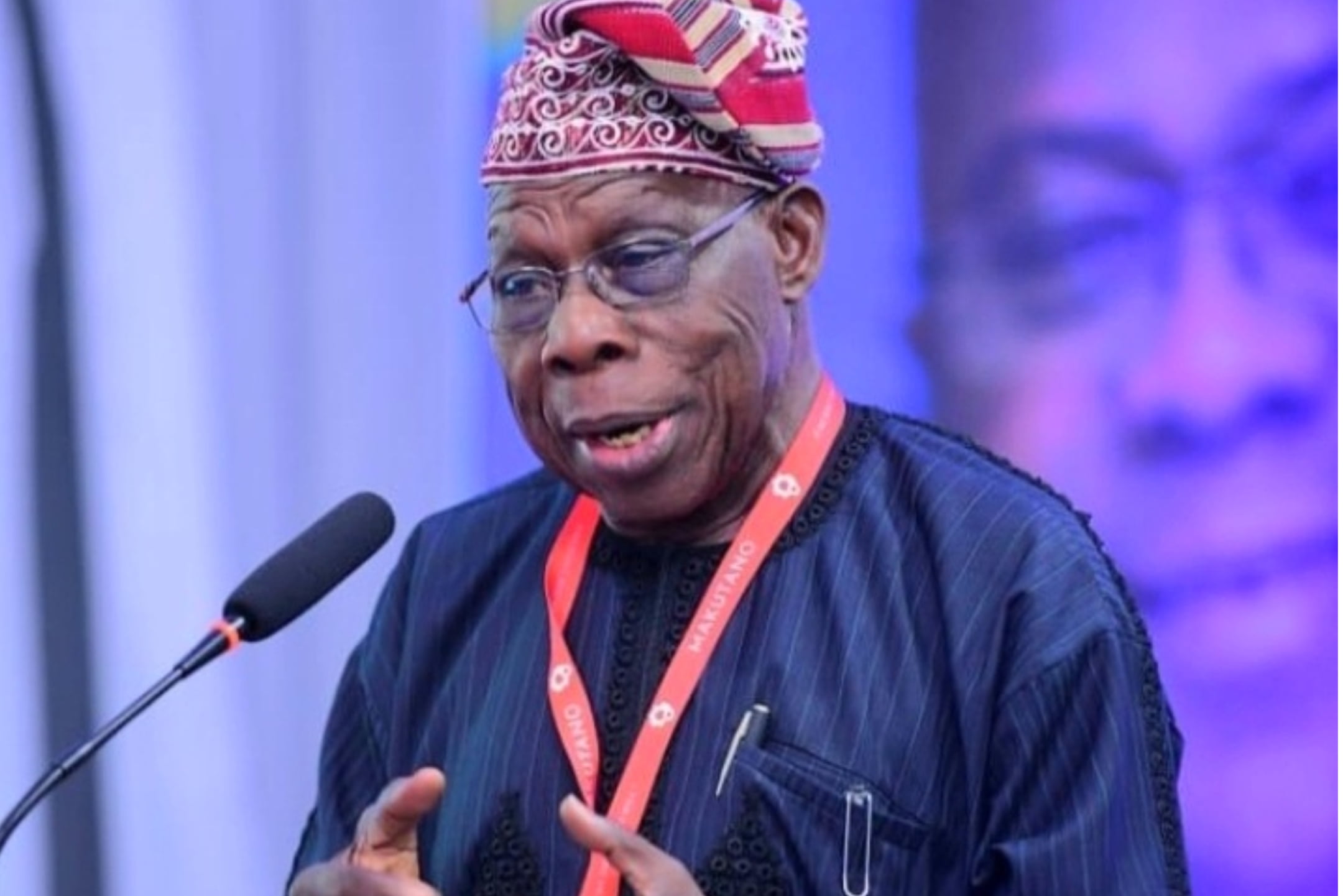
Former President Olusegun Obasanjo has backed calls for an increase in the 13 per cent derivation allocation to oil-producing states, saying the existing share should be treated as a starting point for further negotiations.

Obasanjo spoke on Monday at the flag-off of the Crude Distillation Unit of the $1bn Azikel Refinery in Obunagha, Yenagoa Local Government Area of Bayelsa State, where he also challenged the project’s promoter to complete the facility within 12 months.

Addressing Bayelsa State Governor, Douye Diri, the former President said oil-producing states and communities had not received a fair deal from the exploitation of resources in their territories.

“You are right that the states and oil-producing communities have not got a fair deal so far. Thirteen per cent is the beginning. You can continue to talk,” he said.

The remarks came as Diri renewed his criticism of the derivation formula and the Land Use Act, arguing that communities in the Niger Delta remained excluded from decisions concerning the resources extracted from their land.

The refinery, owned by Azikel Petroleum under the Azikel Group, is designed to process 25,000 barrels of crude oil daily.

Its foundation was laid by Obasanjo about eight years ago, while the installation of the crude distillation unit marks a major stage in the project’s development.

Obasanjo commended the President of Azikel Group, Azibapu Eruani, for sustaining the project and urged him to ensure its completion within the next year.

“I have told Dr Eruani that I will be officially 90 years by next March. It means I will take the boarding pass soon. So, he has to make sure the project is completed before I exit,” he said.

See also  Onyema warns new taxes could cripple airlines

He also acknowledged the role of the African Finance Corporation and the African Export-Import Bank in supporting the investment, calling for continued assistance to bring it to completion.

“My challenge to you, Dr Eruani, is to ensure that the refinery is completed within the next 12 months. With this done, you can even double the capacity,” Obasanjo said.

The former president also praised Diri for what he described as the effective use of Bayelsa’s revenue, citing projects across the state as evidence that the funds accruing to it had been put to use.

“The most important thing is that even the little you have received, you have used it well,” he said.

In his remarks, Diri said the refinery represented an opportunity for residents of Bayelsa and the Niger Delta to participate more directly in an industry built on resources extracted from their communities.

He argued that the region’s long-standing agitation over resource control stemmed from the perceived imbalance between where crude oil was produced and where the benefits of its exploitation accrued.

“As people of the Ijaw ethnic nationality, we have protested and fought because we feel that God gave us something in our land but we are not benefiting from it. Others are benefiting and see us as second-class citizens,” the governor said.

Diri also faulted the Land Use Act, arguing that the division between state control of surface resources and Federal Government control of resources beneath the ground placed oil-producing communities at a disadvantage.

“The Land Use Act is unfair. Surface resources belong to states but what lies underneath belongs to the Federal Government. That law is obnoxious and not good for any just society,” he said.

See also  NAFDAC bans sachet and small-bottle alcohol in Nigeria

He added that the region was not seeking to appropriate all the proceeds from its resources but wanted a greater role in determining how they were managed.

“We do not want to take all to ourselves. We just want to be co-players in determining how it is done. Thirteen per cent is not enough for the states,” he said.

The governor urged young people in Bayelsa to acquire the skills needed to benefit from the refinery and other industrial investments, warning that the presence of such facilities would mean little if residents lacked the capacity to participate in their operations.

He also called on oil companies operating around Gbarain and Obunagha to rehabilitate the road leading to the refinery, saying they should complement the state government’s efforts to support the project.

Diri further stressed the need for African countries to process their natural resources locally, arguing that retaining more processing and industrial activities on the continent was essential to securing greater economic benefits from its resources.

Speaking at the event, Eruani said the refinery was conceived to make Bayelsa and the wider Niger Delta active participants in the petroleum industry rather than remain primarily suppliers of crude oil.

He described the installation of the crude distillation unit as the beginning of the refinery’s completion phase and said the project would help drive industrialisation in the state and the region.

The facility is expected to produce 2.5 million litres of petrol and two million litres of diesel daily, alongside other petroleum products, according to the project’s promoters.

See also  Trump earned over $1bn from crypto ventures in 2025 — Report

Eruani also commended President Bola Tinubu for supporting indigenous refineries, saying their development aligned with the Federal Government’s objective of improving the availability and affordability of petroleum products.

A board member of Azikel Petroleum, Daru Owei, and the Ibenanaowei of Ekpetiama Kingdom and Chairman of the Bayelsa State Council of Traditional Rulers, King Bubaraye Dakolo, also commended Eruani for the project, saying it could improve the economic fortunes of Bayelsa, the Niger Delta and Nigeria.

Source: punchng.com

FOLLOW US ON:

FACEBOOK

TWITTER

PINTEREST

TIKTOK

YOUTUBE

LINKEDIN

INSTAGRAM

Continue Reading
Click to comment

Leave a Reply

Your email address will not be published. Required fields are marked *

Business

Revenue boom: World Bank faults states’ spending priorities, read full details

Published

on

The World Bank has criticised the spending priorities of Nigerian state governments, warning that increased revenues following recent economic reforms have not translated into proportionate investments in education, healthcare and social protection.

The global lender observed that although states had increased spending on essential public services, investments in transport infrastructure had grown considerably faster, even in states with poor human development indicators.

A Senior Economist at the World Bank Nigeria Office, Gloria Joseph-Raji, raised the concerns on Tuesday in Abuja during the launch of BudgIT’s 2026 State of States Report, themed ‘From Allocation to Impact: Rethinking State Spending Priorities.’

She said, “Spending on education, health, and social protection has also risen substantially, but it has not kept pace with the rapid growth in transport infrastructure spending, even in states with weaker human capital outcomes.”

Joseph-Raji explained that the bank’s October Nigeria Development Update, which examined budget implementation reports from all 36 states, found that governments had expanded transport infrastructure and reduced their debt burdens, particularly domestic debt, following increased fiscal allocations.

She attributed the revenue growth to petrol subsidy removal, exchange rate unification and improvements in tax administration since 2023, alongside federal intervention funds and the settlement of longstanding obligations to states.

According to her, the additional resources have enabled states to meet salary obligations and created opportunities for improved public service delivery.

However, she warned that excessive dependence on Federation Account allocations continued to expose state finances to fluctuations in federally shared revenue.

“In 2025, federation transfers accounted for more than three-quarters of revenue in all but a handful of states,” she said.

See also  42% of SMEs can’t last a month without income — Moniepoint

She disclosed that federation transfers accounted for 73 per cent of aggregate state revenues between 2021 and 2025, excluding Lagos, while internally generated revenue was sufficient to cover recurrent expenditure in only two states.

Joseph-Raji noted that states received 26.72 per cent of net Federation Account revenues and now received 55 per cent of Value Added Tax revenue under the revised sharing formula.

Meanwhile, BudgIT’s Country Director, Vahyala Kwaga, disclosed that aggregate revenue across the 34 states covered in its comparative analysis rose from N4.99tn in 2022 to N15.53tn in 2025, representing an increase of N10.54tn.

He said FAAC allocations increased by more than 232 per cent, from N3.43tn to N11.38tn during the period.

Despite the revenue growth, Kwaga disclosed that the states had spent only N8.60tn, representing 24.4 per cent of their combined N35.22tn approved budgets, by June 2026.

“We must also examine how effectively they deploy the resources available to them, what they prioritise and whether their spending is delivering the outcomes that citizens need,” he said.

He explained that BudgIT had revised its assessment methodology to place greater emphasis on spending in education, healthcare, agriculture, water and sanitation, alongside revenue performance and debt sustainability.

Presenting the report, BudgIT’s Head of Research and Policy Advisory, Adejoke Akinbode, disclosed that total debt across the 35 states assessed increased by 10.41 per cent, from N10.57tn in 2024 to N11.67tn in 2025.

She identified Lagos as the most indebted state, with N2.9tn, while Osun spent N100.17bn servicing debt, equivalent to 28.6 per cent of its revenue.

See also  Top banks raise tech budget by 43% in Q1

Akinbode said Lagos ranked first in overall fiscal sustainability, followed by Enugu, Bayelsa, Delta and Kebbi, while Cross River ranked last. Rivers was excluded because of inadequate fiscal data.

She urged states to reduce administrative costs, strengthen revenue collection and link borrowing to productive investments.

In her keynote address, an economist and lecturer at Amadeus University, Abia State, Dr Iboro Nelson, argued that rising government revenues had failed to compensate households for the economic hardship associated with recent reforms.

She disclosed that states collectively budgeted N1.32tn for healthcare in 2024 but spent N816.64bn, while education expenditure stood at N1.61tn against N2.41tn budgeted.

According to her, average annual spending per resident amounted to N3,483 on healthcare and N6,981 on education, equivalent to approximately N290 and N582 monthly, respectively.

“This is actually not fiscal space, but fiscal illusion,” she said.

Nelson blamed weak budget implementation, unrealistic expenditure projections, overlapping projects and excessive recurrent costs for the limited developmental impact of rising allocations.

Also speaking, a Programme Manager at the Ford Foundation’s West Africa Office, Joy Ehinor-Esezobor, urged governments to measure fiscal success by improvements in citizens’ lives rather than revenue growth or rankings.

“The ultimate measure of success should not simply be a better fiscal ranking, but better services and improved living conditions,” she said.

The programme is seeking to establish a framework for developing Nigeria’s underutilised small hydropower resources through private investment and public-private partnerships.

Source: punchng.com

FOLLOW US ON:

FACEBOOK

WHATSAPP CHANNEL

TWITTER

PINTEREST

TIKTOK

YOUTUBE

LINKEDIN

INSTAGRAM

Continue Reading

Business

Otti woos US investors to Abia

Published

on

Governor Alex Otti of Abia State has concluded plans to bring investors, business leaders, policymakers, development partners, diplomatic representatives and entrepreneurs to the state to explore investment opportunities and strengthen commercial relations between Africa and the United States.

In a statement he signed and issued to newsmen on Sunday, the Chief of Staff to the Governor, Pastor Caleb Ajagba, disclosed that the Abia State Government had unveiled plans to attract American and other international investors to the state through the 2026 edition of the African Diaspora Conference and Expo, AFRICANDO, scheduled for this month.

Ajagba said, “AFRICANDO is a platform for translating international economic engagement into concrete investments and commercial partnerships. The state government is working with the organisers to ensure that the conference goes beyond speeches and networking to facilitate transactions, business agreements and sustainable investment.”

According to him, the 2026 edition, with the theme, “Deepening U.S.–Africa Commercial Ties in the Era of AfCFTA,” would connect investment opportunities in Abia and other African markets with American capital, technology, expertise and international distribution networks.

He added, “The African Continental Free Trade Area, AfCFTA, presents opportunities for African businesses to expand beyond their domestic markets, while international partnerships could help them improve production capacity and competitiveness.

“Abia is strategically positioned to benefit from the initiative because of its manufacturing and entrepreneurial base, particularly in Aba, which is known for indigenous manufacturing, commerce and craftsmanship.”

Ajagba added that Otti’s administration “is investing in infrastructure, strengthening public institutions and improving the business environment to position the state as a destination for private investment.”

See also  NAFDAC bans sachet and small-bottle alcohol in Nigeria

He explained that international delegates and prospective investors would be encouraged not only to attend conference sessions but also to visit strategic economic locations, manufacturing clusters, enterprises and government-backed projects to assess investment opportunities firsthand.

He said the approach was intended to give participants a practical understanding of the state’s economic potential and create opportunities for direct engagement with local businesses and relevant government agencies.

“AFRICANDO 2026 is not exclusively an Abia event. It is an international economic platform being hosted in Abia State,” he continued.

He listed agriculture and agro-processing, manufacturing, consumer goods, energy, financial services, healthcare, transportation and logistics, science and technology, artificial intelligence and emerging technologies among the sectors expected to receive attention.

A major feature of the conference, he said, would be a structured Deal Room and Investment Marketplace, where investment-ready projects from Abia and participating businesses would be presented to prospective investors.

Source: punchng.com

FOLLOW US ON:

FACEBOOK

WHATSAPP CHANNEL

TWITTER

PINTEREST

TIKTOK

YOUTUBE

LINKEDIN

INSTAGRAM

Continue Reading

Business

Personal loans hit new high N1.99tn

Published

on

Nigerians’ outstanding personal loans increased by an estimated N58.5bn in the second quarter of 2026, reaching N1.99tn at the end of June, as households faced persistent inflationary pressures and high borrowing costs.

An analysis by The PUNCH of the Central Bank of Nigeria’s Second Quarter 2026 Economic Report showed that personal loans rose by 3.03 per cent from approximately N1.93tn recorded at the end of March.

The development came as total consumer credit increased by 3.26 per cent to N3.17tn from N3.07tn in the preceding quarter, representing an increase of about N100bn within three months.

The CBN stated, “Consumer credit outstanding increased by 3.26 per cent to N3.17tn, from N3.07tn in the preceding quarter. The increase reflected growth in both retail and personal loans, which rose by 4.10 per cent and 3.03 per cent, respectively.”

According to the report, personal loans accounted for 62.87 per cent of total consumer credit, while retail loans constituted the remaining 37.13 per cent.

This means that nearly N63 out of every N100 owed by consumers to financial institutions was classified as personal borrowing, highlighting its dominance in the consumer credit market.

Retail loans also increased by approximately N46.5bn to N1.18tn at the end of June, compared with an estimated N1.13tn in March, representing quarterly growth of 4.10 per cent.

Although retail loans recorded a faster percentage increase, personal loans contributed more to the outstanding stock of consumer credit.

The increase in personal borrowing occurred amid renewed inflationary pressures, which continued to affect household purchasing power.

See also  Trump earned over $1bn from crypto ventures in 2025 — Report

The CBN reported that headline inflation rose to 15.91 per cent in June 2026 from 15.38 per cent in March, reflecting increases in the prices of essential goods and services.

The report attributed the development largely to higher energy and commodity prices associated with geopolitical tensions in the Middle East, which increased production and transportation costs.

These conditions placed additional pressure on household expenditure, particularly for consumers whose incomes had not increased sufficiently to offset rising prices.

However, the report did not establish whether the increase in personal loans was driven primarily by household financial difficulties, consumption needs or improved access to credit.

The growth in consumer borrowing also occurred despite elevated lending rates in the banking sector.


According to the CBN, the average prime lending rate declined marginally to 19.01 per cent in Q2 from 19.37 per cent in the preceding quarter.

In contrast, the maximum lending rate increased slightly to 34.37 per cent from 34.34 per cent, indicating that borrowing remained expensive for some categories of bank customers.

Although these rates reflect broader banking sector lending conditions rather than specific personal loan charges, they provide an indication of the financing environment confronting borrowers.

A recent report ‘Enhancing Financial Inclusion & Advancement’ noted that four in every 10 Nigerians borrowing from formal financial institutions now take loans mainly for consumption and coping needs, as rising financial pressures increasingly push credit away from productive activities.

The ‘2026 Access to Financial Services in Nigeria Survey’ revealed that 40.8 per cent of formal borrowers used loans for coping and consumption, up sharply from 31.7 per cent in 2023.

See also  NAFDAC bans sachet and small-bottle alcohol in Nigeria

The 9.1 percentage-point increase made coping and consumption the largest purpose of formal credit, overtaking productive enterprise borrowing, which fell from 40.2 per cent to 34.3 per cent during the same period.

Borrowing for household assets also declined from 25.2 per cent to 23.4 per cent. The report warned, “Coping/consumption purposes rose from 31.7 per cent to 40.8 per cent; productive purpose fell from 40.2 per cent to 34.3 per cent. We need to ensure that credit builds productive capacity and does not produce distress.”

Formal credit use increased from six per cent of adults in 2023 to 10 per cent in 2026, with about 11.9 million Nigerians borrowing from regulated providers. When informal sources were included, 36 per cent of adults had access to some form of credit.

Credit use among informally employed Nigerians tripled from five per cent to 15 per cent, while borrowing among people aged 18 to 35 rose from four per cent to 10 per cent. Business owners recorded an increase from four per cent to 10 per cent, while farmers rose from two per cent to six per cent.

Source: punchng.com

FOLLOW US ON:

FACEBOOK

WHATSAPP CHANNEL

TWITTER

PINTEREST

TIKTOK

YOUTUBE

LINKEDIN

INSTAGRAM

Continue Reading

Trending