Connect with us

Business

Tax law: VAT hits record N1tn as new sharing era begins

Published

on

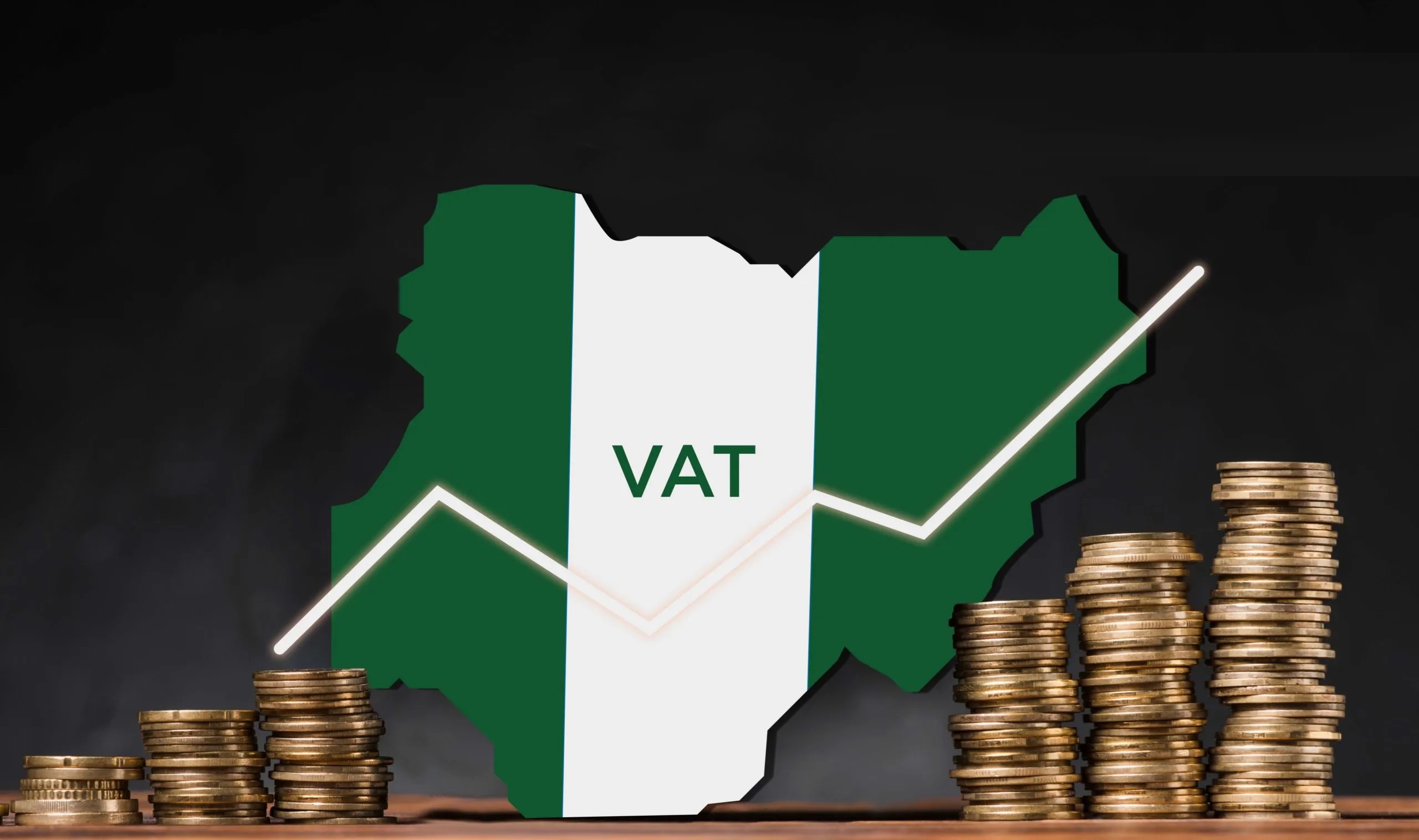
Total Value Added Tax earnings rose to N1.08tn in January as a new sharing formula commenced, altering how the proceeds are split among the Federal Government, states, and Local Governments, findings by The PUNCH have shown.

Documents presented at the February meeting of the Federation Account Allocation Committee and obtained by The PUNCH on Tuesday showed that total VAT collections by the Nigeria Revenue Service stood at N1.08tn in January 2026, compared with N913.96bn in December 2025.

The increase of N169.20bn represents an 18.5 per cent rise month-on-month. However, the full N1.08tn was not available for sharing. VAT deductions at source amounted to N79.94bn in January, up from N67.45bn in December, leaving a net VAT of N1.00tn for distribution.

In December, the net VAT shared stood at N846.51bn. The month-on-month increase in the net distributable VAT was N156.72bn, also representing an 18.5 per cent increase.

January marked the first full month under the revised VAT sharing formula. Under the new structure, 10 per cent of net VAT goes to the Federal Government, 55 per cent to state governments, and 35 per cent to Local Governments.

Previously, the Federal Government received 15 per cent, states 50 per cent, and Local Governments 35 per cent. If the previous 15 per cent formula had been retained, the Federal Government would have received about N150.48bn from the N1.00tn net VAT shared in January, instead of the N100.32bn it got under the new 10 per cent structure, implying a shortfall of roughly N50.16bn.

Conversely, states, which now receive 55 per cent, shared about N551.77bn, meaning their allocation increased by approximately N50.16bn compared to the N501.61bn they would have received under the former 50 per cent formula.

Based on the new sharing formula, from the N1.00tn net VAT shared in January, the Federal Government received N100.32bn, states received N551.77bn, while Local Governments were allocated N351.13bn.

In December, under the old 15 per cent formula, the Federal Government’s VAT share stood at N126.98bn. The January allocation of N100.32bn, therefore, represents a decline of N26.65bn, or about 21 per cent, compared with what the Federal Government received in December.

For states, the impact of the new formula was positive. Their collective share rose to N551.77bn in January from N423.25bn in December, an increase of N128.52bn, equivalent to 30.4 per cent.

Local Governments received N351.13bn in January, up from N296.28bn in December, an increase of N54.85bn or 18.5 per cent.

The cost of collection rose alongside the higher VAT pool. The NRS VAT cost of collection, calculated at 4 per cent, increased to N43.33bn in January from N32.72bn in December, a rise of N10.61bn or 32.4 per cent.

The Nigeria Customs Service import VAT cost of collection, which stood at N3.84bn in December, was nil in January, which may be due to the tax reforms, which made NRS the main agency in charge of collecting government revenue.

See also  US-Iran war: Petrol price surge sparks relief calls

Other statutory deductions included 3 per cent to the North East Development Commission Project Account, which rose to N31.20bn from N26.32bn, an increase of N4.87bn. The 0.5 per cent deduction to the Revenue Mobilisation Allocation and Fiscal Commission increased to N5.42bn from N4.57bn, up by N846.02m.

Combined, the NEDC and RMAFC deductions totalled N36.61bn in January compared with N30.89bn in December, reflecting a month-on-month increase of N5.72bn. The broader FAAC summary showed that total funds available for distribution in January across revenue lines stood at N3.04tn.

Total deductions amounted to N1.14tn, leaving a total net distributable revenue of N1.90tn. Of this amount, N896.78bn came from statutory revenue, while N1.00tn was net VAT. When VAT and statutory revenue were combined, the Federal Government’s total allocation stood at N525.23bn.

State governments received N767.29bn, local governments got N517.28bn, while the 13 per cent derivation share amounted to N90.19bn.

A breakdown of VAT distribution among states showed that Lagos remained the dominant beneficiary. The state’s gross VAT allocation for January stood at N111.22bn. After a deduction of N9.89bn, Lagos retained N101.34bn as state net VAT. Its local governments collectively received N70.57bn.

Oyo ranked second with N24.04bn in gross VAT allocation, while Rivers followed with N23.57bn. Kano received N17.37bn, and the FCT-Abuja was allocated N15.76bn. Bayelsa received N15.07bn. Other top beneficiaries included Katsina with N13.82bn, Jigawa with N12.92bn, Delta with N12.89bn, and Kaduna with N12.73bn.

At the lower end of the allocation scale, Ebonyi received N9.45bn, Ekiti N9.83bn, Taraba N9.37bn, and Nasarawa N9.77bn.

Although the equality component accounts for 50 per cent of the states’ distribution formula, the 30 per cent population and 20 per cent derivation factors continue to create wide disparities between high-activity and lower-activity states.

The non-import local VAT collection table shows the concentration of VAT generation. Total non-import VAT collections for January stood at N913.47bn, compared with N721.83bn in December, representing an increase of N191.65bn or 26.5 per cent.

Lagos alone generated N533.40bn in non-import VAT in January, accounting for 58.39 per cent of the total. Oyo generated N67.18bn, Rivers N66.35bn, FCT-Abuja N39.73bn, and Bayelsa N34.62bn.

For local governments, Lagos councils received N70.57bn in net VAT, Oyo councils got N18.04bn, Kano councils received N16.29bn, Rivers councils got N15.47bn, and Katsina councils received N11.76bn.

A VAT income comparison sheet showed that against a benchmark of N625.13bn, the January VAT collection of N913.96bn exceeded the benchmark by N288.82bn.

The N1.08tn total VAT earnings figure exceeded the same benchmark by N458.03bn, producing a cumulative difference of N746.85bn over the period reflected.

The PUNCH earlier reported that the 36 states of the federation would likely receive an estimated N5.07tn as their share of Value Added Tax in 2026, following the commencement of a new VAT sharing formula introduced under the National Tax Acts.

This development was contained in the 2026–2028 Medium-Term Expenditure Framework and Fiscal Strategy Paper approved by the Federal Executive Council.

See also  ECOWAS parliament adopts $26 million for 2026 budget

However, with VAT earnings exceeding projections in January and February, states may earn higher than N5.07tn if the current actual earning pattern persists throughout the year.

The PUNCH earlier reported that the Nigeria Economic Summit Group warned that the Federal Government could face revenue shortfalls if it does not increase the value-added tax rate as part of the ongoing tax reform process.

The Chief Executive Officer of NESG, Dr Tayo Aduloju, made this statement during an interactive media session in Abuja. He emphasised that while reforms to the VAT system are essential, maintaining the current VAT rate without an increase could result in a significant loss of revenue for the government.

Speaking on the issue, Aduloju said, “Without those rate hikes, it means that the government might lose some revenue.” Aduloju explained that the current tax reform process must strike a balance between simplifying the tax system and increasing the VAT rate to maintain revenue stability.

According to him, simply reducing the number of taxes without adjusting the VAT rate could weaken the government’s revenue base.

Also, in its most recent Article IV Consultation Report on Nigeria, the International Monetary Fund noted that although the recent tax reforms approved by the National Assembly and President Bola Tinubu represent a major step forward in modernising the VAT and Company Income Tax regimes, the choice to maintain the current VAT rate would lead to an immediate revenue shortfall.

It stated that the Federal Government may lose as much as 0.5 per cent of the country’s Gross Domestic Product in revenue following its decision not to raise the VAT rate.

“The decision not to raise the VAT rate now is reasonable, given high poverty and food insecurity, and with the cash transfer system to support the most vulnerable households not yet fully rolled out. However, this will reduce consolidated government revenue by up to ½ per cent of GDP in the authorities’ estimates,” the report noted.

According to the Fund, unless alternative financing options are found, subnational governments may be forced to either scale back spending or ramp up their own revenue efforts. The IMF, however, acknowledged the government’s justification for delaying a VAT hike, particularly at a time of worsening poverty and food insecurity.

Speaking recently at the launch of the BudgIT State of States 2025 Report in Abuja, where he delivered the keynote address, the Chairman of the Presidential Fiscal Policy and Tax Reforms Committee, Mr Taiwo Oyedele, projected that states could earn more than N4tn annually from 2026 when new Value Added Tax reforms take effect.

He said, “With VAT reforms kicking in from 2026, states’ share will rise to 55 per cent. That could amount to over N4tn in 2026. The question is: will this money be spent, or will it be invested?”

See also  Nigeria misses OPEC oil production quota again

States IGR boost

Economic analysts called on state governments to intensify efforts to unlock internal revenue as their allocations under the revised sharing formula increase. In separate interviews with The PUNCH, they noted that Value Added Tax has never been a major revenue pillar for the Federal Government.

A former Chairman of the Chartered Institute of Bankers of Nigeria, Prof Segun Ajibola, said the Federal Government had always focused on other revenue sources. “The federal government has never emphasised VAT as a major revenue source. When the law was amended, the government made it clear that it would benefit the state and the local government more,” Ajibola explained.

The economist added that the Federal Government was strengthening alternative revenue streams, stating, “There are so many revenue sources the federal government is looking at to beef up its own revenue, like capital gains tax and other federally collected revenue, excess duties, and so on. In fact, an increase in VAT is to benefit states and local governments. The pertinent question is what happens to it upon getting there.”

Ajibola expressed concern about living conditions across states. “The states are bleeding. And when I say the states are bleeding, I mean the masses. Schools are dilapidated, roads are bad, people are hungry, health care facilities are nowhere,” he lamented.

He called for transparency in the use of the increased allocations, adding, “If a state government wants to be accountable, each state government should set up a desk to account for the increase in the VAT allocation and make the report known to the public. There is so much to spend on agriculture and other public utilities.”

Also, the Chief Executive Officer of Economic Associates, Dr Ayo Teriba, said VAT historically replaced state sales tax and originally belonged to states. “The tax belonged to the states. It is for ease of collection that the federal government decides to collect on behalf of the states,” Teriba noted.

He, however, argued that the Federal Government could justifiably retain a stronger share. “There’s no reason why the federal government should collect cross-border VAT payments and surrender them to states. The Federal Government should retain it since it also has responsibilities,” Teriba said.

The analyst cautioned states against overdependence on statutory allocations, advising, “Not to make a mountain out of a molehill (as) these are smaller amounts for the states.”

He pointed to Enugu State as a model, noting, “States that can do better than just wait for VAT or FAAC, like Enugu State, will be better models. If they repeat what they have done, their internally generated revenue will be bigger than FAAC and VAT combined. Other states should emulate that. They are unlocking revenue not by taxing people,” Teriba remarked.


Continue Reading
Click to comment

Leave a Reply

Your email address will not be published. Required fields are marked *

Business

Court orders Virgin Atlantic to pay N13m for missed flight

Published

on

A Federal High Court in Lagos has ordered Virgin Atlantic Airways Limited to pay Mrs. Joy Ezetah the sum of $5,906.50 in damages after it failed to allow her board a scheduled Lagos-London flight, an incident that disrupted her onward trip to Canada and caused her financial loss.

Justice Ibrahim Kala in the judgement delivered on Monday, held that the airline was liable for the losses suffered by the claimant after she was denied boarding at the Murtala Muhammed International Airport on 6 April 2024.

The claimant had asked the court for N100m in general damages, arguing that she bought a business-class ticket through Air Canada for a four-leg trip from Lagos to Toronto and back, but was stopped from boarding the Virgin Atlantic flight “without justification.”

She told the court that she arrived early, completed check-in, and was issued a boarding pass for the Lagos-London leg.

According to her, airline officials later prevented her from boarding, stating they could not connect her ticket to her Air Canada connecting flight from London to Toronto.

Ezetah stated that the airline owed her a duty of care and should have resolved the issue with Air Canada or made other arrangements instead of denying her boarding.

She further maintained that when she later contacted Air Canada, the airline confirmed that her ticket was valid and that she was expected on the connecting flight.

Virgin Atlantic, however, denied liability. It said it was “not the issuing carrier” and insisted that the ticket had been purchased directly from Air Canada under a codeshare arrangement.

See also  NewsL-PRES warns of public health risks from unhygienic abattoirs in Taraba

The airline also argued that an error code in the reservation system prevented it from issuing a boarding pass for the connecting flight and that it acted professionally by advising the passenger to contact the ticket issuer.

It further contended that the claimant’s inability to complete online check-in before arriving at the airport showed that there was already a problem with the ticket.

After reviewing the evidence, submissions and legal authorities cited by both sides, Justice Kala held that the claimant’s case had merit.

The court awarded $5,906.50 in damages against Virgin Atlantic and ordered that the sum be paid using the prevailing exchange rate published by the Central Bank of Nigeria. Based on the highest official rate of N1,365.50 to a dollar, the award translates to about N8.07m.

Justice Kala also ordered the airline to pay 10 per cent interest per annum on the judgment sum until full liquidation of the debt.

Additionally, the court awarded N5m as costs against Virgin Atlantic, noting that the claimant had been forced to approach the court to enforce her rights.

punch.ng

FOLLOW US ON:

FACEBOOK

TWITTER

PINTEREST

TIKTOK

YOUTUBE

LINKEDIN

INSTAGRAM

Continue Reading

Business

States kick as Senate moves to amend Electricity Act; read details

Published

on

A fresh battle over the control of Nigeria’s electricity sector is brewing, as state electricity regulators have accused the National Assembly of attempting to claw back powers already devolved to states under the Constitution and the Electricity Act 2023.

In a strongly worded memorandum submitted to the Senate Committee on Power and obtained by our correspondent on Tuesday, electricity regulatory commissions and bureaus from 16 states warned that the proposed Electricity Act (Amendment) Bill 2026 could reverse one of the most significant reforms in Nigeria’s power sector.

The regulators argued that the amendment bill, rather than strengthening the electricity market, seeks to restore extensive federal oversight over matters they insist have constitutionally become the responsibility of states.

The concerns were contained in a letter dated May 26, 2026, addressed to the Chairman of the Senate Committee on Power and signed on behalf of the State Electricity Regulatory Commissions and Bureaus.

Signatories to the document included the chairmen and chief executives of electricity regulators in Abia, Anambra, Bayelsa, Edo, Ekiti, Enugu, Gombe, Imo, Kogi, Lagos, Nasarawa, Niger, Ogun, Ondo, Oyo and Plateau states.

The regulators said they had taken advantage of the Electricity Act 2023 to begin building sub-national electricity markets and had already engaged investors based on the framework created by the law.

They noted that they had earlier met with the Senate committee and were subsequently requested to consolidate their concerns into a single memorandum for the consideration of lawmakers, the Nigerian Electricity Regulatory Commission and other stakeholders.

The letter stated, “We represent State Regulatory Commissions/Bureaus that have taken advantage of the Electricity Act 2023 to commence the development of our sub-national electricity markets and sectors.

We are grateful for the audience you granted us to raise concerns on the ongoing consideration of the proposed Amendment Bill 2026 to the Electricity Act 2023.

“As agreed during our discussion, we have collated and consolidated the comments into one document which is hereby attached for the consideration of the Senate and House Committees on Power, NERC and other stakeholders.”

The state electricity regulators said they had identified 17 contentious provisions in the proposed amendments to the Electricity Act that they believed could undermine the constitutional powers already granted to states in the electricity sector.

According to the regulators, the areas of disagreement include the authorisation of State Houses of Assembly to legislate on electricity matters, the supremacy of state laws within state electricity markets, and provisions seeking to retain federal control over all activities connected to the national grid.

Other disputed clauses relate to restrictions on states’ participation in the wholesale electricity market, matters concerning the Nigerian Wholesale Electricity Market, the authority of states over independent transmission and distribution networks, and the establishment and administration of the Power Consumers Assistance Fund.

The regulators also raised concerns over the proposed expansion of the powers of the Nigerian Electricity Management Services Agency, the structure and decisions of the Forum of Electricity Regulators, and the provision granting the Nigerian Electricity Regulatory Commission final administrative appellate jurisdiction on certain issues arising within the forum.

See also  CBN increases ATM card issuance fee

They further opposed provisions designating electricity generation, transmission, distribution and supply as essential services, as well as clauses dealing with government-owned enterprises as licensees and obligations to host communities.

Additional areas of contention include the regulation of intra-state electricity matters that may have implications for the national grid, the imposition of timelines and phased conditions for states transitioning into independent electricity markets, and proposed federal oversight on consumer protection, anti-trust measures and tariff design within state electricity jurisdictions.

The regulators argued that the disputed provisions require further consultation to ensure that the decentralisation objectives of the Electricity Act are not weakened by subsequent amendments.

“A review of the Bill suggests that the general intention is to reverse the devolution of legislative, governance and regulatory powers over electricity matters that occur solely within the respective states to the state governments, in favour of a reconsolidation of powers at the federal level, with the Nigerian Electricity Regulatory Commission retaining full supervisory powers over the market. Effectively, it appears that the intention of the Bill is that Nigeria should continue with the same regime that, for 20 years, has not led to any significant increase in power availability or per capita consumption for Nigerians, despite ever-increasing (and unsustainable) federal debt.”

At the centre of the dispute is the interpretation of the constitutional amendments that allowed states to legislate on electricity matters within their territories. The regulators argued that the proposed amendment bill wrongly assumes that state legislatures derive their powers from the National Assembly rather than directly from the Constitution.

According to them, any attempt by the National Assembly to grant, restrict or redefine those powers through ordinary legislation would amount to a constitutional violation.

The memorandum stated, “Section 2 of the Bill aims to amend Section 2(2)(a)-(e) of the Principal Act. By that section, the National Assembly reserves to itself the power to delegate legislative powers to States’ Houses of Assembly, suggesting that the Bill (or the Principal Act) is the source of the powers of a state to make laws on its electricity markets.

“This provision is based on a shocking miscomprehension of Nigerian constitutional law—it proceeds from the wrong assumption that the NASS, by ordinary legislation and not constitutional amendment, can confer (or restrict) the legislative power of states.

“The constitutional division of powers is fundamental to federalism, ensuring a balance between national unity and state autonomy. There is no legal framework for the NASS to ‘empower’ state governments to make law by ordinary legislation, as the language of the Bill attempts to do.

“The constitutional division of powers is fundamental to federalism, ensuring a balance between national unity and state autonomy. There is no legal framework for the NASS to ‘empower’ state governments to make law by ordinary legislation, as the language of the Bill attempts to do. Consequently, Section 2 of the Bill, seeking to amend Section 2 of the Act, is not consistent with the Constitution.”

See also  Court strikes out N12.3bn fraud case against Otudeko after settlement

The regulators described as “a shocking miscomprehension of Nigerian constitutional law” the provisions of the bill that appear to suggest that the National Assembly is the source of states’ authority over electricity matters.

They warned that the proposed law could undermine the principle of federalism by weakening state autonomy. Beyond constitutional concerns, the regulators said the bill could create uncertainty in the electricity market and discourage investors who had already committed resources based on the existing legal framework.

“The clear intention behind the new drafting is to reconsolidate in the Federal Government matters solely within the state electricity markets which had been devolved to the states,” the memorandum stated.

“This will defeat the key objectives of the Electricity Act and the various states’ electricity laws, even before the regime introduced by them has taken any root. It will introduce avoidable disruption in the industry as significant investment decisions have already been taken based on the Electricity Act 2023, and these investments are now put at risk by this proposed amendment.”

The state regulators specifically faulted provisions relating to federal oversight of activities connected to the national grid, restrictions on state authority over wholesale electricity transactions, the proposed expansion of NERC’s powers and changes affecting mini-grids and independent distribution systems.

They argued that allowing NERC to retain overriding authority over electricity activities merely because they have some connection to the national grid would effectively render state powers meaningless.

The memorandum stated, “What is required, in order to attain the full benefits of the decentralisation of the Nigerian Electricity Supply Industry that is the theme of the Fifth Alteration and provided for in the Principal Act, is proper coordination on transmission matters between NERC and state regulators, and not top-down federal legislation.”

The regulators also rejected provisions that would permit NERC to exercise final administrative appellate jurisdiction over disputes involving state electricity regulators. According to them, NERC and the SERCs are on equal standing within their respective constitutional spheres of authority.

“NERC and the SERCs are on equal standing within their respective constitutional spheres of authority,” the memorandum said. “The National Assembly cannot arrogate to NERC quasi-judicial authority over SERCs, especially where the dispute might be on a matter over which NERC has no authority.”

They further argued that the Constitution already vests judicial powers in the courts and that such responsibilities cannot be transferred to a regulatory agency. The proposed establishment of a Forum of Electricity Regulators also drew criticism.

Although the regulators acknowledged the importance of coordination among electricity regulators, they argued that participation in such arrangements should be voluntary rather than imposed through federal legislation.

See also  Disu declares total war on police corruption, impunity

“The better approach would be a Memorandum of Understanding or similar instrument jointly negotiated by all relevant regulatory bodies in which the principles of coordination and harmonisation will be agreed,” they said.

The state regulators equally opposed provisions declaring generation, transmission, distribution and supply of electricity as essential services covering both federal and state electricity markets.

According to them, such provisions could inadvertently expand NERC’s jurisdiction into areas already devolved to states, including tariff regulation. “The provision is invidious, regressive and should be expunged,” the memorandum stated.

The regulators also faulted proposals empowering NERC to determine contributions to the Power Consumers Assistance Fund from electricity consumers. They argued that since electricity tariffs and retail supply have become matters for state regulation, decisions relating to subsidies and customer contributions should similarly reside with state authorities.

Other contentious areas identified by the regulators included host community obligations, the role of the Nigerian Electricity Management Services Agency, licensing arrangements involving government-owned electricity enterprises and timelines for states transitioning into independent electricity markets.

The dispute highlights the growing tension between the Federal Government and states over the future structure of Nigeria’s electricity industry. The Electricity Act 2023 was enacted following the Fifth Alteration to the 1999 Constitution, which removed electricity from the Exclusive Legislative List and empowered states to generate, transmit and distribute electricity within their territories.

Since then, several states have enacted electricity laws and established regulatory agencies to oversee emerging sub-national electricity markets. Lagos, Enugu, Ekiti, Ondo, Edo and other states have already commenced varying stages of implementation of their electricity reform programmes.

Energy experts have repeatedly described the decentralisation of the sector as a major opportunity to attract investment, improve efficiency and expand access to electricity. However, the latest amendment proposals appear to have reopened the debate over how regulatory powers should be shared between Abuja and the states.

As the National Assembly continues deliberations on the amendment bill, the position adopted by lawmakers could shape the future direction of Nigeria’s electricity reforms and determine whether the country deepens its experiment with decentralisation or returns to a more centralised regulatory model.

The Electricity Act 2023 was designed to operationalise the constitutional amendments that empowered states to participate directly in electricity generation, transmission and distribution within their boundaries. Since its enactment, several states have passed their own electricity laws and established regulatory commissions.

The proposed Electricity Act (Amendment) Bill 2026 seeks to amend several provisions of the principal legislation. However, state regulators contend that some of the proposed changes amount to an attempt to reverse the gains of decentralisation and restore broad federal control over the Nigerian Electricity Supply Industry.

punch.ng

FOLLOW US ON:

FACEBOOK

TWITTER

PINTEREST

TIKTOK

YOUTUBE

LINKEDIN

INSTAGRAM

Continue Reading

Business

Africa urgently needs more fish farms, says UN

Published

on

Africa needs to urgently expand its fish-farming sector to meet its food needs, the head of the UN’s fisheries division said Tuesday, even as its latest report found record production levels globally.

Fish and seafood is now a $184-billion trade, according to the State of World Fisheries and Aquaculture report by the United Nations’ Food and Agriculture Organization (FAO), launched at the Our Ocean Conference in Kenya.

Fish-farming, or “aquaculture”, overtook traditional “capture” fishing as a source of food production in 2021 and has continued to grow — surpassing 100 million tonnes for the first time in 2024, the latest year for data.

But Africa is lagging behind the rest of the world, with only 18 percent of its fish coming from farms, compared to around half elsewhere.

Sub-Saharan Africa’s fish production will need to grow by 68 percent between now and 2050 to keep up with its rapidly growing population, the FAO said.

“It’s an opportunity waiting to be exploited… but it’s whether the timing is sufficiently fast to catch up with that demand,” Manuel Barange, director of the FAO’s fisheries division, told AFP.

“Aquaculture can actually be a game-changer,” he said. “If we manage to develop aquaculture in Africa, there’s a lot of opportunities.”

But governments urgently need to create regulations and incentives to attract investors, Barange added.

More than 700 different species of fish are raised for consumption on aquaculture farms around the world and the FAO argues it is a more predictable and sustainable approach than traditional fishing at sea.

See also  Nigeria’s Non-Oil Exports Hit $3.225bn In H1 2025

It is also more manageable in the face of climate change, which is causing rapid changes in the volumes and locations of ocean fish.

Climate change is “a disruptor of everything that we do,” said Barange.

More work is also needed to reduce over-fishing: the report found that only 62 percent of global fisheries were sustainably fished.

The 11th edition of the Our Ocean Conference began in the Kenyan port city of Mombasa on Tuesday — its first time in Africa — bringing together politicians, NGOs, investors and innovators.

Since its first edition in 2014, organisers boast that it has led to more than 2,900 commitments valued at over $169 billion, covering marine conservation, sustainable fisheries, climate adaptation, security and pollution reduction.

punch.ng

FOLLOW US ON:

FACEBOOK

TWITTER

PINTEREST

TIKTOK

YOUTUBE

LINKEDIN

INSTAGRAM

Continue Reading

Trending