Connect with us

News

Sand depletion threatens construction, food security — LASG

Published

on

The Lagos State Government has raised alarm over the growing sand depletion deposits across the state, warning that unchecked dredging activities could worsen construction costs, damage aquatic ecosystems and threaten food security.

“We need proper data. We need to know how many people are dredging, how much sand is being dredged daily, and what is left within those areas,” the Commissioner for Waterfront Infrastructure Development, Dayo Bush Alebiosu, said during the ministry’s two-year scorecard presentation at the annual ministerial press briefing held at the Bagauda Kaltho Press Centre.

Alebiosu said increasing demand for sand used in reclamation and infrastructure projects, particularly within the Lekki-Ajah corridor, had intensified pressure on available deposits across Lagos.

According to him, developers handling reclamation projects in Lekki and Ajah now source sand from communities as far as Ikorodu, pumping materials across distances of between 10km and 12km because deposits in closer locations are becoming exhausted.

He said the development confirmed fears that sand resources around Ajah were gradually running out, stressing that the state government has become more cautious in issuing dredging licences and permits.

The commissioner warned that the continued depletion of sand reserves could significantly increase the cost of construction and infrastructure delivery in Lagos, thereby placing additional pressure on housing and urban development.

He also linked indiscriminate dredging to threats to food security, especially in fishing communities that depend on healthy aquatic ecosystems for their livelihoods.

“It is putting food security at risk. We are encouraging people to consume more protein, such as fish, but whenever dredging disturbs aquatic life, fishermen are forced to work harder, and naturally, the cost of fish goes up,” he said.

See also  Togo, Niger, Benin owe Nigeria $11m for electricity supplied in 2025 - NERC

According to Alebiosu, aggressive dredging disrupts aquatic microorganisms and marine habitats, forcing fishermen to travel farther and spend more resources before making catches.

The commissioner further disclosed that host communities are increasingly facing infrastructural damage caused by heavy-duty dredging equipment and commercial activities associated with sand excavation.

He cited Ibese as one of the affected communities where roads and public infrastructure have reportedly deteriorated due to dredging operations.

Alebiosu said the Ministry of Waterfront Infrastructure Development remains the agency legally empowered to regulate dredging and sand dealing activities in Lagos State.

He added that the ministry collaborates with relevant agencies, including the Ministry of Environment and Physical Planning, as well as host communities, to tackle illegal dredging through monitoring, enforcement and whistleblowing mechanisms.

The commissioner also urged residents to support enforcement efforts by reporting illegal dredging activities, noting that some operators deliberately conceal their activities to evade detection.

“We cannot continue blaming foreigners alone. We must ask ourselves how they got there in the first place. They definitely have the connivance of some locals,” he said.

The Lagos State Government reaffirmed its commitment to stricter regulation of dredging activities to curb environmental degradation, protect waterfront communities and ensure the sustainable use of natural resources across the state.

A statement released later on Thursday by the Director, Public Affairs of the Ministry of Waterfront Infrastructure Development, Morenikeji Akodu, noted that commissioner warned that the increasing desperation for sand across Lagos was already exposing the dangers of over-exploitation of waterways and coastal resources.

See also  Govs back Tinubu’s order on oil, gas revenue remittance

He also warned that the development pointed to mounting pressure on available sand deposits across the state and underscored the need for stricter regulation and proper monitoring of dredging activities.

Continue Reading
Click to comment

Leave a Reply

Your email address will not be published. Required fields are marked *

News

Buni presents N532bn 2027 budget to Yobe assembly

Published

on

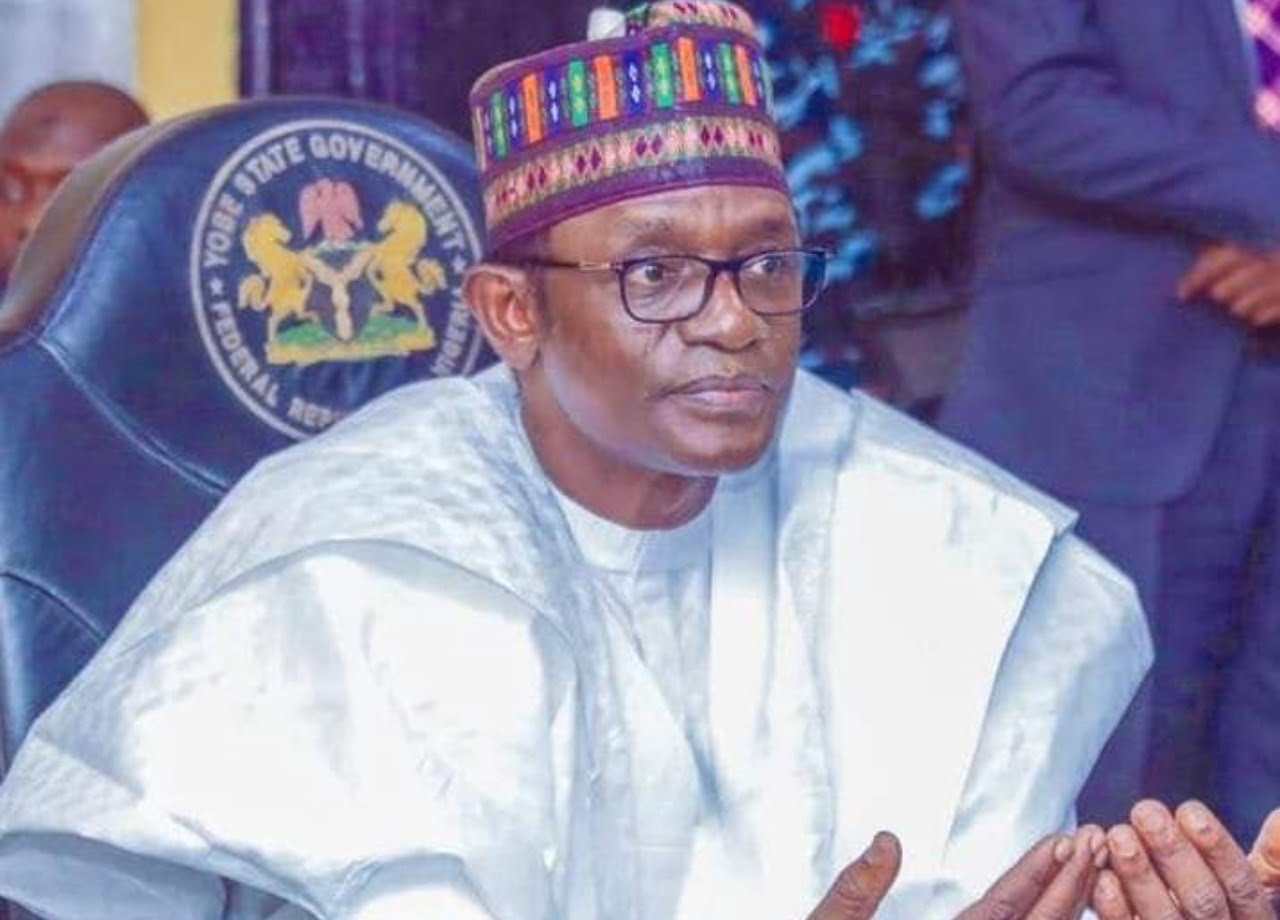
Yobe State Governor, Mai Mala Buni, has presented a proposed budget of N532.27bn for the 2027 fiscal year, with recurrent expenditure taking the largest share of the estimates.

Buni presented the 2027 Appropriation and Finance Bills before the Yobe State House of Assembly in Damaturu on Tuesday, describing the proposal as the final budget of his administration.

Tagged the Budget of Consolidation, Sustainability and Inclusive Growth, the proposed budget represents an increase of N16.739bn, or 3.2 per cent, over the N515.532bn approved for the 2026 fiscal year.

A breakdown of the estimates shows that N288.426bn, representing 54.2 per cent, is allocated to recurrent expenditure, while N243.845bn, representing 45.8 per cent, is earmarked for capital projects.

Presenting the budget, Buni said it was designed to consolidate the achievements of his administration, complete ongoing projects and ensure the sustainability of existing investments.

He said, “Today, with a sense of humility and fulfilment, and in accordance with Section 121(1) of the 1999 Constitution of the Federal Republic of Nigeria (as amended), I once again stand before this Honourable House of Assembly to present the Eighth and last Finance and Appropriation Bills by this administration for your kind consideration and approval for the 2027 fiscal year.”

The governor said the administration would prioritise project completion, improved service delivery and prudent management of public resources.

“The 2027 budget is therefore designed to balance immediate service delivery with the long-term development interest of the state,” he said.

Buni disclosed that the education sector would receive N99.792bn, while N80.543bn was allocated to healthcare.

See also  Alleged terrorism: AGF takes over Malami, son’s trial - see why

He said the education allocation would support the completion of ongoing school construction and rehabilitation projects, the provision of teaching materials, assistance to tertiary institutions and scholarship programmes.

On healthcare, the governor said the government would sustain investments in hospital upgrades, maternity and emergency services, medical equipment and healthcare training institutions.

He also identified the establishment of a modern kidney centre in Gashua as one of the administration’s priority projects.

“We are equally committed to advancing the ongoing establishment of a modern Kidney Centre in Gashua, with emphasis on a safe, accessible, patient-centred treatment environment, appropriate dialysis equipment and the clinical and operational arrangements required for sustainable service delivery,” Buni said.

The governor said infrastructure development would remain a major priority, with emphasis on completing ongoing road, drainage, electricity and commercial infrastructure projects.

He specifically mentioned the Gashua-Masaba, Balanguwa-Kumagannam and Dumbulwa-Lailai roads among the projects requiring attention.

Other priority areas include agricultural development, livestock production, water supply, environmental protection, peacebuilding and the rehabilitation of communities affected by insurgency.

Reviewing the performance of the 2026 budget as of September 30, Buni said the state recorded revenue receipts of N347.078bn, representing 67.3 per cent of the annual projection.

He said the approved 2026 budget stood at N515.532bn, comprising N291.904bn for capital expenditure and N223.628bn for recurrent expenditure.

According to him, recurrent expenditure during the first nine months amounted to N139.346bn, while capital expenditure stood at N94.280bn.

The governor said the administration remained committed to the payment of salaries, pensions and gratuities despite prevailing economic challenges and the demands of post-insurgency recovery.

See also  Togo, Niger, Benin owe Nigeria $11m for electricity supplied in 2025 - NERC

Buni, who described the 2027 proposal as the final budget of his administration, said the government would ensure an orderly transition and preserve ongoing development projects.

“Development must not depend entirely on the presence of any individual in public office. It must be supported by strong institutions, competent public servants, credible planning frameworks and effective systems of accountability,” he said.

The governor assured residents that his administration would continue to discharge its responsibilities until the final day of its tenure.

“We shall continue to work, supervise, deliver and remain accountable until the final day of our mandate. There will be no abandonment of our responsibilities and projects,” he said.

He urged the House of Assembly to give the proposed budget timely consideration and passage.

In a political appeal towards the end of his address, Buni urged the people of Yobe to support President Bola Tinubu’s second-term ambition, arguing that the state’s membership of the ruling All Progressives Congress had created opportunities for it to benefit from the Federal Government.

He also commended Tinubu for approving the Federal Government’s takeover and reimbursement of the Muhammadu Buhari International Cargo Airport project in Damaturu, saying the intervention would free up resources for other development projects.

Source: punchng.com

FOLLOW US ON:

FACEBOOK

WHATSAPP CHANNEL

TWITTER

PINTEREST

TIKTOK

YOUTUBE

LINKEDIN

INSTAGRAM

Continue Reading

News

US military base shooter seeks halt to firing squad execution

Published

on

Nidal Hasan, who is set to be executed by firing squad next month for his 2009 massacre at a US military base, asked a court on Tuesday to halt his execution, according to documents obtained by AFP.

The former US Army major and military psychiatrist asked a federal court to delay his execution, which is set for December 3, while he prepares a case to challenge it on constitutional grounds.

If the execution goes ahead, Hasan will be the first person killed by a US military firing squad since 1945.

A furore over plans to livestream the killing erupted in early October.

US Defence Secretary Pete Hegseth initially said the execution would be “public” before a Pentagon spokesperson added it would be available online.

Concerns mounted far and wide about making the execution into a spectacle and turning Hasan into a martyr.

After days of debate and condemnation, US President Donald Trump cancelled the plans to broadcast the killing, while allowing some witnesses to observe it in person.

Hasan killed 13 people, including 12 soldiers, and wounded 30 others in his November 2009 rampage.

He was shot by a civilian police officer and is paralysed from the waist down.

During his trial, Hasan chose to conduct his own defence, and court-appointed attorneys raised concerns that he was seeking to be executed.

Ultimately, he was sentenced to death by a military jury in 2013.

AFP

Source: punchng.com

FOLLOW US ON:

FACEBOOK

WHATSAPP CHANNEL

TWITTER

PINTEREST

TIKTOK

YOUTUBE

LINKEDIN

INSTAGRAM

See also  FG renames Lagos-Calabar Coastal Highway after Tinubu
Continue Reading

News

Kwara unveils five-year strategy to tackle malnutrition, read full details

Published

on

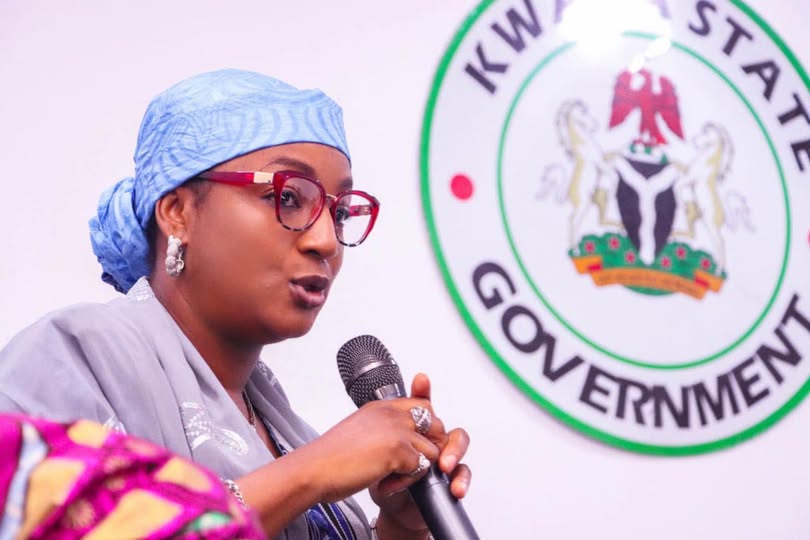
The Kwara State Government has unveiled a five-year nutrition strategy aimed at tackling the social, cultural and behavioural factors contributing to malnutrition, particularly among women and children.

The development was contained in a statement issued on Tuesday by the Assistant Press Secretary, Ministry of Health, Funke Olutemilehin, following the unveiling of the strategy by the Commissioner for Health, Amina El-Imam.

The State Social and Behavioural Change Strategy for Nutrition Across the Life Cycle was unveiled at a dissemination meeting held at the ministry’s headquarters on Monday, with representatives of the United Nations Children’s Fund, government ministries, departments and agencies, religious organisations and civil society groups in attendance.

Speaking at the meeting, El-Imam said addressing malnutrition required interventions beyond the provision of healthcare services and nutrition commodities.

“Poor nutritional knowledge, harmful traditional beliefs, inadequate dietary practices, gender norms, poor health-seeking behaviour and weak community engagement remain major contributors to malnutrition,” the commissioner said.

El-Imam explained that the ministry, with financial and technical support from UNICEF, had successfully domesticated, costed and validated the National Social and Behavioural Change Strategy for Nutrition Across the Life Cycle.

“The framework will promote positive nutrition practices through strategic communication, advocacy, community mobilisation, social norm transformation and stronger intersectoral collaboration,” she added.

Highlighting the state’s progress, the commissioner disclosed that findings from the Mini Nigeria Demographic and Health Survey 2025/26 showed that stunting prevalence in Kwara had declined from 40.8 per cent to 35.5 per cent.

“Stunting prevalence has reduced from 40.8 per cent to 35.5 per cent, wasting from 6.1 per cent to 3.5 per cent and underweight from 24.5 per cent to 14.8 per cent,” she said.

See also  Togo, Niger, Benin owe Nigeria $11m for electricity supplied in 2025 - NERC

El-Imam attributed the improvements to sustained government commitment and interventions, including Accelerating Nutrition Results in Nigeria 1.0, nutrition promotion campaigns, dietary diversification and micronutrient supplementation.

She also listed the distribution of oral rehydration salts and zinc at primary healthcare facilities and community levels among the interventions contributing to the progress recorded.

The commissioner called on ministries, departments and agencies, development partners, traditional and religious institutions, the media and community structures to support the transition to ANRiN 2.0.

She urged stakeholders to ensure effective implementation of the strategy, stressing the importance of collective action in addressing the factors responsible for malnutrition.

In his remarks, the Acting Chairman of the State Committee on Food and Nutrition, Mohammed Ibrahim, representing the Ministry of Planning and Economic Development, reaffirmed the state government’s commitment to improving nutrition outcomes.

Ibrahim disclosed that the government had contributed N100m to the Child Nutrition Fund, which UNICEF leveraged at a one-to-one ratio to procure 3,964 cartons of Ready-to-Use Therapeutic Food.

He also highlighted advocacy for six-month paid maternity leave and sustained investments in primary healthcare as part of the state’s efforts to improve maternal and child nutrition.

The acting chairman said, “We need adequate budgetary provisions and stronger multisectoral collaboration to further accelerate improvements in the nutrition indices of the state.”

Earlier, the Nutrition Focal Person in the Ministry of Health, Dr Habib Abayomi Lawal, commended members of the multisectoral committee for their contributions towards improving nutrition outcomes.

Lawal urged stakeholders to sustain their collaboration and demonstrate continued commitment to the successful implementation of the strategy.

See also  Over 100,000 policemen assigned to VIPs — EU report

Source: punchng.com

FOLLOW US ON:

FACEBOOK

WHATSAPP CHANNEL

TWITTER

PINTEREST

TIKTOK

YOUTUBE

LINKEDIN

INSTAGRAM

Continue Reading

Trending