Connect with us

Business

CBN holds rate at 23%, warns of election spending, read details

Published

on

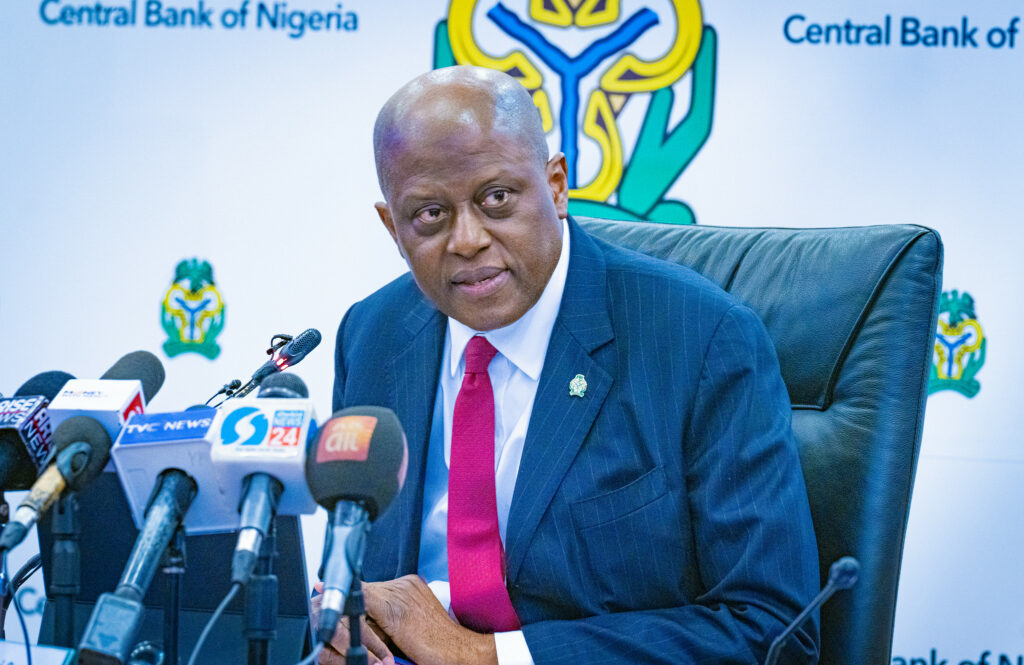
The Monetary Policy Committee of the Central Bank of Nigeria (CBN) has retained the benchmark interest rate at 23 per cent, citing inflationary risks arising from anticipated election-related spending, increased festive season expenditure and disruptions to global energy supplies.

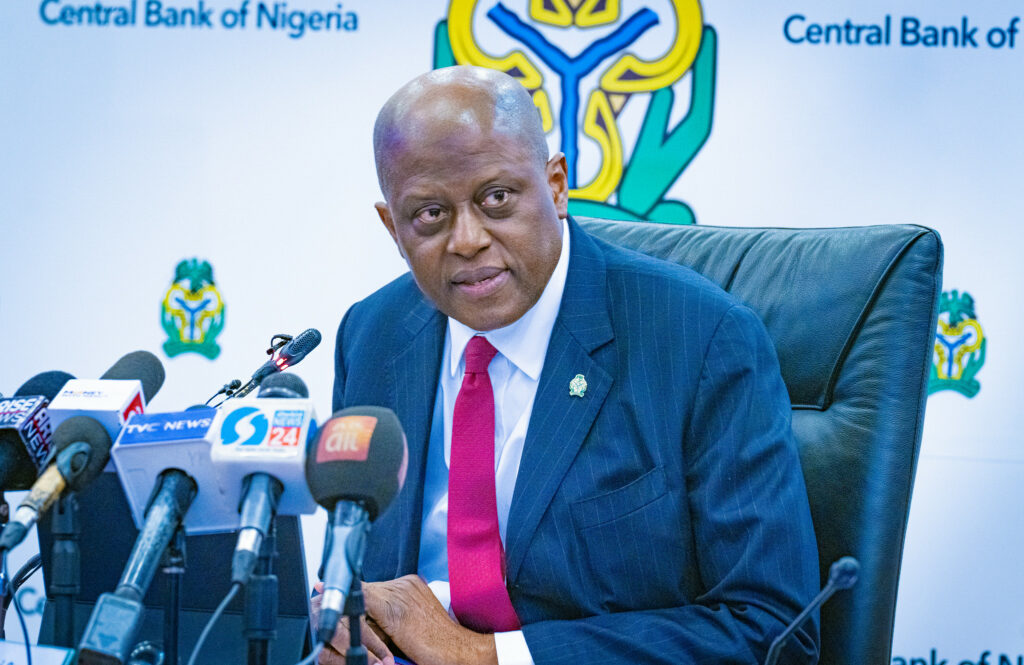
The CBN Governor, Olayemi Cardoso, announced the decision on Tuesday at the end of the committee’s 308th meeting, held on 23 and 24 November, 2026, in Abuja, with 10 members in attendance.

Cardoso said the committee retained the Monetary Policy Rate (MPR) at 23 per cent.

The committee also maintained the Standing Facilities Corridor at +50 and -300 basis points around the MPR. The Cash Reserve Requirement was retained at 45 per cent for deposit money banks, 16 per cent for merchant banks and 75 per cent for non-Treasury Single Account public sector deposits.

The decision follows the 350-basis-point reduction in the benchmark interest rate from 26.5 per cent to 23 per cent in September 2026.

Cardoso explained that although headline inflation had moderated for five consecutive months, prevailing economic risks necessitated maintaining the current monetary policy stance to consolidate the gains recorded in price stability.

He said, “The MPC observed that the anticipated increase in spending from the end-of-year festive season and election-related activities could impact aggregate demand with likely upward pressure on prices.”

The committee also expressed concern over the ongoing Middle East conflict, which could sustain pressure on energy prices, and adverse weather conditions that could undermine food supply.

Nigeria’s headline inflation declined to 14.06 per cent in October from 14.63 per cent in September, while core inflation fell to 10.78 per cent from 12.95 per cent.

See also  Shettima pushes for proactive disaster preparedness over costly relief

Food inflation also moderated to 19.13 per cent from 19.59 per cent, reflecting easing price pressures on processed food and farm produce following the commencement of the harvest season.

Cardoso attributed the sustained moderation in inflation to exchange rate stability, improved monetary policy transmission and the restrictive monetary policy stance.

He added that the Composite Purchasing Managers’ Index rose from 53 points in September to 53.2 points in October, reflecting improved activities across the industrial, agricultural and services sectors.

Responding to questions from journalists, Cardoso disclosed that the September interest rate adjustment was yielding the intended results, with interbank lending rates moving closer to the lower band of the Standing Facilities Corridor.

“What we’re finding is that the interbank rates are moving closer to the lower band of the corridor, and that’s exactly where we want to be,” he said.

The governor added that rates on Open Market Operations instruments and Treasury bills had moderated, while the gap between the benchmark interest rate and prevailing market rates had narrowed considerably.

He also disclosed that credit to the private sector was gradually recovering, adding that the apex bank would continue to monitor borrowing costs.

“We are very pleased that, really, the amount of credit going out to the private sector has gradually begun to come up,” Cardoso said.

He maintained that the September adjustment was intended to align the benchmark rate with market realities rather than signal a departure from the restrictive monetary policy stance.

On recent pressure on the naira and declining external reserves, Cardoso dismissed concerns over the sustainability of exchange rate stability, describing the developments as temporary and largely seasonal.

See also  Dangote refinery IPO attracts fourfold subscriptions, offer extended

Nigeria’s gross external reserves stood at $54.02bn as of 17 November, 2026, sufficient to cover 10.26 months of imports of goods and services.

The governor attributed the recent volatility to year-end portfolio adjustments by foreign investors, increased foreign exchange demand by domestic businesses seeking to hedge against future risks and rising election-related expenditure.

“These are all seasonal. And we believe very strongly that as we go into the next year, we will find a major moderation in the volatility that you have seen,” he said.

Cardoso also disclosed that diaspora remittances exceeded $900m in the preceding month, adding that Nigeria’s current account surplus and sustained remittance inflows would strengthen external buffers.

He assured Nigerians that the apex bank would do everything possible to preserve exchange rate stability.

Speaking on the recently signed Memorandum of Understanding between the CBN and the Nigerian National Petroleum Company Limited, Cardoso said the agreement followed months of consultations between both institutions.

He explained that the partnership would improve transparency in the management of oil-related FX inflows, deepen the FX market, strengthen external reserves and support energy project financing.

The governor added that the CBN would deploy its advisory expertise and convening power to support the national oil company’s operations.

On the outlook for 2027, Cardoso promised policy consistency, stronger coordination between fiscal and monetary authorities, sustained banking sector stability and further improvements in monetary policy transmission.

“Our goal is single-digit inflation, and we will not stop until we get there. We will continue to ensure that we do everything possible to move inflation to single digits,” he said.

See also  Abia begins relocation of transport operators to new terminal

Source: punchng.com

FOLLOW US ON:

FACEBOOK

WHATSAPP CHANNEL

TWITTER

PINTEREST

TIKTOK

YOUTUBE

LINKEDIN

INSTAGRAM

Continue Reading
Click to comment

Leave a Reply

Your email address will not be published. Required fields are marked *

Business

Tinubu cuts 2026 budget to N65.18tn, retains deficit, read details

Published

on

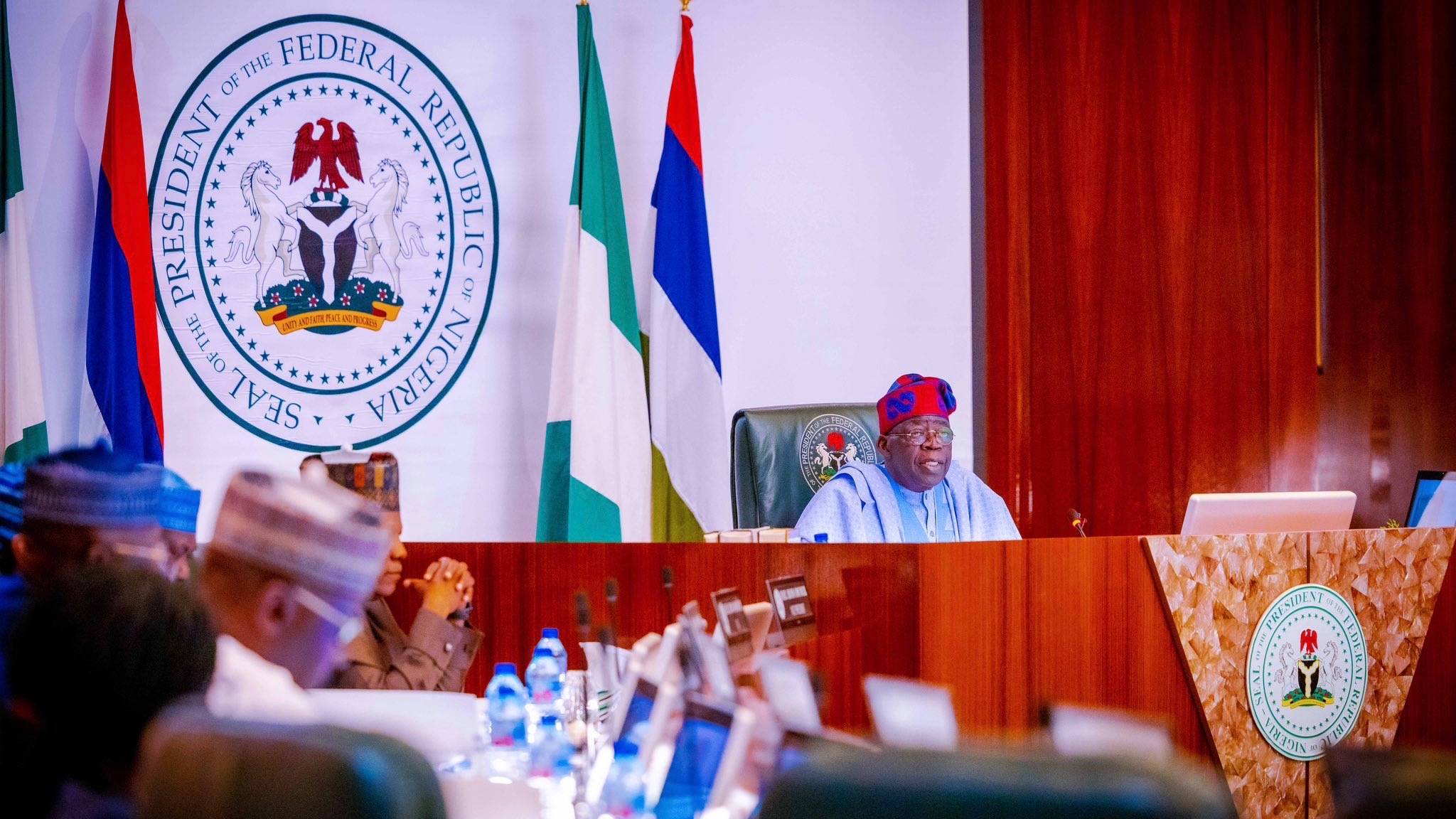
President Bola Tinubu has transmitted a bill to the House of Representatives seeking to repeal and re-enact the 2026 Appropriation Act, reducing the approved budget from N68.32tn to N65.18tn while retaining the N31.46tn fiscal deficit.

The revised budget provides for projected Federal Government revenue of N33.72tn, including earnings from Government-Owned Enterprises, and capital expenditure of N26.23tn.

Tinubu’s request was contained in a letter dated November 20, 2026, addressed to the Speaker of the House, Tajudeen Abbas, and read during plenary on Tuesday.

The President also transmitted a revised 2026 Federal Government Fiscal Framework, explaining that the adjustments were intended to align the budget with existing obligations and available resources.

According to the letter, the revision seeks to regularise some expenditures incurred by the Nigerian National Petroleum Company Limited (NNPCL) on behalf of the Federation, address underprovided debt-service obligations, recognise issued capital warrants and supplementation commitments, and provide for refunds to Ministries, Departments and Agencies (MDAs) and special accounts.

Tinubu said capital provisions for MDAs consisted mainly of amounts already warranted, while a few new capital and overhead allocations were introduced to address priority national interventions.

He identified the completion of critical road projects, protection of agricultural production, reduction of production costs, improvement of farm yields, enhanced market access and measures to address water vulnerability as key priorities.

The President said the revised fiscal framework was designed to prioritise existing commitments, improve the credibility and execution of the capital budget, and maintain fiscal restraint.

Despite the reduction in the overall budget, the fiscal deficit, including project-tied loans, remains unchanged at N31.457tn, representing 5.64 per cent of the Gross Domestic Product.

Tinubu also retained the proposed new borrowing of N29.22tn, comprising N18.43tn in domestic borrowing and N10.79tn in foreign borrowing.

See also  Audit uncovers over N61bn payment breaches in NNPCL

On the proposed external borrowing, the President said the planned $7.7bn loan, estimated at N10.37tn using an exchange rate of N1,346.50 to the dollar, was intended to finance the existing foreign borrowing provision without increasing the borrowing envelope.

The letter read: “The proposal aligns the 2026 budget with existing obligations and available resources. It regularises some NNPCL expenditures incurred on behalf of the Federation, addresses underprovided debt-service obligations, recognises issued capital warrants and supplementation commitments, and provides for refunds to Ministries, Departments and Agencies and Special Accounts.

“MDA capital provision consists mainly of amounts already warranted. A few new MDA capital and overhead provisions were included as priority national interventions, particularly to complete critical road projects, protect agricultural production, reduce production costs, improve farm yields, and enhance market access, while addressing water vulnerability.

“Under the revised framework, aggregate expenditure is N65.176tn, compared with N68.323tn in the approved budget, while projected FGN revenue, including Government-Owned Enterprises, is N33.720tn. Aggregate capital expenditure is N26.232tn.

“The fiscal deficit, including project-tied loans, remains unchanged at N31.457tn, equivalent to 5.64 per cent of GDP. These adjustments prioritise existing commitments and improve the credibility and execution of the capital budget while maintaining fiscal restraint.”

Seeking the cooperation of lawmakers for speedy passage, Tinubu said the revised appropriation was necessary to ensure orderly implementation of the budget and settlement of outstanding obligations.

“I, therefore, request the kind cooperation of the House of Representatives for expeditious consideration and passage of the Bill to facilitate orderly implementation of the revised budget and settlement of existing obligations,” he added.

See also  N100 notes still legal tender, says CBN

The bill will be subjected to legislative scrutiny before the revised appropriation can take effect. Its passage would provide the legal basis for the Federal Government to implement the adjusted spending plan and meet the obligations outlined in the revised fiscal framework.

Source: punchng.com

FOLLOW US ON:

FACEBOOK

WHATSAPP CHANNEL

TWITTER

PINTEREST

TIKTOK

YOUTUBE

LINKEDIN

INSTAGRAM

Continue Reading

Business

Dangote emerges recipient of 2026 Ọbafẹmi Awolọwọ Prize for Leadership, read details

Published

on

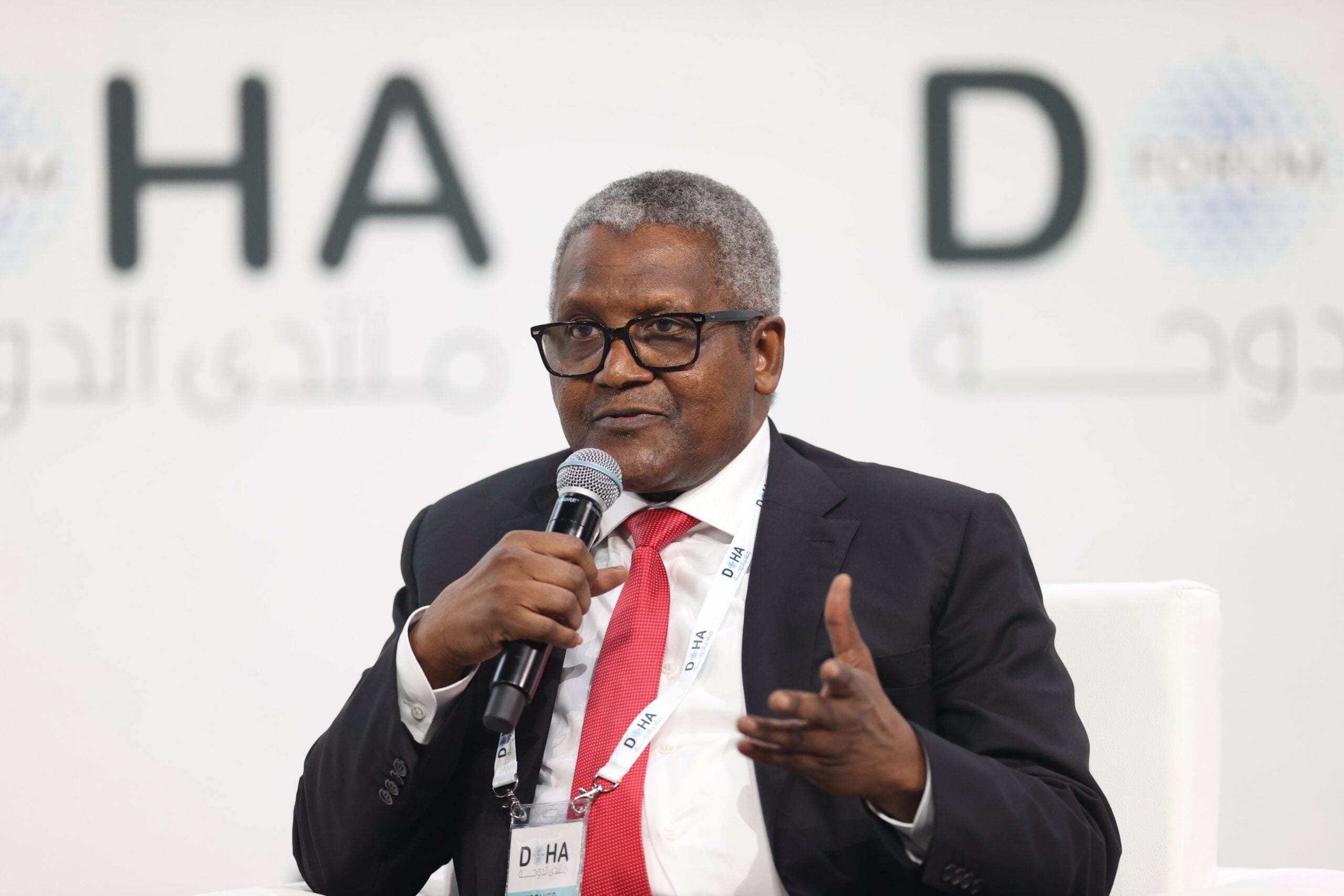
Alhaji Aliko Dangote, President of the Dangote Group, has emerged the winner of the 2026 Ọbafẹmi Awolọwọ Prize for Leadership.

The African industrialist and philanthropist was announced winner among many nominations received for the prestigious biennial global prize in celebration of the democratic and development-oriented ideals of a foremost Pan-African nationalist, Chief Obafemi Awolowo.

Unveiling the winner for the 2026 edition, the Ọbafẹmi Awolọwọ Foundation, in a statement on Monday signed by its Executive Director, Ambassador Dr Ọlatokunbọ Awolọwọ Dosumu, said a distinguished Selection Committee chaired by former Commonwealth Secretary-General, Chief Emeka Anyaoku, GCON, GCVO, CFR, “recognised Dangote’s extraordinary contributions to entrepreneurship, industrialisation and economic development in Nigeria and across Africa.

“Through decades of sustained investment in manufacturing, cement production, fertiliser, petroleum refining and other strategic sectors, he has demonstrated remarkable vision, courage, resilience and tenacity of purpose, while helping to expand Africa’s productive capacity and advance the prospects of economic self-reliance.”

The Foundation explained that the biennial prize, established in 2012, followed a special dialogue organised by the Foundation on Transformational Leadership and Good Governance: Lessons from the Awolọwọ Example, which seeks to recognise, reward and celebrate individuals whose leadership exemplifies the values and ideals for which Chief Awolọwọ was renowned.

According to the statement, the selection process involves public nominations, rigorous screening, verification and careful evaluation against established criteria, including integrity, vision, courage, discipline, accountability, people-centred leadership and demonstrable contributions to societal advancement.

Continuing, the Foundation explained that the Committee also placed considerable emphasis on Dangote’s commitment to philanthropy and human development through the Aliko Dangote Foundation, established in 1994. “Its interventions in education, healthcare and social welfare reflect a recognition that economic growth must be accompanied by meaningful improvements in people’s lives,” the statement added.

See also  Abia begins relocation of transport operators to new terminal

The statement further disclosed that the Prize will be formally presented on Saturday, March 6, 2027, the anniversary of Chief Awolọwọ’s birth, at a ceremony which will also feature the Ọbafẹmi Awolọwọ Prize for Leadership Lecture, to be delivered by the laureate, in keeping with the tradition of the Award.

FULL TEXT:

ALIKO DANGOTE EMERGES RECIPIENT OF 2026 ỌBAFẸMI AWOLỌWỌ PRIZE FOR LEADERSHIP

The Ọbafẹmi Awolọwọ Foundation has announced the recipient of the 2026 Ọbafẹmi Awolọwọ Prize for Leadership, instituted in honour of one of Africa’s foremost statesmen and advocates of visionary, people-centred governance.

Chief Ọbafẹmi Awolọwọ, first Premier of the Western Region of Nigeria, was widely acclaimed for his visionary leadership, integrity, discipline and commitment to social and economic transformation for the citizens. His pioneering programmes in education, healthcare and rural development, together with his advocacy of federalism and economic self-reliance, remain enduring landmarks in Nigeria’s developmental history.

Established in 2012, following a special dialogue organised by the Foundation on Transformational Leadership and Good Governance: Lessons from the Awolọwọ Example, the biennial Prize seeks to recognise, reward and celebrate individuals whose leadership exemplifies the values and ideals for which Chief Awolọwọ was renowned.

The selection process involves public nominations, rigorous screening, verification and careful evaluation against established criteria, including integrity, vision, courage, discipline, accountability, people-centred leadership and demonstrable contributions to societal advancement. The process is overseen by a distinguished Selection Committee chaired by former Commonwealth Secretary-General, Chief Emeka Anyaoku, GCON, GCVO, CFR.

Following the conclusion of the selection process, the Foundation is pleased to announce Alhaji Aliko Dangote, GCON, President of the Dangote Group, as the recipient of the 2026 Ọbafẹmi Awolọwọ Prize for Leadership.

See also  N100 notes still legal tender, says CBN

In arriving at its decision, the Selection Committee recognised Dangote’s extraordinary contributions to entrepreneurship, industrialisation and economic development in Nigeria and across Africa. Through decades of sustained investment in manufacturing, cement production, fertiliser, petroleum refining and other strategic sectors, he has demonstrated remarkable vision, courage, resilience and tenacity of purpose, while helping to expand Africa’s productive capacity and advance the prospects of economic self-reliance.

The Committee also placed considerable emphasis on his commitment to philanthropy and human development through the Aliko Dangote Foundation, established in 1994. Its interventions in education, healthcare and social welfare reflect a recognition that economic growth must be accompanied by meaningful improvements in people’s lives.

Of particular significance is the Foundation’s ambitious educational initiative launched in 2026, designed to support 45,000 students initially, with plans to extend its reach to 1.3 million students by 2035. The initiative places special emphasis on science, technology, engineering and mathematics (STEM), closing the literacy gender gap, teacher development and improving the transition from education to employment.

Dangote’s description of this commitment as a “strategic investment” resonates strongly with Chief Awolọwọ’s conviction that education and human-capital development are fundamental to national progress. His declaration that “Every child we keep in school strengthens our economy. Every student we support reduces inequality” is particularly significant in this regard.

The Committee considers Dangote’s combination of visionary enterprise, industrial transformation and commitment to human development a compelling demonstration of leadership whose impact extends beyond individual achievement to the wider society.

The Prize will be formally presented on Saturday, March 6, 2027, the anniversary of Chief Awolọwọ’s birth, at a ceremony which will also feature the Ọbafẹmi Awolọwọ Prize for Leadership Lecture, to be delivered by the laureate, in keeping with the tradition of the Award.

See also  NAFDAC bans sachet and small-bottle alcohol in Nigeria

Source: tribuneonlineng.com

FOLLOW US ON:

FACEBOOK

WHATSAPP CHANNEL

TWITTER

PINTEREST

TIKTOK

YOUTUBE

LINKEDIN

INSTAGRAM

Continue Reading

Business

CBN may hold interest rate over naira pressure, read details

Published

on

Financial market analysts have warned that renewed pressure on the naira, declining foreign exchange reserves and rising global interest rates could prevent the Central Bank of Nigeria from implementing further monetary policy easing, despite the continued decline in inflation.

The analysts, in separate pre-Monetary Policy Committee reports obtained by The PUNCH on Monday, projected that the apex bank would retain its Monetary Policy Rate at 23 per cent during its 308th MPC meeting scheduled for 23 and 24 November, 2026.

The PUNCH earlier reported that the approaching 2027 general elections and the Christmas season are adding pressure to the naira, with the currency depreciating to N1,394/$ at the official market on Friday and N1,460/$ at the parallel market on Sunday.

The naira lost N6 at the official market on Friday, extending its depreciation streak after weakening by N8.01 on Thursday to N1,388/$ from N1,379.99/$ recorded on Wednesday.

In its report titled ‘MPC to Hold Rates as Naira Pressure Builds’, Cordros Securities warned that additional interest rate reductions could trigger capital outflows and further weaken the domestic currency.

The investment firm said, “In our view, the naira has become the binding constraint on the MPC’s policy rate decision.”

It added, “With the parallel market premium exceeding NGN100.00/USD, gross FX reserves declining and the carry on short-dated naira instruments narrowing towards estimated breakeven levels, a further rate cut could weaken the attractiveness of naira assets and increase the risk of foreign portfolio investment outflows.”

Similarly, the Financial Markets Dealers Association, in its November 2026 pre-MPC analysis, assigned a 60 per cent probability to the committee retaining the benchmark interest rate and a 40 per cent probability to a reduction of not more than 50 basis points.

See also  Marketers reject fuel pricing curbs, threaten shutdown; read why

The association explained, “Monthly inflation rose in October, the naira is weaker, reserves are off their peak and the Fed is expected to hike in December.”

The projections followed the MPC’s September decision to reduce the benchmark rate by 350 basis points from 26.5 per cent to 23 per cent.

According to Cordros, the naira depreciated from N1,329.16 per dollar at the end of September to N1,346.26 on 31 October, before weakening further to N1,389.73 on 20 November.

This represented a 2.5 per cent depreciation since September, although the currency remained 4.7 per cent stronger than at the beginning of the year.

The firm reported that the gap between official and parallel market exchange rates widened to approximately N107 per dollar.

Foreign exchange reserves also declined from $55.26bn on 27 October to $54.65bn on 19 November, representing a reduction of $610m.

Cordros disclosed that the CBN reportedly supplied $6.66bn to the FX market since September’s MPC meeting, including $3.38bn between 1-20 November.

Despite these interventions, FX conditions deteriorated, with the Nigerian Foreign Exchange Market recording net outflows of $1.41bn in October, compared with net inflows of $1.03bn in September.

The firm also reported that foreign portfolio inflows increased by only 3.4 per cent month-on-month, while domestic foreign exchange inflows rose by 148.1 per cent to $5.11bn.

The FMDA separately observed that weekly FX inflows declined to $808m from $2.48bn, highlighting concerns about dollar availability.

Both institutions identified global monetary conditions as another constraint, particularly the narrowing interest rate differential between Nigeria and the United States.

See also  Shettima pushes for proactive disaster preparedness over costly relief

The FMDA reported that the gap between Nigeria’s benchmark interest rate and the upper limit of the US Federal Reserve’s policy rate had narrowed from 22.5 percentage points to 19 percentage points.

Meanwhile, annual headline inflation declined for the fifth consecutive month to 14.06 per cent in October from 14.63 per cent in September.

Cordros projected that annual inflation could moderate further to between 13.30 and 13.90 per cent by December.

It nevertheless cautioned that rising input costs and persistent food inflation justified maintaining the current monetary policy stance.

The FMDA acknowledged that declining inflation provided room for additional easing, noting that the real policy rate remained approximately 8.9 percentage points.

It explained, “The case for a cut is real, inflation is down from 18.97 per cent a year ago to 14.06 per cent, and the real policy rate is about 8.9 points.”

On domestic liquidity, Cordros reported that banking system liquidity averaged N5.43tn between 1 and 20 November, while banks’ deposits with the CBN’s Standing Deposit Facility averaged N5.46tn.

The firm suggested that the CBN could consider reducing the deposit facility rate rather than cutting the benchmark rate.

An Abuja-based economist, Chukwunonse Iheoma, said: “This captures the policy dilemma: the CBN may be moving towards lower interest rates to support economic activity, but renewed pressure on the naira could limit its ability to ease monetary policy without risking exchange-rate stability and inflationary pressures.”

Continue Reading

Trending