Connect with us

Politics

Court ruling on INEC timetable will trigger APC exodus – ADC

Published

on

The African Democratic Congress has said the Federal High Court ruling voiding parts of the Independent National Electoral Commission’s regulations for the 2027 elections would trigger a mass defection from the ruling All Progressives Congress.

The ADC stated this on Thursday while reacting to the court judgment on INEC’s guidelines relating to the deadline for party primaries and membership registration.

In a statement issued by the party’s National Publicity Secretary, Bolaji Abdullahi, the opposition party described the judgment as a vindication of its earlier objections to some provisions of the electoral body’s guidelines.

According to the ADC, it had raised concerns over what it described as restrictive timelines for party primaries and membership registration when the guidelines were introduced.

“The decision of the court on these issues, including those that directly contradict the Constitution, is therefore a welcome vindication of our position,” the statement read.

The party argued that the court ruling would strengthen freedom of association by removing restrictions placed on politicians seeking to contest elections on alternative political platforms.

“We believed at the time that that particular restriction was designed to prevent people from leaving the ruling party, APC.

“Now that the court has ruled against it, we are sure that, in the coming days, we will witness a mass exodus from the ruling party,” Abdullahi stated.

ADC said it welcomed the judgment and expressed optimism that the ruling would deepen democratic participation ahead of the 2027 general elections.

PUNCH Online had reported that the court on Wednesday nullified key portions of the timetable and schedule of activities released by INEC for the 2027 general elections, ruling that the electoral body exceeded its powers by shortening timelines expressly provided under the Electoral Act, 2026.

See also  PHOTOS: Benue APC delegation to rally involved in ghastly accident

Under the timetable released by INEC, political parties were directed to conduct their primaries within a compressed timeframe ahead of the presidential, National Assembly, governorship, and state assembly elections slated for February and March 2027.

The commission had also fixed deadlines for the submission of candidates’ particulars, replacement of candidates, publication of final lists, and the end of campaigns before the statutory periods provided in the Electoral Act.

However, the court held that those deadlines were inconsistent with the law.

It ruled that political parties are entitled to withdraw and replace candidates up to 90 days before an election, adding that the commission lacked the power to impose an earlier deadline.

punch.ng

FOLLOW US ON:

FACEBOOK

TWITTER

PINTEREST

TIKTOK

YOUTUBE

LINKEDIN

INSTAGRAM

Continue Reading
Click to comment

Leave a Reply

Your email address will not be published. Required fields are marked *

Politics

Bulletproof vehicles in high demand amid campaign attacks ahead of 2027 elections, read details

Published

on

Demand for bulletproof vehicles is growing in Nigeria amid mounting concerns over political violence and attacks on campaign rallies ahead of the 2027 general elections.

Findings by The PUNCH on Wednesday showed that some dealers and manufacturers of armoured vehicles were recording improved business and repeated orders from Nigerian customers, while others anticipated increased demand as election campaigns gathered momentum.

The development comes against the backdrop of growing concerns over election security following a series of attacks on political candidates, campaign convoys and party supporters across the country.

Checks by The PUNCH showed that prices of armoured vehicles ranged from $50,000 to $1.5m, depending on their specifications.

However, security experts warned that the growing reliance on personal protection by politicians could widen the security gap between political elites and ordinary Nigerians if the underlying security challenges remained unaddressed.

A representative of Schutz Carr, who described business as currently good, said demand fluctuates depending on regional, political and economic factors.

“Currently, the market has been good. Yes, there are requests. The requests do not always come. It’s slow sometimes, and sometimes it picks up. Lots of factors come into play, regional, political and economic,” he noted.

Asked whether politicians were driving the demand, the dealer declined to disclose the identities of his customers, citing confidentiality.

“We can’t disclose because of client confidentiality,” he said.

He added that the cost of armoured vehicles depended on their specifications, with prices starting from $50,000 and reaching $1.5m. “It starts from USD50,000 to USD1.5m,” he clarified.

The growing demand for armoured vehicles comes amid mounting concerns over political violence ahead of the 2027 general elections, with attacks on campaign convoys, party gatherings and political supporters reported in different parts of the country.

A report by Global Rights’ Incident Centre for Election Atrocities, covering October 2026, documented 12 incidents, including three deaths linked to attacks on political gatherings, campaign activities and candidates’ convoys.

It also recorded four attacks targeting candidates, convoys and party members.

The incidents have continued in November, with attacks reported during political activities in Lagos, Kano, Sokoto and Kebbi states. A report by Deutsche Welle on November 18 highlighted concerns about the growing use of weapons, including axes and cutlasses, at political gatherings.

The latest incident occurred on November 23, when violence erupted during a campaign event involving former Deputy Senate President, Ovie Omo-Agege, in Uduere community, Ughelli North Local Government Area of Delta State.

The police confirmed that six people were killed, while several others sustained injuries. The Inspector-General of Police, Olatunji Disu, ordered an investigation into the incident, including the deployment and conduct of officers at the venue.

A sales representative with Shell Armoured vehicles revealed that Nigeria was becoming an important market for its locally manufactured armoured vehicles, disclosing that the company had received repeated orders from the country.

“Brother, Nigeria is emerging as a good market for our made vehicles. But we do not need very high-level protection. I think the threat level there is very low,” he said.

He added that many prominent individuals were seeking secure vehicles, resulting in repeated orders from Nigerian customers.

The Head of Operations and Director of Proforce Limited, Ayobami Ogundeyin, also confirmed an improvement in the company’s sales performance this season, although he declined to disclose specific figures.

When asked to provide further details on the volume of sales and the categories of customers, locations or groups recording increased purchases of the vehicles, Ogundeyin referred our correspondent to another officer of the company.

He said, “Yes, I can confirm that business is doing better, but I cannot give figures.”

However, a representative of Dimkpa Motors said the company had yet to record a significant increase in sales, but expressed optimism that demand would rise as political campaigns gathered momentum.

“We have not started recording sales. As the campaigns go on, we should. We have the capabilities to supply what they need,” the representative said.

Meanwhile, the Chief Executive Officer of Nord Automobiles, Ajayi Oluwatobi, declined to comment on the development.

The growing interest in armoured vehicles has, however, raised concerns among security experts, who warned that the increasing reliance on personal protection by politicians could worsen insecurity if the underlying security challenges were not addressed.

A security analyst, Jackson Lekan-Ojo, criticised politicians for resorting to self-help instead of working collectively to address insecurity.

See also  Atiku-Tinubu faceoff widens over subsidy, $16bn power projects ahead of 2027

He argued that the purchase of bulletproof vehicles by wealthy individuals would do little to protect ordinary Nigerians exposed to attacks.

“Instead of the VIPs and the VVIPs putting hands together to see how they can stop the issue of insecurity, they are doing what they call self-help. What is self-help? That is why they are purchasing bulletproof vehicles,” he said.

Lekan-Ojo warned that the development could deepen insecurity and widen the protection gap between political elites and ordinary citizens.

“If 10 big men out of a 2,000 crowd protect themselves with bulletproof vehicles, what is the fate of the remaining people, the followers? Those who can afford bulletproof vests may also take to self-help, and it will bring about further catastrophic anarchy and a more troublesome situation,” he said.

He also questioned the capacity of the police to adequately secure large political gatherings, noting that inadequate intelligence and poor welfare among security personnel could undermine election security.

Citing the recent attack during a political campaign in Delta State, he argued that the deployment of police personnel alone was insufficient without effective intelligence gathering and preventive measures.

Similarly, a security expert, Chiji Omoje, described the increasing reliance on personal security arrangements by politicians as an indictment of the Nigeria Police Force, which he said was responsible for leading election security operations.

He faulted the police for failing to publicly explain how they intended to tackle the growing incidents of political violence or demonstrate sufficient proactive action to prevent attacks.

“It’s a heavy indictment on the Nigeria Police. We all know that they are the lead agency in election security, and since all this has been happening, we have not really heard or seen them come out to address Nigerians and tell us exactly how they intend to manage the situation,” he said.

Omoje said the use of bulletproof vehicles suggested that politicians were increasingly relying on personal security measures because they felt exposed to political violence.

“So if politicians are buying bulletproof vehicles, that means they are resorting to personal devices and self-help because it appears that nobody is helping them, and they are exposed to political violence,” he added.

He described the recurring attacks as a test of the leadership of the Inspector-General of Police, warning that failure to secure the 2027 elections could negatively affect his legacy.

Omoje also called on President Bola Tinubu, as Commander-in-Chief of the Armed Forces, to address Nigerians and direct security agencies to take decisive action against political violence.

“Police must sit up. They must sit up,” he stressed.

Days after violence at one of its rallies in Delta State, the Nigeria Democratic Congress has alleged that suspected political thugs attacked its members and supporters in Benin City, Edo State, injuring several people ahead of the arrival of its presidential candidate, Peter Obi.

The party’s National Publicity Secretary, Osa Director, made the allegation in a statement on Wednesday, saying the incident occurred along Airport Road as Obi arrived in the state for a town hall meeting and campaign activities.

The party alleged that the attackers opened fire, damaged campaign vehicles and buses, and injured several supporters.

The statement read, “As our presidential candidate, His Excellency Peter Obi, arrived in the state for a town hall meeting and campaign activities, suspected political thugs reportedly attacked NDC members and supporters along Airport Road.”

It added, “Reports indicate that the assailants opened fire, damaged campaign vehicles and buses, and left several people injured.”

The party described the incident as a “vicious and unprovoked attack”, alleging that it was part of a pattern of violence and intimidation against its members, candidates and structures in Edo State and other parts of the country.

It called on the Edo State Police Command, the Inspector-General of Police and other security agencies to secure the area, protect its supporters and candidates, and investigate the incident.

The NDC also urged the authorities to identify and prosecute those responsible, including their alleged sponsors, irrespective of political affiliation.

“Politics is not war. No Nigerian should be attacked, shot at, or terrorised simply for supporting a political party or exercising their democratic rights,” the statement said.

The party further demanded guarantees of safety for political actors to enable campaigns and other lawful political activities to take place without fear of violence.

See also  Kano gov meets Tinubu amid defection talks

The incident came a day after the NDC raised concerns over the withdrawal of approval for a venue it had booked for Obi’s town hall meeting in Benin City. The event centre’s management, however, denied political interference, attributing the disagreement to a booking error following a request by the party to change the event date.

The NDC vowed to resist alleged attempts to intimidate its presidential candidate, Peter Obi, out of the 2027 general election, accusing the Federal Government of sponsoring a campaign of violence and political persecution against its members.

The National Chairman of the party, Senator Moses Cleopas, stated this at the world press conference in Abuja on Wednesday, where he alleged that repeated attacks on the party’s candidates, supporters and campaign activities across the country were part of a deliberate plot to weaken the opposition ahead of the elections.

Cleopas said the party would not abandon its presidential ambition despite the alleged intimidation, insisting that neither Obi nor other party candidates would be forced out of the electoral contest.

The NDC chair questioned why the NDC and its presidential candidate had allegedly become targets of repeated attacks when several political parties were preparing for the same elections.

“Our candidates are not the only candidates vying for elective positions in this country. Specifically, Mr Peter Gregory Obi is not the only presidential candidate in the forthcoming general elections. So the question is, why is the NDC and its candidate the ones that are always attacked and assaulted?

“There can be only one assumed answer: that the government in power is afraid of our presidential candidate, Peter Obi, and all the candidates of the NDC.”

Cleopas described the rising attacks as a coordinated effort to suppress opposition voices and undermine Nigeria’s multi-party democracy.

“A situation where Obi or our candidates are assaulted in specific parts of this country cannot be condoned and cannot be tolerated. It has become clear to us that it is a coordinated, deliberate effort to silence the NDC and its candidates,” he said.

To support his argument, Cleopas listed several incidents in Enugu, Delta, Lagos, Kano and Cross River states, where he claimed party members had been attacked, injured and killed, while campaign facilities and vehicles were destroyed.

In Enugu State, he recalled an attack on a grassroots ward meeting at Ogofia, Akunana, in Nkana West Local Government Area, on September 12, 2026, which allegedly left eight party members with gunshot wounds.

He also alleged that armed thugs attacked supporters at the campaign office of the party’s governorship candidate, Christian Oha, in Enugu GRA on October 10, resulting in the death of a party member, Kunwarie Christopher.

In Delta State, the chairman narrated how the party’s governorship candidate and supporters had suffered several attacks, including an August 13 assault on the convoy of Senator Ovie Omo-Agege in Kuse, Ughelli South Local Government Area, which reportedly left six members injured.

Cleopas expressed concern that even routine political meetings had allegedly become targets of violence.

“We have not gone into election. This is not a full-blown campaign in a stadium, just a town hall meeting. Is this election a war?” he lamented.

In a related development, the House of Representatives has called on President Bola Tinubu to urgently intervene in the escalating political violence in Delta State, warning that the situation could warrant the consideration of constitutional emergency measures if it deteriorates further.

The House also urged the IG  to establish a special investigative team to probe successive attacks on political campaigns and rallies in the state, identify those responsible and prosecute perpetrators and their sponsors.

The resolutions were contained in a motion of urgent public importance sponsored by the member representing Okpe/Sapele/Uvwie Federal Constituency of Delta State, Benedict Etanabene, during plenary on Wednesday.

The motion followed a series of violent incidents involving political gatherings across the state, including the November 23 attack on the campaign activities of former Deputy President of the Senate, Senator Ovie Omo-Agege, at Uduere community in Ughelli North Local Government Area, which left six people dead and several others injured.

Moving the motion, Etanabene expressed concern that the recurring attacks had created an atmosphere of fear among political parties, candidates, supporters and residents, threatening their constitutional right to participate in democratic activities.

He recalled that on November 7, “violence erupted during a political procession along Nnebisi Road, Asaba, resulting in the death of one person and injuries to five others, figures confirmed by the police.”

See also  Brazil’s Lula clinches poll victory, Bolsonaro seeks to annul election

The lawmaker also cited an attack on a political party’s campaign team at Okpai, Ward 4, Ndokwa East Local Government Area, on November 11, which reportedly left five members injured.

He further recalled an earlier incident in September during a political mobilisation exercise in Effurun, Uvwie Local Government Area, where a participant reportedly sustained machete injuries and later died in hospital.

Etanabene said, “The latest attack at Uduere, where at least six people were reportedly killed by suspected political thugs, underscored the urgency of decisive intervention by the Federal Government and security agencies.”

He warned that the growing frequency of attacks on political activities could trigger a wider breakdown of law and order, undermine peaceful coexistence and threaten the credibility of the 2027 general elections.

“The increasing frequency of attacks on political activities, if not urgently addressed, could escalate into widespread breakdown of law and order, threaten peaceful coexistence and undermine the credibility of the democratic process ahead of the 2027 General Elections,” he continued.

The motion further expressed concern that the recurrence of violence suggested that existing security arrangements might not be doing enough to deter perpetrators and protect political actors and innocent citizens.

Among its resolutions, the House urged Tinubu, in his capacity as Commander-in-Chief of the Armed Forces, to direct relevant security agencies to take immediate measures to prevent further violence and loss of lives in Delta State.

It also called on the IG to deploy adequate personnel, including tactical and intelligence units, to identified flashpoints across the state.

In another significant resolution, the House urged the President to closely monitor the security situation in Delta State and consider invoking section 305 of the 1999 Constitution, as amended, if the situation reached the constitutionally prescribed threshold of an actual or imminent breakdown of public order and public safety.

The motion also called on the Federal Government to facilitate medical assistance and other necessary support for victims of the attacks and families of those killed.

It mandated the House Committees on Police Affairs, National Security and Intelligence, Electoral Matters, and Political Parties Matters to engage the IG and other security agencies on the incidents and report back within two weeks with recommendations for immediate and long-term solutions.

The lawmakers further asked the police boss to invite all governorship candidates in the state for a meeting to remind them of the constitutional provisions and Electoral Act governing political campaigns and electioneering activities.

CNG warns politicians

In a related development, the Coalition of Northern Groups has warned politicians against inflammatory rhetoric, threats and actions capable of turning the 2027 general elections into a battle for survival.

The group said provocative statements by influential political leaders could legitimise hostility, embolden political thugs and deepen divisions, with innocent citizens bearing the consequences.

The National Coordinator of CNG, Jamilu  Charanchi, stated this in a statement issued on Wednesday, expressing concern over the growing use of intimidation and violence in the country’s political space.

He said, “No political ambition, electoral contest or struggle for power is worth the life of a single Nigerian.”

The group urged political leaders across party lines to exercise restraint and demonstrate statesmanship, warning that political disagreements should be addressed through dialogue and lawful democratic processes rather than threats and intimidation.

It also called on political parties to take responsibility for the conduct of their candidates, members and supporters, insisting that they should not provide protection or legitimacy to individuals promoting violence.

CNG further urged security agencies to act professionally and proactively against emerging threats to electoral peace, adding that those responsible for incitement and attacks on political opponents should be investigated and prosecuted irrespective of their political affiliations.

The group also appealed to the Independent National Electoral Commission, the National Peace Committee, civil society organisations and the media to intensify efforts to prevent electoral violence.

It warned Nigerian youths against allowing themselves to be recruited as instruments of political intimidation and electoral manipulation.

“Elections must produce leaders, not widows, orphans, displaced families and grieving communities,” the statement added.

Source: punchng.com

FOLLOW US ON:

FACEBOOK

WHATSAPP CHANNEL

TWITTER

PINTEREST

TIKTOK

YOUTUBE

LINKEDIN

INSTAGRAM

Continue Reading

Politics

Governor Idris reveals why Tinubu, APC will sweep Kebbi votes in 2027, read details

Published

on

Kebbi State Governor, Dr Nasir Idris, recently spoke with Labour Correspondents on the chances of President Bola Tinubu, the All Progressives Congress (APC) as well as his chances of securing re-election in the 2027 election. He equally speaks about what President Tinubu and himself have done for the people of Kebbi in the last three years. CHRISTIAN APPOLOS, presents the excerpts:

With the 2027 general election approaching, how confident are you that the APC will retain Kebbi State, particularly given the political activities of opposition figures, including former Vice-President Atiku Abubakar, who is also working towards the next election?

By God’s grace, we are confident. An election is something you can assess based on your performance and what you have done for the people. It is not simply about belonging to the APC or any other political party.

There is no administration that has introduced as many different packages and interventions for Nigerians as the present Federal Government under President Bola Ahmed Tinubu.

Let me speak specifically about Kebbi State. I believe we have never had it so good in terms of development as we have under the present administration.

My philosophy of democracy is that governance must bring development projects to the doorsteps of the people. Kebbi State has benefited tremendously from the infrastructure development taking place under President Tinubu’s administration.

For instance, there is the ongoing Federal Government road construction of the Malando–Garin Baka–Ngaski–Wara Road in Kebbi State, a strategic road project serving communities in the Yauri and Ngaski axis and linking Kebbi State with Niger State. The road is known as the Malando–Ngaski–Wara–Auna Road. These are the kinds of development projects that people can see and appreciate.

By God’s grace, we believe that our performance, the support of the people and the developmental projects we have delivered will speak for us when the time comes.

You have expressed confidence in President Tinubu’s performance. However, some Nigerians believe that the economic policies introduced by his administration have brought more hardship than relief. How do you reconcile this perception with your optimism about his re-election prospects?

 I believe that the only permanent thing in life is change.

If we are going through difficulties today and, as a result of the decisions we are taking, our children do not have to experience the same hardship tomorrow, then we have succeeded.

But if we continue to allow things to remain the way they are, all of us, including our children, will continue to suffer.

We must be prepared to make certain sacrifices today so that future generations can enjoy a better country.

I believe in these policies because sometimes previous governments may have lacked the courage to introduce certain reforms. Whenever a new policy is introduced, people are bound to feel its immediate impact, particularly when it involves changing an existing system.

However, every policy has its long-term objectives and benefits. At the end of the day, Nigerians will appreciate the results.

That is why President Tinubu has consistently appealed to Nigerians to remain patient and bear with the present challenges. I believe that, at the end of the tunnel, Nigerians will have reasons to smile.

Your administration has consistently highlighted infrastructure development as one of its major achievements. What specific projects do you believe will convince the people of Kebbi State to renew your mandate in 2027?

When we went on our campaign tours, the people made several appeals to us concerning abandoned road projects. One of their major concerns was the poor condition of the roads and the hardship they were experiencing.

We subsequently met with Mr President and drew his attention to these challenges. In particular, we discussed abandoned road projects and the reasons behind their delays. When we engaged the contractors, they explained that inadequate funding was responsible.

I personally took up the matter with Mr President, and funding was subsequently made available to the company. Today, the contractor has returned to the site and work has resumed.

There is another Federal Government road project linking Augie to Kangiwa and Kamba in Kamba Local Government Area. That road was originally constructed during the administration of the late Alhaji Shehu Shagari in 1979, when late Alhaji Muhammadu Shehu Kangiwa was governor of the old Sokoto State.

See also  Wike’s aide slams Obi over FCT school renovation claims 

Since then, successive administrations have done very little to address its condition. However, President Tinubu’s administration has awarded the contract, and the contractors are now working day and night to ensure its completion.

There is also the Koko-Zaria-Kala-Kala road project, which the Federal Government has awarded.

Another major project is the Koko–Mahuta–Dabai–Zuru  road, which is one of the worst roads in Kebbi State. My administration is currently handling its construction on behalf of the Federal Government.

I appealed to Mr President to intervene because the contractor had been on site since February 2018 but had not constructed up to four kilometres of the road.

I requested that the contract be revoked and awarded to a reputable construction company capable of delivering the project, or that the responsibility be transferred to another competent contractor.

Following my appeal, the Federal Government permitted the Kebbi State Government to undertake the construction in line with federal government specifications.

The project is about 87 kilometres long, and we have divided the work among three construction companies: Abib Nigeria Limited, ZBCC and JNIC. They are working day and night to ensure that the road is completed.

Previously, travelling from Koko to Zuru, particularly through the difficult sections, could take about six and a half hours. Today, because of the work we are doing, the journey has been reduced to about two hours. By the time the project is completed, travelling from Koko to Zuru will take approximately one hour.

These are some of the infrastructure projects we have been able to attract and execute through our collaboration with the Federal Government. And there are many more I cannot name off hand right now but Kebbi people can confirm.

Beyond road construction, how would you assess the impact of your administration’s development agenda on the people, particularly in healthcare, education and access to essential services?

We have made significant progress in the health sector. When I assumed office, I discovered that there were challenges with the state health insurance scheme. However, we have made considerable improvements.

As I speak to you, about 300,000 people are benefiting from the Kebbi State health insurance scheme, known as KACHIMA. We are also planning to enroll an additional 50,000 people by early next year.

In terms of healthcare infrastructure, I inherited several general hospitals that had not undergone meaningful renovation for many years, with some dating back to 1978.

When I came into office, I decided that we must address the situation. I therefore embarked on the comprehensive renovation of these hospitals.

I also established three additional general hospitals to address the needs of communities that had been demanding improved access to secondary healthcare services.

Out of the 33 general hospitals in the state, we are currently working on 27. Some have been completed and equipped, while equipment for others is ready and awaiting the completion of ongoing construction and renovation work.

We intend to address the remaining hospitals after completing the current phase.

We have also made significant interventions in primary healthcare. Kebbi State has 225 primary healthcare centres, and we are working on 175 of them. We are also equipping these facilities because we understand the challenges facing the health sector, particularly at the grassroots.

In education, we have also made interventions, including the renovation and construction of classrooms, provision of furniture and improvement of the learning environment.

Even in my own primary school in Birnin Kebbi, I have renovated and constructed several classrooms, provided electricity and water, cleaned up the environment and supplied furniture.

I am not interested in making promises alone. I can point to what I have done, and the people can assess these achievements.

Agriculture remains one of Kebbi State’s strongest economic assets, particularly its rice production. What has your administration done to consolidate the state’s position as a major agricultural producer, and how do you think these interventions will influence the 2027 elections?

Our people know what we have done, particularly in the agricultural sector. Kebbi State is the largest producer of rice in the country, and we have maintained that position.

See also  Atiku-Tinubu faceoff widens over subsidy, $16bn power projects ahead of 2027

In my first year in office, we procured 10,000 solar-powered water pumps and 25,000 CNG-powered water pumps for farmers. We also purchased tractors, distributed 150 truckloads of assorted fertilisers and provided 10,000 units of herbicides free of charge to farmers.

These interventions were introduced to support agricultural production and improve the livelihoods of our farmers.

We have continued with these programmes. We do not restrict agricultural support to the rainy season alone; we also provide interventions during the dry season.

This is because we understand the importance of agriculture to our economy and the contribution Kebbi State makes to food production in Nigeria.

Our state has played an important role in efforts to reduce food prices, particularly the price of rice. We have therefore continued to support farmers through the provision of agricultural inputs, equipment and other necessary assistance.

The people know what we have done, and they have seen the interventions. By God’s grace, we will continue to deliver.

You have spoken about the Federal Government’s interventions in Kebbi State. What has your administration done to attract these projects, and how important is your relationship with President Tinubu in securing more development opportunities for the state?

 We have maintained a good working relationship with Mr President, and whenever we identify challenges that require Federal Government intervention, we bring them to his attention.

For instance, some of the roads I have mentioned were abandoned for years because of funding challenges. I personally approached Mr President and explained the difficulties our people were experiencing.

Following our discussions, the necessary interventions were made, and some of those projects have now resumed.

The Federal High Court did not have its own permanent building in Kebbi State. It was operating from a temporary facility provided by the state government.

It was through my appeal to President Tinubu that the construction of a permanent Federal High Court building in Kebbi State commenced under this administration.

These are practical examples of what political leadership should be about.

The President has also demonstrated commitment to the development of Kebbi State. The Vice-President has visited the state about three times, while the Minister of Agriculture has visited more than five times.

During the last Argungu International Fishing and Cultural Festival, I brought Mr President to Kebbi State, where he personally witnessed the developments and activities taking place.

These visits demonstrate the Federal Government’s attention to Kebbi State and its commitment to supporting our development.

The opposition is also mobilising ahead of 202, do you this that an  alliance of opposition parties is a  serious threat to your re-election and President Tinubu’s second-term ambition?

The opposition parties does not have the political strength they are claiming. Interestingly, some people who benefited immensely from the APC have now decided to leave the party. The APC gave them opportunities to occupy important positions and become what they are today. Yet, they have chosen to move to another political platform.

I want the people of Kebbi State to ask themselves whether such individuals have demonstrated sufficient commitment to the party and the people who supported them.

When the former Attorney-General left the APC, not even a single member of the party’s state executive followed him to the opposition. Not even his local government councillor followed him. Can such a person genuinely claim to have a strong political following?

When we conducted the local government elections, he could not even win his own polling unit, not to talk of his ward or local government area.

These are the issues people should consider when assessing political claims and popularity.

Those who are genuinely on the ground, who have worked for the people and contributed to their development, are known to the electorate.

You have also criticised some opposition figures for allegedly misrepresenting the situation in Kebbi State. How worried are you about misinformation and fake news as political campaigns gather momentum ahead of 2027?

Fake news is a general problem in this country. Nobody can shy away from that reality. However, I do not believe our people will simply accept fake news because they know what an administration has brought to the table. You can be a minister, even the most powerful minister in the country, but if you have not attracted any meaningful project or development to the people of Kebbi State, what exactly are you asking them to judge you on? Even if you are a minister, you should be able to use your position to attract development to your state. People should therefore look beyond political propaganda and examine what those seeking their votes have actually done for them.

See also  PHOTOS: Republican, Valentina Gomez Burns Quran Ahead Of Texas Election

I am not interested in making promises alone. I can point to the number of teachers and other workers I have helped secure employment. I can also take you to communities where we have executed projects. The people of Kebbi State know my contributions before I became governor, and they can also assess my performance in office.

 Insecurity remains a major concern across the country, particularly in the North-West. Given the security challenges confronting some communities in Kebbi State, how do you intend to convince voters that your administration has done enough to protect them?

 The truth is that Kebbi State is also experiencing its own share of insecurity. However, we have taken deliberate measures to strengthen security and protect our people.

As part of our interventions, we procured about 3,000 motorcycles and distributed them to vigilante groups and security personnel, including soldiers, to enhance their mobility and improve their ability to respond to security threats.

We did this because I am committed to ensuring that Kebbi State is secure.

There is no state in Nigeria that can claim to be 100 per cent secure. Even here in Abuja, we have witnessed security challenges.

Insecurity is a global challenge, and no country or state is completely immune to it.

However, the security of the people of Kebbi State remains a priority for my administration, and we will continue to support the security agencies and do everything possible to protect our people.

You have said that your administration’s performance will speak for you in 2027. What additional assurances can you give the electorate that a second term will deliver even greater development for Kebbi State?

By God’s grace, we will continue to deliver. Our people have seen what we have done in agriculture, infrastructure, healthcare, education and other sectors.

We have demonstrated that governance must be about improving the lives of ordinary people and bringing development to their doorsteps.

We have also demonstrated our commitment to working with the Federal Government to attract projects and interventions that will benefit the people of Kebbi State.

I believe that sustaining what we have started and completing ongoing projects are important responsibilities.

The people know what we have done, and they can compare our performance with what obtained in the past.

You have repeatedly expressed confidence in President Tinubu’s re-election. Are you therefore calling on the people of Kebbi State to support your re-election and also vote for the President in 2027?

Yes, absolutely. I am calling on them, and I will continue to do so. I was the first governor in the country to publicly endorse President Tinubu for a second term. The records are there.

We will continue to stand by President Tinubu because we believe in his leadership and the development agenda of his administration.

The people of Kebbi State have seen the interventions and developmental projects, and they know what both administrations have brought to the state.

This weekend, I will inaugurate my campaign council, while on the 17th, the presidential campaign council will be in Kebbi State. Just watch and see what will happen.

By God’s grace, we are confident that the people will support us. We believe our performance, the support of the people and the developmental projects we have delivered will translate into victory in 2027.

I am confident that President Tinubu and I will not just receive the support of the people of Kebbi State when the time comes, but we will sweep Kebbi voters’ votes and win by landslide. Kebbi workers and people in general will massively vote for President Tinubu and I, and all other candidates under APC banner.

Source: tribuneonlineng.com

FOLLOW US ON:

FACEBOOK

WHATSAPP CHANNEL

TWITTER

PINTEREST

TIKTOK

YOUTUBE

LINKEDIN

INSTAGRAM

Continue Reading

Politics

Omo-Agege kicks as court voids senatorial ticket, read details

Published

on

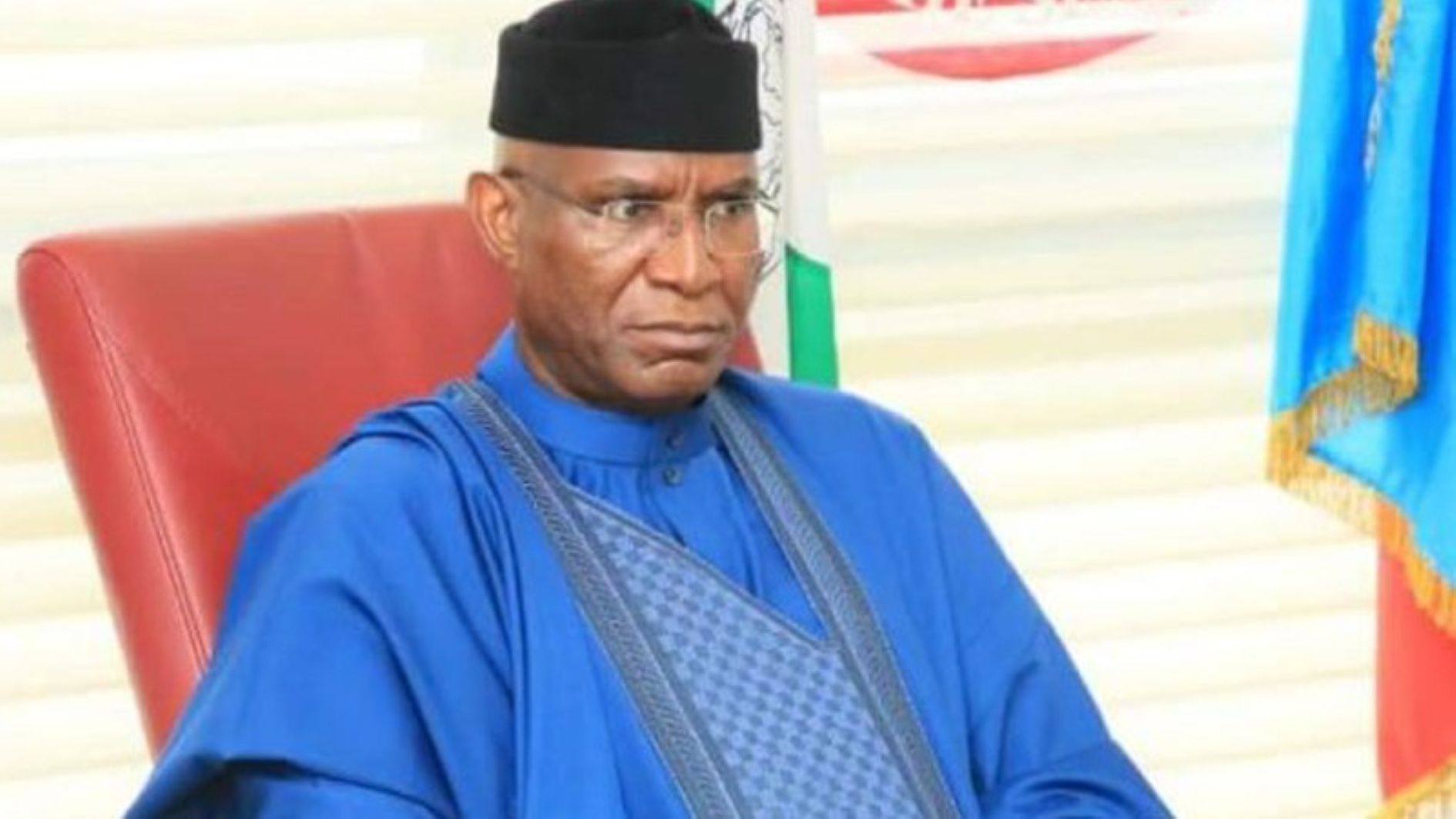
Former Deputy President of the Senate, Senator Ovie Omo-Agege, has rejected a Federal High Court judgment nullifying his nomination as the Nigeria Democratic Congress candidate for Delta Central Senatorial District in the 2027 general elections, describing the ruling as inconsistent with documentary evidence and applicable law.

Omo-Agege, in a statement on Tuesday signed by his Media Adviser, Sunday Areh, said he had directed his legal team to immediately appeal the judgment delivered by the Federal High Court sitting in Warri, Delta State.

“While we respect the court, we strongly disagree with its decision. We believe that some of the findings do not reflect the documentary evidence presented before the court. Senator Omo-Agege has therefore directed his legal team to immediately challenge the judgment at the Court of Appeal,” the statement said.

The court had on Tuesday nullified Omo-Agege’s nomination, citing non-compliance with the provisions of the Electoral Act.

The judgment followed a suit marked FHC/WR/CS/120/2026, instituted by Prof. Alexander Osondu Akpodiete, challenging the validity of Omo-Agege’s nomination on grounds bordering on his resignation from the All Progressives Congress, membership of the NDC and eligibility to participate in the party’s senatorial primary.

Delivering the judgment, Justice Hyeladzira Ajiya Nganjiwa ordered the Independent National Electoral Commission to remove forthwith Omo-Agege’s name from its list of candidates for the election and restrained the former Deputy President of the Senate from parading himself as the NDC senatorial candidate.

Justice Nganjiwa dismissed all five preliminary objections raised by Omo-Agege, the NDC and INEC challenging the competence of the suit before proceeding to determine the substantive issues raised by the plaintiff.

The court held that the NDC failed to comply with the Electoral Act’s mandatory provisions on submitting its membership register to INEC before its primary election.

See also  Brazil’s Lula clinches poll victory, Bolsonaro seeks to annul election

It also found that Omo-Agege’s name was not contained in the NDC membership register submitted to INEC at least 21 days before the conduct of the party’s primary election.

In addition, the court held that the NDC failed to provide credible evidence establishing that its membership register was subsequently updated and submitted to INEC within the statutory period preceding the primary.

However, Omo-Agege faulted the court’s finding that his name was missing from the register, insisting that both the NDC and INEC presented documents showing that he was included in the membership register submitted by the party.

“Both the NDC and INEC produced documents showing that Senator Omo-Agege’s name was in the membership register submitted by the party.

“There was only one register. The NDC did not submit two different registers or maintain competing membership records for the same primary election. Senator Omo-Agege’s name appeared in the register submitted to INEC,” the statement said.

It further claimed that INEC acknowledged receipt of the register and issued Certified True Copies of the document to several persons, with Omo-Agege’s name appearing on it.

The statement said the legal team would ask the Court of Appeal to examine the basis for the trial court’s finding that his name was missing from the register despite the documents presented by the party and the electoral commission.

Omo-Agege also questioned the legal standing of Akpodiete to institute the suit, arguing that the plaintiff did not obtain nomination forms, was not cleared by the party to contest, and was not listed among the participants in INEC’s official monitoring report on the primary election.

See also  PHOTOS: Benue APC delegation to rally involved in ghastly accident

“The evidence before the court was that Prof. Akpodiete did not obtain the Nomination Forms required to participate in the party’s primaries. He was also not cleared by the party to contest, and his name did not appear among the participants listed in INEC’s official monitoring report on the primaries exercise,” the statement said.

It added that the plaintiff did not ask the court to declare him winner of the primary or award him the party’s ticket, but instead sought to invalidate Omo-Agege’s nomination.

The former Deputy Senate President also alleged that there had been attempts before the judgment to persuade INEC to remove his name from its final list of candidates, but said the commission declined after confirming that his name appeared in the membership register submitted by the NDC.

Describing the documents as official records, the statement maintained that they should be examined in their proper context during the appeal.

Omo-Agege said his decision to challenge the judgment should not be interpreted as disrespect for the judiciary, insisting that seeking appellate review was part of the judicial process.

“Those already celebrating this decision as the end of Senator Omo-Agege’s political journey should exercise patience. This is a judgment of the trial court, and the opportunity for appellate review remains. The legal process has not run its course,” the statement said.

The former lawmaker also reaffirmed his commitment to the NDC and the people of Delta Central, saying he would defend his political rights through lawful means.

Meanwhile, Justice Nganjiwa, relying on INEC’s revised electoral timetable, noted that Omo-Agege participated in the APC senatorial primary held on May 18, 2026, a development which, according to the court, established that he was still a member of the APC at the material time.

See also  2027 showdown: Wike-Makinde rift threatens high-stakes PDP convention

The judge maintained that only persons whose names appeared in a political party’s membership register, in accordance with the requirements of the Electoral Act, were eligible to participate in its primary elections.

On the admissibility of a previously withdrawn affidavit, the court held that a party was entitled to withdraw an affidavit already filed in a proceeding, adding that once withdrawn, such an affidavit ceased to form part of the court’s records and could not be relied upon in determining the matter.

Justice Nganjiwa further held that a valid nomination could not be founded on a process that failed to satisfy statutory requirements, stressing that where a political party failed to comply with the Electoral Act in nominating its candidate, INEC was not permitted to include such a candidate on the ballot.

To further highlight the setback for the NDC, the court held that the statutory window for conducting fresh primaries to nominate another candidate had elapsed, as the Electoral Act prescribed a timeline of 180 days before the general elections.

Consequently, the court invalidated Omo-Agege’s nomination, directed INEC to delist him and restrained him from presenting himself as the NDC candidate for Delta Central Senatorial District in the forthcoming general elections.

The certified copy of the court’s judgment was not available as of the time of filing this report.

Source: punchng.com

FOLLOW US ON:

FACEBOOK

WHATSAPP CHANNEL

TWITTER

PINTEREST

TIKTOK

YOUTUBE

LINKEDIN

INSTAGRAM

Continue Reading

Trending