Connect with us

News

INEC strengthens safeguards against AI-driven electoral misinformation, read details

Published

on

A mid mounting fears that artificial intelligence and local-language falsehoods could sway voters in 2027, the Independent National Electoral Commission (INEC) has rolled out automated verification tools and a multi-agency fact-checking alliance to safeguard Nigeria’s next general elections.

The INEC Chairman, Prof. Joash Ojo Amupitan, disclosed this on Wednesday in Abuja at a two-day International Multi-Stakeholder Forum on Disinformation in Electoral Contexts in West Africa.

The forum, organised by the Fundación para la Internacionalización de las Administraciones Públicas in collaboration with FactCheckAfrica under the European Union Support to ECOWAS in Peace, Security and Governance Project, brought together journalists, fact-checkers, civil society organisations, electoral stakeholders and technology experts from Nigeria, The Gambia and Benin.

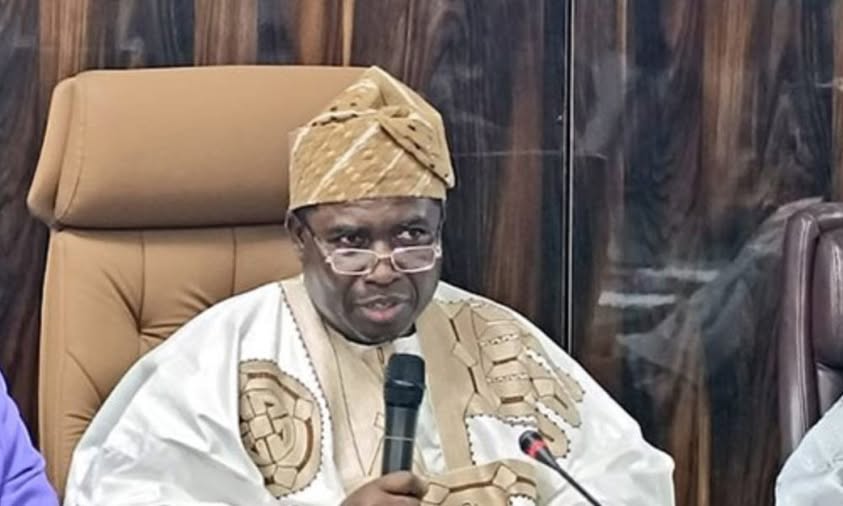
Represented by his Chief Press Secretary, Dayo Oketola, the INEC chairman said the commission had put verification mechanisms in place to ensure that misinformation did not compromise the legitimacy and credibility of elections.

“The commission is working with the National Orientation Agency, civil society organisations, and fact-checking groups to strengthen electoral information management and public confidence amid growing threats from misleading narratives and digitally manipulated content,” he said.

Earlier in his speech, the founder of FactCheckAfrica, Abideen Olasupo, described the exploitation of indigenous languages to manipulate public understanding as “hyper-local manipulation,” warning that disinformation actors increasingly target communities underserved by conventional fact-checking interventions.

“Strengthening local-language information integrity and improving citizens’ access to credible electoral information are critical to tackling the threat,” he said.

He said the forum was convened to examine emerging threats posed by artificial intelligence-generated content, cross-border disinformation, manipulated broadcasts and false narratives spread through indigenous languages ahead of major elections in the region.

See also  Trump orders US withdrawal from 66 international organisations

Diplomatic representatives at the forum called for stronger regional collaboration to address electoral misinformation, which they said transcended national borders and required coordinated responses.

The Head of Cooperation at the European Union Delegation to Nigeria and ECOWAS, Massimo De Luca, said the effects of electoral misinformation could extend to Nigerians in the diaspora, who might also be influenced by misleading narratives about electoral processes and outcomes.

He stressed the responsibility of governments and media organisations to work towards curbing the spread of misinformation.

The Spanish Ambassador to Nigeria, Félix Costales, underscored the importance of fact-checking in protecting electoral integrity but cautioned against measures that could undermine media freedom and legitimate public discourse.

“The fight against misinformation should not be a weapon against legitimate debates,” Costales said.

The Deputy Head of Mission at the Danish Embassy, Julie Rosenkilde Hannibal, reaffirmed Denmark’s support for regional initiatives promoting peace, security and good governance, saying challenges across West Africa required locally driven solutions.


Delivering a keynote address, the Director of the International Media and Information Literacy Institute, Dr Sharon Omotoso, called for stronger media and information literacy systems to complement fact-checking efforts.

She said misinformation could have particularly damaging consequences for women, who were sometimes targeted with coordinated gendered disinformation aimed at undermining their credibility and discouraging political participation.

Omotoso also warned against the politicisation of fact-checking, urging media organisations to maintain editorial independence and exercise caution in verifying names and identifying details to avoid reputational harm.

The forum also witnessed the launch of Elect Peace, a digital platform developed by Dataphyte Foundation to connect civil society organisations, fact-checkers, training resources and open-source verification toolkits across West Africa.

See also  INEC begins nationwide voter registration August 18

The platform is expected to strengthen collaboration and improve access to resources for organisations working to counter electoral misinformation.

Participants from Nigeria, The Gambia and Benin shared experiences from interventions implemented in their countries, examining the roles of fact-checking, artificial intelligence, media literacy and community engagement in responding to disinformation.

Discussions also focused on AI-generated and synthetic media, verification of false information in local languages, technology platform accountability, and the safety of journalists, fact-checkers, women and other civic actors during elections.

Working groups subsequently developed recommendations for a Regional Action Plan on Electoral Disinformation, covering civil society and fact-checking networks, media standards, electoral management bodies, regulators, technology platforms, academia and international partners.

The proposed action plan is expected to guide regional cooperation and improve responses to cross-border disinformation as countries prepare for upcoming elections, including Nigeria’s 2027 general polls.

Source: punchng.com

FOLLOW US ON:

FACEBOOK

WHATSAPP CHANNEL

TWITTER

PINTEREST

TIKTOK

YOUTUBE

LINKEDIN

INSTAGRAM

Continue Reading
Click to comment

Leave a Reply

Your email address will not be published. Required fields are marked *

News

PTAD reveals FG clears pension backlog accumulated since 2013, read details

Published

on

The Executive Secretary of the Pension Transitional Arrangement Directorate, Tolulope Odunaiya, has disclosed that the Federal Government has cleared all outstanding unfunded pension liabilities inherited by the directorate since it began administering the Defined Benefit Scheme in 2013.

Odunaiya revealed this on Thursday in Lagos at the directorate’s stakeholders’ engagement forum, adding that the lowest-paid pensioner under the DBS now receives N58,000 monthly, up from N6,024 in 2024.

According to her, the increase in the minimum monthly payout followed the implementation of various pension increments and the harmonisation policy aimed at improving pensioners’ welfare.

She added that the development had raised PTAD’s monthly pension disbursement from about N8bn to over N13bn.

“When I assumed office in 2024, our lowest-earning pensioner was N6,024. For now, that particular pensioner is earning N58,000. So, I just like to deeply appreciate the President for his commitment, his compassion to the pensioners of Nigeria, whether DBS, whether CPS, but particularly our DBS pensioners,” she said.

Speaking further on the cleared backlog, Odunaiya stated that the unfunded liability budget line would drop to zero in the 2027 fiscal year.

“Going into the 2027 budget, that line, unfunded liability, is zero. The Federal Government will no longer need to provide funds to settle unfunded liabilities under the DBS pension scheme because this government has cleared them,” she added.

The PTAD boss also announced that the directorate, in collaboration with the National Health Insurance Authority, would provide nationwide healthcare coverage for DBS pensioners, noting that PTAD would prioritise the commencement of the scheme in 2027.

See also  Defying court order may invalidate your election, INEC chair warns ADC

Explaining the harmonisation policy, Odunaiya said the framework aligned pensioners’ entitlements with the salary structure applicable at the 2007 DBS cut-off date, replacing the previous arrangement that based payouts on the salary structure at the time of retirement and created disparities among retirees.

“This means that whether a pensioner retired in 1999 or 2000, the pension is now calculated using the salary structure applicable at the 2007 cut-off date,” she explained, adding that all arrears arising from the harmonisation policy and other increments had been fully paid to eligible pensioners.

On digital reforms, Odunaiya said PTAD had upgraded its verification process and the Aliveness Confirmation Portal to enable retirees to complete their annual verification remotely from their homes using electronic devices, eliminating the need to visit PTAD offices.

She commended the Federal Government, particularly the Ministry of Finance and the Office of the Accountant-General of the Federation, for ensuring timely monthly pension releases, while reaffirming PTAD’s commitment to sustaining regular payments and improved service delivery.

In his remarks, the Chief Commissioner of the Public Complaints Commission, Bashir Abubakar, who was represented by the Deputy Director of Investigation, Mrs Amusat Medinat, said PTAD had significantly reduced pension-related complaints through prompt grievance resolution.

Abubakar noted that about 80 per cent of cases referred to PTAD by the commission had been fully resolved, attributing the remaining 20 per cent largely to complainants failing to provide required documentation or comply with directives.

He added that the commission had assigned a dedicated desk officer to liaise with PTAD’s Lagos office to ensure speedy case resolution.

See also  Police lock down Osun, DIG, 30 CPs deployed ahead of Gov election

Similarly, the Director-General of the National Pension Commission, Omolola Oloworaran, represented by the Deputy to the Zonal Head, South-West, Sarah Joseph, lauded PTAD’s digital transformation initiatives, improved service accessibility and the introduction of the health insurance scheme.

Oloworaran emphasised that both agencies held complementary responsibilities in Nigeria’s pension administration system, making sustained collaboration and innovation vital to guaranteeing dignified retirement for senior citizens.

The National President of the Nigeria Union of Pensioners, Godwin Abumisi, represented by the immediate past president of the union, Kayode Ogunbiyi, commended PTAD for clearing pension increase arrears and introducing the health scheme.

He, however, urged the directorate to ensure the increments are permanently factored into monthly payouts and called for close monitoring to guarantee that all presidential security palliatives reach intended beneficiaries.

During the forum, retirees were guided through the pensioners’ profile page, while PTAD officials demonstrated the Aliveness Confirmation Platform, the integrated automation system and the online complaints registration portal.

Meanwhile, in a separate interview with The PUNCH, the Chairman of the Nigerian Union of Pensioners, Lagos NIPOST Chapter, Adeoye Raphael, confirmed that pensioners had witnessed significant improvements in payment regularity and welfare support in recent years.

Recalling past delays where retirees waited days after month-end for their stipends, Raphael noted that recent leadership at PTAD had streamlined disbursements.

“In fact, pensioners nationwide haven’t had it so good,” he said, adding that successive administrations over the past dozen years had demonstrated a friendlier disposition toward retirees.

Addressing the planned N32,000 across-the-board pension increment and a proposed health insurance arrangement involving Total Health Trust, he described the flat-rate addition as a major boost for low-income retirees, noting that a pensioner earning N16,500 would experience a substantial jump once implemented.

See also  FG declares holidays, deploys security amid terror alert ahead of Eid-el-Kabir celebration

“That’s a giant leap,” he stated, while urging fellow retirees to exercise patience as occasional technical glitches or bank delays could temporarily slow payments even after funds had been released.

Source: punchng.com

FOLLOW US ON:

FACEBOOK

WHATSAPP CHANNEL

TWITTER

PINTEREST

TIKTOK

YOUTUBE

LINKEDIN

INSTAGRAM

Continue Reading

News

NCC reveals fake emergency calls hit 57m in 2025, read details

Published

on

Nigerians made 57.97 million hoax, nuisance and non-emergency calls to the country’s Emergency Communications Centres in 2025, accounting for 99.99 per cent of all calls received during the year, according to the Nigerian Communications Commission (NCC).

The commission disclosed that only 8,045 of the 57.98 million calls received nationwide were verified as genuine emergencies requiring intervention, raising concerns over the persistent abuse of the country’s emergency communication infrastructure.

The figures were contained in the NCC’s 2025 Annual Report and Accounts, obtained by The PUNCH on Thursday.

The report read, “Analysis of call traffic during the year shows that the Emergency Communication Centres received a total of 57,982,408 calls.

“Of these, 8,045, representing 0.01 per cent, were verified as genuine emergency calls requiring intervention, while 57,974,363, representing 99.99 per cent, were classified as hoax, nuisance or non-emergency calls.”

An analysis by The PUNCH showed that the centres received an average of 158,834 hoax and non-emergency calls daily, compared with approximately 22 genuine emergency calls.

This translates to about 6,618 non-emergency calls every hour and approximately 7,206 hoax and non-emergency calls for every genuine emergency reported during the year.

The NCC expressed concern that the widespread misuse of emergency lines could undermine the efficiency of response agencies and divert resources from Nigerians requiring urgent assistance.

“The exceptionally high incidence of hoax calls highlights the persistent misuse of emergency communication channels and poses a significant challenge to the efficient delivery of emergency services,” the commission said.

A breakdown of verified emergency calls showed that January recorded the highest number, with 1,064 calls, representing 13.2 per cent of genuine cases recorded during the year.

See also  INEC begins nationwide voter registration August 18

The figure declined to 739 in February and 669 in March, before falling further to 633 in April.

Emergency calls increased to 639 in May and 659 in June before declining to 598 in July. The centres subsequently recorded 644 calls in August, 617 in September, 657 in October and 572 in November.

December recorded the lowest number of genuine emergency calls at 554, representing a 47.9 per cent decline from January.

On geographical distribution, Katsina recorded the highest number of emergency calls, with 1,781 cases, accounting for 22.1 per cent of genuine calls nationwide.

The Federal Capital Territory followed with 992 cases, while Osun recorded 400, Jigawa 395, Akwa Ibom 357 and Edo 325.

Other centres with relatively high emergency call volumes included Zamfara with 282 cases, Nasarawa with 276, Imo with 275, Kaduna with 267 and Enugu with 254.

In contrast, Bayelsa recorded no genuine emergency calls, while Niger recorded two, Ekiti three and Sokoto 12.

The commission added, “The nature of emergency calls included armed robberies, kidnappings, accidents, fire incidents, missing persons, communal clashes and health emergencies, among others.”

Further analysis of the distribution of live cases among response agencies showed that the Federal Road Safety Corps received the largest share at 38 per cent.

The police and fire services accounted for 21 per cent each, while ambulance services received 10 per cent. The Nigeria Security and Civil Defence Corps and the National Emergency Management Agency accounted for six and four per cent, respectively.

To address the abuse of emergency lines, the NCC advocated stronger call-screening mechanisms, intensified public awareness and deterrence campaigns, alongside improved deployment of operational resources.

See also  Four in 10 cancer cases preventable, says WHO

The commission also disclosed that it participated in NEMA’s National Mass Fatality Response Plan programme to strengthen Nigeria’s preparedness for emergencies involving multiple fatalities.

Source: punchng.com

FOLLOW US ON:

FACEBOOK

WHATSAPP CHANNEL

TWITTER

PINTEREST

TIKTOK

YOUTUBE

LINKEDIN

INSTAGRAM

Continue Reading

News

INEC, NSA read riot act to violence sponsors ahead of 2027 elections, read details

Published

on

The Independent National Electoral Commission (INEC) and the Office of the National Security Adviser have pledged to strengthen security coordination and ensure the arrest and prosecution of sponsors of political violence ahead of the 2027 general elections.

INEC Chairman, Prof. Joash Amupitan, and the National Security Adviser, Mallam Nuhu Ribadu, gave the assurance on Thursday at the INEC-ONSA Strategic Election Security Conference in Abuja, amid growing concerns over attacks on political campaign convoys, party offices, supporters and electoral officials.

Amupitan, who condemned the increasing violence across several states, warned that political intolerance and attacks on electoral personnel posed a serious threat to the credibility of the forthcoming elections.

He called on security agencies to move beyond reactive policing and adopt proactive intelligence-sharing and coordinated operations to prevent violence before, during, and after the elections.

The INEC chairman said, “No political ambition is worth the blood of a single Nigerian, and no party or political actor has the right to turn public spaces into theatres of thuggery or declare any territory a no-go area for lawful political engagement.”

He disclosed that attacks on campaign activities had been reported in Lagos, Edo, Ekiti, Enugu, Ebonyi, Delta, Cross River, Oyo and Benue states since the commencement of open campaigns in August.

Amupitan also expressed concern over what he described as the growing pattern of harassment, intimidation and physical attacks against INEC leadership, staff and ad hoc personnel by supporters and agents of political parties.

He warned that attacks on electoral officials were attempts to intimidate the electoral umpire and undermine the democratic process.

“INEC officials are non-partisan public servants discharging a sacred constitutional mandate. When party supporters attack our personnel or seek to intimidate our leadership, they are not merely assaulting individuals; they are attempting to coerce an independent constitutional referee and subvert the democratic order.

See also  FG declares holidays, deploys security amid terror alert ahead of Eid-el-Kabir celebration

“We will neither be intimidated nor blackmailed into compromising our neutrality, and every attack on INEC personnel, facilities or materials will be met with the full weight of the law,” he said.

The INEC chairman also warned political party leaders against distancing themselves from violence perpetrated by their supporters, insisting that accountability should extend beyond the foot soldiers to those financing and encouraging political thuggery.

“Party leadership bears moral and political responsibility for the conduct of its candidates, campaign councils and youth wings. Signing peace accords in Abuja while tolerating or financing thuggery in the states is a contradiction our democracy can no longer afford,” he added.

Amupitan said the commission was prepared to work with security agencies to ensure that perpetrators of electoral offences were prosecuted under the Electoral Act 2026.

He specifically urged police commissioners and heads of investigative agencies to ensure that suspects, forensic exhibits, video evidence and witness statements were properly documented and promptly transmitted to INEC for prosecution.

According to him, Section 148 of the Electoral Act 2026 empowers INEC legal officers and appointed counsel to prosecute electoral offenders directly in court after receiving investigative case files from the police and other security agencies.

He said the Act had also strengthened penalties for electoral offences, including fines of up to N5m or 12 months’ imprisonment for individuals and N10m for political parties for initial breaches.

Amupitan warned that failure to contain political violence could discourage voters from participating in the elections, expose electoral personnel to attacks and undermine the country’s democratic stability.

See also  Disu: Egbetokun, I never dreamed of becoming IG

He disclosed that INEC would deploy more than 1.41 million ad hoc personnel to conduct the elections across 177,299 polling units, warning that the safety of the personnel, many of whom are National Youth Service Corps members, must be guaranteed.

He also cautioned that election-related violence in Nigeria could have serious consequences for the West African sub-region, particularly at a time when several countries were grappling with democratic instability and insecurity.

The INEC chairman said the commission and security agencies must strengthen the Inter-Agency Consultative Committee on Election Security, which is co-chaired by INEC and the Office of the NSA, to ensure effective coordination from the national level down to polling units.

He urged Resident Electoral Commissioners and Commissioners of Police to work together to conduct threat assessments, identify flashpoints and develop coordinated deployment plans across the 36 states and the Federal Capital Territory.

In his remarks, Ribadu assured Nigerians that the Federal Government was committed to providing the security required for peaceful, transparent and credible elections.

The NSA said the administration of President Bola Tinubu, whom he described as a democrat, was determined to protect voters, politicians and electoral officials before, during and after the elections.

“The administration of President Bola Ahmed Tinubu, a democrat, is committed to providing the security necessary for peaceful, transparent and credible elections.

“The duty of government and the security agencies is to protect voters, electoral officials and the wider population before, during and after the election,” Ribadu said.

He assured INEC of the security agencies’ support, stressing that the constitutional independence of the electoral commission must be respected.

See also  Police lock down Osun, DIG, 30 CPs deployed ahead of Gov election

“I think constitutional independence must be protected and respected, especially now that we have a professor of law heading INEC.

“Security agencies will discharge their responsibilities impartially and in accordance with the law,” he added.

Ribadu, however, expressed concern over the growing influence of social media and artificial intelligence in spreading misinformation capable of triggering political violence.

He said, “Social media is a big problem. It creates false narratives and misinformation, causing problems among people.

“One individual, sitting somewhere in a village, could say something that triggers trouble. Often, these are lies. This is the modern form of misinformation that people come to believe.”

The NSA said security agencies would adopt proactive measures, strengthen early-warning mechanisms and assess emerging threats daily to prevent violence.

He added that security protection would be provided to Nigerians irrespective of their political affiliations.

Ribadu urged political actors to exercise restraint, respect opposing views and refrain from actions capable of undermining the electoral process.

He also appealed to the media to remain fair and objective in their coverage of political activities, describing journalists as critical stakeholders in the conduct of credible elections.

Meanwhile, the Inspector-General of Police, Tunji Disu, reaffirmed the commitment of the Nigeria Police Force to professionalism, impartiality and effective collaboration with other security agencies.

Disu said intelligence-sharing, coordinated deployment, early identification of threats and timely responses were essential to preventing election-related violence.

He urged participants at the conference to develop practical strategies for addressing security challenges before, during and after the elections.

Source: punchng.com

FOLLOW US ON:

FACEBOOK

WHATSAPP CHANNEL

TWITTER

PINTEREST

TIKTOK

YOUTUBE

LINKEDIN

INSTAGRAM

Continue Reading

Trending