Connect with us

Lifestyle

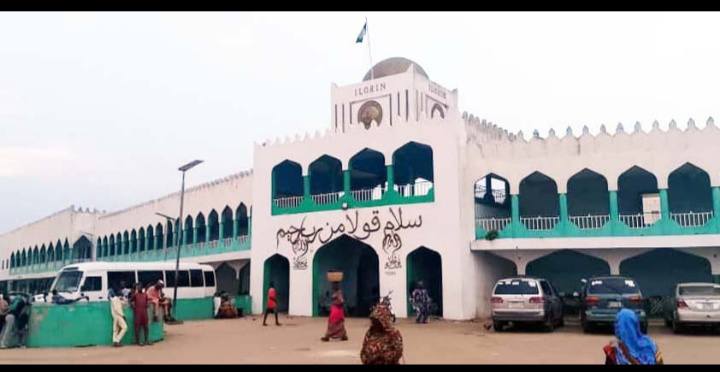
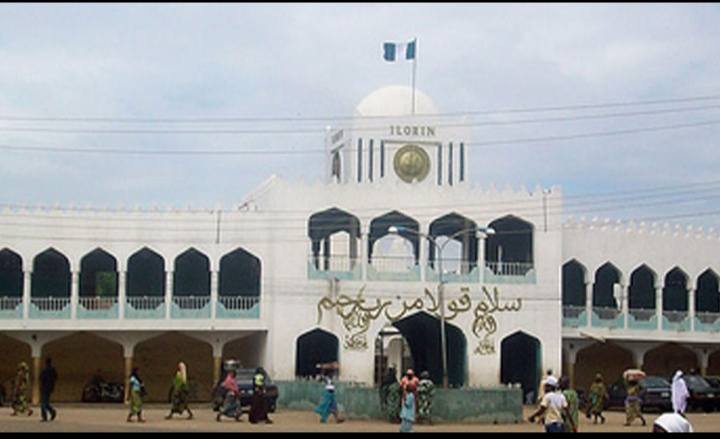
PHOTOS: WHO TRULY OWNS ILORIN – YORUBA OR FULANI?

Published

on

Ilorin… a city of mystery, history, and endless debate.

When you walk through its streets today, you hear Yoruba language, see Yoruba dressing, and feel Yoruba culture everywhere. But when you look at the palace, you bow to a Fulani Emir, not a Yoruba king.

So the question that has divided historians, politicians, and ordinary people for two centuries remains:

Who is the true owner of Ilorin – the Yorubas or the Fulanis?

Let’s break it down:

The Ancient Yoruba Roots

Before the names Afonja and Shehu Alimi ever entered the story, Ilorin was already a Yoruba settlement.
It was originally part of the powerful Oyo Empire. Hunters, farmers, and blacksmiths settled there, using a grinding stone to sharpen their tools. That stone gave the town its name: “Ìlórin” – literally meaning the place of sharpening.

Ilorin was not an isolated village. It was a frontier outpost of the Oyo Empire, positioned to guard against northern invaders. The early inhabitants were Yorubas—people tied to Oyo’s traditions, religion, and political system.

So from the very beginning, the roots of Ilorin were Yoruba. Its name, its land, its people.

The Rise of Afonja and the Turning Point

The real drama began in the early 1800s with Afonja, the legendary Are-Ona-Kakanfo (the generalissimo of Oyo).

Afonja was stationed in Ilorin, but conflict broke out between him and the Alaafin of Oyo. Hungry for independence, he rebelled against the king. To strengthen himself, Afonja invited Shehu Alimi, a Fulani Islamic scholar, to Ilorin.

At first, this alliance looked clever. Alimi’s followers were brave, united, and inspired by the great Sokoto Jihad of Usman dan Fodio. They provided Afonja with spiritual legitimacy and military strength.

See also  “I slept with two dead bodies” – Doris Ogala makes shocking confession in church, reveals near-death experience

But what Afonja didn’t realize was that he had opened the gates of Ilorin to a new power.

The partnership broke down. Afonja was eventually betrayed and killed—many say through Alimi’s influence. With Afonja gone, the Yoruba grip on Ilorin collapsed.

This was the turning point.

The Fulani Takeover and the Birth of the Emirate

After Afonja’s fall, Shehu Alimi’s followers took charge. By the 1820s, Ilorin had transformed from a Yoruba outpost into an Emirate under the Sokoto Caliphate. The throne of Ilorin became the seat of a Fulani emir, tied directly to Sokoto.

But here is the irony—while the rulers were Fulani, the city itself remained Yoruba in culture. The people spoke Yoruba, dressed Yoruba, sang Yoruba, and still held on to their traditions—though now under

Islamic influence.

This created a dual identity that still exists today:

Yoruba by culture and population.

Fulani by rulership and political history.

That’s why Ilorin is unlike any other city in Nigeria. It is not fully Hausa-Fulani like Kano or Sokoto. It is not fully Yoruba like Ibadan or Oyo. It is something in-between, a hybrid identity born out of history, betrayal, and politics.

So, Who Truly Owns Ilorin?

Here’s where the debate never ends.

If you ask a historian, they will tell you:

Ilorin is originally Yoruba land. Its name, its founders, its early culture—all Yoruba.

But if you ask about rulership, they’ll say:

Ilorin has been a Fulani Emirate for 200 years. Its kingship belongs to the descendants of Shehu Alimi, tied to the Sokoto Caliphate.

So who owns Ilorin?

See also  Davido opens up on how losing his son Ifeanyi changed his life

By origin and culture → The Yorubas.

By rulership and political history → The Fulanis.

And that is why Ilorin remains one of the most contested cities in Nigeria’s history. A place where Yoruba men bow to a Fulani Emir, where the call to prayer has replaced the talking drums of the Oyo priests, and where history itself refuses to be silent.

Now I throw the question back to you:
Do you see Ilorin as a Yoruba city under Fulani rulers?
Or has it become a Fulani city with Yoruba population?
Drop your thoughts below. Let’s settle this once and for all in the comments!

Credits: AfriVerse Diaries

FOLLOW US ON:

FACEBOOK

TWITTER

PINTEREST

TIKTOK

YOUTUBE

LINKEDIN

TUMBLR

INSTAGRAM

Continue Reading
Click to comment

Leave a Reply

Your email address will not be published. Required fields are marked *

Lifestyle

Unforgiveness Can Destroy Family Unity

Published

on

Unforgiveness among family members can slowly turn love into bitterness and make people who once cared for one another begin to see each other as enemies. When anger, resentment, and old offenses are allowed to remain in the heart, they can create walls that separate brothers, sisters, parents, children, and other relatives.

The Bible teaches us not to allow bitterness to control our hearts. Forgiveness does not mean that what happened was right; it means choosing to release the offense and pursue peace.

📖 Ephesians 4:31–32 (KJV)

“Let all bitterness, and wrath, and anger, and clamour, and evil speaking, be put away from you, with all malice: And be ye kind one to another, tenderhearted, forgiving one another, even as God for Christ’s sake hath forgiven you.”

📖 Colossians 3:13 (KJV)

“Forbearing one another, and forgiving one another, if any man have a quarrel against any: even as Christ forgave you, so also do ye.”

📖 Proverbs 15:1 (KJV)

“A soft answer turneth away wrath: but grievous words stir up anger.”

📖 Hebrews 12:15 (KJV)

“Looking diligently lest any man fail of the grace of God; lest any root of bitterness springing up trouble you, and thereby many be defiled.”

📖 Matthew 6:14 (KJV)

“For if ye forgive men their trespasses, your heavenly Father will also forgive you.”

❤️ Message to Every Family

Do not allow an old disagreement to destroy a relationship that took years to build. Do not let money, inheritance, jealousy, misunderstandings, or past mistakes turn family members into enemies.

See also  Tinubu, Soyinka, Ladoja relive NADECO battle at Opadokun’s book launch; read details

Choose forgiveness. Choose peace. Choose love. Choose family.

Sometimes, the first person to say “I forgive you” is not the weaker person—it is the person who understands that peace is more valuable than pride.

May God heal every broken family relationship and give us hearts that are willing to forgive. Amen.

FOLLOW US ON:

FACEBOOK

TWITTER

PINTEREST

TIKTOK

YOUTUBE

LINKEDIN

INSTAGRAM

Continue Reading

Lifestyle

Parents Should Love Their Children Equally

Published

on

Some parents make the painful mistake of showing more love, attention, and respect to the child who gives them money, while neglecting or resenting the child who is unable to provide financially. This is not the kind of love God desires from parents.

A child’s worth should never be measured by how much money they can give. Some children may have more financial opportunities than others, while another child may be struggling but still love and honour their parents deeply. Money should never become the standard by which parents measure the value of their children.

The Bible teaches us to love without partiality:

“But if ye have respect to persons, ye commit sin, and are convinced of the law as transgressors.”
— James 2:9 (KJV)

Parents should also remember that every child is a gift from God:

“Lo, children are an heritage of the LORD: and the fruit of the womb is his reward.”
— Psalm 127:3 (KJV)

A child who cannot give money today may become the one who stands by you tomorrow. More importantly, parental love should not be bought with money. Love your children because they are your children, not because of what they can give you.

The Bible commands us:

“And above all things have fervent charity among yourselves: for charity shall cover the multitude of sins.”
— 1 Peter 4:8 (KJV)

Parents, do not create jealousy, bitterness, or division among your children by favouring the one who gives you money. Treat every child with love, fairness, encouragement, and dignity.

See also  Eight die, nine missing in Jigawa boat tragedy

“For there is no respect of persons with God.”
— Romans 2:11 (KJV)

Money can provide comfort, but it should never determine who deserves a parent’s love. Love your children equally, correct them with wisdom, and never make financial contribution the price of acceptance in your family.

FOLLOW US ON:

FACEBOOK

TWITTER

PINTEREST

TIKTOK

YOUTUBE

LINKEDIN

INSTAGRAM

Continue Reading

Lifestyle

Couples, Protect the Privacy of Your Marriage

Published

on

Marriage requires trust, wisdom, love, and discretion. When couples constantly gossip about each other, expose private matters, or tell everyone about their disagreements, they can create room for misunderstanding, disrespect, division, and unnecessary conflict. Not every marital issue should become public knowledge.

The Bible teaches us to be careful with our words and to know when to keep a matter private:

“A talebearer revealeth secrets: but he that is of a faithful spirit concealeth the matter.”
— Proverbs 11:13 (KJV)

“He that covereth a transgression seeketh love; but he that repeateth a matter separateth very friends.”
— Proverbs 17:9 (KJV)

“In the multitude of words there wanteth not sin: but he that refraineth his lips is wise.”
— Proverbs 10:19 (KJV)

“Let all bitterness, and wrath, and anger, and clamour, and evil speaking, be put away from you, with all malice:”
— Ephesians 4:31 (KJV)

A husband and wife should learn to resolve disagreements privately, speak respectfully about each other, and protect one another’s dignity. If a serious problem requires help, seek wise and trustworthy counsel rather than spreading the matter to everyone.

Remember: What you reveal about your spouse today can become a source of shame, conflict, or mistrust tomorrow. Protect your marriage by protecting each other’s privacy.

“Let no corrupt communication proceed out of your mouth, but that which is good to the use of edifying…”
— Ephesians 4:29 (KJV)

A strong marriage is not built by exposing each other’s weaknesses to the world, but by covering one another with love, wisdom, and respect.

See also  Danish aid worker shares new photo of two boys rescued 11 years ago in Akwa Ibom after being accused of being witches

FOLLOW US ON:

FACEBOOK

TWITTER

PINTEREST

TIKTOK

YOUTUBE

LINKEDIN

INSTAGRAM

Continue Reading

Trending