Connect with us

News

Reps, others pay tribute to ex-Speaker at valedictory session

Published

on

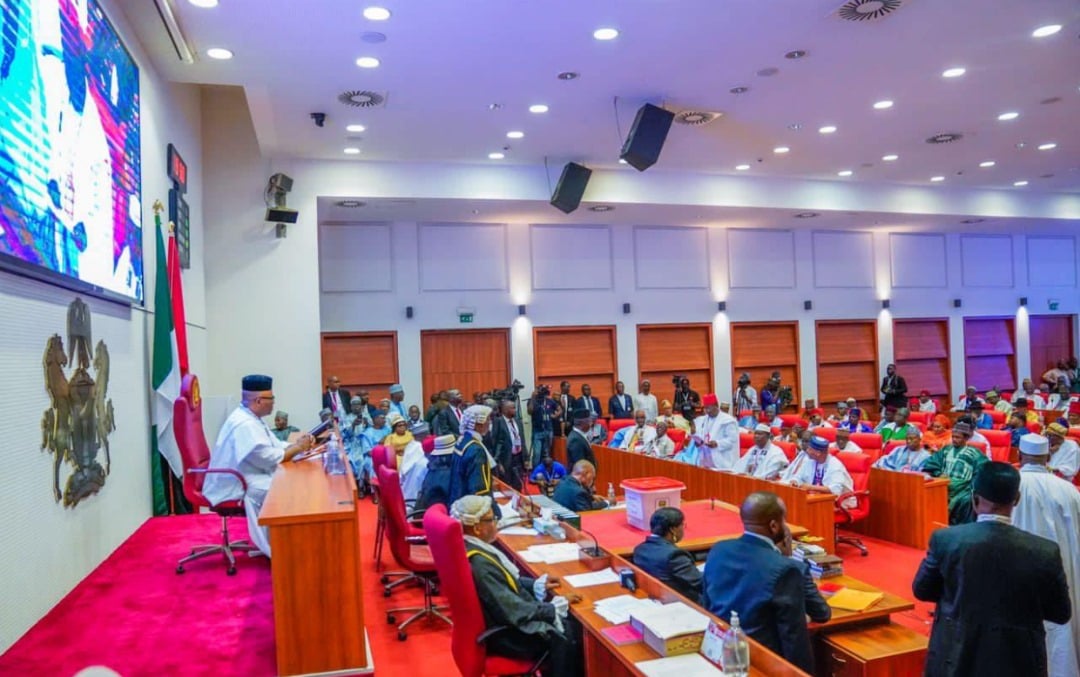
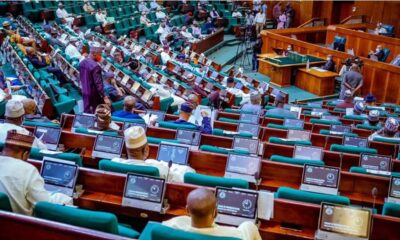
The Speaker of the House of Representatives, Tajudeen Abbas, the Deputy Speaker, Benjamin Kalu and former Kano State Governor, Rabiu Kwankwaso, were some of the dignitaries at Thursday’s valedictory in honour of former Speaker, Agunwa Anaekwe.

Anaekwe, who was the Speaker in the botched Third Republic, died in July 2025 at the age of 69.

He was Speaker on December 5, 1992, until November 17, 1993, when the late military dictator, Gen Sani Abacha, sacked the Ernest Shonekan-led Interim National Government.

As a sign of respect for the departed politician, the casket bearing his remains was brought to the main lobby of the National Assembly, where lawmakers from both chambers took turns to pay their last respect.

Leading the flood of tribute at a session attended by Anaekwe’s immediate family members, Abbas described the valedictory session as an opportunity for lawmakers to assess the nation’s leadership trajectory, identify gaps and take actions to right the wrongs of the past.

He said, “The valedictory session is not merely to offer ceremonial words. It offers us the opportunity both as an institution and as individuals to assess the substance of leadership, the weight of duty, and the legacy left behind. Rt Hon Anaekwe exemplified a standard of parliamentary conduct that combined discipline, fairness, and clarity of purpose.

“Elected during the Third Republic at a time when Nigeria stood at a complex intersection of political transition and democratic aspiration, he assumed the speakership in 1992 and guided this House with composure and clarity of purpose. He recognised that the strength of a legislature lies not in power for its own sake, but in the responsible exercise of authority.

See also  Lagos is a no-man’s land, Bwala defends FG’s investment

“He approached the speakership not as a platform for personal elevation, but as a constitutional trust. Under his leadership, the House maintained coherence in the face of political uncertainty.

“He upheld the sanctity of this House and demonstrated that even in turbulent periods, legislative order can be preserved through restraint and conviction.”

Highlighting the esteem the 10th House held the ex-Speaker, Abbas stated that “By allowing his remains to lie in state within this institution he once led, the National Assembly affirms the enduring significance of his contribution. This honour is not symbolic alone. It confirms that our history acknowledges those who strengthened the legislature through integrity rather than ambition.

“Rt Hon Anaekwe did not merely occupy the office of Speaker. He accepted the challenge and the enormous responsibility entrusted to him. He discharged his duty with humility and a deep sense of service. He demonstrated that leadership can be disciplined, thoughtful, and principled.”

On his part, the Deputy Speaker, Benjamin Kalu, who spoke on behalf of the leadership of the 10th House, lauded Anaekwe for his democratic credentials and leadership acumen.

“At just 36, he bore the weight of a young democracy on his shoulders. He understood that politics is not an occupation but a call to serve the public good. His fidelity to democratic ideals earned him the respect of colleagues and country alike.

“While institutions endure, it is men of character who give them life, meaning, and legitimacy. We honour him best by ensuring that this House continues to act with discipline, unity, and devotion to national interest,” Kalu said.

See also  Suspend constitution amendment, seek referendum, Olanipekun tells N’Assembly

Also speaking, a member of the National Burial Committee, Senator Osita Izunaso, recalled Anekwe’s role in defending democracy during one of Nigeria’s most difficult political periods.

“He fought and defended democracy when we had a near-dictatorship — the military at the executive level and the politicians at the National Assembly. When the military struck on November 17, 1993, he was determined to reconvene the House of Representatives. That determination led to the instant dissolution of the National Assembly.

“He fought for June 12 and defended that mandate. He stood for democracy even when it was risky to do so,” he added.

In his contribution, the lawmaker representing Anambra Central Senatorial District, Victor Umeh, described the deceased as a man who had zero controversy throughout his sojourn in politics.

“He became Speaker at the age of 36, a gentleman in politics. He was never associated with controversy. He built bridges across regions and pursued nation-building with sincerity and moderation. Our people revere him as a man of peace and principle.

“He managed the party with humility and built a solid political foundation that produced future leaders. Even when political godfathers tried to derail democracy in our state, Agunwa stood firm for the people,” he said.

Representative of the Senate President, Senator Muhammed Monguno, commended Anaekwe for standing “Firmly against dictatorial tendencies,” stressing that his belief in democracy was without compromise.

“The late Honourable Agunwa Anakwe, as Speaker, not only preached the gospel of democracy but championed it by leading the House to reject an obnoxious and draconian decree that sought to cripple legislative independence,” he added.

See also  Editors seek tax reliefs, journalists’ safety charter to strengthen democracy

The Borno lawmaker narrated how the late Anakwe sponsored a delegation to the 1993 Commonwealth Conference in Cyprus to challenge the legitimacy of Chief Ernest Shonekan’s interim government.

“We addressed a world press conference declaring that Chief Ernest Shonekan was an imposition on Nigerians and that the National Assembly held the legitimate mandate of the people,” Monguno stated.

Speaking on behalf of former Speakers, Yakubu Dogara described Anaekwe as “A dove with the heart of a lion,” noting that “He led the House in an era when political life was short, poor, nasty, and brutal. Yet, he managed to stand firm with wisdom, calmness, and courage.”

Dogara said the deceased would be remembered “Not for what he kept, but for what he gave: his service, values and examples.”

In his brief comment, Kwankwaso, who served as Deputy Speaker in the Third Republic, drew a bout of laughter from lawmakers present at the valedictory session when he said that “There is no doubt that Anaekwe would have today joined the New Nigeria Peoples Party to do the right thing for the nation.”

Meanwhile, the Deputy Speaker has been appointed to lead a strong delegation of the 10th House to the burial of Anaekwe in Adazi, Anaocha Local Government Area of Anambra State on Friday.

punch.ng

FOLLOW US ON:

FACEBOOK

TWITTER

PINTEREST

TIKTOK

YOUTUBE

LINKEDIN

TUMBLR

INSTAGRAM

Continue Reading
Click to comment

Leave a Reply

Your email address will not be published. Required fields are marked *

News

SEE PHOTO: Senate Appropriation Committee session turns bloody

Published

on

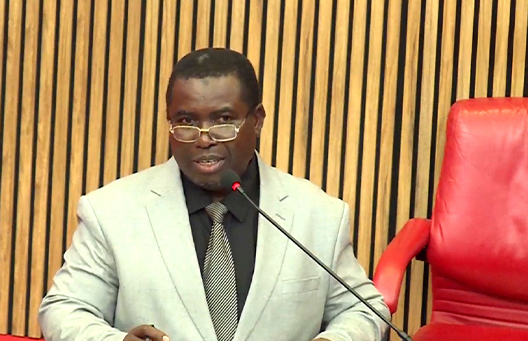
A legislative aide, Mr Kingsley Wali, was rushed to the National Assembly clinic in Abuja for emergency treatment after he was allegedly attacked on Wednesday during a sitting of the Senate Committee on Appropriations, chaired by Senator Adeola Olamilekan (APC, Ogun West).

The attacker, a security official attached to Olamilekan, allegedly punched Wali as he accompanied his principal, Senator Onyesoh (APC, Rivers East), to the committee’s sitting.

The altercation between the security official and the legislative aide began after the former tried to stop Wali from accessing the room where the committee was holding its meeting.


Source: tribuneonlineng.com

FOLLOW US ON:
FACEBOOK

WHATSAPP CHANNEL

TWITTER

PINTEREST

TIKTOK

YOUTUBE

LINKEDIN

INSTAGRAM

See also  Lagos is a no-man’s land, Bwala defends FG’s investment
Continue Reading

News

Amupitan reveals INEC’s verified voters register exceeds 100 million, read details

Published

on

The Chairman of the Independent National Electoral Commission (INEC), Prof. Joash O. Amupitan, SAN, has said that the Commission’s verified voters’ register stands at over 100 million following an audit.

Amupitan disclosed this on Wednesday, 25 November 2026, during a strategic consultative meeting with Resident Electoral Commissioners (RECs) in Abuja.

He said the figure followed three phases of Continuous Voter Registration (CVR), which added over 10.77 million new registrants, and an Automated Biometric Identification System (ABIS) and claims-and-objections audit, which removed over 1.6 million invalid, duplicate or deceased records.

“The register includes 232,658 persons with disabilities (PWDs) requiring accessible polling layouts and assistive materials,” he said.

Amupitan said there were 51 days to the Presidential and National Assembly elections scheduled for 16 January 2027, while the Governorship and State Houses of Assembly elections would hold on 6 February 2027.

He said INEC would conduct a nationwide mock accreditation and result transmission exercise on Saturday, 28 November 2026, across the 36 states and the Federal Capital Territory.

The INEC Chairman warned RECs that minor administrative lapses would not be tolerated, noting that general elections were of a different magnitude.

“In an exercise of that scale, even minor administrative lapses in one state can trigger national headlines and cast doubt on otherwise solid work elsewhere. Margin for error simply does not exist,” he said.

He listed six non-negotiable priorities for RECs.

He said Saturday’s mock exercise, which would take place in two polling units per ward, was a live stress test of the 57,000 newly procured BVAS devices and the upgraded INEC Result Viewing Portal (IReV), which now has automated arithmetic and over-voting checks on Form EC8A before upload.

See also  Suspend constitution amendment, seek referendum, Olanipekun tells N’Assembly

He directed RECs to personally oversee preparations and submit a technical audit to the headquarters by Monday, 30 November 2026, detailing network dead zones, device anomalies and bottlenecks.

On logistics, he said RECs must audit transport arrangements with the National Union of Road Transport Workers (NURTW), marine and aviation partners, verify Registration Area Centres (RACs) and enforce end-to-end tracking of materials.

He said the BVAS threshold had been lowered from 1,250 to 850 voters per machine to prevent crowding, with multiple units to be provided in high-population polling units.

On security, Amupitan said RECs must activate “ICCES Tentacles” down to the local government and ward levels, working with the police, Department of State Services (DSS), Nigeria Security and Civil Defence Corps (NSCDC) and Office of the National Security Adviser (ONSA). He also urged them to use Election Risk Management (ERM) maps to identify flashpoints and resolve conflicts over rally venues under Section 95(4) of the Electoral Act 2026.

He said over 1.41 million ad hoc staff, including National Youth Service Corps (NYSC) members and academics, must be properly trained on the Electoral Act 2026, BVAS operations and Form EC8A validation, with their allowances paid promptly.

The Chairman called for regular engagement with the Inter-Party Advisory Council (IPAC), election observers, civil society organisations and the media to counter disinformation and avoid communication vacuums.

He stressed that there would be zero tolerance for partisan compromise, warning that INEC would not shield any official who compromised the Commission’s neutrality or facilitated malpractice.

“Under the Electoral Act 2026 — including the deterrence provisions of Sections 96, 97 and 148 — the Commission will not shield any staff member or official who compromises neutrality, facilitates malpractice or breaches statutory rules,” he said.

See also  Editors seek tax reliefs, journalists’ safety charter to strengthen democracy

He also emphasised the need for disciplined record-keeping, immutable BVAS logs, authenticated IReV uploads and the timely issuance of Certified True Copies (CTCs) to ensure clarity for voters and election tribunals.

Source: tribuneonlineng.com

FOLLOW US ON:

FACEBOOK

WHATSAPP CHANNEL

TWITTER

PINTEREST

TIKTOK

YOUTUBE

LINKEDIN

INSTAGRAM

Continue Reading

News

Read lessons from US visa ban on Supreme Court justices

Published

on

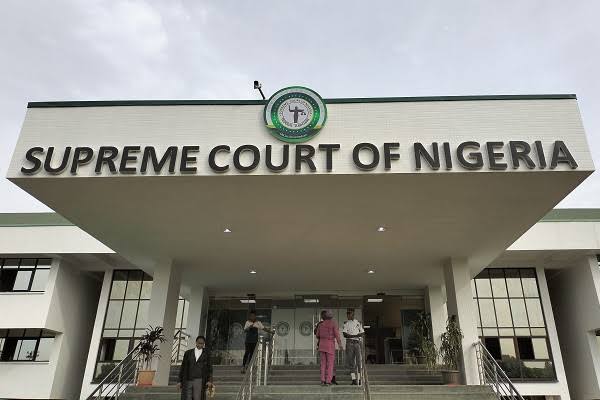
ONCE again, the Supreme Court of Nigeria is under an uncomfortable spotlight. This time, the trigger is an extraordinary revelation by retiring Justice Uwani Abba-Aji at her recent valedictory session. She lamented that the United States imposed visa restrictions on members of a Supreme Court panel over a controversial judgement.

This is no trivial diplomatic gesture. Visa restrictions against serving justices of a country’s highest court carry grave implications for the reputation of the institution and the credibility of its decisions. US authorities would hardly take such a step without serious grounds for concern. More troubling, the sanctions have apparently endured.

Recounting her experience, Abba-Aji said: “My time on the Supreme Court bench was filled with challenges, some of which have served as additional opportunities to stand firm on the side of justice, regardless of the consequences. One of such challenging judgements was widely misinterpreted and led to a travel ban to the United States of America being imposed on all members of the panel; a ban which still holds till today.”

For Abba-Aji, the judgement was merely “widely misinterpreted.” But that is hardly a sufficient explanation for a decision that has continued to cast a shadow over the country’s highest judicial institution. The public, and apparently the US authorities, are entitled to a different assessment. More importantly, the controversy demands introspection rather than defensiveness.

The Supreme Court and the judiciary should recognise that their proceedings and decisions are subject to increasingly intense domestic and international scrutiny. Judicial authority does not confer immunity from criticism. Neither does the sanctity of the bench excuse decisions that raise troubling questions about fairness, consistency and the integrity of the electoral process.

The controversies surrounding the 2023 senatorial elections involving Godswill Akpabio and Ahmad Lawan are cases in point. Both had contested the All Progressives Congress presidential primaries in 2022 before subsequently seeking senatorial tickets in Akwa Ibom North-West and Yobe North, respectively. The Electoral Act 2022 prohibits a candidate from participating in more than one primary election within the same electoral cycle.

Yet, relying on jurisdictional and procedural grounds, the Supreme Court overturned earlier decisions and cleared the way for both men to secure their respective senatorial tickets. Whatever the technical legal reasoning, the outcome reinforced public suspicion that political heavyweights enjoy judicial accommodation unavailable to ordinary Nigerians.

More troubling was the January 14, 2020, Imo State governorship judgement. A seven-member panel of the Supreme Court, including the present Chief Justice of Nigeria, Kudirat Kekere-Ekun, and Abba-Aji, overturned the election of Emeka Ihedioha of the Peoples Democratic Party and declared Hope Uzodimma of the APC governor. Uzodimma had initially placed fourth in the election.

See also  Lagos gives residents December 31 deadline to get health insurance

The court arrived at its conclusion after adding 213,295 votes from 388 polling units, based on documents tendered by a police witness but reportedly disowned by the Independent National Electoral Commission. In effect, the Supreme Court’s intervention overturned the decisions of both the election tribunal and the Court of Appeal.

The judgement raised fundamental questions that have never been satisfactorily laid to rest. Should the Supreme Court assume the responsibility of sorting, counting and declaring election results? Is it an electoral umpire? Where discrepancies in results arise, should the court not direct the appropriate electoral authority to establish the authentic figures in accordance with the law?

When Ihedioha subsequently sought a review of the judgement, the application was dismissed. In a dissenting opinion, the late Justice Centus Nweze warned that “this decision of the Supreme Court will continue to haunt our electoral jurisprudence for a long time to come.”

His words have proved difficult to dismiss. Indeed, such controversial judgements have helped institutionalise the cynical belief that elections are merely preliminary battles, with the real contest taking place in court. Politicians have consequently made “go to court” a familiar refrain, undermining confidence in the ballot and weakening the foundations of electoral democracy.

The Orji Kalu case is another troubling example of judicial controversy. On May 8, 2020, the Supreme Court set aside the 12-year prison sentence imposed on the former Abia State governor by a High Court and upheld by the Court of Appeal over a N7.1 billion money-laundering charge.

The Court held that the trial judge, Mohammed Idris, lacked jurisdiction because he had been elevated to the Court of Appeal when the proceedings were concluded. It ordered a retrial.

Before it was voided in Udeogu v. Federal Republic of Nigeria, Section 396(7) of the Administration of Criminal Justice Act 2015 provided that a High Court judge elevated to the Court of Appeal may continue sitting as a High Court judge to conclude part-heard criminal matters. This provision was designed precisely to prevent the kind of disruption that could arise from judicial elevation.

More fundamentally, setting aside a conviction on procedural grounds does not extinguish the underlying allegations of financial wrongdoing. The public was entitled to expect that the substantive case would be resolved without further unnecessary delay.

Beyond controversial judgements, the judiciary’s growing proximity to the political establishment has also become a source of concern. Judges are expected to maintain a degree of restraint and distance from the executive, particularly when politically sensitive cases are before them. Yet, the spectacle of judicial officers fraternising with political power has repeatedly undermined that expectation.

Lawyers, for instance, criticised the then Acting Chief Justice of Nigeria, Tanko Muhammad, and other judicial officers for attending an Iftar dinner hosted by President Muhammadu Buhari at the Presidential Villa while presidential election petitions were still pending. Even if no impropriety was established, the optics were damaging. Justice must not only be done; it must be seen to be done.

The late Justice Kayode Eso, one of Nigeria’s most respected jurists, had sounded the alarm years earlier. Following the disputed 2007 elections, he lamented the emergence of “billionaire judges” and described a legal profession increasingly divided between “those who know the law and those who have contacts”. That indictment remains painfully relevant.

See also  Iranian leaders scum, ceasefire is over, says Trump

The era of courageous, intellectually rigorous and landmark judgements associated with Justices Chukwudifu Oputa, Eso and Niki Tobi appears to be receding. Their legacy was not built on proximity to political power but on judicial independence, moral courage and fidelity to the law. The present generation must demonstrate that the judiciary is still capable of producing such men and women.

Unfortunately, the rot is not confined to the Court. It has filtered through the lower judiciary, as reflected in disciplinary actions by the National Judicial Council.

At its 112th meeting, the council suspended three judicial officers — Hannatu Mohammed of the Nasarawa State High Court, Mohammed Sani Salihu of the Jigawa State Sharia Court of Appeal and Sobere Biambo of the Rivers State High Court — for one year without pay over various acts of misconduct. Eight others were cautioned, while warning letters were approved for three judges following investigations into their handling of cases.

These sanctions are necessary, but they also expose the scale of the institutional challenge.

Judicial misconduct cannot be treated as an occasional embarrassment to be managed through discreet disciplinary measures. It is a direct assault on the rule of law and the confidence of citizens in the justice system.

The public perception of judicial integrity has suffered from troubling political disclosures. At a valedictory session in the Senate in June 2023, former senator Adamu Bulkachuwa claimed that he had approached his wife, Justice Zainab Bulkachuwa, a former President of the Court of Appeal, to influence election petition cases involving his political colleagues. Although he subsequently recanted, the damage to public confidence was considerable.

Transparency International’s 2025 Corruption Perceptions Index and concerns raised by the Civil Society Legislative Advocacy Centre further underscore the damage corruption does to public trust in Nigerian institutions, including the judiciary. CISLAC has identified judicial corruption as a major weakness in the country’s anti-corruption campaign, noting that both the CJN and the Nigerian Bar Association have acknowledged its threat to public confidence.

See also  Police arrest AFP journalists covering #FreeNnamdiKanu protest in Abuja

The NJC should therefore move beyond occasional disciplinary interventions. It should strengthen its investigative capacity, impose firm and transparent sanctions on erring judicial officers and ensure that accountability extends to the highest courts. No judge should be considered too senior, influential or politically connected to face scrutiny.

If foreign governments are concerned about judicial integrity, Nigerian authorities should not dismiss their actions as interference. The US visa restrictions may be controversial, but they should serve as a wake-up call. Indeed, scrutiny should not stop at the Supreme Court. No level of the judiciary should be beyond examination where credible allegations of misconduct arise.

More fundamental, however, is the need for structural reforms that insulate judicial appointments from political patronage. The appointment of the Chief Justice of Nigeria, the President of the Court of Appeal and chief judges should not remain so vulnerable to the influence of the President and state governors.

An independent, transparent and broadly representative appointments commission should play a decisive role in identifying, screening and recommending judicial candidates on the basis of competence, integrity and professional merit.

There should be meaningful public participation in the appointment process, with appropriate safeguards to protect judicial independence. The objective is not to turn judges into political contestants or subject their decisions to popular approval, but to ensure that those entrusted with dispensing justice command public confidence from the outset.

Ultimately, the judiciary is too important to Nigeria’s democracy to be allowed to decay under the weight of political interference, corruption and questionable judgements.

As the country approaches the 2027 general elections, the Supreme Court and the wider judicial establishment must undertake a serious institutional soul-searching exercise. The credibility of the next elections will depend not only on INEC but also on the integrity of the courts that will adjudicate disputes arising from them.

A judiciary whose integrity is questioned at home and abroad is a liability to the country. It weakens democracy, emboldens impunity, discourages investment and erodes faith in the rule of law.

Investors are unlikely to repose confidence in a country where the impartiality of the courts is in doubt, and commercial disputes can be coloured by political connections.

The lesson from the US visa restrictions should, therefore, be unmistakable: judicial prestige cannot be sustained by constitutional status or the grand trappings of office. It must be earned through impartiality, courage, transparency and fidelity to the law. Nigeria cannot build a credible democracy on a compromised judiciary.

Source: punchng.com

FOLLOW US ON:

FACEBOOK

WHATSAPP CHANNEL

TWITTER

PINTEREST

TIKTOK

YOUTUBE

LINKEDIN

INSTAGRAM

Continue Reading

Trending