Connect with us

News

Emergency plenary: N’Assembly moves to shift presidential poll to Feb 13

Published

on

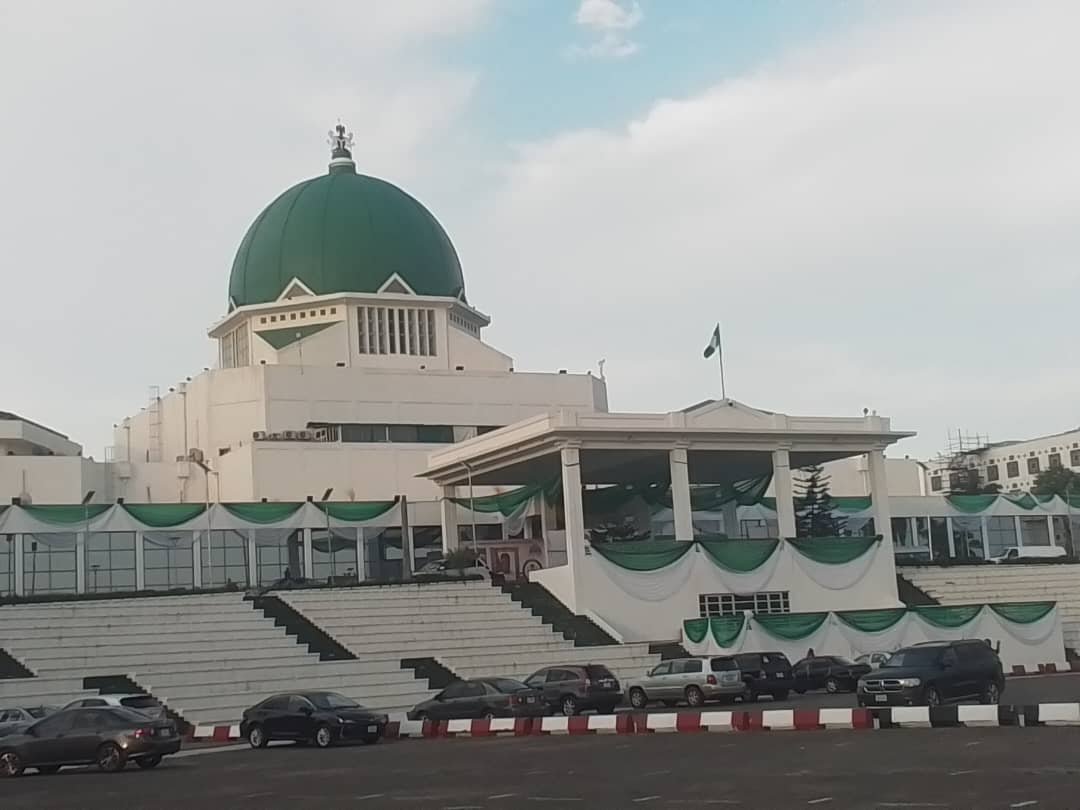
The National Assembly announced on Sunday that it would reconvene its plenary session on Tuesday, February 17, 2026, cutting short its recess amid indications that lawmakers may review the date set for the 2027 presidential election.

Findings by our correspondent showed that the National Assembly may shift the presidential poll to February 13, 2027.

In a notice signed by the Clerk to the National Assembly, Kamoru Ogunlana, senators and members of the House of Representatives were directed to resume sitting at 11 am and adjust their schedules accordingly, as “very crucial decisions” are expected to be taken during the session.

“I am directed to inform all Distinguished Senators and Honourable Members of the National Assembly that the Senate and House of Representatives shall reconvene plenary session at 11:00 am on Tuesday, 17th February 2026, respectively,” the notice read.

“Consequently, all Distinguished Senators and Honourable Members are kindly requested to take note and reschedule their engagements accordingly to enable them attend the session, as very crucial decisions shall be taken by each Chamber during the session,” Ogunlana added.

However, sources within the National Assembly, speaking to The PUNCH on condition of anonymity, revealed that the public notice masks a more pressing agenda.

“It is more of an extraordinary plenary session to review the 2027 presidential election date as stipulated in the Electoral Act amendment.

That is why our recess has been cut short through the announcement made by the Clerk of the National Assembly,” a senator confided.

“The ultimate aim is to give legislative backing to INEC’s request to address the concerns raised regarding the 2027 election slated to hold during Ramadan,” the lawmaker added.

Another Senate insider told The PUNCH: “If all goes according to plan, the presidential poll date may be brought forward to February 13 from the previously announced February 20 by INEC.”

Similarly, a Senate source told The PUNCH: “This session is crucial. It is about more than dates—it is about ensuring that every Nigerian, regardless of faith, has a fair opportunity to participate in the electoral process. The decisions we take here could define the credibility of the 2027 elections.”

The development comes barely a week after the Senate, bowing to public pressure, approved the electronic transmission of election results to the Independent National Electoral Commission’s Result Viewing Portal, while retaining manual collation as a backup in areas where technology may fail.

The emergency reconsideration arose from a disputed clause in the Electoral Act (Repeal and Re-enactment) Amendment Bill, 2026, which had triggered days of nationwide protests and intense criticism from opposition figures, civil society groups, and youth movements.

Despite approving the electronic transmission system, the Senate stopped short of making it compulsory and rejected calls for real-time uploads of results—a key demand of protesters who had accused lawmakers of undermining electoral integrity ahead of the 2027 general elections.

Under the revised provision, presiding officers at polling units must electronically transmit results to the IReV portal after voting concludes and documentation is completed. Where electronic transmission is not possible due to network challenges, the manual result sheet, Form EC8A, will serve as the primary basis for collation and declaration.

See also  ‘You can’t be a police officer and thief, choose one’ – FCT CP warns operatives

Senate President Godswill Akpabio, while putting the motion to a voice vote, urged senators who opposed the amendment to formally challenge it on the floor.

With plenary set to resume, lawmakers are expected to continue deliberations on pending bills, committee reports, and other legislative matters, including further work on the Electoral Act amendment and related reforms ahead of the 2027 polls.

Meanwhile, the Joint National Assembly Conference Committee, constituted to reconcile differences in the Electoral Amendment Bill passed separately by the Senate and the House of Representatives, is expected to meet on Monday. The harmonised bill will subsequently be transmitted to President Bola Tinubu for assent.

The PUNCH learned that the joint panel, comprising members from both chambers, has been given a one-week window to resolve contentious provisions in the bill.

Earlier, The PUNCH reported that INEC acknowledged public concerns over the timing of the 2027 general elections, which coincides with the holy month of Ramadan, a period of fasting and spiritual reflection for millions of Nigerian Muslims.

The commission indicated that it may seek legislative intervention if necessary.

The National Commissioner and Chairman of the Information and Voter Education Committee, Mohammed Haruna, disclosed the development in a statement last Friday, clarifying that the Timetable and Schedule of Activities for the 2027 elections were developed in strict compliance with the Constitution, the Electoral Act 2022, and INEC’s Guidelines and Regulations for the Conduct of Elections, 2022.

According to the statement, INEC had initially slated Saturday, February 20, 2027, for the presidential and National Assembly elections, and Saturday, March 6, 2027, for governorship and state Houses of Assembly elections.

However, Muslim Rights Concern and other Islamic stakeholders rejected the proposed timetable, arguing that it clashes with the Ramadan fasting period, which they consider insensitive to Muslim voters, election officials, and observers.

Former presidential candidate of the Peoples Democratic Party, Atiku Abubakar, was among the notable voices calling for reconsideration.

On his official X (formerly Twitter) handle last Friday, Atiku said the February 20 date falls “squarely within the Ramadan period (February 7 – March 8, 2027), a sacred season of fasting, reflection, and spiritual devotion for millions of Nigerian Muslims.”

Bashir Ahmad, a former presidential aide, also urged INEC via his X account to reconsider the dates.

He wrote, “If the intention is to encourage full and inclusive participation in the electoral process, scheduling such a critical national exercise during Ramadan may present challenges for a large segment of the population. Many Muslims tend to reduce engagement in worldly activities during this period in order to focus on religious obligations.

“Given the significant Muslim population in this country, it may be worthwhile to reconsider the timing to ensure broader participation and convenience for all citizens. I do hope this observation will be taken in the spirit of inclusiveness and national cohesion.”

Reacting, INEC acknowledged the concerns, assuring the public that it remains sensitive to legitimate considerations that may affect electoral participation and the overall conduct of elections.

See also  NFIU reveals how terrorists are using dead persons’ accounts, crowdfunding

“Notwithstanding the foregoing, the commission has taken due notice of concerns expressed by stakeholders regarding the coincidence of the scheduled dates with certain nationally recognised holidays and observances.

“The commission wishes to assure the public that it remains sensitive to all legitimate concerns that may impact electoral participation and the overall conduct of elections.

“In view of these representations, the commission is currently undertaking consultations and may, where necessary, seek appropriate legislative intervention to address the concerns raised, while ensuring that any adjustment remains consistent with constitutional and statutory requirements,” the statement read.

The latest move by the National Assembly builds on prior proposals to adjust the timing of the 2027 elections.

In October last year, lawmakers suggested holding the polls in November 2026, roughly six months ahead of the usual schedule, to ensure that all election petitions would be concluded before the May 29, 2027, handover date.

The draft amendment, unveiled during a public hearing organised by the Senate and House Committees on Electoral Matters in Abuja, read: “Elections into the office of the President and Governor of a State shall be held not later than 185 days before the expiration of the term of office of the last holder of the office.”

Chairman of the House Committee on Electoral Matters, Adebayo Balogun, explained that the move was designed to “ensure that all manner of election litigations are dispensed with before the swearing in of winners.”

The National Assembly also proposed amending sections 285 and 139 of the 1999 Constitution to shorten timelines for election petitions, reducing tribunal judgments from 180 to 90 days, appellate court decisions from 90 to 60 days, and ensuring that the entire judicial process does not exceed 185 days.

Other key proposals included early voting for security personnel, INEC staff, accredited journalists, and observers at least 14 days before election day.

Stakeholders, including INEC, represented by Prof. Abdullahi Zuru, supported the reforms, particularly the push for electronic voting and compulsory e-transmission of results, describing them as critical to enhancing credibility and reducing post-election disputes.

Political Implications

The decision to reconvene the National Assembly ahead of schedule comes amid a politically charged atmosphere, with opposition parties, civil society organisations, and Muslim advocacy groups pressing for adjustments to ensure inclusivity and fairness in the electoral process.

In July last year, mixed reactions trailed a proposal to amend the 1999 Constitution to allow all elections in Nigeria to be conducted on the same day in 2027.

While leading opposition parties—the Peoples Democratic Party, Labour Party, African Democratic Congress, and New Nigeria People’s Party—supported the initiative, the ruling All Progressives Congress rejected it, warning of dire consequences.

The proposal, championed by the House Committee on Constitution Review under Deputy Speaker Benjamin Kalu, emerged from broad consultations across the six geopolitical zones.

As the National Assembly prepares to reconvene, political analysts predict that Tuesday’s plenary could set the tone for the 2027 elections, with the potential rescheduling of the presidential poll to February 13 marking a historic adjustment driven by religious and public considerations.

See also  Top court upholds South Korean ex-president’s seven-year jail term

Observers note that the move, if implemented, could enhance voter participation among Muslims while also testing INEC’s capacity to deliver credible elections under a compressed timeline.

Lawmakers meet on Electoral Act harmonisation

Meanwhile, the Joint National Assembly Conference Committee is expected to meet on Monday (today) to harmonise the Senate and House versions of the Electoral Amendment Bill. Once reconciled, the bill will be sent to President Bola Tinubu for assent, potentially paving the way for a legal framework that accommodates both the timing of elections and the use of electronic transmission.

The outcome of these deliberations will be closely watched by political parties, religious groups, and civil society organisations, as the 2027 elections are shaping up to be a litmus test for Nigeria’s electoral system and its ability to reconcile legal, religious, and technological considerations.

Senate cites power, Internet for ‘real-time’ exclusion

On Sunday, the Senate defended its decision to exclude the “real-time” clause from the Electoral Act amendment, citing poor internet and power infrastructure.

Senate Leader Senator Opeyemi Bamidele explained that Clause 60(3), requiring presiding officers to transmit polling unit results to IReV in real-time, was reviewed to avoid unnecessary crises.

Citing Nigerian Communications Commission data, he said broadband coverage in 2025 was 70 per cent, with internet penetration at 44.53 per cent, and Nigeria ranked 129th out of 150 countries in fixed broadband speed at 33.32 Mbps—far below global standards.

“By global standards, the real-time electronic transmission of election results may not be practicable at this stage of our development. To avoid a situation that compounds our country’s woes, it is better that we make it discretionary since Section 62(2) of the Electoral Act, 2022 has already established the National Electronic Register of Election Results,” Bamidele said.

On power supply, he cited official figures showing 85 million Nigerians—about 43 per cent—still lack access to grid electricity.

“Even though our generation capacity hovers roughly between 12,000 and 13,500 megawatts, our distribution and transmission capacity is acutely limited. As we all know, it can only deliver 4,500 megawatts to households nationwide. But with the Electricity Act, 2025, our power sector will record significant growth from this financial year,” he added.

Bamidele said lawmaking must be based on facts, not emotion.

“All these facts were before us for consideration before we initially decided to retain Section 60(3 & 5) of the Electoral Act, 2022, in the interest of the people and security. The data speak directly to the stark realities of our federation and not emotion or sentiment.”

Describing lawmaking as the “lifeblood” of public institutions, he argued that laws disconnected from practical realities risk instability.

“The term ‘real time’ was removed to ensure Nigeria’s electoral framework remains workable given current infrastructural and technological limitations, while still addressing citizens’ concerns across the country,” he further argued.

punch.ng

FOLLOW US ON:

FACEBOOK

TWITTER

PINTEREST

TIKTOK

YOUTUBE

LINKEDIN

TUMBLR

INSTAGRAM

Continue Reading
Click to comment

Leave a Reply

Your email address will not be published. Required fields are marked *

News

FG urges India to protect Nigerians in detention centres

Published

on

The Federal Government has called on India to ensure the welfare, dignity and protection of the fundamental human rights of Nigerians held in custodial centres across the country.

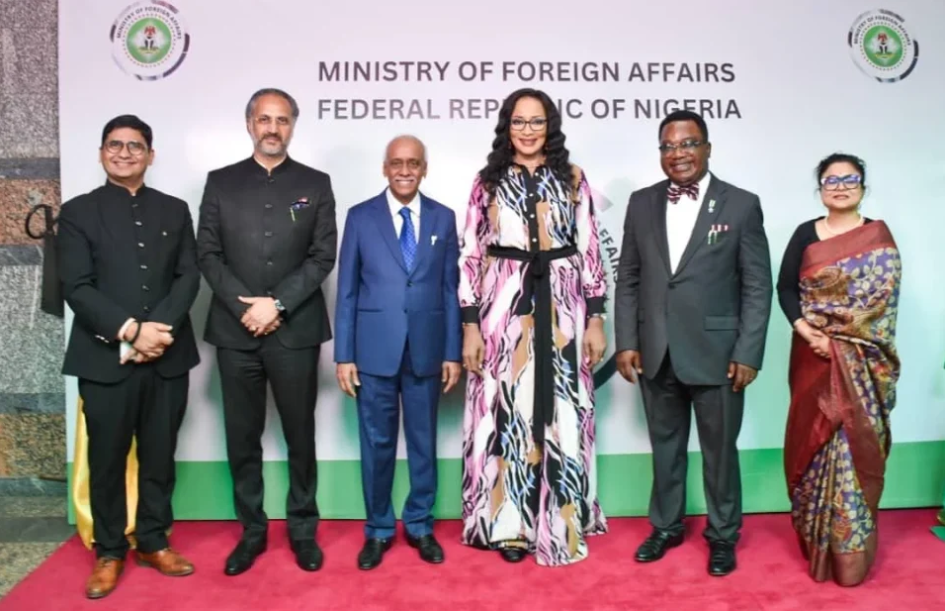
The Minister of Foreign Affairs, Ambassador Bianca Odumegwu-Ojukwu, made the appeal during a meeting with a joint high-level delegation of the National Human Rights Commissions of Nigeria and India at the Ministry of Foreign Affairs in Abuja.

According to a press statement issued on Thursday and signed by the Ministry of Foreign Affairs Spokesperson, Oluwafemi Adeniyi, the minister expressed concern over the treatment of Nigerians serving in custodial centres in India and called for appropriate attention to their welfare and human rights.

She said, “The MoU on Cooperation between the NHRCs is a timely initiative for the translation of the longstanding Nigeria-India relations into practical institutional cooperation on the promotion of human rights. There is the need to strengthen access to justice, improve complaint-handling mechanisms and protect the rights of persons in vulnerable circumstances, ensuring equitable access to essential support and services for them.

“Nigeria and India have an opportunity to contribute constructively to a more inclusive international human rights architecture, as members of the Global South.

“I call on the Indian government to ensure the humane and proper treatment of Nigerian citizens serving in custodial centres in the country, and that they receive appropriate attention to their welfare, dignity and fundamental human rights.”

Odumegwu-Ojukwu, added that the protection of vulnerable persons and access to justice should remain central to the growing human rights cooperation between both countries.

See also  Reno Omokri says Tinubu has already won 2027 presidential election, read details

The Minister’s appeal comes as Nigeria and India strengthened their human rights partnership through the signing of a Memorandum of Understanding between their respective National Human Rights Commissions.

The agreement is expected to promote institutional cooperation, technical exchanges and the sharing of best practices in human rights protection.

The minister described the agreement as a timely initiative for translating the longstanding relations between Nigeria and India into practical institutional cooperation.

She emphasised the need to strengthen access to justice, improve complaint-handling mechanisms and protect people in vulnerable circumstances, ensuring equitable access to essential support and services.

According to her, Nigeria and India have an opportunity to contribute constructively to a more inclusive international human rights architecture as members of the Global South.

She expressed Nigeria’s readiness to deepen engagement with India and other international partners in advancing human rights diplomacy and strengthening national and international human rights institutions.

The minister also expressed appreciation to United Nations member states for supporting Nigeria’s election to the Human Rights Council for the 2027–2028 term.

She reaffirmed Nigeria’s commitment to fulfilling its obligations under the United Nations Charter and the Universal Declaration of Human Rights, guided by the principles of objectivity, non-selectivity and constructive international engagement.

Earlier, the Executive Secretary of Nigeria’s National Human Rights Commission, Chief Anthony Ojukwu, described the MoU as an important framework for strengthening institutional cooperation and technical exchanges between the two countries.

He said the partnership would focus on improving complaint-management mechanisms, strengthening human rights compliance in security sector governance and promoting joint research on international law, human rights implementation and emerging issues.

See also  Top court upholds South Korean ex-president’s seven-year jail term

Ojukwu also stressed the importance of collaboration with the Ministry of Foreign Affairs in integrating international human rights standards into Nigeria’s treaty obligations and diplomatic frameworks.

In his remarks, the Chairperson of India’s National Human Rights Commission, Justice V. Ramasubramanian, highlighted the longstanding historical and diplomatic relations between both countries.

He noted that Nigeria and India shared similarities in population size, ethnic and religious diversity, cultural heritage and democratic aspirations.

Ramasubramanian described the MoU as an important step towards facilitating practical cooperation, institutional learning and capacity development through the exchange of experiences and best practices between the two human rights institutions.

The delegation was jointly led by Ojukwu and Ramasubramanian during the courtesy visit to the minister.

Source: punchng.com

FOLLOW US ON:
FACEBOOK

WHATSAPP CHANNEL

TWITTER

PINTEREST

TIKTOK

YOUTUBE

LINKEDIN

INSTAGRAM

Continue Reading

News

Caine Prize finds no evidence of AI use in Zimbabwean’s £10,000-winning story

Published

on

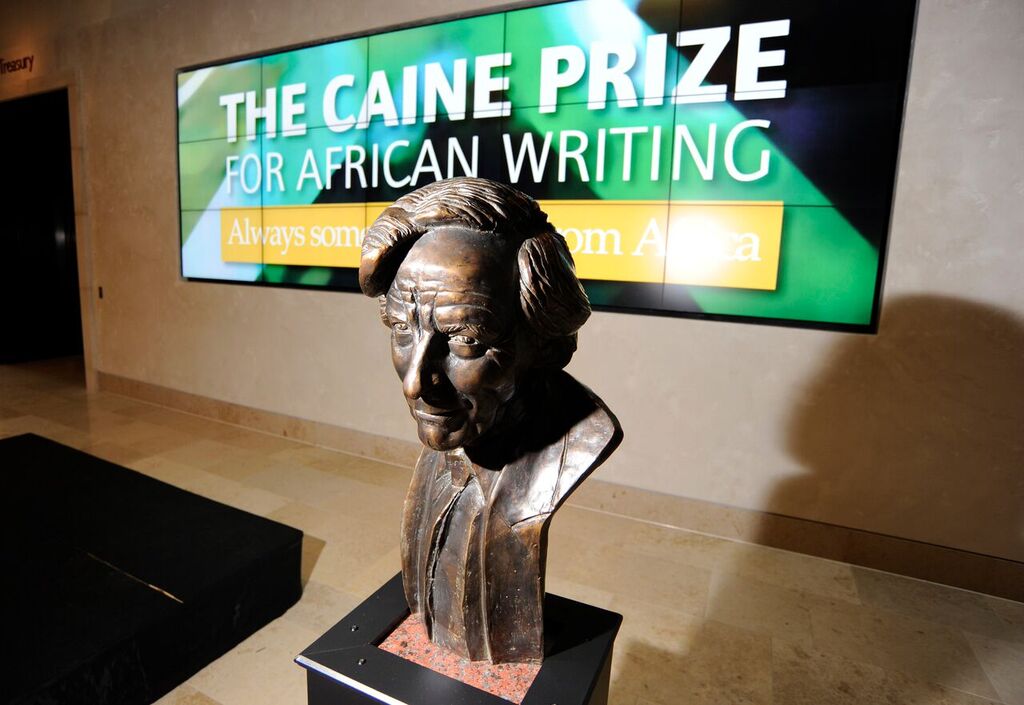
The Caine Prize for African Writing has found no evidence of generative AI use in Zimbabwean writer Simbarashe Kundizeza’s award-winning story, ‘The Blue Fighter’, confirming that it was written by a human.

The award body also upheld Kundizeza’s £10,000 ($13,000) prize, confirming him as the winner of the 2026 edition.

According to a report by the BBC on Wednesday, the accusation follows an article published in a US magazine, ‘The Atlantic,’ titled, “Yet Another Literary Prizewinner Seems to Be AI,” written by Vauhini Vara.

“The prestigious Caine Prize, announced last week, went to a story with many red flags,” the article stated in the header.

She alleged that Kundizeza’s latest story was AI-generated, citing results from an AI-detection tool, Pangram.

However, in a tweet posted via the award body’s X handle on Wednesday, the Chair of the Caine Prize’s board of trustees, Ellah Wakatama, noted that Kundizeza stands as the 2026 award winner after internal review.

She said the organisation adopted a “human-centred” approach in investigating the allegations, which she said were examined “carefully and fairly.”

Wakatama added that the organisation conducted interviews with the Zimbabwean writer, the 2026 judging panel, and the Shallow Tales review where the story was first published, alongside “independent and expert-led metadata analysis of drafts written by the author.”

The board’s chairman stated, “The Board of Trustees of the Caine Prize for African Writing has concluded its internal review of The Blue Fighter, and we confirm that the award stands, and Simbarashe Stein Kundizeza is the 2026 winner of the Caine Prize for African Writing. The review opened on the 11th of October 2026 after an article written by Vauhini Vara and published in The Atlantic suggested that the winning story may have been written using generative AI.

See also  US warship enters Panama canal and now heading towards Caribbean

“When concerns were raised, we have a duty as an organisation to look at them carefully and fairly. However, as the Caine Prize and its award have people at the centre – writers, judges, readers, and publishers – we chose to take a human-centred approach to the investigation.

“Our review included interviews with the author, the 2026 judging panel, and the Shallow Tales review where the story was first published. It also included independent and expert-led metadata analysis of drafts written by the author. And from our detailed investigation, we feel the evidence is clear: The Blue Fighter was human-written.

“We now look forward to awarding and celebrating Simbarashe Stein Kundizeza, the winner of the 2026 prize for his story The Blue Fighter, before the end of the year.”

This latest allegation of AI use against a writer comes after Canadian-Haitian author Thélyson Orélien was accused in October 2026 of using AI to write his breakthrough debut novel about migration “C’etait ca ou mourir” (“It Was Either That Or Die”), which was set to be translated into more than 20 countries.

The book was withdrawn from the shortlist for France’s top book prize, the Goncourt, after tests with AI detector Pangram indicated a 100-per cent probability it contained computer-generated text.

“They say that ‘C’etait ca ou mourir’ was written by an artificial intelligence. That’s slander and heresy,” Orelien wrote in a statement sent exclusively to AFP.

BBC reports that Vara’s allegations followed “rows over other literary prizes this year, in particular the Commonwealth Short Story Prize, which was won by Trinidadian writer Jamir Nazir despite allegations that he had used AI, and the withdrawal of Canadian-Haitian author Thélyson Orélien from France’s top literary award, the Goncourt, over allegations he used AI for his first novel, which he denies.”

See also  PHOTOS: Libya transfers 18 Nigerian migrants from Sirte to Sabha ahead of repatriation

On October 13, 2026, Kundizeza clarified in a post on his X handle that the story had no element of AI.

“For the avoidance of doubt, I wrote “The Blue Fighter.” I did not use generative AI to write it. It is entirely my own work.

“This story did not appear out of nowhere; it has a concrete, documented history,” he wrote

Kundizeza added that the story was inspired by a poem written by Vangile Gantsho, titled ‘My father’s hand,’ which he read during his residency in Ghana. The poem, he said, inspired him to write about his “family’s experiences in Zimbabwe‚ including my father leaving his accounting profession and the hardships my family faced as a result․”

As seen on Caine Prize’s website publication, ‘The Blue Fighter’ story “follows Tinashe, a young boy whose family falls into financial hardship after his father leaves his profession to pursue his passion for building fish tanks. As money becomes increasingly scarce, Tinashe’s mother is forced to choose between her family’s survival and her husband’s dream. A powerful story that explores fatherhood, ambition, and financial hardship while examining the complicated ways in which family circumstances can shape the people within them.”

However, Vara had told the BBC’s ‘Front Row programme’ that, using her own judgment, she found out that every other previous Caine Prize-winning story she had put through Pangram “came out as 100% human.”

“I also found an earlier 2021 story by the same author. I ran that through Pangram. It also came out as 100% human. And what struck me was that was a really good, interesting story. And tonally, it’s so different from this story, as if the same person hadn’t written both,” she said.

See also  Labour tasks states, LGAs on insecurity

Kundizeza, in his tweet, cautioned that while the article “seems to question the story’s authorship by comparing its style to my other writing; as writers, we develop recurring interests, but we don’t produce work from a single fixed template.”

The accusation had caused a social media uproar, the BBC report said, including comments from African writers with suggestions that such accusations are primarily being made against non-white writers.

The Founder of The Republic magazine, Wale Lawal, wrote on his X handle, quoting The Atlantic’s post, “This is crazy, racist and wildly unethical.”

Zimbabwean writer Joe Ruzvidzo said on X that it was time “to fight this literary stop-and-frisk” against “ALL black/African writers.”

Nigerian publisher Modupe Daramola wrote on X, “The Atlantic, this is extremely shameful. Clearly targeted and very malicious. Sinister. I don’t know what to say.”

The controversy has reignited debate over the reliability of AI-detection tools in determining authorship, particularly in literary competitions where allegations of AI use can affect writers’ reputations and the credibility of award-winning works.

Source: punchng.com

FOLLOW US ON:

FACEBOOK

WHATSAPP CHANNEL

TWITTER

PINTEREST

TIKTOK

YOUTUBE

LINKEDIN

INSTAGRAM

Continue Reading

News

Lagos Assembly confirms Tayo-Makanjuola as auditor-general, read details

Published

on

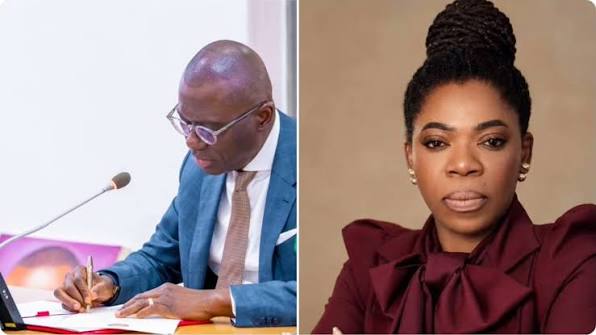
The Lagos State House of Assembly has confirmed Dr. Olufunke Tayo-Makanjuola as the substantive Auditor-General of Lagos State following her nomination by Governor Babajide Sanwo-Olu.

The confirmation, granted on Monday, marks a new milestone in her career in the Lagos State Public Service.

According to a statement issued by the Office of the State Auditor-General on Wednesday, Tayo-Makanjuola previously served as Head of Directorate, Government Accounts, before she was nominated as Acting State Auditor-General.

She is a seasoned finance professional with extensive experience in public financial management and an academic background that includes a Doctorate in Business Administration (DBA) in International Business from Lagos State University, Ojo.

Tayo-Makanjuola is also a Fellow and member of several professional bodies, including the Institute of Chartered Accountants of Nigeria (ICAN), Association of National Accountants of Nigeria (ANAN), Chartered Institute of Taxation of Nigeria (CITN), Chartered Institute of Directors (CIoD) and the Chartered Institute of Forensics and Professional Investigators (CFIP), USA, among others.

The Office of the State Auditor-General said her confirmation recognises her professional experience and background, as well as her capacity to provide leadership in advancing the mandate of the office.

The management and staff of the office congratulated her on the confirmation and wished her a successful tenure.

The office also reaffirmed its commitment to supporting her leadership in strengthening public sector auditing, promoting accountability and transparency, and ensuring the prudent management of public resources in Lagos State.

PUNCH Online had reported that Sanwo-Olu had nominated her as the Acting State Auditor-General, subject to confirmation by the Lagos State House of Assembly.

See also  Nigeria and Wildlife Justice Commission set to combat illegal trafficking

Tayo-Makanjuola succeeds Mr. Adetola Muyiwa John, who previously served as Lagos State Auditor-General before his redeployment as Accountant-General and Permanent Secretary, State Treasury Office, in March 2026.

His redeployment followed the statutory retirement of the then Accountant-General, Dr. Abiodun Muritala. Following Adetola’s movement to the State Treasury Office, Tayo-Makanjuola was appointed Acting Auditor-General on July 28, 2026, pending confirmation by the Lagos State House of Assembly.

Source: punchng.com

FOLLOW US ON:

FACEBOOK

WHATSAPP CHANNEL

TWITTER

PINTEREST

TIKTOK

YOUTUBE

LINKEDIN

INSTAGRAM

Continue Reading

Trending