Connect with us

Business

FG clears pension backlog, prefunds benefits till 2029, read details

Published

on

The National Pension Commission has disclosed that the Federal Government has funded the accrued pension rights of enrolled federal workers ahead of retirement until December 2029, reversing a previous 21-month funding backlog.

The Director-General of PenCom, Omolola Oloworaran, disclosed this on Wednesday in her keynote address at the 2026 Pension Correspondents Association of Nigeria Conference in Abuja.

Oloworaran, represented by PenCom’s Head of Corporate Communications, Ibrahim Buwai, said the government had moved from owing accrued pension rights for 21 months to maintaining a 41-month funding surplus.

“We are moving from a position where we had, where our full pension rights were 21 months in arrears, to where we are today, 41 months in surplus. And 41 months in surplus means that Federal Government employees who have not yet retired and who have enrolled have had their accrued pension rights paid up to December 2029,” she said.

The development means that accrued pension rights for the affected federal employees have been funded in advance.

Oloworaran also claimed that delays in pension payments had largely been eliminated, with retirement benefits now processed within 48 hours.

“The issue of delays of payment of pension has now become history, and now pensions are being paid within a maximum of 48 hours from retirement,” she said.

The PenCom boss highlighted the launch of the PenCare health insurance programme and the N52,500 minimum pension guarantee by President Bola Tinubu on Tuesday.

She explained that PenCare would reduce retirees’ medical expenses, allowing them to devote more of their monthly pensions to other needs.

See also  Report reveals petrol, diesel prices rise 86% in eight months

According to her, the initiative is funded by pension operators and PenCom, with an independent board of trustees chaired by the commission’s pioneer Director-General, Muhammad Ahmad.

On the minimum pension guarantee, she said eligible retirees receiving less than N52,500 would have their pensions increased, adding that some beneficiaries received payment alerts during Tuesday’s launch.

Oloworaran further disclosed that the Federal Government had approved additional exit benefits equivalent to 100 per cent of terminal emoluments for eligible retirees, effective 1 January, 2026.

“The Federal Government has just approved the payment of 100 per cent of terminal emoluments as additional exit benefits,” she said, adding that eligible 2026 retirees, who submitted their documents, had received payments.

The Executive Secretary of the Pension Transitional Arrangement Directorate, Tolulope Odunaiya, represented by the Head of Corporate Communications, Olugbenga Ajayi, said the directorate had introduced remote verification and enhanced life-status checks for pensioners under the Defined Benefits Scheme.

“With the new initiative of this verification without borders, pensioners in the US, in Uganda, in our villages can as well do their verification,” she said.

Odunaiya also disclosed that registration had commenced for PTAD’s proposed health insurance programme, ahead of its formal launch.

The Chief Executive Officer of the Pension Fund Operators Association of Nigeria, Anthonia Ifeanyi-Okoro, represented by Olajumoke Akinwa, called for responsible investment of pension assets in infrastructure, housing, energy and productive sectors to support Nigeria’s $1tn economy target.

“Properly channelled into infrastructure, housing, energy, and productive sectors, these funds can help finance the growth we seek, while still protecting the retirement benefits of contributors,” she said.

See also  States demand forensic audit of $8.8bn crude-for-loan deals

Similarly, the Chief Executive Officer of Awabah, Tunji Andrews, disclosed that personal pension enrolment requirements had been reduced from 25 fields to just four, making it easier for Nigerians in the informal sector to register and contribute through Point of Sale terminals in partnership with Moniepoint and Interswitch.

“As of today, those fields have been reduced to four fields only. Because of that innovation, we’ve been able to put onboarding and payments for PPP on POS terminals,” he said.

Andrews added that Awabah had launched an initiative known as Pension Oga, which would deploy agents to markets and communities to register informal workers, collect contributions and educate Nigerians about pension savings, while calling for greater public awareness to expand participation in the Personal Pension Plan.

The acting Managing Director of NPF Pensions Limited, Mohammed Dutse, represented by Chukwuma Ohaka, commended improvements in pension administration, particularly efforts to strengthen police retirees’ welfare.

A representative of Citizens Pension Limited, Khayran-Yunusa Aliu, called for greater financial inclusion through expanded micro-pension participation.

Meanwhile, the National President of the Nigeria Union of Pensioners, Godwin Abumisi, represented by Ahmad Ibrahim-Gazali, demanded the extension of the new exit benefits to retirees who left service between 2004 and December 2025.

Source: punchng.com

FOLLOW US ON:

FACEBOOK

WHATSAPP CHANNEL

TWITTER

PINTEREST

TIKTOK

YOUTUBE

LINKEDIN

INSTAGRAM

Continue Reading
Click to comment

Leave a Reply

Your email address will not be published. Required fields are marked *

Business

World Bank approves $500m Nigeria loan, read details

Published

on

The World Bank has approved $500 million in financing for Nigeria to tackle flooding, restore degraded agricultural land and reduce conflicts between farmers, herders and rural communities across the northern part of the country.

The funding, approved under the Agro-Climatic Resilience in Semi-Arid Landscapes Project, is expected to strengthen climate resilience, improve water management and support agricultural productivity in 19 northern states and the Federal Capital Territory.

According to a statement obtained by The PUNCH from the World Bank’s website on Wednesday, the additional financing will support the restoration of 1.4 million hectares of land and benefit approximately 6.6 million people by 2031.

The financing will also support watershed rehabilitation, erosion control and improved management of natural resources in communities vulnerable to climate-related disasters.

“The World Bank has approved $500m in additional financing for the Agro-Climatic Resilience in Semi-Arid Landscapes Project to help Nigeria scale up climate resilience, restore degraded landscapes, improve water management, and strengthen livelihoods across northern Nigeria.

“By 2031, this fund will help restore landscapes, rehabilitate watersheds, improve erosion and flood management, and build more resilient rural livelihoods, reaching 1.4 million hectares and benefiting 6.6 million people. This is expected to lead to an increase in household incomes, reduced farmer/community/herder conflicts, increases in vegetation health, reduced flooding and associated fatalities, improved soil health and agricultural productivity,” the statement read.

The World Bank explained that the intervention would build on the achievements of the existing ACReSAL project, which commenced in 2022 to address environmental degradation and climate vulnerabilities across northern Nigeria.

See also  CBN extends anti-money laundering compliance deadline for banks

According to the bank, the programme has introduced sustainable landscape management practices on approximately 550,000 hectares and reached more than 4.4 million beneficiaries.

It added that the project had already exceeded its target for improved catchment management, providing a foundation for expanding climate adaptation investments.

The World Bank Country Director for Nigeria, Mathew Verghis, said the additional financing would enable the government to expand interventions that had demonstrated positive results in vulnerable communities.

“ACReSAL has demonstrated that investments in climate-resilient landscapes can improve livelihoods, strengthen food and water security, and help communities in the parts of Nigeria most vulnerable to climate shocks,” Verghis said.

“This additional financing will help scale up proven solutions, restore more degraded land, increase agricultural productivity, and strengthen institutions that can sustain these gains over the long term.”

The bank explained that the project was designed to address interconnected challenges affecting rural communities, including land degradation, declining agricultural productivity, water insecurity and competition over natural resources.

By improving access to productive land and water resources, the intervention is expected to reduce pressures contributing to disputes among farmers, herders and other community groups.

The ACReSAL Task Team Leader, Iganya Agene, said the additional financing would help translate earlier planning and institutional reforms into larger investments capable of improving economic opportunities.

“The additional financing reflects the strong results achieved under ACReSAL and will focus on translating the planning and institutional foundations already established under the project into larger-scale investments that improve climate adaptation, food security, water security, jobs, and economic opportunities,” Agene said.

See also  Lagos govt begs medical doctors to suspend three-day warning strike

The project is being implemented by the Federal Ministry of Environment in collaboration with the Federal Ministry of Water Resources and Sanitation and the Federal Ministry of Agriculture and Food Security.

It covers all 19 northern states and the FCT, where environmental degradation, flooding and pressure on agricultural resources continue to threaten livelihoods.

The World Bank explained that the additional funding would strengthen institutions responsible for managing natural resources while supporting sustainable economic activities in rural communities.

The intervention is also expected to improve food security by restoring agricultural landscapes, strengthening soil health and supporting more productive farming activities.

The latest approval comes about four months after the World Bank approved a $1.25bn financing package for Nigeria on 29 June, 2026, under the Nigeria Actions for Investment and Jobs Acceleration programme.

The earlier financing comprised a $750m credit from the International Development Association and a $500m loan from the International Bank for Reconstruction and Development, aimed at supporting economic reforms, private investment and job creation.

The fresh $500m approval also comes amid a sustained increase in Nigeria’s indebtedness to the World Bank under President Bola Tinubu.

An analysis of figures published by the Debt Management Office showed that Nigeria’s outstanding debt to the World Bank rose from $14.34bn in March 2023, shortly before Tinubu assumed office, to $20.73bn as of 30 June, 2026.

This represents an increase of approximately $6.39bn, or 44.6 per cent, within the period.

The latest debt stock comprised $19.12bn owed to the International Development Association and $1.61bn to the International Bank for Reconstruction and Development.

See also  Airlines face disruptions as fuel costs soar

Consequently, the World Bank accounted for approximately 38.02 per cent of Nigeria’s total external debt stock of $54.52bn at the end of June 2026, making it the country’s largest multilateral creditor.

The PUNCH earlier reported that the Federal Government is seeking a fresh $500m loan from the World Bank to establish an infrastructure financing platform, with the proposed approval scheduled for May 25, 2027, just four days before the inauguration of Nigeria’s next president.

Source: punchng.com

FOLLOW US ON:

FACEBOOK

WHATSAPP CHANNEL

TWITTER

PINTEREST

TIKTOK

YOUTUBE

LINKEDIN

INSTAGRAM

Continue Reading

Business

Tinubu launches N52,500 minimum pension for 173,209 retirees

Published

on

President Bola Tinubu on Tuesday launched a N52,500 monthly minimum pension guarantee for 173,209 eligible retirees under the Contributory Pension Scheme, ending a 22-year delay in implementing the provision of the Pension Reform Act.

The President also inaugurated the Pension Industry Healthcare Plan for Retirees, known as PenCare, to provide free essential healthcare services to low-income pensioners.

Tinubu, who was represented by Senate President Godswill Akpabio, announced the initiatives during the Presidential Pension Security Initiatives ceremony at the State House Banquet Hall, Abuja.

Declaring the minimum pension guarantee operational, he said, “By the authority vested in me as President, Commander-in-Chief of the Armed Forces of the Federal Republic of Nigeria, I hereby declare the Minimum Pension Guarantee Scheme commenced.”

The President explained that the guarantee, first provided for under the Pension Reform Act of 2004 and retained in the 2014 legislation, had remained unimplemented despite successive administrations.

“From this day, there is a floor beneath the Nigerian retiree. No one who contributed under the Contributory Pension Scheme will ever be allowed to fall below,” he said.

Tinubu urged future administrations to maintain the guarantee, declaring, “Raise it. But never remove the floor.”

On healthcare, he said the PenCare initiative would protect vulnerable retirees from medical expenses capable of exhausting their pension savings.

“PenCare gives our low-income retirees access to essential health care without charge,” he said, adding that beneficiaries would begin receiving healthcare access cards in the coming months.

The President also disclosed that his administration had issued a N758bn bond to address longstanding pension arrears and approved a N32,000 monthly consequential adjustment for affected federal pensioners.

He said states had spent over N1tn settling pension obligations, attributing their improved financial capacity partly to subsidy removal.

See also  Tinubu Govt Summons Emergency Meeting Over NUPENG Strike

Citing a World Bank report, Tinubu said states’ revenues increased by about 93 per cent in real terms between 2023 and 2025, while the share of their budgets devoted to capital projects rose from 46 to 61 per cent.

He also disclosed that government-backed credit initiatives had unlocked over N64bn for 174,000 borrowers, while more than 350,000 Nigerians had accessed approximately N53bn in consumer credit.

In her opening remarks, the Director-General of the National Pension Commission, Omolola Oloworaran, announced that the guaranteed minimum pension had been fixed at N52,500 monthly.

“The minimum pensions in the Federal Republic of Nigeria is 52,500 naira every month,” she said.

According to her, 173,209 retirees qualify for the guarantee, comprising 34 per cent from federal service, 12 per cent from state employment and 54 per cent from the private sector.

She explained that the amount had been actuarially validated and would be subject to periodic review.

“The figure was not plucked from the air. It has been validated by an actuary, and it is subject to review,” Oloworaran noted.

She disclosed that more than N400bn was available in the Pension Protection Fund to finance the guarantee, while more than 65 per cent of private-sector retirees currently earned below the new threshold.

The PenCom boss also revealed that states inherited over N2tn in pension liabilities, of which N1.07tn had been settled.

Source: punchng.com

FOLLOW US ON:

FACEBOOK

WHATSAPP CHANNEL

TWITTER

PINTEREST

TIKTOK

YOUTUBE

LINKEDIN

INSTAGRAM

Continue Reading

Business

NERC okays N30bn to meter Band A customers, read details

Published

on

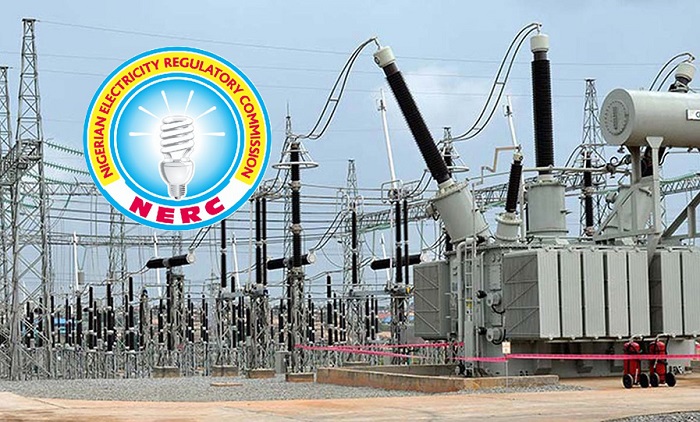
The Nigerian Electricity Regulatory Commission (NERC) has approved N30bn for the third phase of the Meter Acquisition Fund to accelerate the installation of electricity meters for unmetered Band A customers and expand coverage among Band B consumers.

The regulator has also directed electricity distribution companies to complete all meter installations under the programme by 31 May, 2027, warning that customers must not be charged for meters provided through the initiative.

The commission disclosed this in Order No. NERC/2026/121 on the operationalisation of Tranche C of the Meter Acquisition Fund, effective 2 November, 2026. It announced the order in a post on its official X handle on Tuesday.

The post read, “The Nigerian Electricity Regulatory Commission (NERC or the Commission) hereby informs electricity consumers and stakeholders of the issuance of Order No. NERC/2026/121 on the Operationalisation of Tranche C of the Meter Acquisition Fund, effective 2 November 2026.

“The Commission has approved N30 billion for Tranche C, to be allocated among the eleven Distribution Companies (DisCos) in proportion to their respective contributions to the Fund. The funding is intended to meter all remaining unmetered Band A customers and accelerate the metering of Band B customers, with equitable distribution across states within the respective DisCo franchise areas.”

The latest funding is part of the Federal Government’s Presidential Metering Initiative, which seeks to close the country’s persistent electricity metering gap, protect consumers from estimated billing and improve accountability in the power distribution system.

According to the order, the approved N30bn will be shared among the 11 electricity distribution companies in proportion to their respective contributions to the Meter Acquisition Fund.

See also  Lagos govt begs medical doctors to suspend three-day warning strike

The funds will be used to provide meters for all remaining unmetered Band A customers while accelerating installations for Band B consumers. The commission also directed that the distribution should be equitable across states within each DisCo’s franchise area.

Under the arrangement, the distribution companies are required to conduct transparent procurement exercises involving eligible Local Meter Manufacturers and Assemblers and Meter Asset Providers with verified meter stocks.

NERC said it had prescribed maximum procurement prices based on the median national bid prices submitted by Meter Asset Providers during the September 2026 bidding cycle.

The commission also introduced a two-stage payment arrangement to strengthen accountability and ensure that providers deliver the meters before receiving full payment.

Under the arrangement, 70 per cent of the contract payment will be released after verification of delivered meter stocks, while the remaining 30 per cent will be paid after the complete installation of the meters has been confirmed.

The regulator reiterated that all meters supplied and installed under the fund must be provided free of charge to electricity consumers, warning against attempts by distribution companies or their agents to sell them.

It further directed that every meter supplied under the programme must prominently display the name of the relevant distribution company, the applicable tranche of the Meter Acquisition Fund and the inscription, “NOT FOR SALE”.

“The Commission reiterates that all meters supplied and installed under the MAF programme shall be provided FREE OF CHARGE to customers. Every meter must prominently display the relevant DisCo’s name, the applicable MAF tranche and the inscription “NOT FOR SALE.

See also  Africa Energy Bank ready to begin operations — FG

“Where a DisCo initiates the relocation of an existing customer’s connection point for revenue protection purposes, the cost shall be borne by the DisCo. The Order also provides sanctions where DisCo defaults impede meter installation,” the report added.

The order also addressed situations where distribution companies relocate customers’ existing connection points for revenue protection purposes.

According to NERC, where a DisCo initiates such relocation, it must bear the associated cost rather than transfer the financial burden to the affected customer.

The commission also provided for sanctions where defaults by distribution companies obstruct or delay meter installations, reinforcing the responsibility of operators to ensure that the programme is implemented within the stipulated period.

To prevent diversion of funds and ensure proper implementation, the regulator prescribed monitoring, reporting and evaluation requirements for the Fund Manager, distribution companies and participating meter providers.

It also directed that all supply and installation contracts executed under Tranche C must be submitted to the commission.

Source: punchng.com

FOLLOW US ON:

FACEBOOK

WHATSAPP CHANNEL

TWITTER

PINTEREST

TIKTOK

YOUTUBE

LINKEDIN

INSTAGRAM

Continue Reading

Trending