Connect with us

News

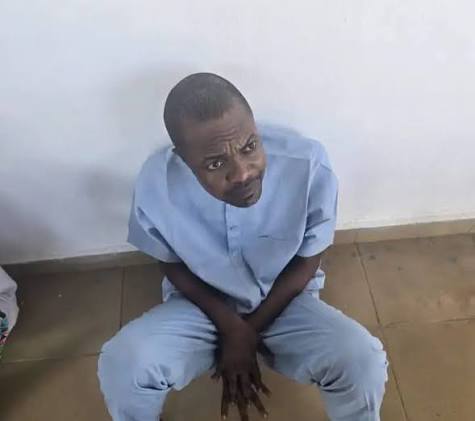
Fake agency probe: ICPC team grills embattled PFIPC DG inside police detention

Published

on

The investigation into the controversial Presidential Foreign Intervention Promotion Council (PFIPC) intensified on Wednesday as the Independent Corrupt Practices and Other Related Offences Commission commenced interrogation of the alleged founder of the disputed agency, Adeniyi Adeyemi, inside police detention.

The PFIPC controversy erupted after allegations that Adeyemi presented himself as the Director-General of a presidential body that several government institutions said they neither created nor recognised, while questions were raised over alleged forged documents, bank accounts and the council’s inclusion in budget proposals.

Adeyemi’s questioning, however, came after an earlier attempt by the anti-graft agency to interview him was stalled when his new lawyer failed to appear at the Nigeria Police Force National Cybercrime Centre, where the suspect was being held.

ICPC operatives, who arrived at the facility around 10am, had prepared for the session but suspended the exercise to allow Adeyemi secure legal representation in line with his rights under criminal procedure.

The interrogation later commenced after his new lawyer arrived, but the session was not concluded as investigators continued probing allegations surrounding the creation, operations and claims of official recognition by the purported PFIPC.

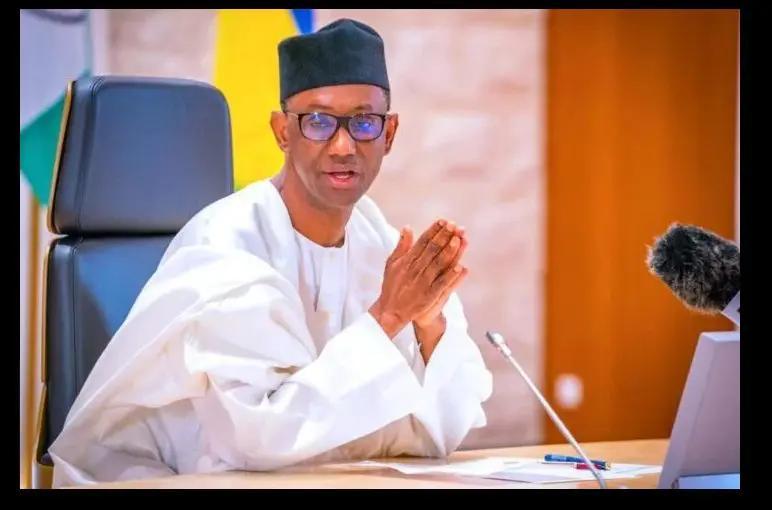
The development came as the controversy widened, with the House of Representatives set to question top government officials, including the Secretary to the Government of the Federation, George Akume; National Security Adviser, Nuhu Ribadu; Attorney-General of the Federation, Lateef Fagbemi (SAN); Inspector-General of Police, Olatunji Disu; and Accountant-General of the Federation, Shamseldeen Ogunjimi, over the council’s appearance in the 2026 budget and its alleged access to government facilities on Thursday (today).

Adeyemi grilled

A senior police source familiar with the investigation, who spoke on condition of anonymity because he was not authorised to comment on the matter, said the anti-graft agency rescheduled Adeyemi’s grilling session from 10am to 3pm on Wednesday to ensure compliance with the suspect’s right to legal representation.

“The ICPC earlier today (Wednesday) was at the Cybercrime Centre in an attempt to interview Adeyemi around 10am, but the interview could not hold after the set-up had been done because his lawyer was absent. That was why the interview was later fixed for 3pm,” the source said.

Another police source confirmed that the interrogation eventually commenced after Adeyemi’s lawyer arrived but noted that the session could not be concluded.

“His lawyer eventually came and he was later interrogated in the presence of his lawyer. They couldn’t conclude the questioning today and there’s the possibility of them continuing some other day, probably tomorrow (today),” the source said.

Under Nigeria’s criminal justice procedure, suspects undergoing formal interrogation by law enforcement and anti-corruption agencies are entitled to legal representation, and investigators typically defer questioning until counsels are present to safeguard the integrity of the process.

On Monday, the Chief of Staff to the President, Femi Gbajabiamila, was at the headquarters of the Independent Corrupt Practices and Other Related Offences Commission in Abuja.

Adeyemi, who was arrested last week, claimed that Gbajabiamila gave him an appointment letter for the role, adding that he gave money to the Chief of Staff to secure the job.

See also  Coalition demands Atiku and Obi’s full membership on 2027 Presidency

But the former House of Representatives Speaker has denied the allegations, filing a suit against Adeyemi. The Presidency has also said the council does not exist.

​Gbajabiamila’s legal counsel, Jiti Ogunye of Jiti Ogunye Chambers, confirmed the Chief of Staff’s appearance in an official statement.

Ogunye said, “​In full cooperation with the ICPC acting as directed by the President of Nigeria, I hereby confirm that my client, Femi Gbajabiamila, Chief of Staff to the President of Nigeria, responded to the invitation of the Independent Corrupt Practices Commission and appeared at about 15:00hrs on Monday, July 20, 2026, as part of the ongoing investigation into the activities of the ‘PFIPC’ fake agency, among others.

“My client gave his testimony, responded to questions accordingly, and has returned to his duty post.”

Gbajabiamila’s appearance at the anti-graft agency comes weeks after President Bola Tinubu directed the ICPC to conduct a comprehensive investigation into the activities of the fictitious Presidential Foreign Intervention Promotion Council, which the Presidency said was never established by the Federal Government.

In a statement issued on July 7 by the President’s Special Adviser on Information and Strategy, Bayo Onanuga, Tinubu ordered the anti-corruption agency to investigate the activities of the fake council and submit a report within 30 days.

The Presidency said the investigation should cover the alleged use of forged appointment letters and official government documents by one Adeniyi Adeyemi, who allegedly presented himself as the Director-General of the non-existent council while falsely claiming to be a presidential appointee.

The probe also includes allegations that Adeyemi used the false claim to seek official recognition and diplomatic support, including visa facilitation, and allegedly opened multiple bank accounts in the names of purported government agencies using forged documents.

Reps committee

The House of Representatives Ad-hoc Committee investigating the controversial establishment and operations of the Presidential Foreign Investment Promotion Council is set to question several top government officials today over their alleged roles in the activities of the council and its inclusion in the 2026 Appropriation Act.

Among those expected to appear before the panel are the Secretary to the Government of the Federation, Senator George Akume; the National Security Adviser, Mallam Nuhu Ribadu; the Inspector-General of Police, Olatunji Disu; the Attorney-General of the Federation and Minister of Justice, Lateef Fagbemi (SAN); the Minister of Finance, Taiwo Oyedele; and the Accountant-General of the Federation, Shamseldeen Ogunjimi.

Others expected before the committee, chaired by Plateau lawmaker Yusuf Gagdi, include the Minister of Foreign Affairs, Ambassador Bianca Odumegwu-Ojukwu; Director-General of the Budget Office of the Federation, Tanimu Yakubu; Executive Secretary/Chief Executive Officer of the Nigerian Investment Promotion Commission, Aisha Rimi; officials of the National Economic Council Secretariat; as well as representatives of the Revenue Mobilisation, Allocation and Fiscal Commission and the National Salaries, Incomes and Wages Commission.

The officials are expected to clarify their respective roles in the inclusion of the PFIPC in the 2026 budget estimates presented by President Bola Tinubu to the National Assembly, as well as issues surrounding the allocation of office accommodation to the council.

The latest hearing follows revelations by the Permanent Secretary, Ministry of Foreign Affairs, Ambassador Dunoma Ahmed, who distanced the ministry from the activities of the council and questioned its legitimacy.

See also  Anioma, Igbanke people in Delta back bill for creation of Anioma State

Ahmed told lawmakers that an individual identified as Prince Adeniyi Adeyemi approached the ministry on three occasions — June 26, 2025; August 5, 2025; and June 5, 2026 — introducing himself as the Director-General of both the Presidential Economic Advisory Council and the Presidential Foreign Investment Promotion Council.

He said Adeyemi sought the ministry’s endorsement and collaboration to organise a World Investment Summit in Nigeria.

According to the Permanent Secretary, the ministry rejected the requests after conducting due diligence, citing inconsistencies in the correspondence and concerns over the authenticity of the council and its purported leadership.

Ahmed further disclosed that the ministry wrote to the Office of the National Security Adviser on October 16, 2025, seeking clarification on the status of the organisation and the identity of its alleged Director-General.

He said the NSA’s office replied on November 26, 2025, informing the ministry that inquiries made with both the Office of the Secretary to the Government of the Federation and the Office of the Chief of Staff to the President showed that Prince Adeyemi was unknown to any Federal Government office.

The Permanent Secretary also told the committee that the Ministry of Foreign Affairs had no involvement in any diplomatic engagement involving the PFIPC and did not facilitate meetings between the council and foreign governments, diplomatic missions, international organisations or prospective investors.

He added that no memorandum of understanding, treaty or investment agreement was negotiated or executed through the council, while no Nigerian diplomatic mission abroad was instructed to recognise or engage with it.

The committee also directed the Inspector-General of Police to produce two suspects reportedly arrested in connection with documents allegedly obtained from the Office of the Head of the Civil Service of the Federation, which purportedly approved the council’s participation in the federal budget process and granted a waiver for the deployment of about 300 personnel.

Akume is also expected to explain the circumstances surrounding the allocation of office space within Phase III of the Federal Secretariat complex, which was originally assigned to the Office of the Secretary to the Government of the Federation in 2023 but was allegedly transferred to the PFIPC.

At Tuesday’s proceedings, Gagdi expressed dissatisfaction with the failure of several invited officials to honour the committee’s invitation, warning that the panel would invoke its constitutional powers to compel their appearance if they failed to attend the next sitting.

The investigation follows concerns over the alleged operation of the PFIPC as a government agency despite claims by several federal institutions that they neither established nor recognised it.

Lawmakers are seeking to determine how the council allegedly secured office accommodation, sought official recognition from government agencies and appeared in the 2026 budget proposals despite questions surrounding its legal status.

The outcome of the probe is expected to guide further legislative action as the House seeks to establish whether there were breaches of due process or abuse of public institutions in the operations of the council.

See also  Why I returned to Nigeria on Ivorian jet — Jonathan

Atiku tackles Tinubu

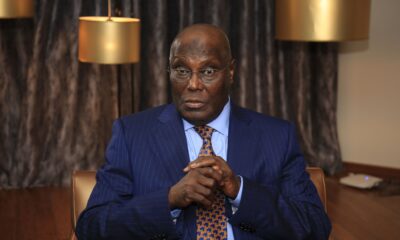
Meanwhile, former Vice-President Atiku Abubakar intensified the political dimension of the controversy, accusing the Tinubu administration of failing to provide clarity over conflicting explanations surrounding the operations of the alleged agency and demanding accountability from the government.

Atiku said the differing positions of the Office of the Accountant-General of the Federation and the Central Bank of Nigeria over the opening of bank accounts linked to the PFIPC had raised serious questions about the handling of the matter.

In a statement issued by his Special Assistant on Public Communication, Phrank Shaibu, the former vice-president said President Bola Tinubu should either order an independent investigation into the controversy or take responsibility for resolving the issues.

He said, “This is where the cover-up appears to begin. One institution denied authorising the opening of the PFIPC accounts and alleged forgery. Another, before the representatives of the Nigerian people, stated that the accounts were opened on the directive of the Accountant-General after due process was followed. Both accounts cannot be true.”

Atiku argued that the conflicting accounts from the two government institutions had created a credibility crisis for the administration.

“When two of your most sensitive financial and monetary authorities publicly contradict each other on the same transaction, no serious leader needs a clairvoyant to know that his administration is trapped in a web of deception and a profound crisis of credibility.

“The President cannot continue to watch from the sidelines while his government tears itself apart with conflicting narratives,” he said.

The former Vice President challenged Tinubu to clarify which of the two official positions his administration recognised.

“President Tinubu must answer a simple question: which version does he believe — the Accountant-General’s or the Central Bank’s? If he believes neither, why has he not acted?” he asked.

He also criticised what he described as the silence of the Attorney-General of the Federation, saying it had further heightened public concerns over the controversy.

Atiku urged the National Assembly to invite the Accountant-General of the Federation and the Governor of the Central Bank of Nigeria to appear jointly before its investigative committee to explain the conflicting claims.

“The PFIPC scandal has ceased to be merely about disputed accounts. It has become a referendum on President Tinubu’s integrity and competence,” he said.

He maintained that the President could restore public confidence only by ensuring an independent investigation into the matter.

“President Tinubu owes Nigerians an unreserved apology for presiding over this unprecedented collapse of public accountability. If he cannot immediately restore public confidence through a genuinely independent investigation and ensure that everyone responsible is held to account, then he has forfeited the moral authority to continue in office. The honourable course is simple: apologise to Nigerians and resign,” he said.

The PFIPC controversy followed conflicting explanations by the Office of the Accountant-General of the Federation and the Central Bank of Nigeria over the opening of accounts linked to the council.

punch.ng

FOLLOW US ON:

FACEBOOK

TWITTER

PINTEREST

TIKTOK

YOUTUBE

LINKEDIN

Continue Reading
Click to comment

Leave a Reply

Your email address will not be published. Required fields are marked *

News

NHRC Demands Arrest, Prosecution Of Sheikh Jingir Over Hate Speech

Published

on

National Human Rights Commission (NHRC) has called for the immediate arrest and prosecution of Islamic cleric, Sheikh Sani Yahaya Jingir, over alleged hate speech and incitement to religious hatred in a viral video ahead of the 2027 general elections.

The commission’s executive secretary, Chief Tony Ojukwu (SAN), made the demand yesterday in Abuja.

He said the cleric’s remarks advocating religiously exclusive politics and referring to some Nigerians as “infidels” were dangerous, divisive and capable of triggering violence in an already sensitive political environment.

Ojukwu urged the inspector -general of police (IGP), the director-general of the Department of State Services (DSS) and other relevant security and law-enforcement agencies to act immediately.
He stressed that no individual, regardless of status, influence or political affiliation, should be above the law.

Ojukwu said the commission viewed with “grave concern” the remarks attributed to Jingir, particularly his call on supporters to obtain their permanent voter cards (PVCs) to “show their limit,” describing the comments as an attempt to exploit religion for political mobilisation.

According to him, the statements violate the principles of equality, non-discrimination and peaceful coexistence guaranteed by the 1999 Constitution and Nigeria’s international human rights obligations.

“The Commission finds these remarks to be hate speech and incitement to religious hatred and potential violence. At a time when we are preparing for another general election, such utterances are reckless and dangerous.

“They serve no purpose other than to divide Nigerians along religious lines and set citizens against one another,” Ojukwu said.

See also  SEE FULL LIST: What Nigerians will pay for UK visas, citizenship from April

He warned that failure by the authorities to respond decisively to inflammatory statements could embolden other influential individuals, including religious and political leaders, to escalate divisive rhetoric as the 2027 elections draw closer.

“We cannot afford to look away. If we fail to speak and act now, we embolden both Christian and Muslim clerics and other influential persons to make worse statements in the coming months. That path leads only to crisis,” he warned.

The NHRC Executive Secretary therefore called for prosecution of Jingir, insisting that legal action must be pursued irrespective of his status or political affiliation.

He said decisive enforcement of the law would send a strong warning to individuals who might attempt to manipulate religious sentiments or exploit identity politics for political advantage during the election season.

Ojukwu, who is also the Chief Human Rights Officer of Nigeria, further appealed to religious leaders, traditional rulers and politicians to desist from inflammatory and divisive rhetoric capable of undermining national unity.

He urged Nigerians to reject identity-based politics and instead assess political leaders on the basis of competence, service delivery, accountability and respect for human rights.

“The Commission will continue to monitor compliance and will engage with security agencies, INEC, and civil society to ensure that the 2027 elections are free from hate and violence,” he said.

FOLLOW US ON:

FACEBOOK

TWITTER

PINTEREST

TIKTOK

YOUTUBE

LINKEDIN

INSTAGRAM

Continue Reading

News

Obasanjo, Obi demand major shake-up of democratic institutions

Published

on

Former President Olusegun Obasanjo and the presidential candidate of the Nigeria Democratic Congress for the 2027 election, Peter Obi, on Tuesday criticised Nigeria’s democratic system and institutions, with Obasanjo calling for an African model of democracy and Obi alleging widespread institutional decay.

They spoke at the 2026 Goodluck Jonathan Foundation Democracy Dialogue in Bauchi, the Bauchi State capital.

The dialogue, organised by the Goodluck Jonathan Foundation, was themed, “Beyond Elections: Can Political Parties and the Judiciary Save African Democracy?”

Obasanjo, who chaired the event, said the Western liberal democracy adopted by many African countries had failed to reflect the continent’s history, culture and values.

He described the system as a “winner-takes-all” model that had encouraged political opponents to see one another as enemies rather than partners in governance.

“The democracy we practise has no African context, no African content, and if you try to use what is not meant for you to serve your purpose, it is like a dress for which you are not measured,” he said.

According to him, the first-past-the-post system had created a situation where winning an election by a single vote could give the victor total control.

“In practice, we have winner takes all, first past the post. If you beat me by one vote, then you take it all and whatever I have does not matter,” the former President said.

Obasanjo said the concept of a “loyal opposition” inherited from Western political systems was difficult to sustain in the African context because opposition was often interpreted as enmity.

See also  SEE FULL LIST: What Nigerians will pay for UK visas, citizenship from April

“So, what do you do with your enemy? You crush him and destroy him, and that is what we have,” he said.

The former President also warned against neglecting Nigeria’s diversity, saying it was fundamental to the country’s identity.

“Nigeria is what it is because of our diversity. Remove diversity out of Nigeria, you will probably have the Republic of Oduduwa; that will not be Nigeria. Or the Republic of Danfodio; that will not be Nigeria. That diversity must be nourished and be taken care of,” he said.

He also expressed concern over the increasing influence of money and inducements in politics, saying they had risen “by leaps and bounds.”

Obasanjo further lamented the under-representation of women in Nigerian politics, noting that no woman had been elected governor since the beginning of the Fourth Republic more than two decades ago.

He argued that African countries should not be afraid to review the democratic model they inherited from the West, noting that even Western countries were reassessing aspects of their political systems.

“Call it what you like, just make sure it has history, culture and values that are African. You can call it democracy if you like, you can call it African democracy. In that case it will be African with African context and African content,” he said.

On his part, Obi accused some academics, lawmakers, lawyers, religious leaders and judicial officers of contributing to the deterioration of Nigeria’s democratic institutions.

The former Anambra State governor recalled his experience of challenging his election at the Court of Appeal, saying five judges whom he had never met ruled in his favour.

See also  Why I returned to Nigeria on Ivorian jet — Jonathan

“I went to the Court of Appeal; five judges I had never met gave judgment in my favour. So, look at that and look at what is happening today in Nigeria, where professors are now aiding illiterates to rig elections,” Obi said.

He alleged that lawmakers had weakened electoral laws, while some senior lawyers were defending persons accused of forgery.

“Where lawmakers have removed forgery as an offence in electoral matters, and Senior Advocates of Nigeria are defending forgery. Our religious leaders are now praying for criminal politicians for blessing. We have a crisis,” he said.

Obi also criticised the judiciary, alleging that some judges had become politically aligned.

“And above all, our judges are now singing, ‘On your mandate we stand,’” he said.

Meanwhile, the National Chairman of the Labour Party, Nenadi Usman, urged politicians preparing for the 2027 elections to emulate former President Jonathan’s peaceful conduct during the 2015 presidential election.

Usman said Nigeria’s democracy survived the political tension surrounding the 2015 election because Jonathan conceded defeat to Muhammadu Buhari before the final results were fully announced.

She said Jonathan had demonstrated that political power was not worth the blood of Nigerians.

“Nigeria’s democracy survived the doomsday predictions of bookmakers in 2015 because Jonathan conceded defeat in that year’s election, even before the final votes were tallied,” she said.

Usman urged politicians to place national interest above personal ambition and avoid inflammatory rhetoric that could threaten Nigeria’s democratic stability.

She, however, questioned whether politicians seeking the presidency in 2027 would be willing to make similar sacrifices for national unity.

See also  Cash crunch: Ministers lament as N10tn capital funding stalls

The LP chairman also described her party as the most structured opposition party in Nigeria, citing its relationship with the Nigeria Labour Congress and the Trade Union Congress.

“With the combined strength of the NLC and the TUC, both of which are constitutional members of the party, no Nigerian political party is better positioned to show the APC government the exit door than the Labour Party,” she said.

The dialogue was attended by Jonathan, former Vice-President Namadi Sambo, Bauchi State Governor Bala Mohammed, former Senate President Anyim Pius Anyim, former Plateau State Governor Jonah Jang, APC Deputy National Chairman (South), Dr Ben Nwoye, and the Emir of Bauchi, Rilwanu Suleiman Adamu.

The event brought together political leaders, constitutional experts and civil society representatives to deliberate on the role of political parties and the judiciary in strengthening democracy and preventing democratic reversals in Africa.

Source: punchng.com

FOLLOW US ON:
FACEBOOK

TWITTER

PINTEREST

TIKTOK

YOUTUBE

LINKEDIN

INSTAGRAM


Continue Reading

News

No difference worth breaking Nigeria apart – Tinubu

Published

on

President Bola Tinubu has called on Nigerians to preserve the unity of the country despite their differences, saying dialogue remains essential to sustaining Nigeria as a united nation.

Tinubu, represented by the Deputy President of the Senate, Barau Jibrin, stated this on Tuesday at the International Conference on Security and National Unity, organised by Jama’atu Izalatil Bid’ah Wa Iqamatus Sunnah in collaboration with the Muslim World League.

The President said the government was committed to addressing Nigeria’s security challenges and promoting peace globally through collaboration with other nations.

He said, “Not only that, the government is determined to make sure that we remain united as a country, despite our differences, whatever the differences may be. We should talk and remain in this country, and allow this country to remain a united nation, a united country.”

Tinubu said the conference was timely given the multiple security challenges confronting the world, adding that its deliberations would contribute to efforts to achieve sustainable regional, continental and global peace.

He also commended the Muslim World League for partnering JIBWIS and choosing Nigeria as the first country to host the conference.

The National Chairman of the All Progressives Congress, Prof Nentawe Yilwatda, in his remarks, warned political leaders against exploiting religion and ethnicity for political advantage, saying such actions could deepen divisions and leave lasting damage on the country.

The APC chairman said Nigeria’s diversity should be a source of strength rather than division, stressing that religious and ethnic differences should not undermine the shared humanity and common destiny of Nigerians.

See also  Coalition demands Atiku and Obi’s full membership on 2027 Presidency

Reflecting on his experience as a displaced person during the Bauchi crisis, Yilwatda said violence did not discriminate between Christians and Muslims as everyone suffered.

“When violence comes, it does not ask whether you are a Christian or a Muslim before it destroys either your home, or your humanity, or your dignity,” he said.

He said his experience of living in an internally displaced persons’ camp had taught him that Nigerians could worship differently but still share the same fears, aspirations and destiny.

“We may worship differently. Or we may suffer together. We dream together. We can build together. And ultimately, we can rise and fall together,” Yilwatda said.

The APC chairman urged politicians to resist the temptation to weaponise religion and ethnicity, warning that temporary political gains could result in permanent damage to the nation.

“To our political leaders, let us resist the temptation to exploit religion or ethnicity for sentiments, and sentiments for temporary political advantage.

“No political victory is worth the permanent damage inflicted on our nation, and we’ve been seeing it every day,” he said.

Yilwatda also urged religious leaders to use their influence to promote peace and reconciliation, rather than hatred and division.

“You as religious leaders, let our mosques and our churches become centres of peace, of reconciliation, and responsible citizenship,” he said.

He called on religious leaders to “preach faith without hatred, conviction without contempt, and truth without incitement,” while urging traditional rulers to make dialogue and reconciliation stronger than retaliation.

Yilwatda further called for a collective commitment by religious leaders, political leaders, traditional institutions and citizens to reject hate speech and protect vulnerable communities.

See also  Daniel, Amosun, Rochas crash, Abiodun, Uzodimma, Bello win APC senate primaries; read details

“We will not use religion to justify violence, and we will reject hate speeches where it comes from a pulpit, or a mosque, or the palace, or a political platform, or the keyboard of our social media,” he said.

He urged Nigerians to build a country where people protect one another irrespective of their religious or ethnic backgrounds, saying, “Not because we share the same faith or ethnicity, but because we share the same humanity.”

Yilwatda said Nigeria must choose peace and ensure that future generations inherit schools, homes and opportunities rather than displacement camps and memories of violence.

The Nigeria Inter-Religious Council also urged Nigerians to reject attempts to weaponise religion, ethnicity and poverty to create division, stressing that humanity remains the common bond among citizens.

The Executive Secretary of NIREC, Prof Cornelius Omonokhua, said Christians and Muslims must promote mercy, compassion, love and respect for human dignity.

Omonokhua said, “No one is created a Christian, and no one is created a Muslim. We are created as human beings; hence what binds us together is humanity.”

He said religion must not be used to justify violence, noting that both Christianity and Islam uphold the sanctity of human life.

He added, “We should never allow anybody to weaponise religion or ethnicity or poverty to turn us against each other. May God give us security and may we continue to live in peace and harmony.”

The NIREC executive secretary said the council had continued to promote human dignity, the common good and welfare of Nigerians through cooperation between Christians and Muslims.

See also  Supreme Court affirms President’s power to declare state of emergency, suspend elected officials

Also speaking, the Sultan of Sokoto and Co-Chairman of NIREC, Sa’ad Abubakar III, called for greater implementation of agreements reached at conferences, saying Nigeria does not lack solutions to its problems.

“We don’t lack solutions to our problems. What we lack is implementation. How to implement whatever we agree to do,” the Sultan said.

He also urged Christians and Muslims to desist from insulting one another, saying, “Christians should stop insulting Muslims. Muslims should stop insulting Christians, and that’s how we live in peace.”

The conference was attended by the Secretary-General of the Muslim World League, Sheikh Mohammad Al-Issa, who is present to witness the signing of the Abuja Declaration, which seeks to establish a new alliance between Muslim and Christian leaders and create a peace-building mechanism to help Nigeria and West Africa prevent religious tensions from escalating into violence.

Sheikh Al-Issa is a leading global voice for moderate Islam and interfaith outreach. He is also the most senior Islamic figure to have visited Auschwitz and, during the papacy of Pope Francis, spearheaded one of the first agreements between an Islamic organisation and the Vatican.

Also present at the ceremony were ministers of the Federal Republic of Nigeria, governors, religious leaders, traditional rulers and a host of other dignitaries.

Source: punchng.com

FOLLOW US ON:

FACEBOOK

TWITTER

PINTEREST

TIKTOK

YOUTUBE

LINKEDIN

INSTAGRAM

Continue Reading

Trending