Connect with us

Education

FG orders recovery of excess payments to university workers, read details

Published

on

The Federal Government has directed federal universities, polytechnics and colleges of education to recover all overpayments arising from the implementation of the 2025/2026 remuneration agreements with tertiary education unions within three months.

The government also capped the payment of excess workload allowance for academic and non-academic staff in federal universities at a maximum of 52 hours per month.

The directives were contained in a November 11, 2026, circular issued by the National Salaries, Incomes and Wages Commission and signed by its Chairman and Chief Executive Officer, Maj. Gen. Junaid S. Bindawa.

The circular, with reference number SWC/S/04/S.149/T/187, was addressed to the Chief of Staff to the President, Secretary to the Government of the Federation, Head of the Civil Service of the Federation, ministers, federal permanent secretaries and heads of government agencies, among others.

The commission said the clarification became necessary following several requests from universities, colleges of education and polytechnics seeking guidance on the implementation of remuneration packages contained in the 2025/2026 agreements between the Federal Government and tertiary education-based unions.

It stated, “Following several requests from Universities, Colleges of Education and Polytechnics on the urgent need for clarification on the implementation of remuneration packages contained in the 2025/2026 Agreements between the Federal Government of Nigeria and the Tertiary Education Institutions Based-Unions, the Commission wishes to clarify as follows.”

On the Consolidated Academic Tools Allowance, the commission said the payment was restricted to academic staff on the Consolidated University Academic Salary Structure and the Consolidated Polytechnics and Colleges of Education Salary Structure.

It explained that vice-chancellors, rectors and provosts were not entitled to the allowance because they were not on the specified salary structures.

The circular stated that the allowance did not apply to the heads of the institutions because they were covered by the Certain Political, Public and Judicial Officer Salaries (Salaries, Allowance, etc.) (Amendment) Act 2008.

It further excluded staff on the Consolidated Medical Salary Structure and associated medical allowances, citing ongoing negotiations between the Federal Government and health-sector unions.

See also  Honorary awards: TASUED dismisses claims of snubbing Gbenga Daniel

The commission said, “This does not apply to staff on Consolidated Medical Salary Structures and associated medical allowances, as collective bargaining is ongoing between the FGN and Health Sector-Based Associations and Unions on the review of CONMESS and associated medical allowances.”

Similarly, it restricted the Consolidated Non-Teaching Tools Allowance to non-academic staff on the Consolidated Tertiary Institutions Salary Structure and Consolidated Tertiary Education Institutions Salary Structure.

The commission also excluded workers on the Consolidated Health Salary Structure and associated medical allowances.

It said, “This does not apply to staff on the Consolidated Health Salary Structure and associated medical allowances, as collective bargaining is ongoing between the FGN and Health Sector-Based Associations and Unions on the review of CONHESS and associated medical allowances.”

On the Excess Workload Allowance, the commission specifically directed that payments to members of ASUU and NASU in federal universities must not exceed 52 hours monthly.

It stated, “A maximum of 52 hours per month applies to the payment of Excess Workload Allowance for the Academic Staff Union of Universities and the Non-Academic Union of Educational and Associated Institutions in Federal Universities.”

The circular also addressed the 10 per cent Earned Academic Allowance, explaining that the provision in the revised salary structure of university academic staff was designed for mainstreaming and budgeting, with five per cent allocated to employees funded by the Federal Government and the remaining five per cent to those funded by university councils through internally generated revenue.

According to the commission, the provision was captured on page 12 of the agreement between the Federal Government and ASUU.

It stated, “The provision of 10% academic earned allowance (EAA) in the table of revised total salary of universities’ academic staff as approved on page 12 of the agreement between FGN and ASUU was for mainstreaming and budgeting – 5% for those funded by FGN and 5% for those funded by Councils through Internally-Generated Revenue.”

However, the commission warned that the implementation must follow its earlier circular of December 30, 2025, which outlined the categories of beneficiaries funded by the Federal Government and university councils.

See also  Suspended FUOYE SUG president reinstated — NANS

It said, “However, the implementation of EAA should be in line with the Commission’s Circular No. SWC/S/04/149/IV/924 dated 30th December 2025, which clearly identified those funded by FGN and Councils, respectively.”

The commission subsequently directed all federal universities, polytechnics and colleges of education to comply with the clarifications and recover excess payments within the stipulated period.

It stated, “All Federal Universities, Colleges of Education and Polytechnics are to comply with these clarifications, and all overpayments should be recovered within three months.”

It added, “All enquiries relating to this circular should be directed to the Commission.”

The directive comes amid the Federal Government’s efforts to implement renegotiated remuneration agreements with academic and non-academic unions in the tertiary education sector after years of disputes over workers’ welfare, salaries, funding and conditions of service.

The Federal Government and ASUU signed their renegotiated 2025 agreement on December 23, 2025, following prolonged negotiations over the 2009 agreement. The deal introduced a 40 per cent upward review of university academic staff emoluments, effective January 1, 2026, alongside improved allowances and pension benefits.

In February 2026, the Minister of Education, Dr Tunji Alausa, announced the commencement of implementation of the 40 per cent increase in the Consolidated Academic Allowance, directing federal universities to reflect the approved adjustments in their payroll systems.

The Federal Government subsequently unveiled the 2026 agreements with academic and non-academic staff unions in October, announcing the payment of approved allowances to eligible personnel across universities, polytechnics and colleges of education, effective January 1, 2026.

The agreements cover unions including ASUU, the Academic Staff Union of Polytechnics, the Colleges of Education Academic Staff Union, the Senior Staff Association of Nigerian Universities and NASU. The government said the agreements were designed to improve staff welfare, strengthen industrial harmony and reduce disruptions to academic calendars.

See also  ASUU mobilises chapters for Oct 13 warning strike

Meanwhile, healthcare professionals in federal universities have threatened legal action against the National Salaries, Incomes and Wages Commission over the contents of the circular.

The affected medical doctors, nurses, pharmacists, medical laboratory scientists and allied health professionals, under the Coalition of Healthcare Professionals in Tertiary Education Institutions of Nigeria, described the circular as discriminatory and contrary to earlier government directives on the allowance.

The National Chairman and Coordinator of CHPTEIN, Musa Shehu, said in his reaction that the disputed circular, with reference number SWC/S/04/S.149/T/187, restricted CONTTA payments to employees on the Consolidated Tertiary Institutions Salary Structure, excluding those on the Consolidated Medical Salary Structure and Consolidated Health Salary Structure.

He noted that the original circulars, “referenced SWC/S/04/S.149/V/1067 for SSANU and SWC/S/04/S.149/IV/1071 for NASU, did not expressly exclude healthcare professionals earning salaries under CONMESS and CONHESS.”

He also maintained that the affected workers were non-teaching employees of federal universities and legitimate members of the two unions, with their check-off dues regularly deducted from their salaries.

“The Budget Office of the Federation calculated the financial implications of CONTTA based on the entire workforce of the Non-teaching staff on the payroll.”

CHPTEIN added that the ministry warned vice-chancellors in paragraph five of the circular that any deviation from the approved scope of funds released by the Federal Government would attract appropriate sanctions.

Questioning the basis for excluding healthcare professionals, the coalition asked why workers classified as non-teaching staff should be denied the allowance when the funds were reportedly calculated based on the entire non-teaching workforce.

Source: punchng.com

FOLLOW US ON:

FACEBOOK

WHATSAPP CHANNEL

TWITTER

PINTEREST

TIKTOK

YOUTUBE

LINKEDIN

INSTAGRAM

Continue Reading
Click to comment

Leave a Reply

Your email address will not be published. Required fields are marked *

Education

US court strikes down Trump’s four-year limit on foreign students, read details

Published

on

A federal judge in the United States has overturned a Trump administration regulation that sought to limit how long foreign students and exchange visitors could remain in the country, Bloomberg Law reports on Monday.

Judge F. Dennis Saylor of the US District Court for the District of Massachusetts ruled on Monday that the Department of Homeland Security regulation exceeded its statutory authority and failed to consider less restrictive ways of achieving its objectives.

The regulation sought to end the long-standing “duration of status” arrangement, which allows international students to remain in the US while making progress towards completing their academic programmes.

Under the proposed changes, holders of F-1 student visas and J-1 exchange visitor visas would have been limited to four years in the country. Those needing more time would have had to apply to the DHS for extensions.

The judge said the agency had not explained how imposing “an unreviewable, completely discretionary renewal system—after a foreign student has already been in the country for four years—meaningfully enhances the ability of DHS to root out cases of fraud, or how the benefits of such a system outweigh the immense costs of abandoning the existing system.”

Saylor said the department had not adequately explained how replacing the existing arrangement with a discretionary renewal system would help prevent immigration fraud or justify the additional burden on foreign students.

The judge also found that the government had failed to establish a rational link between the restrictions and the objectives it claimed they would achieve.

See also  ASUP gives 21-day ultimatum to poly over poor welfare

The case was brought by a coalition of higher education and labour organisations, including the United Auto Workers, which argued that the regulation would disrupt students’ education and make it more difficult for them to complete their degrees.

Saylor had earlier blocked the regulation from taking effect in September. Monday’s order set aside the rule.

The ruling means the proposed four-year limit and the requirement for students and exchange visitors to seek extensions under the new system cannot take effect.

In July, PUNCH Online reported that the Trump administration had introduced a four-year limit on the stay of foreign students and exchange visitors in the US, ending the long-standing “duration of status” arrangement that allowed them to remain in the country for as long as they continued making progress towards completing their academic programmes.

Under the proposed policy, F-1 and J-1 visa holders who needed more than four years would have been required to apply to the Department of Homeland Security for extensions.

Source: punchng.com

FOLLOW US ON:

FACEBOOK

WHATSAPP CHANNEL

TWITTER

PINTEREST

TIKTOK

YOUTUBE

LINKEDIN

INSTAGRAM

Continue Reading

Education

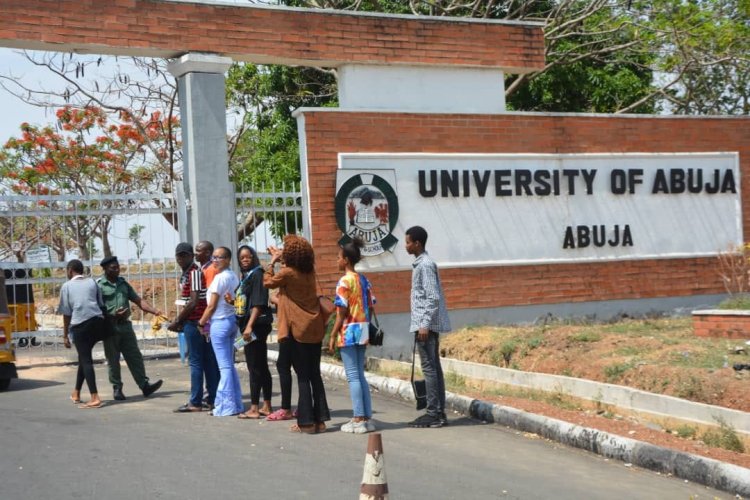
Protests rock UniAbuja over FCTA land cuts, read details

Published

on

The University of Abuja (UNIABUJA) land dispute escalated on Monday as five university unions staged a protest against the alleged reallocation of portions of the institution’s land by the Minister of the Federal Capital Territory, Nyesom Wike, while the FCT Administration defended the decision, citing recommendations by a committee set up in 2016.

The protesters, comprising academic and non-academic staff, students and alumni, urged President Bola Tinubu to intervene and reverse the land reduction, accusing the FCTA of disregarding the rule of law.

However, the administration maintained that Wike merely implemented a decision approved by his predecessor, former FCT Minister Mohammed Bello, following a review of the university’s landholding.

Earlier on Monday, the university community staged a protest, with members of the Academic Staff Union of Universities, Senior Staff Association of Nigerian Universities, Non-Academic Staff Union of Educational and Associated Institutions, Students’ Union Government and the university’s alumni association demanding an immediate reversal of the alleged land reallocation.

The unions accused the FCT minister of disregarding the rule of law by allegedly transferring portions of land allocated to the university to private individuals.

Speaking during the protest in Abuja, ASUU chairman, University of Abuja branch, Sylvanus Ugoh, said the land was allocated to the institution when it was established in 1988, insisting that it should not be taken away for private interests.

Ugoh described the alleged action as an attack on public education and called on the President to intervene by directing Wike to reverse the decision.

He said, “University is a public good; university is public interest. There is nowhere in the world where you take public interest for individual interest.

“We say no to the issue of the honourable minister taking the land that belongs to the university.”

The ASUU chairman warned that the dispute could undermine the Federal Government’s assurances that universities would not experience industrial action under the current administration.

According to him, the university community would not remain passive while land reserved for the development of future generations was allegedly transferred to private individuals.

“We cannot allow what is for unborn generations to be given to individuals. University development is for everyone,” he said.

See also  ASUP gives 21-day ultimatum to poly over poor welfare

Also speaking, SSANU branch chairman, Nurudeen Yusuf, said the unions would resist any attempt to take over the institution’s land, stressing that adequate land was critical to the growth of universities and their academic programmes.

Yusuf cited the university’s Departments of Nuclear Engineering and Aeronautical Engineering as examples of programmes requiring substantial space for research, practical training and other specialised activities.

He explained that nuclear engineering research, in particular, required buffer zones, arguing that the land was deliberately provided to accommodate the institution’s specialised academic and research needs.

The unions’ protest followed an earlier warning by the UniAbuja ASUU branch that it could embark on industrial action if the minister failed to rescind the alleged decision.

The union had also threatened legal action to prevent the disputed land from being taken over and reallocated.

The protesters urged the Federal Government to resolve the matter before it degenerated into a broader crisis capable of disrupting academic activities at the institution.

The PUNCH reports that the dispute dates back to June 2025, when Wike announced plans to reclaim about 7,000 hectares of land originally allocated to the university, reducing its landholding from 11,824 hectares to approximately 4,000 hectares.

The minister had accused the institution of occupying and fencing off extensive portions of land without adequate documentation, directing the FCT Administration to reallocate the reclaimed portion for other developments in the Giri District.

Defending the decision, the FCTA said the action was based on recommendations made by a joint committee established in 2016 by the administration of former FCT Minister Bello.

It said the committee, comprising representatives of the administration and the university, had recommended that the institution’s landholding of over 11,000 hectares be reduced to 100 hectares in line with the National Universities Commission’s recommended size for universities.

In a statement issued on Monday by the minister’s Senior Special Assistant on Public Communications and Social Media, Lere Olayinka, the FCTA described the protest as misplaced, insisting that Wike merely implemented a decision taken by his predecessor.

According to the statement, the joint committee was inaugurated on November 10, 2016, to examine the university’s land size, encroachment by indigenous settlers, illegal developments around its Gwagwalada mini-campus and the issuance of title documents for the institution’s two campuses.

See also  FG releases approved subjects for basic, senior secondary education

Olayinka disclosed that five of the committee’s 12 members were representatives of the university, namely Prof. Otaki Alanana, Prof. A. Mallam, Mohamed Kassim, A.E. Ripite and Sadiq O. Shuaibu.

He said the committee subsequently recommended that the university’s landholding of over 11,000 hectares was far beyond the size recommended by the NUC, adding that the 100-hectare recommendation was approved by Bello.

“It is on record that on November 10, 2016, the then FCT Minister inaugurated a Joint Committee of FCTA and UNIABUJA on Land and Sundry Issues.

“The committee was to look into the UNIABUJA land size vis-à-vis encroachment by indigenous settlers, encroachment on the Gwagwalada Mini Campus land by illegal developers and issuance of titles for the two campuses of the university with their actual land size.

“The committee recommended, amongst others, that the land area of over 11,000 hectares of the main campus was far beyond the recommended size by the National Universities Commission (NUC), and that the recommended size of 100 hectares by the NUC be given to the university.

“The report of the committee was approved by the immediate past FCT Minister, Mohammed Musa Bello, and going by the committee’s recommendation, only 100 hectares of land ought to be given to UNIABUJA,” the statement read.

Olayinka, however, said Wike approved 4,519.80 hectares for the university, rather than the 100 hectares recommended by the committee.

It added that the retained land could accommodate more than 80,000 buildings, using a plot size of 500 square metres.

The FCTA also accused the university of allocating portions of its land to individuals and corporate organisations without consulting the administration, citing the Economic and Financial Crimes Commission as one of the beneficiaries.

The statement questioned the rationale behind the university’s insistence on retaining more than 11,000 hectares, asking what significant expansion the institution had undertaken in its 38 years of existence to justify such a land requirement.

He asked: “Where in the civilised world is a university built on over 11,000 hectares of land, on which over 220,000 houses can be built at 500 square meters per plot?

See also  ASUU mobilises chapters for Oct 13 warning strike

“If the government that owns a university chooses to reduce the size of its land on which no structure has been built in the school’s 38 years of existence, what effect will that have on ASUU, SSANU and NASU? Will that affect the payment of their salaries? Will it affect the students in terms of their studies?”

The media aide urged the academic unions to be honest and clarify their interest in a land dispute between the administration and the management.

The controversy dates back to June 2025, when Wike announced that the administration had reclaimed about 7,000 hectares of land from the university, accusing the institution of laying claim to an extensive portion of government land without adequate documentation.

At the inauguration of access roads in Giri District, the minister directed relevant agencies to carve out about 4,000 hectares for the university, while the remaining portions would be made available for other developments.

Wike had argued that the university could not retain such an extensive landholding without developing it, particularly as the FCTA sought to open up the district for infrastructure and institutional development.

However, the university’s management and ASUU have maintained that the original land allocation was legitimate and necessary for the institution’s long-term development, including academic expansion, agricultural research and other infrastructure.

The university’s Pro-Chancellor, Olanrewaju Tejuoso, had also argued that much of the land left for the institution comprised rocky hills, raising questions about the actual amount of land available for development.

The dispute has also taken a legal dimension, with the university instituting Suit No. FCT/HC/CV/3500/2026 before the High Court of the Federal Capital Territory, Maitama.

In the suit, Justice F.E. Messiri, on August 18, 2026, reportedly ordered the parties to maintain the status quo ante bellum concerning Plot No. 1, Giri District, pending the determination of the substantive matter.

ASUU has subsequently accused the FCTA of violating the court order through alleged allocations of portions of the disputed land to private individuals and companies on September 26, 2026.

Source: punchng.com

FOLLOW US ON:

FACEBOOK

WHATSAPP CHANNEL

TWITTER

PINTEREST

TIKTOK

YOUTUBE

LINKEDIN

INSTAGRAM

Continue Reading

Education

Student’s death sparks outrage at Ogun varsity, read details

Published

on

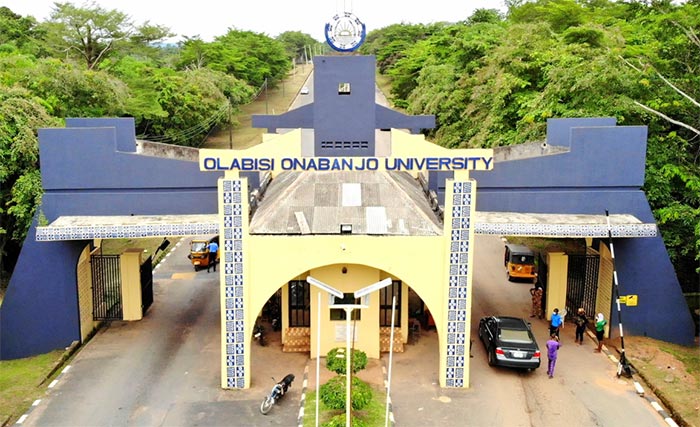
Students of Olabisi Onabanjo University, Ago-Iwoye, Ogun State, have blamed alleged medical negligence at the institution’s health centre and its stop-and-search exercise at the main gate for the death of a 200-level Business Administration student, identified only as AJ.

The student reportedly died after falling off a moving campus shuttle bus on Tuesday, an incident that has sparked outrage among students and alumni, who have called on the university management to address concerns about student safety and healthcare.

PUNCH Metro gathered that some students, who took to social media to express their anger, alleged that the university’s practice of asking students to disembark from shuttle buses for security checks at the gate contributed to the circumstances surrounding AJ’s death.

They claimed that the exercise often delayed students, forcing them to scramble for available seats in departing buses after completing the checks.

According to them, AJ might not have lost his seat and resorted to hanging by the door of the moving shuttle bus if staff had not asked him to disembark at the gate.

The students also accused the university’s health centre of failing to provide immediate medical attention to the injured student, alleging that staff demanded his identification card before attending to him.

One social media user, @just_prinnie on TikTok, questioned why university medical personnel would insist students present ID cards before receiving emergency treatment.

“Why are university medicals still asking for student IDs before they treat them in this big 2026?” the user wrote.

One of the school’s alumni on TikTok, user @AKBAR/MOM+lifestyle, recalled an unpleasant experience at the university clinic, alleging that medical personnel had ignored students seeking treatment, including those in serious conditions.

See also  WAEC confirms new Nigeria head

The user wrote, “That’s exactly how they attend to students, even in emergency cases. I can vividly remember my experience years back when I was still in school.

“I was seriously ill and went to the school clinic for treatment, but all they did was ignore the students waiting outside while some staff sat inside eating or pressing their phones.

“When I eventually went in to meet a doctor, all she could tell me was that I was disturbing her. I was so disappointed. I even noticed her packing some hospital materials into her bag, which made me question the kind of care students were receiving.”

The user added that the experience had made them lose confidence in the clinic, prompting them to register with a private hospital.

Another TikToker, @Ponmilé, condemned the alleged insistence on medical identification cards during emergencies, saying students needed immediate attention rather than administrative demands.

“I couldn’t sleep all night. Nah mini campus I dey, and we saw his dead body when he was brought from the clinic. I wasn’t able to sleep. Rip AJ,” @Sofiyyah added.

Similarly, an X user, @Ola_is_back, also accused the university’s health centre of prioritising documentation over emergency treatment, claiming to have experienced similar treatment after an accident on campus.

“OOU failed that boy. Reading the union’s press statement broke my heart. A student was rushed to the University Health Centre in an emergency, and instead of treating him, staff asked for his medical ID card. A life was on the line, and they wanted paperwork.

“I know that feeling personally. When I had an accident on campus, I was bleeding from my head, arm and leg, and the nurses told me to log into my portal to prove I have completed medicals before they’d attend to me,” the user wrote.

Another student, @divellexx, who identified as a final-year student, said they would rather seek medical attention outside the university than visit its health centre.

See also  Suspended FUOYE SUG president reinstated — NANS

The user alleged that students’ welfare and wellbeing were not being given adequate attention, adding that similar complaints had emerged repeatedly.

The Students’ Union, in a statement issued on Tuesday, also alleged that the university clinic demanded the presentation of the victim’s identification card before treatment could be administered, adding that “sadly, within minutes, the student passed away.”

The union described the circumstances surrounding the incident as disturbing, raising concerns about the driver’s conduct, the safety of campus transportation and the response of the university’s health facility.

Beyond the concerns about the clinic, students also called for a review of the stop-and-search exercise at the university’s main gate, describing it as poorly organised and a source of unnecessary delays.

An X user, @investor_jnr, called for an end to the practice of asking students to disembark from buses for security checks.

“The tradition of asking students to get down at the school gate for whatever searching should be abolished in OOU! It just doesn’t and will never make any sense!” the user wrote.

Another user, Jiggy Elumelu, said the incident should prompt the university management to reconsider how security checks were conducted.

The user said, “But this should also make the school authorities rethink the stop-and-search exercise at the main gate. What exactly is the purpose if students are still being delayed and left rushing to catch their buses?

“If security checks are necessary, let them be properly organised so every student can gain access without unnecessary delays. Security should protect students, not create additional pressure for them.”

See also  FG drops mother tongue policy

Similarly, @IMOLEAYO_9 recalled experiencing delays caused by the exercise during their time at the institution in 2015, alleging that buses sometimes left students behind after the security checks.

Another user, @ridwanom8, also criticised the gate restrictions, alleging that students without medical identification cards were sometimes denied access to the university’s mini campus.

Expressing concern over the incident, @LokeTyg said the university had lost two students to vehicle-related accidents within 24 hours, calling for improved safety measures.

Recall that the university management, in a separate statement issued on Tuesday, announced the suspension of lectures and other academic activities for two days following the student’s death.

In the statement, signed by Wale Balogun on behalf of the Deputy Registrar, Corporate Affairs Division, the university said the Vice-Chancellor, Prof. Ayodeji Agboola, had expressed condolences to the family, friends, coursemates and lecturers of the deceased.

Meanwhile, efforts to reach the university’s public relations officer for comments on the concerns raised by the students proved abortive, as calls to his phone were unsuccessful.

A WhatsApp message sent to him had also not received a response as of the time of filing this report.

Source: punchng.com

FOLLOW US ON:

FACEBOOK

WHATSAPP CHANNEL

TWITTER

PINTEREST

TIKTOK

YOUTUBE

LINKEDIN

INSTAGRAM

Continue Reading

Trending