Connect with us

News

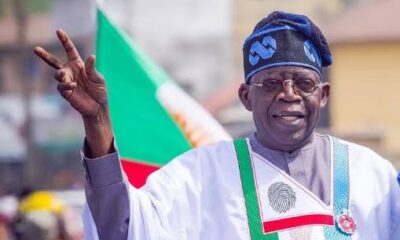
Why Tinubu doesn’t want his FBI records released – Reno Omokri

Published

on

Former presidential aide, Reno Omokri, has defended President Bola Tinubu’s opposition to the public release of his records held by the United States Federal Bureau of Investigation, arguing that the documents are not necessarily criminal records.

Omokri said the presence of Tinubu’s name in FBI records did not mean that the President had a criminal record, arguing that the agency maintains extensive non-criminal files on individuals.

He stated this in a statement on X on Monday while reacting to the controversy surrounding Tinubu’s efforts to prevent the release of unredacted records held by the FBI and Drug Enforcement Administration.

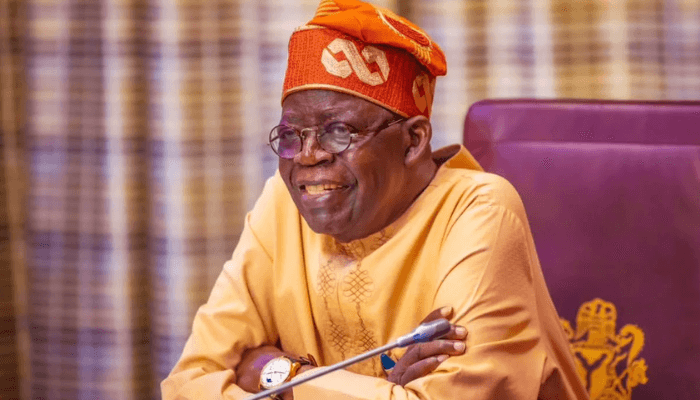
Reno Omokri
File photo of the former presidential aide, Reno Omokri.

Omokri said, “President Bola Tinubu has no criminal record in the United States, Nigeria, or anywhere else, and the FBI has not provided any criminal record on the President to anyone because none exists. Yes, FBI records may contain his name, but they are NOT criminal records.”

He explained that the FBI could have records on foreign nationals who had applied for US visas or undergone background checks.

“This is because the FBI conducts MANDATORY background screenings on behalf of the Department of State and the Department of Homeland Security on US visa applicants,” he said.

“Thus, as a US citizen or resident, or even as a foreign national, if your name is run through the FBI databases, it is likely to bring up hundreds of pages of records. This does not mean that the records are criminal. In most cases, they will be benign.”

According to Omokri, the records could contain sensitive personal information, including biometric, biographical and financial details.

“Such records may include personal biometric, biographical, and financial information, such as fingerprints, DNA, bank statements, and other private records,” he said.

See also  AGF supports legal action against non-performing political parties

He then questioned whether Nigerians would want their private information released to political opponents.

“Would you, as an individual, want your private records released to your political opponents, even if they were non-criminal?”

Omokri also claimed that the US authorities had previously cleared Tinubu of criminal wrongdoing.

He referred to correspondence he said was exchanged between the US Embassy and Nigeria’s then Inspector-General of Police, Tafa Balogun, in February 2003.

According to him, Balogun had written to the US Embassy seeking information on whether the FBI had any criminal records involving Tinubu, who was then Governor of Lagos State.

Omokri said the embassy responded the following day and gave what he described as an “all clear” regarding criminal records involving Tinubu.

He said, “This was consistent with my findings when I visited Chicago in 2022, as a member of the opposition, to establish the truth about then-Presidential candidate Bola Tinubu’s academic and other records.”

Omokri added, “Nigerians may want to find attached the response from the Embassy of the United States absolving the then-Governor of Lagos of any wrongdoing or criminal conduct, charges, or activity whatsoever.”

He challenged anyone who doubted the authenticity of the document to seek clarification from the US Embassy.

“Those who may question the authenticity of this document may also wish to contact the US Embassy in Abuja or Lagos for clarification,” he said.

Omokri’s comments came amid an ongoing legal battle in the United States over access to Tinubu’s records.

PUNCH Online had reported that Tinubu had asked the United States District Court for the District of Columbia to reject a request seeking the release of his unredacted records held by the FBI and DEA.

See also  Power outages, insecurity top business challenges – CBN survey

The President’s lawyers argued that the US Freedom of Information Act and Privacy Act protected the records from disclosure, while also contending that there was no public interest recognised under US law that justified releasing the information.

The lawyers also argued that the request was politically motivated and sought information about Tinubu because of his position as Nigeria’s President.

The case followed a FOIA request by American transparency activist Aaron Greenspan, who sought access to records relating to Tinubu.

The FBI has invoked several FOIA exemptions in resisting the release of portions of the records, including provisions relating to privacy, confidential sources, investigative techniques and the safety of individuals.

The controversy over Tinubu’s US records dates back to the 1990s and became a major issue during the build-up to the 2023 presidential election.

In 1993, a US District Court in Illinois ordered the forfeiture of $460,000 held in an account linked to Tinubu after US authorities alleged that the funds represented proceeds of narcotics trafficking or were involved in prohibited financial transactions.

The All Progressives Congress maintained during the presidential election litigation that the proceeding was a civil forfeiture case and not a criminal conviction.

The Presidential Election Petition Court, in September 2023, held that the petitioners had failed to establish that Tinubu was arrested, arraigned, convicted or sentenced in a criminal case in the US.

Omokri maintained that the current controversy should not be used to portray Tinubu as having a criminal record.

He said, “President Bola Tinubu has no criminal record in the United States, Nigeria, or anywhere else.”

See also  Court halts Willie Obiano’s N4bn money laundering trial indefinitely

He also argued that the public should distinguish between an FBI file and a criminal record.

“Please fact-check me: The US FBI regularly keeps billions of non-criminal files on American citizens and residents, as well as foreign nationals, through the FBI’s Central Records Systems and Next Generation Identification database,” he said.

Omokri said the release of private records should not be treated as an automatic public right merely because the individual concerned is a political figure.

“Would you, as an individual, want your private records released to your political opponents, even if they were non-criminal?” he repeated.

Meanwhile, opposition groups have continued to demand the release of the records, arguing that Nigerians have a right to know information about the President’s past.

The African Democratic Congress spokesperson, Bolaji Abdullahi, said Tinubu should support the release of the records if he had nothing to hide.

“Why is the President opposing the release of his past records? That is suspicious. The President should allow them (records) to be released to clear himself,” he said.

Similarly, the Nigeria Democratic Congress National Publicity Secretary, Osa Director, said Nigerians deserved to know the truth and urged Tinubu to allow the release of the records.

The ongoing US case concerns access to government records under the FOIA and does not, by itself, constitute a criminal prosecution or establish that Tinubu committed a drug-trafficking offence.

Source: punchng.com

FOLLOW US ON:

FACEBOOK

TWITTER

PINTEREST

TIKTOK

YOUTUBE

LINKEDIN

INSTAGRAM

Continue Reading
Click to comment

Leave a Reply

Your email address will not be published. Required fields are marked *

News

IG appoints female AIG to oversee Bayelsa, Rivers

Published

on

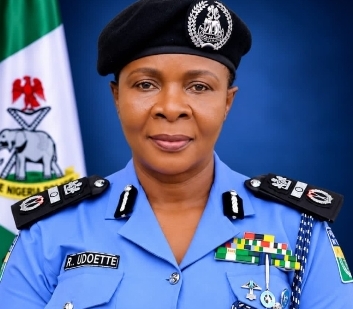
The Nigeria Police Force has appointed Assistant Inspector-General of Police (AIG) Regina Udoette as the new Zonal Commander of Zone 16, comprising Bayelsa and Rivers states, making her the first female officer to occupy the position.

Udoette’s appointment followed the retirement of the immediate past Zonal Commander, AIG Abubakar Zubairu.

The appointment was approved by the Inspector-General of Police, IGP Olatunji Disu, who named the senior police officer to take over the leadership of the zone.

A Saturday statement issued by the Zonal Police Public Relations Officer, SP Gunn Emonena, said the new AIG was from Ifuho village in Ikot Ekpene Local Government Area of Akwa Ibom State.

According to the statement, Udoette was commissioned into the Nigeria Police Force as a Cadet Assistant Superintendent of Police in 1992.

She holds a Bachelor of Arts degree in Communication Arts and a master’s degree from the University of Uyo.

The statement described her as an experienced police officer who had served in various departments and capacities across different levels of the Nigeria Police Force.

Before her appointment as the Zonal Commander, she was the Commissioner of Police in charge of General Investigation at the Force Criminal Investigation Department (FCID), Enugu Annex.

The statement noted that her wealth of experience in policing would be brought to bear in the administration and security operations of the zone.

It said, “The Inspector-General of Police, IGP Olatunji Rilwan Disu, has appointed AIG Regina Cosmas Udoette to take over the mantle of leadership of Zone 16 following the retirement of AIG Abubakar Zubairu.”

See also  Kwara, Kebbi abductions: FG blames US as kidnap outrage spreads

On her professional background, the statement added that “the new AIG was commissioned into the Nigeria Police Force as a Cadet ASP in 1992.”

It further stated that “the first female AIG has served in various departments at different capacities, in all strata of the Force.”

Highlighting her most recent assignment, the statement said she “last served as Commissioner of Police in charge of General Investigation in FCID Enugu Annex.”

The zonal headquarters called on residents, community leaders and other stakeholders in Bayelsa and Rivers states to support the new commander in the discharge of her responsibilities.

It solicited “the co-operation and support of the good people of Bayelsa and Rivers State to enable her bring to bear her vast wealth of experience in policing.”

Source: punchng.com

FOLLOW US ON:
FACEBOOK

WHATSAPP CHANNEL

TWITTER

PINTEREST

TIKTOK

YOUTUBE

LINKEDIN

INSTAGRAM

Continue Reading

News

AI-generated fake content threatens national security – Ex-FPRO reveals

Published

on

A former Force Public Relations Officer, Olumuyiwa Adejobi, has warned that the misuse of artificial intelligence and social media to spread fake news poses a growing threat to Nigeria’s national security.

Adejobi, a Deputy Commissioner of Police in charge of Operations at the Delta State Police Command, said fabricated images, videos, audio recordings and narratives could mislead the public, provoke hostility, incite violence and undermine confidence in public institutions.

He gave the warning in a statement titled, “The Palongo Dance of Social Media Palava,” issued in Lagos on Saturday, urging Nigerians to exercise caution and communicate responsibly on digital platforms.

The former police spokesperson expressed concern about the growing ability of artificial intelligence to make people appear to have said or done things they never did.

According to him, such fabricated content could have serious consequences for public safety and national security.

“Fabricated content can provoke hostility, incite violence, create panic and undermine public confidence in institutions,” he said.

Adejobi also blamed the monetisation of social media for encouraging some content creators to prioritise views, engagement and financial rewards over accuracy and responsibility.

He said some influencers resorted to sensational headlines, unverified allegations and provocative publications without considering the consequences for individuals, institutions and the country.

“Freedom of expression must be exercised responsibly and should not be used to fabricate information, destroy reputations, incite violence or deliberately mislead the public,” he said.

He urged Nigerians to verify information before believing, sharing or reposting it, describing fact-checking as a civic responsibility in the digital age.

See also  US House passes record $1.15trn defence bill to fund Iran war

Adejobi commended the Inspector-General of Police, Olatunji Disu, for recently urging the public to remain vigilant against fake news and irresponsible information dissemination.

He also acknowledged the efforts of former Minister of Information and National Orientation, Lai Mohammed, and the incumbent minister, Mohammed Idris, in drawing attention to the dangers of misinformation and disinformation.

The former police spokesman called for sustained public enlightenment, strategic communication, institutional collaboration and appropriate regulatory measures to address the problem.

He, however, warned against allowing regulation to undermine constitutionally guaranteed freedoms, stressing that legitimate criticism and dissent must be distinguished from deliberate fabrication, impersonation and incitement.

Adejobi advocated a whole-of-society approach involving government institutions, security agencies, media organisations, technology companies, professional bodies, traditional and religious leaders, civil society groups and citizens.

Recalling his personal experience with misinformation and social media manipulation, he said false narratives could cause emotional and reputational damage that might take years to repair.

He warned that fabricated stories could be created within seconds, while the damage they caused could persist for years.

Adejobi urged Nigerians to promote digital literacy, ethical journalism, responsible content creation, fact-checking and constructive public engagement.

He said social media should serve as a platform for enlightenment, innovation, accountability, economic advancement and national development rather than hatred, hostility and destruction.

He also appealed to Nigerians not to “dance Palongo”, a Yoruba expression he said his grandmother used to describe an irregular and disorderly dance.

He urged citizens to reject digital recklessness and embrace truth, responsibility, civility and patriotism.

“Protect the country’s collective destiny from misinformation and manipulation. Nigeria is bigger than our individual interests, political affiliations, personal grievances and social media engagements,” he said.

See also  El-Rufai sues ICPC ₦1bn over unlawful Abuja home invasion

NAN

Source: punchng.com

FOLLOW US ON:

FACEBOOK

WHATSAPP CHANNEL

TWITTER

PINTEREST

TIKTOK

YOUTUBE

LINKEDIN

INSTAGRAM

Continue Reading

News

Oyo allied health workers suspend strike, resume Monday

Published

on

The Nigerian Union of Allied Health Professionals, Oyo State Hospital Management Board (OYSHMB) chapter, has suspended its ongoing industrial action for two weeks.

The suspension takes effect from 11:59 p.m. on November 22, while work resumes on the morning of November 23, according to NAN on Saturday.

The News Agency of Nigeria recalls that the allied health professionals embarked on an indefinite strike on October 28.

Among the union’s demands are the “payment of teaching allowance to members, implementation of skipping of CONHESS 10 as applicable to GL 11, and restoration of call duty allowance for dental therapists.”

Others include the “promotion of some Medical Laboratory Scientists and Radiographers who were denied promotion, and implementation of ward coat/lab coat allowance for members.”

The demands also include a review of the operational guidelines to accommodate members in management and other major committees in government hospitals across the state.

The decision was contained in an official communique issued after a meeting held on Thursday between the executive members of NUAHP OYSHMB and representatives of the Oyo State Government.

The communique, signed by the NUAHP OYSHMB Chairman, Olanrewaju Ajani; the General Secretary, Kayode Oyediran; and the Public Relations Officer, Olatunde Fatola, was made available to NAN on Saturday in Ibadan.

According to the communique, government representatives at the meeting included the Head of Service, the Commissioner for Establishment and Training, permanent secretaries, and representatives of OYSHMB and the State Ministry of Health (SMOH).

The union said government representatives appealed for the suspension of the ongoing industrial action, assuring it of concrete steps towards addressing its grievances and demands.

See also  Sowore regains freedom after four days in Kuje prison

It said that, “after due consultation, deliberation and consideration of the government’s appeal, the union resolved to suspend the ongoing strike for an initial period of two weeks.”

The union said the” period would serve as an opportunity for the government to demonstrate its commitment through tangible actions towards resolving the issues raised.”

It added that, at the expiration of the two-week period, it would review the level of implementation and determine its next line of action.

(NAN)

Source: punchng.com

FOLLOW US ON:
FACEBOOK

WHATSAPP CHANNEL

TWITTER

PINTEREST

TIKTOK

YOUTUBE

LINKEDIN

INSTAGRAM

Continue Reading

Trending