Connect with us

Business

Kaduna IGR rises to N85bn under gov Uba Sani — Official

Published

on

The outgoing Executive Chairman of the Kaduna State Internal Revenue Service, Jerry Adams, has attributed the sustained growth in the state’s Internally Generated Revenue to the political will and non-interference of Governor Uba Sani in the operations of the agency.

Adams, who spoke at the ongoing 160th meeting of the Joint Revenue Board in Kaduna on Thursday, said the state’s IGR had grown from N58bn before 2023 to N85bn in 2025.

He said the revenue had continued to rise, adding that the state was now trending towards an annual collection of N120bn, with an average monthly revenue of N10bn.

Adams said, “The IGR of Kaduna State stood at N58bn before 2023. By 2023, it had risen to N62bn and, in 2024, it reached N71bn.

“In 2025, we recorded an annual revenue of N85bn, with an average monthly collection of N7bn. Today, we are trending towards N120bn, at a monthly average of N10bn.”

According to him, the growth was not a temporary spike but a steady and sustainable trend that would be strengthened through deeper collaboration with aMinistries, Departments and Agencies, stakeholders and the state government.

The KADIRS boss recalled that between 2019 and 2023, the highest annual revenue collection recorded by the service was N59bn in 2022, representing an average monthly collection of about N4.8bn.

Adams, however, explained that a closer examination of the figures showed that a significant portion of the revenue came from back-duty recoveries, sale of government properties and other one-off recoveries rather than organic growth in the state’s tax base.

See also  Tinubu commends NADF for expanding farm input access

He said, “On paper, that looked like progress. But if you looked closer, as we eventually did, you’d find out that a significant portion of that revenue didn’t come from organic tax growth.

“It came from back-duty recoveries, sale of government properties and some other one-off recoveries, not a growing, breathing tax base.”

He said the model eventually stalled by early 2023, forcing the agency to rethink its revenue strategy.

Adams said KADIRS subsequently shifted its focus from merely increasing collections from existing taxpayers to expanding the tax net and bringing more businesses and individuals into the tax system.

“We could no longer keep squeezing the same familiar taxpayers a little harder each year and call it strategy.

“We needed to grow horizontally, not just vertically; to expand the tax net itself, rather than simply tighten it around those already caught in it, and to stop relying on windfalls to flatter our numbers,” he stated.

The outgoing chairman said the agency also embarked on full digitisation of its processes to block revenue leakages through the introduction of the PAYKADUNA portal and Project C.R.A.F.T., an initiative aimed at improving revenue administration and fiscal transparency.

“This gave us, for the first time, a centralised payment system for all state revenue, closing gaps that informal, cash-based collection had long allowed to thrive,” he said.

Adams said KADIRS also recruited additional personnel to expand its tax coverage, provided working tools for staff and facilitated the promotion of workers whose advancement had been delayed.

He added that the agency provided capacity-building opportunities for its personnel and established three additional area offices to complement the existing 34 offices across the state.

See also  Dangote, importers battle as fuel prices holds above N1,000

The former KADIRS boss said the service also strengthened collaboration with institutions including the Joint Revenue Board, the Nigeria Revenue Service and the Nigerian Financial Intelligence Unit, particularly in the area of data sharing.

According to him, the partnerships had helped the state identify taxable activities that previously went undetected.

Adams, who is the All Progressives Congress governorship running mate for the 2027 election, also attributed the improvement in tax compliance to increased trust between taxpayers and government.

He disclosed that tax compliance in the state had risen from about 30 per cent to approximately 65 per cent.

“Tax compliance is a function of trust. When we began, compliance across the state stood at a modest 30 per cent. Today, I am pleased to report that the compliance level has risen to approximately 65 per cent,” he said.

Adams stressed that the improved revenue performance should not be seen as the achievement of KADIRS alone, but as a broader governance success involving the state government, taxpayers, MDAs and other stakeholders.

Source: punchng.com

FOLLOW US ON:

FACEBOOK

TWITTER

PINTEREST

TIKTOK

YOUTUBE

LINKEDIN

INSTAGRAM

Continue Reading
Click to comment

Leave a Reply

Your email address will not be published. Required fields are marked *

Business

Akwa Ibom gov reveals how he made N10m monthly from akara business

Published

on

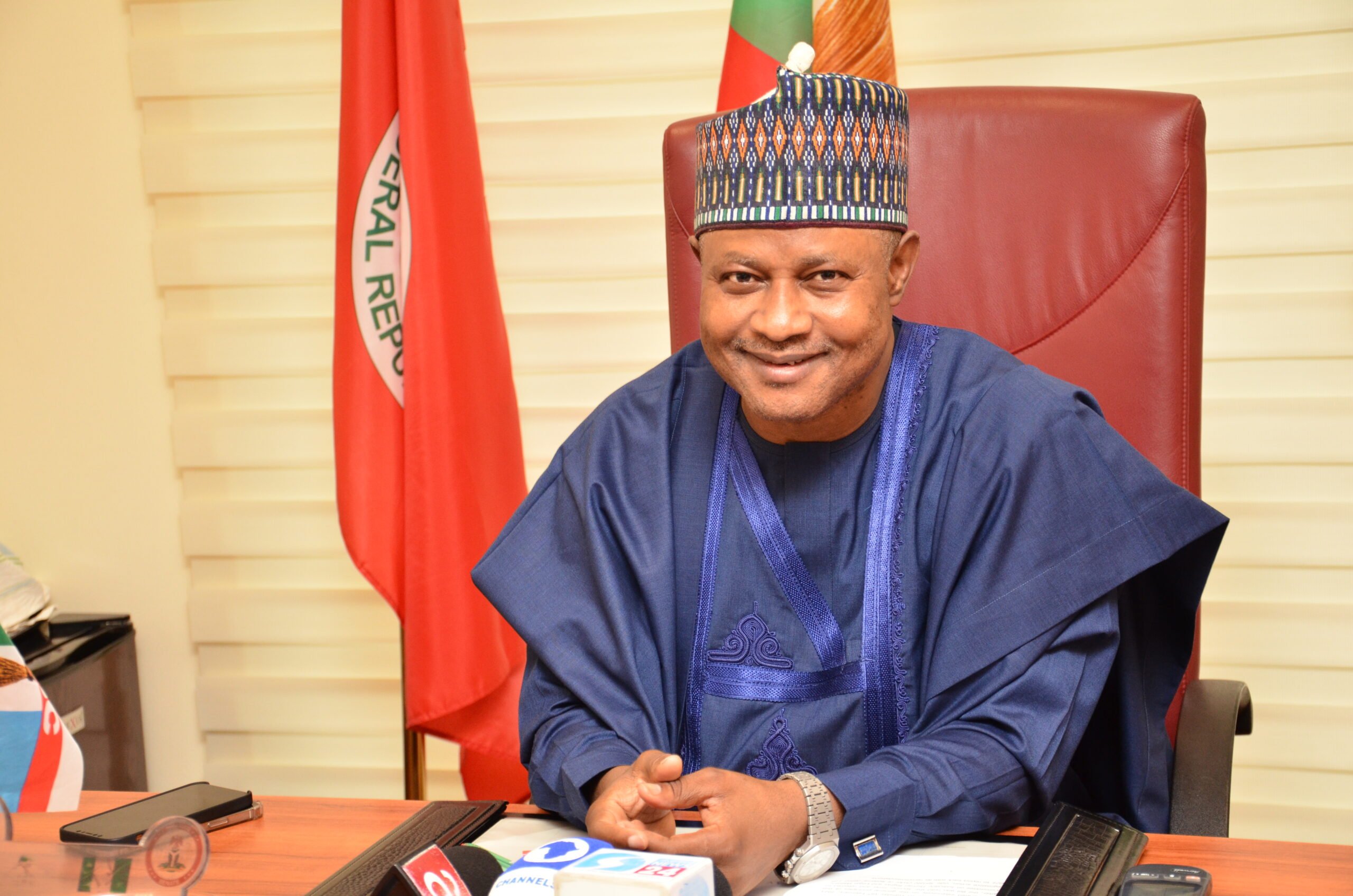
Akwa Ibom State Governor, Umo Eno, has revealed that he once made not less than N10m monthly from his akara and bread business before venturing into politics.

Eno made the disclosure during the state’s monthly covenant prayer service on Tuesday, which started trending on Wednesday.

The governor said he started the business by selling akara and bread, which he packaged as “Akara Burger”, before expanding into a coffee shop.

“We still have that shop there. I started selling Akara and bread. Back then, I was doing Akara Burger. We open the bread and put it inside for you. People going to Exxon Mobil will buy it in the morning, take coffee.

“We started coffee shop and then they will take it. Every month, that Akara business used to give me nothing less than ₦10 million in a month.”

Eno said customers, particularly workers heading to ExxonMobil in the mornings, patronised the business.

He said the experience taught him lessons about entrepreneurship and building businesses from small beginnings.

The governor’s comment comes months after First Lady, Oluremi Tinubu, sparked reactions when she encouraged Nigerians to explore small businesses such as akara and kuli-kuli as part of efforts to improve their livelihoods.

Speaking after a Renewed Hope Initiative meeting with wives of state governors in Abuja in June, the First Lady said such businesses could be started with relatively little capital.

“We’re trying to give hope, and to start Akara business doesn’t take a lot of money. To start roasting corn, or somebody even said kuli kuli doesn’t take much. We didn’t give them a loan; we gave it to them as a grant.”

See also  Dangote, importers battle as fuel prices holds above N1,000

Her comments attracted criticism on social media, with some Nigerians accusing her of being out of touch with the economic realities facing citizens.

She later defended the initiative, saying the empowerment programme was not limited to akara sellers but also covered tomato sellers, roasted plantain sellers, pepper and vegetable traders.

The First Lady also announced a N100m intervention for 2,000 petty traders in Jigawa State, with each beneficiary receiving N50,000 to recapitalise their businesses.

President Bola Tinubu subsequently joined the conversation by jokingly referring to his wife as “Iya Alakara” during a Presidential Press Corps Dinner.

Eno’s account of his own experience in the akara business has now renewed attention on the potential of small-scale enterprises as a means of building sustainable livelihoods.

Source: punchng.com

FOLLOW US ON:
FACEBOOK

TWITTER

PINTEREST

TIKTOK

YOUTUBE

LINKEDIN

INSTAGRAM

Continue Reading

Business

Bolivia orders state intervention as fuel shortage bites

Published

on

The Bolivian government announced Wednesday that it had placed state oil company YPFB under temporary supervision, citing problems with fuel imports and distribution amid a severe supply crisis.

Long lines of drivers queuing for scarce fuel have become a regular sight in Bolivia, where President Rodrigo Paz took power last November on a pledge to end the worst economic crisis in decades.

A government decree, dated Tuesday, orders YPFB’s “extraordinary, transparent and temporary” takeover to “protect the interests of the State.”

The measure could last for up to 180 days and also aims to evaluate how Bolivia currently imports and distributes fuel.

The president’s office said in a Facebook post Wednesday that the move would “restore efficiency, strengthen fuel supply and bring transparency to the logistics chain.”

A commission made up of several ministerial representatives will oversee the management of the state-owned enterprise.

Hydrocarbons Minister Marcelo Blanco acknowledged to reporters that “regular measures we had taken didn’t work” and attributed the fuel shortage to “logistical shortcomings in YPFB’s import and distribution” processes.

The Ministry of Hydrocarbons also announced that it intends to gradually strip YPFB of its role in fuel marketing so the state firm can focus on extraction, exploration and refining.

The government last week hiked diesel prices from 9.80 bolivianos (about 80 US cents) a litre to 18 bolivianos (US$1.50) in an effort to curb fuel smuggling to other countries, which it says is aggravating shortages.

Farmers angry at the decision blocked roads in the northeastern Beni department and Santa Cruz, Bolivia’s economic powerhouse.

See also  Shell’s $5bn Bonga S’West project gets presidential support

The popular dissent tactic defied a state of emergency which Paz declared in June to take the wind out of massive protests against his administration.

The US-backed leader came to power after decades of socialist rule.

His attempts to salvage the economy, such as the scrapping of fuel subsidies in December, caused prices to double and have been unpopular in some circles.

The lack of fuel subsidies drained Bolivia’s foreign currency reserves instead of ending the long lines at gas stations, as Paz had promised.

Paz is currently in talks with international lenders over a multibillion-dollar bailout.

AFP

Source: punchng.com

FOLLOW US ON:

FACEBOOK

TWITTER

PINTEREST

TIKTOK

YOUTUBE

LINKEDIN

INSTAGRAM

Continue Reading

Business

NNPC remits N7.9tn to Federation Account in seven months

Published

on

The Nigerian National Petroleum Company Limited remitted N7.91tn to the Federation Account between January and July 2026, even as its crude oil and condensate production fell to 1.68 million barrels per day in July.

The figures were contained in the NNPC’s July 2026 operational and financial performance report released on Wednesday.

The company said it recorded N3.09tn in revenue and N279bn in profit after tax during the period under review.

However, crude oil and condensate production declined from 1.73 million barrels per day in May to 1.72 million barrels per day in June and further to 1.68 million barrels per day in July.

NNPC attributed the July decline to operational disruptions across several assets.

“July crude oil production was affected by a combination of operational disruptions across several assets, including facility outages, equipment unavailability, pipeline incidents, and production constraints,” the company stated.

The decline in output also reflected lower crude oil and condensate sales, which stood at 22.53 million barrels in July, comprising 21.53 million barrels of crude and one million barrels of condensate, compared with 28.23 million barrels in June.

The company said it was implementing measures to reverse the decline and improve production.

“Production improvement efforts will focus on sustaining high facility uptime through effective preventive maintenance programmes and minimizing unplanned downtime,” NNPC stated.

It said the measures would include optimising export operations at FEPL and Nembe EP, developing incremental production opportunities and strengthening operational reliability across key facilities.

“Additional measures include the activation of tandem offloading operations at Akpo and Erha to enhance export flexibility and the restoration of barging operations at Obodo to improve production evacuation and sustain output,” the company added.

See also  Read Tinubu's unveiled plan to turn flood Threat into economic goldmine

On gas infrastructure, NNPC reported 100 per cent availability of its upstream pipeline network.

It also said pre-commissioning activities had been completed on the River Niger Crossing section of the Obiafu-Obrikom-Oben gas pipeline, with first gas initially targeted for August 2026.

For the Ajaokuta-Kaduna-Kano gas pipeline, NNPC said construction and installation works were at an advanced stage to facilitate early gas delivery to Abuja in 2026.

The company put AKK pipeline availability at 95 per cent, while NNPC Retail’s petrol stations recorded 52 per cent availability, with distribution varying across regions.

NNPC also disclosed that natural gas production stood at 7.49 billion standard cubic feet per day, while gas sales were 4.6bscf/d.

The company cautioned that the reported figures remained subject to reconciliation.

“All production, sales and financial figures are provisional and subject to reconciliation with relevant stakeholders,” it stated.

Source: punchng.com

FOLLOW US ON:

FACEBOOK

TWITTER

PINTEREST

TIKTOK

YOUTUBE

LINKEDIN

INSTAGRAM

Continue Reading

Trending