Connect with us

News

Makinde reveals FG didn’t fund Ibadan airport with N50bn

Published

on

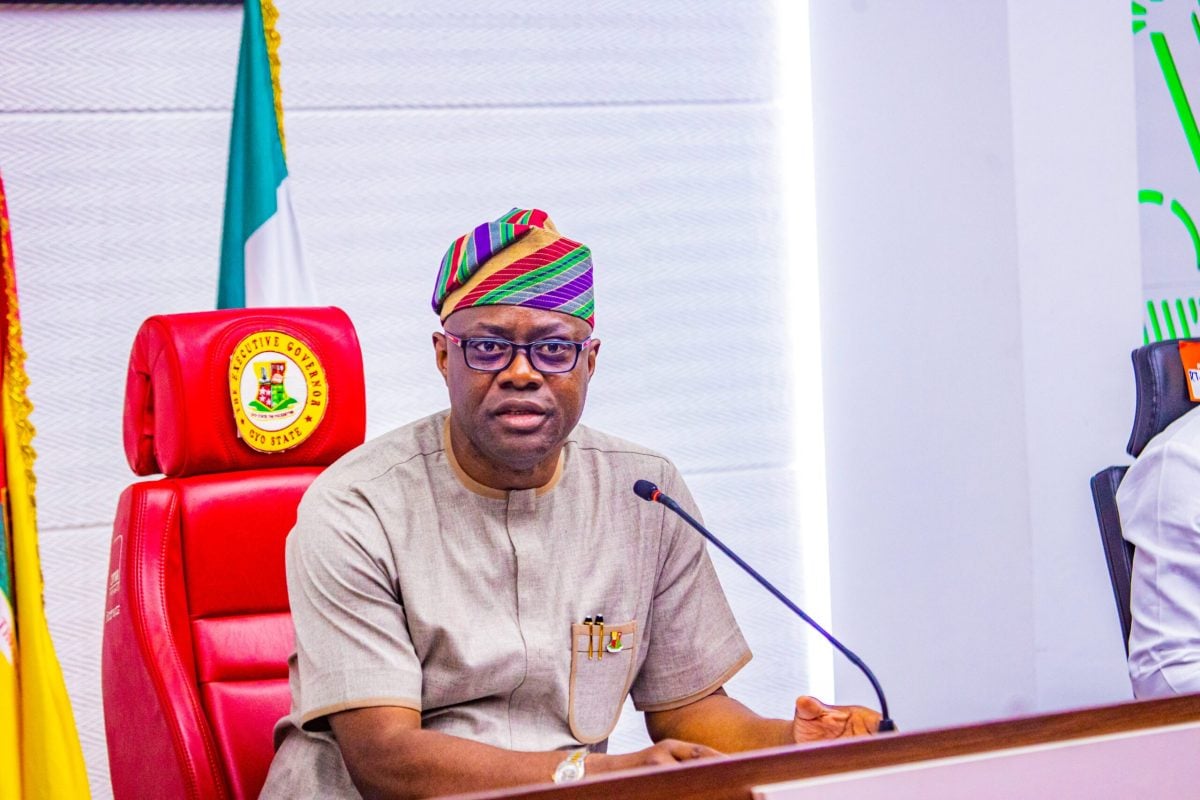
The 2027 presidential candidate of the Allied People’s Movement and Oyo State Governor, Seyi Makinde, has accused the Minister of the Federal Capital Territory, Nyesom Wike, of lying about the alleged N50bn funding from the Federal Government for the upgrade of the Ibadan International Airport.

Wike, while appearing on TVC’s Journalists’ Hangout programme on Monday, had claimed that the President Bola Tinubu-led administration supported the Oyo State Government with N50bn for the airport project.

The disagreement over the airport funding comes amid an increasingly strained political relationship between Makinde and the Tinubu administration, with the governor and members of the Federal Government backing opposing political interests ahead of the 2027 elections.

Makinde, while addressing supporters at the Makinde/Daura 2027 presidential town hall meeting in Katsina on Tuesday, said the Oyo State Government did not receive any N50bn from the Federal Government for the expansion of the airport.

He asserted that the project was being fully funded by the state government.

Makinde stated, “Let me start by saying that my attention was drawn to an interview granted yesterday by the Minister of the Federal Capital Territory, Nyesom Wike, where he said that the President gave N50bn to Oyo State to upgrade the Ibadan Airport to international standards.

“I want to say that claim is false. The President did not give Oyo State N50 bn or me to upgrade the Ibadan Airport. The Ibadan Airport upgrade project is being undertaken 100 per cent with the funds of Oyo State.”

Reiterating the governor’s position, his media aide, Dr Sulaimon Olanrewaju, in a statement, described Wike’s claim on the airport project as false, reckless and misleading.

Olanrewaju said there was no such N50bn approval on the project from the Federal Government to the state government, adding that the state rejected misinformation on the premise of scoring cheap political points.

Olanrewaju argued, “President Bola Tinubu’s minute on the proposal submitted to him by Governor Seyi Makinde for the reconstruction and upgrade of the Ibadan airport was ‘Approved at no cost to the Federal Government.’

“The records as stated above are with the Presidency just as they are with the Oyo State Government.

“Wike’s assertion does not originate from any Federal Executive Council decision, presidential approval, or statutory aviation infrastructure process.

“It is not an official communication of the Federal Government. It is not backed by documentation. It is not grounded in fact. It is a claim made without responsibility and without regard for the truth, and should therefore be disregarded by members of the public.”

See also  Defected Rivers lawmakers free to leave PDP, says Wike

He maintained that every component of the upgrade has so far been executed and funded solely by Oyo State.

Olanrewaju added, “In line with the approval granted by the Federal Government, which clearly stated that the airport upgrade would be undertaken at no cost to the Federal Government, the Oyo State Government has fully financed a comprehensive transformation of the facility.

“This includes the expansion and strengthening of the runway, upgrade of the airfield lighting and navigational systems, apron improvements, construction of supporting infrastructure such as the dualised Airport Road, enhanced aviation safety installations, and ongoing work on a modern international terminal designed to significantly boost passenger and cargo capacity.”

He slammed Wike, adding that the minister should have sought the factual information rather than dishing out “fabrication and lies.”

“Wike’s statement is both untrue and unfortunate. He should have sought knowledge on the matter before going on air. Let it be stated unambiguously: The Federal Government did not give Oyo State N50bn for the Ibadan Airport upgrade. Any suggestion to the contrary is a fabrication and a lie from the pit of hell.

“Aviation infrastructure funding follows strict due-process channels involving the Federal Ministry of Aviation and other regulatory bodies. These channels are transparent, traceable, and publicly verifiable. None of them reflects the figure Mr Wike has circulated.

“The Oyo State Government will not allow misinformation, especially one of this magnitude, to be weaponised for political point-scoring or used to distort public understanding of government finances.

“The claim is not only false; it is reckless, misleading, and capable of eroding public trust if left unchallenged,” Olanrewaju said.

Makinde backs mining devolution

Meanwhile, Makinde has called for the devolution of mining responsibilities to state governments, arguing that states would perform better if given greater control over the sector.

Speaking in Katsina, Makinde proposed that the responsibility be transferred to the states, with the Federal Government retaining oversight.

Speaking in Katsina, Makinde said, “Right now, the issue of mining is on the Exclusive Legislative List in our Constitution. Devolve that responsibility to the states and let there be oversight only at the federal level. They will do better.”

APM presidential candidate and Oyo State Governor said his administration seeks to reset Nigeria’s socio-political system in areas including the economy, education and security.

Makinde stated, “We are determined to reset the economy. People will argue that Nigeria is rich in natural resources. But natural resources are not enough. You must have skills and knowledge, and you must also have intensive production.

“Our economy must work 24/7. If our economy shuts down at 7 or 8 o’clock in the evening, we cannot compete with economies that are running 24/7.

See also  Reps probe NNPC, INEC over N802bn audit breaches

“We want to reset our education. We want to examine the data that we are being given. We want to know how many out-of-school children we have and how we get them back into school.

“We also want to reset the security architecture in Nigeria. A few days ago, we all woke up to learn about the 37 young souls who were lost in Niger State. Is it their fault that they were born in Nigeria? Is it their fault that they were looking for means of surviving? No, sir. The answer is no.”

Power transmission

Makinde also said his 2027 campaign would be issue-based, expressing concern over President Tinubu’s decision to proceed on working leave without, according to him, transmitting power.

The governor said he had always complied with the constitutional requirement as Oyo State governor by transmitting power to his deputy whenever he travelled out of the country on vacation for more than 21 days.

He questioned why a similar arrangement was not being applied at the federal level.

Makinde stated, “Section 145 of the Constitution provides for the President to transmit a written declaration to the President of the Senate and the Speaker of the House of Representatives when proceeding on vacation or otherwise unable to discharge the functions of office.

“If the President is unable, whether through sickness, a medical trip or incapacitation, to function, we are all human. Anything can happen to anybody at any time. If that happens, the President should also transmit power to the Vice President.

“I promise you that, as your President, I will follow the Constitution to the letter. If I am not going to be available, if I am on vacation, I will transmit power to the Vice President. Record this and hold me accountable.

“So, on this basis, I want to implore you to know that what we have ahead of us is a daunting and challenging task. But if we do what we are supposed to do, with support, we can achieve it.

“And for the election, I maintain and repeat it: it won’t be APC versus APM, or APM versus ADC, or ADC versus NDC. It will be APC versus Nigerians.”

Makinde urged Nigerians to obtain their PVCs and support his proposed “Reset Agenda” to build a country that works for all citizens, irrespective of tribe, religion or region.

“So, on this note, expect me back. This is a town hall for the Northwest. I am still coming back here in Katsina, to Kaduna, to Kano, to Kebbi, to Zamfara, and to Jigawa to campaign on a state-by-state basis,” he added.

See also  Wike draws fresh battle lines with APC governors ahead of 2027 elections, read details

In his remarks, APM vice-presidential candidate, Lawal Daura, said the gathering was to demonstrate support for the party’s presidential candidate and express Nigerians’ desire for change ahead of the 2027 general election.

Daura stated, “The North-West, and indeed Nigeria at large, is yearning for resetting Nigeria. Here in the North-West, some of our most prominent and pressing problems include, first and foremost, insecurity, and, of course, the twin brother of insecurity, which is poverty.

“Sometimes, when we try to discuss these issues, we go back and forth. But the alternative we have been looking for has been provided by His Excellency, Governor Makinde.

“One of the main points I have made is that this country needs a reset. Fortunately, that is also the mindset of our presidential candidate, and I was easily persuaded by that position and mindset. So, I want to say that, together with the Governor of Oyo State, His Excellency Makinde, we are ready to reset Nigeria.

“Resetting Nigeria is very important, and we are going to provide details as we proceed with our campaigns. But before that happens, I would like each and every one of us to bear in mind that we must do all we can, within the law, to exercise our civic rights, vote for change and make His Excellency, Governor Makinde, our President come 2027.”

APM National Chairman, Yusuf Dantalle, said the party’s administration under its presidential candidate, Makinde, would prioritise restoring security and normalcy in the country.

Dantalle also said the proposed administration would introduce measures aimed at encouraging citizens to make rational decisions and recognise leaders as representatives of the people.

He urged Nigerians not to doubt the sincerity of the party’s political journey, describing its commitment to the 2027 election as genuine, honest and focused on delivering the desired change.

The Katsina town hall is part of the Makinde/Daura campaign organisation’s planned nationwide consultations ahead of the 2027 election, with the campaign saying the engagements are intended to focus on national stability, citizens’ welfare and other policy issues.

The campaign organisation had announced that the Katsina engagement would kick-start its zonal town hall meetings across the six geopolitical zones, with subsequent meetings scheduled for Uyo, Lafia and Enugu.

Source: punchng.com

FOLLOW US ON:

FACEBOOK

TWITTER

PINTEREST

TIKTOK

YOUTUBE

LINKEDIN

INSTAGRAM

Continue Reading
Click to comment

Leave a Reply

Your email address will not be published. Required fields are marked *

News

N10bn intervention not for Ebola alone, says NCDC boss

Published

on

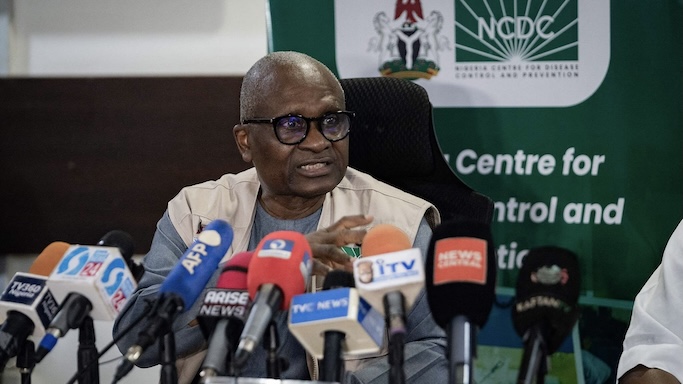
The Director-General of the Nigeria Centre for Disease Control and Prevention, Dr Jide Idris, has said that the controversial N10bn emergency intervention fund approved by President Bola Tinubu was not meant for Ebola Virus Disease alone but for strengthening Nigeria’s preparedness against multiple epidemic-prone diseases.

Idris, who clarified amid growing public debate over the allocation, said the fund was designed to strengthen prevention, preparedness, early detection and rapid response to public health threats, including Lassa fever, cholera, cerebrospinal meningitis, diphtheria, measles, monkeypox and antimicrobial resistance.

He explained that the N10bn was released directly to the NCDC and not to the Presidential Task Force on Ebola Virus Disease, contrary to some narratives surrounding the intervention.

The NCDC boss who had during a press conference on Sunday, October 25, 2026, told journalists that the N10bn has not been released to the agency, did not specify when the fund was eventually released.

Idris, who stressed that the allocation was inadequate in view of Nigeria’s growing health security needs, disclosed that implementing the country’s National Action Plan for Health Security, covering 2025 to 2029, would cost approximately N522bn over five years.

“This translates to an average annual requirement of N104.4bn, meaning the N10bn intervention represents only about two per cent of the plan’s average yearly cost.”

According to him, Nigeria, with a population exceeding 240 million, requires sustained investments from the Federal Government, state governments and development partners to adequately protect its population against epidemic threats.

Providing a breakdown of government funding for health security, Idris disclosed that NCDC’s allocation increased from N4bn in 2024 to N7bn in 2025, followed by a N5bn intervention fund that year, while the 2026 Appropriation provides N22bn.

See also  1,000 abducted Nigerians: Families beg as kidnappers go silent

He added that President Tinubu approved the additional N10bn emergency intervention funding in June 2026 following the outbreak in the Democratic Republic of Congo, which raised global concerns about Ebola.

Idris maintained that the request was never restricted to Ebola but covered the broader national health security agenda.

“In June 2026, as the outbreak in the Democratic Republic of the Congo became a global emergency, Mr President graciously approved a further N10 billion in emergency intervention funding. That fund was requested for all our epidemic-prone diseases, not Ebola alone, and now strengthens work already underway, as we had mobilised resources from government and partners and kept building.

“The gap, however, remains real. The Global Preparedness Monitoring Board estimates that a country needs US$1 to US$2 per person each year to be acceptably prepared for epidemics.

“For about 240 million Nigerians, that is US$240 million to US$480 million a year. Sustained investment from government, States and partners will close that gap.

“This background illustrates the extent to which health security remains underfunded, partly because public investment tends to favour more tangible and immediately visible interventions”, he added.

The NCDC boss said the debate surrounding the N10bn should shift from political controversy to the urgent need for sustainable investment in national health security.

He argued that preventing epidemics, averting deaths and avoiding economic disruption require deliberate financial commitments, warning that the cost of failing to prepare for disease outbreaks could far exceed the cost of prevention.

On the Ebola situation, Idris said Nigeria had confirmed its first imported case of Bundibugyo Ebola virus disease, adding that the laboratory confirmation was made on October 20, 2026, within 24 hours of receiving the alert in Abuja.

See also  PHOTOS & VIDEOS: National strike by Belgium's big unions hits public transport, airports and ships

He, however, assured Nigerians that there was no active case in the country as of the time of his statement, with identified contacts under daily surveillance.

He said surveillance would continue until the last identified contact completes the mandatory 21-day monitoring period without developing symptoms or any new case emerging.

Idris also dismissed calls for the postponement of elections, restrictions on travel or a blanket ban on mass gatherings, insisting that the prevailing situation did not warrant such measures.

According to him, the NCDC had instead developed technical guidelines for organisers of mass gatherings, stressing that strict adherence to infection prevention and control measures would enable public events to proceed safely.

He urged Nigerians to avoid spreading unverified information, warning that misinformation and the politicisation of public health emergencies could undermine public confidence and jeopardise the country’s response efforts.

Source: punchng.com

FOLLOW US ON:

FACEBOOK

WHATSAPP CHANNEL

TWITTER

PINTEREST

TIKTOK

YOUTUBE

LINKEDIN

INSTAGRAM

Continue Reading

News

National Assembly proposes 74 additional seats for women

Published

on

The National Assembly has proposed the creation of 74 additional seats for women in the Senate and House of Representatives, alongside three reserved seats for women in each state House of Assembly, as part of efforts to address the underrepresentation of women in Nigeria’s political system.

The Senate Leader, Opeyemi Bamidele, disclosed this on Monday at the 2026 Law Week organised by the International Federation of Women Lawyers, Ekiti State chapter, with the theme, “Justice in a Changing World: Responding to New Challenges Affecting Women and Children.”

The senator representing Ekiti Central Senatorial District said that the proposed constitution amendment was targeted at breaking the barriers limiting women’s participation in governance and promoting inclusive political culture.

Bamidele, who is also the Vice Chairman of the Senate Committee on the Review of the 1999 Constitution, said the proposals were part of the ongoing constitutional amendment process and would create special legislative seats for women without displacing existing elected representatives.

The initiative, if approved, would add 37 seats to the Senate and 37 to the House of Representatives, ensuring that each state of the federation and the Federal Capital Territory has one additional seat in each chamber.

The programme was attended by the Chairman of the House of Representatives Committee on Information and National Orientation, Steve Fatoba, and the Speaker of the Ekiti State House of Assembly, Adeoye Aribasoye, among others.

Speaking at the event, Bamidele said, “A Bill for an Act to alter the provisions of the Constitution of the Federal Republic of Nigeria, 1999 to provide for special seats for women in the National and state Houses of Assembly and for related matters is receiving our attention at the National Assembly.”

The Senate Leader said the proposal followed extensive consultations and consensus-building, adding that the National Assembly had commenced the constitutional review process early to ensure a comprehensive and inclusive exercise.

See also  105 Nigerians killed in South Africa since 2019 — Read Nigerian Community Report

He added that the legislative initiative “is the fruit of extensive consultation and consensus-building. It is why we commenced the constitutional amendment process early, ensuring that this is not a rushed, haphazard endeavour but a deliberate, inclusive, and thorough reform.

“The proposal, as it stands, is meticulous in its design. It seeks to add 37 seats in the Senate and 37 seats in the House of Representatives.

“This suggests that if finally approved, each state of the federation, including the FCT, will have one additional seat in each of the Houses of the National Assembly.”

Bamidele said the committee had also proposed three additional seats for women in each state House of Assembly, with the arrangement expected to last for 16 years, covering four electoral cycles, before a comprehensive review.

He said the proposal was intended to provide women with greater access to legislative representation while allowing time to assess its impact on political participation.

Bamidele further revealed that the constitution review committee proposed three additional seats for each state House of Assembly, all specifically reserved for women, without displacing any existing electoral seats.

“This arrangement is proposed to run for a period of 16 years, four electoral cycles, before a comprehensive review. This is a sunset clause designed to ensure sustainability and to allow for the organic development of a more inclusive political culture.

“We are actively and strategically engaging with the state Houses of Assembly, as their concurrence is a constitutional sine qua non for bringing this reform to fruition. However, let me add a crucial point that speaks to the very essence of our democratic journey and the Renewed Hope Agenda,” he said.

The Senate leader said the proposal was not a partisan initiative but a constitutional intervention aimed at addressing the exclusion of women from political decision-making.

Bamidele noted that the resolve of the 10th National Assembly had been strengthened by advocacy from senior government figures, including the First Lady, Oluremi Tinubu.

See also  PHOTOS & VIDEOS: National strike by Belgium's big unions hits public transport, airports and ships

He said the special seat initiative “is not a partisan endeavour. It is a historic imperative. The rationale is anchored on a simple, yet profound, principle of constitutional law: the foundational precept of representative democracy.

“A democracy that systematically excludes over half of its population from the decision-making tables that determine their futures is, at best, a flawed democracy and, at worst, a veiled oligarchy.”

He also highlighted the need for legislative interventions to protect vulnerable groups, particularly women, children and persons with disabilities, through improved access to healthcare, education and social protection.

He said: “We were mindful of the reality that the state must intervene to provide a robust safety net where the market and tradition fail. This recognition is translated into legislative support for healthcare initiatives, educational access, and social protection programmes that are meticulously targeted at the most vulnerable demographics: our women, our children, and persons with disabilities.”

On the protection of women and children, Bamidele said Nigeria’s laws must respond to emerging threats that cross geographical boundaries and exploit weaknesses in existing systems.

He stressed that justice must go beyond constitutional provisions and statutory declarations to become accessible and effective for victims of abuse.

He said justice should be more than “a promise merely expressed in the Constitution or a provision enshrined in our statute books. Rather, it must be accessible, affordable, timely, and effective.

“A woman who suffers domestic violence must be able to seek protection without intimidation or social condemnation. A child who experiences abuse must be heard, protected from further harm, and provided with appropriate support.

“Victims must have access to legal assistance, medical care, and psychosocial services, while perpetrators must be held accountable in accordance with due process and the rule of law,” the Senate leader said.

See also  Motorists stranded as Oyo residents protest road extension

He called for stronger collaboration among the legislature, executive, judiciary, law enforcement agencies, social welfare institutions, religious organisations, traditional rulers, civil society groups and the private sector to strengthen the protection of women and children.

Bamidele charged FIDA to deepen engagement with the National Assembly and other relevant institutions, particularly in identifying gaps in existing laws, proposing reforms and ensuring that government policies and budgetary provisions translate into tangible benefits for vulnerable Nigerians.

In her address, the Vice-Chancellor of Afe Babalola University, Ado-Ekiti, Prof. Smaranda Olarinde, called for stronger legal and institutional frameworks to protect women and children against emerging forms of abuse, particularly those enabled by technology and economic vulnerabilities.

The VC said that the increasing use of AI and digital platforms had created new dimensions of threats, including cyberstalking, online harassment, deepfake images, impersonation and exploitation of children, as she called for stronger collaboration among government, the judiciary, law enforcement agencies, universities, religious and traditional leaders, the media and civil society organisations to tackle gender-based violence and child abuse.

The Chief Judge of Ekiti State, Justice Lekan Ogunmoye, described the Senate leader as a perfect person to speak on the emerging issues towards initiating legislative and policy reforms in protection of women and children.

In her welcome address, FIDA Chairperson, Ekiti State chapter, Ayobami Olowoyo-Richards, reiterated the association’s commitment to promoting, protecting and preserving the rights of women and children.

Olowoyo-Richards, who said that the changing realities had continued to present new and complex concerns for the safety, dignity, and fundamental rights of women and children, urged, “We must continually strengthen our laws, institutions, and collective response to ensure that justice remains accessible, effective, and responsive to their needs.”

Source: punchng.com

FOLLOW US ON:
FACEBOOK

WHATSAPP CHANNEL

TWITTER

PINTEREST

TIKTOK

YOUTUBE

LINKEDIN

INSTAGRAM

Continue Reading

News

FG tightens payroll checks as salaries gulp N1.96tn, read details

Published

on

The Federal Government has introduced stricter verification requirements for newly recruited workers seeking admission into its payroll, as personnel costs rose by N133.94bn to N1.96tn in the first quarter of 2026, exceeding capital expenditure during the period.

An analysis by The PUNCH, of the Federal Government’s First Quarter Budget Implementation Reports for 2025 and 2026 showed that personnel expenditure increased by 7.35 per cent from N1.82tn in the corresponding period of 2025, reflecting growing pressure on public finances.

The new measures were announced on Monday by the Office of the Accountant-General of the Federation in a statement signed by its Director of Press and Public Relations, Bawa Mokwa.

The OAGF said the directive, which takes immediate effect, applies to all ongoing and subsequent payroll admission processes under the Integrated Personnel and Payroll Information System.

The statement read, “Henceforth, no newly recruited employee shall be enrolled without first being captured on the nominal roll of the relevant MDA and satisfying all prescribed validation and eligibility requirements.”

According to the 2026 First Quarter Budget Implementation Report, the Federal Government spent N1.96tn on personnel costs between January and March, compared with N1.69tn on capital expenditure.

This means salaries and related personnel obligations exceeded capital spending by approximately N267bn, or 15.77 per cent.

Personnel expenditure accounted for 20.05 per cent of the Federal Government’s total expenditure of N9.76tn, while capital expenditure represented 17.32 per cent.

A breakdown showed that personnel costs for Ministries, Departments and Agencies increased from N1.57tn in the first quarter of 2025 to N1.70tn in the corresponding period of 2026, representing an increase of N133.94bn, or 8.54 per cent.

Personnel expenditure by Government-Owned Enterprises remained unchanged at N254.35bn, indicating that the entire increase in the reported wage bill came from MDAs.

The figures further showed that the Federal Government spent an average of N652.37bn monthly on personnel costs during the review period, compared with N607.73bn in the corresponding period of 2025.

Despite the increase, actual personnel spending remained below the quarterly budget projection.

The Budget Office disclosed that N8.35tn was allocated to MDAs’ personnel costs in the 2026 budget, compared with N7.60tn in 2025, representing an increase of approximately N758.51bn, or 9.99 per cent.

The report stated, “The sum of N8.35tn was appropriated for MDAs Personnel Cost in the 2026 Budget. This translates to a prorated quarterly expenditure outlay of N2.09tn in 2026. Actual expenditure of N1.70tn was released in the first quarter of 2026, translating to N385.78bn (18.47 percent) below the quarterly projection for the year.”

While personnel expenditure continued to rise, implementation of the Federal Government’s capital budget remained significantly below expectations.

The report showed that total capital expenditure of N1.69tn fell short of the prorated quarterly projection of N8.07tn by N6.38tn, representing a shortfall of 79.06 per cent.

More significantly, no funds were released for the implementation of MDAs’ 2026 capital budget during the quarter, despite a prorated allocation of N3.92tn.

Explaining the development, the Budget Office stated, “Funds for MDAs’ capital expenditure were not released in the first quarter of 2026 because some MDAs were still utilising funds released under the 2025 capital budget, whose implementation period had been extended to 31st December, 2026.”

See also  Defected Rivers lawmakers free to leave PDP, says Wike

Consequently, implementation of the 2026 MDAs’ capital budget stood at zero as of March 31, although expenditure was recorded under other capital components, including GOEs, the Tertiary Education Trust Fund and externally financed projects.

GOEs accounted for N740.32bn in capital expenditure, while TETFund spending stood at N393.56bn. Multilateral and bilateral project-tied loans contributed N287.44bn, while grants and donor-funded projects accounted for N249.50bn.

The pressure was further reflected in non-debt recurrent expenditure, which increased from N2.24tn in the first quarter of 2025 to N2.77tn in the corresponding period of 2026, representing an increase of approximately N523.49bn.

Personnel costs accounted for 70.73 per cent of non-debt recurrent spending during the period.

Expenditure on pensions and gratuities, including service-wide pensions, also increased from N161.60bn to N330.72bn, representing a rise of N169.12bn, or 104.65 per cent.

When pensions and gratuities are combined with personnel costs, the Federal Government’s expenditure on these obligations reached N2.29tn, compared with N1.98tn in the corresponding period of 2025.

However, pensions and gratuities are classified separately from personnel costs in the budget implementation reports.

The rising obligations coincided with weak revenue performance.

According to the Budget Office, the Federal Government generated approximately N5.08tn in the first quarter of 2026, against a quarterly target of N9.22tn, representing a shortfall of 44.93 per cent.

Personnel costs alone were equivalent to 38.56 per cent of actual revenue, compared with approximately 36.80 per cent in the corresponding period of 2025.

This means that for every N100 received by the Federal Government during the quarter, an amount equivalent to nearly N39 was spent on personnel costs.

Debt-service payments further constrained government finances, reaching N4.63tn, equivalent to approximately 91.18 per cent of actual revenue.

Combined personnel costs and debt-service obligations amounted to N6.58tn, exceeding government revenue by approximately N1.51tn.

The Federal Government recorded a fiscal deficit of N4.69tn during the period.

The Budget Office acknowledged the need to contain recurrent spending, noting that restrictions on unapproved recruitment remained part of the government’s expenditure management measures.

It stated, “The FGN continued to pursue its goal of curbing the growth of recurrent expenditure as stated in the 2026-2028 MTEF/FSP.”

The report added, “Key initiatives aimed at reducing recurrent costs were therefore pursued vigorously during the period. This includes the embargo on unapproved recruitment by MDAs.”

It explained that recruitment and payroll enrolment requests must first obtain clearance from the Budget Office, while efforts to extend IPPIS coverage across federal establishments were continuing.

Under the latest arrangement, MDAs will assume greater responsibility for managing personnel budgets and maintaining accurate nominal rolls.

The OAGF explained that agencies seeking to enrol newly recruited employees must submit formal requests accompanied by recruitment approvals, appointment letters, applicable waivers and other supporting documents.

These records will undergo verification alongside salary structures, grade levels, salary steps, allowances and other financial entitlements to establish the legitimacy of appointments and the accuracy of payroll obligations.

See also  1,000 abducted Nigerians: Families beg as kidnappers go silent

The statement added, “The validation process will also cover statutory details, including Pension Fund Administrator information, pension identification numbers, National Housing Fund registration and tax records to ensure accurate deductions and timely remittances.”

Following the initial verification, employee records will be forwarded to the relevant MDA for confirmation and endorsement by the Accounting Officer, Director of Human Resources, Director of Finance and Accounts, and designated Payroll Validating Officer.

The records will then be returned to the OAGF for final processing.

The office stated, “Final admission into the Federal Government payroll will be subject to satisfactory completion of all validation procedures and the approval of the Accountant-General of the Federation.”

Permanent Secretaries, Heads of Agencies and other relevant officials have been directed to ensure strict compliance with the requirements.

The OAGF warned that incomplete documentation or unresolved discrepancies would result in the deferment of payroll admission until the necessary conditions were satisfied.

It added that officers responsible for processing and approving payroll admissions would be held accountable for breaches of applicable rules and regulations.

The Federal Government’s wage bill is expected to rise further as it approved a monthly allowance of N70,000 for public servants beginning in November, following a conciliation meeting with the Nigeria Labour Congress, the country’s biggest workers association, in Abuja.

The agreement provides for the payment across all levels for six months, although it did not specify the number of beneficiaries or the total amount budgeted for the intervention.

The PUNCH estimated that the Federal Government’s six-month transport allowance for its workers could cost about N465.7bn if all 1.1 million employee records on its payroll system qualify for the payment.

The economists, however, called for sustainable measures to reduce commuting costs and ease pressure on household budgets.

The Trade Union Congress of Nigeria, however, rejected the N70,000 wage award to cushion transportation expenses.

Instead, the TUC demanded an immediate salary increase for workers and the implementation of outstanding agreements with health workers under the Joint Health Sector Unions.

Experts demand discipline

Reacting to the development, a Nigerian economist, public affairs analyst and Chief Executive Officer of CSA Advisory, Dr Aliyu Ilias, expressed concern that personnel expenditure had exceeded capital spending, warning that the trend could undermine investment in critical infrastructure.

Speaking in an interview with The PUNCH, Ilias said the government needed to prioritise capital projects because of their importance to education, healthcare, transportation and other essential services.

He said, “It is an anomaly to have personnel costs higher than capital expenditure because social infrastructure is very critical. It benefits education, healthcare, road infrastructure, among others.”

The economist argued that the government’s expenditure pattern was particularly troubling because salaries and debt-service obligations were consuming resources needed for development.

He acknowledged that both obligations were difficult to avoid, especially given the declining purchasing power of workers, but maintained that the situation raised serious concerns about fiscal priorities.

See also  States rush to deploy forest guards as insecurity deepens

“Remember that debt servicing is an obligation that you must meet, and salary payment is something you cannot delay. Even if you look at purchasing power, it is very poor. Disposable income is not enough for people to manage,” he said.

Ilias also criticised the repeated extension of budget implementation periods, arguing that the practice had weakened clarity and accountability in public expenditure.

He called on the National Assembly to strengthen its oversight of budget implementation and demand explanations for the government’s spending priorities.

“When we don’t have clear budgets, these are the things that we are likely to see,” he said.

He added that improved revenue collections and potential gains from higher crude oil prices should provide opportunities for increased infrastructure investment.

According to him, the National Assembly has a responsibility to scrutinise the government’s expenditure decisions and provide Nigerians with information on how public resources are being utilised.

Also speaking, an investment banking and financial policy expert and Chief Executive Officer of CFG Advisory, Dr Tilewa Adebajo, warned that Nigeria’s fiscal position was becoming increasingly difficult to sustain, with recurrent obligations and debt servicing limiting the resources available for productive investment.

Adebajo said the figures reflected the severe fiscal pressure facing the government and raised questions about the sustainability of its economic reform programme.

“What you are telling me now is not a surprise. These numbers are not a surprise to us because it is clear from the way government has been spending that government is under severe fiscal pressure,” he said.

He warned that macroeconomic reforms alone would not deliver meaningful improvements in living standards without stronger economic growth, fiscal discipline and investment in productive sectors.

“Reforms by themselves are definitely not enough,” he said.

The financial expert stressed that capital expenditure was essential to expanding the economy, warning that persistent underfunding of development projects could undermine the benefits of macroeconomic stabilisation.

“If you do not fund your capital budget, that is the investment needed to grow the economy. The economy will not grow,” Adebajo said.

He argued that the government needed to shift its attention towards policies capable of stimulating productivity, attracting private investment, expanding exports and improving household welfare.

“The next phase must be fiscal discipline, productivity, private sector investment and export diversification, and improvements in household welfare,” he stated.

Adebajo maintained that the country needed a credible strategy to achieve economic growth of between eight and 10 per cent, noting that stabilising macroeconomic indicators was only the foundation for improving living standards.

“Macroeconomic stability is the foundation for economic prosperity. It is not the destination,” he said.

He further expressed concern about the government’s borrowing plans and the transparency of public expenditure, calling for stronger scrutiny of compliance with fiscal regulations.

Source: punchng.com

FOLLOW US ON:

FACEBOOK

WHATSAPP CHANNEL

TWITTER

PINTEREST

TIKTOK

YOUTUBE

LINKEDIN

INSTAGRAM

Continue Reading

Trending