Connect with us

Politics

One ticket, two visions; read about the battle between NDC and the OK Movement today

Published

on

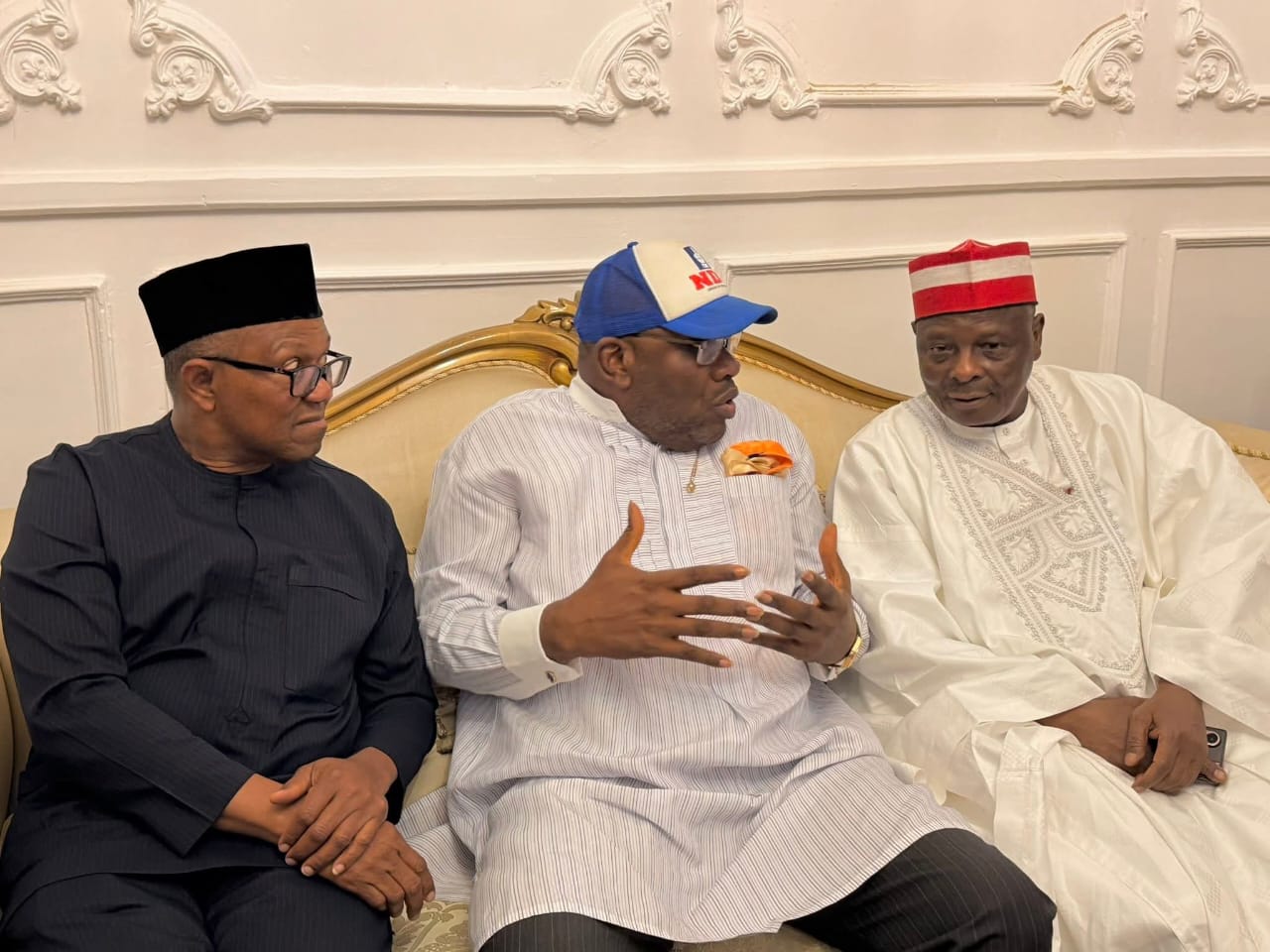
The presidential candidate of the opposition Nigeria Democratic Congress (NDC), Peter Obi and his running mate, Rabiu Musa Kwankwaso  appear to have divergent views on some issues ahead of the 2027 presidential election.

Obi and Kwankwaso hold different views on fuel subsidy removal and establishment of state police.

Daily Trust reports that Obi supports the removal of the subsidy but believes it should have been removed in a structured and phased manner, noting that the alleged mismanagement of subsidy savings should not have been an excuse for restoring it.Speaking at the Nigerian Bar Association conference in Port Harcourt, Rivers State, recently, Obi maintained that he did not support a return to the fuel subsidy era.

“I subscribe and maintain that you need to remove the subsidy. Mismanagement of the proceeds shouldn’t be the reason for not removing it. What we should have done is that when we remove subsidy, we would have given the people an alternative usage for the subsidy. What we have today is that the removal and attendant resources being recovered are also being mismanaged and stolen,” Obi had said.

But Kwankwaso said he supported the reintroduction of the subsidy in a modified form.

In a TV interview on Tuesday, the NDC vice-presidential candidate stated that an Obi-led government would bring back subsidy “in our own way.”

Asked whether it would be difficult for the NDC to campaign in the North-West, where there is support for the return of subsidy, Kwankwaso said, “No, no, no, look. We are bringing subsidy in our own way.”

“Of course, there are many ways. One, I can tell you: now we have a refinery built by a businessman, and I’m sure more refineries would be built.

“Now, if individuals in this country could build refineries, I see no reason why the government, under certain circumstances, will not build a refinery or refineries to the extent that we achieve the minimum requirement.

“What is the minimum requirement? The minimum requirement is for the people across the country to go to the filling stations and buy fuel at a reasonable price.

“We, in the NDC, will do whatever it takes, really, to put the price of oil down,” he said.

The position of the NDC presidential candidate and his running mate also differed on state police.

Obi had in a statement on his X handle, commended the State Police Bill, saying it represents a major legislative milestone in Nigeria’s quest to reform its policing architecture, but disagreed with the manner in which the legislation was processed.

He said the absence of broad public consultation and the speed with which the legislation was passed had created widespread suspicion about the motives behind the initiative.

Obi said, “The recent passage of the State Police Bill by the National Assembly marks a significant legislative milestone in addressing a long-standing demand of the Nigerian people.

Also, in an interview with Arise Television, Obi,  when asked if he believes in state police, retorted:  ‘’Yes I believe in state police. We will do whatever it takes to secure the country.”

But the NDC vice-presidential candidate, in the Tuesday interview, rejected the creation of state police in Nigeria saying the increasing calls for it were due to the inability of the current federal policing system to effectively tackle the country’s security challenges.

Kwankwaso insisted that the idea of state police emerged because of what he described as the failure of the federal or national police to effectively deal with insecurity.

He said, “I have always been against state police, and I can tell you the issue of state police came because of the failure of the federal or national police. I think it’s one of the big mistakes that government is doing.

NDC, OK Movement rift

Also, the brewing tension between the hierarchy of the NDC and grassroots volunteers under the auspices of the Obi-Kwankwaso (OK) Movement has spilled into the open after the executive leadership of the party disowned a 59-member Presidential Campaign Council (PCC) unveiled by the movement.

See also  Cameroon President Biya appoints his son as vice president, hands him military command

The move marks the first major public battle over political supremacy, organisational control and strategy between the party platform and the high-profile support group backing the Obi-Kwankwaso ticket.

Analysts describe the disagreement within the party over the structure of its campaign machinery as “untimely” and warned the crisis could have wider implications for the opposition ahead of the 2027 general elections.

The crisis escalated when the OK Movement, through its National Secretary Saadatu Sani, announced the formation of an independent campaign machinery led by the movement’s National Director-General, John Ughulu, as Director-General of the PCC. The announcement was swiftly rebuffed by the party hierarchy.

In a counter-statement titled “Re: Purported OK Movement PCC Announcement,” the NDC National Chairman, Senator Cleopas Moses, officially disavowed the movement’s setup, insisting that no campaign structure could be unveiled without formal approval from the party’s National Working Committee (NWC).

Adding weight to the party’s stance, the NDC National Leader Senator Seriake Dickson cautioned support groups against setting up alternative organs that compete with official structures.

While acknowledging the importance of support groups in grassroots mobilisation, Dickson insisted that all campaign activities must be channeled through formal party machinery.

“Support groups should work with the political party and its campaign structures rather than compete with them during the electioneering process,” Dickson noted, reiterating that party supremacy remains non-negotiable.

Why NDC, OK Movement are at loggerheads

Behind the public statements lies a fundamental conflict between traditional party governance and organic political mobilisation.

Party insiders revealed that the NDC leaders fear being sidelined by the support group’s assertive structure.

An NDC chieftain, who spoke on condition of anonymity, outlined the core conflict.

“The friction rests on organizational independence versus party supremacy. The OK Movement maintains it is a volunteer-driven force that will not be absorbed or subordinated into the NDC machinery. Conversely, the NDC views political authority through constitutional structures. Allowing parallel campaign councils creates competing power centers that undermine party discipline,” the source said.

The feud is further complicated by leadership disputes around Ughulu. While state and ward coordinators of the OK Movement have threatened mass withdrawal if Ughulu is removed, NDC leaders have resisted his authority, citing unresolved disciplinary proceedings over past primary disputes in Lagos.

Campaign council list ‘nonsensical’ – Dickson

The NDC national leader, Dickson, also criticised the OK Movement over the controversy surrounding the 59-member presidential campaign council list, describing the group’s actions as “nonsensical.”

Dickson addressed the issue on Tuesday following a meeting of NDC stakeholders in Abuja, where Babachir Lawal, former Secretary to the Government of the Federation (SGF), officially joined the party.

Rejecting the movement’s stance, Dickson emphasised that support groups must understand their boundaries and avoid attempting to rival the party apparatus.

“Support groups don’t compete with the political party that is sponsoring candidates. Support groups don’t compete for supremacy and space. They provide grassroots support and mobilisation. They don’t convert themselves to become critics of the political party sponsored. They don’t attack the political party sponsored,” he said.

Dickson noted that while support groups exist across all political platforms, including the ruling All Progressives Congress (APC), none had attempted to usurp party functions.

“None of them will dare say they are setting up a presidential campaign council. It is unheard of. Nonsensical. And those who had a duty to educate and call people to order should do so,” he added.

Despite the reprimand, the NDC leader affirmed that the party recognises the value of grassroot support groups and remains open to collaborating with them, noting that he has previously held constructive meetings with Obedient groups.

See also  Terrorists kill Nigerian brigadier general – AFP report

Movement declares independence from party

Refusing to back down, Ughulu, in a statement on Wednesday, asserted that the movement remains an autonomous entity that will neither merge into the NDC nor surrender its nationwide structures.

“The OK Movement is an independent political organisation, not a support group created as an appendage of any political party. Its existence and internal administration are not subject to the internal management of the NDC. Political cooperation between the OK Movement and the NDC should be understood as collaboration rather than organizational subordination,” Ughulu declared.

He maintained that the movement is self-funded by its members and retains the right to design its own campaign strategy and field operations. While affirming that the group does not claim supremacy over the NDC, he warned against attempts to dissolve or hijack its network.

“No individual can simply declare that structure dissolved, transferred, or absorbed without the authority of the movement’s legitimate organs,” he warned.

He stressed that the movement operates through its own established nationwide structures across national, state, local government, and ward levels, adding that these assets would neither be surrendered, collapsed, nor merged into the NDC or any other political party.

“The movement’s structures were built through the commitment of thousands of coordinators across the country over time. No individual can simply declare that structure dissolved, transferred, or absorbed without the authority of the movement’s legitimate organs,” Ughulu said.

Reaffirming the group’s long-term strategy, Ughulu stated that the OK Movement remains united, lawful and fully committed to advancing the Obi-Kwankwaso presidential campaign through the 2027 general elections.

Rift may affect NDC’s chances at polls – Analysts

A Kano-based political analyst, Mustapha Isa, said the OK Movement operates outside the formal party structure and enjoys the blessings of both Obi and Kwankwaso because of its organisational strength and ability to mobilise resources more pragmatically than many party organs.

He noted that the recent rift between the NDC and the movement over the campaign council reflects a lack of synergy and highlights the group’s independence, which the party may see as a threat.

“Traditionally, what obtains in Nigerian politics is for the party to inaugurate its campaign council and assign roles to support groups. This is usually done under a coordinator or director of support groups, who harmonises their activities, just like the APC did,” Isa said.

The analyst maintained that the NDC was right to dissociate itself from the campaign council list released by the movement, warning that recognising it could encourage other support groups to set up parallel councils, thereby creating a cumbersome structure for the party to manage.

He added that the OK Movement, because of its allegiance to the candidates, believes the party cannot effectively manage campaigns or safeguard their mandate.

Isa advised that the way forward is for the party to accommodate the movement within its proposed campaign council and address its grievances, so that its wide network can be deployed during electioneering.

He urged Obi and Kwankwaso to personally intervene in resolving the feud before it worsens.

Speaking on the issue, a political analyst, Dr Ayinde Mosadi, said the disagreement within the NDC over the structure of its campaign machinery should be viewed beyond the immediate internal wrangling.

He warned that the crisis could have wider implications for the opposition ahead of the 2027 general election.

Mosadi said the NDC’s present crisis was partly rooted in the history of the party and the manner in which it had evolved with the entry of prominent political figures.

According to him, the party was initially a relatively small political platform that welcomed prominent figures such as Obi and Kwankwaso because of their political strength and the desire to win the election.

See also  Xenophobic attacks and the ‘balance of madness’

A lecturer at the Department of Political Science, Adekunle Ajasin University, Akungba-Akoko, Ondo State, Idowu Ajayi, warned that the ongoing rift between the NDC and the OK Movement could affect the party’s performance in the 2027 general election if not urgently resolved.

Ajayi said the manner in which the campaign committee was constituted had the potential to create divisions within the political platform, particularly if the various groups involved were not adequately carried along.

He said the disagreement should not be treated as an ordinary misunderstanding because it could affect internal coordination, grassroots mobilisation and the party’s ability to present a common message to the electorate.

According to him, any political organisation preparing for a general election requires a clearly defined structure in which the roles of the party, campaign organisation and support groups are understood by all stakeholders.

“The way the campaign committee was constituted is capable of creating misunderstanding among the different interests within the movement. If the issue is not properly managed, it could affect the performance of the party during the general election,” he said.

Ajayi explained that the major issue appeared to be the relationship between the authority of the political party and the independent identity of the OK Movement and other support organisations associated with the Obi-Kwankwaso political project.

He said while the party would want to maintain control over its official structures and candidates, the support movements would also expect recognition of their structures and contributions.

He warned that failure to resolve the differences could create confusion among supporters at the grassroots, particularly over who is responsible for mobilisation, campaign activities and communication.

“When supporters begin to receive different directives from different structures, it can affect coordination. At the ward and polling-unit levels, there must be clarity about who is responsible for what,” Ajayi said.

The political scientist also noted that continued public exchanges between the NDC and the OK Movement could shift attention away from the party’s candidates, policies and campaign message, while prolonged disagreement could deepen mistrust among the different interests within the political platform.

We’re awaiting nominations to PCC from Obi, Kwankwaso – NDC

Meanwhile, the NDC has ceded the privilege to nominate key members of the party’s Presidential Campaign Council to Obi and Kwankwaso.

The party said the duo would nominate the Director-General, Deputy Director-General (North), campaign spokesman, deputy spokesman, Head of New Media, Finance Director, Deputy Finance Director and other officials of the council in consultation with the party leadership.

The NDC stated this in a statement on Tuesday by its National Publicity Secretary, Osa Director, following consultations between Obi, Kwankwaso and the party’s national leadership.

Director said the arrangement was designed to promote inclusiveness and cohesion in the campaign structure.

The spokesman explained that the organogram of the campaign council had been prepared since August and submitted to Obi and Kwankwaso for their input, while nominations had also been received from stakeholders nationwide.

He said, “The party leadership has given a free hand to the presidential candidate and his running mate to make nominations.”

The NDC said it would announce and inaugurate the council after receiving the candidates’ inputs.

“We also appeal to all our candidates at all levels to restrain their supporters and support groups to focus on the need to win elections. There are no battles to fight within the NDC. The common opponent to defeat is the ruling APC.

“We are committed as a party. The party has done its own and is ready to do more. The candidates and their supporters are encouraged to do the same,” he stated.

Source: dailytrust.com

FOLLOW US ON:

FACEBOOK

TWITTER

PINTEREST

TIKTOK

YOUTUBE

LINKEDIN

INSTAGRAM

Continue Reading
Click to comment

Leave a Reply

Your email address will not be published. Required fields are marked *

Politics

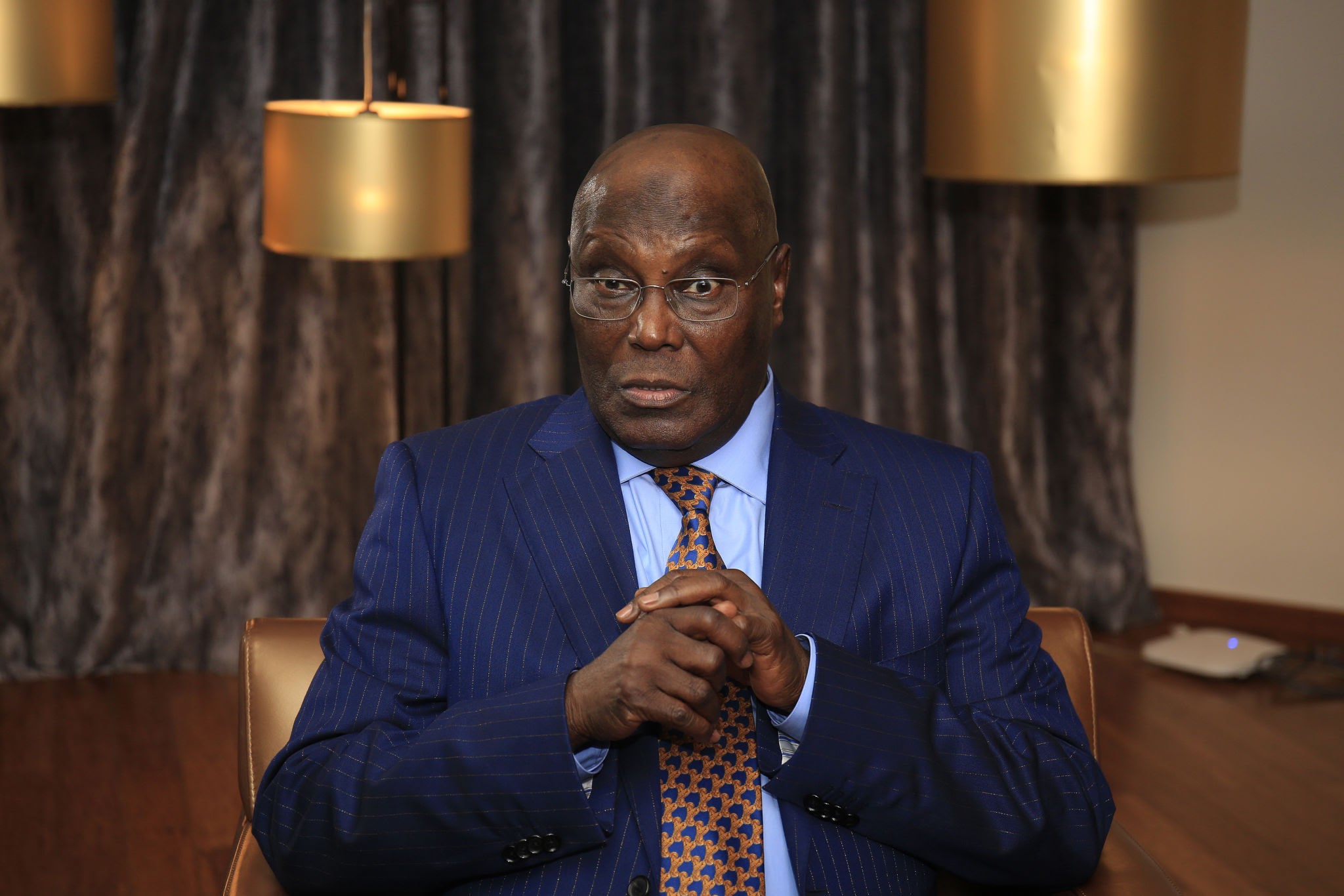
Atiku promises affordable living, urges Nigerians to collect PVCs ahead of 2027 elections

Published

on

The presidential candidate of the African Democratic Congress, Atiku Abubakar, has criticised the rising cost of living and insecurity in Nigeria, promising to make life affordable and restore security if given the opportunity to lead the country.

Atiku made the pledge in a post on his official X account on Wednesday, where he urged registered voters to collect their Permanent Voter Cards ahead of the next general election.

The former Vice President said Nigerians across different age groups were struggling with economic hardship and growing security concerns.

“My fellow Nigerians, young and old, I know the pain you are carrying,” Atiku wrote.

He lamented that parents were worried about feeding their children, while pensioners were forced to make difficult choices between buying food and purchasing medicines.

The former vice-president also expressed concern over the financial difficulties facing young Nigerians, noting that many workers could barely meet their basic needs despite their earnings.

“Young people work hard, yet transport, rent and basic needs consume what they earn,” he said.

Atiku further decried the persistent threat of kidnapping and attacks across the country, saying many families lived in fear for the safety of their loved ones.

“And across the country, families live with the fear of kidnapping, attacks and whether their loved ones will return home safely,” he added.

He said Nigerians should not be forced to endure hunger and insecurity simultaneously, warning against allowing the prevailing challenges to become the future inherited by younger generations.

“No family should have to face hunger and insecurity at the same time. We cannot allow this hardship and fear to become the future our children inherit,” Atiku stated.

See also  Tinubu appoints NECO, NBTE chairmen, names poly rector, renews library DG tenure

Calling on eligible voters to participate in the electoral process, he urged registered voters to collect and safeguard their PVCs, describing the cards as instruments for demanding change through peaceful democratic participation.

“If you are a registered voter, please go and collect your PVC. Hold on to it. It is your voice, your choice and your peaceful power to demand change,” he said.

Atiku, who has been a presidential candidate in previous elections, blamed President Bola Tinubu’s administration for the high cost of living and pledged to reverse the trend.

“Bola made life expensive. I will work to make life affordable again and restore the security every Nigerian deserves,” he said.

He called for national unity across generations, urging Nigerians to support his vision of a country where families could live safely and with dignity.

“Let us stand together, across generations, and vote for a Nigeria where every family can live with dignity, safety and hope,” he added.

Source: punchng.com

FOLLOW US ON:

FACEBOOK

TWITTER

PINTEREST

TIKTOK

YOUTUBE

LINKEDIN

INSTAGRAM

Continue Reading

Politics

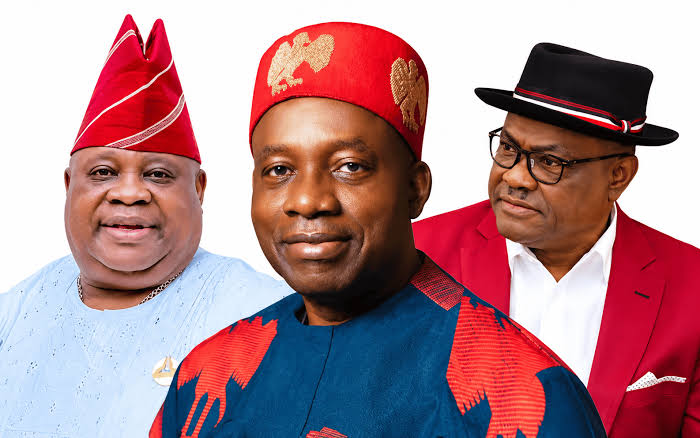
PDP, APGA, Accord back Wike, Soludo, Adeleke for APC campaign

Published

on

Three opposition political parties have backed the inclusion of their chieftains in the All Progressives Congress Presidential Campaign Council to re-elect President Bola Tinubu in the 2027 general election.

The parties — the Peoples Democratic Party, All Progressives Grand Alliance and Accord, expressed support for the roles assigned to the Minister of the Federal Capital Territory, Nyesom Wike; Anambra State Governor, Chukwuma Soludo; and his Osun State counterpart, Ademola Adeleke, in the ruling party’s revised campaign council.

The APC named the three politicians in its expanded Presidential Campaign Council on Tuesday, despite their affiliations with parties other than the ruling party.

This comes as the APC national chairman, Prof. Nentawe Yilwatda, while receiving the former Chief Justice of Nigeria, Justice Olukayode Ariwoola-led Savannah Centres for Diplomacy, Democracy and Development, on Tuesday, confirmed that the ruling party appealed to Wike, Adeleke, Soludo and other opposition figures to support and work for Tinubu’s re-election.

While Wike is a prominent PDP chieftain, Soludo belongs to APGA, while Adeleke is a member of the Accord.

Their inclusion reflects the political alliances and cross-party relationships shaping the race ahead of the 2027 presidential election.

Speaking exclusively with The PUNCH on Wike’s inclusion in the council, the National Publicity Secretary of the PDP National Caretaker Committee, Jungudo Mohammed, said the minister’s willingness to work with Tinubu was never in doubt.

He explained that the PDP had given Wike the go-ahead to support the President from the beginning of the current administration.

“The FCT minister got the blessing of the PDP during the era of its former National Chairman, Umar Damagum, to work with Mr President. His inclusion in the Presidential Campaign Council was therefore expected but this does not make him a member of the APC National Working Committee.

“Every political party including the PDP would like to have Mr Nyesom Wike in their campaign council, but the party had already endorsed his invitation to help the current administration from day one. He is working for President Tinubu and not for APC.”

APGA also welcomed Soludo’s appointment as the Anambra State coordinator of Tinubu’s 2027 presidential campaign, describing it as well deserved.

In a statement signed by its National Publicity Secretary, Ejimofor Opara, the party congratulated the governor and reaffirmed its support for Tinubu’s re-election bid.

“The National Working Committee of the All Progressives Grand Alliance heartily congratulates our National Leader and Governor of Anambra State, Prof Chukwuma Charles Soludo, CFR, on his well-deserved appointment as the Anambra State Coordinator of the President Bola Ahmed Tinubu 2027 Presidential Campaign Council.

See also  2027 Elections - Jonathan splits South-South PDP

“This appointment is a testament to Governor Soludo’s exemplary leadership, his uncommon commitment to progressive ideals, and his consistent advocacy for a strategic partnership between APGA and the Federal Government for the collective good of Ndi Anambra and Ndigbo at large.

“As a party, APGA has made its position clear. At our National Executive Committee meeting and during Mr President’s working visit to Anambra on May 8, 2025, we formally adopted President Bola Ahmed Tinubu as our consensus presidential candidate for the 2027 general election.

“In line with this resolution, APGA did not field a presidential candidate for the 2027 election,” the statement read.

The party said Soludo’s appointment was consistent with its political position and its support for cooperation between APGA and the Federal Government.

It added that the governor’s message that “Progressives are working together” reflected a shared political outlook between the party and the ruling party.

“Governor Soludo’s mantra that ‘Progressives are working together’ is not just a slogan, but a statement of historical truth.

“APGA, as the first truly progressive party in Nigeria, shares ideological DNA with the progressive movement at the centre.

“This synergy has already yielded tangible dividends for Anambra State, including federal collaboration on critical infrastructural interventions and economic development enablers.”

Reaffirming its position ahead of the elections, APGA said it would continue to seek electoral victories for its candidates at the state and federal legislative levels while supporting Tinubu.

The statement further stressed that “while APGA remains firmly in control of Anambra State, our position remains: In Anambra, it is Tinubu for President, APGA for Senate, House of Representatives, and state House of Assembly.

“We are confident that Gov Soludo will bring his intellectual depth, organisational capacity, and wide acceptability across the Southeast to galvanise massive support for President Tinubu’s Renewed Hope Agenda.”

Similarly, a chieftain of the Accord and member representing Ede South/Ede North/Ejigbo/Egbedore Federal Constituency of Osun State, Bamidele Salam, described Adeleke’s appointment to lead Tinubu’s re-election campaign in Osun as “a welcome development.”

Salam’s reaction signals support for Adeleke’s campaign role despite the governor’s membership of the Accord Party rather than the APC.

Our appeal

The APC national chairman, Prof Yilwatda, confirmed that the ruling party had reached out to opposition leaders to seek their support for Tinubu’s re-election in 2027.

See also  Tinubu promises support for slain security personnel in Kebbi

He stated, “You see, the APC is doing a lot, and despite our achievements and accomplishments as a government, we are still not relaxing. We are not resting. We have been reaching out to all stakeholders, including our party members and even those who are not members of our party.

“In Osun State, we contested the election against the incumbent governor, Ademola Adeleke, of the Accord. Our party lost that election, but we approached the governor. We begged him and asked him to work for President Bola Tinubu’s re-election. He agreed to work for the President’s re-election.

“In Anambra State, we also lost to the APGA candidate, the incumbent governor, Charles Soludo. But after the election, we went back and appealed to him because we know that he is a stakeholder in that state.

“We appealed to him to come and work for us, work for our party and support President Bola Tinubu’s re-election. He agreed to work for us.

“We did the same thing in other states, including Rivers State. We begged the Minister of the Federal Capital Territory, Wike, to work for the party. He has agreed to work for the candidate, President Bola Ahmed Tinubu, in Rivers State and the FCT.”

Yilwatda said the APC’s efforts to secure support across party lines were driven by the national interest, stressing that the initiative was aimed at advancing the interests of the Federal Republic of Nigeria beyond partisan considerations.

“So, the party is moving. We are reaching out to Nigerians. We are not just relaxing and saying that we are delivering good governance or the dividends of democracy. No. We are reaching out to stakeholders to support our party across party lines.

“The interest goes beyond political parties. This is in the interest of the Federal Republic of Nigeria, and that is why we are doing what we are doing,” he said.

‘Rainbow Coalition stays’

Meanwhile, Wike has insisted that the Rainbow Coalition will remain a feature of Nigeria’s political landscape ahead of the 2027 general elections.

Speaking at his monthly media chat in Abuja on Tuesday, Wike played down claims that the coalition had caused unease among APC governors or might trigger defections from the ruling party.

Wike has continued to promote the Rainbow Coalition in Rivers State and FCT in support of Tinubu ahead of the 2027 elections.

See also  Nigerians languish in prisons as Ethiopia stalls repatriation MoU

He recently alleged that Kwara State Governor, AbdulRahman AbdulRazaq and Imo State Governor, Hope Uzodimma, were behind some of the political challenges confronting him, linking their opposition to the coalition’s growing influence and its support for politicians challenging APC candidates in governorship and senatorial elections.

Uzodimma, who chairs the APC Progressive Governors’ Forum, has said APC governors would not support any alliance capable of undermining Tinubu’s re-election or weakening the party ahead of 2027, insisting that they would campaign for APC candidates at all levels.

Wike, however, maintained that his support for Tinubu’s presidential bid did not require him to back APC candidates in other elections, saying he remained free to support candidates of his choice, amid continued tensions between him and some APC governors.

Wike maintained that the Rainbow Coalition had come to stay, adding that, “If you have any problem against me, come out and face Wike. Don’t go under the Rainbow Coalition. For Rainbow Coalition, it has come. It will stay. There is nothing anybody can do about it.”

Wike, who oversees the coalition’s activities in Rivers State and the FCT, said it brings together APC members and supporters of President Tinubu from other political parties to work towards a common goal.

He said, “If you see that word, PBAT/APC, it means those who are supporting the President who are not members of the party, together with the party, are working together to achieve that purpose.

“The major thing is Mr President. Whatever we are going to do, whoever has any idea or anything to contribute is to the success of Mr President. That is the whole thing.”

Wike cited the FCT as an example of the coalition’s effectiveness, saying its members would support Tinubu in the 2027 election while backing APC candidates for the National Assembly.

He questioned why the arrangement should be considered problematic and dismissed suggestions that the political alliance was new to Nigeria.

Wike added, “When you say a new thing that never happened, I don’t think so,” adding that such backing had existed before without being formalised.

“But this time, it came out because of the period we are in,” he said.

Source: punchng.com

FOLLOW US ON:

FACEBOOK

TWITTER

PINTEREST

TIKTOK

YOUTUBE

LINKEDIN

INSTAGRAM

Continue Reading

Politics

Pantami, Adebutu get Oct 24 lifeline due to INEC omission, read details

Published

on

The Independent National Electoral Commission has given political parties whose candidates were omitted from its final list for the 2027 governorship elections until October 24 to notify it of the alleged errors.

The commission said the deadline was in line with Section 32(2) of the Electoral Act, 2026, which provides a 14-day window for political parties to notify it if they believe their candidates were wrongly excluded from the list.

INEC made this known in a statement issued on Tuesday evening by its National Commissioner and Chairman of the Information and Voter Education Committee, Mohammed Haruna, amid controversy over the omission of several prominent politicians from the final list of governorship and State Houses of Assembly candidates.

Among those missing from the list are the Peoples Democratic Party’s governorship candidates in Ogun and Gombe states, Oladipupo Adebutu and Isa Ali Pantami, respectively.

Also omitted was the Nigeria Democratic Congress governorship candidate in Kano State, Aminu Gwarzo, while the African Democratic Congress in Jigawa State protested the omission of its endorsed deputy governorship candidate, Aminu Ringim, and several other candidates.

The omissions have triggered protests and calls for clarification from affected political parties and candidates, with some threatening to pursue legal action to secure their inclusion.

The controversy followed the Supreme Court’s September 24 judgment in INEC v. Zenith Labour Party, appeal number SC/CV/495/2026, which upheld the constitutionality of provisions of the Electoral Act governing political party membership registers and candidate nominations.

In the statement titled, “Clarification on the Omission of Some Candidates from the Final List for the 2027 Governorship Election,” INEC said the apex court had upheld Sections 77(5), 77(6) and 77(7) of the Electoral Act, 2026.

See also  Djibouti’s President Guelleh secures sixth term with 97.8% of vote

The provisions require political parties to submit their membership registers to INEC within the stipulated period and use the registers for their primaries, congresses and conventions.

“The general public is aware of the recent decision of the Supreme Court in INEC v. Zenith Labour Party, Appeal No. SC/CV/495/2026 delivered on 24th September, 2026,” the Commission said.

The electoral body added that the judgment arose from its appeal against a Court of Appeal decision that had nullified the disputed provisions of the Electoral Act.

“However, the Supreme Court, in the aforementioned judgment, held that the provisions of Section 77(5)-(7) of the Electoral Act, 2026 are constitutional and mandatory for all political parties,” the statement read.

According to INEC, the court also upheld Item No. 2 of its timetable and schedule of activities, which required political parties to submit their membership registers between April 21 and May 10, 2026.

The commission said the Supreme Court further held that political parties that failed to comply with the requirements were ineligible to sponsor candidates for the election.

“Furthermore, the court held that failure to comply with the provisions of Section 77(5)-(7) renders the defaulting political parties ineligible to sponsor any candidate for the election,” it stated.

INEC explained that it applied the judgment while finalising the governorship candidates’ list, excluding parties that failed to comply with the membership-register requirements.

INEC said its action was in accordance with Section 287(1) of the 1999 Constitution, as amended, which requires authorities to enforce decisions of the courts.

The commission, however, noted that the final lists of presidential and National Assembly candidates had been published on September 12, 2026, 13 days before the Supreme Court delivered its judgment, adding that the deadline for parties seeking corrections to the governorship candidates’ list was October 24.

See also  Education, agriculture candidates now exempted from UTME, says JAMB

“Under Section 32(2) of the Electoral Act, 2026, political parties that believe their candidates were wrongly left off the list have 14 days from the date of publication to notify the commission. The deadline is 24th October, 2026,” the statement added.

The commission’s clarification comes amid growing concerns over the implications of the Supreme Court judgment for political parties and their candidates ahead of the February 6, 2027 governorship elections.

INEC assured Nigerians of its commitment to transparency, the rule of law and the credibility of the electoral process.

Source: punchng.com

FOLLOW US ON:
FACEBOOK

TWITTER

PINTEREST

TIKTOK

YOUTUBE

LINKEDIN

INSTAGRAM

Continue Reading

Trending