Connect with us

Politics

Soludo’s Anambra win sparks political storm

Published

on

Opposition parties on Sunday condemned the conduct of the Anambra 2025 governorship election, warning that the level of vote-buying and institutional complacency witnessed during the exercise posed a serious threat to the credibility of the 2027 general elections.

The incumbent governor, Chukwuma Soludo, won in all the 21 local government areas in a landslide to seal a second term ticket.

The condemnation came just hours after President Bola Tinubu congratulated Soludo of the All Progressives Grand Alliance on his re-election, describing the outcome as “an affirmation of visionary leadership” and pledging closer collaboration between the Federal Government and Anambra State.

The Independent National Electoral Commission’s Returning Officer, Edoba Omoregie, Vice Chancellor of the University of Benin, while announcing Soludo’s victory, noted that the incumbent satisfied the electoral requirements, having won in more than two-thirds of all local government areas across the state.

Soludo polled 422,664 votes to emerge the winner, with the closest rival, Nicholas Ukachukwu of the All Progressives Congress scoring 99,445 votes to come second.

Paul Chukwuma, the candidate of the Young Progressives Party secured 37,753 votes.

While the Labour Party candidate, George Moghalu scored 10,576 votes, John Nwosu, the candidate of the coalition-backed African Democratic Congress (ADC) polled 8,208 votes.

According to INEC, 16 candidates from 16 political parties participated in the election.

ADC rejects results

But the ADC, in a statement by its National Publicity Secretary, Mallam Bolaji Abdullahi, alleged that the poll was reduced to a marketplace of cash-for-votes.

The statement partly read, “The African Democratic Congress has observed the conduct of the just-concluded Anambra gubernatorial election with a deep sense of concern for the electoral process in Nigeria.

“What unfolded in Anambra was, regrettably, a cash-drenched spectacle that was more of a bazaar than an election. This undermines the very essence of democracy.”

The party accused the incumbent and his party of orchestrating widespread financial inducement.

“We wish to state categorically that, as has been widely reported and clearly shown to Nigerians and the international community, this election was highly monetised, with the incumbent and his party seen to have participated in several forms and styles of cash-for-votes.

“At polling units across the state, bundles of naira notes changed hands in full view. This was a brazen violation of the Electoral Act, whose foundation had been laid by the governor himself well ahead of the election,” the statement added.

Abdullahi faulted the conduct of security agencies and electoral officials.

He said, “Even more troubling was the apparent silence – and in some instances, visible inaction – of institutions mandated to enforce electoral integrity. Security operatives stood by as voters were harassed and compromised, while electoral officials, overwhelmed or indifferent, failed to uphold even the most basic standards.

“If this is the manner in which INEC intends to conduct the 2027 general election, then Nigerians have every reason to be worried about the future of our democracy, especially at a time when the state of our nation is under the microscope of the international community.”

Also, the ADC candidate in the election, John Nwosu, rejected the outcome of the election, describing it as a “national embarrassment.”

Nwosu, who addressed journalists in Nnewi, on Sunday, alleged that Soludo’s victory was aided by money.

He noted that in almost every polling unit, voters were openly induced with cash ranging from N3,000 to N20,000, turning the entire process into a marketplace rather than a democratic exercise.

See also  Ex-APC Chairman, Oba Adegboyega Famodun Is Dead

Although he did not state his next line of action, he added, “True victory is judged not by the outcome, but by the integrity of the process.

“An election riddled with corruption, manipulation, and vote trading cannot and will never represent the voice of the people. It was a shambolic election that conferred a shambolic mandate.

“I, John Chuma Nwosu, the governorship candidate of the African Democratic Congress, hereby categorically reject the outcome of the just-concluded gubernatorial election in Anambra State.

“What took place yesterday (Saturday) was a ruse and total subversion of the people’s will, marred by massive vote buying and shameless financial inducement at polling units across the state. By every account, the people have not spoken.”

He added, “This struggle continues. We will not surrender. We will not be silent. Our movement will keep pressing until the people of Anambra can freely choose their leaders without fear or inducement.”

Nwosu condemned in strong terms the failure of relevant institutions to safeguard the sanctity of the ballot, lamenting that when the system fails to uphold fairness, it loses the moral right to declare winners.

He called for an end to this culture of electoral corruption if the country truly desires a prosperous and just society.

Moghalu laments vote-buying

The candidate of the Labour Party, Dr George Moghalu, also rejected the results of the election.

Speaking to journalists in his Nnewi office on Sunday, Moghalu said he was dissatisfied with the conduct of the election and alleged that several irregularities occurred.

He said, “The exercise was marred by widespread vote-buying and reports of underage voting in some areas. The November 8, 2025 governorship election in Anambra State, in my view, fell short of expectations.

“I hereby reject it in its entirety. I contested in previous elections, but this one was different. The level of vote buying was alarming.”

“Children who were not supposed to be carrying voter cards were openly seen with them and were allowed to vote. These are issues that raise questions about the integrity of the process.

“I received reports from my team that in some polling units the LP name appeared on the ballot paper without the party’s logo, making it difficult for voters to identify the party’s position on the ballot.”

Moghalu stressed that he would release a more detailed statement after receiving a comprehensive report from his agents across the state.

APC studying outcome

However, the candidate of the All Progressives Congress, Nicholas Ukachukwu, said he was gathering information from his party agents on the outcome of the poll. He alleged that his supporters were prevented from voting by thugs during the poll.

“My supporters, including my running mate, were intimidated by thugs and prevented from casting their votes in their polling units. They arrested one of our agents and kept him somewhere until after the election,” Ukachukwu said.

“When you look at where we are coming from, you will understand that we made an appreciable effort. What happened is a story for another day.

“We are still collating data and gathering information from our party agents, and after that, we will know what to do. I am still consulting with my party to know the steps or actions to take.

See also  Insecurity: Tinubu pledges state police to US, European allies

“For the first time in the history of the election, the APC scored almost 100,000 votes without any inducement. But they accused us of vote-buying. Can the APC candidate who is not a sitting governor buy votes?

“If the APC candidate bought votes like the APGA candidate, the result would have been obvious. And if you see the level of violence, the people they arrested were all APC members. The house they burnt belonged to an APC member. The woman defeated them in her polling booth, but they went to burn down her house. Was it the APC that burnt down the house?

“Those who burnt the house have not been arrested. Whatever decision I am going to take, I must carry those 99,445 voters who voted for me along. They voted for me because they want Anambra to move forward. I must consult them. Like I said, I will hear from them. APC is here and it’s here to stay.”

UN observer

A United Nations election observer, Jim Oko, scored the poll “very highly”,  saying the conduct was “in line with international best practices.”

Oko, the national coordinator of Nouvel Perspective Int., a UN-accredited election observer organisation, said, “With the fact that most of us have monitored a lot of elections all over the world, especially the US election that was a very high level one, we can conveniently state that everything was how it should be – peacefully done, peacefully collated, peacefully announced and peacefully accepted. So, we are very glad over this”.

Tinubu hails Soludo

Meanwhile, President Bola Tinubu congratulated Soludo on his re-election, calling the result “an affirmation of visionary leadership” and promising closer federal–state collaboration with Anambra.

In a statement he signed on Sunday, Tinubu praised voters, security agencies and INEC for a peaceful exercise and urged the governor to be “magnanimous in victory.”

He also commended the new INEC chairman, Prof. Joash Amupitan, and charged the commission to sustain higher standards in future polls.

The overwhelming victory that Soludo recorded in Saturday’s poll has now made him the third governor in the state’s political history to win a second term.

Tinubu wrote, “I must also congratulate the people of Anambra State, the security agencies, and the Independent National Electoral Commission on the peaceful and successful conduct of the governorship election.

“Professor Soludo’s re-election is a testament to his visionary leadership and the significant progress the state has made under his guidance.

“Governor Soludo, the Solution, has demonstrated that indeed knowledge is power and that academic principles can be applied in serving the people, undergirding accountability, transparency, and prudent management of people and resources.”

The President commended Soludo for bringing discipline, grace, brilliance, and a fresh perspective to governance in Anambra, saying, “Under him, Anambra is living up to its motto as the Light of the Nation.”

Assuring Soludo of his support, the President urged the former Central Bank chief to be magnanimous in victory and to seek the cooperation of his opponents in the just-concluded elections.

He stated, “I assure Governor Soludo of my unwavering support, and I look forward to continued collaboration between Anambra and the Federal Government.”

Tinubu also thanked the new INEC Chairman, Amupitan, and his team for conducting what, according to him, observers have described as a credible election, “based on the reports I have received thus far.”

See also  Northern Tsunami – Gbadebo Rhodes-Vivour Reveals Why Tinubu Will Lose 2027 Bid

“I charge the commission with maintaining the standards and further improving its performance, so we can continue to strengthen and deepen our electoral system,” said Tinubu.

Soludo hails INEC

Basking in the euphoria of his re-election, Soludo hailed the conduct of Saturday’s poll, describing it as the best organised by INEC.

Soludo made the remarks during his victory speech in Awka on Sunday after being declared the winner of the election by INEC.

He expressed appreciation to President Tinubu, describing him as a “true democrat” who demonstrated commitment to ensuring a free and fair election in Anambra.

He said, “The people have spoken and their votes counted. I thank INEC, especially the new chairman, Prof. Joash Amupitan. I am excited that your first impression was an emphatic one, as INEC delivered.

“This is the best election INEC has organised in Anambra so far. We commend INEC’s ICT department for ensuring transparency through the real-time upload of results on the IReV portal.”

The governor also congratulated the other candidates, saying politics in Anambra should remain a contest of ideas, not enmity.

“Sixteen of us were on the ballot, and obviously one person will win. In the Anambra way, we fight like there will be no tomorrow, but afterward, we meet and celebrate.

“I extend a hand of fellowship to all of you, as I’m prepared to work with everyone for the greater good of our dear state,” he added.

Govs congratulate Soludo

The Nigeria Governors’ Forum on Sunday congratulated Governor Soludo on his re-election.

In a congratulatory message on Sunday by the Forum’s Chairman and Governor of Kwara State, AbdulRahman AbdulRazaq, the governors said Soludo’s victory was an indication of his popularity among the electorate.

“The Nigeria Governors’ Forum sends its hearty congratulations to His Excellency, Governor (Prof) Charles Soludo, on his victory at the Saturday gubernatorial election in Anambra State.

“We are confident that this deserved victory will enable His Excellency to consolidate on his great achievements across different sectors.

“We also congratulate the people of Anambra and all the stakeholders on the orderly and peaceful conduct of the election — another proof that Nigerians have fully embraced democracy and rule of law as a choice form of governance.

“We also commend the Independent National Electoral Commission and the security agencies for the orderly electoral process so far”, the statement read.

APC teases Obi

Meanwhile, the Lagos State chapter of the APC has advised the 2023 presidential candidate of the Labour Party, Peter Obi, to reconsider his 2027 presidential ambition.

The party’s spokesperson, Seye Oladejo, gave the advice in a statement on Sunday in Lagos, reacting to the Labour Party’s performance in Saturday’s governorship election in Anambra.

Oladejo said the outcome reflected a decline in the Labour Party’s grassroots support and in Obi’s Obidient Movement.

“The result, especially in Obi’s polling unit, showed that LP’s structure in his base was crumbling. Social media popularity cannot replace consistent political organisation and voter engagement.

“The Anambra election offers important lessons on structure and performance,” he said.

He added that while President Tinubu remained focused on governance and reforms, other political actors needed to build capacity.

“APC’s showing in Anambra demonstrated increasing public confidence in the party’s leadership.

Continue Reading
Click to comment

Leave a Reply

Your email address will not be published. Required fields are marked *

Politics

ADC rejects claim it sponsored attack on Tinubu’s convoy 

Published

on

The African Democratic Congress (ADC) has denied involvement in the alleged stoning of President Bola Tinubu’s convoy in Abuja, accusing the All Progressives Congress of blaming the opposition for public anger over the economic situation.

The party’s National Publicity Secretary, Bolaji Abdullahi, on Wednesday, stated this in a statement while responding to allegations against the ADC.

“We deny any involvement in the APC’s current predicament. We also cannot take responsibility for citizens who are expressing their genuine grievances against a failed regime that has pauperised them more than any other in recent history,” Abdullahi said.

He challenged the ruling party to provide evidence to support its claims, saying, “They have no evidence to support their claims.”

Abdullahi also accused the APC of being responsible for political violence in the country, stating, “Every Nigerian knows that.”

He added that the ADC had earlier warned the ruling party about the consequences of its actions.

“We warned them a long time ago that they would have their day of reckoning with the people. Now, judgment day has arrived, and they are looking for someone to blame,” he said.

The ADC spokesman also questioned the APC’s account of the alleged attack on the President’s convoy, asking, “By the way, didn’t they deny that the President’s convoy was stoned at the mosque? Liars.”

The response follows allegations by the APC Presidential Campaign Council that the ADC and the Nigeria Democratic Congress were sponsoring protests and violence at political campaign events ahead of the 2027 general elections.

See also  Wike, Adeleke, Soludo, others make APC revised campaign council list

The APC campaign council, in a statement by its spokesperson, Dele Alake, on Tuesday, alleged that opposition parties were mobilising youths to disrupt its activities through sponsored protests, fake news and propaganda.

It also accused the parties of mobilising hoodlums to pelt Tinubu’s motorcade with stones at an Abuja mosque on November 13, shortly after the President observed Jumu’ah prayers in Garki.

The council said security operatives attached to the President’s convoy exercised restraint during the incident and that Tinubu directed the police to release those arrested over the disruption.

However, the ADC Presidential Campaign Council had challenged the APC to provide evidence linking the opposition party to the alleged attack, questioning the circumstances surrounding the reported arrests and release of suspects.

Source: punchng.com

FOLLOW US ON:

FACEBOOK

WHATSAPP CHANNEL

TWITTER

PINTEREST

TIKTOK

YOUTUBE

LINKEDIN

INSTAGRAM

Continue Reading

Politics

ADC files 17-ground appeal on Atiku’s candidacy, read full details

Published

on

The African Democratic Congress (ADC) has asked the Court of Appeal to restrain the Independent National Electoral Commission from altering its leadership records and the nomination particulars of its presidential and governorship candidates pending the determination of its appeal against the judgment of Justice Peter Lifu of the Federal High Court, Abuja.

The party said it had filed a 17-ground appeal challenging the November 5, 2026 judgment, which it described as fundamentally flawed, arguing that the trial court lacked jurisdiction to entertain the leadership dispute.

In a statement issued on Tuesday by the Director of Strategic Communication, ADC Campaign Council, Phrank Shaibu, the party said it was also challenging an earlier ruling that granted Bala Gombe leave to amend his originating summons despite an unresolved objection to the court’s jurisdiction.

The ADC maintained that allowing INEC to implement the November 5 judgment before the Court of Appeal determines the issues raised could undermine its appeal and expose its candidates to uncertainty.

It therefore urged the appellate court to preserve the party’s existing leadership and candidate records until the legal dispute was resolved.

Shaibu said the 17 grounds of appeal questioned the jurisdiction of the Federal High Court, Gombe’s standing to institute the action, the assessment of disputed evidence and the orders made against the party.

“The 17 grounds challenge the foundation, findings and orders of Justice Lifu’s judgment. The ADC has asked the Court of Appeal to examine whether the trial court had jurisdiction, whether the claimant had standing, whether disputed evidence was properly assessed, and whether the sweeping orders made against the party can stand in law,” he said.

See also  Obi denies seeking Bwala’s support for 2023 campaign

The party is also challenging the July 24, 2026 ruling in a separate appeal, arguing that the trial court granted Gombe permission to amend his originating summons while deferring its decision on the ADC’s preliminary objection to jurisdiction.

According to the statement, the party contends that the proposed amendment altered the description of parties and the capacity in which a defendant was sued without prior leave of court.

The appellant’s brief challenging that ruling was settled by Chief J.S. Okutepa (SAN), who leads the ADC’s legal team in the appeal.

The party is asking the Court of Appeal to set aside the amendment order and determine the outstanding objection to the trial court’s jurisdiction.

The ADC further argued that Justice Lifu proceeded to deliver judgment on a court process whose validity was already being challenged before the appellate court.

It expressed concern that INEC could act on the judgment before the appeal is determined, potentially creating a situation that would be difficult to reverse even if the appellate court eventually rules in its favour.

“INEC must not make changes that could preempt the court’s decision or put the party’s candidates in jeopardy while our applications are pending. We are asking the court to protect the subject of the appeal so that its eventual decision has practical effect,” Shaibu added.

The party said its decision to make the legal challenge public was intended to clarify the issues before the appellate court and assure its members and supporters that it would pursue the matter through lawful judicial processes.

See also  Political Parties warn INEC rules could skew 2027 polls

The dispute centres on the leadership of the ADC and the legal validity of the processes through which its leadership records and related party affairs are being contested.

Justice Lifu’s November 5 judgment in the suit instituted by Gombe has thrown the party’s leadership structure and its preparations for the 2027 general elections into fresh legal uncertainty.

The latest appeal comes amid continuing litigation over the ADC’s leadership, with the party insisting that earlier court decisions recognising its leadership transition remain valid and have not been set aside.

The ADC said it would defend the rights of its members, its leadership and the decisions taken by the party, urging that no administrative action be taken on the basis of a contested judgment before the Court of Appeal has considered the issues raised.

The party’s applications and appeals are now before the appellate court for determination.

Source: punchng.com

FOLLOW US ON:

FACEBOOK

WHATSAPP CHANNEL

TWITTER

PINTEREST

TIKTOK

YOUTUBE

LINKEDIN

INSTAGRAM

Continue Reading

Politics

Jonathan fears post-election violence in 2027, read details

Published

on

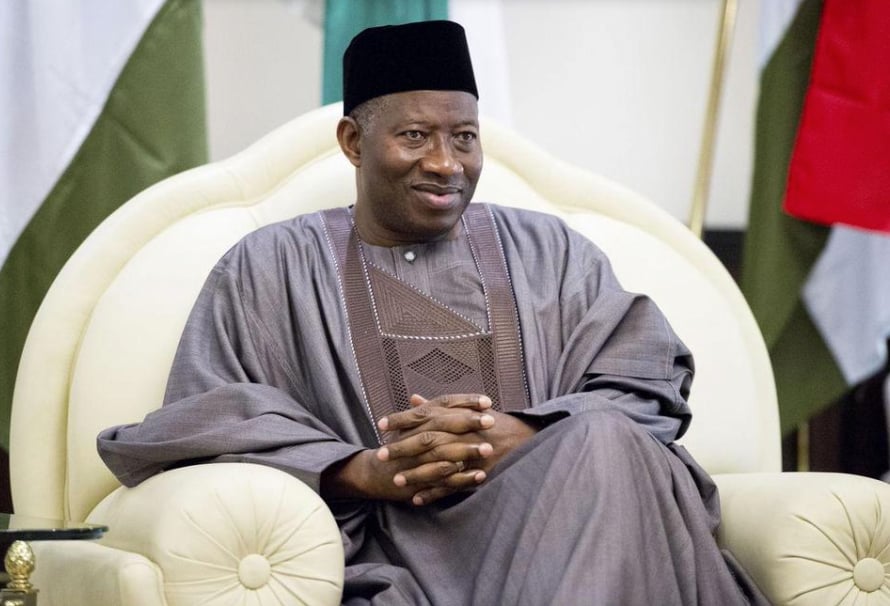
Former President Goodluck Jonathan has expressed concern over growing political intolerance ahead of the 2027 general elections, noting that incendiary rhetoric could trigger a post-election crisis.

Jonathan, the founder and chairman of the Goodluck Jonathan Foundation, gave the warning on Tuesday at the 2027 Peace and Security Conference in Abuja, themed ‘Safeguarding Peace and Strengthening Social Cohesion in a Competitive Political Environment.’

Political attacks on candidates and supporters of major parties have intensified as Nigeria prepares for the 2027 general elections.

The convoy of President Bola Tinubu, the All Progressives Congress presidential candidate, came under attack on November 13, 2026, shortly after he observed Jumu’ah prayers in Garki, Abuja, with some individuals reportedly throwing stones and other objects at it.

On November 15, 2026, suspected thugs attacked the campaign convoy of Nigeria Democratic Congress vice-presidential candidate, Senator Rabiu Kwankwaso, and its Kano governorship candidate, Aminu Gwarzo, in Bichi Local Government Area, leaving several vehicles damaged and supporters injured.

Earlier in November, the convoy of Nigeria Democratic Congress presidential candidate, Peter Obi, was attacked in Calabar, Cross River State, while some of his supporters were reportedly assaulted at a Lagos town hall meeting last week.

Supporters of the African Democratic Congress presidential hopeful, Atiku Abubakar, have also reportedly faced attacks in Edo, Kaduna, and Cross River states.

Similarly, the African Action Congress presidential candidate, Omoyele Sowore, and his entourage were attacked on October 30, 2026, at a restaurant in Ado-Ekiti, Ekiti State. The Allied Peoples Movement and other parties have also reported attacks on their supporters.

The ex-President also raised concerns about conflicting judicial pronouncements, particularly decisions by courts of coordinate jurisdiction, warning they could undermine public confidence in the judiciary and push citizens toward self-help.

He stated, “As we gradually approach the 2027 general elections, certain developments in our political environment are becoming increasingly worrisome. As a former President, I receive calls from Nigerians and friends of our country across the world who express concern about the direction Nigeria is heading. Rather than the confidence and optimism we should be inspiring, there is growing apprehension about the likelihood of crises that may follow the elections. We must not ignore these concerns.

“Among the issues demanding urgent attention is the growing culture of political intolerance. There appears to be an increasing unwillingness among political actors to accommodate opposing views or recognise the legitimate right of others to compete for political power.’’

“This is compounded by political thuggery, the exploitation of our young people as instruments of violence, and acts of political brigandage. Equally disturbing are controversies surrounding some judicial pronouncements, particularly those involving courts of coordinate jurisdiction.

“While the judiciary has the constitutional responsibility to interpret the law and adjudicate disputes, conflicting decisions on similar matters can undermine public confidence in the institution and create unnecessary tension. We must protect the integrity and independence of our judiciary,” he further said.

Jonathan warned that declining public confidence in the judiciary could lead to citizens taking the law into their own hands, with potentially disastrous consequences for the country’s stability.

He also cautioned against the use of ethnic sentiments in the 2027 elections, warning that political rivalry could deepen divisions and threaten national unity.

The former President added, “These are precisely the concerns that inform this conference. We seek to hold a mirror before our political leaders and citizens, encourage reflection and promote a change in conduct that respects our laws, democratic values and shared responsibilities.

See also  Ex-APC Chairman, Oba Adegboyega Famodun Is Dead

“As I observed a few days ago in Lagos, if Nigeria must make meaningful progress, we must review our political recruitment process. Our present system remains vulnerable to ethnic, religious and other primordial considerations, which often prevent competent and credible individuals from emerging as leaders.

“As we approach the 2027 elections, Nigerians will be choosing leaders at both national and sub-national levels. We must therefore be deliberate about the quality of people we recruit into public office at both the state and federal levels. The future of our country depends on the choices we make. Leadership is very critical in the growth of any nation.

“Let us choose competence over prejudice, service over personal ambition, and national interest over narrow considerations. Our democracy must produce leaders capable of uniting our people and advancing our collective development.”

Earlier in his remarks, former Vice-President Namadi Sambo, who is the Chairman of the occasion,  urged the political leaders to view political differences as opportunities for constructive engagement rather than sources of division.

Sambo called for inclusive governance, responsible leadership and respect for the rule of law, stressing the need to build bridges across ethnic, religious and political differences to strengthen national cohesion.

“As a nation, we must continually remind ourselves that political differences should be viewed as opportunities for constructive engagement rather than sources of division. Our collective responsibility is to promote tolerance, inclusive governance, responsible political leadership and respect for the rule of law.

“Having had the privilege of serving our country at the highest level of government, I strongly believe that national cohesion must transcend political affiliation and personal interest. We must deliberately build bridges across our ethnic, religious and political differences and create an environment where every Nigerian feels valued, protected and represented.”

The former leader expressed optimism that the discussions and recommendations at the conference would strengthen public trust, democratic institutions and national unity, stressing that “Our democracy must be competitive, but our nation must remain united.”

In his goodwill message, the Minister of Defence, Gen Christopher Musa (retd.), cautioned political leaders against allowing political competition to fuel national disunity, violence and insecurity, urging them to prioritise peace and national unity.

The minister, represented by his Special Adviser on Strategic Communications, Mercy Bala, stated that, “Political competition is a fundamental feature of democracy. It provides citizens with the opportunity to make choices, express their opinions and hold those entrusted with public responsibilities accountable. However, political competition must never be allowed to become a source of national disunity or insecurity.

“We must understand that political parties and their candidates may have different ambitions, ideologies and programmes, but the peace and unity of Nigeria must remain a common priority for all. The language of political engagement matters. The conduct of political leaders matters. The responsibility of the media matters.

“Above all, the choices we make as citizens matter. We must discourage the use of inflammatory language, hate speech, misinformation and divisive narratives that exploit our ethnic, religious and political differences. Our political leaders must demonstrate restraint, maturity and statesmanship, particularly in moments of heightened political tension.

See also  Political Parties warn INEC rules could skew 2027 polls

“Democracy should provide a platform for healthy competition and constructive disagreement, not an avenue for violence, intimidation or the breakdown of mutual respect. Ultimately, no political ambition is worth the loss of innocent lives, the destruction of property or the destabilisation of our country.”

The Chairman of the Independent National Electoral Commission, Prof. Joash Amupitan, cautioned political actors, sponsors and supporters against violence, intimidation and attacks on campaign convoys ahead of the 2027 elections, warning that those responsible would face prosecution.

Amupitan, represented by INEC National Commissioner, May Agbamuche-Mbu, said, “The Commission condemns in the strongest and most unequivocal terms the widespread incidents of political violence, intimidation, and attacks on campaign convoys and party supporters recorded across parts of the country in recent weeks. Democracy cannot flourish in an atmosphere of fear and bloodshed.

“Let me issue a clear and unambiguous warning to all political actors, sponsors, and their foot soldiers: the law will take its full course, and security agencies working alongside the commission will go after the promoters and perpetrators of violent campaigns without fear or favour.

“Equally, I must sound a stern warning against any form of harassment, intimidation, or physical attack directed at the leadership, staff, or ad hoc workers of INEC by supporters of any political party — whether within Nigeria or abroad. Election officials are public servants discharging a sacred constitutional duty; assaulting or threatening them is an assault on the Nigerian state and will be met with decisive legal consequences.

“Let me remind all political parties, candidates, and their supporters that the Electoral Act 2026 speaks with unmistakable clarity on campaign conduct. Sections 96 and 97 of the Act prohibit the use of abusive, intemperate, or slanderous language designed to provoke violent reactions, ban the deployment of private guards, thugs, or masquerades at political rallies, and criminalise any threat or use of force to intimidate voters or opponents.”

The INEC chairman noted that the Electoral Act 2026 increased penalties for electoral offences fivefold, prescribing fines of up to N5m or 12 months’ imprisonment for individuals and up to N10m for political parties.

He added that the law also empowers the commission to prosecute electoral offenders upon receiving investigation reports from the police.

The INEC chairman declared, “Peaceful campaigns are not a favour granted to the commission; they are a constitutional obligation owed to the Nigerian people. I urge party leaders present here today to hold their candidates and supporters, particularly the youth wings, to the highest standards of discipline, and to utilise the Inter-Party Advisory Council as a genuine platform for dialogue rather than a theatre of brinkmanship.”

In a related development, a former President of the ECOWAS Commission, Omar Touray, has identified public trust in democratic institutions and electoral processes as essential to sustaining stable democracies.

Touray added that public confidence in electoral and judicial institutions would help societies manage political disagreements and accept election outcomes, warning that a lack of trust could trigger political tension and instability even after credible elections.

Ahead of the Nigeria 2027 polls, he recommended that, “Political parties and candidates must exercise restraint and responsibility. Electoral complaints must be supported by evidence and pursued through established constitutional and legal mechanisms rather than through intimidation, incitement or extra-constitutional actions.

“The judiciary must be independent, accessible and capable of delivering timely and credible justice. Its decisions must command respect because they are grounded in law, impartiality and due process.

See also  Obi denies seeking Bwala’s support for 2023 campaign

“Security institutions must remain professional and politically neutral, protecting citizens and democratic processes without fear, favour or discrimination.

“The media, in turn, must uphold the highest standards of accuracy, impartiality and professional responsibility, recognising that the irresponsible dissemination of unverified information can deepen political divisions and undermine public confidence.”

The Executive Director, Goodluck Jonathan Foundation, Ann Iyonu, warned that insecurity, economic pressures and declining public trust could heighten political tensions ahead of the 2027 elections.

She cited an Afrobarometer survey showing that fewer than four in 10 Nigerians believe the 2027 polls will be free and fair, warning that electoral violence could threaten regional stability.

Iyonu noted, “As Nigeria approaches the 2027 general elections, our nation faces a complex and evolving political landscape. Political realignments, persistent insecurity, economic pressures, and declining public trust in institutions are converging to create a fragile environment in which political contestation, if not responsibly managed, could deepen divisions and heighten social tensions.

“The central issue before us today is not political competition itself. Indeed, healthy political competition is a defining feature of every vibrant democracy. The challenge lies in ensuring that competition is conducted responsibly, inclusively, and within the framework of democratic norms, and that political differences are managed in ways that strengthen rather than undermine national cohesion.

“At a time when West Africa is grappling with democratic pressures, violent extremism, unconstitutional changes of government, and growing public distrust in institutions, this conference could not be timelier.

“Across the region, governments, political actors, and citizens are confronted with the shared responsibility of ensuring that contests for political power contribute to national stability and democratic consolidation rather than fuel division, polarisation, and insecurity. Political competition must therefore be conducted in ways that strengthen, rather than weaken, social cohesion, peace, and regional security.”

She added that the survey found that many Nigerians fear vote buying, electoral violence, violation of electoral laws and manipulation of results during the 2027 elections.

Iyonu observed that most respondents still intend to vote, stressing that public confidence in the electoral process is vital to national unity, peace and democratic stability.

“Your Excellencies, distinguished guests, ladies and gentlemen, the implications extend far beyond Nigeria’s borders. As West Africa’s biggest democracy and economy, and a critical anchor of regional security, Nigeria’s ability to conduct peaceful, credible, and transparent elections is central to the stability of the sub-region.

“During its October 2026 pre-election fact-finding mission to Abuja, ECOWAS underscored that Nigeria’s management of the 2027 elections will serve as a barometer for the sub-region’s democratic and security trajectory. At a time when parts of West Africa continue to grapple with democratic backsliding, unconstitutional changes of government, a disputed or violence-marred election in Nigeria could have far-reaching consequences.

“It could further erode confidence in democratic governance across the sub-region, strain ongoing counterterrorism and border security efforts, trigger humanitarian pressures through population displacement, and disrupt trade and economic stability. For these reasons, safeguarding the integrity of our electoral process is not only a national priority but also a regional peace and security imperative.”

Source: punchng.com

FOLLOW US ON:

FACEBOOK

WHATSAPP CHANNEL

TWITTER

PINTEREST

TIKTOK

YOUTUBE

LINKEDIN

INSTAGRAM

Continue Reading

Trending