Connect with us

News

Tinubu demands two permanent seats, veto powers for Africa at the UN Security Council

Published

on

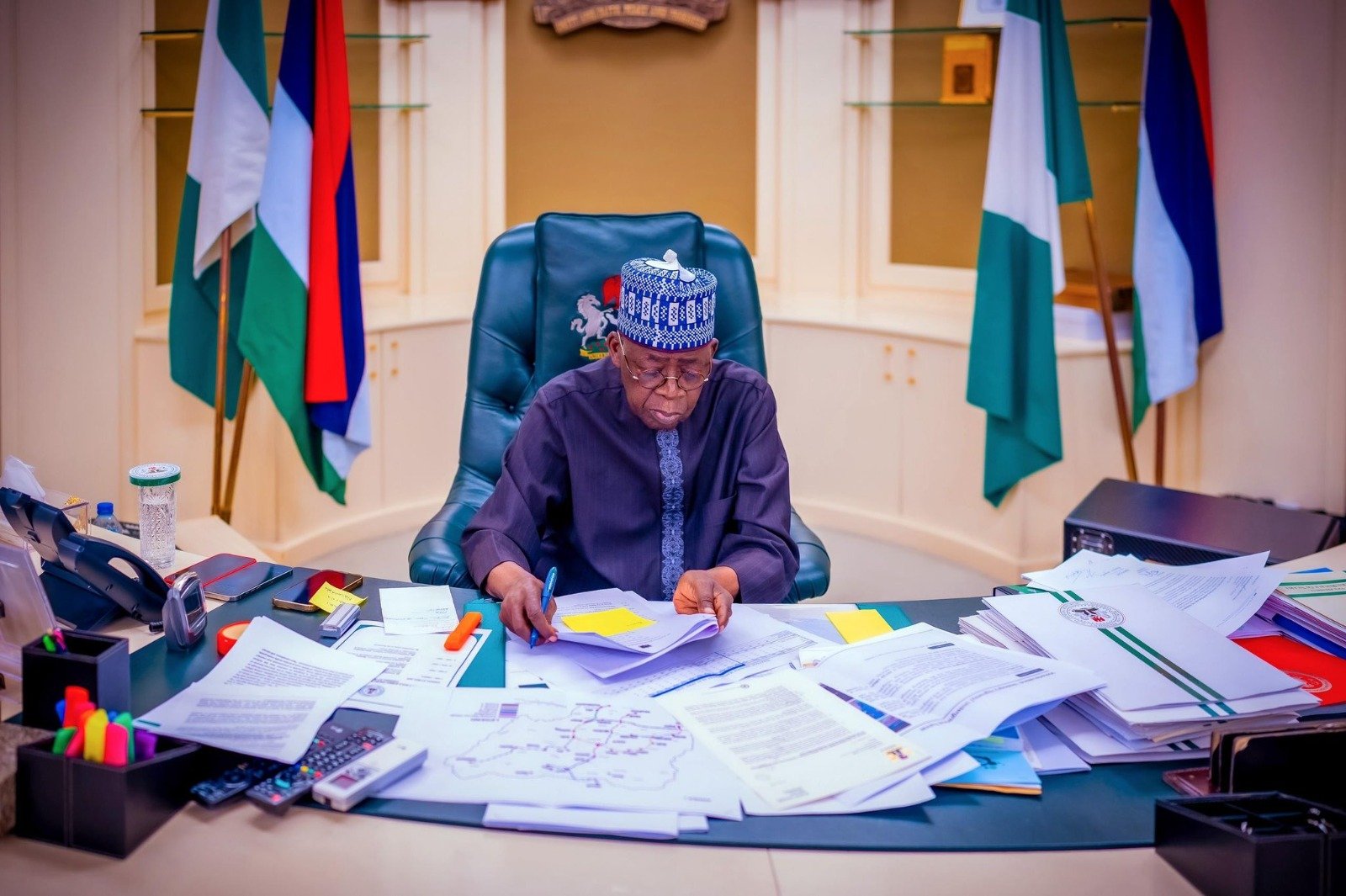
President Bola Tinubu has demanded at least two permanent seats for Africa on the United Nations Security Council, with veto powers, saying the current structure no longer reflects the distribution of global power.

Tinubu made the demand on Thursday in his address to the General Debate of the 81st Session of the United Nations General Assembly in New York.

The President’s address, delivered by Vice President Kashim Shettima, also called for five non-permanent seats for Africa on the Security Council.

He said the reform of the global body must begin with restructuring the Security Council, arguing that Africa could not continue to contribute to the council’s agenda without having permanent representation.

“The reform of this institution must begin with the reconstitution of the Security Council, for the world of 2026 cannot remain captive to the distribution of power in 1945. Africa cannot continue to fill the Council’s agenda while remaining absent from its permanent membership. Nigeria demands, in accordance with the Ezulwini Consensus and the Sirte Declaration, at least two permanent seats for Africa, with all the rights and responsibilities of permanent membership, including the veto for as long as it exists, and five non-permanent seats in total. The authority to speak for humanity carries an obligation to represent it.”

Tinubu said Nigeria was prepared to take on greater responsibility in international peace and security, citing the country’s contributions to peacekeeping and mediation efforts across Africa.

He listed Nigeria’s involvement in Liberia, Sierra Leone, Darfur, Mali and The Gambia, adding that the country continued to advance mediation, democratic governance, counter-terrorism and maritime security through ECOWAS, the African Union and Gulf of Guinea partnerships.

On climate change, the President rejected what he described as a false choice between development and climate action, saying developing countries needed support to industrialise while reducing emissions.

“We reject the false choice between development and climate action. Developing countries must industrialise, eradicate poverty and expand energy access through low-carbon pathways supported by technology transfer, capacity building and climate finance.

See also  Amupitan’s security concern: Opposition kicks against troop deployment for 2027 elections

“Africa contributes less than four per cent of greenhouse gas emissions, yet bears disproportionate consequences. Nigeria remains committed to the Paris Agreement and an equitable energy transition that reflects historical responsibility and capacity while protecting people’s right to development.”

Tinubu said Nigeria’s Energy Transition Plan was targeting net-zero emissions by 2060 while expanding access to affordable and reliable energy.

He said the plan combined renewable energy, clean cooking and gas as a transitional fuel with climate-smart agriculture and nature-based solutions.

The President also called for international climate finance to be based on equity and shared responsibility.

“Finance must be governed by equity and shared responsibility rather than charity, with international commitments translated into accessible, predictable and adequately funded mechanisms enabling developing countries to pursue climate action without compromising development objectives.”

On artificial intelligence, Tinubu called for responsible deployment of the technology, saying it could be used either for destructive purposes or to improve lives.

“We refuse to surrender our technological future to paranoia. An invention can be destructive or beneficial, depending on the purposes it serves and the judgement of those who use it. A knife can take a life in the hands of an assailant and save one in the hands of a surgeon. We can deploy artificial intelligence to wage war or use it to transform healthcare, education, agriculture, governance and economic productivity.

“Much of the anxiety surrounding AI reflects the distrust we have allowed to grow among us.”

He said Nigeria was investing in digital public infrastructure, broadband connectivity, innovation ecosystems, research institutions and technology entrepreneurship.

Tinubu invited international partners to collaborate with Nigerian youths in directing AI towards development.

“We invite the world to work with our inventive, resourceful and enterprising young people to direct AI towards humanity’s advancement rather than its destruction.”

The President also called for reforms to the international financial system, saying inadequate financing remained one of the biggest obstacles to sustainable development.

See also  US official reveals how Mexican cartels are turning Nigeria into meth hub, read details

“Nigeria therefore calls for reform of the international financial architecture, wider access to concessional financing and debt sustainability frameworks that recognise developmental needs.”

He said Nigeria also supported innovative financing through private capital, blended finance, South-South cooperation and strategic partnerships for sustainable development, climate adaptation and resilient infrastructure.

Tinubu highlighted the African Continental Free Trade Area as an opportunity to strengthen regional value chains, increase intra-African trade and promote industrialisation.

He said Africa must move beyond exporting raw materials and focus on value addition, manufacturing, technological innovation and knowledge-driven growth.

“Our abundant natural resources must become engines of shared prosperity rather than sources of perpetual dependency.”

On security, the President said Nigeria’s experience fighting Boko Haram, ISWAP and other armed groups had shown that military victories alone could not guarantee lasting peace.

“Nigeria’s prolonged struggle against Boko Haram, ISWAP and other armed groups has taught us that military victories require enduring foundations in education, economic opportunity, accountable governance and communities whose rights and dignity are protected. Development cannot take root where violence repeatedly uproots livelihoods, and peace cannot endure where injustice and exclusion replenish the ranks of those who threaten it.”

Tinubu called for greater international cooperation against terrorism, organised crime, cyberattacks and illicit finance.

He also expressed concern about the continuing conflicts in Sudan and other war-torn countries, calling for urgent diplomacy and protection of civilians.

“All parties must uphold international humanitarian and human rights law, protect civilians and facilitate humanitarian access. Negotiated settlements must respect sovereignty and territorial integrity.”

The President said Nigeria remained committed to peaceful dispute settlement under the UN Charter and urged the strengthening of peacekeeping, peacebuilding, mediation and institution-building.

“We place our faith in diplomacy because military victories alone cannot secure lasting peace.”

Tinubu further called for greater recognition of Africa’s contribution to global development, describing the continent as a potential major driver of global growth.

“Developing countries must be recognised as indispensable partners whose contributions to global solutions and shared prosperity extend far beyond their need for assistance.”

See also  Latest developments in the US-Iran war

He said the UN must evolve to reflect the aspirations of present and future generations, warning that institutions that failed to adapt risked losing their relevance.

Tinubu said Nigeria would continue to support cooperation, dialogue and partnership among nations.

“Nigeria pledges to choose cooperation over confrontation, dialogue over division, hope over fear and partnership over isolation.”

Concluding the address, the President said a reformed UN remained necessary to achieve global peace and sustainable development.

“A reformed, inclusive and effective United Nations is indispensable to the peaceful, just and sustainable world that future generations deserve. Whatever our differences, we must remember that humanity is our oldest citizenship, and peace is the inheritance we owe every child.”

The demand came against the backdrop of renewed calls for reform of the UN Security Council, with UN Secretary-General António Guterres saying Africa’s continued absence from permanent membership was “unjust and indefensible”. Guterres, speaking as world leaders gathered in New York for the 81st session of the UN General Assembly, said the council must be reformed to reflect the present-day global order.

He said, “We must reform the Council so that it reflects today’s world with the legitimacy and effectiveness that today’s challenges demand.”

The 15-member council currently has five permanent members China, France, Russia, the United Kingdom and the United States all of which have veto powers. The African Union has been seeking at least two permanent seats with full privileges, including veto power if the veto is retained, as well as five non-permanent seats.

Guterres has repeatedly backed reforms of global institutions to reflect present-day geopolitical realities. In February, he told African leaders that the absence of permanent African seats on the council was “indefensible”, arguing that the UN system must reflect today’s realities rather than that of 1945.

Source: punchng.com

FOLLOW US ON:

FACEBOOK

TWITTER

PINTEREST

TIKTOK

YOUTUBE

LINKEDIN

INSTAGRAM

Continue Reading
Click to comment

Leave a Reply

Your email address will not be published. Required fields are marked *

News

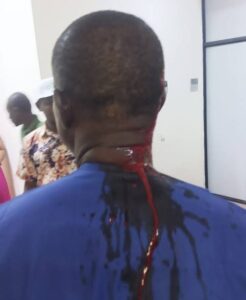
SEE PHOTO: Senate Appropriation Committee session turns bloody

Published

on

A legislative aide, Mr Kingsley Wali, was rushed to the National Assembly clinic in Abuja for emergency treatment after he was allegedly attacked on Wednesday during a sitting of the Senate Committee on Appropriations, chaired by Senator Adeola Olamilekan (APC, Ogun West).

The attacker, a security official attached to Olamilekan, allegedly punched Wali as he accompanied his principal, Senator Onyesoh (APC, Rivers East), to the committee’s sitting.

The altercation between the security official and the legislative aide began after the former tried to stop Wali from accessing the room where the committee was holding its meeting.


Source: tribuneonlineng.com

FOLLOW US ON:

FACEBOOK

WHATSAPP CHANNEL

TWITTER

PINTEREST

TIKTOK

YOUTUBE

LINKEDIN

INSTAGRAM

See also  PHOTOS: Meet Anthony Joshua’s close friends who died in Lagos-Ibadan Expressway crash
Continue Reading

News

Amupitan reveals INEC’s verified voters register exceeds 100 million, read details

Published

on

The Chairman of the Independent National Electoral Commission (INEC), Prof. Joash O. Amupitan, SAN, has said that the Commission’s verified voters’ register stands at over 100 million following an audit.

Amupitan disclosed this on Wednesday, 25 November 2026, during a strategic consultative meeting with Resident Electoral Commissioners (RECs) in Abuja.

He said the figure followed three phases of Continuous Voter Registration (CVR), which added over 10.77 million new registrants, and an Automated Biometric Identification System (ABIS) and claims-and-objections audit, which removed over 1.6 million invalid, duplicate or deceased records.

“The register includes 232,658 persons with disabilities (PWDs) requiring accessible polling layouts and assistive materials,” he said.

Amupitan said there were 51 days to the Presidential and National Assembly elections scheduled for 16 January 2027, while the Governorship and State Houses of Assembly elections would hold on 6 February 2027.

He said INEC would conduct a nationwide mock accreditation and result transmission exercise on Saturday, 28 November 2026, across the 36 states and the Federal Capital Territory.

The INEC Chairman warned RECs that minor administrative lapses would not be tolerated, noting that general elections were of a different magnitude.

“In an exercise of that scale, even minor administrative lapses in one state can trigger national headlines and cast doubt on otherwise solid work elsewhere. Margin for error simply does not exist,” he said.

He listed six non-negotiable priorities for RECs.

He said Saturday’s mock exercise, which would take place in two polling units per ward, was a live stress test of the 57,000 newly procured BVAS devices and the upgraded INEC Result Viewing Portal (IReV), which now has automated arithmetic and over-voting checks on Form EC8A before upload.

See also  Latest developments in the US-Iran war

He directed RECs to personally oversee preparations and submit a technical audit to the headquarters by Monday, 30 November 2026, detailing network dead zones, device anomalies and bottlenecks.

On logistics, he said RECs must audit transport arrangements with the National Union of Road Transport Workers (NURTW), marine and aviation partners, verify Registration Area Centres (RACs) and enforce end-to-end tracking of materials.

He said the BVAS threshold had been lowered from 1,250 to 850 voters per machine to prevent crowding, with multiple units to be provided in high-population polling units.

On security, Amupitan said RECs must activate “ICCES Tentacles” down to the local government and ward levels, working with the police, Department of State Services (DSS), Nigeria Security and Civil Defence Corps (NSCDC) and Office of the National Security Adviser (ONSA). He also urged them to use Election Risk Management (ERM) maps to identify flashpoints and resolve conflicts over rally venues under Section 95(4) of the Electoral Act 2026.

He said over 1.41 million ad hoc staff, including National Youth Service Corps (NYSC) members and academics, must be properly trained on the Electoral Act 2026, BVAS operations and Form EC8A validation, with their allowances paid promptly.

The Chairman called for regular engagement with the Inter-Party Advisory Council (IPAC), election observers, civil society organisations and the media to counter disinformation and avoid communication vacuums.

He stressed that there would be zero tolerance for partisan compromise, warning that INEC would not shield any official who compromised the Commission’s neutrality or facilitated malpractice.

“Under the Electoral Act 2026 — including the deterrence provisions of Sections 96, 97 and 148 — the Commission will not shield any staff member or official who compromises neutrality, facilitates malpractice or breaches statutory rules,” he said.

See also  Trump orders US withdrawal from 66 international organisations

He also emphasised the need for disciplined record-keeping, immutable BVAS logs, authenticated IReV uploads and the timely issuance of Certified True Copies (CTCs) to ensure clarity for voters and election tribunals.

Source: tribuneonlineng.com

FOLLOW US ON:

FACEBOOK

WHATSAPP CHANNEL

TWITTER

PINTEREST

TIKTOK

YOUTUBE

LINKEDIN

INSTAGRAM

Continue Reading

News

Read lessons from US visa ban on Supreme Court justices

Published

on

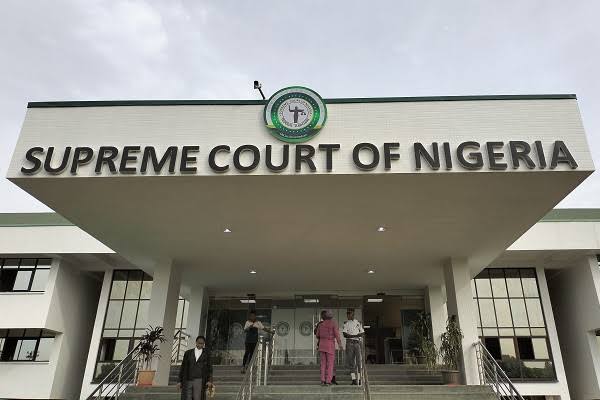
ONCE again, the Supreme Court of Nigeria is under an uncomfortable spotlight. This time, the trigger is an extraordinary revelation by retiring Justice Uwani Abba-Aji at her recent valedictory session. She lamented that the United States imposed visa restrictions on members of a Supreme Court panel over a controversial judgement.

This is no trivial diplomatic gesture. Visa restrictions against serving justices of a country’s highest court carry grave implications for the reputation of the institution and the credibility of its decisions. US authorities would hardly take such a step without serious grounds for concern. More troubling, the sanctions have apparently endured.

Recounting her experience, Abba-Aji said: “My time on the Supreme Court bench was filled with challenges, some of which have served as additional opportunities to stand firm on the side of justice, regardless of the consequences. One of such challenging judgements was widely misinterpreted and led to a travel ban to the United States of America being imposed on all members of the panel; a ban which still holds till today.”

For Abba-Aji, the judgement was merely “widely misinterpreted.” But that is hardly a sufficient explanation for a decision that has continued to cast a shadow over the country’s highest judicial institution. The public, and apparently the US authorities, are entitled to a different assessment. More importantly, the controversy demands introspection rather than defensiveness.

The Supreme Court and the judiciary should recognise that their proceedings and decisions are subject to increasingly intense domestic and international scrutiny. Judicial authority does not confer immunity from criticism. Neither does the sanctity of the bench excuse decisions that raise troubling questions about fairness, consistency and the integrity of the electoral process.

The controversies surrounding the 2023 senatorial elections involving Godswill Akpabio and Ahmad Lawan are cases in point. Both had contested the All Progressives Congress presidential primaries in 2022 before subsequently seeking senatorial tickets in Akwa Ibom North-West and Yobe North, respectively. The Electoral Act 2022 prohibits a candidate from participating in more than one primary election within the same electoral cycle.

Yet, relying on jurisdictional and procedural grounds, the Supreme Court overturned earlier decisions and cleared the way for both men to secure their respective senatorial tickets. Whatever the technical legal reasoning, the outcome reinforced public suspicion that political heavyweights enjoy judicial accommodation unavailable to ordinary Nigerians.

More troubling was the January 14, 2020, Imo State governorship judgement. A seven-member panel of the Supreme Court, including the present Chief Justice of Nigeria, Kudirat Kekere-Ekun, and Abba-Aji, overturned the election of Emeka Ihedioha of the Peoples Democratic Party and declared Hope Uzodimma of the APC governor. Uzodimma had initially placed fourth in the election.

See also  Doctors dispute FG’s N11.9bn payout, strike continues

The court arrived at its conclusion after adding 213,295 votes from 388 polling units, based on documents tendered by a police witness but reportedly disowned by the Independent National Electoral Commission. In effect, the Supreme Court’s intervention overturned the decisions of both the election tribunal and the Court of Appeal.

The judgement raised fundamental questions that have never been satisfactorily laid to rest. Should the Supreme Court assume the responsibility of sorting, counting and declaring election results? Is it an electoral umpire? Where discrepancies in results arise, should the court not direct the appropriate electoral authority to establish the authentic figures in accordance with the law?

When Ihedioha subsequently sought a review of the judgement, the application was dismissed. In a dissenting opinion, the late Justice Centus Nweze warned that “this decision of the Supreme Court will continue to haunt our electoral jurisprudence for a long time to come.”

His words have proved difficult to dismiss. Indeed, such controversial judgements have helped institutionalise the cynical belief that elections are merely preliminary battles, with the real contest taking place in court. Politicians have consequently made “go to court” a familiar refrain, undermining confidence in the ballot and weakening the foundations of electoral democracy.

The Orji Kalu case is another troubling example of judicial controversy. On May 8, 2020, the Supreme Court set aside the 12-year prison sentence imposed on the former Abia State governor by a High Court and upheld by the Court of Appeal over a N7.1 billion money-laundering charge.

The Court held that the trial judge, Mohammed Idris, lacked jurisdiction because he had been elevated to the Court of Appeal when the proceedings were concluded. It ordered a retrial.

Before it was voided in Udeogu v. Federal Republic of Nigeria, Section 396(7) of the Administration of Criminal Justice Act 2015 provided that a High Court judge elevated to the Court of Appeal may continue sitting as a High Court judge to conclude part-heard criminal matters. This provision was designed precisely to prevent the kind of disruption that could arise from judicial elevation.

More fundamentally, setting aside a conviction on procedural grounds does not extinguish the underlying allegations of financial wrongdoing. The public was entitled to expect that the substantive case would be resolved without further unnecessary delay.

Beyond controversial judgements, the judiciary’s growing proximity to the political establishment has also become a source of concern. Judges are expected to maintain a degree of restraint and distance from the executive, particularly when politically sensitive cases are before them. Yet, the spectacle of judicial officers fraternising with political power has repeatedly undermined that expectation.

Lawyers, for instance, criticised the then Acting Chief Justice of Nigeria, Tanko Muhammad, and other judicial officers for attending an Iftar dinner hosted by President Muhammadu Buhari at the Presidential Villa while presidential election petitions were still pending. Even if no impropriety was established, the optics were damaging. Justice must not only be done; it must be seen to be done.

The late Justice Kayode Eso, one of Nigeria’s most respected jurists, had sounded the alarm years earlier. Following the disputed 2007 elections, he lamented the emergence of “billionaire judges” and described a legal profession increasingly divided between “those who know the law and those who have contacts”. That indictment remains painfully relevant.

See also  Presidency under pressure as police arrest Adeyemi’s father due to Fake PFIPC agency scandal

The era of courageous, intellectually rigorous and landmark judgements associated with Justices Chukwudifu Oputa, Eso and Niki Tobi appears to be receding. Their legacy was not built on proximity to political power but on judicial independence, moral courage and fidelity to the law. The present generation must demonstrate that the judiciary is still capable of producing such men and women.

Unfortunately, the rot is not confined to the Court. It has filtered through the lower judiciary, as reflected in disciplinary actions by the National Judicial Council.

At its 112th meeting, the council suspended three judicial officers — Hannatu Mohammed of the Nasarawa State High Court, Mohammed Sani Salihu of the Jigawa State Sharia Court of Appeal and Sobere Biambo of the Rivers State High Court — for one year without pay over various acts of misconduct. Eight others were cautioned, while warning letters were approved for three judges following investigations into their handling of cases.

These sanctions are necessary, but they also expose the scale of the institutional challenge.

Judicial misconduct cannot be treated as an occasional embarrassment to be managed through discreet disciplinary measures. It is a direct assault on the rule of law and the confidence of citizens in the justice system.

The public perception of judicial integrity has suffered from troubling political disclosures. At a valedictory session in the Senate in June 2023, former senator Adamu Bulkachuwa claimed that he had approached his wife, Justice Zainab Bulkachuwa, a former President of the Court of Appeal, to influence election petition cases involving his political colleagues. Although he subsequently recanted, the damage to public confidence was considerable.

Transparency International’s 2025 Corruption Perceptions Index and concerns raised by the Civil Society Legislative Advocacy Centre further underscore the damage corruption does to public trust in Nigerian institutions, including the judiciary. CISLAC has identified judicial corruption as a major weakness in the country’s anti-corruption campaign, noting that both the CJN and the Nigerian Bar Association have acknowledged its threat to public confidence.

See also  Iran Lists Three Conditions To End War With US, Israel

The NJC should therefore move beyond occasional disciplinary interventions. It should strengthen its investigative capacity, impose firm and transparent sanctions on erring judicial officers and ensure that accountability extends to the highest courts. No judge should be considered too senior, influential or politically connected to face scrutiny.

If foreign governments are concerned about judicial integrity, Nigerian authorities should not dismiss their actions as interference. The US visa restrictions may be controversial, but they should serve as a wake-up call. Indeed, scrutiny should not stop at the Supreme Court. No level of the judiciary should be beyond examination where credible allegations of misconduct arise.

More fundamental, however, is the need for structural reforms that insulate judicial appointments from political patronage. The appointment of the Chief Justice of Nigeria, the President of the Court of Appeal and chief judges should not remain so vulnerable to the influence of the President and state governors.

An independent, transparent and broadly representative appointments commission should play a decisive role in identifying, screening and recommending judicial candidates on the basis of competence, integrity and professional merit.

There should be meaningful public participation in the appointment process, with appropriate safeguards to protect judicial independence. The objective is not to turn judges into political contestants or subject their decisions to popular approval, but to ensure that those entrusted with dispensing justice command public confidence from the outset.

Ultimately, the judiciary is too important to Nigeria’s democracy to be allowed to decay under the weight of political interference, corruption and questionable judgements.

As the country approaches the 2027 general elections, the Supreme Court and the wider judicial establishment must undertake a serious institutional soul-searching exercise. The credibility of the next elections will depend not only on INEC but also on the integrity of the courts that will adjudicate disputes arising from them.

A judiciary whose integrity is questioned at home and abroad is a liability to the country. It weakens democracy, emboldens impunity, discourages investment and erodes faith in the rule of law.

Investors are unlikely to repose confidence in a country where the impartiality of the courts is in doubt, and commercial disputes can be coloured by political connections.

The lesson from the US visa restrictions should, therefore, be unmistakable: judicial prestige cannot be sustained by constitutional status or the grand trappings of office. It must be earned through impartiality, courage, transparency and fidelity to the law. Nigeria cannot build a credible democracy on a compromised judiciary.

Source: punchng.com

FOLLOW US ON:

FACEBOOK

WHATSAPP CHANNEL

TWITTER

PINTEREST

TIKTOK

YOUTUBE

LINKEDIN

INSTAGRAM

Continue Reading

Trending