Connect with us

Sports

Why the World Cup Was the End for Many Head Coaches

Published

on

While fans of an unprecedented 48 nations cheered on their teams at this summer’s World Cup, Nigerians had to make do with looking on from afar as the Super Eagles missed out on a second consecutive tournament. Éric Chelle was the man brought in to revive Nigeria’s qualification hopes, but his team fell short in the CAF play-off final, drawing 1-1 with DR Congo before losing 4-3 on penalties in November 2025.

Unlike many of the coaches who did make it to the finals in North America, Chelle is still in his job. In June, Nigerian officials confirmed that he would remain in charge of the Super Eagles and would also take responsibility for the country’s U-23 side. The focus now turns to the 2027 Africa Cup of Nations cycle and to building a more stable national-team structure.

All the best online sports betting sites will now be taking predictions on Nigeria’s  chances of success in the qualification campaign for AFCON 2027. MyTopSportsbooks is the best place to find out about those betting sites. But what about all those coaches who lost their jobs this summer? At the last count, 17 national teams will be hiring a new leader in the weeks and months ahead. What caused this huge turnover of coaching talent?

The best online sports betting sites will now be taking predictions on Nigeria’s chances of success in the qualification campaign for AFCON 2027. But the aftermath of the World Cup has also been dominated by a remarkable number of coaching changes. Some managers had already decided that the tournament would mark the end of their tenure, while others paid the price for disappointing results.

See also  Arbeloa confident Mbappe fit for Man City trip in Champions League

The Time Was Right

One of the biggest departures was Didier Deschamps leaving France after 14 years in charge. His exit had been announced before the tournament, so the World Cup was always going to be his final competition with Les Bleus. France finished fourth after losing 6-4 to England in the third-place match, and Zinedine Zidane was appointed as Deschamps’ successor on July 28.

Carlos Queiroz had a very different summer with Ghana. Appointed in April, he guided the Black Stars into the Round of 32, where they lost 1-0 to Colombia. He initially left after the tournament when his short-term mandate ended, but that was not the end of the story: on September 2, the Ghana Football Association reappointed him for the next phase of the national team’s programme.

End of the Road

For several long-serving coaches, the World Cup marked the end of a natural cycle. Roberto Martínez left Portugal after their Round of 16 defeat by Spain and was replaced by Jorge Jesus in July. Zlatko Dalić also ended his long spell with Croatia after the tournament, with former national-team coach Slaven Bilić returning for a second spell in charge.

Mexico also moved into a new era. Javier Aguirre’s tenure ended after the World Cup and Rafael Márquez, who had worked as his assistant, was formally presented as the new national-team coach in September. Scotland made a change too, with Sébastien Pocognoli taking over from Steve Clarke after the tournament.

Jordan coach Jamal Sellami stepped down after his team’s historic World Cup debut ended with three defeats. The Jordan Football Association then appointed former Morocco coach Badou Zaki on a one-year contract. Australia, however, provides an important exception to the wider trend: Tony Popovic did not resign. He remains Socceroos coach through the 2027 Asian Cup after signing a contract extension before the World Cup and later declining a longer deal through 2030.

See also  Messi revealed why he cried after Argentina’s World Cup comeback

Poor Results

Results inevitably accounted for a number of the post-tournament changes. Ronald Koeman stepped down as Netherlands head coach after the Oranje were eliminated by Morocco on penalties in the Round of 32. Miroslav Koubek also left Czechia by mutual agreement after a disappointing group-stage campaign.

Senegal’s Pape Thiaw was dismissed after his side’s Round of 32 defeat by Belgium. The Senegalese federation subsequently appointed Patrick Vieira in August, giving the former France international his first job as a senior national-team head coach.

Belgium took a different decision after reaching the quarter-finals. Rudi Garcia’s contract was not renewed, and the Belgian federation appointed Mark van Bommel on a two-year deal through UEFA EURO 2028. The change showed that even a relatively deep World Cup run did not guarantee continuity once federations began planning for the next cycle.

Figure 2 A soccer coach’s position is a perilous one, whatever the level – Source: Pexels

With Immediate Effect

Some dismissals came after the tournament, but Tunisia made its decision while the World Cup was still under way. Sabri Lamouchi was removed after a 5-1 defeat by Sweden in the opening group game. In came the charismatic Herve Renard, appointed for the remainder of the tournament in an attempt to rescue Tunisia’s campaign. The team then lost 4-0 to Japan and 3-1 to the Netherlands, and Renard announced the end of his short spell in charge in early July.

Tunisia then appointed Moïne Chaâbani as head coach later in July on a contract running to 2030. The sequence – Lamouchi out after one match, Renard in for the rest of the World Cup, and Chaâbani appointed for the longer term – was perhaps the clearest example of how quickly a national team’s plans can change around a major tournament.

See also  Glasgow 2026: Tobi Amusan blames injury for 100m hurdles title loss

Chelle to Stay

Nigeria’s absence from the World Cup was a major disappointment, especially after the Super Eagles had also missed the 2022 tournament. But the decision to retain Éric Chelle stands out against the wave of coaching changes elsewhere.

Chelle now has the chance to build on Nigeria’s third-place finish at the 2025 Africa Cup of Nations and prepare the team for the next continental campaign. After so much upheaval on national-team benches following the 2026 World Cup, continuity may prove to be one of Nigeria’s biggest advantages.

Source: punchng.com

FOLLOW US ON:

FACEBOOK

TWITTER

PINTEREST

TIKTOK

YOUTUBE

LINKEDIN

INSTAGRAM

Continue Reading
Click to comment

Leave a Reply

Your email address will not be published. Required fields are marked *

Sports

Almería donate ticket revenue to late Jesús de Miguel’s family

Published

on

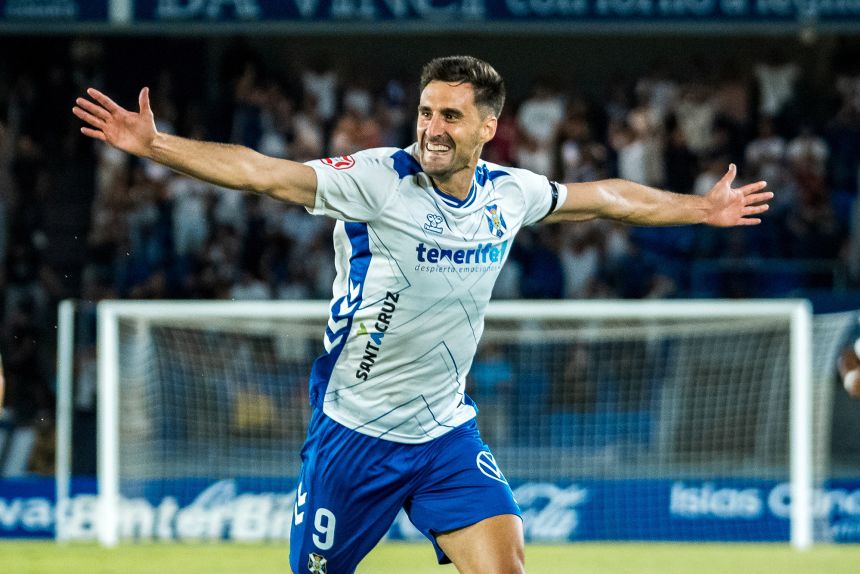
Spanish Club UD Almería have announced that they will donate all ticket sales revenue from their home match against CD Tenerife to support the family of Jesús de Miguel.

The initiative was established by club president Mohammed Al Khereiji as the Spanish club seeks to provide financial assistance to the bereaved family following their loss.

Announcing the decision, the club expressed its sympathy and acknowledged that no amount of financial assistance could make up for the loss of a loved one.

As reported by ESPN on Wednesday, the club was quoted as saying, “We are fully aware that nothing can ever compensate for the loss of a loved one, and that no form of support, whether financial or emotional, can ease the pain caused by a tragedy of this kind.”

Despite recognising the limitations of the gesture, UD Almería hope that donating the entire proceeds from the match will provide some support to Jesús de Miguel’s family during this difficult period.

The initiative comes under the leadership of Al Khereiji, who is the club’s president.

It also puts the spotlight on UD Almería’s ownership, with Portuguese football superstar Cristiano Ronaldo having acquired a 25 per cent stake in the Spanish club earlier this year.

Source: punchng.com

FOLLOW US ON:

FACEBOOK

WHATSAPP CHANNEL

TWITTER

PINTEREST

TIKTOK

YOUTUBE

LINKEDIN

INSTAGRAM

See also  Glasgow 2026: Tobi Amusan blames injury for 100m hurdles title loss
Continue Reading

Sports

SEE FULL LIST: Highest-scoring matches in Champions League history

Published

on

Borussia Dortmund’s 8-4 victory over Legia Warszawa remains the highest-scoring match in UEFA Champions League history, while Como’s 9-1 demolition of Lens has joined the competition’s list of most prolific encounters.

The Dortmund-Legia encounter produced 12 goals during the 2016/17 group stage, with the German side emerging victorious in a remarkable contest.

According to the UEFA website on Wednesday, the match featured five goals in the opening 32 minutes, including a spell in which three goals were scored within four minutes.

FULL LIST: Highest-scoring matches in Champions League history

Aleksandar Prijović gave Legia a 10th-minute lead, but Shinji Kagawa scored twice in quick succession to put Dortmund ahead.

Marco Reus also registered a brace, while three goals were scored in the closing 10 minutes to complete the 8-4 result.

Como’s 9-1 victory away to Lens on November 4, 2026, also entered the record books, with the 10-goal encounter ranking among the highest-scoring matches in the competition.

Bayern Munich’s 9-2 victory over GNK Dinamo in September 2024 and Monaco’s 8-3 win against Deportivo La Coruña in November 2003 are other notable entries on the list.

Barcelona’s 8-2 defeat of Bayern Munich in the 2019/20 campaign also features among the highest-scoring Champions League matches.

Bayern thrash Barca 8-2

Full list of highest-scoring Champions League matches

• Borussia Dortmund 8-4 Legia Warszawa — November 22, 2016 (12 goals)

• Bayern Munich 9-2 GNK Dinamo — September 17, 2024 (11 goals)

• Monaco 8-3 Deportivo La Coruña — November 5, 2003 (11 goals)

• Barcelona 2-8 Bayern Munich — August 14, 2020 (10 goals)

See also  Barca eye Osimhen as Atletico frustrate Alvarez move

• Lens 1-9 Como — November 4, 2026 (10 goals)

• Paris Saint-Germain 7-2 Rosenborg — October 24, 2000 (nine goals)

• Lyon 7-2 Werder Bremen — March 8, 2005 (nine goals)

• Villarreal 6-3 Aalborg — October 21, 2008 (nine goals)

• Tottenham Hotspur 2-7 Bayern Munich — October 1, 2019 (nine goals)

• Manchester City 6-3 Leipzig — September 15, 2021 (nine goals)

• Paris Saint-Germain 7-2 Maccabi Haifa — October 25, 2022 (nine goals)

• Benfica 4-5 Barcelona — January 21, 2025 (nine goals)

• Bayer Leverkusen 2-7 Paris Saint-Germain — October 21, 2025 (nine goals)

• Barcelona 7-2 Newcastle United — March 18, 2026 (nine goals)

• Paris Saint-Germain 5-4 Bayern Munich — April 28, 2026 (nine goals)

• LASK 3-6 Liverpool — October 14, 2026 (nine goals)

Full list of highest-scoring Champions League draws

UEFA also identified four matches that ended in 4-4 draws, each producing eight goals.

• Hamburg 4-4 Juventus — September 13, 2000

• Chelsea 4-4 Liverpool — April 14, 2009

• Bayer Leverkusen 4-4 Roma — October 20, 2015

• Chelsea 4-4 Ajax — November 5, 2019

Source: punchng.com

FOLLOW US ON:
FACEBOOK

WHATSAPP CHANNEL

TWITTER

PINTEREST

TIKTOK

YOUTUBE

LINKEDIN

INSTAGRAM

Continue Reading

Sports

SEE FULL LIST: Como join Liverpool, Madrid in Champions League victory record

Published

on

Como have joined Liverpool and Real Madrid in recording the biggest winning margin in UEFA Champions League history after thrashing Lens 9-1 in their Matchday 4 encounter on Tuesday night.

The Italian side’s nine-goal haul secured an eight-goal victory margin, equalling Liverpool’s 8-0 defeat of Beşiktaş in 2007 and Real Madrid’s 8-0 triumph over Malmö in 2015.

According to the UEFA website on Wednesday, Como also became only the second team after Bayern Munich to score nine goals in a Champions League match.

Tasos Douvikas scored a hat-trick in the encounter, while six other Como players also found the net as the competition debutants recorded the biggest away victory in the tournament’s history.

Liverpool were the first team to achieve an eight-goal winning margin when they defeated Beşiktaş 8-0 during the 2007/08 group stage.

Crouch scores two joining Yossi Benayoun who scored hatrick. Ryan Babel also netted a brace and captain Steven Gerrard scored the eight goal

Yossi Benayoun scored three goals, while Ryan Babel and Peter Crouch each contributed two. Steven Gerrard completed the scoring as Liverpool secured the record victory despite having collected just one point from their opening three group matches.

Real Madrid matched the feat on December 8, 2015, when they overwhelmed Malmö 8-0 at home.

Cristiano Ronaldo scored four goals, setting what was then an individual group-stage record of 11 goals, while Karim Benzema registered a hat-trick.

Ronaldo nets four in Malmö thrashing

Bayern Munich also feature prominently in the record books after defeating GNK Dinamo 9-2 on September 17, 2024, establishing a new record for the most goals scored by a team in a single Champions League match.

Harry Kane scored four goals in the encounter, while Michael Olise added two.

See also  Glasgow 2026: Tobi Amusan blames injury for 100m hurdles title loss

Full list of biggest Champions League victories

Eight-goal winning margin

1. Lens 1-9 Como — November 4, 2026

2. Liverpool 8-0 Beşiktaş — November 6, 2007

3. Real Madrid 8-0 Malmö — December 8, 2015

Seven-goal winning margin

1. Bayern Munich 9-2 GNK Dinamo — September 17, 2024

2. Juventus 7-0 Olympiacos — December 10, 2003

3. Arsenal 7-0 Slavia Praha — October 23, 2007

4. Žilina 0-7 Marseille — November 3, 2010

5. Valencia 7-0 Genk — November 23, 2011

6. Bayern Munich 7-0 Basel — March 13, 2012

7. BATE Borisov 0-7 Shakhtar Donetsk — October 21, 2014

8. Bayern Munich 7-0 Shakhtar Donetsk — March 11, 2015

9. Barcelona 7-0 Celtic — September 13, 2016

10. Maribor 0-7 Liverpool — October 17, 2017

11. Liverpool 7-0 Spartak Moscow — December 6, 2017

12. Manchester City 7-0 Schalke — March 12, 2019

13. Manchester City 7-0 Leipzig — March 14, 2023

14. Paris Saint-Germain 7-0 Brest — February 19, 2025

Continue Reading

Trending