Connect with us

News

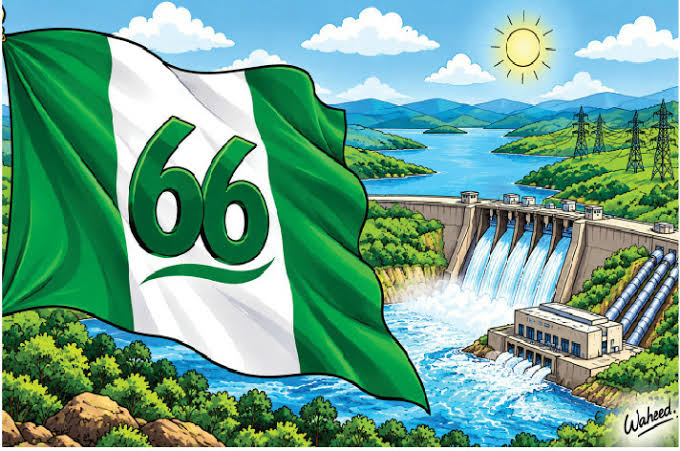
Nigeria @ 66: Dashed hopes, fragile future

Published

on

SIXTY-SIX years after flag independence, millions of Nigerians remain hungry. Millions of children are out of school. Infrastructure is grossly inadequate. The country still depends far too heavily on crude oil income.

Nigeria’s resources, including vast arable land, water bodies, oil, gas, solid minerals, a young population, and extraordinary human talent, have yet to translate into the prosperity, security and dignity the people deserve and the founding fathers espoused.

The country’s greatest tragedy is no longer that it has failed to realise its potential. It is that it has become accustomed to failing to realise it.

The political class has shown a disturbing disdain for good governance. Leadership has been anything but visionary. It’s been more about power grabbing, access to the public purse, deceit, sloganeering, and unbridled arrogance.

Yet, it is not that Nigeria has achieved nothing in 66 years. The truth, rather, is that what it has achieved pales distressingly to what it could have achieved.

At 66, there is a pervading sense of despondency, dashed hopes and, more disturbingly, a fragile future.

October 1, 1960 was supposed to mark the beginning of Nigeria’s great national journey. With a functioning parliamentary system, a strong regional structure and an agriculture-powered economy, the country seemed headed towards remarkable prosperity.

The North built an economy around groundnuts, cotton and livestock. The West became synonymous with cocoa and rubber. The East exploited palm oil, palm kernels and extensive trading networks. Agriculture employed the vast majority of the population. The three regions – later four –built schools, roads, hospitals, universities and other infrastructure.

The First Republic wasn’t flawless, it must be said. Ethnic rivalry, electoral manipulation and power struggles tainted it. This eventually contributed to military intervention on January 15, 1966, the suspension of democratic institutions and the devastating Civil War of 1967-1970.

But the First Republic left one unforgettable lesson: regional autonomy can drive rapid development when government and the people have both responsibility and incentives to perform.

Sadly, the military era ended the parliamentary system and destroyed the vibrant regional governments, replacing them with a centralised federation.

Agriculture lost its primacy as attention turned to crude oil. Petrodollars weakened the urgency to diversify the economy.

That false choice has haunted Nigeria ever since.

Fixated on easy oil cash, Nigeria neglected to build the infrastructure, institutions and human capital required to transform the country. Rather, it developed a morbid taste for everything imported, bleeding its resources to sustain others.


The return to civilian rule in 1979 rekindled some hope. But the military soon returned in 1983 as politicians squandered another opportunity to reset the national trajectory.

See also  Lagos threatens clampdown on content creators violating child rights

On June 12, 1993, more than 10 years later, Nigerians voted in large numbers in a presidential election that produced a clear victory for MKO Abiola of the Social Democratic Party.

History will not forget that the Ibrahim Babangida junta annulled the freest and fairest election ever held in Nigeria. Abiola never assumed the presidency. He died mysteriously in detention in July 1998.

A democratic possibility was insidiously aborted. Nigeria has spent decades trying to recover from that indecent, violent assault.

Since 1999, however, democracy has survived. The military has remained in the barracks. Elections have taken place regularly, and government has changed hands peacefully. Civilian rule has become the country’s political norm.

These are achievements that must be acknowledged.

Nigeria demonstrated during the COVID-19 pandemic that with coordination, institutions and governments can respond effectively to extraordinary challenges.

The country expanded testing capacity rapidly and mobilised its existing disease-surveillance infrastructure. It limited the spread of the disease and kept deaths significantly low, drawing commendation from the World Health Organisation.

This year, Nigeria has demonstrated that technological ambition is not beyond its reach. A surgeon in Lagos recently performed a tele-robotic procedure on a patient in Abuja, a striking pointer to what Nigeria can achieve with expertise and the right infrastructure.

In between, Nigeria has seen advancements in ICT and financial services. Its Diaspora has recorded feats in academia, sciences and enterprise. Its creative industry has virtually gone global.

There has also been a substantial, even if painful, reset in the petroleum industry since the petrol subsidy was removed in 2023.

The chronic scarcity and long queues that periodically became a symbol of governmental failure have largely disappeared as the new Dangote Refinery repositioned Nigeria as a major exporter of petroleum products rather than an import-dependent country.

These achievements deserve recognition. But they also trigger the question: if Nigeria can do these things, why has it not done far more?

Other countries that gained independence around the same period offer uncomfortable comparisons.

Singapore transformed itself from a corrupt, poor, newly independent city-state into a major global centre for finance, trade, logistics and advanced services.

South Korea has transformed from a rural economy to a global tech and industrial powerhouse.

China’s ascendancy to world economic dominance is an enduring testimony to visionary leadership.

Even Botswana, once among the world’s poorest territories, used diamond wealth alongside strong institutions and fiscal management to build a much more prosperous economy.

From dependence on rubber and tin, Malaysia transformed into a manufacturing, technology and export-capacity country, sending palm oil products to Nigeria.

Nigeria, meanwhile, remains stuck on crude oil proceeds, using it as an excuse not to build anything else.

The country was called the Giant of Africa because of its size and potential. But at 66, the giant has spent too long sleeping and is now ranked fourth-largest economy on the continent, down from first.

See also  States pile up N1.06tn debt despite record allocations

Nigeria’s democratic record is particularly abysmal. The Economist Intelligence Unit’s 2024 Democracy Index places Nigeria in the “hybrid regime” category, meaning its democratic profile is horrendous. The index evaluates the electoral process, functioning of government, political participation, political culture and civil liberties.

Sixty-six years after independence, Nigeria’s elections remain tainted by disputes over transparency, electoral administration, vote buying, violence and litigation. Courts, rather than the voters, now determine electoral outcomes. This must stop.

Democracy cannot thrive merely because elections occur every four years. It thrives when citizens trust the process and institutions enforce the rules impartially.

At 66, Nigeria is still struggling to feed its citizens despite arable land larger than many countries combined and over 800km of coastline.

The 2025 Global Hunger Index ranks the country 115th among 123 countries, with a score of 32.8, placing the country in the “serious” hunger category. This is shameful.

The National Bureau of Statistics’ landmark 2022 Multidimensional Poverty Index found that 133 million Nigerians (about 63 per cent of the population) were multidimensionally poor. A few million have been reportedly added to the tally in the last few years.

In 2018, Nigeria overtook India as the global capital of poverty with 87 million citizens living in extreme poverty. For a resource-rich country, the irony is profound.


The country struggles to supply electricity, generating only 5,000 megawatts 127 years after the first power plant was installed. Its continental peers, Egypt and South Africa, generate 55,000 MW each.

Education is no less alarming. Between 18 million and 20 million Nigerian children are out of school, the world’s largest burden, though the government argues that figure is exaggerated.

This is not merely education data. It is a warning about Nigeria’s future.

Every out-of-school child represents lost productivity, diminished opportunity and a potential security risk.

Infrastructure tells the same story. The World Bank estimates that the country would need to invest about $3 trillion over 30 years (roughly $100 billion yearly) to close its huge infrastructure gap.

At independence, Nigeria had roughly 45 million people. Today, the population is more than five times that figure. Yet the scale of government planning and infrastructure provision seems fixed on 1960 figures. The bitter truth is that Nigeria has failed much more than it has succeeded.

President Bola Tinubu’s 2025 Independence Day address struck a celebratory note, including the assertion that “the worst is over” and that improvements were being recorded in education, healthcare and infrastructure. Government declarations must match the people’s lived experiences.

For far too long, Nigeria’s leaders have indulged in self-praise over woeful performance. Worse, citizens, blinded by ethnic, religious and sundry base sentiments, tolerate such travesty. Many trudge through life waiting endlessly for their turn to “eat.”

This need not be the case if the socio-political and economic structures are designed to work.

The presidential system has concentrated enormous political and financial power at the centre.

Abuja exercises influence over resources and responsibilities that, in a genuinely competitive federation, should be handled by the sub-entities, which are much closer to the people.

The result is a peculiar political economy in which states frequently look towards the centre for allocations, projects and patronage instead of competing to build productive economies based on their own comparative advantages.

Local governments, once the custodians of basic education, have become mere spectators.

This is where the true federalism question comes in. The future is foreboding without it. The perpetual and intense competition for power at the centre remains a dysfunctional, centrifugal force that prevents a national consensus on the path to real progress.


In the 2024 Fragile States Index, Nigeria ranked the 15th most fragile country with a score of 96.60 out of 120 (where higher scores mean greater vulnerability and instability).

The country, for all its acknowledged promise, has been ravaged by Islamic terrorism, banditry, separatist agitation and militancy for most of the Fourth Republic.

Widespread violence has become a real and existential threat.

Corruption remains a heavy chain around Nigeria’s neck, despite the efforts to contain it. With a score of 26 out of 100, Nigeria ranked 142 out of 182 countries and territories assessed in the 2026 Corruption Perceptions Index by Transparency International.

Wrongdoing, lawlessness and impunity must be confronted forcefully and completely.

The First Republic was not perfect. But Nigeria needs a federation in which federating units possess meaningful authority, clear responsibilities and strong incentives to develop their own economies and human capital.

True federalism, properly designed and accompanied by strong institutions, could encourage states and regions to compete on education, agriculture, industry, infrastructure, healthcare and investment. The result would be collective progress and prosperity for which citizens yearn.


Nigeria has shown resilience through the years, but at 66, it should not congratulate itself merely for surviving. Survival is not the same as success. Hopes should be fulfilled, the future clear.

This demands a reinstatement of the visionary leadership that produced Nigeria’s independence in the first instance.

Punch Editorial Board

Source: punchng.com

FOLLOW US ON:

FACEBOOK

TWITTER

PINTEREST

TIKTOK

YOUTUBE

LINKEDIN

INSTAGRAM

Continue Reading
Click to comment

Leave a Reply

Your email address will not be published. Required fields are marked *

News

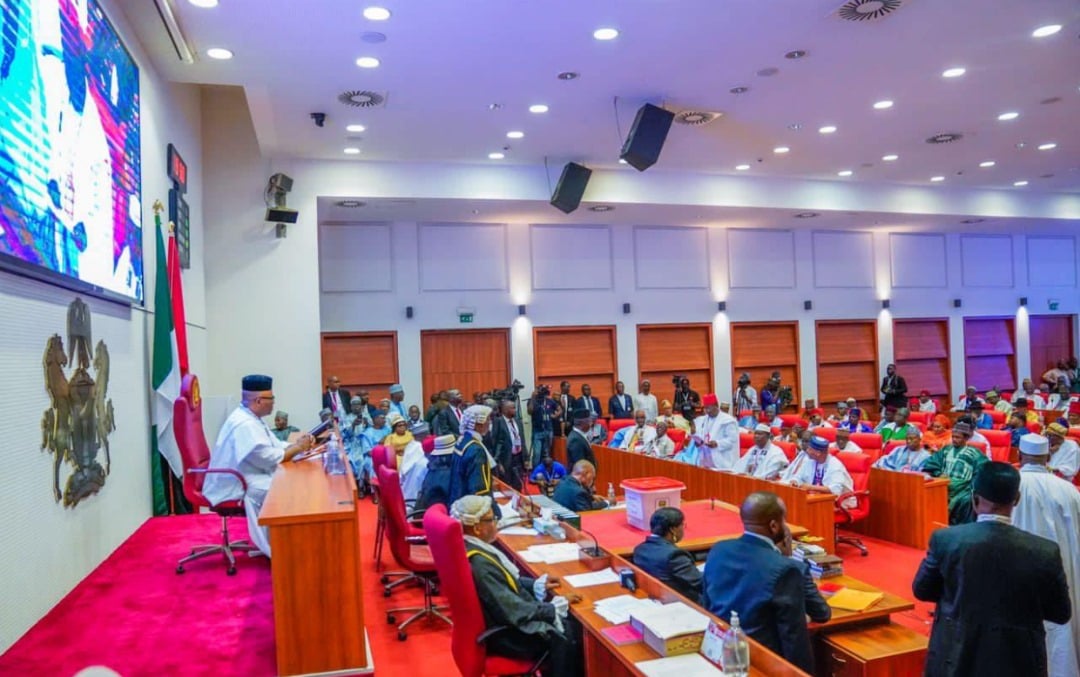
SEE PHOTO: Senate Appropriation Committee session turns bloody

Published

on

A legislative aide, Mr Kingsley Wali, was rushed to the National Assembly clinic in Abuja for emergency treatment after he was allegedly attacked on Wednesday during a sitting of the Senate Committee on Appropriations, chaired by Senator Adeola Olamilekan (APC, Ogun West).

The attacker, a security official attached to Olamilekan, allegedly punched Wali as he accompanied his principal, Senator Onyesoh (APC, Rivers East), to the committee’s sitting.

The altercation between the security official and the legislative aide began after the former tried to stop Wali from accessing the room where the committee was holding its meeting.


Source: tribuneonlineng.com

FOLLOW US ON:

FACEBOOK

WHATSAPP CHANNEL

TWITTER

PINTEREST

TIKTOK

YOUTUBE

LINKEDIN

INSTAGRAM

See also  Lagos threatens clampdown on content creators violating child rights
Continue Reading

News

Amupitan reveals INEC’s verified voters register exceeds 100 million, read details

Published

on

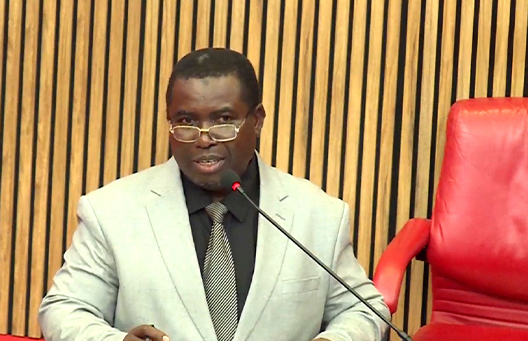
The Chairman of the Independent National Electoral Commission (INEC), Prof. Joash O. Amupitan, SAN, has said that the Commission’s verified voters’ register stands at over 100 million following an audit.

Amupitan disclosed this on Wednesday, 25 November 2026, during a strategic consultative meeting with Resident Electoral Commissioners (RECs) in Abuja.

He said the figure followed three phases of Continuous Voter Registration (CVR), which added over 10.77 million new registrants, and an Automated Biometric Identification System (ABIS) and claims-and-objections audit, which removed over 1.6 million invalid, duplicate or deceased records.

“The register includes 232,658 persons with disabilities (PWDs) requiring accessible polling layouts and assistive materials,” he said.

Amupitan said there were 51 days to the Presidential and National Assembly elections scheduled for 16 January 2027, while the Governorship and State Houses of Assembly elections would hold on 6 February 2027.

He said INEC would conduct a nationwide mock accreditation and result transmission exercise on Saturday, 28 November 2026, across the 36 states and the Federal Capital Territory.

The INEC Chairman warned RECs that minor administrative lapses would not be tolerated, noting that general elections were of a different magnitude.

“In an exercise of that scale, even minor administrative lapses in one state can trigger national headlines and cast doubt on otherwise solid work elsewhere. Margin for error simply does not exist,” he said.

He listed six non-negotiable priorities for RECs.

He said Saturday’s mock exercise, which would take place in two polling units per ward, was a live stress test of the 57,000 newly procured BVAS devices and the upgraded INEC Result Viewing Portal (IReV), which now has automated arithmetic and over-voting checks on Form EC8A before upload.

See also  States pile up N1.06tn debt despite record allocations

He directed RECs to personally oversee preparations and submit a technical audit to the headquarters by Monday, 30 November 2026, detailing network dead zones, device anomalies and bottlenecks.

On logistics, he said RECs must audit transport arrangements with the National Union of Road Transport Workers (NURTW), marine and aviation partners, verify Registration Area Centres (RACs) and enforce end-to-end tracking of materials.

He said the BVAS threshold had been lowered from 1,250 to 850 voters per machine to prevent crowding, with multiple units to be provided in high-population polling units.

On security, Amupitan said RECs must activate “ICCES Tentacles” down to the local government and ward levels, working with the police, Department of State Services (DSS), Nigeria Security and Civil Defence Corps (NSCDC) and Office of the National Security Adviser (ONSA). He also urged them to use Election Risk Management (ERM) maps to identify flashpoints and resolve conflicts over rally venues under Section 95(4) of the Electoral Act 2026.

He said over 1.41 million ad hoc staff, including National Youth Service Corps (NYSC) members and academics, must be properly trained on the Electoral Act 2026, BVAS operations and Form EC8A validation, with their allowances paid promptly.

The Chairman called for regular engagement with the Inter-Party Advisory Council (IPAC), election observers, civil society organisations and the media to counter disinformation and avoid communication vacuums.

He stressed that there would be zero tolerance for partisan compromise, warning that INEC would not shield any official who compromised the Commission’s neutrality or facilitated malpractice.

“Under the Electoral Act 2026 — including the deterrence provisions of Sections 96, 97 and 148 — the Commission will not shield any staff member or official who compromises neutrality, facilitates malpractice or breaches statutory rules,” he said.

See also  President Tinubu Writes Reps, Seeks N1.15tr Borrowing Approval To Fund 2025 Budget Deficit

He also emphasised the need for disciplined record-keeping, immutable BVAS logs, authenticated IReV uploads and the timely issuance of Certified True Copies (CTCs) to ensure clarity for voters and election tribunals.

Source: tribuneonlineng.com

FOLLOW US ON:

FACEBOOK

WHATSAPP CHANNEL

TWITTER

PINTEREST

TIKTOK

YOUTUBE

LINKEDIN

INSTAGRAM

Continue Reading

News

Read lessons from US visa ban on Supreme Court justices

Published

on

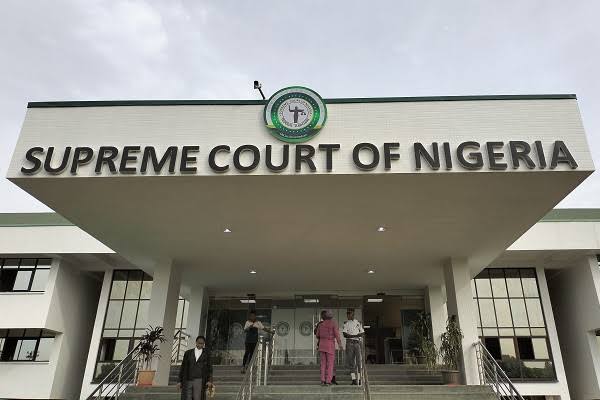
ONCE again, the Supreme Court of Nigeria is under an uncomfortable spotlight. This time, the trigger is an extraordinary revelation by retiring Justice Uwani Abba-Aji at her recent valedictory session. She lamented that the United States imposed visa restrictions on members of a Supreme Court panel over a controversial judgement.

This is no trivial diplomatic gesture. Visa restrictions against serving justices of a country’s highest court carry grave implications for the reputation of the institution and the credibility of its decisions. US authorities would hardly take such a step without serious grounds for concern. More troubling, the sanctions have apparently endured.

Recounting her experience, Abba-Aji said: “My time on the Supreme Court bench was filled with challenges, some of which have served as additional opportunities to stand firm on the side of justice, regardless of the consequences. One of such challenging judgements was widely misinterpreted and led to a travel ban to the United States of America being imposed on all members of the panel; a ban which still holds till today.”

For Abba-Aji, the judgement was merely “widely misinterpreted.” But that is hardly a sufficient explanation for a decision that has continued to cast a shadow over the country’s highest judicial institution. The public, and apparently the US authorities, are entitled to a different assessment. More importantly, the controversy demands introspection rather than defensiveness.

The Supreme Court and the judiciary should recognise that their proceedings and decisions are subject to increasingly intense domestic and international scrutiny. Judicial authority does not confer immunity from criticism. Neither does the sanctity of the bench excuse decisions that raise troubling questions about fairness, consistency and the integrity of the electoral process.

The controversies surrounding the 2023 senatorial elections involving Godswill Akpabio and Ahmad Lawan are cases in point. Both had contested the All Progressives Congress presidential primaries in 2022 before subsequently seeking senatorial tickets in Akwa Ibom North-West and Yobe North, respectively. The Electoral Act 2022 prohibits a candidate from participating in more than one primary election within the same electoral cycle.

Yet, relying on jurisdictional and procedural grounds, the Supreme Court overturned earlier decisions and cleared the way for both men to secure their respective senatorial tickets. Whatever the technical legal reasoning, the outcome reinforced public suspicion that political heavyweights enjoy judicial accommodation unavailable to ordinary Nigerians.

More troubling was the January 14, 2020, Imo State governorship judgement. A seven-member panel of the Supreme Court, including the present Chief Justice of Nigeria, Kudirat Kekere-Ekun, and Abba-Aji, overturned the election of Emeka Ihedioha of the Peoples Democratic Party and declared Hope Uzodimma of the APC governor. Uzodimma had initially placed fourth in the election.

See also  200 US troops still in Nigeria for joint intelligence and training – DHQ

The court arrived at its conclusion after adding 213,295 votes from 388 polling units, based on documents tendered by a police witness but reportedly disowned by the Independent National Electoral Commission. In effect, the Supreme Court’s intervention overturned the decisions of both the election tribunal and the Court of Appeal.

The judgement raised fundamental questions that have never been satisfactorily laid to rest. Should the Supreme Court assume the responsibility of sorting, counting and declaring election results? Is it an electoral umpire? Where discrepancies in results arise, should the court not direct the appropriate electoral authority to establish the authentic figures in accordance with the law?

When Ihedioha subsequently sought a review of the judgement, the application was dismissed. In a dissenting opinion, the late Justice Centus Nweze warned that “this decision of the Supreme Court will continue to haunt our electoral jurisprudence for a long time to come.”

His words have proved difficult to dismiss. Indeed, such controversial judgements have helped institutionalise the cynical belief that elections are merely preliminary battles, with the real contest taking place in court. Politicians have consequently made “go to court” a familiar refrain, undermining confidence in the ballot and weakening the foundations of electoral democracy.

The Orji Kalu case is another troubling example of judicial controversy. On May 8, 2020, the Supreme Court set aside the 12-year prison sentence imposed on the former Abia State governor by a High Court and upheld by the Court of Appeal over a N7.1 billion money-laundering charge.

The Court held that the trial judge, Mohammed Idris, lacked jurisdiction because he had been elevated to the Court of Appeal when the proceedings were concluded. It ordered a retrial.

Before it was voided in Udeogu v. Federal Republic of Nigeria, Section 396(7) of the Administration of Criminal Justice Act 2015 provided that a High Court judge elevated to the Court of Appeal may continue sitting as a High Court judge to conclude part-heard criminal matters. This provision was designed precisely to prevent the kind of disruption that could arise from judicial elevation.

More fundamentally, setting aside a conviction on procedural grounds does not extinguish the underlying allegations of financial wrongdoing. The public was entitled to expect that the substantive case would be resolved without further unnecessary delay.

Beyond controversial judgements, the judiciary’s growing proximity to the political establishment has also become a source of concern. Judges are expected to maintain a degree of restraint and distance from the executive, particularly when politically sensitive cases are before them. Yet, the spectacle of judicial officers fraternising with political power has repeatedly undermined that expectation.

Lawyers, for instance, criticised the then Acting Chief Justice of Nigeria, Tanko Muhammad, and other judicial officers for attending an Iftar dinner hosted by President Muhammadu Buhari at the Presidential Villa while presidential election petitions were still pending. Even if no impropriety was established, the optics were damaging. Justice must not only be done; it must be seen to be done.

The late Justice Kayode Eso, one of Nigeria’s most respected jurists, had sounded the alarm years earlier. Following the disputed 2007 elections, he lamented the emergence of “billionaire judges” and described a legal profession increasingly divided between “those who know the law and those who have contacts”. That indictment remains painfully relevant.

See also  Navy Officer Yerima Allegedly Bypasses Airport Screening, Attempts To Board Flight With Gun

The era of courageous, intellectually rigorous and landmark judgements associated with Justices Chukwudifu Oputa, Eso and Niki Tobi appears to be receding. Their legacy was not built on proximity to political power but on judicial independence, moral courage and fidelity to the law. The present generation must demonstrate that the judiciary is still capable of producing such men and women.

Unfortunately, the rot is not confined to the Court. It has filtered through the lower judiciary, as reflected in disciplinary actions by the National Judicial Council.

At its 112th meeting, the council suspended three judicial officers — Hannatu Mohammed of the Nasarawa State High Court, Mohammed Sani Salihu of the Jigawa State Sharia Court of Appeal and Sobere Biambo of the Rivers State High Court — for one year without pay over various acts of misconduct. Eight others were cautioned, while warning letters were approved for three judges following investigations into their handling of cases.

These sanctions are necessary, but they also expose the scale of the institutional challenge.

Judicial misconduct cannot be treated as an occasional embarrassment to be managed through discreet disciplinary measures. It is a direct assault on the rule of law and the confidence of citizens in the justice system.

The public perception of judicial integrity has suffered from troubling political disclosures. At a valedictory session in the Senate in June 2023, former senator Adamu Bulkachuwa claimed that he had approached his wife, Justice Zainab Bulkachuwa, a former President of the Court of Appeal, to influence election petition cases involving his political colleagues. Although he subsequently recanted, the damage to public confidence was considerable.

Transparency International’s 2025 Corruption Perceptions Index and concerns raised by the Civil Society Legislative Advocacy Centre further underscore the damage corruption does to public trust in Nigerian institutions, including the judiciary. CISLAC has identified judicial corruption as a major weakness in the country’s anti-corruption campaign, noting that both the CJN and the Nigerian Bar Association have acknowledged its threat to public confidence.

See also  PHOTOS: Woman burnt to de@th in the home of a man she met at a club in Uyo

The NJC should therefore move beyond occasional disciplinary interventions. It should strengthen its investigative capacity, impose firm and transparent sanctions on erring judicial officers and ensure that accountability extends to the highest courts. No judge should be considered too senior, influential or politically connected to face scrutiny.

If foreign governments are concerned about judicial integrity, Nigerian authorities should not dismiss their actions as interference. The US visa restrictions may be controversial, but they should serve as a wake-up call. Indeed, scrutiny should not stop at the Supreme Court. No level of the judiciary should be beyond examination where credible allegations of misconduct arise.

More fundamental, however, is the need for structural reforms that insulate judicial appointments from political patronage. The appointment of the Chief Justice of Nigeria, the President of the Court of Appeal and chief judges should not remain so vulnerable to the influence of the President and state governors.

An independent, transparent and broadly representative appointments commission should play a decisive role in identifying, screening and recommending judicial candidates on the basis of competence, integrity and professional merit.

There should be meaningful public participation in the appointment process, with appropriate safeguards to protect judicial independence. The objective is not to turn judges into political contestants or subject their decisions to popular approval, but to ensure that those entrusted with dispensing justice command public confidence from the outset.

Ultimately, the judiciary is too important to Nigeria’s democracy to be allowed to decay under the weight of political interference, corruption and questionable judgements.

As the country approaches the 2027 general elections, the Supreme Court and the wider judicial establishment must undertake a serious institutional soul-searching exercise. The credibility of the next elections will depend not only on INEC but also on the integrity of the courts that will adjudicate disputes arising from them.

A judiciary whose integrity is questioned at home and abroad is a liability to the country. It weakens democracy, emboldens impunity, discourages investment and erodes faith in the rule of law.

Investors are unlikely to repose confidence in a country where the impartiality of the courts is in doubt, and commercial disputes can be coloured by political connections.

The lesson from the US visa restrictions should, therefore, be unmistakable: judicial prestige cannot be sustained by constitutional status or the grand trappings of office. It must be earned through impartiality, courage, transparency and fidelity to the law. Nigeria cannot build a credible democracy on a compromised judiciary.

Source: punchng.com

FOLLOW US ON:

FACEBOOK

WHATSAPP CHANNEL

TWITTER

PINTEREST

TIKTOK

YOUTUBE

LINKEDIN

INSTAGRAM

Continue Reading

Trending