Connect with us

Education

SEE FULL LIST: OAU, Ghana varsity top 2026 West African University Games medal table

Published

on

Obafemi Awolowo University, Ile-Ife, has emerged overall champion of the 15th West African University Games, winning 122 medals, according to the official medal table shared on the Games’ social media handles on Sunday.

The host institution won 33 gold, 50 silver and 39 bronze medals to finish ahead of the University of Ghana, which secured second position with 59 medals, comprising 26 gold, 21 silver and 12 bronze.

Benson Idahosa University finished third with 21 gold, 10 silver and seven bronze medals, while the University of Ibadan placed fourth with 17 gold, 12 silver and 13 bronze medals.

The rankings are based on the number of gold medals won, followed by silver and bronze medals where necessary.

Below is the full medal table for the 15th West African University Games, hosted by OAU in Ile-Ife, Osun State.

Full WAUG 2026 medal table

2026 WAUG Medal Table

– 1. Obafemi Awolowo University: 33 gold, 50 silver, 39 bronze — 122 medals

– 2. University of Ghana: 26 gold, 21 silver, 12 bronze — 59 medals

– 3. Benson Idahosa University: 21 gold, 10 silver, seven bronze — 38 medals

– 4. University of Ibadan: 17 gold, 12 silver, 13 bronze — 42 medals

– 5. Lagos State University: 10 gold, four silver, three bronze — 17 medals

– 6. Afe Babalola University: nine gold, 14 silver, 19 bronze — 42 medals

– 7. Delta State University, Abraka: seven gold, two silver, two bronze — 11 medals

– 8. University of Ilorin: six gold, four silver, six bronze — 16 medals

See also  OAU students reject new dress code, citing rights violation

– 9. University of Cape Coast: six gold, one silver, nine bronze — 16 medals

– 10. Nile University of Nigeria: six gold, one silver, two bronze — nine medals

– 11. Kwame Nkrumah University of Science and Technology: five gold, four silver, three bronze — 12 medals

– 12. Ladoke Akintola University of Technology: three gold, five silver, six bronze — 14 medals

– 13. Rev. Fr. Moses Orshio Adasu University, Makurdi: two gold, three silver, five bronze — 10 medals

– 14. University for Development Studies: two gold, two silver, two bronze — six medals

– 15. University of Abuja: one gold, six silver, six bronze — 13 medals

– 16. University of Energy and Natural Resources: one gold, two silver, seven bronze — 10 medals

– 17. Federal University, Oye-Ekiti: one gold, one silver, four bronze — six medals

– 18. Osun State University: no gold, six silver, 10 bronze — 16 medals

– 19. Lead City University: no gold, two silver, one bronze — three medals

– 19. University of Ilesa: no gold, one silver, six bronze — seven medals

– 20. Plateau State University: no gold, one silver, one bronze — two medals

– 21. Federal University of Agriculture and Technology, Okeho: no gold, no silver, four bronze — four medals

– 22. Federal University of Technology, Akure: no gold, no silver, three bronze — three medals

OAU describes Games as investment in youth

In a report published on October 5, 2026, on its website, OAU said the opening ceremony brought together 50 universities, with more than 1,500 athletes and officials expected to participate across 18 sports.

See also  No player better than Messi at 2026 World Cup — Yamal

Speaking at the ceremony, the university’s Vice-Chancellor, Professor Adebayo Simeon Bamire, said, “For OAU, the Games are an investment in the future of our youth.”

WAUG 2026 mascot, Ori-Olokun

He said the university wanted the infrastructure and systems developed for the competition to continue benefiting its community after the Games.

Also speaking at the opening ceremony, WAUG President Ibrahim Tanko Shaibu urged athletes to give their best while respecting their opponents and officials.

“Give your best, respect your opponents and officials,” he told the athletes, according to OAU’s October 5 report.

In a separate notice published on October 11, OAU said the closing ceremony would celebrate the achievements of participating athletes and institutions, as well as the spirit of fair play, resilience and friendship during the Games.

The 15th West African University Games were scheduled to run from October 2 to 12 at OAU, Ile-Ife.

Source: punchng.com

FOLLOW US ON:

FACEBOOK

TWITTER

PINTEREST

TIKTOK

YOUTUBE

LINKEDIN

INSTAGRAM

Continue Reading
Click to comment

Leave a Reply

Your email address will not be published. Required fields are marked *

Education

Australia scraps digital writing tests for Year 5 pupils

Published

on

Australia will return to pen-and-paper writing tests for Year 5 pupils from 2028 following growing concerns over the impact of excessive screen time and digital technology on children’s learning outcomes.

The decision, agreed by the country’s education ministers, will see pupils take the National Assessment Programme – Literacy and Numeracy (NAPLAN) writing test on paper rather than computers.

According to an updated ABC News report late Tuesday, South Wales Deputy Premier and Education Minister, Prue Car, said there was growing evidence that excessive screen exposure was affecting students and their academic performance.

“There is a lot of evidence to suggest that excessive screen time has been harmful for students and their outcomes.

“Ministers across the country have agreed that we work towards year 5 NAPLAN being writing with pen and paper, that will be in addition to year 3 already being pen and paper,” Car said.

Car is also pushing for the writing assessments for Years 7 and 9 to return to paper, with the Australian Curriculum, Assessment and Reporting Authority, which administers NAPLAN, expected to provide advice to ministers on the proposal.

Explaining the decision, she said students performed better when writing by hand than typing on screens.

“It’s about the evidence of how children learn and they actually do better when they’re writing pen to paper as opposed to typing on screen.

“So making sure that the assessment is actually pen to paper will then necessitate more classroom time being pen and paper as opposed to a computer,” she said.

See also  Canada updates Visa processing times for Nigerians as study permit wait rises

The decision comes amid concerns about declining academic performance among Australian pupils, with recent international assessments highlighting challenges in literacy, numeracy and students’ use of digital devices.

Australian students recorded their worst-ever results in the recent Programme for International Student Assessment, which compares educational performance across countries.

The assessment found that Australian students spent an average of 2.6 hours daily using digital devices, compared with the Organisation for Economic Co-operation and Development average of 1.7 hours.

NAPLAN results have also consistently shown that about one-third of Australian students are not meeting what education authorities describe as challenging but reasonable expectations in foundational literacy and numeracy.

The Heads Up Alliance, a grassroots movement of parents campaigning against screen time, welcomed the proposed changes but called for more comprehensive reforms.

Its founder, Dany Elachi, said the decision was a step in the right direction but argued that more needed to be done to reverse the decline in educational standards.

“New South Wales’ recently announced screen time parameters and proposed NAPLAN reforms are welcome steps in the right direction.

“However, more will be needed to reverse the decline in Australian educational standards. It turns out that Australia’s Digital Education Revolution of 2008 was, in effect, a vast experiment on our children. Today, the results of that experiment have become impossible to ignore,” Elachi said.

La Trobe University Distinguished Professor Pamela Snow also backed calls for a broader reassessment of technology use in schools, arguing that its adoption had moved faster than the available evidence supporting its benefits.

See also  FG extends 2026 textbooks ranking deadline to August 7

“I think as a general principle, the application of technology and education has got way ahead of the evidence.

“We can’t just keep going with these stopgap measures of tinkering around the edges downstream,” Snow said.

Snow said technology was introduced into classrooms too quickly.

“It’s now just become normalised, and, of course, it’s difficult now to wind it back and calibrate its use, but I’m not aware of any actual evidence that says technology has enhanced students learning,” she added.

Car said education ministers had also agreed to begin work on a broader digital detox initiative for Australian classrooms.

“State and territory ministers and the Commonwealth have agreed to start work on a digital detox for Australian classrooms.

“In New South Wales mandatorily from 2028, we’re going forward with screen time limits in classrooms, phased in from preschool to year 12 in the HSC year,” she said.

The education ministers are expected to release a communique later in the week outlining further reforms, including a proposed federal super commission partly aimed at addressing concerns over Year 12 dropout rates.

The ministers are also considering reforms to the primary school mathematics curriculum and additions to the national curriculum to address anti-Semitism.

Source: punchng.com

FOLLOW US ON:
FACEBOOK

WHATSAPP CHANNEL

TWITTER

PINTEREST

TIKTOK

YOUTUBE

LINKEDIN

INSTAGRAM

Continue Reading

Education

UniAbuja land dispute: ASUU threatens industrial action

Published

on

The Academic Staff Union of Universities (ASUU), University of Abuja (UniAbuja) branch, has demanded the immediate reversal of the alleged unlawful allocation of the university’s land by FCT Minister, Nyesom Wike.

The union also appealed to President Bola Tinubu to call Wike to order over the disputed land, saying this would allow peace and harmony to prevail on the university campus.

The Chairperson of ASUU, UniAbuja branch, Prof. Sylvanus Ugoh, made the demands at a news conference on Tuesday in Abuja.

The News Agency of Nigeria (NAN) reports that the conference was tagged: “Ministerial Encroachment into University of Abuja Land: Some Points to Ponder.”

Ugoh said the union would no longer guarantee industrial harmony if the minister failed to reverse the alleged allocation of the university’s land to his friends and cronies.

“The act of the FCT Minister is an outright breach and total disregard for the rule of law.

“On Aug. 18, Justice F.E. Mesiri of Maitama High Court granted interlocutory injunctions, including an order restraining the FCT Minister from entering or encroaching on University land.

“In spite of the court order, the FCT Minister went ahead on Sept. 26, to allocate the university land to companies and individuals,” he said.

Ugoh said the minister announced on June 30, 2025, during the inauguration of an access road to the Economic and Financial Crimes Commission (EFCC) Institute in Giri, the retrieval of 7,000 hectares from the 11,000 hectares allocated to the university.

He said the minister had accused the university of land grabbing and fencing several hectares of land without proper approval or documentation.

See also  Classic clashes: Five AFCON finals fans will never forget

“There is overwhelming documentary evidence showing that this parcel of land was allocated to the University of Abuja,” he said.

He explained that the University of Abuja was established on January 1, 1988, with an initial land allocation of 11,824 hectares to accommodate its long-term academic and infrastructural development.

According to him, the university authority could not have on its own decided where to situate the institution.

He said the university and the land were the property of the Federal Government and not the FCT.

Ugoh said the large landmass was deliberately allocated to provide room for future expansion, research activities, academic facilities and other institutional needs.

He noted that the university, as a dual-mode institution offering conventional and distance learning programmes, required sufficient land to fulfil its mandate.

Ugoh said the land was also needed for the establishment of research institutes, innovation centres and other facilities that would contribute to national development.

He added that portions of the land served as green areas for ecological balance, environmental conservation and climate change mitigation.

“The development of the University of Abuja may seem very slow, but it is still the Federal Government that is responsible for the development of its university.

“We appreciate the zeal of the FCT Minister to develop the FCT, but the argument that the land has been left undeveloped for too long does not stand.

“Universities gradually realise their full potential. It is pertinent to mention that the 11,824 hectares of University of Abuja land is not in any way beyond a dual-mode university in the country’s capital.

See also  Jason Collins, first openly gay NBA player, dies at 47

“For instance, University of Ilorin occupies 15,000 hectares, Obafemi Awolowo University, Ile-Ife, occupies 13,000 hectares, Federal University of Technology, Minna, occupies 10,650 hectares and Federal University of Agriculture, Abeokuta, occupies 10,000 hectares,” he said.

He explained that out of the 11,824 hectares occupied by the University of Abuja, about two hectares were hilly and would require huge resources to develop.

He said the union would, within the ambit of the law, resist in totality any attempt by the minister to unlawfully take away UniAbuja land.

NAN reports that the news conference followed an emergency congress of the union held at the university on November 3 to deliberate on the land dispute.

In June 2025, Wike accused the varsity of land grabbing and noted that the institution has claimed 11,000 hectares of land, of which he had retrieved 7,000.

(NAN)

Source: punchng.com

FOLLOW US ON:

FACEBOOK

WHATSAPP CHANNEL

TWITTER

PINTEREST

TIKTOK

YOUTUBE

LINKEDIN

INSTAGRAM

Continue Reading

Education

MURIC kicks against hijab ban in Nigerian law schools

Published

on

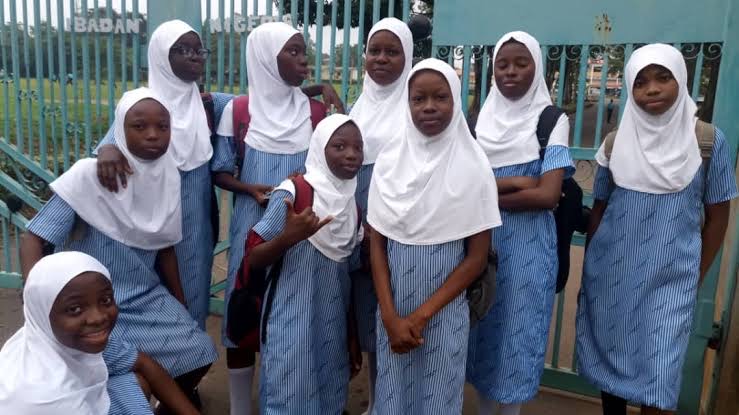
Muslim Rights Concern, MURIC, has expressed displeasure over the ban on female Muslim students from wearing hijab at Nigerian law schools.

The organisation described the development as sad and unfortunate.

MURIC, in a statement signed by its Executive Director, Professor Isiaq Akintola, on Sunday, alleged that female Muslim students in law schools across the country were, on Saturday, barred from wearing hijab.

He added that the students were intimidated and harassed, condemning the action of the Nigerian law schools’ authorities.

Akintola called for the suspension of all examinations at law schools across the country, pending investigation into the matter.

He said, “There was harassment and intimidation of hijab-wearing female Muslim students in some Law School examination halls across the country yesterday, Saturday, 31st October, 2026.

‎”Hijabites who came hoping to sit for their call to bar final examinations were disallowed from entering the examination halls. In some places, they were forced to remain standing outside for about one hour until they removed their hijabs before they were allowed to enter and start the examination.

‎”While this was going on, our office was inundated with telephone calls, text messages and chats. We heard the cries of traumatised candidates, the lamentations of distressed parents, hundreds of kilometres away from the examination centres and the agitation of concerned Muslims around the country.

“MURIC strongly condemns the wanton disruption of the lawful educational pursuit of innocent Muslim ladies. It is crude, irrational and sadistic.”

FOLLOW US ON:

FACEBOOK

WHATSAPP CHANNEL

TWITTER

PINTEREST

TIKTOK

YOUTUBE

LINKEDIN

INSTAGRAM

See also  Classic clashes: Five AFCON finals fans will never forget
Continue Reading

Trending