The Federal Government has begun engaging state governors, transport unions and commercial fleet operators to enforce lower transport fares for commuters using Compressed Natural Gas-powered vehicles, as its CNG initiative attracts more than $2.5bn in private-sector investment.
The Presidential Initiative on Compressed Natural Gas and Electric Vehicles said it would introduce stickers displaying designated routes and approved fares on buses deployed under its programme to improve transparency and prevent operators from overcharging passengers.
However, findings by The PUNCH across several states show that implementation remains uneven, with commuters in some areas yet to benefit from fare reductions despite government investments in alternative-energy transportation.
The Head of Brand and Communications at Pi-CNG and EV, Onyekachi Eke, disclosed in an exclusive interview that the initiative had begun meeting state governors to identify transport routes and develop arrangements for enforcing lower fares.
Eke said a meeting with the Jigawa State governor was scheduled to map out routes and determine the programme’s implementation in the state.
“So as we said, we are working with state governors, fleet operators and different transport unions to enforce the reduction in fare. In line with the presidential directive, we have started meeting with governors. Tomorrow we are going to be in Jigawa to meet with the state governor. The meeting will be to map out all routes,” she said.
She explained that buses distributed under the programme would carry stickers indicating their designated routes and fares, enabling passengers to know the approved charges before boarding.
“Henceforth, for every bus we give, there will be a sticker to map out the intended routes. The routes will be placed on the buses as stickers, and the fare will be there. So everyone can see it, and customers will know what they should pay,” Eke said.
The initiative is working with transport unions and fleet operators to ensure compliance, although Eke did not disclose the specific fare reductions or penalties for operators who failed to comply.
She said Abuja was already recording reductions on designated routes, with CNG-converted commercial vehicles operating under the National Union of Road Transport Workers partnership offering passengers a 40 per cent fare cut. Similar reductions, she added, were being recorded through CNG and electric mobility interventions in Borno, Enugu, Niger and Abia states.
Eke acknowledged, however, that the reductions had not reached every route or passenger, saying the programme was being expanded while officials followed up with state governments and transport operators to improve compliance.
“Pi-CNG & EV’s position has always been clear. The benefit of cheaper energy must ultimately reach the passenger. It is not enough for a commercial operator to reduce operating costs by switching to CNG while commuters continue to pay fares based on petrol operating costs.
“This is one of the issues being addressed through the National Affordable CNG Transit Programme. Pi-CNG & EV is working with State Governments, transport unions and commercial operators to develop and implement fare-reduction frameworks on routes where CNG and electric mobility interventions are being deployed,” Eke said.
She added, “However, we recognise that these reductions are not yet being experienced on every route or by every commuter. This is why the programme is being scaled and why we are following up with states and transport operators on implementation. The objective is not simply to increase the number of CNG vehicles on Nigerian roads, but to ensure that the lower operating cost is reflected in what passengers actually pay.”
$2.5bn investment
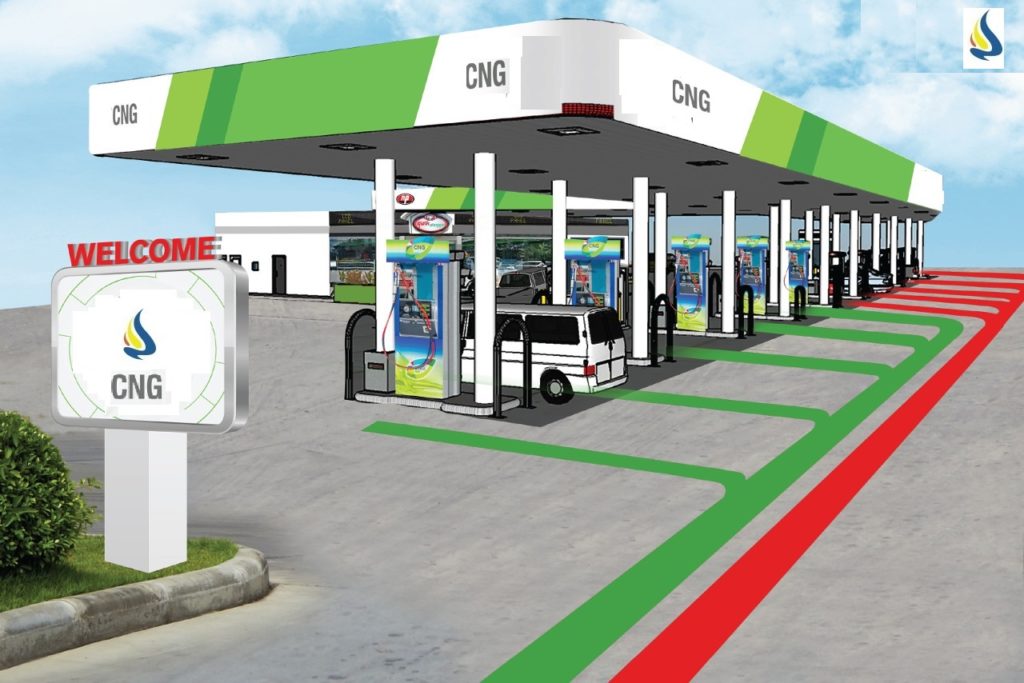
Eke said the initiative had mobilised more than $2.5bn in private-sector investment across the CNG value chain, including refuelling infrastructure, conversion centres and vehicle assembly.
“On investment, it is important to distinguish Federal Government investment from private-sector investment attracted into the CNG ecosystem. The programme has mobilised significant private investment across refuelling infrastructure, conversion centres, vehicle assembly and other parts of the value chain. Current Pi-CNG and EV figures put investments secured at over $2.5bn,” she said.
According to her, Federal Government interventions had supported vehicle and conversion-kit procurement, conversion incentives, infrastructure development, training and other measures to accelerate CNG adoption.
She said the initiative would provide a consolidated figure for Federal Government investment separately to ensure that public spending was not conflated with private-sector investment.
The programme also includes efforts to extend affordable transportation to students through Project Sprout, under which buses will be provided to 20 universities in the first phase.
“We have also scaled up our Project Sprout, where buses will be given to 20 universities in the first phase. So that it would ease transportation for them,” the Pi-CNG and EV official said.
Eke disclosed that the initiative was conducting public awareness activities to promote CNG-powered transportation, including a campaign and roadshow in Kano.
She also said Pi-CNG was working on a proposed partnership with ride-hailing platform inDrive to encourage vehicle conversion and make CNG-powered cars easier for passengers to identify.
“Secondly, we are working on a partnership with inDrive. Modalities are still being worked on. First is for them to convert and then, after converting, place a sign that would make it easy to identify vehicles that run on CNG,” she said.
Eke expressed concern that some drivers using CNG were still charging passengers the same fares as petrol-powered vehicle operators despite benefiting from cheaper fuel. “Some of these drivers use gas but still charge as normal fares. They get it cheap and make profit,” she said.
She did not provide details of the proposed inDrive partnership, including the number of drivers expected to participate, the conversion timeline or whether the platform would introduce specific fares for CNG-powered vehicles.
Tinubu targets reductions
President Bola Tinubu had, on August 27, 2026, said the Federal Government and state governors had agreed to take measures to reduce transportation fares nationwide from October 1 by leveraging cheaper energy sources, particularly CNG.
“Cheaper fuel should result in cheaper fares,” Tinubu said, adding that the objective was for Nigerians to benefit from lower fuel costs through reduced transport fares.
The President said the governors had resolved to take immediate measures to bring down transportation costs in their respective states, with a focus on CNG and electric vehicles.
He disclosed that more than 120,000 vehicles had been converted under the Presidential CNG Initiative, with over 100,000 additional conversion kits in the works.
Tinubu also said the Federal Government was financing more than 100 gas projects through the Midstream and Downstream Gas Infrastructure Fund, including 15 CNG mother stations and 86 daughter stations.
He said he had directed the rollout of another 500 CNG refuelling stations in addition to the 500 previously ordered, bringing the planned total to 1,000 nationwide.
The President said a joint Federal and State committee would oversee implementation, noting that “a vehicle running on CNG spends 60 to 80 per cent less on fuel than one running on petrol.”
On September 19, 2026, Tinubu said an implementation committee had been established under the Nigeria Governors’ Forum and chaired by Kwara State Governor, AbdulRahman AbdulRazaq.
The committee, the Presidential Initiative on CNG and Electric Vehicles, and state governments and other stakeholders were working to identify priority transport corridors and determine appropriate interventions to reduce transportation costs.
Tinubu cited Borno, Kaduna, Oyo, Enugu, Plateau, Edo and Kano as examples of states where cheaper energy could translate into lower fares. He urged state governments to work with transport unions and commercial operators, support vehicle conversion and fleet deployment, and ensure that savings were passed on to commuters.
In a statement on Sunday, October 11, the President said the government was expanding the use of CNG and electric-powered vehicles to reduce transportation costs following the removal of the petrol subsidy.
He cited cases of commuters benefiting from lower fares, including a passenger who paid N500 for a journey from Masaka to Berger in the Federal Capital Territory, compared with the previous fare of N1,500. He also cited a reduction in fares on the Enugu-Nsukka route from N4,000 to N1,600.
The President said the government was working with state governments and private investors to expand affordable transportation under the National Affordable CNG Transportation Programme.
Mixed progress
Despite the Federal Government’s target, findings by The PUNCH show that several states are still preparing to deploy CNG-powered vehicles or establish the infrastructure required to operate them, while commuters in some areas continue to pay existing fares.
In Bayelsa State, the government earmarked N25bn in its 2026 approved budget for CNG buses and the establishment of refuelling stations. However, checks in Yenagoa showed that no confirmed CNG-powered buses were operating on major intra-city routes at the time of filing this report.
The state’s existing Prosperity Transport Scheme provides affordable transportation through buses, but the vehicles currently operating under the scheme have not been identified as CNG-powered.
The N25bn budget allocation does not necessarily represent money already spent, as no public record confirming the release or expenditure of the entire amount was available.
Transport operators in Yenagoa have previously cited the cost of vehicle conversion and inadequate refuelling infrastructure as obstacles to adopting CNG.
In Imo State, transport fares remained high despite the President’s October 1 target. Checks at Ama JK, Warehouse Junction, Fire Service, Control Post, Arugo Park and Old Okigwe Park in Owerri showed no immediate reduction.
A driver who spoke to The PUNCH on condition of anonymity said, “The CNG bus is not in Imo, and we have not seen anyone. Imagine paying N4500 from Owerri to Akokwa and paying N9000 from Owerri to Awka. These places increased by 50%. The President should reduce the fuel price until the CNG vehicles arrive Imo”.
Another driver, John, said, “How many people will the CNG buses serve? Have we also talked about the modalities of the operation? Imo State is run by private bus owners. These are factors of consideration. We expect the federal government to reduce pump price”.
He added, “Imagine paying as high as N4500 from Owerri to Umuahia against N2000 paid before now. Bus owners are charging N7000 from Owerri to Enugu. Before, N2000 would take you from Owerri to Enugu”.
The spokesperson of the All Progressives Congress in Imo State, Jones Onwuasoanya, said the President’s promise of lower transportation fares from October 1 was on course.
“While many Nigerians may not have immediately started feeling the impact, I am aware that this wasn’t a mere political promise, but a policy statement rooted in truth and a commitment to deliver”.
He added, “In Imo State, we have started taking delivery of many units of the CNG vehicles, and in a matter of days, we shall begin to witness a drastic drop in the cost of transportation across the State”.
He further said, “However, we are also cognisant of the fact that there are thousands of our people who operate shuttle buses and other small-scale transportation businesses. The APC administration will carefully implement these policies in order to ensure that this vital demography is not shortchanged or thrown out of their jobs”.
In Kaduna State, the government is expecting an additional 120 CNG-powered buses, which would increase its fleet to 220.
The state Commissioner for Information and Culture, Malam Ahmed Maiyaki, said the government currently had 100 CNG buses. He declined to provide the investment figure, saying he needed to obtain it from the relevant government offices because the vehicles were procured through a formal process.
“In terms of costs, I need to check with the relevant offices because it is a procurement process,” he said. “Another 120 is on the way to make it 220,” Maiyaki stated.
He also disclosed that the state was working on a major bus terminal project to complement its Bus Rapid Transit system. The proposed terminals would be located in the eastern, southern and northern parts of the state, with provision for dedicated BRT lanes.
Unions seek clarity
Reacting to the development, the President of the Road Transport Employers’ Association of Nigeria, Musa Mohammed, said he was unaware of any such move by the Federal Government, adding that he would be briefed when the decision became more concrete.
He said, “I don’t even know anything about that, not to talk of knowing which roads or routes they will be deployed to. Maybe when things get more serious, I will be called upon.”
Calls and text messages sent to the National President of the National Union of Road Transport Workers, Musiliu Akinsanya, were neither answered nor responded to. The same was the case with the union’s Ogun State Chairman, Mustapha Adewale.
The Ogun State Secretary of RTEAN, Kabir Akingbade, commonly referred to as ‘Paulo Rossi’, said he was at the airport and could not speak on the matter. He promised to get back to our correspondent shortly but did not do so.
Conventional buses
The governments of Sokoto and Kebbi states have invested billions of naira in conventional transport vehicles, even as the Federal Government pushes for wider adoption of CNG.
Sokoto budgeted at least N3.45bn for 10 luxury 50-seater buses, 20 Mitsubishi Canter vehicles and 20 Toyota 18-seater buses, according to its 2025 budget implementation documents.
In September 2026, the Sokoto State Transport Authority disclosed that it had acquired seven 18-seater buses for N511m using internally generated revenue, while three additional buses were ordered for N219m.
The authority has also begun converting petrol-powered vehicles to CNG. Its General Manager, Ibrahim Muhammad, said 20 vehicles were being converted at N750,000 each, bringing the cost of the current exercise to about N15m.
He said the programme began with the authority’s “Iyaye Mata” vehicles, which provide subsidised transportation for women, with plans to extend the conversion to larger buses after the first phase.
Kebbi State’s 2026 Citizens’ Budget provides N5.25bn for the purchase of 100 18-seater Toyota Hiace buses under its mass transit programme.
The Commissioner for Transport and Renewable Energy, Bala Muhammad Gagga, said the state had deployed more than 50 new 18-seater buses through the Kebbi State Transport Authority. The buses operate on routes linking Birnin Kebbi with the state’s 21 local government headquarters at subsidised fares.
Records also show that Kebbi had earlier invested N1.9bn in 21 new 18-seater Toyota Hiace buses, with one allocated to each local government area.
However, no comparable state-funded CNG conversion expenditure has been publicly disclosed for Kebbi.
The state now has a federal CNG conversion centre following the inauguration of the National Automotive Training and CNG Conversion Centre at Waziri Umaru Federal Polytechnic, Birnin Kebbi, in July 2026. The facility is expected to provide conversion, repair and maintenance services.
Transport fares have largely remained unchanged on commercial routes in Sokoto and Kebbi. In Kebbi, state-owned buses charge about N3,500 from Kebbi to Sokoto, compared with around N5,000 on commercial buses.
Slow adoption
In Benue State, the government is yet to procure CNG-powered vehicles, according to the Technical Adviser to Governor Hyacinth Alia on Natural Gas and Renewable Energy and Coordinator of the Benue CNG project, Jonathan Ashir.
Ashir said the state was laying the necessary groundwork before procuring the vehicles, citing safety concerns and the need to expand technical capacity. “Benue State is starting late because there are a series of things to be done first to avoid the explosion that happens in other places.
“The first thing is the awareness program which was successfully done last week, then, there will be training programme that will commence next week Monday to increase the number of conversion centers and technical capacity and at the same time.
“Government is talking to PSCNG to get a Mobile Refiling Unit which will act as filing stations so that within the next two weeks while training for technical capacity is on, there will be procurement of MRU which will serve as refiling unit.”
Asked how much the government had invested in the project, Ashir said, “A lot of money has gone into this.”
In Jigawa State, commuters are yet to feel the impact of the CNG initiative despite claims that 100 vehicles have been converted.
Checks across major roads and motor parks showed that no CNG-powered buses were operating to reduce fares. Commuters continued to pay N3,500 from Dutse to Kano, N5,000 from Dutse to Hadejia and N4,500 from Dutse to Gumel.
A passenger at Dutse Central Motor Park, Sani Habibu, said, “We are not even accessing the CNG-converted vehicles, let alone differentiating which vehicle is CNG and which is not. Fare is still high.”
Another commuter, Abida Mukhtar, who regularly travels between Dutse and Kano, said she still paid the same fare and had never boarded a government CNG bus.
The Jigawa State Chairman of the National Association of Transport Owners, Bello Usman Dunaro, confirmed that some vehicles had been converted under the government initiative.
“About 100 vehicles have been converted to CNG under the government initiative in Jigawa State. The programme is ongoing, and more will be converted.”
He added, “We appreciate the government for the initiative, but we need more CNG stations and support to make the impact felt by passengers.”
Dunaro said the conversions had yet to translate into lower fares because of the small number of converted vehicles and the lack of refuelling infrastructure.
He added that “only one CNG filling station is available in the state, which is situated in Dutse, the Jigawa State capital.”
Zamfara State also lacks a CNG station, leaving motorists dependent on petrol and contributing to rising transportation costs.
In Bauchi State, the state-owned Yankari Express Corporation said the government had yet to make any commitment towards adopting CNG for public transport.
The corporation’s Information Officer, Jalaluddeen Usman, said the agency had not started converting its buses from petrol to CNG. “We have not witnessed any commitment as regards CNG and from our end, no conversion of buses from petrol to CNG,” Usman stated.
In Kano State, the government said it was pursuing the CNG programme in collaboration with the Federal Government. The Commissioner for Transport, Mr Haruna Dederi, said the administration was “vigorously pursuing” the initiative to reduce transport fares.
“The Kano State government in collaboration with the Federal Government is vigorously pursuing the programme with a view to reducing transport fares,” he said.
However, findings by The PUNCH showed that 40 CNG buses had been deployed by the Federal Government to Kano in June 2026, although it remained unclear how many had begun operating.
Dederi also disclosed that the state had procured 500 electric tricycles as part of broader efforts to reduce transportation costs and emissions.
“Kano State government has procured 500 electric tricycles. The tricycles will not only reduce transport fares but will go a long way in reducing carbon emissions,” he said.
Meanwhile, rising petrol prices have pushed up fares on routes from Kano to other parts of the country. Passengers travelling from Kano to Kaduna, who previously paid N7,000, now pay N8,000 or more.
Fares from Kano to Malumfashi and Funtua, which previously cost N3,500 and N4,000 respectively, have risen to N4,500 and N6,000.
Fares for passengers travelling to southern states by luxury buses have also increased by about 20 per cent, from between N25,000 and N28,000 to between N30,000 and N33,000, depending on the destination.
CNG, electric mobility
Nasarawa State has commenced plans to establish CNG bi-fuel conversion centres in each of its three senatorial zones.
The Senior Special Assistant to Governor Abdullahi Sule on Public Affairs, Peter Ahemba, said at least 50 auto-technicians from the Nigerian Automobile Technicians Association had been trained in CNG bi-fuel system conversion at the PAN Learning Centre in Kaduna State.
“The Nasarawa State government is committed to building conversion centres so that the trained auto-technicians will not only be able to make their own impacts but train other people there. Based on the current needs of our people, we are going to establish these centres, one each in the three senatorial zones of the state.
“Governor Abdullahi Sule had noted that these centres will be for repairs, maintenance, and possibly manufacturing of some of the few parts that are going to be there.
“This is because the future lies in clean energy. The future lies in gas, CNG, and electric vehicles. Based on the available information, we are going to be starting the conversion centre in Lafia,” Ahemba said.
Borno State said it had been cushioning transportation costs since the removal of the petrol subsidy through investments in CNG and electric vehicles.
The governor’s Senior Technical Assistant on Print and Digital Communication, Abdulrahman Bundi, said the government had invested billions of naira in the vehicles.
“Borno State did not start complying with the federal government’s directive recently. Since the subsidy removal, Borno came up with the measure to cushion the effect of the subsidy removal on people. There was a lot of procurement of electric buses, gas-powered buses, and taxis.
“I can boldly tell you that Borno is the only state that you can go on a trip with 50 naira,” he added.
Bundi said about 80 per cent of the state’s procured buses were powered by CNG or electricity. “Most of our buses are CNG-powered. They are mixed. We have electric and CNG buses. I can say about 80 percent are either CNG- or electric-powered,” he noted.
Asked about the financial implications, Bundi said, “I can’t tell the financial cost right now. But I know the government has spent a lot of money, going into billions”.
Niger State has spent N7bn on 200 CNG buses, according to information obtained by The PUNCH. The 50-seater buses were purchased primarily to cushion the impact of the petrol subsidy removal.
Governor Mohammed Bago said during the contract signing that the buses would provide free transportation for schoolchildren, while fares for civil servants would be subsidised.
Taraba State is working with the Federal Government to procure CNG and electric buses. The Commissioner for Transport and Aviation, Hon. Yakubu Samaila, said mobile CNG stations and electric charging points would be installed in the state by November.
“We are working closely with the Federal Government in the procurement of CNG and electric buses for Taraba State. By November, movable CNG and electric charging stations will be installed in the state, just as was done in Adamawa,” the commissioner said.
Kogi State has budgeted N1bn for CNG buses and electric vehicles in its 2026 fiscal year, but the funds have yet to be made available.
The state Commissioner for Transport, Atuluku Levi, said the government was also preparing to sign a memorandum of understanding with Vostok Meridian to provide and manage CNG and electric vehicles for intra-city and inter-state transportation in Lokoja.
“We have up to N1bn on the 2026 fiscal year budget for the acquisition of CNG buses/EVs. When funds are made available, we will execute as appropriate,” he said.
He added, “We are at the level of signing an MOU with Vostok Meridian to provide and manage CNG vehicles/EVs for Lokoja intra-city and inter-state transportation (including Traffic lights with camera installation).”
In Adamawa State, Governor Ahmadu Fintiri has promised to purchase 1,000 electric tricycles for workers to cushion the impact of rising transport costs.
Speaking at the launch of 100 electric tricycles assembled in Yola by Sparrow Mobility Ltd, the e-mobility subsidiary of A4&T Group, the governor said the initiative formed part of a broader partnership involving clean mobility infrastructure and energy investment.
“Today, we stand at the intersection of vision and reality—where bold ideas meet tangible progress. This occasion marks not just the launch of an initiative, but the beginning of a transformational journey that will redefine energy access, transportation, and economic opportunity across our great state.”
Fintiri said the state had entered into a memorandum of understanding with A4&T Group covering mini-grids, commercial and industrial solar solutions, and clean mobility infrastructure. He said more than 6,000 households across Song, Lamurde, Jada, Fufore, Demsa, Numan, Shelleng and Hong local government areas had been connected through solar home systems.
Speaking at the event, A4&T Group Chief Executive Officer Ayodeji Ademilua said the electric tricycles had been assembled in Yola by Sparrow Mobility Ltd. “These vehicles represent innovation, sustainability, affordability, and opportunity.”
He said the group intended to increase local production over time. “But our vision does not stop here. In the years ahead, we intend to deepen our investments by backwardly integrating our operations, gradually producing more components locally and utilizing local materials and talent within Adamawa State and Nigeria.”
Ademilua said the long-term goal was to achieve up to 90 per cent local sourcing across the electric vehicle value chain. “This means more jobs, more skills transfer, more industrial development, and more economic empowerment for the people of this state,” he said.
In Abia State, the government said it was focusing on electric buses while remaining open to CNG adoption. The state Commissioner for Transport, Chimezie Ukaegbu, said the government had encountered infrastructure challenges in its initial consideration of CNG buses.
“They have to do what they are supposed to do. It is not an issue of having a CNG bus. There are lots of processes to have a CNG bus. Initially, that was what we wanted to do. But we found out that first, most of the states that had CNG had problems running them because of some major issues.
“The source of gas supply became a problem for you to have an effective CNG system or process. You need to have a mother station as a gas generating station. You need to have a daughter station, that is, a filling station. You need to have a conversion centre.”
Ukaegbu said the state had discussed these requirements with the Federal Government and other states, adding that Abia was already using electric vehicles.
“Until such time they can make such provisions or such systems are put in place, there is nothing we can do. We also told them that Abia is using electric vehicles, which they also appreciated.”
He said the electric vehicles were also part of the presidential initiative and that the state had subsidised bus fares by 50 per cent before the latest federal directive. “Electric buses, in terms of cost implication, are far cheaper in maintenance. Also, reducing the cost of transportation.”
He added that the state remained open to CNG adoption. “But all the same, we are open to CNG too. We’ll be having meetings with them”.
However, drivers interviewed in Umuahia said fares remained unchanged, citing the cost of fuel. Kanu Nduka, a bus driver, said, “As long as the price of fuel is high, the cost of transport will remain high”.
Another driver, Caleb Oziri, asked, “How many CNG buses will be in the state to serve the teeming number of commuters?”
He added, “This Presidential directive is utopian and unrealizable. Let the federal government concentrate on reducing the cost of fuel. If done, the cost of transport will reduce, not by CNG buses”.
Civil servants’ buses
Separately, the Federal Government has provided 10 mass transit buses for an initial rollout aimed at easing the transportation burden on federal civil servants amid rising fuel and commuting costs.
The Office of the Head of the Civil Service of the Federation said interested civil servants were required to register to use the service, with enrolment closing on October 7, 2026.
The Permanent Secretary, Service Welfare Office, Dr Abdul S. U. Garba, disclosed this in a circular dated September 30, 2026, titled “Commencement of Enrolment for the Operationalisation of the Renewed Hope Mass Transit Buses.”
The circular said the Head of the Civil Service of the Federation had approved the commencement of the enrolment exercise. It stated that the initiative was designed to provide “affordable, accessible and reliable and safe transportation services to Federal Civil Servants and reduce the burden of daily commuting.”
According to the circular, the programme would initially deploy 10 buses to validate its operational arrangements before additional vehicles were progressively deployed.
“The Programme will commence with deployment of ten (10) buses to validate the operational arrangements. The outcome will guide the progressive deployment of additional buses,” it stated.
Registration was intended to help the authorities identify high-demand residential areas, determine suitable routes and pick-up and drop-off points, and ensure equitable deployment across Federal Secretariat complexes.
The government cautioned that registration would not automatically guarantee a particular route or service schedule.
“Registration does not, by itself, constitute a guarantee of a specific route or service schedule. Final routes and bus deployment will be determined based on verified passenger demand,” the circular stated.
Permanent secretaries and heads of extra-ministerial departments were directed to inform interested staff and ensure they completed registration by the stated deadline.
The Federal Government’s drive to expand alternative-energy transport comes amid sustained pressure on household budgets following the removal of the petrol subsidy and subsequent increases in fuel prices.
While the CNG initiative has attracted substantial private-sector investment and some states have expanded their fleets, the findings show that gaps in vehicle deployment, refuelling infrastructure and implementation continue to limit its impact on commuters.
The programme’s success will ultimately depend not only on the number of vehicles converted or the investment attracted, but also on whether lower operating costs translate into sustained fare reductions for passengers.
Source: punchng.com
FOLLOW US ON: