Connect with us

News

Ondo plane crash: Epidemic fears mount as bodies remain unrecovered

Published

on

Nine days after a Nigerian Air Force aircraft crashed in Igbokoda, Ilaje Local Government Area of Ondo State, the wreckage and bodies of the 25 victims remain unrecovered, raising fears of a public health crisis as residents complain of an increasingly offensive stench from the crash site.

The development has heightened pressure on the military to accelerate recovery operations and address concerns over possible environmental contamination, with the community’s monarch and residents calling for urgent intervention by the federal and state governments.

Meanwhile, the Senate has called for a comprehensive audit of the Nigerian Air Force’s aircraft fleet and maintenance funding, while the House of Representatives has demanded an independent investigation into the October 5 crash. The NAF says it has intensified search efforts and constituted a 12-member board to investigate the incident.

The monarch of Igbokoda, Oba Afolabi Odidiomo, has urged the Federal and Ondo State governments to expedite efforts to recover the remains of victims of the Nigerian Air Force aircraft that crashed on October 5, 2026.

One week after the incident, neither the wreckage of the NAF ATR-42 aircraft nor the bodies of the 25 victims had been recovered, despite the deployment of sonar buoys and amphibious buggies for the search operation.

Odidiomo said residents had been enduring an increasingly offensive stench since the crash, which he attributed to decomposing human remains in the river. He also raised concerns about possible environmental pollution from spilled aviation fuel.

“The odour is extremely offensive. So many parts of the human body are floating around in the river. Some of the bodies have not been recovered. They have decomposed, and it is affecting everything,” the monarch said.

He added that the suspected pollution had affected residents’ access to clean water for domestic use, including cooking. He also said traces of aviation fuel could be seen on the river some distance from the crash site.

The monarch urged the authorities to accelerate the recovery of the victims’ remains and aircraft debris and commence an urgent environmental clean-up.

Responding, the Ondo State Commissioner for Environment, Mr Tob Loko, said the state government was working with the Federal Government to address the situation.

Loko said the state had dispatched a delegation to assess the environmental impact shortly after the crash, while residents and other responders had joined the recovery efforts.

He said the state was also assessing the extent of environmental contamination and its potential public health implications to determine the appropriate decontamination measures.

“Despite the number of days the recovery effort has been ongoing, no recovery has been made. None of the corpses has been recovered,” the commissioner said.

He acknowledged concerns about pollution, adding that the government was conducting a comprehensive assessment of the environmental and public health risks to ensure that appropriate measures were taken promptly.

A community leader, Segun Omogbemi, also confirmed the stench, saying it had become increasingly unbearable.

“What happened in Igbokoda is a very sad experience. Since Sunday, we have perceived this odour, very offensive. In fact, it is getting worse; we are thinking the odour is from the crash site,” he said.

Omogbemi appealed to the federal and state governments to speed up the recovery of the victims’ remains and implement appropriate measures to address the suspected pollution.

A resident, Veronica Molehin, similarly expressed concern over the worsening stench, saying it had persisted for days.

“My house is not too far from the scene of the crash; we perceive the odour here too. We have been on it since Friday, and we thought the government would have evacuated the remains of the victims, but they are still on it,” she said.

See also  Tinubu seeks time to verify N4tn GENCO debt

NAF intensifies search

The Nigerian Air Force says it has intensified search and recovery operations following the crash and constituted a 12-member board to investigate the incident.

The Director of Public Relations and Information at NAF Headquarters, Air Commodore Ehimen Ejodame, disclosed this in a statement on Tuesday, saying the Chief of the Air Staff, Air Marshal Sunday Aneke, had directed sustained recovery operations alongside a comprehensive investigation.

According to the statement, Air Vice Marshal E.O.E. Ebiowe, head of the Investigation and Recovery Team, is coordinating the response, while Air Vice Marshal F.O. Ankeli heads the Aircraft Accident Investigation Board.

The 12-member board comprises specialists in aviation operations, flight safety, piloting, air traffic control, aircraft engineering, maintenance and medical services. Representatives of the Nigerian Civil Aviation Authority and the Nigerian Safety Investigation Bureau are also members.

The board is expected to examine the operational, technical, environmental, human and organisational factors surrounding the crash, preserve relevant evidence and establish its immediate and underlying causes.

It will also assess the emergency response, including search and rescue, medical assistance, recovery operations and management of the crash site, before recommending measures to prevent a recurrence.

The NAF said the investigation would follow established aviation safety procedures, warning against drawing conclusions about the cause of the crash before the process was completed.

The service also announced a dedicated helpline at its headquarters, under the Office of the Directorate of Veterans Affairs, to provide the victims’ next of kin with information and clarification.

It said arrangements had been made to meet with affected families and provide other support measures during their period of grief.

“The NAF recognises the public’s legitimate interest in the ongoing process and remains committed to providing appropriate updates as verified information becomes available,” the statement said.

The Air Force extended its condolences to the bereaved families, colleagues and others affected by the crash, assuring the public that search, recovery and investigative operations remained a priority.

Audit calls

The Senate on Tuesday called for a comprehensive audit of the Nigerian Air Force’s aircraft fleet and maintenance funding following the October 5 crash in Ondo State.

It also directed relevant committees to scrutinise budgetary allocations for aircraft maintenance to determine whether funding gaps or other lapses contributed to recurring military aviation accidents.

The resolutions followed a motion sponsored by Senator Osita Ngwu, representing Enugu West.

The Senate expressed concern over recurring military aircraft crashes and the loss of personnel, raising questions about aircraft maintenance, ageing fleets, operational safety procedures and airworthiness.

The lawmakers warned that failure to conduct a transparent and comprehensive investigation could prevent the authorities from identifying the causes of the crash and taking measures to prevent a recurrence.

The chamber observed a minute’s silence in honour of the victims and extended condolences to President Bola Tinubu, the Chief of the Air Staff, the NAF, the Ondo State Government and the bereaved families.

It urged the NAF and the Nigerian Safety Investigation Bureau to investigate the immediate and underlying causes of the crash and make their findings public.

The Senate also mandated its committees on Air Force and Aviation to visit the crash site, engage NAF authorities and audit the serviceability and airworthiness of aircraft in the presidential and military fleets.

It further urged the Federal Government to prioritise funding for regular aircraft maintenance and the replacement of ageing military aircraft.

Seconding the motion, Senator Tahir Monguno, representing Borno North, called for a comprehensive audit of the NAF fleet to establish the aircraft’s serviceability, operational readiness and airworthiness.

Senator Adams Oshiomhole, representing Edo North, proposed an additional resolution directing the NAF leadership to submit its aircraft maintenance budgetary provisions to the relevant Senate committee.

See also  Adelabu Family Speaks On Rescue Of Sister, Twins Sons

Oshiomhole said the Senate needed to establish the amount allocated for aircraft maintenance.

Supporting the proposal, Senator Titus Zam, representing Benue North-West, said the inquiry should determine the amount earmarked for maintenance and whether the funding was sufficient.

Meanwhile, the House of Representatives has called for an independent investigation into the October 5 crash, citing the need for greater accountability and improved military aviation safety.

The House urged the Federal Government to ensure the timely release of approved funds for aircraft maintenance, spare parts and other essential operational needs, warning that funding and logistical constraints could compromise aviation safety.

The resolutions followed a motion of urgent public importance sponsored by Donald Ojogo (APC, Ondo) during Tuesday’s resumed plenary. The lawmakers said the proposed independent investigation should complement, rather than replace, the inquiry announced by the NAF.

They also urged the Ministry of Defence to conduct an immediate audit of military aircraft and equipment to establish their operational condition and reduce the risk of similar accidents.

The House called for posthumous commendations for the pilot and crew in recognition of their service. It also urged the government to provide appropriate welfare support and compensation to the bereaved families in line with applicable laws and policies.

Additionally, the lawmakers asked the NAF to strengthen its aircraft maintenance and airworthiness management systems, particularly for ageing aircraft, and ensure that only aircraft meeting prescribed safety standards were deployed.

Moving the motion, Ojogo described the crash, which reportedly involved 25 military personnel and crew on a flight from Benin to Lagos, as a devastating national loss.

He said the incident had plunged the country into mourning and highlighted the risks military personnel face in the discharge of their duties.

Ojogo described the crash as second only to the 1992 Hercules Air Force transport aircraft accident in Ejigbo.

He commended local divers, Nigerian Navy personnel, officials of the local government led by Maurice Oripenaye, the Ondo State Emergency Management Agency and other state officials for their response.

Despite their efforts, he said, the crash resulted in no survivors.

The lawmaker also praised the pilot’s handling of the aircraft in its final moments, citing eyewitness accounts that the plane had attempted to steer away from densely populated areas of Igbokoda.

Similarly, Alhassan Rumrum (APC, Kano), who chairs the House Committee on Air Force, highlighted the importance of aircraft serviceability to national defence, intelligence gathering, military logistics and operational effectiveness.

He said the loss of lives underscored the need for sustained investment in military aviation and stronger risk-management measures across the Armed Forces.

Rumrum warned that inadequate funding, delayed budget releases, spare-parts shortages and other logistical challenges could reduce aircraft availability and undermine operational safety.

Budget under scrutiny

The Nigerian Air Force earmarked a total of N37.10bn for aircraft maintenance across five budget cycles between 2022 and 2026, an analysis of budget documents has shown.

The figures stood at N2.56bn in the 2022 Appropriation Amendment and the same amount in the 2023 Appropriation Act. The allocation rose to N4.86bn in the 2024 Executive Proposal, N11.57bn in the 2025 Appropriation Act and N15.56bn in the 2026 Appropriation Bill.

The five figures amount to N37,103,707,547, or approximately N37.10bn.

However, the actual amounts released and spent on aircraft maintenance during the period could not be established because the relevant budget implementation and expenditure records were not available in the documents reviewed.

It therefore remains unclear how much of the budgeted funds was released to the NAF and how much was ultimately spent on aircraft maintenance.

Meanwhile, the brother of a female NAF officer who died in the crash has accused the authorities of withholding information about the tragedy, alleging that the aircraft developed a mechanical fault before its final flight.

See also  Nigeria now better equipped for pandemics, says NACA

He claimed that his sister had told him about a technical problem with the aircraft, which he said stopped briefly in Benin City, Edo State, for checks before continuing its journey to Lagos.

“There is damage control everywhere,” he said, accusing the military of downplaying the circumstances surrounding the crash.

He questioned why the aircraft was allowed to continue its journey if the reported fault had not been adequately resolved.

“I have evidence that this aircraft was coming all the way from Abuja. It stopped in Benin on Sunday night so that it could be fixed,” he said.

The allegations have not been established by an official investigation.

President Bola Tinubu has ordered an investigation into the incident, while the Federal Government declared three days of national mourning for the victims.

Experts demand oversight

An aviation analyst and member of the Aviation Round Table, Olumide Ohunayo, called for stronger collaboration between the military and civilian aviation authorities, particularly the Nigerian Civil Aviation Authority and the Nigerian Safety Investigation Bureau.

He said that although military personnel worked alongside civilian officials in air traffic management and search-and-rescue operations, cooperation with the aviation regulator and accident investigation agency remained inadequate.

Ohunayo argued that closer collaboration was necessary to identify safety lapses, investigate crashes thoroughly and prevent future occurrences.

He also questioned the effectiveness of repeated military investigations, citing what he described as a recurring pattern of accidents.

“When you have 16 accidents in 10 years, and eight in five years, it shows there’s something wrong with your system,” he said.

The analyst urged the NAF to allow civilian aviation authorities to participate in investigations into military aircraft crashes, arguing that independent oversight was essential to improving safety and accountability.

He maintained that investigations should go beyond identifying the immediate causes of accidents to examining systemic weaknesses in aircraft operations and maintenance.

“The Air Force must agree there’s a problem with their safety and operational system that needs regulatory surveillance, most importantly, audits. And that audit cannot come from the Air Force,” he said.

Similarly, aviation expert Alex Nwuba attributed recurring military aircraft accidents partly to differences between civilian and military aviation standards and weaknesses in maintenance practices.

He explained that civilian aviation authorities had limited oversight of military aviation, creating gaps between military procedures and the standards applied to civilian operators under the International Civil Aviation Organization.

Nwuba argued that maintenance shortcomings needed closer scrutiny, stressing that aircraft accidents should not be treated as an inevitable consequence of military operations.

He also questioned the operational availability of the NAF’s aircraft, claiming that only three of its ATR aircraft were operational.

According to him, reliance on spare parts taken from grounded aircraft could further undermine fleet availability and leave more planes out of service.

“We don’t have a maintenance ethic,” he said, adding that some aircraft had reportedly remained grounded for decades.

His claims about the number of operational aircraft and maintenance practices could not be independently verified from the information available.

Retired Group Captain John Ojikutu also expressed concern over the failure to recover the victims’ bodies a week after the crash.

He questioned the progress of the search-and-recovery operation, saying the continued absence of recovered bodies raised serious concerns.

“Have they brought out anything? Even the bodies, they’ve not been able to find them. That is where my worry is,” he said.

Source: punchng.com

FOLLOW US ON:

FACEBOOK

TWITTER

PINTEREST

TIKTOK

YOUTUBE

LINKEDIN

INSTAGRAM

Continue Reading
Click to comment

Leave a Reply

Your email address will not be published. Required fields are marked *

News

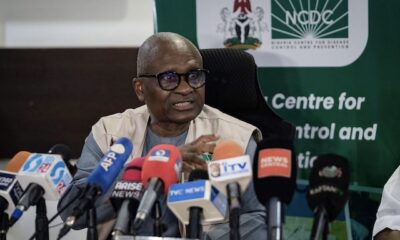
N10bn intervention not for Ebola alone, says NCDC boss

Published

on

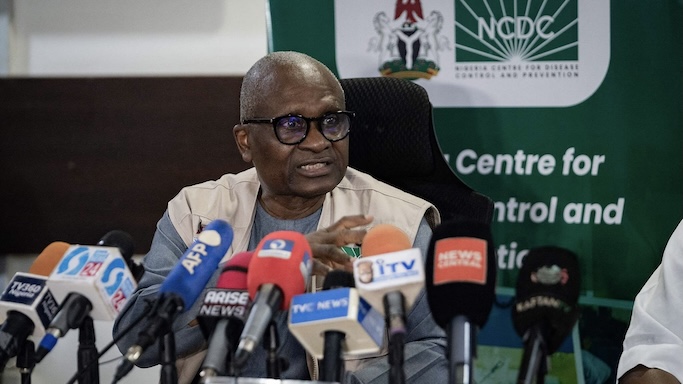
The Director-General of the Nigeria Centre for Disease Control and Prevention, Dr Jide Idris, has said that the controversial N10bn emergency intervention fund approved by President Bola Tinubu was not meant for Ebola Virus Disease alone but for strengthening Nigeria’s preparedness against multiple epidemic-prone diseases.

Idris, who clarified amid growing public debate over the allocation, said the fund was designed to strengthen prevention, preparedness, early detection and rapid response to public health threats, including Lassa fever, cholera, cerebrospinal meningitis, diphtheria, measles, monkeypox and antimicrobial resistance.

He explained that the N10bn was released directly to the NCDC and not to the Presidential Task Force on Ebola Virus Disease, contrary to some narratives surrounding the intervention.

The NCDC boss who had during a press conference on Sunday, October 25, 2026, told journalists that the N10bn has not been released to the agency, did not specify when the fund was eventually released.

Idris, who stressed that the allocation was inadequate in view of Nigeria’s growing health security needs, disclosed that implementing the country’s National Action Plan for Health Security, covering 2025 to 2029, would cost approximately N522bn over five years.

“This translates to an average annual requirement of N104.4bn, meaning the N10bn intervention represents only about two per cent of the plan’s average yearly cost.”

According to him, Nigeria, with a population exceeding 240 million, requires sustained investments from the Federal Government, state governments and development partners to adequately protect its population against epidemic threats.

Providing a breakdown of government funding for health security, Idris disclosed that NCDC’s allocation increased from N4bn in 2024 to N7bn in 2025, followed by a N5bn intervention fund that year, while the 2026 Appropriation provides N22bn.

See also  Reno Omokri says Tinubu has already won 2027 presidential election, read details

He added that President Tinubu approved the additional N10bn emergency intervention funding in June 2026 following the outbreak in the Democratic Republic of Congo, which raised global concerns about Ebola.

Idris maintained that the request was never restricted to Ebola but covered the broader national health security agenda.

“In June 2026, as the outbreak in the Democratic Republic of the Congo became a global emergency, Mr President graciously approved a further N10 billion in emergency intervention funding. That fund was requested for all our epidemic-prone diseases, not Ebola alone, and now strengthens work already underway, as we had mobilised resources from government and partners and kept building.

“The gap, however, remains real. The Global Preparedness Monitoring Board estimates that a country needs US$1 to US$2 per person each year to be acceptably prepared for epidemics.

“For about 240 million Nigerians, that is US$240 million to US$480 million a year. Sustained investment from government, States and partners will close that gap.

“This background illustrates the extent to which health security remains underfunded, partly because public investment tends to favour more tangible and immediately visible interventions”, he added.

The NCDC boss said the debate surrounding the N10bn should shift from political controversy to the urgent need for sustainable investment in national health security.

He argued that preventing epidemics, averting deaths and avoiding economic disruption require deliberate financial commitments, warning that the cost of failing to prepare for disease outbreaks could far exceed the cost of prevention.

On the Ebola situation, Idris said Nigeria had confirmed its first imported case of Bundibugyo Ebola virus disease, adding that the laboratory confirmation was made on October 20, 2026, within 24 hours of receiving the alert in Abuja.

See also  UN General Assembly votes for Hamas-free Palestinian state

He, however, assured Nigerians that there was no active case in the country as of the time of his statement, with identified contacts under daily surveillance.

He said surveillance would continue until the last identified contact completes the mandatory 21-day monitoring period without developing symptoms or any new case emerging.

Idris also dismissed calls for the postponement of elections, restrictions on travel or a blanket ban on mass gatherings, insisting that the prevailing situation did not warrant such measures.

According to him, the NCDC had instead developed technical guidelines for organisers of mass gatherings, stressing that strict adherence to infection prevention and control measures would enable public events to proceed safely.

He urged Nigerians to avoid spreading unverified information, warning that misinformation and the politicisation of public health emergencies could undermine public confidence and jeopardise the country’s response efforts.

Source: punchng.com

FOLLOW US ON:

FACEBOOK

WHATSAPP CHANNEL

TWITTER

PINTEREST

TIKTOK

YOUTUBE

LINKEDIN

INSTAGRAM

Continue Reading

News

National Assembly proposes 74 additional seats for women

Published

on

The National Assembly has proposed the creation of 74 additional seats for women in the Senate and House of Representatives, alongside three reserved seats for women in each state House of Assembly, as part of efforts to address the underrepresentation of women in Nigeria’s political system.

The Senate Leader, Opeyemi Bamidele, disclosed this on Monday at the 2026 Law Week organised by the International Federation of Women Lawyers, Ekiti State chapter, with the theme, “Justice in a Changing World: Responding to New Challenges Affecting Women and Children.”

The senator representing Ekiti Central Senatorial District said that the proposed constitution amendment was targeted at breaking the barriers limiting women’s participation in governance and promoting inclusive political culture.

Bamidele, who is also the Vice Chairman of the Senate Committee on the Review of the 1999 Constitution, said the proposals were part of the ongoing constitutional amendment process and would create special legislative seats for women without displacing existing elected representatives.

The initiative, if approved, would add 37 seats to the Senate and 37 to the House of Representatives, ensuring that each state of the federation and the Federal Capital Territory has one additional seat in each chamber.

The programme was attended by the Chairman of the House of Representatives Committee on Information and National Orientation, Steve Fatoba, and the Speaker of the Ekiti State House of Assembly, Adeoye Aribasoye, among others.

Speaking at the event, Bamidele said, “A Bill for an Act to alter the provisions of the Constitution of the Federal Republic of Nigeria, 1999 to provide for special seats for women in the National and state Houses of Assembly and for related matters is receiving our attention at the National Assembly.”

The Senate Leader said the proposal followed extensive consultations and consensus-building, adding that the National Assembly had commenced the constitutional review process early to ensure a comprehensive and inclusive exercise.

See also  See why Tinubu pulls 100,000 policemen from VIPs

He added that the legislative initiative “is the fruit of extensive consultation and consensus-building. It is why we commenced the constitutional amendment process early, ensuring that this is not a rushed, haphazard endeavour but a deliberate, inclusive, and thorough reform.

“The proposal, as it stands, is meticulous in its design. It seeks to add 37 seats in the Senate and 37 seats in the House of Representatives.

“This suggests that if finally approved, each state of the federation, including the FCT, will have one additional seat in each of the Houses of the National Assembly.”

Bamidele said the committee had also proposed three additional seats for women in each state House of Assembly, with the arrangement expected to last for 16 years, covering four electoral cycles, before a comprehensive review.

He said the proposal was intended to provide women with greater access to legislative representation while allowing time to assess its impact on political participation.

Bamidele further revealed that the constitution review committee proposed three additional seats for each state House of Assembly, all specifically reserved for women, without displacing any existing electoral seats.

“This arrangement is proposed to run for a period of 16 years, four electoral cycles, before a comprehensive review. This is a sunset clause designed to ensure sustainability and to allow for the organic development of a more inclusive political culture.

“We are actively and strategically engaging with the state Houses of Assembly, as their concurrence is a constitutional sine qua non for bringing this reform to fruition. However, let me add a crucial point that speaks to the very essence of our democratic journey and the Renewed Hope Agenda,” he said.

The Senate leader said the proposal was not a partisan initiative but a constitutional intervention aimed at addressing the exclusion of women from political decision-making.

Bamidele noted that the resolve of the 10th National Assembly had been strengthened by advocacy from senior government figures, including the First Lady, Oluremi Tinubu.

See also  Opposition leaders urge N’Assembly to begin fresh electoral act amendment

He said the special seat initiative “is not a partisan endeavour. It is a historic imperative. The rationale is anchored on a simple, yet profound, principle of constitutional law: the foundational precept of representative democracy.

“A democracy that systematically excludes over half of its population from the decision-making tables that determine their futures is, at best, a flawed democracy and, at worst, a veiled oligarchy.”

He also highlighted the need for legislative interventions to protect vulnerable groups, particularly women, children and persons with disabilities, through improved access to healthcare, education and social protection.

He said: “We were mindful of the reality that the state must intervene to provide a robust safety net where the market and tradition fail. This recognition is translated into legislative support for healthcare initiatives, educational access, and social protection programmes that are meticulously targeted at the most vulnerable demographics: our women, our children, and persons with disabilities.”

On the protection of women and children, Bamidele said Nigeria’s laws must respond to emerging threats that cross geographical boundaries and exploit weaknesses in existing systems.

He stressed that justice must go beyond constitutional provisions and statutory declarations to become accessible and effective for victims of abuse.

He said justice should be more than “a promise merely expressed in the Constitution or a provision enshrined in our statute books. Rather, it must be accessible, affordable, timely, and effective.

“A woman who suffers domestic violence must be able to seek protection without intimidation or social condemnation. A child who experiences abuse must be heard, protected from further harm, and provided with appropriate support.

“Victims must have access to legal assistance, medical care, and psychosocial services, while perpetrators must be held accountable in accordance with due process and the rule of law,” the Senate leader said.

See also  UN General Assembly votes for Hamas-free Palestinian state

He called for stronger collaboration among the legislature, executive, judiciary, law enforcement agencies, social welfare institutions, religious organisations, traditional rulers, civil society groups and the private sector to strengthen the protection of women and children.

Bamidele charged FIDA to deepen engagement with the National Assembly and other relevant institutions, particularly in identifying gaps in existing laws, proposing reforms and ensuring that government policies and budgetary provisions translate into tangible benefits for vulnerable Nigerians.

In her address, the Vice-Chancellor of Afe Babalola University, Ado-Ekiti, Prof. Smaranda Olarinde, called for stronger legal and institutional frameworks to protect women and children against emerging forms of abuse, particularly those enabled by technology and economic vulnerabilities.

The VC said that the increasing use of AI and digital platforms had created new dimensions of threats, including cyberstalking, online harassment, deepfake images, impersonation and exploitation of children, as she called for stronger collaboration among government, the judiciary, law enforcement agencies, universities, religious and traditional leaders, the media and civil society organisations to tackle gender-based violence and child abuse.

The Chief Judge of Ekiti State, Justice Lekan Ogunmoye, described the Senate leader as a perfect person to speak on the emerging issues towards initiating legislative and policy reforms in protection of women and children.

In her welcome address, FIDA Chairperson, Ekiti State chapter, Ayobami Olowoyo-Richards, reiterated the association’s commitment to promoting, protecting and preserving the rights of women and children.

Olowoyo-Richards, who said that the changing realities had continued to present new and complex concerns for the safety, dignity, and fundamental rights of women and children, urged, “We must continually strengthen our laws, institutions, and collective response to ensure that justice remains accessible, effective, and responsive to their needs.”

Source: punchng.com

FOLLOW US ON:
FACEBOOK

WHATSAPP CHANNEL

TWITTER

PINTEREST

TIKTOK

YOUTUBE

LINKEDIN

INSTAGRAM

Continue Reading

News

FG tightens payroll checks as salaries gulp N1.96tn, read details

Published

on

The Federal Government has introduced stricter verification requirements for newly recruited workers seeking admission into its payroll, as personnel costs rose by N133.94bn to N1.96tn in the first quarter of 2026, exceeding capital expenditure during the period.

An analysis by The PUNCH, of the Federal Government’s First Quarter Budget Implementation Reports for 2025 and 2026 showed that personnel expenditure increased by 7.35 per cent from N1.82tn in the corresponding period of 2025, reflecting growing pressure on public finances.

The new measures were announced on Monday by the Office of the Accountant-General of the Federation in a statement signed by its Director of Press and Public Relations, Bawa Mokwa.

The OAGF said the directive, which takes immediate effect, applies to all ongoing and subsequent payroll admission processes under the Integrated Personnel and Payroll Information System.

The statement read, “Henceforth, no newly recruited employee shall be enrolled without first being captured on the nominal roll of the relevant MDA and satisfying all prescribed validation and eligibility requirements.”

According to the 2026 First Quarter Budget Implementation Report, the Federal Government spent N1.96tn on personnel costs between January and March, compared with N1.69tn on capital expenditure.

This means salaries and related personnel obligations exceeded capital spending by approximately N267bn, or 15.77 per cent.

Personnel expenditure accounted for 20.05 per cent of the Federal Government’s total expenditure of N9.76tn, while capital expenditure represented 17.32 per cent.

A breakdown showed that personnel costs for Ministries, Departments and Agencies increased from N1.57tn in the first quarter of 2025 to N1.70tn in the corresponding period of 2026, representing an increase of N133.94bn, or 8.54 per cent.

Personnel expenditure by Government-Owned Enterprises remained unchanged at N254.35bn, indicating that the entire increase in the reported wage bill came from MDAs.

The figures further showed that the Federal Government spent an average of N652.37bn monthly on personnel costs during the review period, compared with N607.73bn in the corresponding period of 2025.

Despite the increase, actual personnel spending remained below the quarterly budget projection.

The Budget Office disclosed that N8.35tn was allocated to MDAs’ personnel costs in the 2026 budget, compared with N7.60tn in 2025, representing an increase of approximately N758.51bn, or 9.99 per cent.

The report stated, “The sum of N8.35tn was appropriated for MDAs Personnel Cost in the 2026 Budget. This translates to a prorated quarterly expenditure outlay of N2.09tn in 2026. Actual expenditure of N1.70tn was released in the first quarter of 2026, translating to N385.78bn (18.47 percent) below the quarterly projection for the year.”

While personnel expenditure continued to rise, implementation of the Federal Government’s capital budget remained significantly below expectations.

The report showed that total capital expenditure of N1.69tn fell short of the prorated quarterly projection of N8.07tn by N6.38tn, representing a shortfall of 79.06 per cent.

More significantly, no funds were released for the implementation of MDAs’ 2026 capital budget during the quarter, despite a prorated allocation of N3.92tn.

Explaining the development, the Budget Office stated, “Funds for MDAs’ capital expenditure were not released in the first quarter of 2026 because some MDAs were still utilising funds released under the 2025 capital budget, whose implementation period had been extended to 31st December, 2026.”

See also  Marketers push N800/litre petrol, seek import licences

Consequently, implementation of the 2026 MDAs’ capital budget stood at zero as of March 31, although expenditure was recorded under other capital components, including GOEs, the Tertiary Education Trust Fund and externally financed projects.

GOEs accounted for N740.32bn in capital expenditure, while TETFund spending stood at N393.56bn. Multilateral and bilateral project-tied loans contributed N287.44bn, while grants and donor-funded projects accounted for N249.50bn.

The pressure was further reflected in non-debt recurrent expenditure, which increased from N2.24tn in the first quarter of 2025 to N2.77tn in the corresponding period of 2026, representing an increase of approximately N523.49bn.

Personnel costs accounted for 70.73 per cent of non-debt recurrent spending during the period.

Expenditure on pensions and gratuities, including service-wide pensions, also increased from N161.60bn to N330.72bn, representing a rise of N169.12bn, or 104.65 per cent.

When pensions and gratuities are combined with personnel costs, the Federal Government’s expenditure on these obligations reached N2.29tn, compared with N1.98tn in the corresponding period of 2025.

However, pensions and gratuities are classified separately from personnel costs in the budget implementation reports.

The rising obligations coincided with weak revenue performance.

According to the Budget Office, the Federal Government generated approximately N5.08tn in the first quarter of 2026, against a quarterly target of N9.22tn, representing a shortfall of 44.93 per cent.

Personnel costs alone were equivalent to 38.56 per cent of actual revenue, compared with approximately 36.80 per cent in the corresponding period of 2025.

This means that for every N100 received by the Federal Government during the quarter, an amount equivalent to nearly N39 was spent on personnel costs.

Debt-service payments further constrained government finances, reaching N4.63tn, equivalent to approximately 91.18 per cent of actual revenue.

Combined personnel costs and debt-service obligations amounted to N6.58tn, exceeding government revenue by approximately N1.51tn.

The Federal Government recorded a fiscal deficit of N4.69tn during the period.

The Budget Office acknowledged the need to contain recurrent spending, noting that restrictions on unapproved recruitment remained part of the government’s expenditure management measures.

It stated, “The FGN continued to pursue its goal of curbing the growth of recurrent expenditure as stated in the 2026-2028 MTEF/FSP.”

The report added, “Key initiatives aimed at reducing recurrent costs were therefore pursued vigorously during the period. This includes the embargo on unapproved recruitment by MDAs.”

It explained that recruitment and payroll enrolment requests must first obtain clearance from the Budget Office, while efforts to extend IPPIS coverage across federal establishments were continuing.

Under the latest arrangement, MDAs will assume greater responsibility for managing personnel budgets and maintaining accurate nominal rolls.

The OAGF explained that agencies seeking to enrol newly recruited employees must submit formal requests accompanied by recruitment approvals, appointment letters, applicable waivers and other supporting documents.

These records will undergo verification alongside salary structures, grade levels, salary steps, allowances and other financial entitlements to establish the legitimacy of appointments and the accuracy of payroll obligations.

See also  ICPC to arraign El-Rufai in Kaduna today

The statement added, “The validation process will also cover statutory details, including Pension Fund Administrator information, pension identification numbers, National Housing Fund registration and tax records to ensure accurate deductions and timely remittances.”

Following the initial verification, employee records will be forwarded to the relevant MDA for confirmation and endorsement by the Accounting Officer, Director of Human Resources, Director of Finance and Accounts, and designated Payroll Validating Officer.

The records will then be returned to the OAGF for final processing.

The office stated, “Final admission into the Federal Government payroll will be subject to satisfactory completion of all validation procedures and the approval of the Accountant-General of the Federation.”

Permanent Secretaries, Heads of Agencies and other relevant officials have been directed to ensure strict compliance with the requirements.

The OAGF warned that incomplete documentation or unresolved discrepancies would result in the deferment of payroll admission until the necessary conditions were satisfied.

It added that officers responsible for processing and approving payroll admissions would be held accountable for breaches of applicable rules and regulations.

The Federal Government’s wage bill is expected to rise further as it approved a monthly allowance of N70,000 for public servants beginning in November, following a conciliation meeting with the Nigeria Labour Congress, the country’s biggest workers association, in Abuja.

The agreement provides for the payment across all levels for six months, although it did not specify the number of beneficiaries or the total amount budgeted for the intervention.

The PUNCH estimated that the Federal Government’s six-month transport allowance for its workers could cost about N465.7bn if all 1.1 million employee records on its payroll system qualify for the payment.

The economists, however, called for sustainable measures to reduce commuting costs and ease pressure on household budgets.

The Trade Union Congress of Nigeria, however, rejected the N70,000 wage award to cushion transportation expenses.

Instead, the TUC demanded an immediate salary increase for workers and the implementation of outstanding agreements with health workers under the Joint Health Sector Unions.

Experts demand discipline

Reacting to the development, a Nigerian economist, public affairs analyst and Chief Executive Officer of CSA Advisory, Dr Aliyu Ilias, expressed concern that personnel expenditure had exceeded capital spending, warning that the trend could undermine investment in critical infrastructure.

Speaking in an interview with The PUNCH, Ilias said the government needed to prioritise capital projects because of their importance to education, healthcare, transportation and other essential services.

He said, “It is an anomaly to have personnel costs higher than capital expenditure because social infrastructure is very critical. It benefits education, healthcare, road infrastructure, among others.”

The economist argued that the government’s expenditure pattern was particularly troubling because salaries and debt-service obligations were consuming resources needed for development.

He acknowledged that both obligations were difficult to avoid, especially given the declining purchasing power of workers, but maintained that the situation raised serious concerns about fiscal priorities.

See also  One dies, three injured in Lagos building collapse

“Remember that debt servicing is an obligation that you must meet, and salary payment is something you cannot delay. Even if you look at purchasing power, it is very poor. Disposable income is not enough for people to manage,” he said.

Ilias also criticised the repeated extension of budget implementation periods, arguing that the practice had weakened clarity and accountability in public expenditure.

He called on the National Assembly to strengthen its oversight of budget implementation and demand explanations for the government’s spending priorities.

“When we don’t have clear budgets, these are the things that we are likely to see,” he said.

He added that improved revenue collections and potential gains from higher crude oil prices should provide opportunities for increased infrastructure investment.

According to him, the National Assembly has a responsibility to scrutinise the government’s expenditure decisions and provide Nigerians with information on how public resources are being utilised.

Also speaking, an investment banking and financial policy expert and Chief Executive Officer of CFG Advisory, Dr Tilewa Adebajo, warned that Nigeria’s fiscal position was becoming increasingly difficult to sustain, with recurrent obligations and debt servicing limiting the resources available for productive investment.

Adebajo said the figures reflected the severe fiscal pressure facing the government and raised questions about the sustainability of its economic reform programme.

“What you are telling me now is not a surprise. These numbers are not a surprise to us because it is clear from the way government has been spending that government is under severe fiscal pressure,” he said.

He warned that macroeconomic reforms alone would not deliver meaningful improvements in living standards without stronger economic growth, fiscal discipline and investment in productive sectors.

“Reforms by themselves are definitely not enough,” he said.

The financial expert stressed that capital expenditure was essential to expanding the economy, warning that persistent underfunding of development projects could undermine the benefits of macroeconomic stabilisation.

“If you do not fund your capital budget, that is the investment needed to grow the economy. The economy will not grow,” Adebajo said.

He argued that the government needed to shift its attention towards policies capable of stimulating productivity, attracting private investment, expanding exports and improving household welfare.

“The next phase must be fiscal discipline, productivity, private sector investment and export diversification, and improvements in household welfare,” he stated.

Adebajo maintained that the country needed a credible strategy to achieve economic growth of between eight and 10 per cent, noting that stabilising macroeconomic indicators was only the foundation for improving living standards.

“Macroeconomic stability is the foundation for economic prosperity. It is not the destination,” he said.

He further expressed concern about the government’s borrowing plans and the transparency of public expenditure, calling for stronger scrutiny of compliance with fiscal regulations.

Source: punchng.com

FOLLOW US ON:

FACEBOOK

WHATSAPP CHANNEL

TWITTER

PINTEREST

TIKTOK

YOUTUBE

LINKEDIN

INSTAGRAM

Continue Reading

Trending