Connect with us

Business

Business activity strengthens as PMI rises to 53.2 points, read details

Published

on

BUSINESS activities in Nigeria strengthened in October as the Purchasing Managers’ Index (PMI) rose to 53.2 points from 53.0 points in September, extending the private sector’s expansion for the fifth consecutive month.

The latest PMI report by the Central Bank of Nigeria (CBN), released on Thursday, showed that 24 of the 32 subsectors surveyed recorded expansion, indicating that the improvement in economic activities was spread across major segments of the economy.

A PMI reading above the 50-point threshold indicates expansion, while a reading below 50 points signals contraction.

The improvement was driven largely by stronger performances in agriculture and industry, where business activities gained momentum, supported by increased production, new orders and employment.

The industrial PMI rose to 52.6 points in October from 52.0 points in September, while agriculture recorded a stronger increase to 54.7 points from 53.1 points.

However, the services sector recorded a moderation, with its PMI declining to 52.7 points from 53.2 points in the preceding month, although it remained in expansion territory for the fourth consecutive month.

Within the industrial sector, manufacturing activity improved as the Manufacturing PMI increased to 52.4 points from 51.7 points, reflecting stronger performances in cement, motor vehicles and assembly, and oil refining.

The report showed that manufacturing production rose to 53.5 points from 53.2 points, while the new orders index increased to 52.1 points from 51.7 points.

Employment also improved significantly, with the index rising to 52.7 points from 51.1 points, suggesting increased demand for labour among businesses.

Raw materials inventory increased to 51.8 points from 51.1 points, while suppliers’ delivery time stood at 52.6 points, slightly below the 52.7 points recorded in September.

See also  Naira records mixed performance in FX markets

Of the 16 industrial subsectors monitored, 12 recorded expansion, while four contracted.

Cement manufacturing emerged as the best-performing industrial subsector, with a PMI of 60.2 points, while chemical and pharmaceutical products recorded the weakest performance at 43.4 points.

Agriculture maintained its position as one of the strongest drivers of business expansion, supported by improved farming activities and new orders.

The general farming activities index rose to 56.8 points, while new orders increased to 55.6 points. Livestock also recorded strong performance, with a PMI of 56.4 points.

In the services sector, business activity stood at 54.2 points, while employment improved to 53.5 points. New orders and inventories recorded 51.7 points and 51.1 points, respectively.

Seven of the 11 services subsectors expanded during the month, while four contracted. Educational services recorded the strongest performance at 60.2 points, while arts, entertainment and recreation posted the weakest reading at 47.1 points.

Despite the improvement in business activity, the report highlighted persistent cost pressures confronting companies, with both input and output prices increasing during the review period.

The composite input price index rose to 64.0 points in October from 63.3 points in September, while the output price index increased to 58.9 points from 58.4 points.

The increases suggest that businesses continued to face higher costs of raw materials and other production inputs, with some transferring the additional costs to consumers through higher selling prices.

Agriculture recorded particularly strong increases in both measures, as its input price index climbed to 68.3 points from 65.8 points, while its output price index rose to 61.1 points from 58.5 points.

See also  Blackouts: N300bn electricity power lifeline for hospitals, varsities hits snag

In the services sector, the input price index increased to 62.8 points from 62.0 points, although the output price index declined to 58.4 points from 59.3 points.

Commenting on the outlook, CSL Research said the gradual recovery in economic activities was expected to continue in the near term, supported by sustained agricultural production and improving industrial conditions.

It noted that the recovery in manufacturing output and new orders was particularly encouraging, as sustained improvements could support domestic production, capacity utilisation and employment.

However, the research firm cautioned that elevated input costs could undermine operating margins and limit the extent to which increased demand translates into higher output and profitability.

It also warned that the moderation in services activity suggested that the recovery remained uneven across sectors.

The CBN survey, which covered 1,851 responses from purchasing and supply executives across the agriculture, industry and services sectors, provides an indication of prevailing business conditions in the Nigerian economy.

Overall, the October PMI suggests that private sector activity is sustaining its recovery, although rising production costs remain a major risk to the durability of the expansion.

Source: tribuneonlineng.com

FOLLOW US ON:

FACEBOOK

WHATSAPP CHANNEL

TWITTER

PINTEREST

TIKTOK

YOUTUBE

LINKEDIN

INSTAGRAM

Continue Reading
Click to comment

Leave a Reply

Your email address will not be published. Required fields are marked *

Business

Trump blames Democrats’ midterm victories for stock market plunge, read details

Published

on

US President Donald Trump attributed Thursday’s stock market freefall to the electoral victory of his rival Democratic Party in midterm elections earlier this week.

“The Stock Market crashed today because the Dumocrats had a big Tuesday — So sad to see, you only have yourselves to blame!” Trump posted on his Truth Social platform after US markets closed for the day.

Analysts attributed Thursday’s stock selloff to fears of Democrats threatening the AI data center investment boom, with the tech-focused Nasdaq suffering its worst session percentage-wise since April 2025.

Data centers have faced broad opposition from US voters regardless of political affiliation, and many midterm winners have pledged to put the brakes on such projects.

Democrats flipped seats that had long been held by Republicans, scoring breakthroughs in South Carolina, North Carolina, Iowa, Kansas, Ohio, Texas and Maine.

In Maine, former logger Troy Jackson defeated longtime Republican Senator Susan Collins, the party’s seventh Senate seat captured from Republicans.

In Kansas, Methodist minister Adam Hamilton became the first Democrat elected to the Senate from the reliably conservative state since 1932. Iowa had not elected a Democratic senator since 2008.

Talarico, the Texas Democrat, declared he had defeated “Goliath” in winning a Senate seat, while Gina Hinojosa unseated the state’s Republican governor, Greg Abbott, ending decades of Republican rule.

Democrats also protected key Senate seats of their own, including Jon Ossoff in Georgia and an open seat in New Hampshire.

The scale of the victory grew further when Abdul El-Sayed defeated former Republican lawmaker Mike Rogers in Michigan, making him the first Muslim elected to the upper chamber of Congress.

See also  NNPC boosts Dangote refinery crude supply to seven cargoes – Sources

The party’s House victory saw gains across Pennsylvania, Kentucky, Arizona, North Carolina, Wisconsin and New Jersey, including districts Trump had carried comfortably in 2024.

In one closely watched bellwether, Democrat J.D. Ford ousted Republican congresswoman Victoria Spartz in Indiana, capturing a district Trump won by 17 points two years earlier.

Democrats also won Georgia’s governorship, electing former Atlanta mayor Keisha Lance Bottoms as the first Black woman governor in US history.

Republicans had some consolation in Florida, where Trump-backed Byron Donalds became the state’s first Black governor and Ashley Moody retained a Senate seat — but only after seeing off surprisingly strong Democratic challenges.

Source: punchng.com

FOLLOW US ON:

FACEBOOK

WHATSAPP CHANNEL

TWITTER

PINTEREST

TIKTOK

YOUTUBE

LINKEDIN

INSTAGRAM

Continue Reading

Business

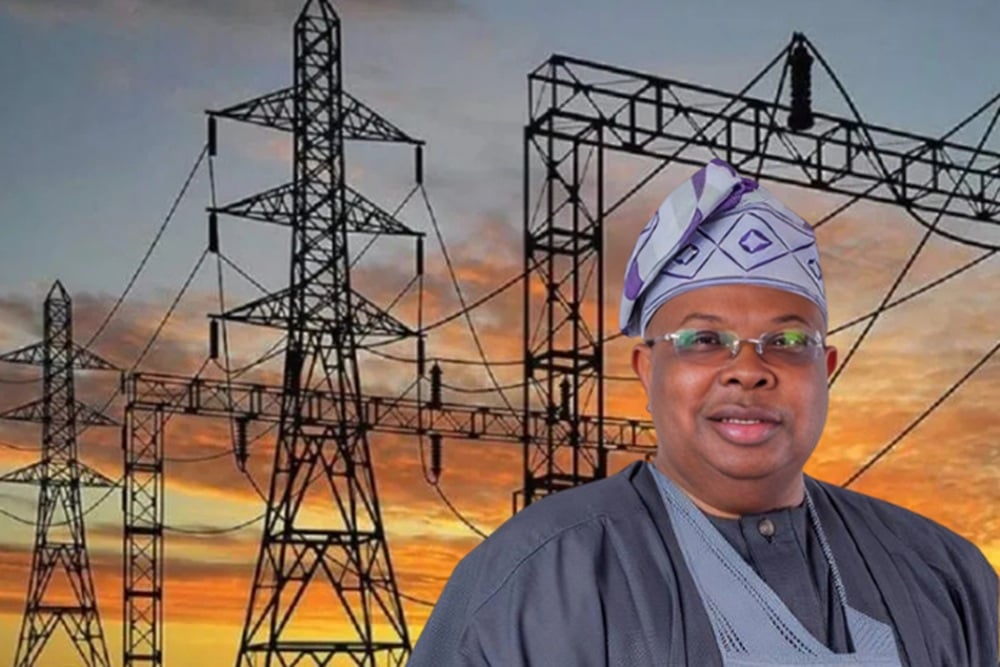
FG blames gas shortage as power outages hit five states, read details

Published

on

The Minister of Power, Joseph Tegbe, has acknowledged worsening electricity supply disruptions in Lagos, Abuja, Ogun, Kwara and Oyo states, as the Federal Government moves to recover abandoned power equipment, beginning with the clearance of 44 containers from Apapa ports in Lagos.

The minister said the affected areas had recently recorded noticeable improvements in electricity supply before the latest disruptions, which he attributed to maintenance and operational challenges, gas shortages at thermal power stations and reduced output from hydropower plants.

The development comes amid growing complaints from electricity consumers over reduced supply hours, with the Nigerian Independent System Operator identifying inadequate gas supply and lower water inflows into hydroelectric reservoirs as major constraints on national grid generation.

The latest electricity distribution data showed that the 11 electricity distribution companies received a combined allocation of 2,926 megawatts as of 4:41pm on Thursday, 5 November, 2026.

Abuja Electricity Distribution Company received the highest allocation of 633MW, accounting for about 21.6 per cent of the total power allocated to the DisCos. Ibadan Disco followed with 391MW, while Port Harcourt Disco received 320MW.

Benin Disco received 264MW, while Eko Disco was allocated 256MW. Enugu Disco received 253MW, slightly ahead of Ikeja Disco, which got 249MW.

Among the remaining distribution companies, Kano Disco received 173MW, Kaduna Disco 167MW and Jos Disco 146MW, while Yola Disco received the lowest allocation of 74MW.

The figures indicate significant differences in electricity allocations among the distribution companies, with Abuja Disco receiving more than eight times the allocation to Yola Disco.

See also  NNPC boosts Dangote refinery crude supply to seven cargoes – Sources

The figures represent the load allocated to the distribution companies at the stated time, not necessarily the electricity ultimately delivered to consumers.

In a statement issued on Thursday by his Special Adviser on Media and Publicity, Adeola Adelabu, Tegbe said preliminary assessments showed that the disruptions were not caused by a major or systemic failure of the national grid.

He said the government was working with the Transmission Company of Nigeria, NISO and electricity distribution companies to address the problems and restore normal supply.

“The Ministry acknowledges the inconvenience this has caused households, businesses and public institutions, and understands the frustration of Nigerians who had begun to see the benefits of steadier supply.

“We recognise what every hour without power means for individuals, families and businesses, and we do not take it lightly,” the minister said.

He explained that maintenance and operational issues across parts of the electricity value chain, alongside reduced generation, were responsible for the decline in supply.

Tegbe said he had engaged the relevant agencies and distribution companies to resolve the constraints, accelerate ongoing maintenance and keep consumers informed about restoration efforts.

The minister’s acknowledgement of the outages coincided with the announcement that the Federal Government had facilitated the clearance of 44 containers of electricity equipment from Apapa ports, where more than 300 containers had remained stranded, some since 2014.

Tegbe said the clearance followed President Bola Tinubu’s directive after the last Federal Executive Council meeting, asking the Ministry of Power to work with the Nigeria Customs Service and the Nigerian Ports Authority to resolve the outstanding issues.

See also  Two-year refining milestone: Fuel import spending crashes 54% to $6.7bn

According to him, the President directed the agencies to reconcile outstanding charges and facilitate the release of the equipment.

The minister said the first 44 containers had been released following the intervention, adding that technical experts would inspect their contents before deployment.

He stated that serviceable equipment would be deployed to ongoing electricity projects, while unusable items would be disposed of appropriately

The development also follows the recovery of 110 abandoned containers and 216 packages by the Niger Delta Power Holding Company under its Managing Director, Jennifer Adighije.

The recovery reportedly saved more than N30bn and helped unlock about 470 megawatts of electricity generation capacity through recovered turbines.

The latest clearance is expected to provide additional equipment for ongoing power infrastructure projects, although the ministry did not disclose the specific contents of the 44 containers, their condition or the timeline for deployment.

Source: punchng.com

FOLLOW US ON:
FACEBOOK

WHATSAPP CHANNEL

TWITTER

PINTEREST

TIKTOK

YOUTUBE

LINKEDIN

INSTAGRAM

Continue Reading

Business

States spend N45bn fuelling vehicles, generators in six months

Published

on

Thirty-one state governments spent N45.04bn fuelling motor vehicles, plants and generators in the first six months of 2026, representing a 14.35 per cent increase over the N39.38bn recorded in the corresponding period of 2025.

An analysis by The PUNCH of the states’ second-quarter budget implementation reports showed that the combined fuel bill increased by N5.65bn, with Lagos, Yobe, Nasarawa, Kano and Ekiti recording the highest expenditure.

The spending translates to an average of N7.51bn monthly, or approximately N248.82m daily, between January and June.

The increase in states’ fuel bills came amid higher global oil prices following the Middle East conflict and disruptions to shipping through the Strait of Hormuz, with Brent crude rising from $61 per barrel at the beginning of 2026 to over $100.

The International Monetary Fund said petrol and diesel prices in Nigeria rose by 22.5 per cent and 16 per cent, respectively, in March compared with pre-war levels, adding to operating costs.

The analysis examined cumulative first-half actual expenditure under “Motor Vehicle Fuel Cost” and “Plant / Generator Fuel Cost”, rather than annual budget provisions or spending during April to June alone.

It covered the same 31 states in both years to ensure a consistent comparison. Separately classified expenditure on aircraft fuel, cooking gas, other transport equipment, maintenance and power-plant gas was excluded.

Of the N45.04bn spent during the period, N28.52bn went into fuelling plants and generators, while motor vehicles accounted for N16.52bn.

Plant and generator fuel expenditure increased by N3.64bn, or 14.63 per cent, from N24.88bn in the first half of 2025. Vehicle fuel costs rose by N2.01bn, or 13.88 per cent, from N14.50bn.

See also  Naira records mixed performance in FX markets

Generators and plants consequently accounted for 63.33 per cent of the combined bill and 64.38 per cent of the year-on-year increase.

The findings showed that 24 of the 31 states increased their combined fuel spending, while seven recorded reductions. Thirteen states spent more than N1bn each.

Lagos recorded the highest expenditure at N8.93bn, up from N7.65bn in the corresponding period of 2025, representing an increase of N1.28bn, or 16.79 per cent.

The state alone accounted for 19.83 per cent of the combined spending and 22.71 per cent of the aggregate increase.

Its expenditure was dominated by plant and generator fuel, which reached N8.26bn, while motor vehicle fuel accounted for N670.20m.

Yobe followed with N3.42bn, compared with N2.83bn a year earlier, an increase of 20.72 per cent. Almost all its spending went into plants and generators, which consumed N3.39bn, against N35.76m for motor vehicles.

Nasarawa ranked third with N3.29bn, up from N2.02bn in the first half of 2025. Its N1.26bn increase represented growth of 62.59 per cent and accounted for 22.38 per cent of the total increase across the states.

The state spent N1.77bn on plant and generator fuel and N1.51bn on motor vehicle fuel.

Together, Lagos and Nasarawa accounted for 45.09 per cent of the aggregate increase, indicating that a substantial part of the additional spending was concentrated in the two states.

Kano’s combined expenditure rose by 14.70 per cent to N2.99bn from N2.61bn. Of the 2026 amount, N2.62bn went into plant and generator fuel, while N368.27m was recorded for motor vehicles.

Ekiti spent N2.81bn, compared with N2.33bn a year earlier, an increase of 20.46 per cent. Plant and generator fuel accounted for N2.38bn, while vehicles consumed N430.95m.

See also  Blackouts: N300bn electricity power lifeline for hospitals, varsities hits snag

Edo followed with N2.74bn, up by 20.54 per cent from N2.28bn. Unlike several other leading spenders, its bill was driven mainly by motor vehicles, which accounted for N2.36bn, the highest vehicle-fuel expenditure in the sample. Plant and generator fuel cost N379.75m.

The six states together accounted for 53.69 per cent of the total fuel bill.

Other states with expenditure above N1bn were Ogun, N2.21bn; Benue, N1.70bn; Bauchi, N1.64bn; Abia, N1.54bn; Anambra, N1.26bn; Adamawa, N1.12bn; and Borno, N1.09bn.

The 10 biggest spenders accounted for 69.42 per cent of the combined expenditure.

Below the N1bn threshold, Jigawa recorded N997.09m, followed by Kwara with N981.75m, Bayelsa with N961.68m, Enugu with N914.17m and Gombe with N890.75m.

Taraba spent N780.18m, Ondo N744.39m, Katsina N665.27m, Plateau N632.96m and Ebonyi N545.37m.

At the lower end, Kebbi recorded the smallest combined fuel expenditure at N3.06m, followed by Oyo with N11.54m, Kogi with N288.05m, Delta with N358.19m and Cross River with N371.32m.

Sokoto recorded N375.50m, Zamfara N376.58m and Kaduna N401.19m.

Kebbi and Delta reported no actual expenditure under their motor vehicle fuel lines in the first half of 2026. Their combined figures therefore consisted entirely of the amounts recorded for plant and generator fuel.

Cross River recorded the fastest percentage increase, with its bill rising by 353.17 per cent from N81.94m to N371.32m, although its expenditure remained among the lowest in absolute terms.

Enugu followed with an increase of 282.54 per cent, from N238.97m to N914.17m. Delta’s bill rose by 236.92 per cent from N106.31m to N358.19m, while Anambra recorded an increase of 86.06 per cent.

See also  Schools, markets open as IPOB ends Monday sit-at-home

Among states recording reductions, Oyo’s expenditure fell by 98.59 per cent from N816.72m to N11.54m. Sokoto’s bill declined by 66.77 per cent from N1.13bn to N375.50m, while Borno recorded a 61.18 per cent reduction from N2.80bn to N1.09bn.

Kaduna’s expenditure fell by 47.54 per cent, Kebbi’s by 32.57 per cent, Katsina’s by 25.91 per cent and Kogi’s by 10.86 per cent.

The PUNCH further examined the fuel costs against the states’ internally generated revenue and receipts from the Federation Account Allocation Committee.

The 31 states generated N2.29tn internally and received N4.95tn through their reported government share of FAAC in the first half of 2026, bringing the combined receipts to N7.23tn.

Their N45.04bn fuel bill was equivalent to 0.62 per cent of these receipts, compared with 0.60 per cent in the corresponding period of 2025.

Fuel spending grew faster than the combined revenue, which increased by 10.63 per cent from N6.54tn.

However, the bill represented a smaller proportion of IGR, declining from 2.22 per cent in 2025 to 1.97 per cent in 2026, as internally generated revenue increased by 28.84 per cent.

Source: punchng.com

FOLLOW US ON:

FACEBOOK

WHATSAPP CHANNEL

TWITTER

PINTEREST

TIKTOK

YOUTUBE

LINKEDIN

INSTAGRAM

Continue Reading

Trending