Connect with us

Politics

2027 manifesto: Tinubu eyes 6% growth, 78,000 security recruits, read full details

Published

on

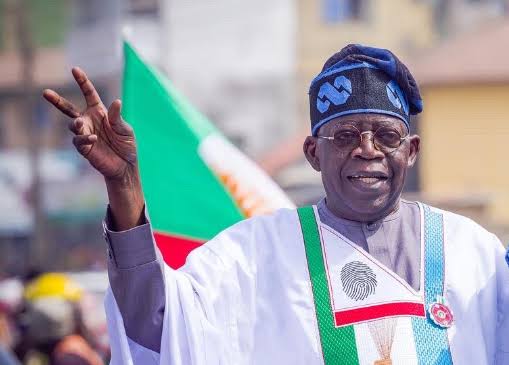
President Bola Tinubu has promised to recruit 28,000 additional military personnel and 50,000 police officers as part of efforts to strengthen Nigeria’s security architecture and tackle terrorism, banditry and kidnapping.

According to the 109-page APC 2027 Presidential Election Manifesto, titled From Reform to Prosperity Agenda 2027–2031, obtained by The PUNCH, Tinubu plans to achieve six per cent annual economic growth, facilitate the construction of 200,000 affordable homes and sustain a downward trend in inflation and food prices by 2031.

The APC leadership will unveil the 2027–2031 presidential manifesto on Tuesday, November 10, 2026, at the Shehu Musa Yar’Adua Centre in Abuja.

The event is scheduled to begin at 11 am.

Under the healthcare component of the manifesto, Tinubu promises to increase the number of functional primary healthcare centres to 90 per cent nationwide and expand active health insurance coverage to 40 per cent of Nigerians.

The manifesto further outlines plans to make communities safer, recruit and train 20,000 additional teachers and scale available electricity generation towards 10,000 megawatts to improve access to power for households and businesses.

The President said his second term would focus on translating the economic reforms and foundations laid during his first tenure into tangible improvements in the lives of Nigerians, with prosperity extending to homes, markets, farms and workplaces across the country.

On what Nigerians should expect by 2031, the manifesto stated, “Safer lives and communities: Stronger protection against terrorism, banditry and kidnapping; a police service that responds when needed; and better protection of our borders.

“Lower living costs and food security: Inflation set on a sustained downward trajectory, domestic food production, storage, and processing expanded, and post-harvest losses halved, and goods moving more quickly and cheaply between states.

“Reliable power for homes, businesses and communities:

Available power generation scaled towards 10,000MW, metering extended towards full coverage, transmission and distribution networks reinforced, and clean energy access extended to underserved communities.

“Expanded jobs and higher real incomes: Annual economic growth accelerated to 6 per cent, youth unemployment halved, and equitable credit reached half of all economically active Nigerians.

“Quality education and accessible healthcare: Out-of-school children halved, more children completing their education, 20,000 additional teachers deployed, health insurance expanded from more than 23 million enrollees to 40 per cent of Nigerians, and primary health centres functioning in at least 90 per cent of facilities, up from 53 per cent today.”

See also  Nigeria, UK seal £746m deal to redevelop Tin Can, Apapa ports

Tinubu pledged to facilitate the construction of 200,000 affordable homes for Nigerian workers by 2031 through the Tinubu Mass Social Housing Scheme, mortgage financing and partnerships with licensed private developers.

He said the initiative would provide more working households with access to decent housing while strengthening regulations to protect property buyers.

The President also promised to strengthen accountability in governance by extending digital case management systems to magistrate courts, tracking public service delivery and ensuring local governments receive their constitutional allocations under clear performance standards.

On security, Tinubu pledged to guarantee Nigerians greater safety in their homes, workplaces, schools, farms and commercial centres, assuring that his administration would strengthen measures to protect lives, secure national borders and enable citizens to live, work and travel without fear.

The APC presidential candidate promised to strengthen the Armed Forces and other security agencies, improve intelligence gathering and deploy modern technology to tackle insecurity across the country if re-elected in 2027.

The President, in his 2027–2031 manifesto, also pledged to intensify efforts against terrorism, banditry, kidnapping and organised crime through improved recruitment, specialised training, modern equipment and better welfare for security personnel.

He said the proposed security reforms would prioritise the protection of farmers, schoolchildren, traders and other Nigerians, while strengthening border surveillance, community policing and emergency response systems to ensure safer communities and commercial activities.

It read in part, “2027–2031: Complete the establishment and equipping of the four new Army divisions in Makurdi, Ilorin, Jalingo and Benin City, recruit and train the 28,000 additional personnel approved, and report publicly on their deployment.

“Sustain intelligence-led kinetic operations against insurgent and kidnapping networks to degrade and dismantle their operating bases, backed by independent verification of reported operational outcomes to build public trust.

“Strengthen surrender and rehabilitation frameworks through standardised, verifiable reporting on all screened, reintegrated, and prosecuted ex-combatants. Establish specialised zonal counter-terrorism capabilities while fortifying physical security across schools, commercial markets, places of worship, and vital transport corridors.

“Expand peace-building, trauma support, and deradicalisation programmes to enable long-term social recovery, rebuild civic trust, and safely resettle internally displaced families in their homes. We will restore peace in every community.

“Train and deploy the 50,000 newly recruited officers and expand recruitment and tactical training towards a 1:400 police-to-citizen ratio, maximising visible patrols across residential neighbourhoods, commercial centres, schools, and transit corridors.”

Tinubu also plans to implement a nationwide police reform programme featuring digital record systems, officers’ body cameras, geographic mapping tools, emergency response channels and modern forensic facilities to improve policing and crime prevention.

See also  Kano Assembly moves to impeach deputy governor, see reasons

The manifesto further proposes recruiting 30,150 personnel of the Nigeria Security and Civil Defence Corps to take over static security duties from the police, while working with federal and state lawmakers and governors to establish a legal framework for accountable state and community policing.

It added, “Complete e-surveillance coverage of all mapped borders (31 of 190 mapped areas remain), extend e-Gates, passenger-data (APIS) and MIDAS border systems to more entry points, and strengthen patrol, screening and intelligence-sharing.

“Complete nationwide Mining Marshals coverage across all identified mining sites (over 530 identified, 420 already protected) and resolve outstanding governance and funding questions so the unit is accountable and credible.

“Deploy trained Forest Guards, Agro-Rangers, and Mining Marshals to safeguard agricultural belts, farming communities, grazing routes, national forest reserves, and mineral deposits.

“Launch full implementation of the National Protection Policy and Strategy for Critical National Assets, with real-time surveillance across energy pipelines, electrical power grids, railways, schools, and health facilities.

“Expand domestic military production of ammunition, personal protective gear, armoured vehicles, and tactical drones, generating high-skilled Nigerian jobs while securing defence supply chains.”

Tinubu also pledged to establish integrated security command systems to improve intelligence gathering, detect threats early and strengthen coordination among security agencies, while boosting local defence production through technology partnerships.

He promised to implement approved salary increases for security personnel, improve their welfare and housing, and fast-track insurance and pension payments to families of fallen officers.

The manifesto also outlines plans to rehabilitate police barracks, improve working conditions and expand tactical training, while introducing vocational programmes and non-custodial measures to reduce congestion in correctional facilities.

Tinubu further promised to modernise fire stations, strengthen maritime surveillance and cybersecurity, deploy drones for emergency response and enrol 95 per cent of Nigerians in the National Identity Database.

It added, “Building on the 80,284 teachers already certified and licensed, recruit and train 20,000 additional teachers, prioritising female educators and underserved rural communities nationwide.

“Enforce safe-school standards, expand school water and sanitation facilities, and publish an annual education dashboard tracking enrolment, dropout, and completion rates.

“Prioritise foundational learning, science, technology, engineering, mathematics, and digital capabilities across all educational levels. Strengthen partnerships with industry to provide practical, work-linked training and move students into the workforce, aligning courses with labour-market needs.

See also  N571bn campaign spending limit for presidential, gov candidates ahead of 2027 poll

“Scale NELFUND, expand the National Smart Learning Initiative, sustain industrial peace in public universities, and extend the Student Venture Capital Grant and Diaspora BRIDGE to additional tertiary institutions. Expand technical, vocational, and digital training programmes, building on the TVET initiative (117,152 verified trainees, monthly stipend raised from N22,500 to N30,000) and the Digital Technical Academy, measuring systemic success by graduate employment, enterprise survival, and workplace productivity.”

Tinubu also pledged to expand the Mandatory School Sports Programme and the National Sports and Education Excellence Programme nationwide, building on the ongoing pilot involving 61 schools, 3,500 teachers and 15 trained students to strengthen grassroots sports development.

The manifesto read in part, “Expand static and mobile primary care, upgrade secondary facilities across all local government areas, and strengthen referral networks to tertiary hospitals, raising the share of functional primary health centres from 53 per cent today towards 90 per cent by 2031 and extending direct quarterly financing under the Basic Health Care Provision Fund from about 8,300 to all 17,600 primary health centres.

“Sustain maternal, newborn, immunisation, cancer-screening, and early detection programmes, prioritising families with the greatest financial need and tracking the proportion of births attended by a skilled health provider as a

headline HOPE-PHC indicator.

“Expand active health insurance coverage from more than 23 million enrollees to 40 per cent of Nigerians by 2031, subsidising poor and vulnerable Nigerians through the Vulnerable Group Fund, and cut out-of-pocket spending from 71 per cent to below 50 per cent of health expenditure.

“Complete the revitalisation of the remaining primary health centres (about 1,000 still under way), bring steady power to 30 per cent of health facilities by the end of 2027 through Power for Health solar installations, and scale MAMII free emergency obstetric care from 172 local government areas to all 774.

“Complete the National Health Information Exchange to ensure portable electronic records by 2031, while achieving complete Emergency Operations Centre coverage across all states.”

Tinubu also pledged to improve the recruitment, training and welfare of healthcare workers, boost local production of essential medicines to 50 per cent by 2031 through BioVaccines Nigeria, and complete cancer treatment centres across the six geopolitical zones.

Source: punchng.com

FOLLOW US ON:

FACEBOOK

WHATSAPP CHANNEL

TWITTER

PINTEREST

TIKTOK

YOUTUBE

LINKEDIN

INSTAGRAM

Continue Reading
Click to comment

Leave a Reply

Your email address will not be published. Required fields are marked *

Politics

Ex-Kwara ADC spokesperson defects to APC, read details

Published

on

The immediate past Publicity Secretary of the African Democratic Congress in Kwara State, Abubakar Basambo, has defected to the All Progressives Congress.

Basambo, who is former governorship candidate of the Labour Party in the 2023 general election, announced his defection in a statement made available to The PUNCH on Sunday in Ilorin.

He said his decision followed a meeting with the Speaker of the Kwara State House of Assembly and APC governorship candidate, Yakubu Danladi-Salihu.

The former ADC spokesman also declared his support for Governor AbdulRahman AbdulRazaq and Danladi-Salihu, expressing confidence in the leadership of the governor and his administration’s performance.

“Governor AbdulRazaq is a man who keeps his promise. His singular act of taking the governorship ticket to Kwara North is enough for me. His resounding success in healthcare, education, roads and other sectors is top-notch,” he said.

Basambo added that he decided to join the ruling party to contribute to the development of the state, adding that he was fully committed to supporting the governor and the APC governorship candidate.

“I hereby declare my unflinching support and total loyalty to the Executive Governor of Kwara State, Mallam AbdulRahman AbdulRazaq, and to Rt. Hon. Yakubu Danladi,” he stated.

His defection comes amid a public disagreement between him and the Kwara State chapter of the ADC over the circumstances surrounding his resignation from the party.

Basambo had resigned as the ADC state publicity secretary in a letter dated October 23, 2026, addressed to the state chairman through the chairman of his Magaji Are 1 Ward and the Ilorin East Local Government Area chapter.

See also  Opposition splits over NASS poll shift plan ahead of 2027

In the letter titled, ‘Letter of Resignation from ADC’, he accused some party leaders and members of the state executive committee of hypocrisy, dishonesty and double standards, saying he could no longer identify with the direction of the party in the state.

“This decision was not taken lightly. After deep reflection, I can no longer cope with the direction the party is going in the state. There is so much hypocrisy, lies, and double standards amongst some party leaders and State Excos who parade themselves as loyal leaders,” he wrote.

However, the ADC state secretary, Ibrahim Alege, had alleged that Basambo resigned to avoid disciplinary proceedings initiated by the party leadership and its Council of Elders over concerns about his conduct and commitment.

“For some time, concerns had been raised regarding Mr Basambo’s conduct and commitment to the ideals of the party. These concerns prompted the party’s leadership and Council of Elders to initiate established internal disciplinary procedures. Rather than allow that process to run its course, he chose to resign,” Alege said in a statement.

The party maintained that his departure was a personal decision and did not reflect any weakness within its ranks.

But Basambo dismissed the allegation, insisting that he resigned voluntarily and was never formally notified of any allegations against him or given an opportunity to defend himself.

“Let me state it unequivocally: I resigned voluntarily and on principle. I did not resign to evade any process. No formal allegation was ever served on me in writing, and I was never given a fair hearing to respond,” he said in a statement made available to The PUNCH.

See also  Damilola Mike-Bamiloye revealed how Dad rejected the plan to remake ‘Agbara Nla’

He also faulted the proposed disciplinary panel, alleging that some of those expected to sit on it were among the party members whose conduct he had previously challenged.

“You cannot be a judge in your own case. I cannot face a panel populated by the very persons whose anti-party activities and impunity I challenged,” he added.

The former spokesman further accused the ADC leadership in Kwara of failing to establish an effective political structure, describing the party as “structurally comatose”.

He questioned the party’s visibility and grassroots engagement, alleging that it had no billboards or radio programmes to promote its activities and lacked adequate facilities for its operations.

“Show me one billboard of the ADC in Kwara. Show me one radio program sponsored by the party to sensitise the public. There is none — except for the personal efforts of a few serious-minded candidates, particularly in Kwara South and one Senatorial candidate from the North,” he said.

Basambo also alleged that members of the Council of Elders had taken control of the party’s affairs, sidelined the state executive and engaged in political negotiations with other parties without accountability.

He further claimed that the party’s state secretariat was uninhabitable and alleged that a candidate who won its House of Assembly primary in Oyun Local Government Area was removed and replaced by some party leaders, although he did not provide details of the circumstances surrounding the alleged replacement.

The former spokesman had also criticised the ADC governorship candidate, Zakari Mohammed, alleging that his conduct contributed to his decision to leave the party.

See also  2027 Presidency: PDP unveils zoning panel, dispels Jonathan, Obi talks

Despite his criticism of the ADC leadership, Basambo expressed appreciation for his political leader, Abubakar Kannike, whom he described as a man of honour and sincerity.

The ADC, however, maintained that it remained committed to building what it described as a credible political alternative in Kwara State and Nigeria, insisting that its mission was driven by transparency, competence and service.

Source: punchng.com

FOLLOW US ON:

FACEBOOK

WHATSAPP CHANNEL

TWITTER

PINTEREST

TIKTOK

YOUTUBE

LINKEDIN

INSTAGRAM

Continue Reading

Politics

Opposition’s consensus candidate plan dead – G-100 chieftain

Published

on

The failure of opposition parties to shelve their individual ambitions in favour of a consensus presidential candidate against President Bola Tinubu in the 2027 election has effectively ended the prospect of a broad-based coalition, a chieftain of the G-100 political pressure group, Umanu Elijah, has said.

Elijah disclosed this in a telephone interview with The PUNCH on Sunday, saying opposition politicians were unwilling to make the concessions required to forge a united front against the ruling All Progressives Congress.

G-100, a political pressure group convened by former Director-General of the Progressives Governors’ Forum, Salihu Lukman, was established to facilitate a broad-based opposition coalition ahead of the 2027 general election.

The group’s central argument is that opposition parties, if they contest the election independently, would struggle to dislodge the APC, particularly with the ruling party’s political structures and electoral advantages.

As part of its efforts, G-100 has held consultations with former Vice President Atiku Abubakar, former Anambra State Governor Peter Obi and Oyo State Governor Seyi Makinde, among other political figures, in a bid to build consensus around a common platform and a single presidential candidate.

The initiative has also sought to bring together opposition parties and influential political actors across party lines, with the expectation that a united front would improve their chances against Tinubu in the 2027 election.

However, the group’s efforts have faced growing doubts as opposition politicians continue to pursue their individual political ambitions and campaign activities, with little indication of an imminent agreement on a common candidate.

The development has raised questions about the feasibility of the coalition project, particularly as the 2027 election approaches and political actors intensify consultations and mobilisation.

See also  Opposition splits over NASS poll shift plan ahead of 2027

Speaking exclusively with The PUNCH on Sunday, Elijah said the single-candidate proposal championed by Lukman had failed.

He said, “The sole candidacy thing is dead and buried. The candidates are not ready to make concessions. You can see what the Allied Peoples Movement is doing. They are going about their campaigns, and none of these candidates is talking about single candidacy.”

The African Democratic Congress and APM’s continued campaign activities, alongside those of other opposition parties, were cited by Elijah as evidence that the prospects of a consensus arrangement had diminished.

The opposition coalition push had been driven by concerns that a divided opposition would split votes and weaken the challenge to the APC in the next general election.

As it were, none of the political gladiators, including Atiku, Obi of the Nigeria Democratic Congress, Makinde and Adewale Adebayo of the Social Democratic Party, have shown the slightest willingness to perish their ambition to support whoever will emerge as the consensus candidate, a development likely to see the opposition going into the election as fragmented parties rather than a united coalition of a group driven by common purpose and interest.

Efforts by our correspondent to get Lukman’s reaction were unsuccessful, as he neither answered calls nor responded to messages sent to him on WhatsApp.

Source: punchng.com

FOLLOW US ON:

FACEBOOK

WHATSAPP CHANNEL

TWITTER

PINTEREST

TIKTOK

YOUTUBE

LINKEDIN

INSTAGRAM

Continue Reading

Politics

God on my side, says Makinde ahead of 2027 elections

Published

on

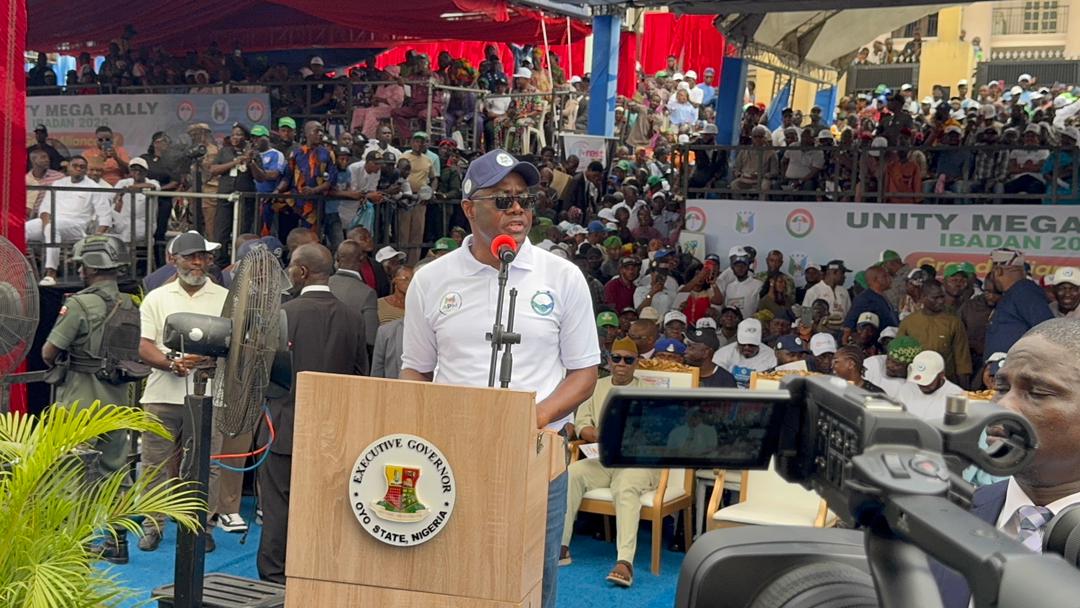
The presidential candidate of the Allied People’s Movement and Oyo State Governor, Seyi Makinde, has declared that he is confident of winning the 2027 presidential election, saying he has God and Nigerians on his side.

Makinde spoke on Sunday during a church service at the Church of Christ in Nations, Jos, Plateau State, where he said his presidential ambition was not backed by any political godfather but by God Almighty and Nigerians.

In a statement by his Director of Strategic Communications, Richard Ihediwa, on Sunday, Makinde said his ambition was driven by the need to reset Nigeria through effective leadership and address challenges in security, the economy, education and the socio-political system.

The statement read, “The APM presidential candidate specifically said that his aspiration is not backed by any political godfather but by God Almighty and the people of Nigeria.

“He expressed optimism that God would be merciful to Nigerians by providing the right leadership through the 2027 presidential election.

“According to Makinde, ‘When I said in Oyo State in 2018 that I would like to be governor, somebody asked me, ‘Governor of which Rotary District?’ I said Governor of Oyo State, and they asked, ‘With no godfather; nobody in politics who can stand in for you?’ I responded by saying, ‘Well, I have God the Father. And I became the Governor of Oyo State.

“This time around, we also have God the Father, and God will be merciful unto Nigeria, and He will show us mercy in this country.”

Makinde said his administration in Oyo State was guided by planning, transparency and accountability, with development road maps covering his two terms from 2019 to 2027.

He added that his Reset Nigeria Agenda, prepared ahead of the 2027 election, focuses on four key areas: security, the economy, education and the socio-political system.

The statement read, “While presenting the Reset Nigeria Manifesto to the leadership of the church, Makinde asked Nigerians to hold him accountable for the promises in the document.

“I want Nigerians to be able to hold me accountable, not just through promises but through documented commitments. Everything is written down in black and white, and I am prepared to be held accountable for everything contained in this document.”

Makinde urged Nigerians, particularly Christians, to participate in politics and get ready to enforce their will in the 2027 presidential election.

He said, “Please, get ready and participate. History is about to happen again.”

The President of COCIN, Rev. Dr Amos Mohzo, urged Makinde to address Nigeria’s major challenges, particularly worsening insecurity and economic hardship, while praying for his success in the 2027 presidential election.

Mohzo also encouraged the APM candidate to sustain his campaign, expressing hope that God’s will would prevail in his political journey.

See also  Coup controversy: Military tracks N45bn in NDDC

Makinde, who flagged off his presidential campaign in Bauchi State on Saturday, is in Jos for the party’s Plateau State rally scheduled for Monday at Rayfield Park.

The Independent National Electoral Commission has fixed January 16, 2027, for the presidential election.

Speaking during a live political programme on Jay FM radio station in Jos, ahead of the rally, Makinde said Nigeria needed a complete reset, not mere reform, to move forward.

Makinde identified the economy as the foremost priority, insisting that economic performance should be measured by the living conditions of ordinary Nigerians.

“Reform is possible when the good within a system outweighs the bad. At that point, you can say the system can be tweaked and improved. But when the good within the system accounts for only about 20 per cent of what you expect, then the best course of action may not be to tweak it.

“It is like your computer system. If it keeps hanging whenever you try to run a programme, the best course of action is not necessarily to keep tweaking the programme. You have a reset button. Basically, you shut down the system, reboot it and then have a clearer path to proceed with your programme.

“So, reform is not going to work within the environment we are in. I was not born a politician; I decided that I must participate because the future of millions of our people is involved and also for potentially the greatest black country on the face of the earth; their destiny is also involved.

“The economy must work for everybody. It is not about taking numbers out and saying external reserves have grown or quoting what the World Bank said about inflationary trends.

“What is the ordinary man on the street feeling? Are they able to feed themselves? If you cannot feel the impact of an improving economy at the street level, then the economy is not getting better,” he said.

He called for greater investment in skills acquisition, entrepreneurship, education and intensive production, arguing that Nigeria must create an enabling environment for businesses to thrive and provide employment opportunities for its youthful population.

Makinde also promised to decentralise Nigeria’s security architecture through the establishment of state police if elected president in 2027.

He said state police would enable governors to respond more effectively to security challenges in their respective states, adding that states willing and ready to establish the institution should be allowed to do so with appropriate safeguards.

The governor, who reiterated his long-standing support for state police, recalled that he had advocated the establishment of state police shortly after assuming office in 2019, following growing security concerns across the country.

See also  APC unveils 73-member National Convention Committee

“When I became governor, we already had security challenges in different parts of the country. We approached the late President Muhammadu Buhari towards the end of 2019 and said we should have state police.

“At that time, the argument was that some states were not even able to pay workers’ salaries. Now you want them to establish state police. They asked how they could do that when they were unable to pay their workers,” he said.

Makinde explained that governors in the South-West subsequently established the Western Nigeria Security Network, popularly known as Amotekun, as an alternative security arrangement pending the establishment of state police.

“Amotekun was a midway between having full-fledged state police and having nothing.

“If these operatives were only permitted to carry sticks, they could gather intelligence. They would be there; they could see what was happening and provide useful information.

“That was the compromise at the time, and I am happy to report that we have not had issues getting them to work with the federal security agencies. It has worked very well in our region,” he stated.

The governor acknowledged concerns that state police could become a tool in the hands of some governors to oppress citizens and political opponents, but maintained that appropriate safeguards could address such fears.

“Those concerns are legitimate because some people believe it could become a tool in the hands of state governors to oppress the people.

“But we have gone through this type of arrangement before. We do not all have to establish state police at the same time.

“Let the opportunity exist. If you think you are ready, you have ticked the boxes and put the safeguards in place, you should go ahead and secure your state,” he said.

Makinde further argued that Nigeria needed a security arrangement that reflected the realities of individual states, rather than relying entirely on a centralised structure.

He also linked insecurity to the absence of economic opportunities for young Nigerians, warning that failure to provide a clear future for the country’s growing youth population could worsen security challenges.

“Some of these young people are now getting involved in crime and criminality because we have not given them a path to the future.

“If you do not give opportunities to the coming generation, it is a recipe for bigger conflicts ahead of us,” he said.

The APM presidential candidate noted that Nigeria’s population was projected to exceed 300 million, with more than 70 per cent expected to be below 34 years, stressing the need for deliberate policies to harness the potential of young people.

See also  2027: Be wary of politicians with unrealistic promises, Makinde warns

Makinde also recalled his stance during the COVID-19 pandemic in 2020, when he declined to impose a total lockdown in Oyo State.

He said, “I was faced with an almost identical situation in 2020. Six months after we got into government, COVID hit. And we had a meeting, a National Economic Council meeting in Abuja. And the Vice President, who normally would chair the National Economic Council, came in and said, ‘Well, mandatorily, we can see what is happening around the world. All of you should go and lock down your states.’

“And I said, ‘Sir, I cannot lock down my state because I know people in my state who, if they don’t go out today, have no food to eat that night or even the following day. How are we going to look after these people?’

“So, we argued back and forth. Eventually, we agreed that it should be optional. If you think your state needs to be locked down, lock your state down.

“And I didn’t lock down my state. People criticised me at that time and said, ‘Well, he is going to kill the people in his state,’ and things like that. But we were dealing with science, data and logic. It wasn’t as if I had 100 per cent alignment within my own team as well.”

He added, “But something stood out clearly: the 1918 Spanish flu, which was almost similar to COVID. After that flu, people in temperate regions started having flu shots every year. We were not having flu shots here. Very well.

“We were going through from 1918 till 2020. So, this idea even came from the virology unit at the University of Ibadan.

“They said, ‘Well, we’re studying this. We need to manage things and all of that, and I said, ‘Well, some of our people would rather die of COVID than die of hunger because they know they can deal with hunger if they go out.

“So, we’ve done it before. We can do the same with state police, and it will help the security situation at the state level.”

On education, Makinde said he remained a firm believer in the vision of the late Chief Obafemi Awolowo on free education.

On how he intends to reinvigorate higher education to make institutions research hubs, Makinde said, “Well, you know, I kept saying that the first thing we will do is to let Nigerians know our situation sincerely. Don’t hide anything. Bring it forward, and the next thing we will do is to ensure that we have accountability.”

Source: punchng.com

FOLLOW US ON:

FACEBOOK

WHATSAPP CHANNEL

TWITTER

PINTEREST

TIKTOK

YOUTUBE

LINKEDIN

INSTAGRAM

Continue Reading

Trending