Connect with us

News

FG urges India to protect Nigerians in detention centres

Published

on

The Federal Government has called on India to ensure the welfare, dignity and protection of the fundamental human rights of Nigerians held in custodial centres across the country.

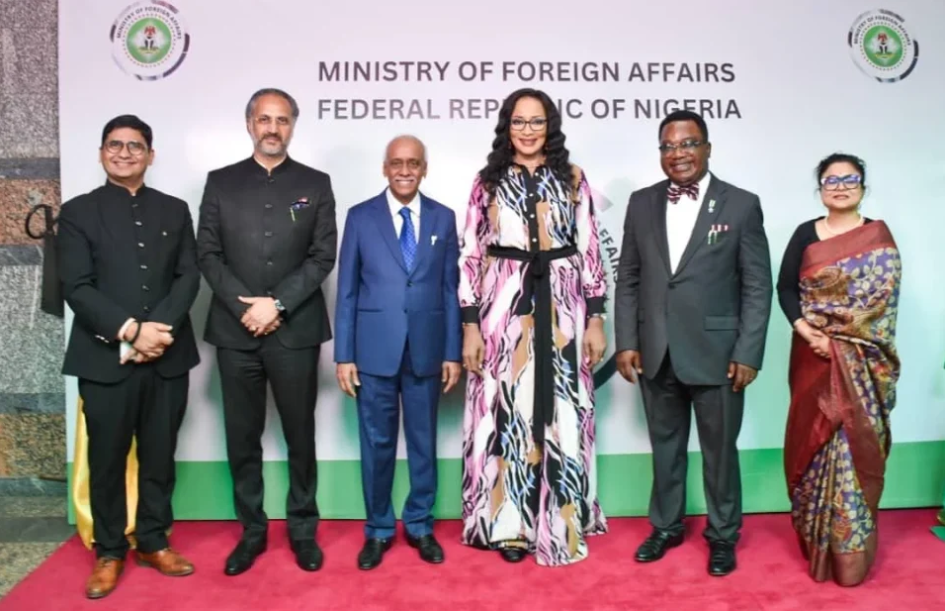
The Minister of Foreign Affairs, Ambassador Bianca Odumegwu-Ojukwu, made the appeal during a meeting with a joint high-level delegation of the National Human Rights Commissions of Nigeria and India at the Ministry of Foreign Affairs in Abuja.

According to a press statement issued on Thursday and signed by the Ministry of Foreign Affairs Spokesperson, Oluwafemi Adeniyi, the minister expressed concern over the treatment of Nigerians serving in custodial centres in India and called for appropriate attention to their welfare and human rights.

She said, “The MoU on Cooperation between the NHRCs is a timely initiative for the translation of the longstanding Nigeria-India relations into practical institutional cooperation on the promotion of human rights. There is the need to strengthen access to justice, improve complaint-handling mechanisms and protect the rights of persons in vulnerable circumstances, ensuring equitable access to essential support and services for them.

“Nigeria and India have an opportunity to contribute constructively to a more inclusive international human rights architecture, as members of the Global South.

“I call on the Indian government to ensure the humane and proper treatment of Nigerian citizens serving in custodial centres in the country, and that they receive appropriate attention to their welfare, dignity and fundamental human rights.”

Odumegwu-Ojukwu, added that the protection of vulnerable persons and access to justice should remain central to the growing human rights cooperation between both countries.

See also  Nigeria’s Juju Music Legend, Professor Y.K. Ajao, Dies at 72– Music Industry Mourns

The Minister’s appeal comes as Nigeria and India strengthened their human rights partnership through the signing of a Memorandum of Understanding between their respective National Human Rights Commissions.

The agreement is expected to promote institutional cooperation, technical exchanges and the sharing of best practices in human rights protection.

The minister described the agreement as a timely initiative for translating the longstanding relations between Nigeria and India into practical institutional cooperation.

She emphasised the need to strengthen access to justice, improve complaint-handling mechanisms and protect people in vulnerable circumstances, ensuring equitable access to essential support and services.

According to her, Nigeria and India have an opportunity to contribute constructively to a more inclusive international human rights architecture as members of the Global South.

She expressed Nigeria’s readiness to deepen engagement with India and other international partners in advancing human rights diplomacy and strengthening national and international human rights institutions.

The minister also expressed appreciation to United Nations member states for supporting Nigeria’s election to the Human Rights Council for the 2027–2028 term.

She reaffirmed Nigeria’s commitment to fulfilling its obligations under the United Nations Charter and the Universal Declaration of Human Rights, guided by the principles of objectivity, non-selectivity and constructive international engagement.

Earlier, the Executive Secretary of Nigeria’s National Human Rights Commission, Chief Anthony Ojukwu, described the MoU as an important framework for strengthening institutional cooperation and technical exchanges between the two countries.

He said the partnership would focus on improving complaint-management mechanisms, strengthening human rights compliance in security sector governance and promoting joint research on international law, human rights implementation and emerging issues.

See also  Presidency Gives Update On Edun’s Health Status

Ojukwu also stressed the importance of collaboration with the Ministry of Foreign Affairs in integrating international human rights standards into Nigeria’s treaty obligations and diplomatic frameworks.

In his remarks, the Chairperson of India’s National Human Rights Commission, Justice V. Ramasubramanian, highlighted the longstanding historical and diplomatic relations between both countries.

He noted that Nigeria and India shared similarities in population size, ethnic and religious diversity, cultural heritage and democratic aspirations.

Ramasubramanian described the MoU as an important step towards facilitating practical cooperation, institutional learning and capacity development through the exchange of experiences and best practices between the two human rights institutions.

The delegation was jointly led by Ojukwu and Ramasubramanian during the courtesy visit to the minister.

Source: punchng.com

FOLLOW US ON:

FACEBOOK

WHATSAPP CHANNEL

TWITTER

PINTEREST

TIKTOK

YOUTUBE

LINKEDIN

INSTAGRAM

Continue Reading
Click to comment

Leave a Reply

Your email address will not be published. Required fields are marked *

News

Caine Prize finds no evidence of AI use in Zimbabwean’s £10,000-winning story

Published

on

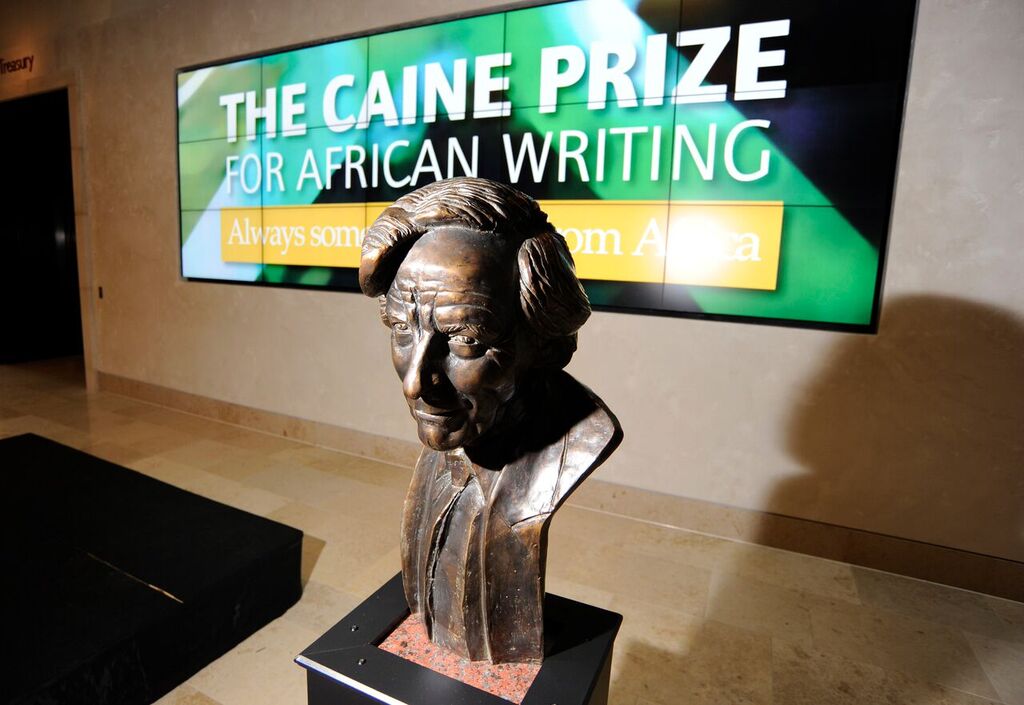
The Caine Prize for African Writing has found no evidence of generative AI use in Zimbabwean writer Simbarashe Kundizeza’s award-winning story, ‘The Blue Fighter’, confirming that it was written by a human.

The award body also upheld Kundizeza’s £10,000 ($13,000) prize, confirming him as the winner of the 2026 edition.

According to a report by the BBC on Wednesday, the accusation follows an article published in a US magazine, ‘The Atlantic,’ titled, “Yet Another Literary Prizewinner Seems to Be AI,” written by Vauhini Vara.

“The prestigious Caine Prize, announced last week, went to a story with many red flags,” the article stated in the header.

She alleged that Kundizeza’s latest story was AI-generated, citing results from an AI-detection tool, Pangram.

However, in a tweet posted via the award body’s X handle on Wednesday, the Chair of the Caine Prize’s board of trustees, Ellah Wakatama, noted that Kundizeza stands as the 2026 award winner after internal review.

She said the organisation adopted a “human-centred” approach in investigating the allegations, which she said were examined “carefully and fairly.”

Wakatama added that the organisation conducted interviews with the Zimbabwean writer, the 2026 judging panel, and the Shallow Tales review where the story was first published, alongside “independent and expert-led metadata analysis of drafts written by the author.”

The board’s chairman stated, “The Board of Trustees of the Caine Prize for African Writing has concluded its internal review of The Blue Fighter, and we confirm that the award stands, and Simbarashe Stein Kundizeza is the 2026 winner of the Caine Prize for African Writing. The review opened on the 11th of October 2026 after an article written by Vauhini Vara and published in The Atlantic suggested that the winning story may have been written using generative AI.

See also  Poor maintenance culture undermining Nigeria’s development, says Okonjo-Iweala

“When concerns were raised, we have a duty as an organisation to look at them carefully and fairly. However, as the Caine Prize and its award have people at the centre – writers, judges, readers, and publishers – we chose to take a human-centred approach to the investigation.

“Our review included interviews with the author, the 2026 judging panel, and the Shallow Tales review where the story was first published. It also included independent and expert-led metadata analysis of drafts written by the author. And from our detailed investigation, we feel the evidence is clear: The Blue Fighter was human-written.

“We now look forward to awarding and celebrating Simbarashe Stein Kundizeza, the winner of the 2026 prize for his story The Blue Fighter, before the end of the year.”

This latest allegation of AI use against a writer comes after Canadian-Haitian author Thélyson Orélien was accused in October 2026 of using AI to write his breakthrough debut novel about migration “C’etait ca ou mourir” (“It Was Either That Or Die”), which was set to be translated into more than 20 countries.

The book was withdrawn from the shortlist for France’s top book prize, the Goncourt, after tests with AI detector Pangram indicated a 100-per cent probability it contained computer-generated text.

“They say that ‘C’etait ca ou mourir’ was written by an artificial intelligence. That’s slander and heresy,” Orelien wrote in a statement sent exclusively to AFP.

BBC reports that Vara’s allegations followed “rows over other literary prizes this year, in particular the Commonwealth Short Story Prize, which was won by Trinidadian writer Jamir Nazir despite allegations that he had used AI, and the withdrawal of Canadian-Haitian author Thélyson Orélien from France’s top literary award, the Goncourt, over allegations he used AI for his first novel, which he denies.”

See also  Reps urge teaching hospitals to prioritise research

On October 13, 2026, Kundizeza clarified in a post on his X handle that the story had no element of AI.

“For the avoidance of doubt, I wrote “The Blue Fighter.” I did not use generative AI to write it. It is entirely my own work.

“This story did not appear out of nowhere; it has a concrete, documented history,” he wrote

Kundizeza added that the story was inspired by a poem written by Vangile Gantsho, titled ‘My father’s hand,’ which he read during his residency in Ghana. The poem, he said, inspired him to write about his “family’s experiences in Zimbabwe‚ including my father leaving his accounting profession and the hardships my family faced as a result․”

As seen on Caine Prize’s website publication, ‘The Blue Fighter’ story “follows Tinashe, a young boy whose family falls into financial hardship after his father leaves his profession to pursue his passion for building fish tanks. As money becomes increasingly scarce, Tinashe’s mother is forced to choose between her family’s survival and her husband’s dream. A powerful story that explores fatherhood, ambition, and financial hardship while examining the complicated ways in which family circumstances can shape the people within them.”

However, Vara had told the BBC’s ‘Front Row programme’ that, using her own judgment, she found out that every other previous Caine Prize-winning story she had put through Pangram “came out as 100% human.”

“I also found an earlier 2021 story by the same author. I ran that through Pangram. It also came out as 100% human. And what struck me was that was a really good, interesting story. And tonally, it’s so different from this story, as if the same person hadn’t written both,” she said.

See also  Nigeria’s Juju Music Legend, Professor Y.K. Ajao, Dies at 72– Music Industry Mourns

Kundizeza, in his tweet, cautioned that while the article “seems to question the story’s authorship by comparing its style to my other writing; as writers, we develop recurring interests, but we don’t produce work from a single fixed template.”

The accusation had caused a social media uproar, the BBC report said, including comments from African writers with suggestions that such accusations are primarily being made against non-white writers.

The Founder of The Republic magazine, Wale Lawal, wrote on his X handle, quoting The Atlantic’s post, “This is crazy, racist and wildly unethical.”

Zimbabwean writer Joe Ruzvidzo said on X that it was time “to fight this literary stop-and-frisk” against “ALL black/African writers.”

Nigerian publisher Modupe Daramola wrote on X, “The Atlantic, this is extremely shameful. Clearly targeted and very malicious. Sinister. I don’t know what to say.”

The controversy has reignited debate over the reliability of AI-detection tools in determining authorship, particularly in literary competitions where allegations of AI use can affect writers’ reputations and the credibility of award-winning works.

Source: punchng.com

FOLLOW US ON:

FACEBOOK

WHATSAPP CHANNEL

TWITTER

PINTEREST

TIKTOK

YOUTUBE

LINKEDIN

INSTAGRAM

Continue Reading

News

Lagos Assembly confirms Tayo-Makanjuola as auditor-general, read details

Published

on

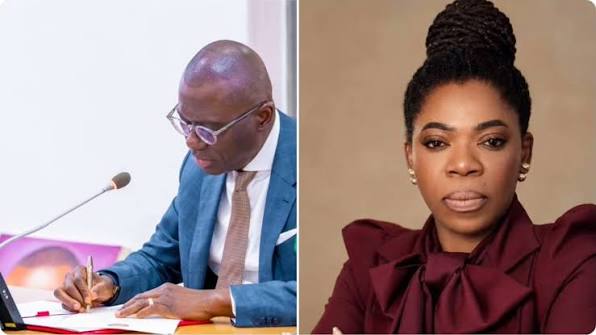
The Lagos State House of Assembly has confirmed Dr. Olufunke Tayo-Makanjuola as the substantive Auditor-General of Lagos State following her nomination by Governor Babajide Sanwo-Olu.

The confirmation, granted on Monday, marks a new milestone in her career in the Lagos State Public Service.

According to a statement issued by the Office of the State Auditor-General on Wednesday, Tayo-Makanjuola previously served as Head of Directorate, Government Accounts, before she was nominated as Acting State Auditor-General.

She is a seasoned finance professional with extensive experience in public financial management and an academic background that includes a Doctorate in Business Administration (DBA) in International Business from Lagos State University, Ojo.

Tayo-Makanjuola is also a Fellow and member of several professional bodies, including the Institute of Chartered Accountants of Nigeria (ICAN), Association of National Accountants of Nigeria (ANAN), Chartered Institute of Taxation of Nigeria (CITN), Chartered Institute of Directors (CIoD) and the Chartered Institute of Forensics and Professional Investigators (CFIP), USA, among others.

The Office of the State Auditor-General said her confirmation recognises her professional experience and background, as well as her capacity to provide leadership in advancing the mandate of the office.

The management and staff of the office congratulated her on the confirmation and wished her a successful tenure.

The office also reaffirmed its commitment to supporting her leadership in strengthening public sector auditing, promoting accountability and transparency, and ensuring the prudent management of public resources in Lagos State.

PUNCH Online had reported that Sanwo-Olu had nominated her as the Acting State Auditor-General, subject to confirmation by the Lagos State House of Assembly.

See also  Swiss museums return 18 Benin artefacts to Nigeria

Tayo-Makanjuola succeeds Mr. Adetola Muyiwa John, who previously served as Lagos State Auditor-General before his redeployment as Accountant-General and Permanent Secretary, State Treasury Office, in March 2026.

His redeployment followed the statutory retirement of the then Accountant-General, Dr. Abiodun Muritala. Following Adetola’s movement to the State Treasury Office, Tayo-Makanjuola was appointed Acting Auditor-General on July 28, 2026, pending confirmation by the Lagos State House of Assembly.

Source: punchng.com

FOLLOW US ON:

FACEBOOK

WHATSAPP CHANNEL

TWITTER

PINTEREST

TIKTOK

YOUTUBE

LINKEDIN

INSTAGRAM

Continue Reading

News

Arm Amotekun to tackle kidnappers, Afenifere tells S’West govs

Published

on

The pan-Yoruba socio-political organisation, Afenifere, has called for stronger security measures across the South-West following a series of kidnappings and violent attacks in the region, including the recent abduction of 10 travellers along the Ijebu-Ode–Ibadan Road in Ogun State.

In a statement issued in Ibadan, the Oyo State capital, on Wednesday, the organisation’s National Publicity Secretary, Jare Ajayi, expressed concern over the abduction of the travellers, who were reportedly travelling from Ijebu-Ode to Ibadan, with their abductors demanding a ransom of N25m.

The organisation noted that while it is relieved that the victims were ultimately rescued or released, “we are deeply saddened that these disheartening incidents are occurring at all, as they remind us that much still needs to be done to secure the people and ensure their safety.”

To permanently end banditry, kidnapping, and allied criminalities in the region, the Afenifere spokesman proposed structural, legal and operational measures.

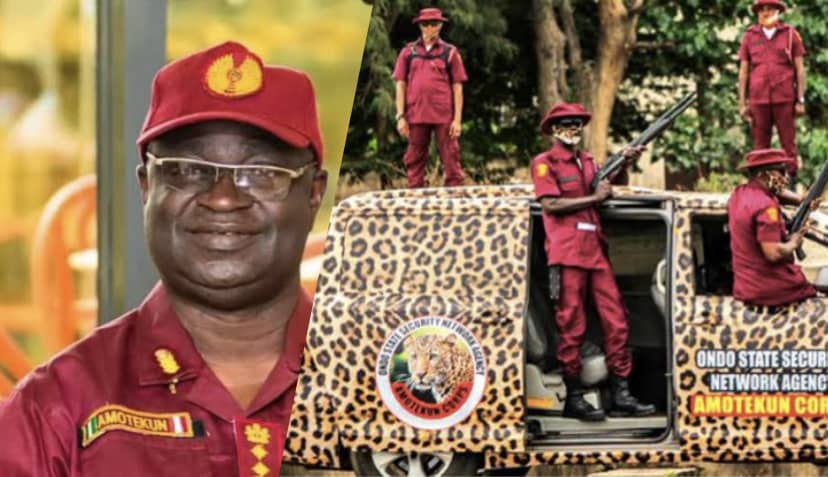
He said, “South-West governments should acquire modern, high-grade weapons for the Western Nigeria Security Network codenamed Amotekun so its personnel can match the firepower of armed criminals.

“Official security agencies and local outfits should be integrated and structured into tactical squads to effectively patrol ungoverned woodlands and forests.

“Governments should procure and deploy drones, modern communication gadgets and rapid-response systems to monitor forests and border areas.

“Full financial autonomy should be granted to local government councils to enable them to directly fund grassroots policing and maintain regular patrols in vulnerable rural communities.

“Mechanised farming and youth vocational programmes should be established to provide gainful employment and curb criminal recruitment. Strict judicial penalties must be enforced without compromise to deter banditry and violent crimes.

See also  Google is finally letting users to change their Gmail address

“Effective bottom-up reporting chains should be created so residents can immediately report suspicious movements to ward leaders, community heads, and security agencies.

“Obas, Baales, community leaders and security agencies must work proactively to coordinate neighbourhood watch groups, screen new arrivals in rural settlements and maintain local early-warning systems.”

The organisation stressed that among the victims of recent abduction was Dapo, who had just completed his National Youth Service Corps scheme in Edo State.

It added that the incident occurred just weeks after prospective NYSC members travelling from Ibadan were abducted in Imo State on October 1, 2026.

Afenifere said, “Similarly, the abduction at FRIN—which is also located along the Ibadan–Ijebu-Ode highway—followed a comparable incident at the same location just a few months prior.

“Other recent violent incidents cited in the statement include: the beheading of a farmer in Itesiwaju Local Government Area of Oyo State; the kidnapping of Prince Michael Folarin in Igbeti, Oyo State; the abduction of a 33-year-old poultry farmer, Mr Ooreoluwa Osonuga, in Ogun State; the abduction of Honourable Debo Farounbi in Ora, Osun State and a string of ongoing kidnappings across parts of Kwara, Kogi, and Niger States.”

Ajayi emphasised that the current security situation in the heartland of Yorubaland demands concerted efforts from Federal and State Governments, security agencies, and local communities.

He observed that existing regional initiatives have yet to adequately curb the menace, referencing Operation Kosaye—recently launched by the Ogun and Lagos State governments—alongside tripartite security arrangements between Lagos, Ogun, and Oyo States, and joint governors’ security meetings such as the one held in Ibadan on November 25, 2025.

See also  Presidency Gives Update On Edun’s Health Status

“While these efforts are acknowledged, the fact that insecurity, particularly kidnapping, persists on our land suggests that current measures are not enough,” it added.

Afenifere stressed that there is a need for more focused, strategic, and better-coordinated actions from the authorities and security agencies in conjunction with local communities across the region.

The statement also referenced recent remarks by the Sultan of Sokoto, Alhaji Muhammad Sa’ad Abubakar III, who warned at last Saturday’s Barewa Old Boys’ Association lecture in Gombe that the high number of out-of-school children in Northern Nigeria poses a severe threat to national security.

Afenifere said, “While speaking on the theme, “The Scourge of Out-of-School Children in Nigeria and the Implications for National Security and National Development,” the Sultan echoed his earlier warning from December 9, 2024, at the graduation ceremony of 1,897 Almajiri and 1,087 out-of-school adolescent girls at the Sultan Maccido Institute of Quranic and General Studies in Sokoto.

“Represented on that occasion by the Ciroma of Sokoto, Alhaji Aliyu Abubakar, the Sultan had decried the neglect of young children under the Almajiri system, noting that their vulnerability makes them easy targets for criminal recruitment in exchange for food, and urged traditional rulers to take a stand against street begging.”

Consequently, Afenifere called on governments at all levels to prioritise public education and introduce welfare programmes that take children off the streets, thereby cutting off the recruitment pipeline for bandits and criminals.

Source: punchng.com

FOLLOW US ON:

FACEBOOK

WHATSAPP CHANNEL

TWITTER

PINTEREST

TIKTOK

YOUTUBE

LINKEDIN

INSTAGRAM

Continue Reading

Trending