Connect with us

Business

NBS report reveals Inflation drops to 14.05%, read details

Published

on

Nigeria’s headline inflation rate declined to 14.06 per cent in October 2026 from 14.63 per cent in September, marking the fifth consecutive month of moderation, although food inflation remained elevated at 19.13 per cent.

The latest figure represents a decline of 0.57 percentage points from September and 4.91 percentage points from the 18.97 per cent recorded in October 2025.

This was disclosed in the October 2026 Consumer Price Index report released on Monday by the National Bureau of Statistics.

The report read, “In October 2026, the Headline inflation rate stood at 14.06 per cent, down from 14.63 per cent in September 2026 and stood at 18.97 per cent in the same month of the preceding year (October 2025).”

Despite the moderation in annual inflation, the report showed that consumer prices increased faster on a monthly basis, indicating that inflationary pressures persisted.

Month-on-month headline inflation rose to 0.43 per cent in October from 0.06 per cent in September, an increase of approximately 0.37 percentage points.

The NBS explained, “This means that in October 2026, the rate of increase in the average price level was higher than the rate of increase in the average price level in September 2026.”

The Consumer Price Index increased to 147.0 points in October from 146.4 points in September, reflecting a continued rise in the general price level.

Further analysis showed that food and non-alcoholic beverages remained the largest contributors to annual headline inflation, accounting for 5.63 percentage points.

Restaurants and accommodation services followed with 1.82 percentage points, transportation contributed 1.50 percentage points, while housing, water, electricity, gas and other fuels accounted for 1.18 percentage points.

See also  Nigeria pledges to strengthen bilateral cooperation with India

Education and health services contributed 0.87 and 0.85 percentage points, respectively.

Food inflation stood at 19.13 per cent year-on-year in October, compared with 16.30 per cent in October 2025, representing an increase of 2.83 percentage points.

However, on a month-on-month basis, food inflation stood at -0.75 per cent, compared with -1.55 per cent in September, indicating that average food prices declined for the second consecutive month, although at a slower pace.

The bureau explained, “This can be attributed to the rate of change in the average prices of the following products: Vegetable Oil (75cl), Titus Sardines (125g), Green Peas (Prepacked), Mackerel Frozen, Croakers (Apo), Rice Local, Catfish Fresh, Beef tripes, Palm oil (75cl), Millet Flour (sold loose), etc.”

The average annual food inflation rate for the 12 months ending October stood at 15.98 per cent, compared with 26.47 per cent in the corresponding period of 2025.

Core inflation, which excludes volatile agricultural produce and energy prices, declined to 10.78 per cent from 21.25 per cent in October 2025.

On a monthly basis, core inflation fell by 0.53 per cent, reversing the 1.11 per cent increase recorded in September.

Other inflation indicators showed that farm produce prices increased by 18.38 per cent year-on-year, while energy inflation stood at 12.30 per cent. Services inflation was 11.73 per cent, goods inflation reached 13.58 per cent, and imported food inflation stood at 8.39 per cent.

Urban inflation stood at 14.84 per cent year-on-year, compared with 12.17 per cent in rural areas.

On a monthly basis, urban inflation moderated to 0.43 per cent from 0.53 per cent, while rural inflation increased to 0.18 per cent from minus 0.89 per cent.

See also  CAC processes 10,000 daily registrations after AI rollout

Across the states, Imo recorded the highest annual headline inflation at 28.66 per cent, followed by Enugu at 22.81 per cent and Kaduna at 21.55 per cent.

Taraba recorded the lowest rate at 6.12 per cent, followed by Sokoto at 6.68 per cent and Ekiti at 7.64 per cent.

For food inflation, Ondo recorded the highest annual rate at 31.74 per cent, followed by Lagos at 31.43 per cent and Imo at 29.75 per cent. Nasarawa recorded the lowest at 3.70 per cent.

The NBS cautioned, “The CPI is weighted by consumption expenditure patterns that vary across States and locations,” adding that differences in consumption baskets could make interstate comparisons misleading.

An analysis of inflation trends in 2026 showed that headline inflation declined from 15.15 per cent in December 2025 to 15.10 per cent in January and 15.06 per cent in February.

However, it increased to 15.38 per cent in March, 15.69 per cent in April and 15.93 per cent in May, before easing to 15.91 per cent in June.

The downward trend continued in July at 15.43 per cent, August at 15.39 per cent and September at 14.63 per cent, before reaching 14.06 per cent in October.

Consequently, inflation has declined by 1.87 percentage points from its May peak, although the continued increase in the general price level means households still face higher living costs.

The latest figures come ahead of the Central Bank of Nigeria’s Monetary Policy Committee meeting scheduled for November 24, following its decision in September to reduce the benchmark interest rate to 23 per cent.

See also  FG tells marketers to reflect global oil price drop in petrol prices

The sustained moderation in annual inflation could strengthen expectations of further monetary easing, although persistent food price pressures and the acceleration in monthly headline inflation remain concerns for policymakers.

Source: punchng.com

FOLLOW US ON:

FACEBOOK

WHATSAPP CHANNEL

TWITTER

PINTEREST

TIKTOK

YOUTUBE

LINKEDIN

INSTAGRAM

Continue Reading
Click to comment

Leave a Reply

Your email address will not be published. Required fields are marked *

Business

Cornerstone Insurance’s profit falls amid 77% revenue growth

Published

on

Cornerstone Insurance Plc recorded a 77 per cent increase in insurance revenue to N43.31bn in the nine months ended September 2026, but its profit after tax declined by 8.5 per cent amid higher foreign exchange losses and weaker investment gains.

The insurer disclosed this in its unaudited financial results for the nine months ended 30 September, 2026, filed with the Nigerian Exchange Limited.

Profit after tax fell to N7.41bn from N8.10bn recorded in the corresponding period of 2025, while profit before tax declined to N7.91bn from N8.32bn.

The decline in earnings came despite growth in the company’s core insurance operations, with insurance service results rising by 8.09 per cent to N11.75bn from N10.87bn a year earlier.

However, net insurance and investment results declined by 4.4 per cent to N13.50bn from N14.12bn in the corresponding period of 2025.

Cornerstone attributed the decline to higher net foreign exchange losses and lower fair value gains on its investment portfolio compared with the previous year’s performance.

Earnings per share also weakened to 41 kobo from 45 kobo in the corresponding period.

The company’s balance sheet, however, strengthened during the period, with total assets rising by 5.75 per cent to N149.14bn as of 30 September, 2026, from N141.03bn at the end of December 2025.

Shareholders’ funds increased by 10.3 per cent to N80.36bn from N72.86bn over the same period, supported by retained earnings and favourable fair value movements on investments.

The insurer said it remained focused on expanding its underwriting business, strengthening its capital position and implementing a new group structure that separates its life and general insurance businesses in line with regulatory requirements.

See also  TCN refutes Kaduna Electric’s claim on Jos power supply

Cornerstone Insurance, incorporated in 1991 and listed on the Nigerian Exchange in 1997, provides life and general insurance services to individual and corporate customers.

Source: punchng.com

FOLLOW US ON:

FACEBOOK

WHATSAPP CHANNEL

TWITTER

PINTEREST

TIKTOK

YOUTUBE

LINKEDIN

INSTAGRAM

Continue Reading

Business

Sovereign Trust Insurance’s assets rise 48% to N41.78bn, read details

Published

on

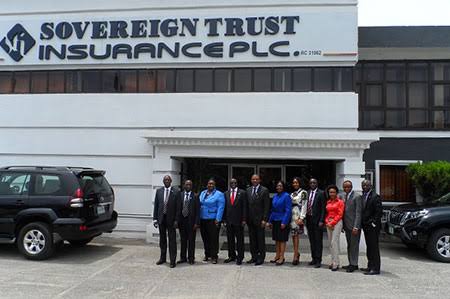
Sovereign Trust Insurance Plc increased its total assets by 48 per cent to N41.78bn as of September 2026, from N28.31bn at the end of December 2025, supported by growth in cash holdings, financial investments and reinsurance contract assets.

The insurer disclosed this in its unaudited financial statements for the nine months ended 30 September, 2026, filed with the Nigerian Exchange.

Cash and cash equivalents rose by 36.3 per cent to N15.94bn from N11.69bn, while investments in financial assets measured at fair value through profit or loss increased to N4.99bn from N2.07bn.

Reinsurance contract assets recorded one of the largest increases, rising to N9.90bn from N3.95bn, representing a 150.7 per cent increase.

The company’s statutory deposit also rose to N1.5bn from N315m, while property, plant and equipment increased to N3.08bn from N2.70bn.

The balance sheet expansion coincided with a return to profitability, as the insurer posted a profit after tax of N1.04bn in the nine months ended September 2026, compared with a N100.53m in the corresponding period of 2025.

Profit before tax increased to N1.23bn from N171.67m a year earlier.

The improvement in earnings came despite a decline in insurance revenue, which fell by 21.4 per cent to N31.53bn from N40.13bn in the corresponding period of 2025.

Insurance service expenses declined by 24.9 per cent to N13.75bn from N18.31bn, while the insurance service result stood at N1.69bn from N1.70bn.

However, net expenses from reinsurance contracts held remained high at N16.09bn, although they declined from N20.12bn in the previous year.

Investment returns increased to N3.64bn from N1.53bn, supported by higher investment income and fair value gains on financial assets.

See also  TUC urges subsidy for Dangote, modular refineries to lower fuel costs

Shareholders’ funds rose to N21.71bn from N15.66bn at the end of December 2025, partly supported by N5.02bn raised through the issuance of share capital during the period.

Insurance contract liabilities also increased to N14.09bn from N6.50bn, reflecting higher obligations associated with the company’s insurance business.

Sovereign Trust Insurance provides general insurance and risk management services to individual and corporate customers.

Source: punchng.com

FOLLOW US ON:
FACEBOOK

WHATSAPP CHANNEL

TWITTER

PINTEREST

TIKTOK

YOUTUBE

LINKEDIN

INSTAGRAM

Continue Reading

Business

Telcos adopt equipment reuse to reduce emissions, read details

Published

on

Telecom operators are increasingly adopting equipment reuse and refurbishment to reduce network investment costs, limit waste and cut emissions as the industry faces pressure to meet its net-zero target by 2050.

The shift is moving operators away from the traditional practice of replacing equipment during network upgrades towards extending the lifespan of existing infrastructure, according to a Research Analyst at GSMA Intelligence, Muskan Gadodia.

In an article published on the GSMA website, Gadodia reported that the world’s 10 largest mobile network operators by subscriber base had introduced or supported more than 500 unconventional sustainability initiatives since 2020, either independently or through partnerships.

She identified equipment reuse, energy management, smarter procurement, redesigned network sites, environmental restoration and community clean-energy partnerships as six areas in which operators were expanding their sustainability efforts beyond conventional measures.

Under the equipment reuse approach, Telefónica’s MAIA platform and Orange’s OSCAR programme are helping to extend the lifespan of network equipment through reuse and refurbishment. According to Gadodia, the initiatives can reduce waste, lower capital requirements and mitigate supply-chain risks.

The development is also drawing equipment manufacturers into operators’ sustainability programmes. Orange’s OSCAR programme, for instance, has established a formal refurbishment partnership with Nokia, reflecting the growing role of suppliers in efforts to extend the useful life of telecommunications infrastructure.

Gadodia said achieving net-zero emissions by 2050 remained one of the industry’s biggest challenges, despite operators’ investments in network efficiency and renewable energy.

“Achieving net-zero emissions by 2050 remains one of the telecom industry’s biggest challenges. Most mobile network operators are pursuing this goal through traditional measures such as improving network energy efficiency and increasing the use of renewable energy,” the analyst wrote.

Those measures alone might not be sufficient to close the industry’s remaining emissions gap, prompting operators to explore additional initiatives involving infrastructure, energy management and environmental restoration.

See also  Elon Musk Reacts as Nigeria Makes Top 10 List of Countries Contributing to Global GDP

The analysis also highlighted efforts to turn telecommunications infrastructure into energy assets. Finland’s Elisa is using backup batteries at base stations in a virtual power plant model to support electricity grid balancing, while Deutsche Telekom is deploying waste heat from network facilities.

Other operators are incorporating environmental considerations into procurement decisions. Telefónica, for example, has introduced internal carbon pricing into its procurement processes, taking into account energy consumption, emissions and lifetime operating costs alongside purchase prices.

In Africa, Airtel Africa’s lean-site model in Nigeria was cited as an example of how operators are redesigning network infrastructure to reduce operational requirements. Japan’s NTT DOCOMO also operates a self-powered hydropower base station.

The sustainability drive extends to environmental monitoring and community energy projects. Orange Business and Tēnaka are collaborating on coral reef monitoring, while Vodafone has an environmental monitoring initiative in Scotland. In Kenya, Safaricom’s partnership with Sistema.bio is helping farmers access biodigesters through mobile-enabled payments and loyalty mechanisms.

The GSMA’s Mobile Net Zero report showed that the mobile industry’s operational emissions fell by eight per cent between 2019 and 2023, even as data traffic quadrupled. However, the industry needs to reduce emissions by 7.5 per cent annually by 2030, more than twice the average annual rate achieved so far, to reach net zero by 2050.

Gadodia said the unconventional initiatives were designed to complement, rather than replace, network modernisation and renewable energy adoption, as operators seek to reduce emissions across their wider operations and supply chains.

Source: punchng.com

FOLLOW US ON:

FACEBOOK

WHATSAPP CHANNEL

TWITTER

PINTEREST

TIKTOK

YOUTUBE

LINKEDIN

INSTAGRAM

See also  Dangote blames marketers, IOCs for Lamu refinery protests

Continue Reading

Trending