Connect with us

News

CJN reveals that laws alone can’t protect Nigerian children, read details

Published

on

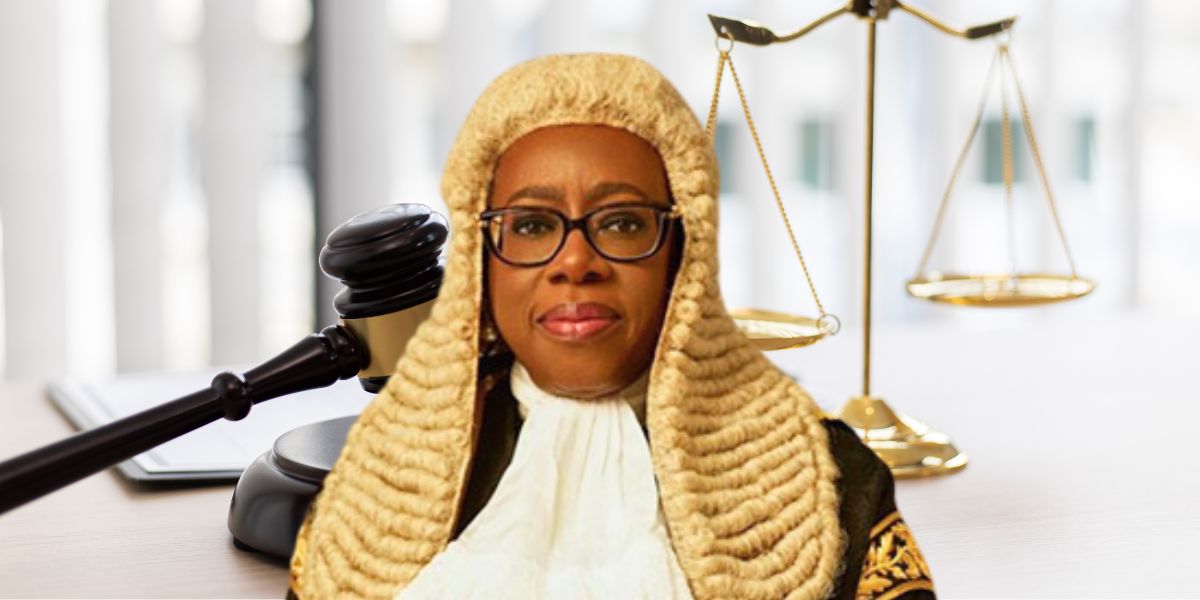
The Chief Justice of Nigeria, Justice Kudirat Kekere-Ekun, has warned that legislation alone cannot protect Nigerian children from abuse, exploitation, neglect and other forms of violence, urging stronger enforcement of child protection laws.

She said the effectiveness of the Child Rights Act 2003 depended on how consistently its provisions were implemented to protect children in their daily lives.

The CJN spoke on Friday at the inaugural conference of the Nigerian Association of Family Court Judicial Officers, Magistrates and Other Practitioners, organised to commemorate the 2026 United Nations World Children’s Day in Abuja.

Represented by a Supreme Court Justice, Jummai Sanke, SAN, Kekere-Ekun said Nigeria had established an important legal framework for protecting children’s rights but needed coordinated action by relevant institutions to translate the provisions into practical safeguards.

“In Nigeria, the Child Rights Act 2003 provides an important legal framework for the protection and advancement of children’s rights. Its recognition of the best interests of the child as a primary consideration in all actions concerning children establishes a principle that must guide our laws, policies, institutions and decisions.

“However, the existence of legislation, important as it is, does not by itself guarantee the protection of children. The real measure of our commitment lies in how effectively these rights are respected, protected and enforced in the daily lives of children,” the CJN said.

She identified child abuse, neglect, sexual exploitation, trafficking, child labour, early and forced marriage, abandonment and denial of access to education and healthcare as persistent threats to children’s welfare.

The CJN said the judiciary had a significant responsibility to ensure that children appearing before courts as victims, witnesses or children in conflict with the law were treated with dignity, sensitivity and understanding.

See also  UK to replace paper documents with eVisas from February 25

She called for child-friendly judicial proceedings that protected children’s privacy, encouraged their participation and took account of their age, maturity and emotional circumstances.

“Where a child has come into conflict with the law, the emphasis should, where appropriate, be on rehabilitation and reintegration rather than measures that permanently undermine the child’s prospects,” she said.

Kekere-Ekun also called for more training for judicial officers in trauma-informed approaches, handling child witnesses, emerging forms of exploitation and the implications of digital technology.

She said child protection required collaboration among government institutions, law enforcement agencies, social welfare services, schools, healthcare providers, legislators, families and civil society organisations.

“A child who has suffered abuse should not have to navigate a fragmented system in search of help,” she said.

The CJN urged participants to identify practical solutions to child protection challenges and strengthen institutions to ensure that children’s rights guaranteed by law translated into meaningful protection.

She said the true measure of commitment to children’s rights would be seen in children protected from abuse, girls allowed to remain in school, children whose voices were heard in custody proceedings and young people given opportunities for rehabilitation.

The Attorney-General of the Federation and Minister of Justice, Lateef Fagbemi, SAN, also acknowledged gaps in the implementation of child protection laws, disclosing that the Federal Government was reviewing the Child Rights Act 2003 to address emerging challenges.

He said the review had culminated in a draft amendment bill scheduled for stakeholder validation on November 24, ahead of further steps towards its finalisation and enactment.

See also  Stop Deceiving Nigerians By Asking Tinubu To Find Oyo Victims – Mbaka Carpets Makinde

Fagbemi said the challenge confronting Nigeria was not the absence of laws but the failure to effectively implement them.

“The pressing challenge before us is not the absence of laws, but the gap in their implementation. Across the country, too many children still face realities that threaten their safety and stifle their potential.

“Bridging this gap demands sustained political will, coordinated institutional action, and a readiness to adapt our systems to the evolving vulnerabilities of our children,” he said.

The minister said the Federal Ministry of Justice was driving reforms to strengthen the country’s child justice system, adding that it had supported the development of Legal Aid Guidelines and Prosecutors’ Guidelines for Handling Cases of Children in Contact with the Law.

He said the guidelines were designed to guarantee quality legal representation and enforce child-sensitive prosecution standards nationwide.

Fagbemi also called for stronger safeguards against cyberbullying, digital exploitation, harmful online content and breaches of children’s privacy.

He urged stakeholders to ensure that the outcome of the conference went beyond communiqués and produced measurable improvements in courtrooms, policies and frontline services.

Earlier, the President of NAFCJOMP, Justice Eberechi Suzette Nyesom-Wike, said the association was committed to advancing children’s rights, protection and welfare through stronger family court practice and a child-sensitive administration of justice.

She said the association, registered with the Corporate Affairs Commission in January 2026, brought together judicial officers, magistrates, prosecutors, social welfare officers, advocates, law enforcement personnel and other child protection practitioners across the 36 states and the Federal Capital Territory.

Nyesom-Wike said the association’s mission was to promote children’s best interests by strengthening family court practice and supporting the effective administration of justice.

See also  World Polio Day: Sokoto, UNICEF renew push to end polio in N’West

“Among other things, our objectives are to promote compliance with child protection laws by advocating for the implementation of policies related to child welfare, including education, healthcare, and social security.

“We seek to pursue the successful implementation of the Child Rights Act and laws of the sub-nationals, in ensuring that the Nigerian child suffers no detriment in any circumstance,” she said.

She said the association also sought to promote professional development and collaboration among family justice and child protection practitioners to ensure consistent standards in family and juvenile court practice.

Nyesom-Wike said NAFCJOMP, in collaboration with its partners, facilitated access to counselling, legal aid and medical support through a referral system.

“This reflects our conviction that protecting children requires not only sound laws and effective courts, but also coordinated support that meets children’s needs in practice,” she said.

She said the conference would provide an opportunity for stakeholders to strengthen their professional community, deepen collaboration across disciplines and develop practical approaches to challenges confronting children and families.

The Speaker of the Children’s Parliament, Miss Progress Umoh, also made a case for Nigerian children, while participants drawn from secondary schools across the Federal Capital Territory spoke on issues affecting their rights and welfare.

The conference, themed “My Day. My Rights. My Future,” brought together judicial officers, legal practitioners, policymakers, child protection professionals, civil society organisations and children to examine child protection, access to justice, rehabilitation and children’s participation in matters affecting them.

Continue Reading
Click to comment

Leave a Reply

Your email address will not be published. Required fields are marked *

News

IG appoints female AIG to oversee Bayelsa, Rivers

Published

on

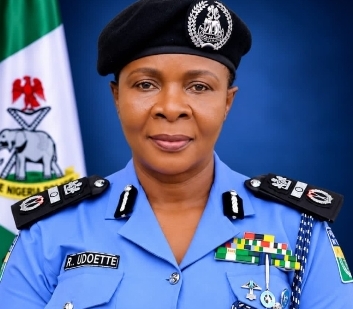
The Nigeria Police Force has appointed Assistant Inspector-General of Police (AIG) Regina Udoette as the new Zonal Commander of Zone 16, comprising Bayelsa and Rivers states, making her the first female officer to occupy the position.

Udoette’s appointment followed the retirement of the immediate past Zonal Commander, AIG Abubakar Zubairu.

The appointment was approved by the Inspector-General of Police, IGP Olatunji Disu, who named the senior police officer to take over the leadership of the zone.

A Saturday statement issued by the Zonal Police Public Relations Officer, SP Gunn Emonena, said the new AIG was from Ifuho village in Ikot Ekpene Local Government Area of Akwa Ibom State.

According to the statement, Udoette was commissioned into the Nigeria Police Force as a Cadet Assistant Superintendent of Police in 1992.

She holds a Bachelor of Arts degree in Communication Arts and a master’s degree from the University of Uyo.

The statement described her as an experienced police officer who had served in various departments and capacities across different levels of the Nigeria Police Force.

Before her appointment as the Zonal Commander, she was the Commissioner of Police in charge of General Investigation at the Force Criminal Investigation Department (FCID), Enugu Annex.

The statement noted that her wealth of experience in policing would be brought to bear in the administration and security operations of the zone.

It said, “The Inspector-General of Police, IGP Olatunji Rilwan Disu, has appointed AIG Regina Cosmas Udoette to take over the mantle of leadership of Zone 16 following the retirement of AIG Abubakar Zubairu.”

See also  Malami, wife, son granted N200m bail in EFCC trial

On her professional background, the statement added that “the new AIG was commissioned into the Nigeria Police Force as a Cadet ASP in 1992.”

It further stated that “the first female AIG has served in various departments at different capacities, in all strata of the Force.”

Highlighting her most recent assignment, the statement said she “last served as Commissioner of Police in charge of General Investigation in FCID Enugu Annex.”

The zonal headquarters called on residents, community leaders and other stakeholders in Bayelsa and Rivers states to support the new commander in the discharge of her responsibilities.

It solicited “the co-operation and support of the good people of Bayelsa and Rivers State to enable her bring to bear her vast wealth of experience in policing.”

Source: punchng.com

FOLLOW US ON:

FACEBOOK

WHATSAPP CHANNEL

TWITTER

PINTEREST

TIKTOK

YOUTUBE

LINKEDIN

INSTAGRAM

Continue Reading

News

AI-generated fake content threatens national security – Ex-FPRO reveals

Published

on

A former Force Public Relations Officer, Olumuyiwa Adejobi, has warned that the misuse of artificial intelligence and social media to spread fake news poses a growing threat to Nigeria’s national security.

Adejobi, a Deputy Commissioner of Police in charge of Operations at the Delta State Police Command, said fabricated images, videos, audio recordings and narratives could mislead the public, provoke hostility, incite violence and undermine confidence in public institutions.

He gave the warning in a statement titled, “The Palongo Dance of Social Media Palava,” issued in Lagos on Saturday, urging Nigerians to exercise caution and communicate responsibly on digital platforms.

The former police spokesperson expressed concern about the growing ability of artificial intelligence to make people appear to have said or done things they never did.

According to him, such fabricated content could have serious consequences for public safety and national security.

“Fabricated content can provoke hostility, incite violence, create panic and undermine public confidence in institutions,” he said.

Adejobi also blamed the monetisation of social media for encouraging some content creators to prioritise views, engagement and financial rewards over accuracy and responsibility.

He said some influencers resorted to sensational headlines, unverified allegations and provocative publications without considering the consequences for individuals, institutions and the country.

“Freedom of expression must be exercised responsibly and should not be used to fabricate information, destroy reputations, incite violence or deliberately mislead the public,” he said.

He urged Nigerians to verify information before believing, sharing or reposting it, describing fact-checking as a civic responsibility in the digital age.

See also  Nigerian embassies hit by unpaid rent, salary arrears

Adejobi commended the Inspector-General of Police, Olatunji Disu, for recently urging the public to remain vigilant against fake news and irresponsible information dissemination.

He also acknowledged the efforts of former Minister of Information and National Orientation, Lai Mohammed, and the incumbent minister, Mohammed Idris, in drawing attention to the dangers of misinformation and disinformation.

The former police spokesman called for sustained public enlightenment, strategic communication, institutional collaboration and appropriate regulatory measures to address the problem.

He, however, warned against allowing regulation to undermine constitutionally guaranteed freedoms, stressing that legitimate criticism and dissent must be distinguished from deliberate fabrication, impersonation and incitement.

Adejobi advocated a whole-of-society approach involving government institutions, security agencies, media organisations, technology companies, professional bodies, traditional and religious leaders, civil society groups and citizens.

Recalling his personal experience with misinformation and social media manipulation, he said false narratives could cause emotional and reputational damage that might take years to repair.

He warned that fabricated stories could be created within seconds, while the damage they caused could persist for years.

Adejobi urged Nigerians to promote digital literacy, ethical journalism, responsible content creation, fact-checking and constructive public engagement.

He said social media should serve as a platform for enlightenment, innovation, accountability, economic advancement and national development rather than hatred, hostility and destruction.

He also appealed to Nigerians not to “dance Palongo”, a Yoruba expression he said his grandmother used to describe an irregular and disorderly dance.

He urged citizens to reject digital recklessness and embrace truth, responsibility, civility and patriotism.

“Protect the country’s collective destiny from misinformation and manipulation. Nigeria is bigger than our individual interests, political affiliations, personal grievances and social media engagements,” he said.

See also  Malami, wife, son granted N200m bail in EFCC trial

NAN

Source: punchng.com

FOLLOW US ON:

FACEBOOK

WHATSAPP CHANNEL

TWITTER

PINTEREST

TIKTOK

YOUTUBE

LINKEDIN

INSTAGRAM

Continue Reading

News

Oyo allied health workers suspend strike, resume Monday

Published

on

The Nigerian Union of Allied Health Professionals, Oyo State Hospital Management Board (OYSHMB) chapter, has suspended its ongoing industrial action for two weeks.

The suspension takes effect from 11:59 p.m. on November 22, while work resumes on the morning of November 23, according to NAN on Saturday.

The News Agency of Nigeria recalls that the allied health professionals embarked on an indefinite strike on October 28.

Among the union’s demands are the “payment of teaching allowance to members, implementation of skipping of CONHESS 10 as applicable to GL 11, and restoration of call duty allowance for dental therapists.”

Others include the “promotion of some Medical Laboratory Scientists and Radiographers who were denied promotion, and implementation of ward coat/lab coat allowance for members.”

The demands also include a review of the operational guidelines to accommodate members in management and other major committees in government hospitals across the state.

The decision was contained in an official communique issued after a meeting held on Thursday between the executive members of NUAHP OYSHMB and representatives of the Oyo State Government.

The communique, signed by the NUAHP OYSHMB Chairman, Olanrewaju Ajani; the General Secretary, Kayode Oyediran; and the Public Relations Officer, Olatunde Fatola, was made available to NAN on Saturday in Ibadan.

According to the communique, government representatives at the meeting included the Head of Service, the Commissioner for Establishment and Training, permanent secretaries, and representatives of OYSHMB and the State Ministry of Health (SMOH).

The union said government representatives appealed for the suspension of the ongoing industrial action, assuring it of concrete steps towards addressing its grievances and demands.

See also  Nigerian embassies hit by unpaid rent, salary arrears

It said that, “after due consultation, deliberation and consideration of the government’s appeal, the union resolved to suspend the ongoing strike for an initial period of two weeks.”

The union said the” period would serve as an opportunity for the government to demonstrate its commitment through tangible actions towards resolving the issues raised.”

It added that, at the expiration of the two-week period, it would review the level of implementation and determine its next line of action.

(NAN)

Source: punchng.com

FOLLOW US ON:

FACEBOOK

WHATSAPP CHANNEL

TWITTER

PINTEREST

TIKTOK

YOUTUBE

LINKEDIN

INSTAGRAM

Continue Reading

Trending