Connect with us

Business

Marketers reject fuel pricing curbs, threaten shutdown; read why

Published

on

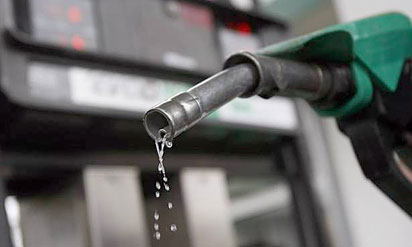
Fuel marketers have declared that their filling stations will stop selling petrol should the Federal Government try to enforce price control.

The National Publicity Secretary of the Independent Petroleum Marketers Association of Nigeria, Chinedu Ukadike, issued the warning on Tuesday during an interview with our correspondent.

The Minister of State for Petroleum Resources (Oil), Heineken Lokpobiri, warned on Monday that the government would not tolerate profiteering and other practices that exploit fuel consumers. Lokpobiri said that, though the era of government-fixed petrol prices was over, deregulation did not mean regulators should abdicate their responsibility to protect consumers.

The minister spoke in Abuja at the opening ceremony of the 2026 General Counsel and Legal Advisers Forum organised by the Nigerian Midstream and Downstream Petroleum Regulatory Authority.

His remarks came amid renewed public concerns over the failure of refiners and importers to lower the gantry prices of petroleum products even as crude prices fell from a high of $120 during the US-Iran war to as low as $72 a barrel.

On Sunday, the Federal Competition and Consumer Protection Commission expressed concern over what it described as possible consumer exploitation in the downstream petroleum sector following the failure of fuel prices to decline significantly despite the sharp drop in global crude oil prices.

During the Monday engagement, the oil minister told the NMDPRA to ensure Nigerians are not exploited by fuel marketers. β€œAs part of the requirements of deregulation, prices have to be determined by market forces. The NMDPRA has a unique responsibility, compounded by the PIA, to ensure not only that products are available but also that unnecessary profiteering is stopped.

β€œYes, the market is definitely deregulated, but that doesn’t limit deregulation… What is important is the reality of the situation in the industry. Primarily, market forces have to determine prices. But we also have a responsibility as a government to ensure that there is no profiteering. The PIA specifically vested (that power in) government institutions, including the NMDPRA,” Lokpobiri said.

See also  APC, opposition list expectations for next INEC chair ahead of 2027

However, the IPMAN spokesman denied allegations of profiteering, saying many marketers are running into losses with the series of reductions carried out lately by the Dangote refinery.

Ukadike said the Federal Government should first investigate the root cause of the current high petrol prices and boost competition by making sure its refineries work, stressing that marketers will sell what they buy.

He warned, β€œMarketers will shut down if they try somehow to enforce price control. We are going to shut down our stations nationwide. You can’t be regulating a deregulated market. You can’t tell me how much to sell my product without trying to know how much I bought it.”

Recounting the ordeals of marketers, he said, β€œWe, the independent marketers, are losing money. We bought petrol at a particular rate a few days ago; on our way to our filling stations, there was a reduction. We have been struggling with the price. We have been struggling against financial losses. We are also struggling against stagnation due to low patronage of our products. Because those marketers who are purchasing now are purchasing at a lower price, and they are selling cheaper.

β€œIf you don’t bring down your price, you cannot see buyers. This is the beauty of deregulation. If you cannot compete, you will not survive in the market. And because most of us are trading on bank loans, the bank does not know when the price goes up or goes down. Their interest rate is fixed; their return on investment is fixed. So, you must pay them. This is the situation we find ourselves in.”

Ukadike maintained that the factors of demand and supply should determine price.

See also  Marketers blame depots as petrol nears N1,000/litre

β€œBy the time more products come in, you will see that the prices will go down. What we, independent marketers, are asking for is not about regulation or trying to bring price control or trying to force marketers to sell below or trying to force Dangote to sell below its production cost. What we are asking is to open up the various channels, boost importation, and let local refineries start refining. This will push the competition to the peak. With this, prices will drastically go down,” he stated.

Ukadike said the Federal Government has to find out the remote cause of the high fuel prices before calling for price control.

β€œThe primary cause of this is that there is no competition. If there should be competition, the refineries will be working. That is where the minister should put his energy to ensure that our local refineries or whatever partnership we have with the Chinese will work. It is not about going to filling stations to check who is selling at higher prices. Do you know how much I bought the fuel for? Can you have a regulated market in a deregulated economy? You can’t be blowing hot and cold at the same time. The PIA must be followed to the letter. If they try to enforce price control, we will shut down,” Ukadike said.

PETROAN speaks

The National President of the Petroleum Products Retail Outlet Owners Association of Nigeria, Billy Gillis-Harry, said the minister has the power to intervene in ensuring consumers are not exploited. However, he said this must be in consultation with major stakeholders in the sector.

See also  States, FCT external debt nears $5.7bn amid higher FAAC

β€œThe minister of petroleum has the power to intervene in ensuring that Nigerians are treated fairly. The NMDPRA has the power, and so does the FCCPC. However, these decisions to discipline or not to discipline should follow stakeholder practice.

β€œWe have the petroleum stakeholder conference that is being headed by the minister. And I think that this is the time for the minister to convene a meeting of all the stakeholders to unravel what the scenario is and what the situation is and make a decision that is beneficial for Nigerians. That’s what I think we should do,” he said.

Gillis-Harry maintained that the government should act without the consent of the stakeholders. β€œThey have the right to intervene, but if they do that and the stakeholders have a different view, that will be difficult. And that’s why the minister should mandate a meeting to speak to all stakeholders as fast as possible.

β€œThe minister has the power to intervene in matters like this, and every stakeholder, including the refineries, must comply,” he submitted.

Meanwhile, the NMDPRA spokesman, George Ene-Ita, told our correspondent that he was yet to be briefed about the plans of the management as far as the matter is concerned. β€œI’ve not been briefed. I don’t know the action the management wants to take,” Ene-Ita replied.

The PUNCH reports that petrol currently sells at prices ranging between N1,140 and N1,210, depending on the location.

punch.ng

FOLLOW US ON:

FACEBOOK

TWITTER

PINTEREST

TIKTOK

YOUTUBE

LINKEDIN

Continue Reading
Click to comment

Leave a Reply

Your email address will not be published. Required fields are marked *

Business

Trump earned over $1bn from crypto ventures in 2025 β€” Report

Published

on

US President Donald Trump recorded around $1.2 billion in income from his cryptocurrency activities in 2025, according to documents released on Tuesday by the US Office of Government Ethics.

A 1978 law requires the president and vice president of the United States to declare their income as well as their assets.

According to the documents, which are more than 900 pages long, Trump received nearly $`550 million from his ties to the startup World Liberty Financial.

The Trump family lent its support and its name to this cryptocurrency platform, launched in September 2024.

World Liberty Financial issued its own cryptocurrency, WLFI, whose initial sale brought in `$550 million.

Trump and his three sons also obtained, via an intermediary company, DT Marks Defi, an additional 22.5 billion WLFI, currently worth around $`1.3 billion.

In April 2025, WLF also marketed its stablecoin β€” a digital currency whose value is pegged to a traditional currency, in this case the dollar.

Trump’s income disclosure also mentions $635 million in royalties received under a licensing agreement related to the $TRUMP cryptocurrency, launched just hours before his inauguration in January 2025.

The president’s activities in the cryptocurrency sector are the main reason for the near tripling of his personal fortune, which rose from `$2.3 billion to $6.5 billion between 2024 and 2026, according to Forbes.

The former real estate developer is regularly accused of conflicts of interest, in particular for having invested in the crypto-currency industry while as president taking several measures to deregulate the sector, causing asset prices to soar.

See also  Aviation professionals outline paths to sector recovery

Beyond the income derived from WLF and its cryptocurrency, Trump has also earned several million dollars from shares in various publicly listed companies active in cryptocurrencies, such as the Coinbase exchange platform.

The president’s assets are held in a trust managed by his son, Donald Trump Jr. But its bylaws stipulate that the entity can be dissolved at any time, which means the billionaire could regain control of it as soon as his second term ends.

AFP

punch.ng

FOLLOW US ON:

FACEBOOK

TWITTER

PINTEREST

TIKTOK

YOUTUBE

LINKEDIN

Continue Reading

Business

World Bank to stop lending to China by 2031; read why

Published

on

The World Bank will phase out its lending to China by 2031, according to the organisation’s new country partnership framework, a source familiar with the matter told AFP on Tuesday.

The source confirmed an earlier report of the development by the Financial Times.

β€œChina has made significant development advances over the past several decades β€” progress that the World Bank and others have supported,” said a World Bank official familiar with the matter, speaking on condition of anonymity.

β€œNow we are reaching a new phase of our relationship, reflecting that reality.”

World Bank lending to China β€” the world’s second-largest economy β€” has steadily declined in recent years as the Asian giant saw explosive growth and a reduction in poverty indicators.

In his first term in office, US President Donald Trump demanded that the World Bank stop lending to China entirely, as he adopted a more aggressive approach to Washington’s chief economic rival.

Trump has maintained that tone in his second term, but has not specifically repeated that demand.

World Bank lending to China peaked at 750 million in 2025.

China also contributes funds to the World Bank’s International Development Association (IDA) pool for the world’s least developed countries, with its $1.5 billion under the latest replenishment round making Beijing the fifth-largest donor.

β€œThe World Bank’s role is shifting from lender to knowledge partner, in line with China’s development trajectory,” said the World Bank official.

On June 16, the World Bank announced a similar plan for Poland, planning to reduce loans to zero by 2031 while maintaining technical assistance.

See also  Marketers blame depots as petrol nears N1,000/litre

AFP

punch.ng

FOLLOW US ON:

FACEBOOK

TWITTER

PINTEREST

TIKTOK

YOUTUBE

LINKEDIN

Continue Reading

Business

Average city bus fare rises 2.43% to N1,431 in May

Published

on

The average fare paid by commuters for bus journeys within Nigerian cities rose to N1,431.25 per trip in May 2026, highlighting continued pressure on transportation costs despite signs of easing inflation in other sectors of the economy.

This was contained in the National Bureau of Statistics’ latest Transport Fare Watch report, released on Tuesday.

According to the report, the average intra-city bus fare increased 2.43 per cent from N1,397.27 recorded in April 2026. On a year-on-year basis, the fare rose 38.63 per cent from N1,032.46 paid in May 2025.

The report also showed that transport costs increased across other major categories, including intercity bus travel, domestic air transport, motorcycle (okada) rides, and water transportation during the review period.

The NBS noted that transport fares continued to rise across virtually all categories in May, with motorcycle transportation recording the highest annual increase.

According to the data, the average fare for intercity bus travel increased to N9,699.55 in May, up 0.96 per cent from N9,607.41 in April. Compared with May 2025, the fare rose 21.89 per cent from N7,957.41.

Similarly, the average airfare for specified domestic routes stood at N157,552.19, reflecting a 0.12 per cent month-on-month increase and a 20.86 per cent rise from N130,361.85 recorded in May 2025.

Motorcycle transport recorded the sharpest increase among all transport categories, with the average fare rising to N1,072.51. This represented a 3.56 per cent increase from April and a 52.45 per cent year-on-year increase.

Water transport fares also increased to N2,276.48 during the month, up by 2.41 per cent from April and 30.88 per cent higher than the N1,739.32 recorded in May last year.

See also  States, FCT external debt nears $5.7bn amid higher FAAC

The bureau said the figures showed that transport costs remained elevated nationwide despite relatively modest monthly increases.

State-by-state analysis showed wide disparities in transport fares across the country.

Ondo State recorded the highest average intercity bus fare at N11,080, followed by Abia State at N11,066.13, while Kwara and Edo states posted the lowest average fares.

For intra-city bus transportation, Zamfara State recorded the highest average fare at N1,878.80, followed by Taraba State at N1,771.96. Abia and Adamawa states recorded the lowest city bus fares.

The report further showed that Kano State posted the highest average domestic airfare at N184,139.29, ahead of Lagos State at N176,971.65, while Gombe and Nasarawa states recorded the lowest airfares.

Kaduna State recorded the highest average fare for motorcycle transportation at N1,720.76, while Rivers State posted the highest average water transport fare at N6,893.55.

At the regional level, the South-West recorded the highest average fares for city bus services, intercity buses, and motorcycle transportation, while the South-South recorded the highest average water transport fares.

punch.ng

FOLLOW US ON:
FACEBOOK

TWITTER

PINTEREST

TIKTOK

YOUTUBE

LINKEDIN

Continue Reading

Trending