

Connect with us

Education

How A Classmate’s Question At Harvard Forced Me To Dump Banking For Politics – Abia Governor, Alex Otti

Published

on

He stated that this question, which Raina asked him at Harvard Business School in 2009, redirected his life from banking to politics.

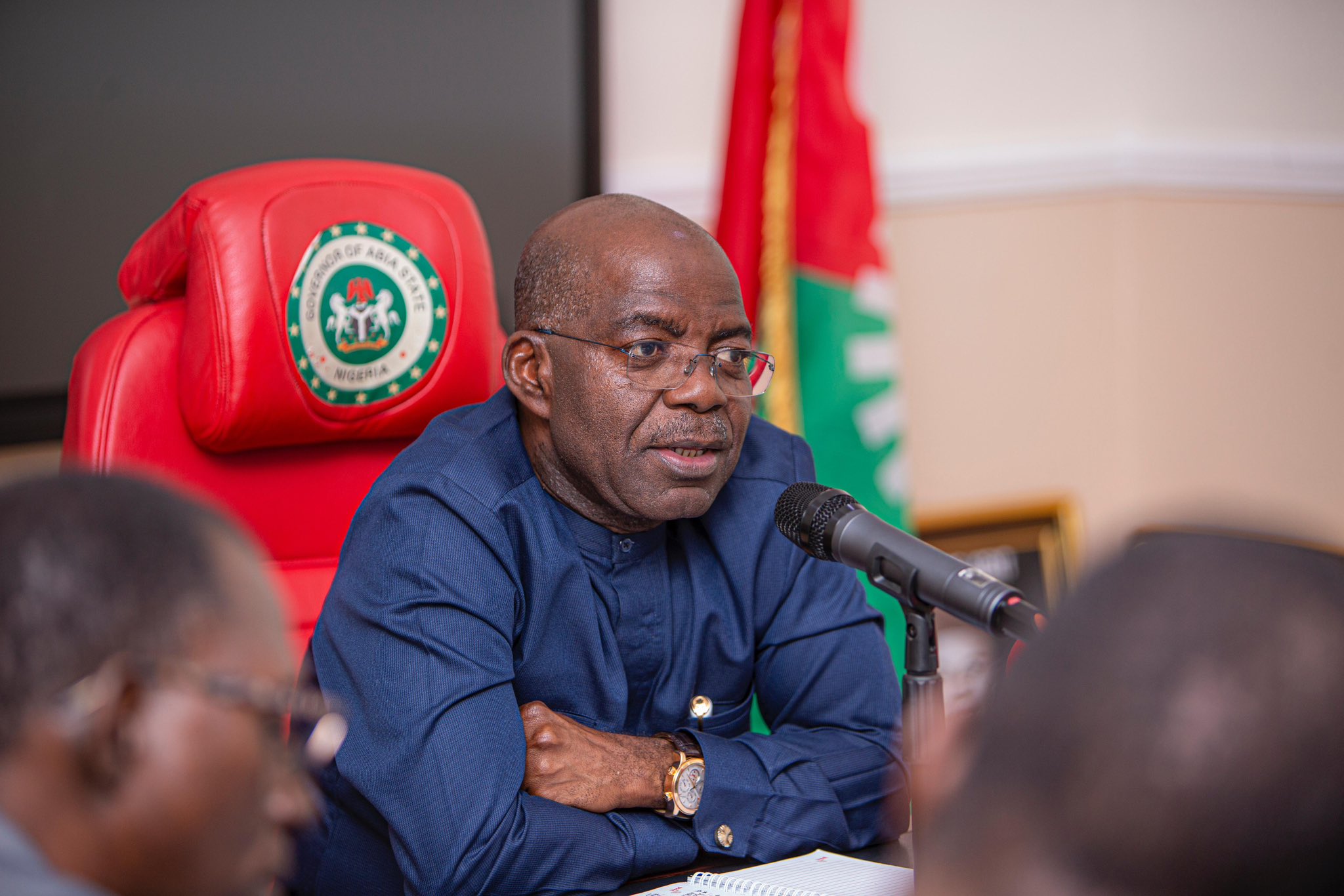
Alex Otti, the Governor of Abia State, has recounted a story about a question a Harvard classmate asked him that ended up haunting him for a long time.

The governor stated that his classmate, Samvit Raina, an American of Indian descent, had asked him why many Nigerians he had met were successful, brilliant, and hardworking, yet the country from which they came was economically and development-wise backwards.

He stated that this question, which Raina asked him at Harvard Business School in 2009, redirected his life from banking to politics.

Speaking at the 2025 dinner and award presentation ceremony of the Harvard Business School Association of Nigeria in Onikan, Lagos, on Saturday, he said that his classmate’s question led him to abandon a lucrative banking career to pursue public service.

Otti, at the time, was participating in the Advanced Management Programme at Harvard.

He said, “I did not respond promptly in order not to be seen as endorsing an uncomplimentary remark against my country by a foreigner, but within me, I knew that he may not be the only one asking the question.”

The question, Otti explained, prompted him to engage in deep reflection during his time in Boston, where the school is situated.

“I spent the rest of my time at Boston reflecting on the poser raised by my course mate: how do you explain the paradox of very successful people operating from a country that is everything but successful?” he said.

See also  ASUU - Hold FG responsible for varsity shutdown

The introspection, Otti said, led him to confront uncomfortable truths about Nigeria’s development challenges.

Otti said he thought about his home state of Abia and its development challenges at the time.

“The more deeply I thought, the more worried I became. Nigeria is a nation of multiple constituencies and wherever you go, there are no shortage of intelligent, hardworking and passionate individuals. The question then is: why are we failing at even the most basic matters of civilisation? Why are elementary concerns like waste disposal, access to potable water, electricity, roads, primary healthcare and basic education still a challenge here?” he asked.

After examining the foundational structures that propelled other nations to greatness, Otti said he arrived at a disturbing conclusion.

“I realised that our problem was never about the size of the treasury box nor the appetite for progress but in the fact that those who ought to have taken the lead were often absent in the decision-making room. Like myself, they were busy chasing after career success, looking to hit the next million dollar or to publish their paper in a reputable journal. To these incredibly-smart people, government is treated as a minor irritation.

“Ultimately, while we were at Harvard, Cambridge, MIT, Oxford and in other elite universities topping the result charts and winning all the laurels, barely-educated individuals were taking decisions that influence how the world sees Nigeria in our various local government headquarters, state capitals and in Abuja,” he noted.

Otti challenged the gathering to find out where the majority of result-driven leaders are most likely to be found to understand where the country’s challenges were coming from.

See also  FG, avert looming ASUU strike

“Where are you most likely to find a superior number of ethical and result-driven leaders: at the board meeting of an NSE-listed company or at a gathering of political stakeholders in our states? You can probe further to ask: where would a First-Class graduate from an elite university be keener to start his professional life: at a regular government agency in Umuahia or in a blue-chip company?” he asked.

According to the governor, the disinterest in public affairs by the country’s best minds has had negative consequences on its economy and development.

“The summary of it is that our disinterest in public affairs offered an extended invitation to persons of questionable development orientation to step in and produce outcomes that are generally unsatisfactory,” he said.

FOLLOW US ON:

FACEBOOK

TWITTER

PINTEREST

TIKTOK

YOUTUBE

LINKEDIN

TUMBLR

INSTAGRAM

Continue Reading
Click to comment

Leave a Reply

Your email address will not be published. Required fields are marked *

Education

Aba Polytechnic to introduce education technology courses, tackles drug abuse

Published

on

The Ogbonnaya Onu Polytechnic Aba,  Abia State, has announced plans to introduce Educational Technology (EdTech) courses in line with directives from the Abia State Ministry of Education.

The initiative seeks to equip students with competencies in digital tool integration, instructional design, and contemporary pedagogical practices to strengthen teaching and learning within the institution.

The Rector of the Polytechnic, Dr. Christopher Okoro Kalu, disclosed this while addressing members of the Academic Board at the Polytechnic Auditorium.

He said the institution has been positioned  to comply with the Ministry’s directive, assuring that all newly introduced courses would undergo proper accreditation before the planned relocation to the Osisioma campus.

“Before the relocation to Osisioma Campus, these courses must either be fully accredited or have completed the necessary resource verification processes,” he said.

Kalu further revealed that infrastructural development at the Osisioma campus is progressing.

He explained that the Ministry of Public Utilities has commenced work on water reticulation at the campus, with a projected completion timeline of one month and a durability span of up to 50 years.

The Rector added that the Ministry of Works is currently overseeing the construction of internal roads, covering both Phase One and Phase Two, while work has also begun on the administrative building, which is expected to be completed by September.

‎He also acknowledged the Abia State Government for the official handover of facilities previously constructed by Abia State University, Uturu.

‎Addressing concerns regarding the relocation, Kalu assured staff and students that their welfare remains a top priority.

‎In addition, he disclosed that modern equipment has been provided to support the establishment of an EYE Content Hub for students of Film and Multimedia Production.

See also  FG, Germany chamber of commerce partner to train, export graduates

‎The hub, to be located at the institution’s ICT building, is designed to enhance practical training and align students with current industry standards.

In a related development the polytechnic has strengthened its collaboration with the National Drug Law Enforcement Agency (NDLEA), Abia State Command, to curb drug abuse among students.

Kalu approved the partnership on Wednesday while receiving the NDLEA State Coordinator, CN Chigbu Odomelam Chilee, and his delegation at the institution’s Council Chamber.

Chilee raised concern over the rising incidence of substance abuse in the state, noting that young people are among the most affected.

The NDLEA official called for the introduction of drug education programmes, peer sensitisation initiatives, and campaigns promoting healthy lifestyles among students.

The Rector described drug abuse as a major threat to societal development, emphasising the need for sustained intervention.

“Nothing destroys a nation quicker than drug abuse. Aside from its impact on mental health, it also contributes to poverty,” he said.

Kalu approved the training of students in the dangers of drug abuse as part of the institution’s preventive strategy.

He disclosed that the training sessions would be held between May and June this year with another round scheduled for November, and stressed the importance of continuous sensitisation.

punch.ng

FOLLOW US ON:

FACEBOOK

TWITTER

PINTEREST

TIKTOK

YOUTUBE

LINKEDIN

Continue Reading

Education

Police accused of assaulting, firing at protesting OOU students

Published

on

The Olabisi Onabanjo University’s (OOU) Students’ Union Government has accused officers of the Nigerian Police Force of assaulting their leaders and firing shots at unarmed students during a protest at the Oru-Ijebu Police Station in Ogun State.

The Ogun State Police Command had denied the allegations in a statement signed by its spokesperson, Oluseyi Babaseyi, late Saturday night, saying no student was detained following the reported confrontation at the Oru-Ijebu Police Division.

However, in a statement by the students’ union on Sunday, co-signed by the SUG President, Kehinde Bamigbose, and General Secretary, Olajire Emmanuel,  the incident began after reports emerged that some students had been arrested under “unclear and questionable” circumstances, prompting the SUG  Legal Director to visit the station to verify the situation.

“In a bid to ensure due process and protect the rights of our students, the OOUSUG Legal Director proceeded to the station to ascertain the situation and engage the officers in a lawful and civil manner.

“Shockingly, while carrying out his legitimate duty, our legal director was subjected to degrading treatment — he was physically assaulted, kicked, and violently manhandled, including being choked by officers of the Nigerian Police Force,” the statement partly read.

It added that another student present at the station was also assaulted, as they frowned at the unprofessional acts by the law enforcement agency.

“Even more disturbing, a student who accompanied him was slapped by officers during the encounter. These acts represent a gross violation of human dignity, professional ethics, and the rule of law,” the union said.

See also  Only Kebbi offers 100% free education nationwide – Idris

The statement further explained that the Students’ Union President, alongside other leaders, later arrived at the station in an attempt to de-escalate the situation.

“Upon receiving this disturbing update, the OOUSUG President, accompanied by other student leaders, arrived at the station to peacefully intervene and de-escalate the situation,” it said.

Detailing the aftermath, the union alleged that the police responded with force, claiming that several students were injured and arrested during the incident.

“Rather than engage constructively, the police officers resorted to reckless violence. Without justification, they opened fire on unarmed students.

“In the course of this unwarranted aggression, a student was shot on the hand; several students were brutalised and assaulted; multiple students were unlawfully arrested; panic and chaos were deliberately instigated through continuous gunfire,” it stated.

The union also alleged that bystanders were affected.

“Innocent bystanders and students were subjected to fear, intimidation, and physical harm,” it added.

Describing the incident as an abuse of power, the union said it would not tolerate intimidation or violence against students.

“We find it utterly unacceptable that officers entrusted with maintaining law and order would instead become agents of terror against the very citizens they are meant to protect,” it said.

The union issued a list of demands, including an immediate investigation, prosecution of officers involved, medical treatment and compensation for injured students, and the unconditional release of those allegedly detained.

The development comes amid conflicting accounts from both the police and the students over the circumstances surrounding the clash at the Oru-Ijebu division.

See also  FG, Germany chamber of commerce partner to train, export graduates

punch.ng

FOLLOW US ON:

FACEBOOK

TWITTER

PINTEREST

TIKTOK

YOUTUBE

LINKEDIN

Continue Reading

Education

60% of employers say graduates not job-ready — Report

Published

on

Nearly 60 per cent of employers in Nigeria say graduates are not job-ready, underscoring a widening gap between academic training and industry expectations, a new report has revealed.

This comes as experts urged Nigerian undergraduates to boost their employability by acquiring soft skills and leveraging opportunities both within and beyond the classroom before graduation.

The advice was given on Thursday in Ikeja, Lagos, during the presentation of Proten International’s latest report on the gap between education and industry needs.

The report added that more than 55 per cent of Nigerian graduates work in roles unrelated to their field of study, as it highlighted critical gaps in communication, technical and digital skills.

“Findings reveal significant misalignment between academic training and the competencies demanded by modern workplaces, with 55 per cent of respondents working in fields unrelated to their academic background and nearly 60 per cent of employers reporting that graduates are inadequately prepared for their roles.

“Critical gaps exist in teamwork, communication, technical proficiency, and digital literacy, while soft skills and practical experience remain highly desired but underdeveloped,” the report read.

Speaking at the industry roundtable themed “Bridging the Skill Gap Between Education and Industry Needs in Nigeria,” the Managing Director of Proten International, Deborah Yemi-Oladayo, described the problem as multidimensional.

“It’s not one way. If you redesign the curriculum, it means you are improving it. Then you need to retrain the people who are going to train the students,” she said.

She questioned the level of investment in lecturer development, adding, “How many of our lecturers get enough training? If we’re expecting our lecturers to do much more for our students, we need to give them that level of training so that they will be able to transfer in the classroom.”

See also  FG, avert looming ASUU strike

Yemi-Oladayo stressed that expecting improved outcomes without equipping educators is unrealistic.

“It’s not enough to expect lecturers to do magic. They can only give what they have,” she said.

The MD also advised students not to wait for systemic reforms before taking responsibility for their own development.

“I advise undergraduates to harness opportunities that are around the world. We have online platforms that deliver training for free,” she said, urging them to focus on self-development beyond social media.

She added that students must be intentional about their growth. “They (the students) have a part to play. Nobody will do it for them,” she said.

Also speaking, the founder of Treford Africa, a non-engineering skill partner for professionals and businesses, Harry Enabolo, emphasised the importance of practical experience in preparing for employment.

“Experience prepares you for a job faster than almost anything you learn. The best learning still happens on the job,” he said.

Enabolo encouraged students to seek internships and engage with startups, noting that applying knowledge in real-life situations accelerates learning.

“One of the best ways of learning is to take all the knowledge you have gained and apply it to something,” he said, adding that early exposure to work environments helps students transition more easily into the labour market.

He further called for a more flexible education system that allows students to combine academic work with practical experience without affecting their performance.

The representatives from government, the private sector, and academia attended the roundtable.

punch.ng

FOLLOW US ON:

FACEBOOK

TWITTER

PINTEREST

TIKTOK

YOUTUBE

LINKEDIN

Continue Reading

Trending