Connect with us

News

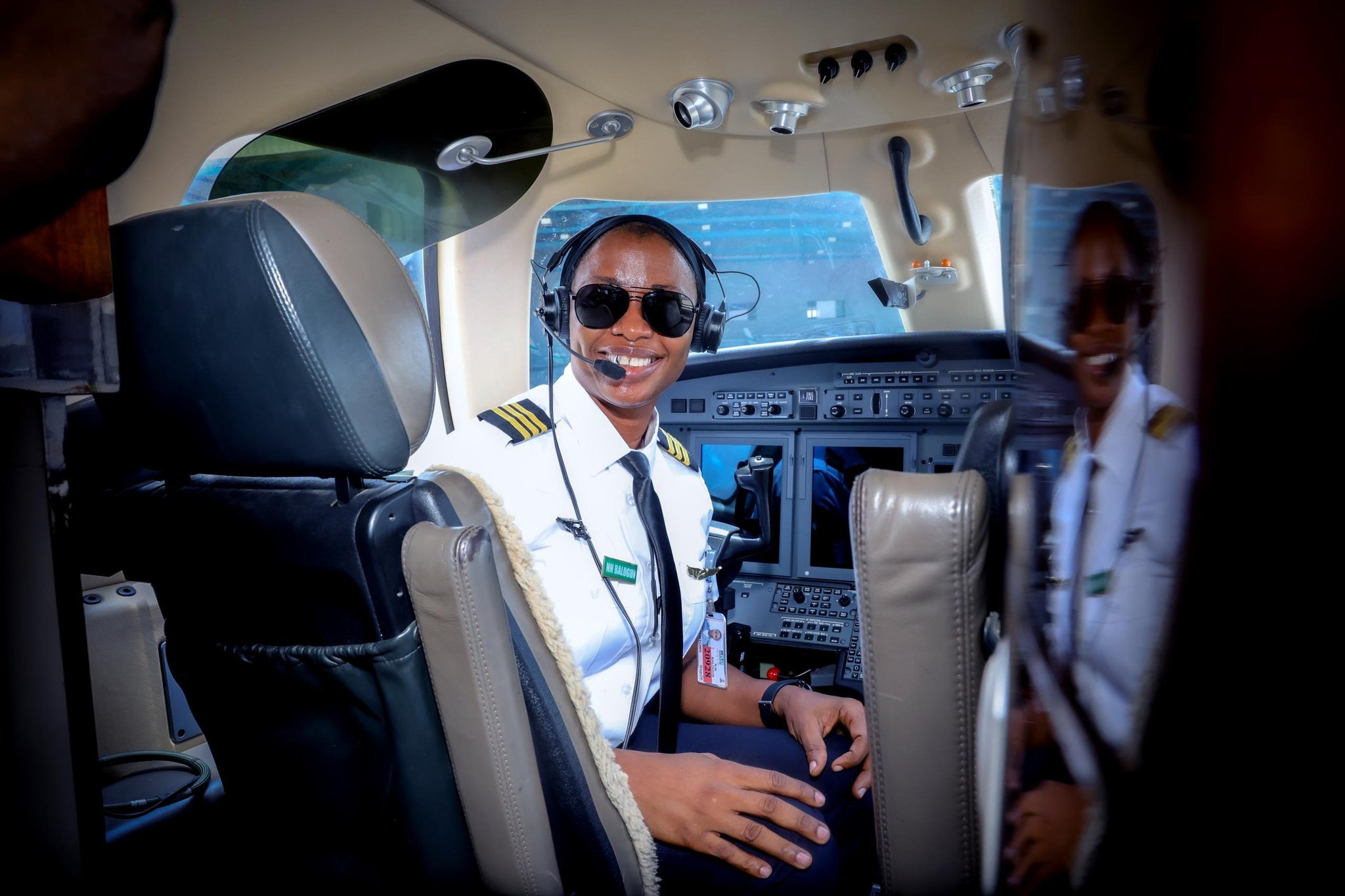
Customs’ first female pilot gets US commercial licence

Published

on

The first female pilot of the Nigeria Customs Service, Nafisat Balogun, has secured a commercial multi-engine pilot licence in the United States of America.

The NCS spokesperson, Abdullahi Maiwada, disclosed this in a statement made available to newsmen on Sunday in Abuja.

Maiwada said that following the feat, the Superintendent of Customs was honoured at a ceremony organised by the Nigeria Customs Technical Hangar Service recently.

He said Balogun’s achievement marked a historic milestone as she became the first female pilot in the NCS, a field dominated by men.

He described her resilience, discipline and determination as a motivation for officers to strive for success and leverage new opportunities within the service.

Speaking at the celebration, the Managing Director of the Customs Technical Hangar Service, Captain Kuhi Mbaya, described Balogun’s journey as inspiring and transformative.

Mbaya described her achievement as a source of pride for the service, noting that the officer rose from being a cabin attendant to a fully-fledged commercial pilot.

“This is a great achievement not only for her but for the entire service,” he said.

Mbaya said that her accomplishment had set a precedent in the service and reflected the evolving opportunities within it.

“For the first time, we now have a female pilot in the NCS. She has set a record, and it is important that we celebrate and recognise this milestone,” he said.

He urged women to take Balogun’s accomplishment as a charge to pursue their ambitions in specialised fields without fear, as barriers were being broken for them to thrive.

“This achievement shows that there are no limits. The glass ceiling has been shattered, and with determination and consistency, more women can achieve their dreams,” Mbaya said.

See also  Tinubu congratulates Zamfara governor at 60

He also commended the Comptroller-General of Customs (C-G), Bashir Adeniyi, for his leadership and constant support for gender inclusion within the service.

Responding, Balogun thanked the NCS for believing in her capacity and supporting her to achieve the feat.

She reaffirmed her commitment to discharge her duties diligently and to continue to serve with dedication, integrity and professionalism.

The News Agency of Nigeria recalls that in 2024, the NCS announced Balogun as making history as the first female pilot in the service, rising from a cabin crew member to a trailblazer in aviation.

NAN

punch.ng

FOLLOW US ON:

FACEBOOK

TWITTER

PINTEREST

TIKTOK

YOUTUBE

LINKEDIN

INSTAGRAM

Continue Reading
Click to comment

Leave a Reply

Your email address will not be published. Required fields are marked *

News

Reps probe alleged N2bn in ex-mining commander’s account, read details

Published

on

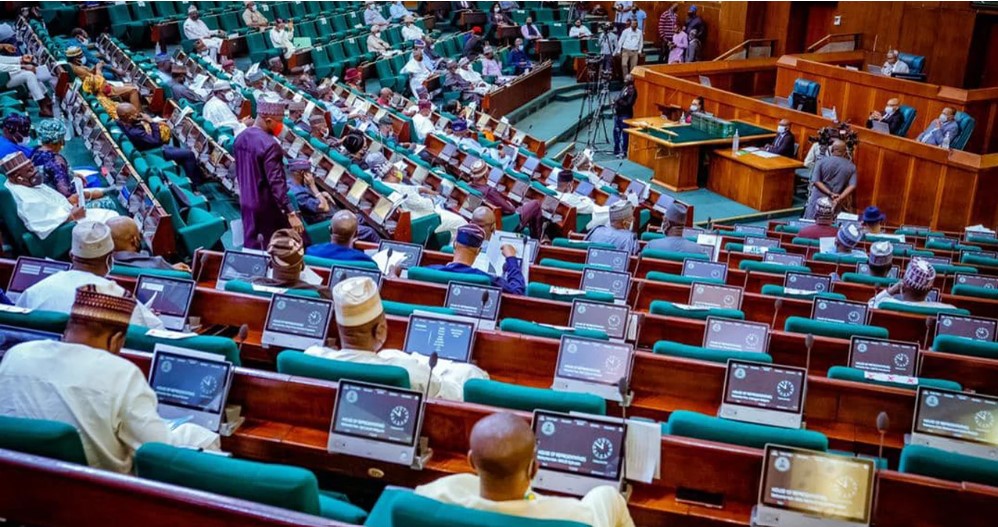
The House Committee on Solid Minerals Development has questioned the legal basis for the operations of the Mining Marshals, insisting that the unit lacked specific legislative backing to operate in its current form.

The committee, chaired by Jonathan Gbefwi, raised the concern during an investigative hearing involving the Nigeria Security and Civil Defence Corps at the National Assembly Complex, Abuja. It is probing allegations of extortion, harassment of licensed mining operators and financial impropriety.

Lawmakers are examining the unit’s funding, procurement of operational vehicles and allegations that more than N2bn was found in the account of a former state commander.

Gbefwi, a Labour Party member from Nasarawa State, said the committee was exercising its constitutional powers under Sections 88 and 89 of the 1999 Constitution, as amended, and Sections 2 to 5 of the Legislative Houses (Powers and Privileges) Act, 2017.

He faulted the NSCDC’s failure to submit requested documents despite the appearance of its Commandant-General, Ahmed Audi.

According to him, “the committee served Audi with a formal statutory demand on October 20, 2026, requiring the Corps to submit a comprehensive response under oath.”

The demand required 10 bound and paginated hard copies, alongside an identical electronic version of relevant documents, by 2 pm on November 3. However, Gbefwi said the documents had not been delivered when proceedings commenced. He stressed that Audi’s appearance did not discharge the Corps’ obligation to provide the records.

He said Audi’s responses under oath would be the NSCDC’s official position. He directed the Corps to preserve operational and financial records, including arrest registers, banking documents, vehicle registers and CCTV footage across the 36 states and the Federal Capital Territory.

Gbefwi warned that destroying, concealing, altering or backdating records, or intimidating officers and witnesses, would attract legal consequences.

“Any alteration, backdating, concealment, removal, or destruction of responsive records, or any intimidation, coaching, or retaliation against any officer or witness, constitutes a grave statutory offence under Section 14 of the Legislative Houses (Powers and Privileges) Act, 2017, and Section 19 of the NSCDC Act,” he said.

See also  Nigerians self-deport amid Trump’s deadly ICE raids

He also referred to a letter dated July 24, 2026, written by the Commander of the Mining Marshals, Attah Onoja, to the Speaker of the House. The letter reportedly contained allegations against a member of the House and questioned the legislature’s integrity.

Gbefwi said Audi had to clarify whether the Corps endorsed the allegations or the letter reflected Onoja’s personal position. Audi was required either to adopt the allegations with documentary evidence or formally disown the letter under oath.

The NSCDC delegation, led by Audi, defended the establishment and operations of the Mining Marshals, maintaining that the unit had a legal basis. Audi undertook to submit the requested documents. Onoja answered questions about the reported N2bn transaction involving a former state commander.

Established by the Federal Government in 2024 as a special enforcement unit within the NSCDC, the Mining Marshals were tasked with tackling illegal mining, protecting mining sites and enforcing mining regulations. Their operations have raised questions about their statutory powers, funding, and alleged harassment and extortion of licensed operators.

In another development, the House of Representatives has called for urgent repairs to failed box culverts along the East-West Road in Rivers State.

The road resolutions followed a motion by Yenagoa/Opokuma Federal Constituency member Oboku AbonsiOforji on Wednesday.

The House urged the Federal Ministry of Works to direct Rock Result Nigeria Limited to return to site and rehabilitate or reconstruct failed box culverts at Iheke in Ahoada East Local Government Area of Rivers State. It also called for an independent engineering assessment of the damaged structures.

See also  Court fixes date for ruling on Sowore’s bail application; read details

Moving the motion, Oforji recalled that the House had, on October 3, 2023, adopted a resolution drawing attention to the deplorable condition of the Iheke section, prompting government interventions.

He commended the government for constructing culverts, approving rehabilitation funds and re-awarding the contract to Setraco Nigeria Limited.

However, he expressed concern that the culverts had deteriorated despite the financial commitments. He blamed alleged substandard execution, questioning the materials, engineering specifications, supervision and value for public funds.

Oforji said the road linked Bayelsa, Rivers and Delta states.

He said the damaged culverts could “endanger lives, disrupt the movement of people and goods, and aggravate flooding and erosion in the region if urgent remedial action was not taken.”

The motion highlighted delays in dualising the Ahoada-to-Bayelsa and Patani sections. According to Oforji, the project, “initially scheduled for completion in April 2025, was subsequently extended to November 2025 but remained unfinished as of November 25, 2026.”

The House urged the ministry to ensure Rock Result Nigeria Limited repaired the culverts and Setraco Nigeria Limited completed the dualisation works on the Ahoada-to-Bayelsa and Patani sections.

It mandated its Committee on Works and Legislative Compliance to monitor implementation and report back within four weeks for further legislative action.

Source: punchng.com

FOLLOW US ON:

FACEBOOK

WHATSAPP CHANNEL

TWITTER

PINTEREST

TIKTOK

YOUTUBE

LINKEDIN

INSTAGRAM

Continue Reading

News

Mock polls: INEC orders RECs to plug gaps

Published

on

The Independent National Electoral Commission (INEC) has directed Resident Electoral Commissioners across the 36 states and the Federal Capital Territory to address all identified operational and logistical shortcomings ahead of Saturday’s nationwide mock accreditation and result transmission exercise.

The INEC Chairman, Prof. Joash Amupitan, gave the directive on Wednesday in Abuja at a strategic consultative meeting with RECs, warning that the commission could not afford operational failures as preparations intensified for the 2027 general elections.

Amupitan said the mock exercise scheduled for November 28 would serve as a critical test of the commission’s upgraded Bimodal Voter Accreditation System devices, logistics arrangements and automated result validation safeguards on the INEC Result Viewing Portal.

He directed the RECs to personally supervise preparations in their respective states, monitor the exercise and submit comprehensive technical reports to the commission’s headquarters by November 30.

The INEC chairman said the reports must identify network failures, device anomalies and procedural bottlenecks requiring urgent intervention before the general elections.

“Every single operational bottleneck, communication gap, or logistical friction point identified during our recent off-cycle reviews must be permanently closed before Saturday’s nationwide simulation and well ahead of January 16,” he said.

He warned that the commission had no room for administrative lapses, noting that the 2027 elections would involve more than 100 million registered voters, 57,000 newly procured BVAS devices and over 1.41 million ad hoc personnel.

“Margin for error simply does not exist,” Amupitan declared.

The chairman disclosed that the presidential and National Assembly elections would hold on January 16, 2027, while the governorship and state Houses of Assembly elections were scheduled for February 6.

See also  Tinubu congratulates Zamfara governor at 60

He said the commission was working with a verified register of more than 100 million voters following three phases of Continuous Voter Registration, which added over 10.77 million registrants, and an audit that removed more than 1.6 million invalid, duplicate or deceased records.

Amupitan also disclosed that the register included 232,658 Persons With Disabilities, whose participation, he said, required accessible polling arrangements and appropriate assistive materials.

He identified six operational priorities requiring immediate attention from the RECs, including the successful conduct of Saturday’s mock exercise, last-mile logistics, BVAS deployment, election security, recruitment and welfare of ad hoc personnel, and the prevention of disinformation and partisan interference.

On logistics, the INEC chairman warned that delays in opening polling units could undermine public confidence and trigger unnecessary tension on election day.

“Delayed openings breed suspicion, anxiety, and avoidable tension,” he said.

He directed the RECs to review transportation arrangements with the National Union of Road Transport Workers, marine operators and aviation partners, while ensuring that Registration Area Centres were physically ready and secured.

He also ordered strict tracking of sensitive and non-sensitive election materials from state warehouses to polling units and their eventual return through collation centres.

On the deployment of BVAS, Amupitan said the commission had reduced the voter threshold per device from 1,250 to 850 to prevent overcrowding, long queues and accreditation delays.

He explained that multiple devices would be deployed to polling units with more than 850 registered voters.

The chairman also said the commission had constructed climate-controlled storage facilities across the states to protect the newly acquired devices from extreme temperatures.

See also  Tinubu hails Nigerian global English champions

On election security, he called for stronger collaboration between the RECs, state commissioners of police, directors of the Department of State Services, the Nigeria Security and Civil Defence Corps and other security agencies.

He said the commission would activate its decentralised Inter-Agency Consultative Committee on Election Security structures down to local government and ward levels, supported by Election Risk Management maps to identify potential flashpoints.

Amupitan further directed the RECs to ensure the early resolution of disputes over political rally venues and timings in line with Section 95(4) of the Electoral Act 2026.

He warned that the commission would not tolerate partisan conduct by its personnel, stressing that institutional neutrality was essential to credible elections.

“Equally vital, enforce uncompromising institutional neutrality across every level of your state workforce.

“Under the Electoral Act 2026—including the deterrence provisions of Sections 96, 97, and 148—the Commission will not shield any staff member or official who compromises neutrality, facilitates malpractice, or breaches statutory rules,” he told the electoral commissioners.

The INEC chairman also stressed the need for adequate training and timely payment of allowances to the more than 1.41 million ad hoc personnel expected to participate in the elections.

He identified National Youth Service Corps members, university vice-chancellors, academics serving as returning and collation officers, and career civil servants among the personnel who would support the electoral process.

Amupitan urged the RECs to maintain regular engagement with political parties, election observers, civil society organisations and the media to prevent information gaps that could fuel misinformation and disinformation.

See also  AEDC sacks 800 workers amid power crisis

“The Nigerian people are not asking us for excuses or explanations after the fact; they are asking for competence, impartiality, transparency, and courage in the execution of our constitutional mandate,” he said.

He charged the RECs to personally supervise field preparations rather than rely solely on reports from subordinate officers, urging them to communicate operational challenges promptly to the commission’s headquarters.

“As Resident Electoral Commissioners, your leadership sets the ethical and operational tone in your respective states. Stay close to your Electoral Officers, supervise field audits personally rather than relying solely on secondhand assurances, and report realities on the ground with complete candour so Headquarters can support you swiftly,” he said.

Source: punchng.com

FOLLOW US ON:

FACEBOOK

WHATSAPP CHANNEL

TWITTER

PINTEREST

TIKTOK

YOUTUBE

LINKEDIN

INSTAGRAM

Continue Reading

News

El-Rufai backtracks on Ribadu phone-tapping claim, read details

Published

on

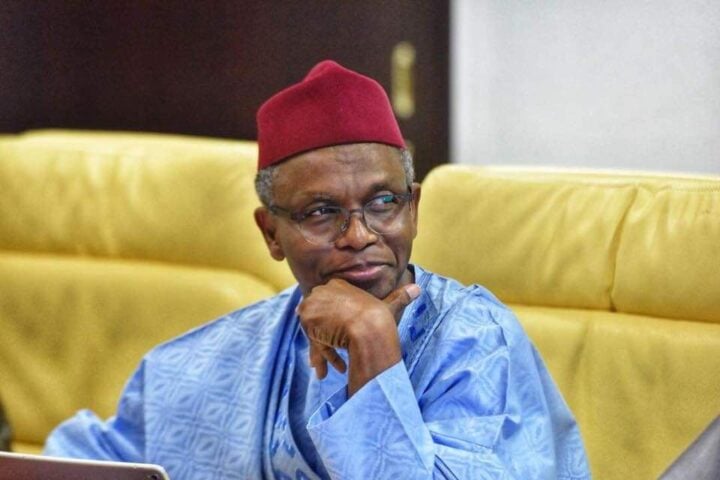
Detained former Kaduna State Governor, Nasir El-Rufai, on Wednesday told the Federal High Court in Abuja that his claim that the telephone of the National Security Adviser, Nuhu Ribadu, was tapped was false, saying he made the statement to scare the government and make its officials uncomfortable.

El-Rufai, who made the admission before the trial judge, Justice Joyce Abdulmalik, described the claim as political rhetoric rather than a factual statement, insisting that neither he nor other opposition figures intercepted Ribadu’s telephone conversations.

The former governor spoke while testifying as the first defence witness in his ongoing prosecution by the Department of State Services over allegations that he intercepted the NSA’s telephone conversations, among other offences.

El-Rufai, who governed Kaduna State between 2015 and 2023, is facing trial over comments he made during an appearance on Arise Television’s Prime Time programme on February 13.

According to court documents, El-Rufai allegedly admitted during the interview that he knew and was associated with an individual who had illegally intercepted the NSA’s telephone communications.

The former Minister of the Federal Capital Territory, who served under former President Olusegun Obasanjo, is accused of breaching national security and public safety through his actions, an offence punishable under Section 12(1) of the Cybercrimes (Prohibition, Prevention, etc.) (Amendment) Act, 2024. He was also charged with failing to report the alleged crime to the relevant security agencies.

During the television interview, El-Rufai had alleged that DSS operatives attempted to abduct him at the Nnamdi Azikiwe International Airport, Abuja, on February 12, 2026, upon his return from Cairo.

He further alleged that the security agency was acting on the instigation of the Independent Corrupt Practices and Other Related Offences Commission, which he claimed had received a directive from Ribadu to detain him.

See also  Ogun issues fresh flood alert ahead of September rains

The court had, on October 26, ordered the former governor to open his defence to the allegations after dismissing his no-case submission seeking to be discharged and acquitted of the charges.

Justice Abdulmalik held that the application lacked merit and declined to terminate the trial.

At the continuation of proceedings on Wednesday, El-Rufai’s lawyer, Paul Erokoro (SAN), played a recording of the interview his client granted Arise TV on February 13, in which he claimed that someone tapped Ribadu’s phone and relayed his conversations to him and other opposition figures.

After listening to the recording, Erokoro asked his client to clarify what he meant by the statement.

Responding, El-Rufai acknowledged making the claim but said it was not intended to be understood literally.

He explained that his intention was to draw attention to what he described as the government’s surveillance of opposition figures and other prominent Nigerians, including former presidents and senior judges.

El-Rufai said, “What I wanted to say was that the government was monitoring opposition figures and that we knew what they were doing.

“I used the word ‘tap’ as political rhetoric to make them uncomfortable. It was rhetorical, not literal. It was linguistic flourish, just to make the government uncomfortable.”

When reminded by Erokoro that the interviewer had told him that tapping someone’s phone was illegal, the former governor said he intended to expose what he described as the government’s secret monitoring of opposition figures without lawful court orders.

He said, “I was referring to the government violating the law and not someone else doing it.”

Asked who he meant by “we” when he claimed that “we are listening to their conversations…”, El-Rufai said he was referring to himself and other prominent opposition figures.

He, however, denied that they tapped Ribadu’s phone, explaining that he learnt of an alleged plan to abduct and detain him through a mutual friend.

See also  Nigerians self-deport amid Trump’s deadly ICE raids

The former governor declined to disclose the identity of the person, saying he did not want to jeopardise the interest of his source.

He told the court that after returning home from the television interview, the said friend visited him and clarified that he had not tapped the NSA’s phone.

According to El-Rufai, he told the person that he already knew but had deliberately made the claim to make government officials uncomfortable.

Earlier in his testimony, the former governor said he had known Ribadu since 2003, when he, as head of the Bureau of Public Enterprises, assisted him in establishing the Economic and Financial Crimes Commission by providing office accommodation and funding.

He attributed the breakdown in their relationship to the 2011 presidential election, when Ribadu contested for the presidency, and he supported the late former President Muhammadu Buhari, whom he considered a better candidate.

El-Rufai further alleged that the NSA was opposed to him because of his opposition to President Bola Tinubu’s re-election bid.

He denied involvement in telephone interception, insisting that he neither possessed the knowledge nor the equipment required to tap phone conversations.

However, during cross-examination by the prosecuting counsel, Oluwole Aladedoye (SAN), El-Rufai, who said he obtained a law degree from the University of London, maintained that he would not disclose the identities of those he referred to as “we” in the television interview.

He also refused to name the person who allegedly informed him that Ribadu, Kaduna State Governor, Uba Sani, and the ICPC chairman had met and agreed to ensure his arrest.

See also  Soldiers do not buy uniforms or bulletproof vests – Army

The former governor said he learnt of the alleged plan before returning from Cairo on February 12. He explained that he resisted attempts by DSS operatives to arrest him at the airport upon his arrival because they failed to produce a valid arrest warrant.

El-Rufai also maintained that his claims during the Arise TV interview that he had never stolen public funds and knew nothing about the disappearance of activist Dadiyata while he was governor of Kaduna State were factual.

He insisted that all other statements he made during the interview were true, except the claim relating to the tapping of Ribadu’s phone.

The former governor, who said he instituted fundamental rights suits over the alleged search of his residence with a defective warrant, admitted that the cases had been dismissed by both the High Court of the Federal Capital Territory and the Federal High Court.

Towards the end of the cross-examination, Aladedoye informed the court that Erokoro had approached him before the commencement of proceedings to seek his assistance in the defence’s plan to invite Ribadu and the ICPC chairman as witnesses.

The prosecuting counsel said he declined the request, explaining that the matter was beyond his control.

Erokoro, however, said he would file the necessary applications to secure their attendance.

Justice Abdulmalik subsequently adjourned the case until February 15 and 16 for the continuation of El-Rufai’s defence.

Source: punchng.com

FOLLOW US ON:

FACEBOOK

WHATSAPP CHANNEL

TWITTER

PINTEREST

TIKTOK

YOUTUBE

LINKEDIN

INSTAGRAM
Continue Reading

Trending