Connect with us

News

Malami, Fagbemi clash over $200m Mambilla settlement

Published

on

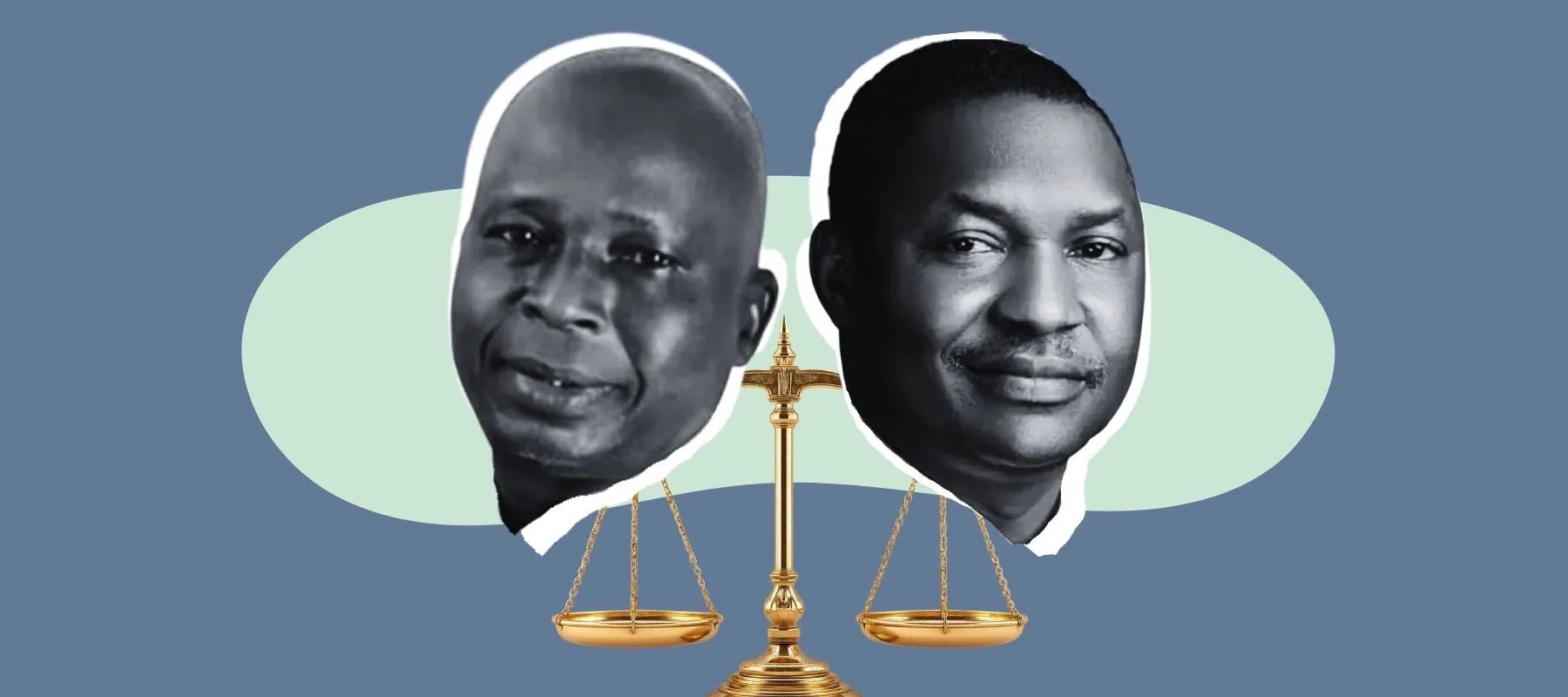
Former Attorney-General of the Federation, Abubakar Malami, and his successor, Lateef Fagbemi, have offered contrasting accounts of the controversial $200m settlement reached between the Federal Government and Sunrise Power over the Mambilla Hydroelectric Power Project.

While Malami said on Tuesday that the settlement was pursued in Nigeria’s interest and was not motivated by any promise of personal financial benefit, Fagbemi said the protracted dispute and litigation had held the Mambilla project “hostage” and deepened the country’s energy poverty.

Their differing positions followed a September 16 final award by an International Chamber of Commerce arbitration tribunal in Paris, which rejected Sunrise Power and Transmission Company Limited’s claims against Nigeria and ordered the company and its promoter, Leno Adesanya, to reimburse Nigeria $11.82m in legal fees and $414,125 in arbitration costs.

The dispute centres on the Mambilla project in Taraba State, whose development dates back to a 2003 agreement under which Sunrise was to construct a 3,050MW hydropower plant on a build-operate-transfer basis.

Sunrise subsequently commenced arbitration against Nigeria in 2017, seeking about $2.35bn over the project. The dispute later produced a January 2020 settlement under which Nigeria was to pay Sunrise $200m, followed by a March 2020 addendum that introduced a further $200m default provision, potentially raising Nigeria’s exposure to $400m plus interest.

In his reaction on Tuesday, Malami, through his Special Assistant on Media, Mohammed Bello Doka, rejected suggestions that his actions as AGF were undertaken pursuant to a corrupt agreement or in exchange for personal financial benefit.

“Malami rejects any suggestion that his official actions were undertaken pursuant to a corrupt agreement or in exchange for personal financial benefit,” the statement said.

See also  GRAPHIC PHOTOS: One de@d as four storey building collapses in Lagos

Malami argued that the dispute predated his tenure as AGF, noting that the controversy had existed since 2003 and had passed through several administrations, attorneys-general and ministries.

He said the government’s consideration at the time was whether “an asserted multibillion-dollar exposure, continuing litigation, financing difficulties and delays to the Mambilla project could be brought to an end through a substantially smaller negotiated settlement.”

Malami also pointed out that the $200m settlement was never paid to Sunrise, adding that there was no evidence before the tribunal linking him to any financial benefit from the proposed arrangement.

“One obvious factual question is whether any money or other financial benefit from Sunrise, Adesanya or any connected entity was ever received by Malami pursuant to the alleged arrangement,” he said.

“The settlement money itself was never paid by the federal government to Sunrise.”

The former AGF also acknowledged that former President Muhammadu Buhari did not approve the payment, saying he subsequently instructed government lawyers to resist Sunrise’s attempt to enforce the settlement against Nigeria and preserve the Federal Government’s legal position.

Malami further cautioned against presenting the tribunal’s findings as a criminal conviction, noting that the proceedings were commercial arbitration between parties to a dispute and that he was neither a party to the proceedings nor given an opportunity to state his own side of the story.

Fagbemi, however, said the legal battle had come at a substantial cost to Nigeria, particularly in terms of the delay to the power project.

According to the AGF, the progress of the Mambilla project was “held hostage” by the “relentless litigation and arbitration” instituted by Sunrise.

See also  Shake-up: Army redeploys senior generals

He said the tribunal had established that the settlement agreement and its addendum were not binding on Nigeria because the former government officials who signed them lacked the requisite authority.

“As a result, the project has been unable to achieve financial close, depriving Nigeria and its people of the enormous economic benefits of 3,050 megawatts of clean, renewable hydroelectric power,” Fagbemi said.

He added that the consequences of the delay included “lost power generation, foregone industrial output, and continued energy poverty.”

The AGF said the tribunal’s decision sent a message that Nigeria “will not be a soft target for predatory litigation and arbitration.”

Fagbemi also commended President Bola Tinubu for maintaining that Nigeria should not succumb to what he described as “fraudulently contrived contractual agreements” and adverse claims arising from them.

The ICC tribunal, in its 616-page award, found the settlement agreements unenforceable, including on grounds of corruption and violation of Nigerian public policy. It also rejected Sunrise’s claim for $400m, while directing the company and Adesanya to bear their own legal expenses.

Malami said he would issue a comprehensive response to the tribunal’s individual findings after reviewing the full award and the underlying records.

Source: punchng.com

FOLLOW US ON:

FACEBOOK

TWITTER

PINTEREST

TIKTOK

YOUTUBE

LINKEDIN

INSTAGRAM

Continue Reading
Click to comment

Leave a Reply

Your email address will not be published. Required fields are marked *

News

IG appoints female AIG to oversee Bayelsa, Rivers

Published

on

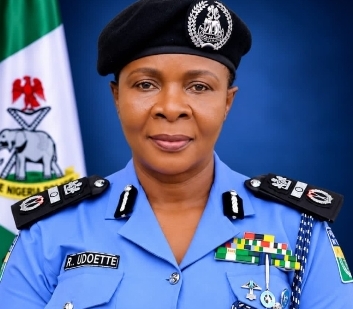
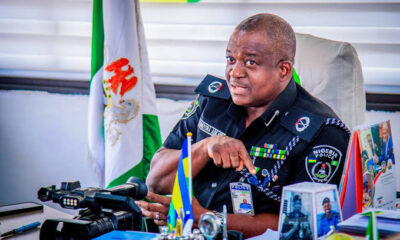
The Nigeria Police Force has appointed Assistant Inspector-General of Police (AIG) Regina Udoette as the new Zonal Commander of Zone 16, comprising Bayelsa and Rivers states, making her the first female officer to occupy the position.

Udoette’s appointment followed the retirement of the immediate past Zonal Commander, AIG Abubakar Zubairu.

The appointment was approved by the Inspector-General of Police, IGP Olatunji Disu, who named the senior police officer to take over the leadership of the zone.

A Saturday statement issued by the Zonal Police Public Relations Officer, SP Gunn Emonena, said the new AIG was from Ifuho village in Ikot Ekpene Local Government Area of Akwa Ibom State.

According to the statement, Udoette was commissioned into the Nigeria Police Force as a Cadet Assistant Superintendent of Police in 1992.

She holds a Bachelor of Arts degree in Communication Arts and a master’s degree from the University of Uyo.

The statement described her as an experienced police officer who had served in various departments and capacities across different levels of the Nigeria Police Force.

Before her appointment as the Zonal Commander, she was the Commissioner of Police in charge of General Investigation at the Force Criminal Investigation Department (FCID), Enugu Annex.

The statement noted that her wealth of experience in policing would be brought to bear in the administration and security operations of the zone.

It said, “The Inspector-General of Police, IGP Olatunji Rilwan Disu, has appointed AIG Regina Cosmas Udoette to take over the mantle of leadership of Zone 16 following the retirement of AIG Abubakar Zubairu.”

See also  Shake-up: Army redeploys senior generals

On her professional background, the statement added that “the new AIG was commissioned into the Nigeria Police Force as a Cadet ASP in 1992.”

It further stated that “the first female AIG has served in various departments at different capacities, in all strata of the Force.”

Highlighting her most recent assignment, the statement said she “last served as Commissioner of Police in charge of General Investigation in FCID Enugu Annex.”

The zonal headquarters called on residents, community leaders and other stakeholders in Bayelsa and Rivers states to support the new commander in the discharge of her responsibilities.

It solicited “the co-operation and support of the good people of Bayelsa and Rivers State to enable her bring to bear her vast wealth of experience in policing.”

Source: punchng.com

FOLLOW US ON:

FACEBOOK

WHATSAPP CHANNEL

TWITTER

PINTEREST

TIKTOK

YOUTUBE

LINKEDIN

INSTAGRAM

Continue Reading

News

AI-generated fake content threatens national security – Ex-FPRO reveals

Published

on

A former Force Public Relations Officer, Olumuyiwa Adejobi, has warned that the misuse of artificial intelligence and social media to spread fake news poses a growing threat to Nigeria’s national security.

Adejobi, a Deputy Commissioner of Police in charge of Operations at the Delta State Police Command, said fabricated images, videos, audio recordings and narratives could mislead the public, provoke hostility, incite violence and undermine confidence in public institutions.

He gave the warning in a statement titled, “The Palongo Dance of Social Media Palava,” issued in Lagos on Saturday, urging Nigerians to exercise caution and communicate responsibly on digital platforms.

The former police spokesperson expressed concern about the growing ability of artificial intelligence to make people appear to have said or done things they never did.

According to him, such fabricated content could have serious consequences for public safety and national security.

“Fabricated content can provoke hostility, incite violence, create panic and undermine public confidence in institutions,” he said.

Adejobi also blamed the monetisation of social media for encouraging some content creators to prioritise views, engagement and financial rewards over accuracy and responsibility.

He said some influencers resorted to sensational headlines, unverified allegations and provocative publications without considering the consequences for individuals, institutions and the country.

“Freedom of expression must be exercised responsibly and should not be used to fabricate information, destroy reputations, incite violence or deliberately mislead the public,” he said.

He urged Nigerians to verify information before believing, sharing or reposting it, describing fact-checking as a civic responsibility in the digital age.

See also  Uruguay becomes first in Latin America to legalize Euthanasia

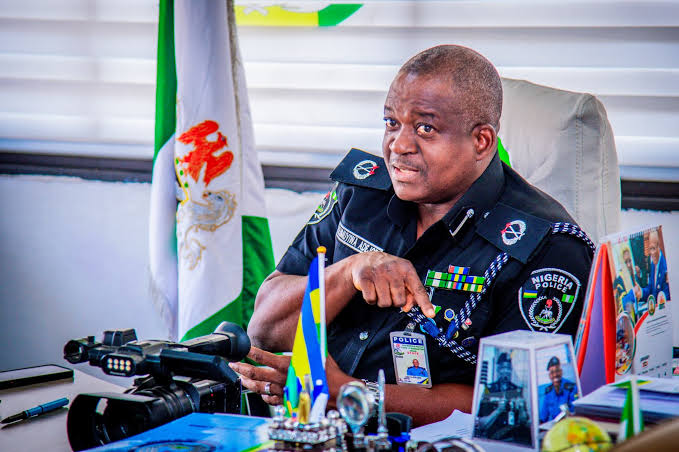
Adejobi commended the Inspector-General of Police, Olatunji Disu, for recently urging the public to remain vigilant against fake news and irresponsible information dissemination.

He also acknowledged the efforts of former Minister of Information and National Orientation, Lai Mohammed, and the incumbent minister, Mohammed Idris, in drawing attention to the dangers of misinformation and disinformation.

The former police spokesman called for sustained public enlightenment, strategic communication, institutional collaboration and appropriate regulatory measures to address the problem.

He, however, warned against allowing regulation to undermine constitutionally guaranteed freedoms, stressing that legitimate criticism and dissent must be distinguished from deliberate fabrication, impersonation and incitement.

Adejobi advocated a whole-of-society approach involving government institutions, security agencies, media organisations, technology companies, professional bodies, traditional and religious leaders, civil society groups and citizens.

Recalling his personal experience with misinformation and social media manipulation, he said false narratives could cause emotional and reputational damage that might take years to repair.

He warned that fabricated stories could be created within seconds, while the damage they caused could persist for years.

Adejobi urged Nigerians to promote digital literacy, ethical journalism, responsible content creation, fact-checking and constructive public engagement.

He said social media should serve as a platform for enlightenment, innovation, accountability, economic advancement and national development rather than hatred, hostility and destruction.

He also appealed to Nigerians not to “dance Palongo”, a Yoruba expression he said his grandmother used to describe an irregular and disorderly dance.

He urged citizens to reject digital recklessness and embrace truth, responsibility, civility and patriotism.

“Protect the country’s collective destiny from misinformation and manipulation. Nigeria is bigger than our individual interests, political affiliations, personal grievances and social media engagements,” he said.

See also  Shake-up: Army redeploys senior generals

NAN

Source: punchng.com

FOLLOW US ON:

FACEBOOK

WHATSAPP CHANNEL

TWITTER

PINTEREST

TIKTOK

YOUTUBE

LINKEDIN

INSTAGRAM

Continue Reading

News

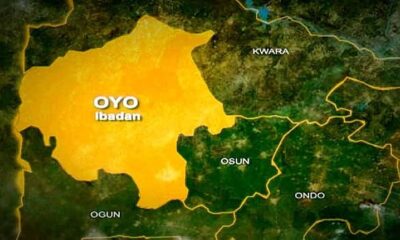
Oyo allied health workers suspend strike, resume Monday

Published

on

The Nigerian Union of Allied Health Professionals, Oyo State Hospital Management Board (OYSHMB) chapter, has suspended its ongoing industrial action for two weeks.

The suspension takes effect from 11:59 p.m. on November 22, while work resumes on the morning of November 23, according to NAN on Saturday.

The News Agency of Nigeria recalls that the allied health professionals embarked on an indefinite strike on October 28.

Among the union’s demands are the “payment of teaching allowance to members, implementation of skipping of CONHESS 10 as applicable to GL 11, and restoration of call duty allowance for dental therapists.”

Others include the “promotion of some Medical Laboratory Scientists and Radiographers who were denied promotion, and implementation of ward coat/lab coat allowance for members.”

The demands also include a review of the operational guidelines to accommodate members in management and other major committees in government hospitals across the state.

The decision was contained in an official communique issued after a meeting held on Thursday between the executive members of NUAHP OYSHMB and representatives of the Oyo State Government.

The communique, signed by the NUAHP OYSHMB Chairman, Olanrewaju Ajani; the General Secretary, Kayode Oyediran; and the Public Relations Officer, Olatunde Fatola, was made available to NAN on Saturday in Ibadan.

According to the communique, government representatives at the meeting included the Head of Service, the Commissioner for Establishment and Training, permanent secretaries, and representatives of OYSHMB and the State Ministry of Health (SMOH).

The union said government representatives appealed for the suspension of the ongoing industrial action, assuring it of concrete steps towards addressing its grievances and demands.

See also  Shake-up: Army redeploys senior generals

It said that, “after due consultation, deliberation and consideration of the government’s appeal, the union resolved to suspend the ongoing strike for an initial period of two weeks.”

The union said the” period would serve as an opportunity for the government to demonstrate its commitment through tangible actions towards resolving the issues raised.”

It added that, at the expiration of the two-week period, it would review the level of implementation and determine its next line of action.

(NAN)

Source: punchng.com

FOLLOW US ON:

FACEBOOK

WHATSAPP CHANNEL

TWITTER

PINTEREST

TIKTOK

YOUTUBE

LINKEDIN

INSTAGRAM

Continue Reading

Trending