Lifestyle
PHOTOS: HOW OPPONENTS WEAPONISED THE 1992 C-130 TRAGEDY AGAINST MY REGIME. I HAVE NO HANDS IN THE PLANE CRASH— IBB

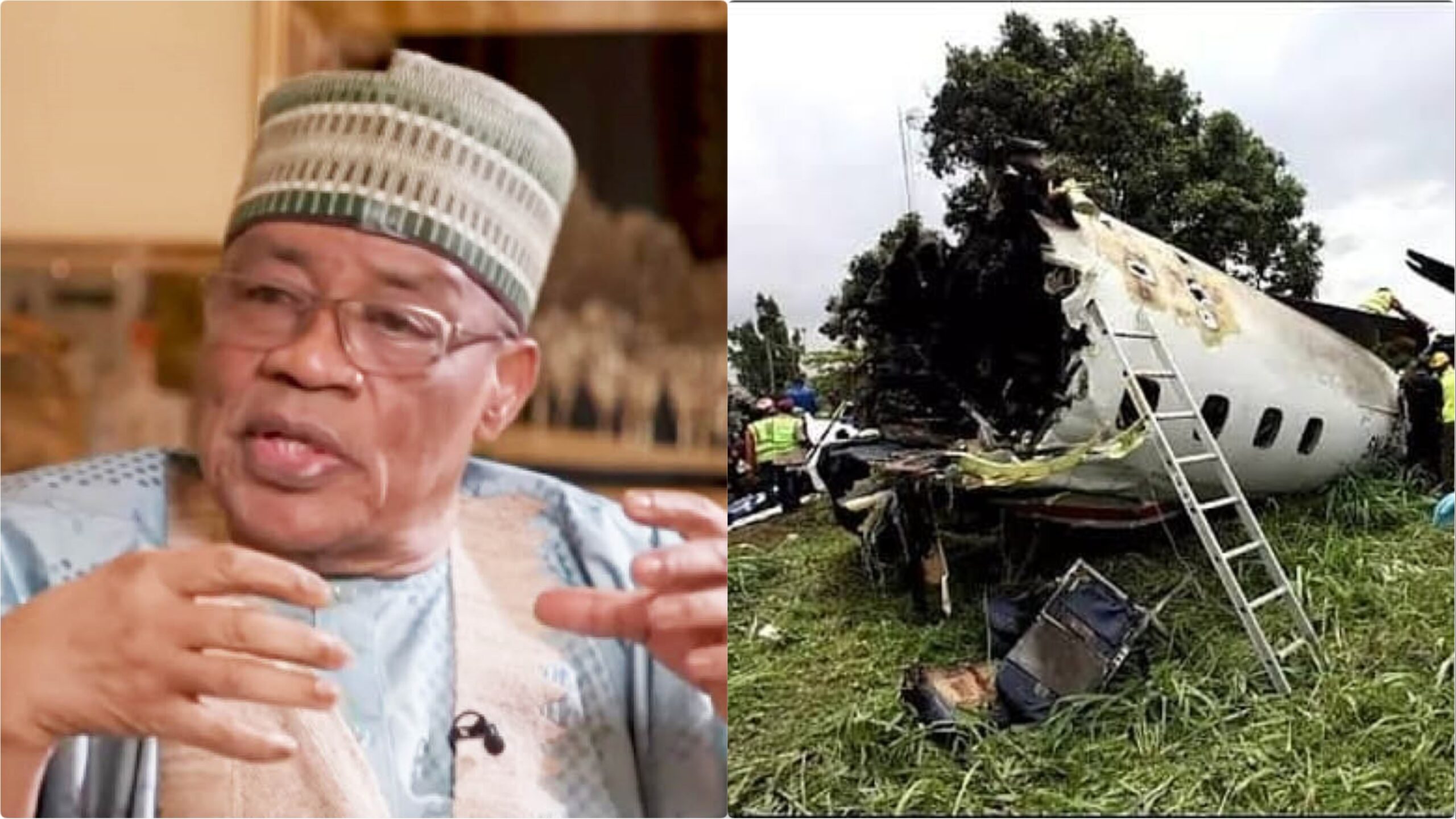
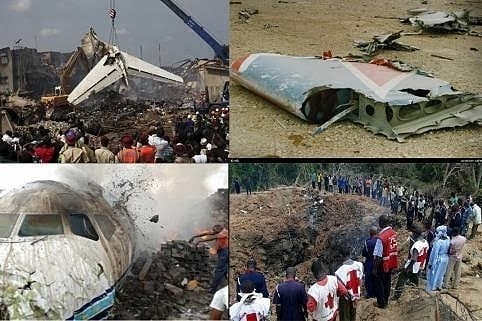
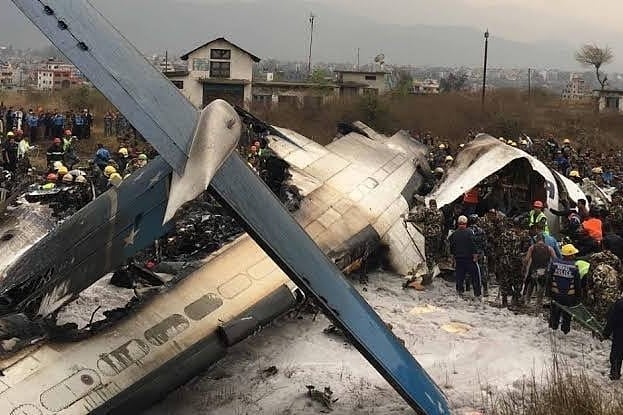
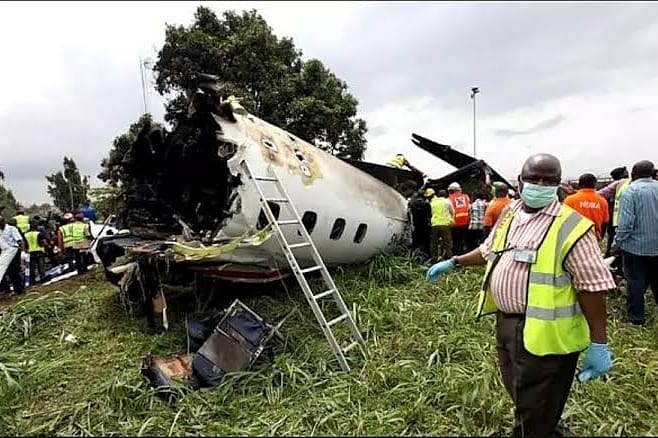
Amidst all the intricacies and collisions happening between the military and politics in the early 90’s and especially in 1992, a tragedy befell Nigeria and particularly the families and friends of about 151 military officers and civilians who perished on a Hercules C-130 flight. The flight, which was meant to ferry mid level officers from the airport in Ikeja to Kaduna, crashed just about 3 minutes into lift-off.
Some of the officers from NDA Regular Course 22 who missed the flight had originally been scheduled to take a Senior Course 15 of the Armed Forces Command and Staff College in Jaji, Kaduna They withdrew in the last minute when they expressed their preference to do the course with their own mates in the next around. Others who missed were within the bracket of the 19th, 20th, and 21st courses, and were tied up with military postings. In fact, a lot of the officers who were supposed to be on the flight did not board eventually because they left the airport after hanging around for days waiting for the flight.
And so it happened that on the evening of Saturday, September 26, 1992, at about 5 PM, the military aircraft, which was piloted by Wing Commanders J.P. Alabesunu and A.S. Mamadi finally got clearance from the control tower to take off.
Reports have it that one of the aircraft’s four engines failed immediately after takeoff. Then, a second engine failed shortly afterward as the pilot struggled to return to the airport. In the ensuing microseconds of crucial decision making, the crew tried to maneuver to ditch the fully-laden plane into the Ejigbo Canal for softer impact, but then; the third engine failed and it all went dark for both crew and passengers. The Hercules crashed nose down into a tropical mangrove swamp with one of the wings and the tail broken off.
While there are also conflicting claims that there were 163, 174, or 200 on board, there was no manifest for the flight to clearly ascertain this except the casualty count, which was estimated at 151 persons. The casualty list had a total of 151 involving 7 Lt. Colonels, 96 Majors, 1 Sergeant, 3 civilian staff, 26 Air Force, and 17 Navy officers died on the crash. Additionally, 5 Ghanaians, 1 Tanzanian, 1 Zimbabwean, and 1 Ugandan military officer died in the mishap.
Ideally, the Hercules C-130 had the capacity to carry up to 92 combat troops or 64 fully equipped paratroopers and can haul 20.4 tonnes of cargo. So, the C-130 airplane most likely did not crash because it had so many passengers on it.
In a period where conspiracy theories were rife, it was difficult not to point at a possible complicity of military top brass in the death of the 151 mid level officers. If at all a case could not be made for any reason the military leadership would want to wipe out junior officers, the lackadaisical attitude and the slow response to the rescue mission by then Head of State, Gen. Ibrahim Babangida, Chief of Defense Staff, Gen. Sani Abacha and other commanders on the ground saddled with intelligence and military welfare revealed their indifference about the death of their colleagues.
To quote Remi Oyeyemi, “It is on record that less than an hour of the crash, the British government offered to rescue the victims, and the offer was turned down by IBB. It is also on record that the U.S. government informed the IBB administration that they had a ship on the high seas very close to Nigeria that could be on the scene within a few hours of the crash to help in the rescue effort. It was turned down by IBB.”
Thirty three years after one of the deadliest air crashes in Nigeria’s history, no official report of the incident has been published. Even the widows of the officers involved in the crash were never really given all the benefits promised them. It took the Oputa Panel to compel the Ministry of Defense before some of the promises of death benefits were fulfilled.
The Hercules C-130 may not just have fallen out of the sky for natural causes or a motive to kill a group of promising military officers, but the administrative incompetence which characterizes many of the disaster response moves in the nation may have led to the death of the 151 persons in that ill-fated flight.
Former Military President General Ibrahim Badamasi Babangida has denied involvement in the 1992 C-130 military plane crash.
IBB made the denial in his personal memoir “A JOURNEY IN SERVICE” he presented to the public in Abuja.
“Mischief makers and rumour mongers were colouring the public perception of this accident. Some speculated that regime opponents in the armed forces had sabotaged the aircraft to vent their anger in the direction of the administration.
A more wicked version of the rumour was that the administration had somehow plotted to assemble these officers in one consignment for elimination for fear that they might be planning a coup against the military administration’s leadership based on the failed Gideon Orkar coup that had taken place earlier.
It was, however, an indication of the level of decay to which our public perception and discourse had descended. Political opponents weaponised tragedies against my administration. ” Babangida wrote.
Most of those who died were bread winners of their families.Some of them had very bright career prospects ahead. It was during the military era, and nothing could have stopped a few of them from becoming military administrators or board members of choice government agencies, but death ended all that.
See comment section for the names and ranks of the victims. Number 52, Major I K Nwuke was from my Local Government in Rivers State. His father was a regional minister in the old eastern region.
May their souls continue to rest in peace.
FOLLOW US ON:

Lifestyle
🔥 A HARD QUESTION FOR CHRISTIAN WIVES: WHY DO YOU RESPECT YOUR PASTOR MORE THAN YOUR HUSBAND?





🔥 A HARD QUESTION FOR CHRISTIAN WIVES: WHY DO YOU RESPECT YOUR PASTOR MORE THAN YOUR HUSBAND?

WHEN MAJOR DECISIONS ARE KEPT HIDDEN, THE FOUNDATION OF A MARRIAGE BEGINS TO CRUMBLE

Security forces storm Niger for rescue after Mass abduction

‘Sleeping Prince’ of Saudi Arabia dies after 20 years in coma

2027: Atiku delays ADC membership card collection amid rumoured Jonathan comeback

How A Class Of 24 Students Produced 2 Presidents, 4 Governors, 2 Ministers, 4 Emirs, 3 Justices, 4 Ambassadors and Other Influential Leaders


-

 News13 hours ago
President Tinubu orders comprehensive audit of IPPIS, Govt systems over ghost workers and fake agencies
-
News13 hours ago
‘I have evidence Tinubu is 90 years old, i can prove it in Court’ – Atiku
-
Crime13 hours ago
PHOTOS: Two extradited to US for alleged child exploitation and s#xtortion
-
Crime12 hours ago
Socialite KC Luxury sues NDLEA and demands N190m over alleged unlawful arrest, detention and invasion of privacy
-
News13 hours ago
Trump asks Supreme Court to uphold Military’s ban on Transgender Soldiers
-
Crime10 hours ago
Security forces storm Niger for rescue after Mass abduction
-
News12 hours ago
Togo, Niger, Benin owe Nigeria $11m for electricity supplied in 2025 – NERC
-
Crime13 hours ago
US to deport 10 Nigerians who are suspected criminal offenders