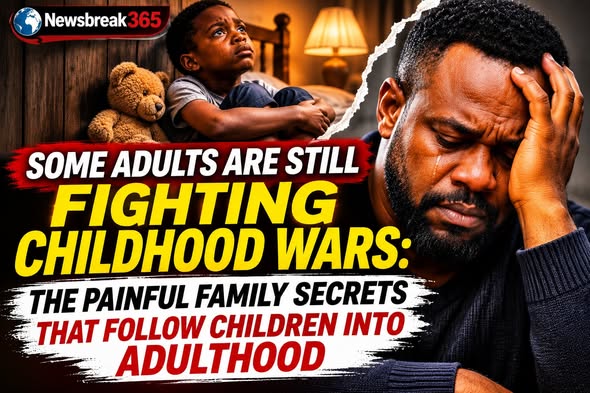
Some parents proudly boast about raising their children, but have they ever stopped to consider the emotional scars those children carried out of their childhood homes?**
Growing up does not automatically mean healing. Getting a job does not erase emotional wounds. Getting married does not suddenly teach someone how to love properly. And becoming a parent does not necessarily mean someone has overcome the pain of being a child.
There is a painful reality many families refuse to confront: some adults are still fighting battles that started behind the closed doors of their childhood bedrooms.
They are no longer children, but the memories remain.
Some learned to cry silently because nobody cared enough to ask what was wrong. Others learned to hide their feelings because expressing pain attracted punishment, insults or humiliation.
Some grew up believing they were never good enough. Others spent their childhood desperately seeking affection from parents who made love feel like a reward rather than something every child deserved.
And today, those children have grown into adults.
But what happened to them during childhood may still influence how they see themselves, how they trust people and how they build relationships.
## THE PARENTS WHO FORGOT WHAT THEY DID
Perhaps one of the most disturbing aspects of childhood emotional wounds is that the people responsible may not even remember what happened.
A parent may remember providing food, paying school fees, buying clothes and putting a roof over the family’s head.
But the child may remember something entirely different.
They may remember being constantly compared with other children, publicly embarrassed, called useless or made to feel unwanted.
They may remember being beaten for expressing an opinion, ignored when they needed affection or blamed whenever problems occurred in the household.
To the parent, it was just another day of discipline.
To the child, it may have been another day of feeling worthless.
And years later, when that child becomes emotionally distant, struggles with trust or refuses to maintain a close relationship, the same parent may ask:
“Why has my child changed?”
But perhaps the more uncomfortable question is:
**What happened to that child while you were busy raising them?**
## THE DAMAGE DOES NOT ALWAYS SHOW ON THE OUTSIDE
Not every wounded adult walks around looking miserable.
Some are successful businesspeople. Some are responsible husbands and wives. Some are hardworking parents. Others are the people everyone depends on when life becomes difficult.
They smile, laugh, work and appear perfectly normal.
But behind closed doors, they may struggle with insecurity, fear of rejection, emotional isolation and the constant feeling that they are not worthy of love.
Some find it difficult to accept compliments because they grew up being criticised.
Some become excessively independent because they learned that asking for help was pointless.
Others tolerate unhealthy relationships because emotional neglect became so familiar during childhood that they struggle to recognise what healthy affection looks like.
Of course, childhood experiences do not determine every adult’s behaviour. People respond differently, and healing is possible.
But pretending that childhood experiences have no lasting consequences is dishonest.
## WHEN THE VICTIM BECOMES A PARENT
Here is another uncomfortable reality.
Some adults who suffered emotionally during childhood unknowingly repeat the same behaviour with their own children.
The parent who was constantly shouted at may become a parent who shouts at every little mistake.
The child who was never allowed to express an opinion may grow into an adult who refuses to listen to their own children.
The person who grew up without affection may struggle to show affection to the next generation.
And suddenly, a painful family pattern continues.
This is how emotional wounds can travel from one generation to another.
However, childhood pain does not give anyone permission to hurt others. Every adult has a responsibility to recognise harmful behaviour and make an effort to break the cycle.
**You cannot change the childhood you experienced, but you can take responsibility for the childhood you give your own children.**
## SOME PARENTS WANT RESPECT BUT REFUSE TO ACCEPT RESPONSIBILITY
In many families, questioning a parent’s behaviour is treated as disrespect.
Children are expected to forgive, remain silent and maintain family relationships regardless of what happened in the past.
But respect should not mean pretending that painful experiences never happened.
Parents are human beings. They make mistakes. Many were themselves raised in difficult environments and never learned healthier ways of expressing love, discipline or disappointment.
That context matters, but it does not erase the consequences.
An apology does not make a parent weak. Acknowledging past mistakes does not destroy parental authority.
Sometimes, the most powerful thing a parent can say to a grown child is:
“I may not have understood what you were going through when you were young. I am sorry for the ways I hurt you.”
Unfortunately, some parents would rather lose their relationship with their children than admit they were wrong.
## THE QUESTION EVERY FAMILY SHOULD BE WILLING TO ANSWER
We spend so much time discussing children’s education, discipline, financial security and future success.
But how often do we discuss their emotional security?
How often do parents ask their children whether they feel heard, appreciated, protected and loved?
A child needs more than food, clothing and school fees. Children also need patience, reassurance, emotional support and a home where they do not constantly feel afraid of making mistakes.
The scars left by childhood experiences are not always visible, but that does not make them insignificant.
And perhaps the greatest achievement of parenting is not simply raising children who become financially successful adults.
It is raising children who do not have to spend their entire adulthood recovering from the emotional environment in which they were raised.
**THE FINAL QUESTION:**
Should parents be held accountable for the emotional wounds they leave behind, even when their children have grown into adults?
Or should grown children simply forgive, move on and stop bringing up the past?
There are two sides to this debate, and many families have stories they have never dared to tell.
**What is your opinion?**
Share your thoughts. Your experience may help someone understand a battle they have been fighting silently.
— **Newsbreak365 | Real Stories. Uncomfortable Conversations.**
FOLLOW US ON:
FACEBOOK
WHATSAPP CHANNEL
TWITTER
PINTEREST
TIKTOK
YOUTUBE
LINKEDIN
INSTAGRAM









 Videos2 hours ago