Connect with us

Lifestyle

Felicia Adetoun Ogunseye: Nigeria’s First Female Professor

Published

on

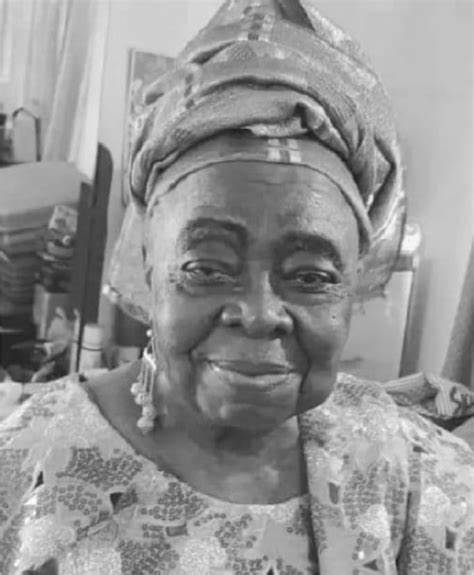
Professor Felicia Adetowun Ogunseye (née Banjo) holds the historic distinction of being Nigeria’s first female professor. A pioneer in Library and Information Science, she built a career that permanently transformed opportunities for women in higher education across the country.

Early Life and Education

Born on December 5, 1926, in Benin City, Ogunseye began breaking barriers early in life.

In 1946, she became the first female student admitted to Yaba Higher College, an institution then overwhelmingly male.

By 1948, she graduated with a teaching diploma, becoming its first female graduate.

Her academic journey continued abroad at the University of Cambridge, where she earned a Bachelor of Arts in Geography (1952) and later a Master of Arts (1956). She became the first Nigerian woman to receive a degree from Cambridge.

In 1962, she obtained a Master’s in Library Science from Simmons College (now Simmons University), equipping her for a distinguished career in librarianship, scholarship, and institutional development.

Academic Milestones

In 1973, Ogunseye was appointed Professor at the University of Ibadan, making her:

Nigeria’s first female professor

The first Professor of Library and Information Science in Nigeria

Between 1977 and 1979, she served as Dean of the Faculty of Education, becoming the first woman to hold a dean’s position in any Nigerian university. She retired in 1987 after decades of mentoring students and shaping Nigeria’s academic landscape.

Advocacy and National Impact

Beyond the university, Professor Ogunseye championed:

Women’s access to higher education

School library development nationwide

Children’s literacy initiatives

She founded the Abadina Media Resources Centre in Ibadan and worked as a consultant for international organisations including UNESCO and the World Bank. Her work consistently emphasized the connection between information access, education, and national development.

See also  REMEMBER YOUR AGE GROUP TODAY, AND DO NOT FORGET YOUR PURPOSE IN LIFE.

Family Background

Professor Ogunseye came from a family marked by remarkable achievement and historical tragedy.
Her younger brother, Victor Adebukunola Banjo, was a senior officer in the Biafran Army during the Nigerian Civil War. He was executed on September 25, 1967, on allegations of plotting a coup against Chukwuemeka Odumegwu Ojukwu.

Another brother, Ademola Banjo, excelled academically—graduating with a first-class degree in Mechanical Engineering from the University of Manchester in 1952 and later becoming the first Nigerian to earn a doctorate in Metallurgical Engineering in 1954.

Legacy

Now in her late nineties, Professor Felicia Adetowun Ogunseye remains a living symbol of courage, intellect, and perseverance. Her life story reflects the journey of a woman who entered institutions not originally designed for her, reshaped them through excellence, and left doors permanently open for generations of Nigerian women scholars.

Honors

Ogunsheye has received numerous accolades, including the Ford International Fellowship (1961), the Honorary D.L.S. from Simmons College (1969), the Fulbright Fellowship for Senior African Scholars (1980), and the Decade of Women Certificate of Merit for Outstanding Achievement (1985). She was named a Fellow of the Nigerian Library Association (1982) and the Nigerian Academy of Education (1985). In 1990, she was awarded an Honorary Doctor of Letters (D.Litt.) from the University of Maiduguri. She was also given the chieftaincy title of Iyalaje of Ile-Oluji in 1982. The University of Ibadan honored her by naming a female postgraduate hall after her.

Works

Ogunsheye’s academic publications include:

“The Role and Status of Women in Nigeria” (1960)
“A Preliminary Bibliography of the Yoruba Language” (1963)
“Library Education in Nigeria” (1968)
“Problem of Bibliographic Services in Nigeria” (1969)
“The Future of Library Education in Africa” (1976)
“Abadina Media Resource Centre: A Case Study in Library Service to Primary Schools” (1979)
She also edited Nigerian Women and Development (1988) and authored A Break in the Silence: A Historical Note on Lt. Colonel Victor Adebukunola Banjo (2001).
Children’s Books
My Alphabet Reading Book (1993)
My First Alphabet Book: A B C (1996)
My First Number Book: 1 2 3 (1996)
Lara and Kariba (2003)

See also  Chief Sodeke: Leading War Chief and Defender of Abeokuta

Archives

Her archives are now accessible to researchers, and the finding aids are available online.

Source

University of Ibadan archival records

Punch newspapers

FOLLOW US ON:

FACEBOOK

TWITTER

PINTEREST

TIKTOK

YOUTUBE

LINKEDIN

TUMBLR

INSTAGRAM

Continue Reading
Click to comment

Leave a Reply

Your email address will not be published. Required fields are marked *

Lifestyle

STOP CONFUSING WEALTH WITH SUCCESS! NOT EVERYTHING THAT GLITTERS IS GOLD!

Published

on

In Nigeria today, if you drive an expensive car, build a mansion, wear designer clothes, and spray money at parties, many people will automatically call you a successful person.

Nobody asks questions. Nobody looks deeper. Everybody wants to associate with you!

But if you live in a modest house, drive an ordinary car, and live within your means, some people will look down on you as if you have failed in life.

What a dangerous way to measure human worth!

We live in a society where appearances can earn you more respect than character, where people are celebrated for displaying wealth but rarely questioned about the values behind it.

A man may build a magnificent mansion while his family is falling apart. A woman may post beautiful pictures every day while struggling emotionally. Someone may spray millions of naira at parties but owe people money. Another person may be living quietly, paying their bills, raising their children, and building a secure future without making noise on social media.

Who is truly successful?

The problem is not wealth. There is absolutely nothing wrong with being rich, driving a luxury car, or living in a beautiful house. The problem begins when we judge people entirely by what they possess instead of who they are.

In Nigeria, we must stop teaching our children that success means becoming rich at all costs. We must stop worshipping politicians and celebrities simply because they display wealth. We must stop assuming that everybody who travels abroad is doing better than those who remain at home.

See also  Sacred Heart Hospital, Abeokuta: Nigeria’s First Hospital

A person’s lifestyle is not proof of their character, the source of their wealth, or the happiness they experience behind closed doors.

Dear Nigerians, learn to think beyond what your eyes can see. Ask questions. Examine facts. Value integrity over intimidation, wisdom over showmanship, and peace of mind over public applause.

Because at the end of the day, the size of your house cannot measure the quality of your life, and the price of your car cannot determine your worth as a human being.

LET ME ASK YOU A QUESTION:

If a Nigerian man drives a ₦150 million car but has no peace of mind, while another man drives an ordinary car, pays his bills, has a loving family, and sleeps peacefully every night, WHO IS TRULY RICH?

Are we celebrating genuine success in Nigeria, or have we become prisoners of appearances?

Drop your honest opinion in the comments. Let’s have a serious discussion!

Share this message if you believe Nigerians need to change the way they define success.

#Nigeria #NigerianSociety #NotEverythingThatGlittersIsGold #TrueSuccess #CriticalThinking #LifeLessons

FOLLOW US ON:

FACEBOOK

TWITTER

PINTEREST

TIKTOK

YOUTUBE

LINKEDIN

INSTAGRAM

Continue Reading

Lifestyle

AFRICAN FAMILIES: WHY DO WE KEEP REPEATING THE SAME MISTAKES FROM ONE GENERATION TO THE NEXT?
Published

on

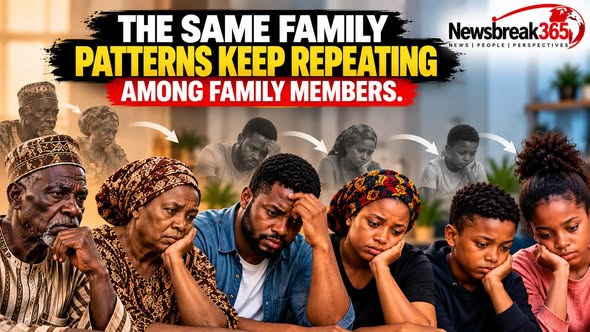
In many African families, the same problems seem to travel from grandparents to parents and from parents to their children. Different faces, different years, but sometimes the same suffering.

A grandfather who ruled through fear raises a father who believes that shouting is leadership. A mother who was silenced throughout her marriage may teach her daughter to endure the same treatment. Children who grew up watching their parents fight may enter adulthood without learning how to resolve conflict peacefully.

And when somebody dares to challenge these patterns, the response is often:

“THAT IS HOW WE WERE BROUGHT UP!”

But since when did the way we were raised become proof that everything we learned was right?

In some African households, questioning an elder is considered disrespect. Family secrets must remain hidden to protect the family name. Children are expected to obey, even when adults refuse to listen. Marriage problems are sometimes concealed to avoid public shame, while relatives pressure people to tolerate situations that deserve to be addressed.

We tell our children to respect their elders, but do we teach elders to respect their children?

We tell young people to preserve our culture, but do we encourage them to distinguish between valuable traditions and harmful habits?

We demand that children become successful, but do we examine the behaviours, attitudes, and family environments that shape their future?

AFRICAN CULTURE IS NOT THE PROBLEM. THE PROBLEM IS WHEN WE REFUSE TO QUESTION HARMFUL BEHAVIOURS SIMPLY BECAUSE THEY HAVE EXISTED FOR GENERATIONS.

See also  A Royal Ride Through Nigeria: The Prince of Wales' 1925 Visit (PHOTOS)

Our ancestors passed down wisdom, courage, community spirit, and valuable traditions. We should preserve those things. But we should not blindly inherit every fear, prejudice, unhealthy relationship pattern, or destructive family rule.

Respect does not require silence. Love does not require suffering. Tradition does not excuse wrongdoing.

The African family must learn that breaking a harmful cycle is not a betrayal of one’s parents. Sometimes, it is the greatest gift a person can give the next generation.

Imagine an African generation that teaches boys emotional intelligence instead of aggression, girls self-respect instead of silent endurance, parents communication instead of intimidation, and families honesty instead of protecting appearances.

THAT IS HOW GENERATIONAL CHANGE BEGINS.

One generation must have the courage to question what the previous generation accepted.

One generation must be willing to heal what the previous generation ignored.

One generation must decide that its children deserve better.

LET’S TALK! 👇🏿

What is one harmful pattern in African families that you believe must end with our generation?

Is it excessive parental control, favouritism among children, family pressure, toxic marriages, fear of questioning elders, or hiding family problems to protect the family name?

Speak your mind respectfully. Someone reading your comment may realise that a cycle they considered normal can actually be changed.

#AfricanFamilies #AfricanCulture #BreakTheCycle #GenerationalPatterns #FamilyValues #AfricanSociety #Newsbreak365

FOLLOW US ON:

FACEBOOK

TWITTER

PINTEREST

TIKTOK

YOUTUBE

LINKEDIN

INSTAGRAM

Continue Reading

Lifestyle

BIG HOUSES. LUXURY CARS. EXPENSIVE LIFESTYLES. LOTS OF MONEY. YET, STILL NOT HAPPY.

Published

on

We live in a world where people are constantly told that happiness is waiting for them behind a bigger house, a more expensive car, designer clothes, exotic vacations, and a bigger bank account.

But here is the uncomfortable truth:

You can afford almost everything and still feel empty inside.

You can sleep in a mansion and still struggle to find peace.
You can drive a luxury car and still cry when nobody is watching.
You can have millions in the bank and still feel lonely.
You can post a perfect life online while privately fighting battles nobody knows about.

Money can buy comfort.
Money can buy opportunities.
Money can buy beautiful experiences.

But money cannot automatically buy purpose, genuine love, inner peace, or emotional fulfilment.

And this is something many societies—including African societies—need to talk about.

We often celebrate people because of what they own rather than who they are. We admire the car before asking whether the person behind the steering wheel is actually happy.

Maybe success should not only be measured by what you can buy.

Maybe success is also having peace of mind, meaningful relationships, good health, purpose, and the freedom to enjoy your life without constantly proving your worth to others.

Because at the end of the day:

A wealthy life is not necessarily a fulfilled life.

What do you think?

Can money buy happiness—or does happiness come from something deeper?

#Money #Happiness #Success #Wealth #Life #AfricanPerspective #MentalWellbeing #CriticalThinking #Purpose #SocialMedia

FOLLOW US ON:

FACEBOOK

TWITTER

PINTEREST

TIKTOK

YOUTUBE

LINKEDIN

INSTAGRAM

See also  A BURNING LAMP CAN SEE THE FAULTS OF ANOTHER, BUT CANNOT SEE ITS OWN
Continue Reading

Trending