Sometimes, the greatest enemies of a family are not outsiders but the very people who share the same blood.**
There is a painful reality many people refuse to acknowledge: countless families have been torn apart, lifelong relationships have been destroyed, and siblings have become bitter enemies because of greed.
What is happening to family values? How can people who grew up under the same roof, ate from the same plate, shared childhood memories and survived difficult times together suddenly become strangers because of money, land, houses and inheritance?
The answer is uncomfortable: GREED!
## When Money Becomes More Important Than Family
It is shocking how quickly some people abandon their humanity when money enters the picture.
A brother who once protected his younger siblings suddenly becomes their greatest enemy. A sister who shared everything with her family begins fighting over inheritance. Relatives who once celebrated together start dragging one another to court over property.
Some people would rather see their own relatives suffer than allow them to benefit from something they believe belongs exclusively to them.
They manipulate, deceive, intimidate and sometimes destroy relationships that took decades to build, all because of material possessions.
But what exactly are they trying to achieve?
## Inheritance: The Beginning of Many Family Wars
One of the most painful sources of family conflict is inheritance.
When parents die, some families that should be supporting one another begin fighting over houses, land, businesses and money.
Instead of respecting the memories and sacrifices of their parents, some relatives turn the family estate into a battlefield.
The most disturbing part is that people who contributed nothing to acquiring the family property sometimes become the loudest voices demanding the largest share.
In some cases, greed becomes so extreme that siblings stop communicating, children grow up knowing their cousins only through family disputes, and generations inherit hatred they never created.
Imagine destroying an entire family because of a piece of land that will eventually belong to someone else.
## The Dangerous Relationship Between Wealth and Selfishness
Having money does not automatically make someone successful, responsible or respectable.
Some people accumulate wealth but lose their compassion along the way. They become so obsessed with ownership and personal advantage that they forget the importance of relationships.
They measure everything in financial value, including the people who stood beside them when they had nothing.
Unfortunately, some individuals only remember family when they need assistance, but when they acquire wealth, they suddenly develop an attitude of superiority.
They forget that life is unpredictable and that today’s financial advantage does not guarantee tomorrow’s security.
## The Children Are Often the Silent Victims
Perhaps the greatest tragedy is what happens to the next generation.
Children who should grow up together become separated because their parents cannot settle their differences.
Family gatherings become uncomfortable. Weddings become occasions for avoiding certain relatives. Funerals become opportunities for reopening old disputes.
The children inherit bitterness, suspicion and resentment instead of love, unity and family memories.
And the cycle continues.
How can we talk about building strong families when adults are deliberately destroying the relationships their children should inherit?
Political power has a strange way of changing people. Give some individuals a government position, a convoy of expensive vehicles, security escorts and access to public funds, and suddenly they begin to behave as though the entire nation belongs to them.
They forget where they came from. They forget the ordinary citizens who supported their political journey. Worst of all, they begin to treat the people they were elected to serve as if they were beneath them.
But here is a painful truth every politician must understand: **NO POLITICAL OFFICE IS PERMANENT, AND NO HUMAN BEING IS TOO POWERFUL TO BE FORGOTTEN OR HELD ACCOUNTABLE BY HISTORY.**
## When Power Turns Leaders Into Arrogant Masters
One of the greatest tragedies of leadership is watching someone who once begged for public support become someone who refuses to listen to the public.
Before elections, politicians visit communities, shake hands with ordinary citizens, make promises, attend local gatherings and present themselves as servants of the people.
But after securing political office, some suddenly become unreachable.
The same citizens who helped them win elections are now treated as disturbances. Critics are labelled enemies. Journalists asking difficult questions become threats. Anyone who disagrees with their decisions is considered disloyal.
Is that leadership, or is it an abuse of privilege?
A political position should be an opportunity to serve humanity, not an opportunity to intimidate people.
## Your Convoy Will Not Follow You Forever
Some politicians measure their importance by the number of vehicles in their convoy, the number of bodyguards surrounding them, the luxury of their residences and the number of people struggling to gain access to their offices.
But what happens when the political appointment ends?
What happens when the sirens stop, the security escorts disappear, the luxurious government vehicle is returned and the people who once praised you begin to move on with their lives?
Will anyone remember your generosity, your compassion and your contribution to society?
Or will your name become a reminder of arrogance, intimidation, broken promises and wasted opportunities?
**The greatest political tragedy is not losing an election. It is leaving office without leaving behind anything worth celebrating.**
## Beware of Those Who Surround You With Empty Praise
One of the biggest dangers facing powerful politicians is the company they keep.
When leaders surround themselves with sycophants, they gradually lose touch with reality.
Every decision becomes perfect. Every mistake is defended. Every criticism is interpreted as an attack. Their advisers become more interested in protecting their personal interests than telling them the truth.
Unfortunately, those who praise you while you are in power may be the first to abandon you when your political influence disappears.
Real leadership requires people who can tell you uncomfortable truths, not people who clap for every mistake you make.
## History Has No Permanent Favourite
Political power changes hands. Governments come and go. Political parties rise and fall. Formerly powerful individuals eventually become ordinary citizens.
But the consequences of leadership decisions can remain for generations.
A leader who invests in education, healthcare, infrastructure, justice and human development creates something that can outlive their administration.
A leader who uses power to humiliate opponents, silence critics, enrich themselves and intimidate ordinary citizens risks leaving behind a legacy of bitterness and disappointment.
History does not judge leadership by the number of expensive cars in a convoy or the size of a presidential palace.
It judges leadership by its impact on human lives.
## The Question Every Politician Should Answer
Imagine standing before the people you once governed without government security, political influence, public funds or the authority to command anyone.
Would they still respect you?
Would ordinary citizens proudly tell their children about your achievements?
Would the poor remember you as someone who gave them hope, or as someone who looked down on them?
These are questions every politician should ask themselves before arrogance destroys everything they worked to achieve.
**Power is an opportunity, not a permanent entitlement. Leadership is a responsibility, not a licence to behave like a king.**
The position you occupy today will eventually be occupied by someone else. The people you ignore today may be the same people whose judgement defines your legacy tomorrow.
Never confuse fear with respect. Never mistake silence for loyalty. And never believe that political power makes you greater than the people you were elected to serve.
### FINAL WORD: POWER EXPIRES, BUT YOUR LEGACY REMAINS!
A wise politician uses power to build people. An arrogant politician uses people to build personal power.
One earns respect that survives political retirement. The other discovers that applause purchased with fear disappears when the money and authority are gone.
**Remember this: YOU MAY CONTROL THE OFFICE TODAY, BUT YOU CANNOT CONTROL HOW HISTORY REMEMBERS YOU TOMORROW!**
### WHAT DO YOU THINK?
Should politicians who become arrogant after gaining power be remembered for their achievements, or should their mistreatment of ordinary citizens define their legacy?
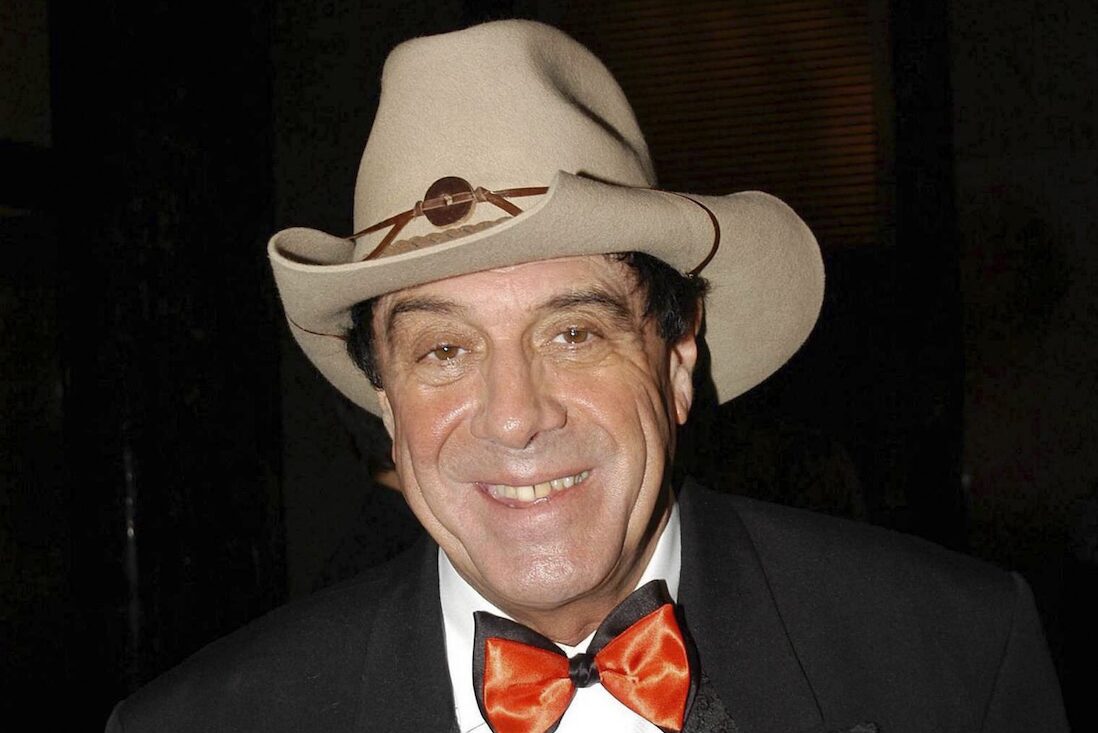
Australian music legend Molly Meldrum has died at the age of 83 following a long illness.
The veteran music promoter and broadcaster, whose real name was Ian Alexander Meldrum, passed away peacefully at a hospital in Melbourne in the early hours of Monday, his family confirmed in a statement.
Meldrum played a major role in shaping Australia’s music industry over several decades, championing local acts such as INXS and Kylie Minogue while promoting international stars, including ABBA.
Affectionately known as ‘the Guru’, he became a household name through his energetic personality, distinctive Stetson hat and remarkable contribution to music broadcasting.
In a statement announcing his death, his family described him as the heartbeat, champion and spirit of Australian music.
“Affectionately dubbed ‘the Guru’, Molly was the heartbeat, the champion and the spirit of Australian music,” the statement read.
Throughout his illustrious career, Meldrum interviewed several international celebrities, including King Charles and British music icon Elton John.
John once described him as the “single most important influence in Australian pop music”, recognising his enormous contribution to the country’s entertainment industry.
Meldrum rose to national prominence as the host of the Australian Broadcasting Corporation’s music television programme Countdown, where he helped introduce audiences to emerging Australian artists and international music stars.
He later featured on the popular variety programme Hey Hey, It’s Saturday, further establishing himself as one of Australia’s most recognisable television personalities.
One of his most memorable moments came during a 1977 interview with King Charles, then Prince of Wales.
Clearly nervous during the encounter, Meldrum stumbled over his words before famously admitting: “Your Royal Highness… Oh, oh, I’m sweating like a pig”.
Reflecting on the interview during Countdown’s 40th anniversary special, King Charles joked: “There is an old showbusiness saying which warns never to work with animals or children. But nobody prepared me for Molly Meldrum”.
Born in Victoria in 1943, Meldrum developed a passion for music from an early age and went on to become one of the most influential figures in Australian popular culture.
His life was marked by health challenges after he suffered an acquired brain injury following a fall from a ladder in 2011.
In recognition of his contribution to the music industry, Meldrum made history in 2014 as the first person who was not a recording artist to be inducted into the Australian Recording Industry Association (ARIA) Hall of Fame.
Australian Arts Minister Tony Burke also paid tribute to the late broadcaster, describing his death as a significant loss to the country.
“One of his greatest legacies will be the generations of Australians who grew up with his unmistakable enthusiasm and love of music. A true champion of Australian talent, you will be missed, but never forgotten,” Burke said.
Meldrum leaves behind a lasting legacy as a broadcaster, music promoter and passionate supporter of Australian talent, whose influence helped shape the country’s music scene for generations.
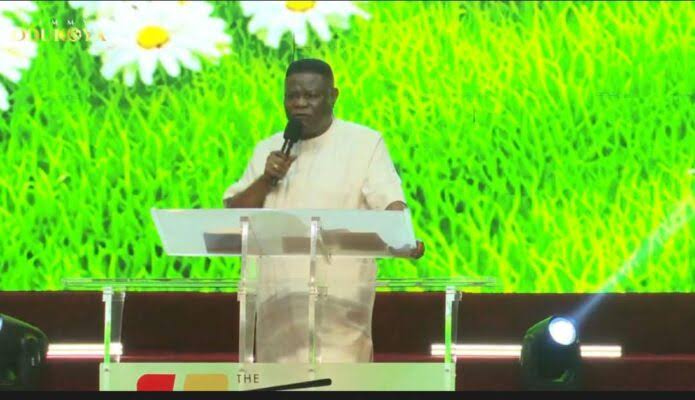
The Fountain of Life Church, Ilupeju, Lagos, on Sunday received an intervention from one of Nigeria’s prominent Pentecostal leaders, Bishop Mike Okonkwo, who, amid the escalating leadership crisis rocking the church, urged members not to take sides but to protect an institution he said was built on the blood, sacrifices and lives of its founders.
Okonkwo, founder of The Redeemed Evangelical Mission, said he had been prompted by the Holy Spirit to visit the church and bless its congregation after his telephone was inundated with calls over the preceding week, with people demanding to know why he had remained silent as the dispute between Pastor Jimmy Odukoya and his sister, Tolu, threatened the church’s unity.
But Jimmy, who also spoke during the service, addressed the interim court order restraining him from presenting himself as the church’s Senior Pastor and Spiritual Head, saying he had heard about the injunction but had not been formally served.
Okonkwo, in his sermon, said, “I have not slept since 1.30 am.
The Holy Spirit said to me, son, go to the Fountain and bless them. That’s why I am here,” he told the congregation.
Senior Pastor of The Fountain of Life Church, Pastor Jimmy Odukoya during his church’s Sunday service in Ilupeju, Lagos
His appearance and sermon, titled The Glory of the Church, were an attempt to redirect attention from the personalities at the centre of the dispute to the institution they inherited from their late parents, Pastor Taiwo and Pastor Bimbo Odukoya.
But beneath his generally conciliatory message were pointed admonitions that appeared to address the warring parties, the congregation and a wider public that has followed the controversy, cautioning against turning a leadership disagreement into a battle capable of destroying the church.
Opening with an assurance that “all is well”, Okonkwo recalled the traumatic period following Taiwo’s death, when he had addressed the congregation and urged members to preserve the legacy of the deceased founder.
“I remember when Pastor Taiwo passed, it was a traumatic time and experience. We cried, we wailed, we blew our noses and dried our tears, and the responsibility fell on me to come here to talk to us,” he said.
He said he had reminded the congregation at the time that the greatest honour it could pay the late pastor was to ensure that his life’s work continued.
“And I know one of the things I said that day is, please, the only honour we can do for the sacrifice, the price, the pains and everything… that the only thing is that the legacy must continue. And I told you that day that Fountain will never die.”
Pastor of the Fountain of Life Church, Jimmy Odukoya, and his sister, Tolu Odukoya
The bishop said he remained personally invested in the church and could not be indifferent to developments there.
“For the past one or two weeks, we have been literally battered on social media. There’s nothing that has not been said, both the ones that are true and the ones that are not true. Phone calls from far and near: ‘Bishop Mike, where are you?’” he said.
“You can’t separate me from Fountain because it is a covenant that God himself created by himself, so what happens to Fountain affects me. So don’t think that I am just aloof.”
However, the central thrust of his message was that the church was bigger than the individuals currently fighting over its leadership.
Drawing extensively from biblical passages on redemption, the value of the church and the sacrifices behind its establishment, Okonkwo argued that the institution could not be reduced to a human organisation whose survival depended on the fortunes of particular individuals.
“The church is not a human institution. It is God’s house. It belongs to him. Think of the price that God had to pay for his church,” he said.
He subsequently made one of the most direct references to the leadership dispute, telling members that their allegiance should not be to either of the Odukoya siblings or the church’s governing board.
“Every one of us, from myself downwards, should know: you are not for Tolu or for Jimmy or for the board. None of them died for you. Church is not a political party. The blood. Life was involved. The church is not an ordinary thing. God could not redeem the church with anything other than his life,” he said.
“We must be careful so that none of us will be an instrument of destroying the church of Christ.”
The appeal appeared directed not only at the two sides in the dispute but also at members whose public declarations of support, social media exchanges and competing narratives have increasingly made the crisis a subject of wider controversy.
Okonkwo’s emphasis on the sacrifices of the founders also appeared intended to remind the contending parties of the responsibility attached to the institution they inherited. He insisted that the present difficulties were not evidence that God had abandoned the church, arguing that its challenges had already been anticipated in God’s plan.
Using Jesus Christ’s illustration in Luke 14:28 of a builder who must first calculate the cost of constructing a tower, Okonkwo questioned why members would allow the present crisis to unsettle their faith in the church’s future.
“Question, Fountaineers, are you saying that Jesus did not factor in the challenges you will go through? He is saying that if I want to build a house, I will first of all be sure that I have all that is necessary, and he is the builder of the house, we are the building. Are you saying that all the crises, all the gossips, all that is happening to you individually is taking you by surprise?” he asked.
“He has already factored all those in even before you were called. He has already taken care of business. That is why I know without shadow of doubt whatever the devil does, he is already a failure. The believer never ever ends in shame.”
But while assuring the congregation that the church would survive, the bishop also warned against reactions that could aggravate its problems.
“Do you know the challenges of the believers? When trials come, temptations come, difficulties come, we fall apart, we forget what he told us, we begin to run helter-skelter, and many times we do the things we are not supposed to do and further arm the devil,” he said.
“If there was a time Fountaineers needed to chill, it is this time. Let God perfect what he has started.”
He declared that the church would eventually surpass the achievements of its late founder. “This church is going to do seven times more than Taiwo left it,” he said.
“The game is not over. You are still in the will of God. You are still in his hands. God has not left this church. And can I tell you, he will never leave this church; the glory of God remains in this house.”
He ended with a call for collective responsibility, assuring members that the church would not be destroyed by the present controversy.
“Be assured. No matter what anyone says, that is not your business. We will build this church. Together we will build this church.”
Jimmy’s personal battle
But the atmosphere that followed Okonkwo’s sermon suggested that the bishop’s appeal for a collective response to the crisis might not have entirely displaced the personal dimension of the dispute.
Jimmy, who addressed the congregation after Okonkwo, appeared to frame the unfolding controversy more directly around his own predicament, a departure from the senior bishop’s sustained emphasis on the survival of the institution beyond its current leadership.
He mounted the pulpit and sang the popular hymn It Is Well with My Soul before moving to gospel musician Dunsin Oyekan’s My Worship Is My Weapon, whose refrain declares worship as a means of winning personal battles.
The choice of songs, coming immediately after Okonkwo had urged members not to identify with either of the contending parties, shifted the emotional emphasis towards a personal struggle and appeared to reinforce the perception among his supporters that he was fighting an unjust campaign against him.
Jimmy was the only party to the leadership dispute who addressed the congregation during the service.
He subsequently addressed the interim court order restraining him from presenting himself as the church’s Senior Pastor and Spiritual Head, saying he had heard about the injunction but had not been formally served.
“I heard that there was an injunction against me. I heard. I’ve not seen it. But I heard. But I’ve not been served. So, legally, I’ve not been served,” he said.
He also thanked members for remaining at the church despite the controversy and assured them of his continued commitment to their interests.
“In spite of everything, you are still here,” he said. “There is no Fountain without you. You are Fountain of Life. And as long as you are with me, I will continue to speak for you. I will continue to stand with you.”
While the remarks were likely to reassure his supporters, they offered little indication of an immediate willingness to de-escalate the dispute or pursue reconciliation with the opposing side.
Towards the end of the service, as the choir continued singing, Jimmy walked up to the choir leader at least twice to whisper instructions. On one occasion, the choir subsequently sang the popular gospel song in Pidgin by Bidemi Olaoba, Who Dey Talk Wetin God No Talk, a primarily individualistic chorus that became the closing song.
The choice of song, with its message about disregarding declarations contrary to God’s will, added another layer to the service’s underlying contest of narratives.
Jimmy also appeared determined to maintain his position as the church’s leader despite the legal challenge, leaving the question of reconciliation unresolved.
The Odukoya legacy
The controversy has also revived questions about the personality, public conduct and religious identity of the Odukoya family, particularly as Jimmy’s unconventional appearance and style of ministry continue to attract criticism from sections of the Christian community.
Tattooed, dreadlocked, fond of swaggering dance routines and wearing earrings, Jimmy has attracted considerable attention for a public persona that departs from the conventional image of a Pentecostal pastor in Nigeria.
But the apple did not fall far from the tree.
His late mother and co-founder of The Fountain of Life Church, Bimbo Odukoya, also faced considerable criticism during her lifetime for challenging the conservative social conventions and strict codes of appearance that characterised much of Nigeria’s expanding Pentecostal movement in the 1990s and early 2000s.
At the time, many Pentecostal churches maintained restrictive expectations around dressing, hairstyles, jewellery and other forms of personal adornment, reflecting a broader doctrine of separation from worldly influences.
Pastors’ wives were generally expected to dress in long skirts and modest clothing, often complemented by church hats and restrained accessories.
Bimbo, however, cultivated a considerably different public image. Her fashionable outfits, shorter skirts, wigs and jewellery attracted criticism from conservative Christians who considered her appearance inconsistent with the standards expected of a pastor’s wife.
Yet, her appearance was accompanied by a formidable preaching ministry. Her sermons, which frequently focused on purpose, relationships, leadership and personal development, established her as one of the more recognisable female Christian voices of her generation.
She was also known for her forceful, scripture-based responses to criticism, challenging interpretations of biblical doctrines that she considered unnecessarily restrictive.
Her ability to combine an unconventional public image with an intellectually engaging preaching style helped distinguish her from many of her contemporaries.
Jimmy’s public persona, however, has generated a different kind of debate. While his appearance and contemporary style have endeared him to a section of younger Christians, questions have persisted over whether his public responses and conduct consistently reflect the temperament, depth and intellectual maturity expected of someone leading a large congregation.
The distinction is particularly evident in the way both generations have approached public criticism.
During Sunday’s service, Okonkwo used a football analogy, drawing on the nature of a Manchester United match, to explain that conceding a goal did not mean the referee would immediately end the game. The match would continue until the allotted time elapsed before the final result was determined.
The analogy was a measured attempt to contextualise the reputational damage the church might have suffered, reminding members that the present controversy was not the end of its institutional story.
It contrasted with Jimmy’s own much-discussed social media engagement with Manchester United, in which he adapted a popular Christian song, invoked the name of Christ while praying for the club’s victory, and danced before the camera.
The performance attracted criticism from social media users who considered it unbecoming of a pastor of his stature.
The criticism raises a broader question about the boundaries between contemporary Christian expression, personal branding, and the public responsibilities attached to pastoral leadership. While younger audiences may appreciate Jimmy’s informality and entertainment-oriented presentation, the same approach can be received differently by members of a religious institution whose identity was shaped by more conventional standards of pastoral conduct.
Indeed, Nigerian Pentecostal churches are increasingly confronting the challenge of negotiating these competing expectations.
The country’s large youth population is growing up in an environment shaped by the internet, international entertainment, social media and cultural influences that increasingly challenge traditional assumptions about dressing, music, personal expression and religious identity.
Tattoos, dreadlocks, earrings and contemporary dance styles, once widely regarded with suspicion in conservative Christian circles, have become increasingly common forms of expression among younger generations.
Some Pentecostal leaders have argued that these practices are not inherently sinful and should not be confused with a person’s spiritual disposition.
Even traditionally conservative denominations, including the Deeper Christian Life Ministry, have over time deemphasised or relaxed some of their earlier positions on aspects of dressing, hair covering, jewellery and contemporary music.
The challenge for churches is how to accommodate a changing generation without losing the doctrinal identity and institutional traditions that defined their establishment.
For The Fountain of Life Church, this generational transition is history re-unfolding alongside a particularly sensitive leadership dispute involving the children of its founders.
The immediate legal battle remains unresolved. The Lagos State High Court, presided over by Justice O.O. Adewunmi-Oshin, issued an interim order on Wednesday, November 18, restraining Jimmy from presenting himself as the church’s Senior Pastor and Spiritual Head.
The order followed an application by the Incorporated Trustees of The Fountain of Life Church. The court also restrained him, either personally or through proxies, from interfering with or disrupting the church’s activities, governance and other business.
The matter was adjourned until December 1 for mention.
Sunday’s service offered little indication that the dispute was nearing a resolution. While Okonkwo sought to redirect the congregation’s attention to the church’s founding vision and collective future, Jimmy’s address placed his own position and relationship with members at the centre of the unfolding controversy.
For a church founded on the ministry and public identities of Taiwo and Bimbo Odukoya, the crisis is now testing not only the succession arrangements but also the meaning of the legacy they left behind.
Okonkwo’s message was that the church must survive its present troubles and become greater than it was under its founders. Whether those now contesting its leadership can subordinate their differences to that vision remains the more immediate test.