Connect with us

Lifestyle

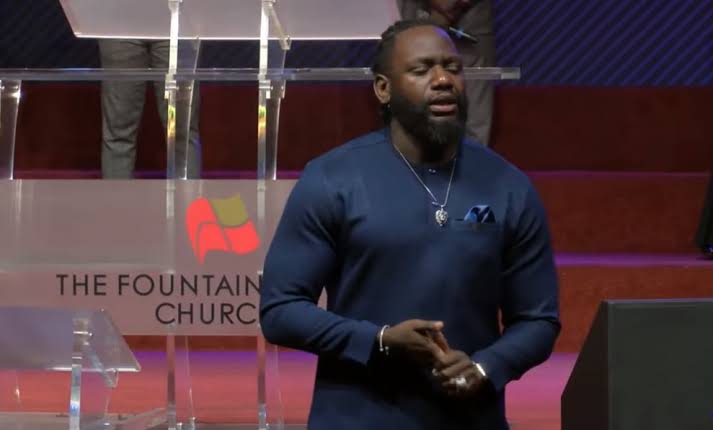
Fountain board drags Jimmy Odukoya to court for contempt

Published

on

The Incorporated Trustees of the Fountain of Life Church have initiated contempt enforcement proceedings against Jimmy Odukoya over his alleged failure to comply with a court order restraining him from parading himself as the church’s Senior Pastor and Spiritual Head.

The church, through its counsel, Ibitayo Reju, on Monday obtained an order of substituted service from the Lagos State High Court, authorising it to serve Odukoya with Form 48, a notice warning of the consequences of disobeying an order of court.

Justice O. O. Adewunmi-Oshin, sitting at the Lagos High Court, granted the application in suit number LD/0126PRA/2026, permitting service through newspaper publications, pasting at Odukoya’s last known address at No. 12 Industrial Estate Road, off Town Planning Way, Ilupeju, Lagos, and electronic means.

The judge also directed Odukoya to appear before the court on November 26, 2026, to show cause.

Form 48, issued on November 23 pursuant to Section 72 of the Sheriffs and Civil Processes Act and Order IX Rule 13 of the Judgment (Enforcement) Rules of Court, warned Odukoya that failure to comply with the order made on November 18 would amount to contempt of court and expose him to committal to prison.

The notice, addressed to Odukoya at his last known address in Ilupeju, stated: “Take notice that unless you obey the Order of this Honourable Court (annexed to this process) made on 18 November 2026, you will be guilty of contempt of Court and will be liable to be committed to prison.”

See also  Hajia Bola Muinat Shagaya: Nigeria’s Business Icon and Fashion Patron (PHOTOS)

The contempt proceedings followed an ex-parte order made by Justice Adewunmi-Oshin on November 18, restraining Odukoya, whether acting personally or through proxies, from holding himself out as the Senior Pastor and Spiritual Head of the church.

The court also restrained him from interfering with, disrupting, meddling with or obstructing the activities, governance, and other affairs of the church.

The church had argued in its application that Odukoya had ceased to occupy the position following the appointment of a successor by its late founder and Senior Pastor, Pastor Taiwo Odukoya, in accordance with the church’s constitution.

While granting the application, the judge also gave the church leave to commence the action under the pre-action protocol provisions of the Lagos State High Court (Expeditious Disposal of Civil Cases) Practice Direction No. 2 of 2019.

The court directed that the originating processes and accompanying documents be served on the respondent and that he file his response within the timelines prescribed by the Practice Direction.

The judge, however, expressly stated that the November 18 order was made ex parte and without prejudice to Odukoya’s right to apply to set it aside or respond fully to the substantive claims upon being served.

At Monday’s proceedings, Reju appeared for the applicant, while Odukoya was unrepresented. Both parties were absent.

The matter was adjourned to November 26 for Odukoya to show cause,the matter was initially adjourned to December 1, 2026, for mention before  Monday’s proceedings.

Source: punchng.com

FOLLOW US ON:

FACEBOOK

WHATSAPP CHANNEL

TWITTER

PINTEREST

TIKTOK

YOUTUBE

LINKEDIN

INSTAGRAM

Continue Reading
Click to comment

Leave a Reply

Your email address will not be published. Required fields are marked *

Lifestyle

Ex-Kaduna gov demands Daura emir’s suspension over sexual assault allegation

Published

on

A former Military Governor of Kaduna State, Col. Abubakar Dangiwa Umar (retd.), has called on the Katsina State Governor, Dikko Radda, to suspend the Emir of Daura, Alhaji Faruk Umar Faruk, over allegations of sexual assault levelled against him by a Polish tourist.

Umar, in an open letter to the governor, urged the state government to suspend the traditional ruler pending a thorough, impartial and transparent investigation into the allegation.

ArewaPUNCH reports that the call came amid growing controversy over a viral video reportedly showing the Emir in an encounter with the female tourist, Mirka Czee, who accused him of touching her breasts without her consent during a visit to his palace.

The tourist, who uses the Instagram handle @beduinqa, has maintained that she was sexually assaulted during the encounter, while the Daura Emirate Council says it is examining the footage to establish its authenticity and determine whether it has been manipulated or artificially generated.

In the letter dated Novemeber 22, 2026, a copy made available to ArewaPUNCH on Monday, Umar described the allegation as disturbing, saying that if the video was authentic, the conduct would amount to an abuse of the dignity, authority and responsibilities attached to the traditional institution.

He said the Emir’s position was not merely ceremonial but carried enormous moral, cultural and historical responsibilities.

According to him, occupants of revered traditional offices are expected to demonstrate dignity, restraint and exemplary conduct.

“Any behaviour such as this that brings the institution into disrepute inevitably diminishes public confidence in traditional leadership generally,” he said.

See also  Tinubu, Soyinka, Ladoja relive NADECO battle at Opadokun’s book launch; read details

Umar expressed concern that previous reports of alleged misuse of power by the Emir had reportedly caused embarrassment and anxiety among traditional rulers and members of the public.

He urged Radda to exercise his constitutional and statutory powers to suspend Faruk immediately, adding that if the allegations were established, the Emir should be deposed without delay.

The former military governor, however, stressed that suspension pending investigation should not be interpreted as a declaration of guilt.

Rather, he said, it would demonstrate that nobody, irrespective of age, status or traditional authority, was above accountability.

Meanwhile, Czee has given a detailed account of her alleged experience at the palace, explaining why she decided to make the incident public.

The Polish tourist, who was born in the Czech Republic, said she had travelled across several parts of Nigeria, including Oron, Calabar, Ibadan, Benin City, Lagos, Abeokuta, Osogbo, Ilorin, Abuja, Jos, Bauchi, Dutse, Kano, Zaria, Katsina and Daura.

She said she travelled by public transport and interacted with residents as part of her efforts to experience Nigeria’s culture and diversity, adding that she had mostly encountered kind, helpful and hospitable people.

Recounting her visit to the Daura palace, Czee said she was introduced to the Emir, who instructed his dignitaries to take her for a meal and show her around the palace and its surroundings.

She said she learnt about Daura’s history, including its place in Hausa history, stories about female rulers and the account of a prince from Baghdad who killed a snake at a well.

She also visited different rooms and the palace stables, where she rode a horse.

See also  Akwa Ibom flood victims recount losses, seek government’s intervention

According to her, she was later taken back to the Emir but was surprised when she was left alone with him in a large room.

She alleged that the Emir asked her to sit close to him on a couch, held her hand and began playing with it, making her uncomfortable.

Czee said she lowered the Meta glasses on her head and activated their recording function while trying to maintain their conversation.

“I felt we sat too close, I felt uncomfortable that he grabbed my hand and started to play with it,” she wrote.

She further alleged that the Emir later hugged and kissed her on the cheek as they stood up before touching her breasts without her consent.

“I just couldn’t believe he did it. I reacted with lots of ‘no, no, no, no Emir’ and he repeated after me ‘no, no, no’ with laughter. I said, ‘you cannot be touching’,” she alleged.

Explaining why she decided to publish the recording, the tourist said she believed other women might have experienced similar unwanted advances without having the opportunity or means to speak out.

She said, “Because it happened to me. Because I had a chance and a tool to record it, and because I believe it happens to so many other women who don’t have a chance to speak up.”

Czee stressed that her concern was not simply about an alleged incident in a public space but that it happened inside the palace of a traditional ruler.

“I wasn’t grabbed by boobs on streets of Nigeria, even in crowded places, but in a palace of traditional leader who should be showing exemplary ways of behaviour. And he did not. I was a guest in his country, in his region, in his city, in his palace. And I was assaulted,” she wrote.

See also  See the travails of Nigerian parents struggling to raise children abroad

She also said the incident had affected her emotionally and that she needed time and space to recover.

Source: punchng.com

FOLLOW US ON:

FACEBOOK

WHATSAPP CHANNEL

TWITTER

PINTEREST

TIKTOK

YOUTUBE

LINKEDIN

INSTAGRAM

Continue Reading

Lifestyle

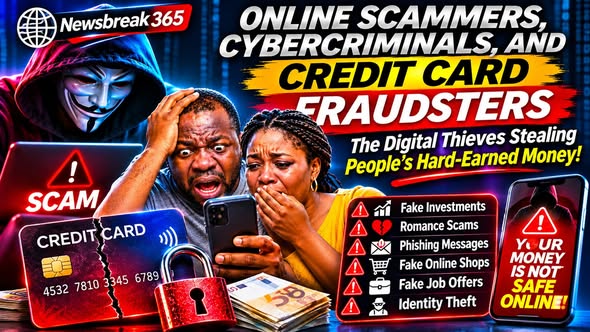
ONLINE SCAMMERS, CYBERCRIMINALS AND CREDIT CARD FRAUDSTERS: THE DIGITAL THIEVES STEALING PEOPLE’S HARD-EARNED MONEY

Published

on

They don’t need guns, masks or physical weapons to rob you. All they need is your phone number, an internet connection, a convincing lie and one careless click!**

The internet was created to connect people, make life easier, support businesses and provide opportunities. But behind the convenience of the digital world lies a dangerous criminal underworld where innocent people are being manipulated, deceived and financially destroyed.

Today, some criminals no longer need to break into your house to steal your valuables. They can sit thousands of kilometres away, hide behind fake identities and empty your bank account without ever coming face to face with you.

Welcome to the frightening world of online scammers, cybercriminals and credit card fraudsters.

## THE NEW GENERATION OF THIEVES DOES NOT NEED TO ENTER YOUR HOUSE!

Imagine waking up one morning, checking your bank account and discovering that money you worked extremely hard to earn has disappeared.

You contact your bank. You check your transactions. You become confused, frightened and desperate to understand what happened.

But the person responsible may be sitting comfortably somewhere, enjoying money stolen from people who trusted the wrong individual.

This is the devastating reality of internet fraud.

Cybercriminals exploit technology, human emotions, financial desperation and people’s trust to achieve their criminal objectives.

And the frightening part? Their next victim could be anybody.

## 10 DANGEROUS TRICKS DIGITAL CRIMINALS USE TO STEAL YOUR MONEY

**1. Romance scams: When fake love becomes a financial trap**

Some scammers create attractive fake profiles, pretend to be interested in relationships and spend weeks or months building emotional connections.

Once they gain someone’s trust, the stories begin: medical emergencies, travel expenses, business problems and unexpected financial difficulties.

See also  Tinubu, Soyinka, Ladoja relive NADECO battle at Opadokun’s book launch; read details

Before the victim realises what is happening, thousands of euros may have disappeared.

**2. Fake investment opportunities**

They promise unbelievable profits from cryptocurrency, forex trading, online businesses and other investment schemes.

They display fake testimonials, fabricated profits and impressive-looking websites to convince victims that their money is growing.

Some even allow victims to withdraw small amounts initially to build confidence before demanding larger deposits.

**3. Credit card fraud**

Stolen card details can be used for unauthorised purchases and other fraudulent transactions.

Criminals may obtain financial information through phishing, compromised websites, data breaches or other illegal methods.

**4. Phishing messages and fake bank alerts**

You receive a message claiming that your bank account has been blocked or that an urgent security update is required.

A link takes you to a fake website designed to steal your banking credentials.

One careless click could expose sensitive information.

**5. Fake online shopping websites**

They advertise expensive phones, electronics, clothing and household products at unbelievable prices.

Customers make payments but receive nothing. Some websites disappear shortly after collecting payments.

**6. Fake job recruitment schemes**

People desperately searching for employment become targets of criminals pretending to represent legitimate companies.

Victims are asked to pay registration fees, processing charges or provide sensitive personal information.

**7. Identity theft**

Your personal information can be stolen and used to impersonate you, open fraudulent accounts or deceive other innocent people.

**8. Social media impersonation**

Scammers clone accounts belonging to friends, relatives, celebrities and businesses.

They then contact unsuspecting people with urgent requests for money.

**9. Fake giveaways and prize notifications**

Congratulations! You have won a prize!

See also  Bola Ige: The Cicero of Esa-Oke

But before collecting your imaginary winnings, you are instructed to pay a processing fee, provide banking information or disclose personal details.

The prize never existed.

**10. Fake customer support representatives**

Criminals pretend to represent banks, technology companies or online platforms.

They offer to solve problems but may actually be attempting to obtain passwords, verification codes or remote access to devices.

## WHY ARE SO MANY PEOPLE FALLING VICTIM?

The answer is uncomfortable: criminals understand human psychology.

They know how to exploit fear, greed, loneliness, desperation, ambition and trust.

Someone looking for love may become vulnerable to a romance scam. Someone desperate for employment may believe a fraudulent job offer. Someone struggling financially may be attracted to promises of extraordinary investment returns.

These criminals do not always attack computers first. Sometimes, they attack people’s emotions.

## THE VICTIMS ARE NOT ALWAYS IGNORANT PEOPLE

One dangerous misconception is that only uneducated or careless people fall victim to internet fraud.

That is simply not true.

Educated professionals, business owners, entrepreneurs, students, pensioners and financially experienced individuals can all be deceived.

Sophisticated scams can look remarkably convincing, and criminals constantly change their methods.

Being intelligent does not automatically make someone immune to manipulation.

## HOW TO PROTECT YOURSELF

– Never disclose your banking PIN, passwords or one-time verification codes.
– Never click suspicious links sent through emails, text messages or social media.
– Verify investment companies before transferring money.
– Never send money to someone you have only met online without independently verifying their identity and claims.
– Use strong, unique passwords and enable two-factor authentication.
– Activate transaction alerts from your bank.
– Regularly check your bank and credit card statements.
– Contact your bank immediately if you suspect fraud.
– Report suspicious websites, accounts and financial transactions to the appropriate authorities.

See also  King George Pepple Orugbeji of Bonny (1849–1888)

If your card details have been compromised, contact your bank immediately to block the card and dispute unauthorised transactions.

## THE BIG QUESTION: HOW DO WE STOP THIS DIGITAL CRIME EPIDEMIC?

Technology is advancing, but criminals are also becoming more sophisticated.

Banks, governments, technology companies, law enforcement agencies and social media platforms all have important roles to play in preventing financial fraud and protecting innocent people.

However, public awareness remains one of the strongest weapons against deception.

People must understand that an attractive offer is not necessarily a legitimate opportunity, an online relationship is not proof of genuine love, and a convincing message does not automatically mean it came from a trusted institution.

**Your hard-earned money deserves protection. Your personal information deserves security. And your trust should never become somebody else’s opportunity to exploit you.**

## WHAT DO YOU THINK?

Have you ever been contacted by an online scammer?

Have you or someone close to you lost money through credit card fraud, fake investments, romance scams or fraudulent online businesses?

Should banks and social media companies do more to protect innocent people from digital criminals?

Share your experiences and opinions in the comments. Your story could prevent another person from becoming a victim.

**NEWSBREAK365 WARNING: THINK BEFORE YOU CLICK. VERIFY BEFORE YOU PAY. NEVER ALLOW A STRANGER ONLINE TO CONTROL YOUR FINANCIAL FUTURE.**

*Stay informed. Stay alert. Stay protected.*

FOLLOW US ON:

FACEBOOK

WHATSAPP CHANNEL

TWITTER

PINTEREST

TIKTOK

YOUTUBE

LINKEDIN

INSTAGRAM

Continue Reading

Lifestyle

THE BUSINESS OF DEATH: How Criminals Are Turning Fake Drinks and Counterfeit Drugs Into a Deadly Industry

Published

on

Behind attractive bottles, familiar medicine packaging and convincing labels lies a dangerous underground trade that puts millions of consumers at risk. For some criminals, human life is simply the price of doing business.**

Imagine walking into a shop, purchasing your favourite alcoholic drink or buying medicine for a loved one, believing that what you are taking home is genuine.

But what if the bottle contains contaminated alcohol? What if the medicine you purchased contains the wrong ingredients? What if the product you trusted to protect your health is actually putting your life in danger?

This is the frightening reality of counterfeit drinks, fake medicines and illegally manufactured drugs.

And the biggest question is this: **How did human life become so cheap that criminals are willing to manufacture and sell potentially deadly products simply to make money?**

## When greed becomes more important than human life

Counterfeit products are not merely a problem of dishonest business practices. They represent a serious threat to public health, consumer safety and the survival of vulnerable communities.

Across markets and distribution networks, counterfeiters attempt to imitate genuine products, reproduce familiar packaging and deceive unsuspecting customers.

Their objective is simple: make illegal products look legitimate enough to sell.

The consequences, however, can be devastating.

People may unknowingly consume dangerous alcoholic beverages, take medicines that contain incorrect ingredients or purchase products manufactured without proper quality controls.

For the criminals behind these operations, the priority is profit. For the unsuspecting consumer, the consequences could be permanent disability, serious illness or death.

## 1. Fake alcoholic drinks: A bottle that could become a death sentence

One of the most disturbing aspects of counterfeit alcohol is that consumers may have no reliable way of identifying dangerous contents simply by looking at the bottle.

See also  Tinubu, Soyinka, Ladoja relive NADECO battle at Opadokun’s book launch; read details

Illegally produced or adulterated alcoholic beverages can contain toxic substances, including methanol.

Methanol poisoning can cause blindness, permanent neurological damage and death.

Imagine celebrating a birthday, attending a wedding or enjoying an evening with friends, only for a counterfeit drink to turn that moment into a medical emergency.

This is not an ordinary consumer complaint. It is a matter of life and death.

## 2. Counterfeit medicines: When the cure becomes another danger

Perhaps even more frightening is the illegal trade in fake medicines.

People purchase medication because they are sick, frightened or desperate to recover.

They trust that the medicine contains the ingredients needed to treat their condition.

But counterfeit and substandard medicines can contain incorrect ingredients, insufficient active substances or dangerous contaminants.

For someone suffering from malaria, an infection or another serious illness, taking ineffective or dangerous medication can delay proper treatment and worsen their condition.

**Think about the cruelty of selling fake medicine to someone who is fighting for their life.**

## 3. Illegal manufacturing: The hidden factories behind the deception

Behind counterfeit products are illegal production and distribution networks.

Some operate outside regulatory oversight, without proper hygiene, quality testing or manufacturing standards.

Products may be packaged to imitate legitimate brands and introduced into commercial supply chains.

The consumer sees a familiar-looking product. The criminal sees another opportunity to make money.

This is why stronger inspections, product authentication, laboratory testing and effective enforcement are essential.

## 4. The dangerous role of corruption and weak enforcement

Criminal manufacturing operations cannot be effectively confronted without investigating the networks that finance, distribute and protect them.

See also  Bola Ige: The Cicero of Esa-Oke

Where regulatory institutions are weak, inspections are inadequate or officials become compromised, criminal operators may find opportunities to continue their activities.

Authorities must investigate the entire chain, from illegal production to wholesale distribution and retail sales.

Punishing only the person selling a counterfeit product while ignoring the larger criminal network will not solve the problem.

## 5. Who pays the ultimate price?

It is rarely the criminal enjoying the profits who suffers the immediate consequences.

It is the ordinary consumer.

It is the mother who buys medicine for her child.

It is the father who purchases a drink for a celebration.

It is the elderly person who depends on affordable medication.

It is the family that suddenly finds itself facing hospital bills, permanent disability or the loss of a loved one.

The people making money from these operations may never meet their victims.

But their victims live with the consequences.

## 6. Governments must stop treating counterfeit products as ordinary business fraud

The fight against counterfeit drinks and fake medicines requires more than occasional raids and public announcements.

Governments and regulatory agencies must:

– Strengthen inspections of manufacturers, wholesalers and retailers.
– Conduct regular laboratory testing of suspicious products.
– Improve product authentication and traceability systems.
– Shut down illegal manufacturing facilities.
– Investigate criminal distribution networks.
– Prosecute those responsible for knowingly manufacturing and distributing dangerous products.
– Protect whistleblowers and encourage consumers to report suspicious products.
– Educate the public about the dangers of counterfeit alcohol and medicines.

There must also be stronger cooperation between neighbouring countries because counterfeit products can cross borders through complex distribution networks.

See also  Akwa Ibom flood victims recount losses, seek government’s intervention

## THE BIG QUESTION: HOW MANY LIVES MUST BE LOST BEFORE THIS BUSINESS IS DESTROYED?

There is something deeply disturbing about a society where people cannot confidently trust the products they purchase.

A bottle of alcohol should not become a potential source of poisoning. Medicine should not become another threat to the patient. And making money should never give anyone the right to gamble with human lives.

Those who knowingly manufacture and distribute dangerous counterfeit products must face serious legal consequences.

But governments must also examine why these criminal networks continue to find opportunities to operate.

**The fight against counterfeit products is not simply about protecting brands, businesses or government revenue. It is about protecting human beings.**

Because when criminals turn public health into a business opportunity, everybody becomes a potential victim.

—

### NEWSBREAK365: THE FINAL WORD

A society that protects profits but fails to protect human lives has lost sight of its priorities.

Counterfeit drinks and fake medicines are not harmless alternatives. They can become instruments of suffering, disease and death.

The time for stronger enforcement, public awareness and accountability is now.

**Human lives are not merchandise. Public health is not a business opportunity for criminals.**

### JOIN THE CONVERSATION

Should anyone knowingly manufacturing and distributing dangerous counterfeit drinks and fake medicines face life imprisonment when their actions cause deaths?

Should public officials who knowingly protect these criminal networks face equally severe punishment?

What more should governments do to protect ordinary citizens?

Share your opinion. This is a conversation that society cannot afford to ignore.

FOLLOW US ON:

FACEBOOK

WHATSAPP CHANNEL

TWITTER

PINTEREST

TIKTOK

YOUTUBE

LINKEDIN

INSTAGRAM

Continue Reading

Trending