Connect with us

Lifestyle

Tinubu, Soyinka, Ladoja relive NADECO battle at Opadokun’s book launch; read details

Published

on

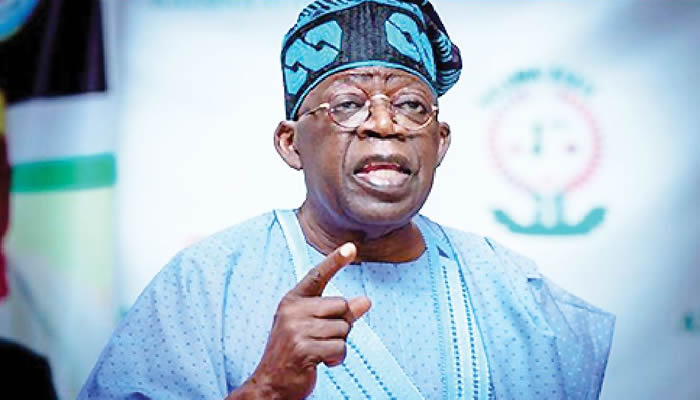
President Bola Tinubu, Nobel laureate Prof Wole Soyinka, and the Olubadan of Ibadanland, Oba Rashidi Ladoja, on Wednesday, relived memories of Nigeria’s pro-democracy struggle at the unveiling of a book written by General Secretary, National Democratic Coalition, Ayo Opadokun.

The book, titled “The NADECO story,” was unveiled at the Shell Hall of the MUSON Centre, Onikan, Lagos.

The event featured a historical reflection and a national call for continued defence of democratic values by pro-democracy actors, leading statesmen and scholars.

Speaking on behalf of Tinubu, former Ogun State Governor, Chief Olusegun Osoba, said the administration recognised the sacrifices made by NADECO members and other pro-democracy activists, noting that their actions helped preserve Nigeria’s democratic trajectory.

Tinubu said the struggle against military dictatorship came with enormous personal risks, including exile, detention, harassment and loss of livelihood.

“The President has asked me to convey his deep appreciation to all those who stood firm at a very difficult period in the history of our country,” he said.

He added that Nigeria’s current democratic stability could not be divorced from the courage of those who resisted military rule in the 1990s.

“What you did then laid the foundation for the democracy we are all enjoying today,” he said.

Tinubu also recalled the internal dynamics of NADECO, noting that the coalition brought together politicians, activists, labour leaders and intellectuals who were united by the goal of restoring democratic governance.

He urged younger Nigerians to study the history of the struggle to better appreciate the country’s democratic evolution.

On his part, Soyinka described “The NADECO Story” as a rare historical correction, saying it provided authenticity to a period often distorted in public discourse.

See also  Tinubu to review state police bill Sept 3

“I have had to describe Nigeria as a republic of liars,” Soyinka said, adding that “This is one instance where I will say the nation is redeemed from that reputation of permanent lying.”

He said the book stood out because it combined personal experience, documentary evidence and investigative narration of events that defined the resistance against military rule.

“Every page of this book rings of truth – truth that can be verified even by those who were not directly involved,” he said.

Soyinka, however, warned against reducing the struggle to a simplified narrative, stressing that the resistance movement was complex, dispersed and sustained by countless unnamed actors.

“If we were to tell the full story of that struggle, we would be here for a year, perhaps even longer,” he said.

The Nobel laureate paid tribute to late pro-democracy figures, particularly Dr Beko Ransome-Kuti, whom he described as “one of the most fearless and tragic figures of that era.”

Recounting his exile years, Soyinka said the struggle stretched across continents and involved clandestine meetings, financial sacrifices and personal risks.

“There were individuals who disappeared from our lives after playing their roles. They were not seeking recognition; they simply answered the call of history,” he said.

He also called for broader recognition of lesser-known participants, including citizens who contributed materially or logistically to the struggle.

“Sometimes it was just someone picking up a bill, or offering shelter, or quietly helping activists survive,” he said, adding that “Those gestures mattered more than we often admit.”

Soyinka further urged Nigerians to consider symbolic gestures of recognition for all contributors to the democratic struggle, saying their sacrifices should not be forgotten.

In his remarks, Oba Ladoja said democracy was preserved not only by those who protested publicly but also by individuals who worked quietly behind the scenes.

See also  2027: Obi’s one-term Presidency gambit sparks political firestorm

“People think that everybody must be on the streets. I think some of us might be in the background and do our work effectively,” he said.

Ladoja described himself as a committed democrat, noting that his political journey during the military era included participation in political processes, exile, and engagement with key figures in the pro-democracy movement.

“I am a democrat, and I will do anything to protect democracy,” he said.

The monarch recalled the turbulence of the Abacha era and how political rivalries and national struggles intersected at local and national levels.

He stressed that the June 12 crisis was not only about national leadership but also about grassroots political struggles and survival within a volatile system.

The event attracted a wide array of participants, including Dr Olisa Agbakoba, Dr Joe Okei-Odumakin, Dr Labaran Maku, Prof Anthony Kila, Wahab Shittu (SAN), Sam Omatseye, Tokunbo Ajasin, Moshood Erubami, Laolu Akande, Prof Sylvester Akhaine, among others.

In his welcome address, the author, Opadokun, described the event as a historic milestone aimed at correcting distortions in Nigeria’s democratic history.

He said ‘The NADECO Story’ was a documentation of resistance against military rule between 1994 and 1998, capturing sacrifices made by individuals and groups who opposed dictatorship.

“This ceremony is not just about remembrance. It is about national healing, historical accuracy and civic education,” Opadokun said.

He said many contributors to the struggle had been overlooked, adding that the book was an attempt to ensure that future generations understand the cost of democracy.

Between 1994 and 1998, he said, Nigeria stood at “the edge of political and moral collapse,” but was saved by the courage of activists, journalists, and international allies who resisted authoritarian rule.

See also  US Embassy warns citizens ahead of #FreeNnamdiKanuNow protest in Abuja

“Men and women chose truth over fear and sacrifice over comfort,” he said.

Reviewing the book, Prof Sylvester Akhaine said ‘The NADECO Story’ provided a critical intervention in Nigeria’s historiography, particularly in correcting narratives around the June 12 struggle and military dictatorship.

He said many accounts of Nigeria’s political transition had been shaped by those who benefited from power, leaving gaps in historical documentation.

“The NADECO Story comes as a necessary corrective to distorted narratives,” he said.

Akhaine added that the book also highlighted structural issues in Nigeria’s political development, including federal imbalance, military interference and elite contests for power.

He noted that the annulment of the June 12, 1993, election remained a turning point that reshaped Nigeria’s democratic journey.

The event also saw renewed appeals for national recognition of all actors in the pro-democracy movement, including lesser-known contributors whose roles, speakers said, were often overlooked.

The event featured the presentation of awards to media houses, journalists, civil society organisations, diplomats, individuals, activists, and institutions who were committed to the struggle for democracy.

The PUNCH newspapers received an award for its “steadfast reporting of our activities which sustained the voice of freedom in the face of repression, intimidation and closure.”

punch.ng

FOLLOW US ON:

FACEBOOK

TWITTER

PINTEREST

TIKTOK

YOUTUBE

LINKEDIN

INSTAGRAM

Continue Reading
Click to comment

Leave a Reply

Your email address will not be published. Required fields are marked *

Lifestyle

Why Do Some People Hate Being Corrected?

Published

on

Some people can accept praise without a problem—but the moment you point out their mistake, everything changes.

You bring facts, they bring anger.

You try to explain, they become defensive.

You calmly point out that they may be wrong, and suddenly you become the problem.

But why?

For some people, being corrected feels like an attack on their intelligence, authority, or pride. Instead of seeing correction as an opportunity to learn, they see it as an attempt to embarrass them.

And let’s be honest: nobody knows everything.

Even intelligent and experienced people make mistakes. The ability to listen, reconsider your position, and admit when you are wrong is not weakness—it is a sign of maturity.

At the same time, correction should be done with respect. There is a big difference between helping someone understand their mistake and deliberately embarrassing them in front of others.

The real question is:

Do people hate being corrected because of pride, or because they genuinely believe they are right?

And another question:

How do you react when someone points out that you are wrong?

👇 Share your opinion in the comments. Let’s have an honest conversation.

FOLLOW US ON:

FACEBOOK

TWITTER

PINTEREST

TIKTOK

YOUTUBE

LINKEDIN

INSTAGRAM

See also  US Embassy warns citizens ahead of #FreeNnamdiKanuNow protest in Abuja
Continue Reading

Lifestyle

Parental Trauma vs. Outside Trauma: Which Hurts Children More?

Published

on

A child can survive many difficult experiences—but what happens when the person causing the pain is the same person they expect to protect them?

This is a question many families may not want to discuss.

Trauma from outsiders can come from bullying, relatives, teachers, friends, or other people. It can damage a child’s confidence and leave emotional scars for years.

But parental trauma can feel different.

When a child repeatedly experiences humiliation, rejection, harsh insults, neglect, constant comparison, fear, or emotional abuse from a parent, the child may begin to question their own worth.

The painful irony is that the child may still desperately want the love and approval of the person hurting them.

But here is where the debate gets complicated:

Is parental trauma always worse than trauma from outsiders?

Or can an experience involving an outsider be just as devastating—or even worse—depending on what happened and how long it lasted?

🔥 THE NEWSBREAK365 QUESTION:

Which one do you think hurts children more?

🔴 PARENTAL TRAUMA
🔵 TRAUMA CAUSED BY OUTSIDERS

Don’t just choose one.

Tell us what you think and explain your reasons. 👇

Someone reading your comment may see their own childhood experience differently.

What do you think?

#NewsBreak365 #ChildhoodTrauma #Parenting #ParentingDebate #FamilyMatters #ChildProtection #MentalHealth #AfricanParents #NigerianParents #LetsTalk

FOLLOW US ON:

FACEBOOK

TWITTER

PINTEREST

TIKTOK

YOUTUBE

LINKEDIN

INSTAGRAM

See also  2027: Obi’s one-term Presidency gambit sparks political firestorm
Continue Reading

Lifestyle

Tunde Kelani reveals why he is still passionate about filmmaking

Published

on

Veteran filmmaker and cinematographer, Tunde Kelani, discusses with VERA ALKALI about his career and current trends in the industry

You have had an extraordinary journey in the film industry. Can you take us through the highest and lowest moments of your career?

You cannot just say the highest moments because that is a jump. I joined the industry at an early age. I had uncles who were already in the industry, but I also grew up in a community in Abeokuta (Ogun State) where I was exposed to different forms of culture and oral traditions.

As soon as I could read and write in Yoruba, I took off from there. Abeokuta is a meeting point of culture, and my experience started from there. I could read to my grandfather, and we learnt English alongside Yoruba. I was able to compare what I learnt from social studies with what I learnt through Yoruba culture.

That was how I started. Later, I went into photography and eventually moved into motion pictures. I was employed by Western United Television, where I was trained primarily as a film cameraman.

I later attended the London Film School for the artistic and technical aspects of filmmaking. When I returned, I worked in television for one or two years before becoming an independent filmmaker.

From that point, I began to see films by people such as Professor Wole Soyinka, Bandesola Oru, Rasheed Onikoyi and Hubert Ogunde. I had known some of these people and had seen their works on the big screen.

Before then, I was already a film enthusiast. I practically saw all the films that came into Lagos and were shown in some of the theatres at the time.

On the high side, I think I chose the medium of cinema particularly to promote, preserve and document the rich Yoruba culture.

I have benefited from global cinema, including Hollywood, Japanese, Indian, Italian and European cinema, but people often ask me, “What is your style?” I tell them my style is unique. Having benefited from global cinema, I am still impressed by the Yoruba acting tradition.

I have seen people such as Kola Ogunmola and Oyin Adejobi. Those were my coaches. I also had many mentors, and that became my take-off point.

You mentioned being influenced by Hollywood, Japanese, Italian and other cinemas. What cultural differences or shocks did you experience in filmmaking and cinematography?

I think global cinema is about identity. You just know it. When you see an Indian film, you know it is Indian. When you see a Japanese film, you know it is Japanese. When you see a South Korean film, you know it is South Korean.

When you see me as a Yoruba man with my abetiaja cap on, you know that is our signature.

You have worked as a cinematographer, director and producer. Which aspect of filmmaking would you say is your favourite?

I trained for two years at the London Film School. The course specialised in the Diploma of Art and Technical Filmmaking.

Primarily, I am a storyteller. I share my experiences, our culture and our history, but I use cinema as my vehicle for dissemination.

See also  See what made Cardi B go viral in Saudi Arabia

You are a Yoruba man and have made films that strongly reflect Yoruba culture. What does it mean to you to convey your messages in Yoruba and preserve the culture through film?

That is my whole being. It is my essence. It is my culture and language.

I am an advocate for indigenous cultural expression, and I believe Nigeria should be united in diversity.

Our films are not displaying enough of that diversity. We have more than 300 languages, but we hardly see movies depicting these different cultures and languages in Nigeria.

As someone who is committed to indigenous storytelling, how do you decide which stories are worth telling?

My works are classified. Most of them are adaptations from literature. ‘Oleku’ and some of my works were written by authors such as Femi Osofisan and others.

Most of the films I make are adapted from texts. So, I work more from text to screen because of my background. I have read works by many of these authors.

Some are classified as ‘conscience drama’ because they are films that explore socio-political themes. ‘Saworoide’, ‘Arugba’ and ‘Campus Queen’ are examples of socio-political films.

What attracted you to bringing literature to the screen?

I was born in Lagos, but my father decided that I should be brought up in Abeokuta. I was taken to the family compound. I missed my mother, but I had a lot of people around me catering for me.

However, I felt lonely. As soon as I could read and write, I found reading to be a comfort, and a form of escape At that point, literature got stuck with me, and I learnt how to use it.

It is difficult for filmmakers to pick a favourite among their works, but if you had to choose one, which would it be?

All my works give me satisfaction and recognition. They also came with equal amounts of ups and downs because making a successful film is very challenging.

But my latest film, ‘Cordelia’, is my favourite.

Can you take us through the making of Cordelia?

‘Cordelia’ is adapted from Femi Osofisan’s novel of the same title, and I had kept the project for years.

In fact, I was going to make it before ‘Maami’ (which was released in 2012). When I got to Femi Osofisan and we discussed it, he wondered why I was interested in it. He went in and brought ‘Maami, but I insisted that I wanted ‘Cordelia’ at the time.

About three or four years ago, I received visitors from the University of Delaware in the United States. The music department wanted a sort of cultural fusion. They said that if we made the soundtrack for the film, they would orchestrate it in the United States.

I was interested. They were asking for an old film from me, but I said, ‘No, we would do a new film.’

I told them about ‘Cordelia’ and explained that it was the new film we wanted to make because the story could inspire a solid musical score. It is so dramatic that it can inspire a strong musical composition.

See also  The First Reported Three-Storey Building in Lagos: Petesi Anduru

When you compare filmmaking today with what obtained in your early days, which era do you feel more connected to?

It does not matter because I have worked with all the new technologies of making motion pictures.

Recently, I completed an experiment in a small studio which I call “Studio Lab”, where I combined all the known technologies of making motion pictures, including physical sets, green screen, traditional props and everything else.

I have also added digital cinema cameras and artificial intelligence. So, it combines all of them.

What is your view on artificial intelligence and its growing role in filmmaking?

Artificial intelligence is everything, but just like when computers came and they added sound cards and graphics cards, I knew it was going to come into motion picture production.

I started early. It is the same thing with any technology that comes along. I embrace it.

We should embrace technology, but it should not replace our culture or our language. We should be in control and not let it tell our stories for us.

How do you blend artificial intelligence with Yoruba culture and other indigenous cultures?

Artificial intelligence technology is already a tool. Most of the time, if we are making a movie, our script is written in English. Later, we indicate the dialogue in Yoruba.

Filmmaking is a collaborative medium. You can have 150 people working on a film, and most of them may not be Yoruba.

You document, organise the group and use everything that technology provides. The technology is the tool, but the product becomes whatever you want it to be.

There has been an emergence of more Nigerian movies in cinemas. Do you think contemporary directors and producers are doing enough to preserve Nigerian cultures?

We have gatekeepers; I mean those people who fund movies. They are not necessarily interested in cultural preservation. They want to invest in a business, recoup their money and make a profit.

So, it is business. You can make a movie that they do not think will sell well, and that becomes a challenge.

The world is rapidly changing, and people’s tastes are changing as well.

I consider myself a “techie”. Even with all my experience with technology, I am still surprised by how many things you can do with a smartphone. Today, I lectured with my smartphone.

That is what technology is all about. We have witnessed similar things with the advent of video games and mobile phones, and now we are talking about artificial intelligence. These are all tools.

You recently received an award from the Nigerian Academy of Letters. Did you expect this kind of recognition when you were starting out?

I never really set out with recognition in mind. I was simply passionate about what I was doing. From photography to cinematography, advertising, music and everything else I got involved in, I was driven by the desire to create and communicate.

See also  I Have Never Been Asked For S€x For Roles – Nigerian Actress, Bisola Aiyeola Opens Up

I had stories I wanted to share with people, and that was what occupied my mind. I wanted to use whatever medium was available to me to tell those stories and connect with people. I was more concerned about the work itself and how best I could express what I had in mind than about whether anybody would recognise or reward me for it.

So, awards were never the motivation. They are certainly appreciated, and I am grateful whenever my work is recognised, but when I was starting out, I was not thinking about receiving awards many years later. I was simply following my passion, learning along the way and trying to tell stories that I believed were worth telling.

If you are passionate about what you do and remain committed to it, recognition may come, but it should not be the reason you do the work.

Many young filmmakers and creatives look up to you. What is your advice to them?

Number one, it is about passion.

You have to be passionate about what you are doing. If you are not passionate about it, it becomes very difficult to sustain yourself, especially in a creative field where you will face many challenges, disappointments and moments when things may not go the way you want.

In fact, my case is different. I am not supposed to be known because I am the person behind the camera. I am not a star. My job has always been to help tell the story and make sure that the story gets across to the audience in the best possible way. I have always been comfortable being behind the camera and allowing the work to speak for me.

For young filmmakers, I would say they should not be in a hurry to become famous. They should concentrate on learning their craft, understanding the medium and developing their own voice. You must be willing to learn continuously because filmmaking is changing all the time. The technology changes, the platforms change and the way people consume stories changes, but the fundamental need to tell good stories remains.

They should also understand that there are many different roles in filmmaking. You do not necessarily have to be the person in front of the camera. You can be a cinematographer, editor, writer, sound designer, production designer, director or work in any of the other areas that make filmmaking possible. What matters is that you find the area where your passion lies and develop yourself in it.

For me, the most important thing is to remain committed to the work. Fame and recognition may come, but they should be secondary. If you have passion, discipline and a story to tell, keep working at it. Eventually, the quality of your work will speak for you.

Source: punchng.com

FOLLOW US ON:

FACEBOOK

TWITTER

PINTEREST

TIKTOK

YOUTUBE

LINKEDIN

INSTAGRAM

Continue Reading

Trending