
Connect with us

Business

We want petroleum products at reasonable prices – DAPPMAN

Published

on

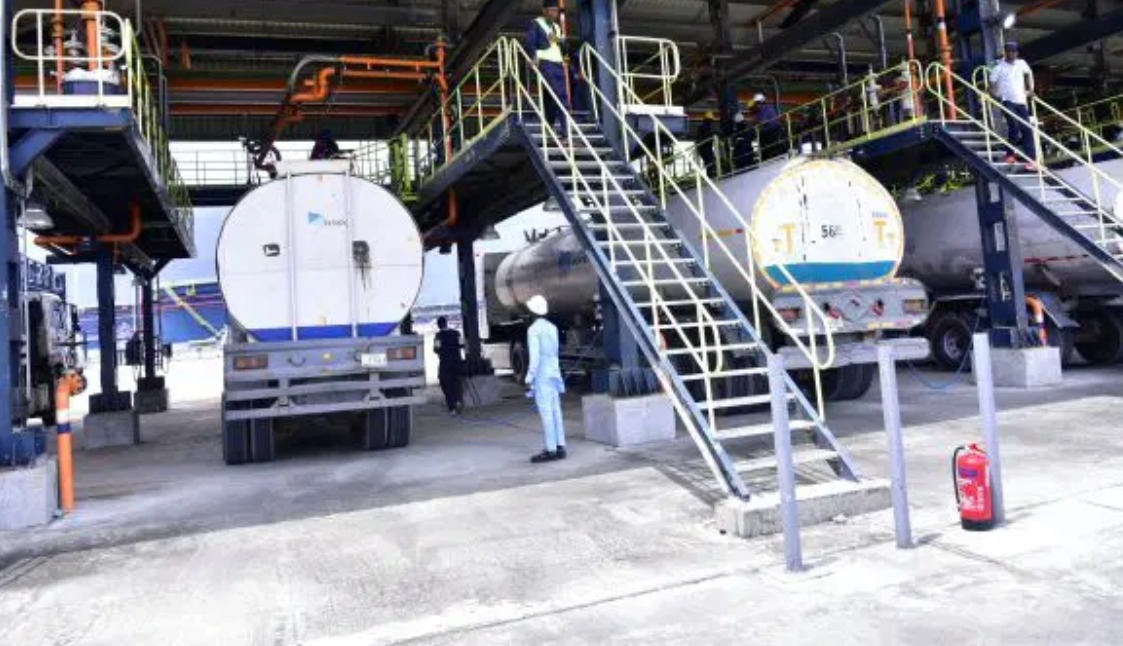
The Depot and Petroleum Products Marketers Association of Nigeria has called on the Dangote Refinery to make its fuel supply more accessible to marketers and sell products at affordable rates.

The spokesperson for the association, Ikem Ohia, said on Channels Television’s The Morning Brief on Wednesday that closer collaboration with the refinery would ensure steady supply and end fuel queues across the country.

He dismissed claims of a rift with the refinery, insisting that marketers only want a transparent arrangement that guarantees regular distribution.

“Our key interest is to have petroleum products offered at reasonable prices consistently, in a way that there’s no stock-out and Nigerians no longer queue for fuel,” Ohia stated.

While acknowledging the refinery as the dominant supplier, Ohia explained that access and pricing remain the major concerns.

“The question is: at what price does he offer us, and do we actually have access to purchase these products from him?” he asked.

He pointed out that for over two decades, DAPPMAN members have developed a strong distribution network with depots in Lagos, Warri, Port Harcourt and Calabar, and urged Dangote to take advantage of these facilities.

“What we are asking Dangote to do is to use these depots that are already in existence for us to meet the demands of Nigerians,” he said.

On claims that marketers were pushing for subsidies, he replied, “We are businessmen; he is a businessman. We’re not asking for subsidies. We went into negotiations and are still negotiating to see how he can bridge the gap.”

See also  Airlines in pricing limbo amid 180% Jet A1 price surge

According to him, global practice shows that refineries usually rely on bulk supply to off-takers alongside retail sales.

“Ideally, refineries emphasise bulk evacuation through off-takers who can lift massive quantities and allow continuous production. Relying only on retail gantry sales cannot meet national demand,” he stated.

He added that although DAPPMAN approached Dangote before production commenced to request bulk supply, no firm understanding was reached.

“Instead, he prefers to work with a few selected partners, which includes one or two of our members. We believe an open system, not a controlled one, will help the country,” he said.

On distribution, Ohia noted that many of the association’s members also operate filling stations, some with as many as 300 outlets, but restricted supply has left them unable to meet demand.

“Figures don’t lie; whatever is supplied now doesn’t meet full market needs. Bulk deliveries to depots are necessary if we must serve Nigerians effectively,” he said.

The debate comes after Dangote invested in 4,000 CNG-powered trucks for nationwide distribution.

Marketers argue the approach could give the refinery too much control of the downstream sector.

On Tuesday, billionaire businessman, Femi Otedola, urged DAPPMAN to adapt to market changes, advising them to restructure and consider taking over the Port Harcourt Refinery rather than opposing Dangote’s model.

Also weighing in on the issue, the President of the Petroleum Products Retail Outlets Owners Association of Nigeria, Billy Gilly-Harris, said the 4,000 trucks were not sufficient to ensure steady supply across the country.

The refinery, however, has maintained that it will not bear the logistics expenses that marketers want transferred to it.

See also  OPS reacts on CBN's interest rates reduction

In a recent statement, Dangote Petroleum Refinery described DAPPMAN’s subsidy claim of over ₦1.5tn as “false and unfounded,” insisting that products are sold at its gantry strictly on the basis of production costs and regulated margins.

It argued that marketers, like other players in the industry, must cover the cost of transporting products to their depots, adding that subsidy on petroleum products had been abolished by the Federal Government since May 2023.

punch.ng

FOLLOW US ON:

FACEBOOK

TWITTER

PINTEREST

TIKTOK

YOUTUBE

LINKEDIN

TUMBLR

INSTAGRAM

Continue Reading
Click to comment

Leave a Reply

Your email address will not be published. Required fields are marked *

Business

Otti seeks partnership with NAADI to grow Abia’s agriculture, economy

Published

on

Governor Alex Otti has said the Abia State Government is ready to leverage the Nigeria Agribusiness and Agro-Industrial Development Initiative to grow the state’s economy and strengthen value addition across key agricultural sectors.

Otti stated this on Wednesday while receiving a delegation of the Nigeria Agribusiness and Agro-Industrial Development Initiative, led by its Director, Felix Charles, at the Government House in Umuahia.

The governor said the initiative aligns with his administration’s economic agenda and pledged the readiness of his team to work closely with NAADI.

“We are already looking forward to taking advantage of this,” Otti said.

“I believe that as you sit down with my team, we will begin to unveil the details and know how to work with you to take full advantage of this initiative that you brought.

“One thing I can assure you is that my team is very ready,” he added.

Otti noted that many of the objectives of NAADI were already reflected in his campaign promises and development plans for the state.

“If you have a look at our manifesto and my promise to our people here, you will find that a lot of the things that NAADI targets to achieve have been documented in the manifesto.

“So, I want to thank you very much for your visit and thank you for considering us as a beneficiary,” the governor stated.

He further stressed that countries and states cannot achieve meaningful economic growth by relying solely on the production of raw materials without processing and industrialisation.

See also  Consumers pay N1.13tn electricity bill despite blackouts

According to him, Abia is richly endowed in palm oil, cassava, cocoa, cashew nuts, rubber, leather works, and fabrics, but said the products would add little economic value if they were not processed beyond subsistence production.

Earlier, Charles described NAADI as a Federal Government initiative aimed at promoting agricultural participation, strengthening agro-processing value chains, and improving access to international markets.

He disclosed that the programme had already been established in eight states, adding that Abia would become the ninth state to domesticate and launch the initiative.

Charles also commended Otti’s developmental projects and assured the state government of NAADI’s commitment to partnership.

According to him, Abia would benefit from key pillars of the initiative, including bridging capacity gaps, promoting agribusiness, improving market access, and addressing funding constraints.

The meeting was attended by Deputy Governor Ikechukwu Emetu, Chief of Staff Caleb Ajagba, Commissioner for Trade and Commerce Salome Obiukwu, Special Adviser on Trade and Commerce Nwaka Inem, and other senior government officials.

punch.ng

FOLLOW US ON:

FACEBOOK

TWITTER

PINTEREST

TIKTOK

YOUTUBE

LINKEDIN

INSTAGRAM

Continue Reading

Business

Domestic refiners dump $3.13bn crude over pricing disputes

Published

on

Domestic refiners in Nigeria left an estimated $3.13bn worth of crude oil unlifted in the first quarter of 2026, highlighting deepening inefficiencies in the country’s crude supply framework.

Analysis of data released by the Nigerian Upstream Petroleum Regulatory Commission by our correspondent on Wednesday showed that while crude producers made significant volumes available under the Domestic Crude Supply Obligation, refiners were unable to take delivery of a large portion due to persistent commercial and structural challenges.

The latest data showed a significant mismatch between crude availability and actual refinery offtake, despite regulatory efforts to deepen domestic refining. The figures indicate that producers collectively made available 68.7 million barrels of crude between January and March, far above allocated requirements, yet refiners struggled to convert the offers into actual deliveries.

This translates to a weak conversion rate of about 36–46 per cent, underscoring persistent structural and commercial bottlenecks in the domestic crude supply chain. Findings showed that the total gap between crude offered and actual refinery offtake stood at 40.3 million barrels in the three-month period, with the shortfall valued at about $3.13bn using conservative average prices.

Figures released by the commission indicated that while 61.9 million barrels were allocated to domestic refiners during the period, oil producers collectively offered 68.7 million barrels.

However, actual deliveries lagged significantly, with refiners lifting just 28.5 million barrels, indicating that crude producers supplied local refineries with less than half of the volumes allocated under the country’s domestic ‌crude supply rules.

The development underscores a persistent gap between crude availability and actual refinery intake, raising fresh concerns over feedstock adequacy for Nigeria’s refining ambitions.

See also  Constituency meeting: Lagos lawmaker empowers residents

In the press statement earlier issued by the commission, the NUPRC Head of Media and Corporate Communications, Eniola Akinkuotu, said the data reflected ongoing efforts to enforce the Domestic Crude Supply Obligation in line with the Petroleum Industry Act.

The statement read, “The Nigerian Upstream Petroleum Regulatory Commission has released the statistics on the enforcement of the Domestic Crude Supply Obligation in accordance with the provisions of the Petroleum Industry Act.

“A summary of the monthly allocation shows that 61.9 million barrels of crude oil were allocated to domestic refineries during the quarter, while producers collectively offered a higher volume of 68.7 million barrels. However, actual supply to local refineries was 28.5 million barrels, translating to a supply conversion rate of 36-46 per cent as of the end of the first quarter 2026.”

A breakdown of the value of rejected crude revealed that in January, producers offered 25.3 million barrels, but refiners lifted only 9.2 million barrels, leaving a shortfall of 16.1 million barrels valued at approximately $1.09bn.

In February, out of the 19.8 million barrels offered, refiners took 9.1 million barrels, resulting in a gap of 10.7 million barrels worth about $749m. Similarly, in March, refiners lifted 10.1 million barrels from the 23.6 million barrels offered, leaving 13.5 million barrels unutilised, with an estimated value of $1.28bn.

The data underscores a persistent disconnect between crude supply and refinery demand, despite regulatory efforts to prioritise local refining under the Petroleum Industry Act, 2021.

The NUPRC has attributed the shortfall to pricing disputes, crude grade mismatches, and the “willing buyer, willing seller” framework, which leaves transactions subject to commercial negotiations rather than strict enforcement.

See also  Recapitalised banks poised to drive Nigeria’s $1trn economy ambition

Experts say the situation has continued to limit refinery utilisation and slow Nigeria’s drive towards energy self-sufficiency, even as investments in refining capacity, led by the Dangote Petroleum Refinery and several modular plants, gather momentum.

The Domestic Crude Supply Obligation was introduced to ensure that local refineries have adequate access to feedstock and to reduce dependence on imported petroleum products.

However, the latest figures suggest that implementation challenges persist, with large volumes of crude remaining unlifted despite apparent availability. Operators have repeatedly called for reforms, including the introduction of a domestic pricing benchmark and improved alignment between crude grades supplied and refinery configurations.

The development comes at a time when Nigeria is seeking to ramp up local refining capacity and conserve foreign exchange, raising fresh concerns over whether current supply frameworks can support the country’s long-term energy security goals.

Commenting, the Crude Oil Refiners Association of Nigeria has attributed the growing reliance of the Dangote Petroleum Refinery on imported crude to commercial pricing structures and crude grade differentials in the domestic market.

Speaking in an interview with our correspondent, CORAN Publicity Secretary, Eche Idoko, said the refinery’s preference for imported crude is largely driven by economics and product compatibility rather than lack of demand for local supply.

He explained that Nigerian producers predominantly sell Brent-linked crude at a premium, while the refinery often imports West Texas Intermediate crude, which better aligns with its operational configuration.

Idoko said, “So one of the major issues we are having with Dangote buying more crude from the U.S is because of the type of products offered and the pricing. It is based on commercials. So producers sell more Brent crude at a premium, but the import from other countries is WTI, another grade that is utilised by the refinery.”

See also  European airports could run out of jet fuel in weeks as Iran war sparks more chaos

He argued that the current pricing framework places domestic refiners at a disadvantage compared to international sourcing options, particularly in terms of competitiveness and risk exposure. According to him, a more tailored pricing mechanism is needed to reflect Nigeria’s local refining realities and reduce reliance on external markets.

Idoko said, “All we have said is that for local refineries, in Nigeria, as they do in other climes, why can’t we have a pricing index that reflects our peculiarity, and we don’t have to face the international insurance risk. Dangote goes out to buy more crude from other countries because of the Brent and premium pricing template by local producers.”

He stressed that aligning crude pricing to domestic refining needs could help strengthen local supply chains and reduce the growing dependence on imported feedstock.

punch.ng

FOLLOW US ON:

FACEBOOK

TWITTER

PINTEREST

TIKTOK

YOUTUBE

LINKEDIN

INSTAGRAM

Continue Reading

Business

Oshiomhole seeks ban on MTN, DSTV, read why

Published

on

The senator representing Edo North, Adams Oshiomhole, on Tuesday called for the revocation of licences of South African companies operating in Nigeria, including MTN and MultiChoice, owners of DSTV, following renewed xenophobic attacks against Nigerians in South Africa.

The call came as the National Assembly condemned the latest wave of attacks, urging the Federal Government to take immediate diplomatic and protective measures to safeguard Nigerian citizens abroad.

Speaking during plenary, Oshiomhole said Nigeria must respond firmly, invoking the principle of reciprocity in international relations.

He said, “I don’t want this Senate to be shedding tears, to sympathise with those who have died. We didn’t come here to share tears.

“If you hit me, I’ll hit you. I think it is appropriate in diplomacy. It’s an economic struggle.”

The former Edo State governor proposed that Nigeria should nationalise MTN and withdraw its operating licence, arguing that the company repatriates significant revenue while Nigerians face hostility in South Africa.

“This Senate should adopt a position that MTN, a South African company that is cutting away millions of dollars from Nigeria every day, should have Nigeria nationalise it and withdraw its licence,” he said.

According to him, such action would not only serve as a deterrent but also create opportunities for indigenous firms, amid what he described as economic and social targeting of Nigerians abroad.

He extended the call to MultiChoice, urging the Federal Government to revoke DSTV’s licence over alleged exploitative practices.

“I call on the Federal Government to revoke DSTV, which is also a South African company that is cutting away millions of dollars,” he said.

See also  Consumers pay N1.13tn electricity bill despite blackouts

Oshiomhole linked the recurring tensions to domestic political dynamics in South Africa, noting that anti-immigrant rhetoric had become a feature of its politics and was shaping public attitudes toward foreign nationals, including Nigerians.

“When we hit back, the president of South Africa will go on his knees to recognise that Nigerians cannot be intimidated,” he said.

The senator made the remarks while contributing to a motion sponsored by Osita Izunaso, which was read on the floor by Aniekan Bassey under Senate rules on matters of urgent public importance.

Titled “A call for urgent national diplomatic and humanitarian action to defend the dignity, safety and honour of Nigerian citizens,” the motion highlighted growing concerns over the safety of Nigerians in South Africa.

Also speaking, Senator Victor Umeh described the situation as alarming, warning that Nigerians were living in fear.

“It is worrisome. They are hiding for their lives. They can’t move freely. This is a situation where people are paying good with evil,” he said, referencing Nigeria’s historical support for the anti-apartheid struggle.

Umeh called on the African Union to intervene and impose sanctions, warning that Nigeria could no longer tolerate attacks on its citizens.

“The AU, of which South Africa is a member, should rise now and impose necessary sanctions,” he said, adding that “we cannot allow this to continue.”

Oshiomhole, however, doubled down on calls for economic retaliation, arguing that Nigeria must move beyond rhetoric.

“I don’t want this Senate to be shedding tears to sympathise with those who have died. We didn’t come here to shed tears. I am not going to shed tears. If you hit me, I hit you. I think it is appropriate in diplomacy. It is an economic struggle,” Oshiomhole said.

See also  OPS reacts on CBN's interest rates reduction

He further argued that Nigerians should take advantage of opportunities in the local economy, currently dominated by foreign firms.

Senator Abdul Ningi warned South Africans over recent attacks on Nigerians, threatening that the country would take the fight to their territory.

“If a crime has been committed under the South African law, they have the right to bring any such person to justice, but to kill our people as if we are helpless, we will not allow that.

“If these things continue, we have alternatives, we have options, and therefore, these words should be sent across South Africa. We know where South Africans are, not only in Nigeria but all over Africa, and we can take this fight to their territory,” he said.

Speaking, the Senate President, Godswill Akpabio, decried the attack, adding that the National Assembly would send a joint team to meet with the South-African parliament on the matter.

“This is just not acceptable, this is barbaric, this is cruel, this is unheard of, this is strange behaviour, and we’re not seeing action from the government of South Africa. These are aspects that annoy me,” Akpabio said.

The development underscores mounting pressure on the Federal Government to adopt a tougher stance, as recurring xenophobic violence in South Africa continues to strain diplomatic relations and provoke calls for both economic countermeasures and stronger protections for Nigerians abroad.

Continue Reading

Trending