Connect with us

Lifestyle

Sex outside marriage: Saudi court orders 100 lashes for Kenyan woman, read complete story

Published

on

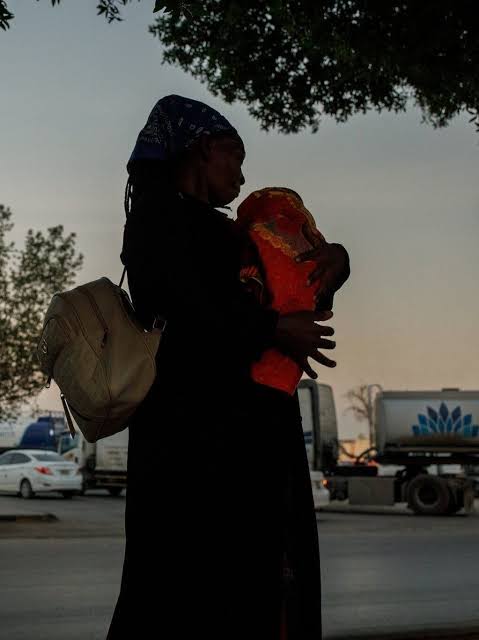
A Saudi Arabian court has sentenced a 40-year-old Kenyan domestic worker, Esther Wanja Muthoni, to 100 lashes for having sex outside marriage after she gave birth to a child in the kingdom.

The sentence, issued in October, followed several court hearings last summer and has left Muthoni fearing for her safety as she struggles to return to Kenya with her one-year-old son, Abudy.

The New York Times reported on Tuesday that Muthoni had been trying for more than a year to leave Saudi Arabia with her child but was unable to do so because of the legal proceedings against her.

“I am so afraid,” she told the newspaper in a telephone interview last month.

“I don’t think I can endure those lashes,” she said.

Muthoni, a mother of five, was working legally as a domestic worker through Maharah Human Resources, a Saudi recruitment company, when she became pregnant following a brief relationship with an Egyptian resident identified only as Mohamud.

She gave birth in August 2025 at staff accommodation. According to court documents reviewed by the newspaper, a supervisor discovered her and took her and the baby to a hospital, after which police detained her for questioning over the pregnancy.

Muthoni told the police that the child’s father had left Saudi Arabia. The court documents did not provide his surname.

Although she was released from police custody, she was reportedly denied access to both her staff accommodation and a shelter.

She subsequently lived at a petrol station in Riyadh that had become a gathering place for migrant mothers hoping to leave the country with their children.

See also  Why Do Some Men Experience Sudden Death During Marriage?

The New York Times said its investigation published last year had documented the difficulties faced by East African domestic workers who became pregnant in Saudi Arabia, including the bureaucratic obstacles preventing them from obtaining documents for their children and returning home.

Following the newspaper’s earlier report on Muthoni’s situation, Maharah provided her with accommodation, while the Kenyan Embassy issued documents intended to allow her to leave Saudi Arabia.

However, she remained unable to travel while her criminal case was pending.

The newspaper reported that Muthoni was provided with a court interpreter but had no lawyer during the proceedings. The court documents it reviewed also contained no indication that she had legal representation.

Although indigent defendants in Saudi Arabia are entitled to state-sponsored lawyers, experts told the newspaper that criminal trials sometimes proceed without legal representation, including in some cases carrying the death penalty.

In October, the three-judge panel found Muthoni guilty of having sex outside marriage and imposed the 100 lashes prescribed under its interpretation of Islamic law.

The judgment did not indicate that authorities had pursued the child’s father.

Ekaterina Porras Sivolobova, a labour migration analyst and founder of the non-profit organisation Do Bold, criticised the punishment, saying it violated international human rights standards.

“This sentence of flogging does not align with international human rights standards,” she told the newspaper.

She added that the punishment stripped Muthoni of her dignity instead of protecting a vulnerable woman.

The case has also raised questions about Saudi Arabia’s claims of legal and social reforms, particularly its 2020 announcement of restrictions on flogging.

See also  “All Women Are the Same” — Why Do Some Men Say This?

The New York Times noted that judgments involving morality offences were not routinely published, making it difficult to establish how frequently courts still imposed the punishment.

Saudi Arabia’s judicial system is based on Islamic law, or sharia, but the kingdom does not have a written penal code.

Judges therefore interpret Islamic law in deciding criminal cases, leaving some offences and their punishments open to differing interpretations.

Muthoni did not appeal the judgment, saying she wanted to return home to her other children.

“It is the only way that can take me back home to my children,” she said.

In addition to the lashes, the court sentenced her to one year of banishment. The newspaper reported that Saudi rules generally allow a person sentenced to banishment to be sent to another city in the kingdom when no destination is specified in the judgment.

It remains unclear whether the order means Muthoni will be deported to Kenya. Her exit documents have also expired, leaving uncertainty over how she and her son will return home.

The Saudi and Kenyan governments, as well as representatives of Maharah, did not respond to requests for comment from The New York Times.

The newspaper’s earlier investigation found that East African women recruited to work as domestic workers in Saudi Arabia faced reports of physical abuse, sexual violence, withheld wages and abandonment.

It also reported that some Kenyan women who became pregnant while working in the kingdom struggled to obtain birth certificates for their children, while diplomats who could assist them were accused of neglecting their cases or demanding bribes and sexual favours.

See also  I Have Lost My Freedom To Move – Regina Daniels Cries Out Over Health Challenge

Source: punchng.com

FOLLOW US ON:

FACEBOOK

WHATSAPP CHANNEL

TWITTER

PINTEREST

TIKTOK

YOUTUBE

LINKEDIN

INSTAGRAM

Continue Reading
Click to comment

Leave a Reply

Your email address will not be published. Required fields are marked *

Lifestyle

Paul McCartney ranks third-richest musician with $1.4bn

Published

on

Former Beatles member Paul McCartney has become a billionaire, with an estimated net worth of $1.4bn, making him the world’s third-richest musician, Forbes has reported.

The 84-year-old British singer-songwriter ranks behind American rapper Jay-Z, whose fortune is estimated at 2bn, according to the publication.

Forbes disclosed this in a report published on Monday, attributing McCartney’s wealth to decades of songwriting, music publishing investments, royalties, touring and property holdings.

Much of his fortune comes from MPL Communications, the music publishing company he established in 1969, shortly before The Beatles broke up.

Through the company, McCartney acquired the publishing rights to thousands of songs, including works by early rock-and-roll musician Buddy Holly and scores from Broadway musicals.

The catalogue also includes several well-known Christmas songs, such as “It’s Beginning to Look a Lot Like Christmas”, “Blue Christmas” and “Baby, It’s Cold Outside”.

Forbes estimated that MPL is worth at least $`250m and generates tens of millions of dollars in annual revenue from music royalties.

The singer also earns from The Beatles’ music catalogue through the group’s Apple Corps company, which Forbes estimated generates more than $50m annually from streaming, vinyl sales and merchandise.

McCartney, drummer Ringo Starr and the estates of late band members John Lennon and George Harrison each receive a 25 per cent share of the company’s income, according to Forbes.

His share of the songwriting copyrights to The Beatles’ compositions in the United States is also estimated to be worth at least 10m annually.

McCartney’s wealth further includes earnings from decades of international tours, property in the United Kingdom and the Hamptons in the United States, as well as an art collection featuring works by Pablo Picasso and René Magritte.

See also  Overly Possessive About Money

The singer’s financial success came after an early career in which The Beatles reportedly earned less than one US cent for each album sold under their initial record deal, while music publisher Dick James controlled the copyrights to songs written by the group.

McCartney subsequently established his own publishing company to gain greater control over his music and future royalties.

In a 2017 Forbes essay, he described the group’s early recording agreement as “basically a slave contract”, saying they did not receive a raise despite the success they brought the company.

Source: punchng.com

FOLLOW US ON:

FACEBOOK

WHATSAPP CHANNEL

TWITTER

PINTEREST

TIKTOK

YOUTUBE

LINKEDIN

INSTAGRAM

Continue Reading

Lifestyle

BLACKMAIL: THE CRUEL WEAPON PEOPLE USE TO DESTROY OTHER PEOPLE’S LIVES – BEFORE YOU THREATEN SOMEONE, THINK ABOUT THE DAMAGE YOU COULD CAUSE!

Published

on

Some people don’t need weapons to destroy another person’s life. All they need is a secret, a private photograph, a personal conversation or information they know someone desperately wants to keep confidential.**

Blackmail is one of the ugliest forms of manipulation. It is an act of intimidation that turns someone’s private life into a weapon for personal gain, revenge, financial benefit or control.

What makes it even more disturbing is that some people who engage in blackmail see nothing wrong with their actions. They threaten, intimidate, demand money and deliberately create fear in the lives of others, without considering the emotional and psychological consequences of what they are doing.

But here is a question worth asking: **Have you ever stopped to imagine what happens to the person you are blackmailing after you send that threatening message?**

## The Secret You Are Using Against Someone Could Become Their Greatest Nightmare

Imagine waking up every morning afraid to check your phone because someone is threatening to expose your private information.

Imagine receiving messages from someone demanding money, threatening to destroy your marriage, embarrass you publicly or expose something you shared in confidence.

Imagine living every day with the fear that your family, children, spouse, colleagues or friends might suddenly discover something you never intended to make public.

That is the psychological burden blackmail can create.

While the blackmailer may be enjoying the power they believe they have over another person, the victim could be experiencing sleepless nights, anxiety, humiliation, emotional distress and fear.

**You may see it as an opportunity to make money or settle a personal score, but someone else may be fighting to keep their life from falling apart.**

See also  Overly Possessive About Money

## 1. Blackmail Can Destroy Marriages and Families

Some blackmailers deliberately target people’s marriages and relationships.

They threaten to expose private conversations, photographs, past relationships or personal mistakes to spouses and family members.

They understand that certain revelations could create serious conflict, embarrassment and emotional pain.

But what gives anyone the right to deliberately interfere with another person’s marriage or use private information to threaten an entire family?

A mistake someone made in the past does not give another person unlimited permission to terrorise them.

## 2. Blackmail Can Destroy Careers and Reputations

Some people spend years building their careers, businesses and public reputations.

One threatening individual can attempt to put everything at risk by using confidential information as leverage.

Imagine someone losing professional opportunities, business relationships or public trust because another person decided to use private information as a weapon.

The damage may take years to repair, even after the threats stop.

## 3. Blackmail Can Cause Serious Psychological and Emotional Damage

This is perhaps one of the most overlooked consequences of blackmail.

Not everyone responds to threats in the same way.

Some victims become withdrawn. Others experience extreme anxiety, depression, shame and emotional exhaustion.

Some become afraid of social interactions because they constantly worry about being exposed or humiliated.

We must never underestimate the psychological consequences of deliberately making another human being live in fear.

## 4. Blackmail Is Not Always About Money

Some people engage in blackmail because they want revenge.

Others want to control someone, punish a former partner, settle personal disputes or force someone to do things against their will.

See also  A Royal Ride Through Nigeria: The Prince of Wales' 1925 Visit (PHOTOS)

Some use private photographs, intimate conversations, financial information and personal secrets to intimidate their victims.

Whether the motivation is money, revenge, jealousy or personal satisfaction, the underlying behaviour remains dangerous.

## 5. Having Someone’s Secret Does Not Make You Powerful

This is a lesson many people need to understand.

Knowing someone’s secret does not make you superior to them.

Having access to someone’s private photographs does not give you ownership of their life.

Possessing confidential information does not give you the right to threaten, intimidate or financially exploit another person.

**The fact that someone trusted you with something private should be a reason to respect their confidence, not an opportunity to exploit their vulnerability.**

## THE BIGGER QUESTION: WHAT KIND OF HUMAN BEING TAKES PLEASURE IN ANOTHER PERSON’S FEAR?

We live in a society where some people are willing to destroy friendships, relationships and families simply because they possess information that can be used against someone.

People who once shared laughter, secrets and personal experiences can suddenly become enemies when trust breaks down.

And sometimes, the person threatening you is someone you once trusted with your deepest secrets.

That is what makes blackmail particularly painful: the weapon is often placed in someone’s hands by the very trust they were given.

## FINAL WARNING: THINK BEFORE YOU DESTROY SOMEONE’S PEACE!

Before you threaten someone, demand money, expose private information or use another person’s vulnerability for revenge, ask yourself one question:

**If someone did the same thing to you, your spouse, your children, your parents or someone you deeply love, how would you feel?**

See also  “All Women Are the Same” — Why Do Some Men Say This?

Would you still consider it entertainment?

Would you still call it business?

Would you still laugh while another person struggles with fear and humiliation?

There is a difference between exposing genuine wrongdoing in the public interest and exploiting someone’s private life to threaten or control them.

Blackmail is not courage. It is not intelligence. It is not power.

It is an abuse of trust that can leave consequences long after the threats have stopped.

And remember: the internet never forgets easily, but neither should society forget the damage caused by those who deliberately use another person’s vulnerability as a weapon.

—

## LET’S DEBATE!

1. Should someone who blackmails another person receive severe legal punishment?
2. If someone shares private information with you in confidence, do you have any moral right to use it against them?
3. Should victims expose their blackmailers publicly, or should they report them to the authorities?
4. Can you ever forgive a friend, former partner or family member who uses your secrets to blackmail you?

**What is your opinion? Is blackmail one of the most cruel forms of betrayal in human relationships?**

Join the conversation and share this article. Someone needs to understand that another person’s private life is not a weapon for personal profit.

**Newsbreak365 – Bringing Issues That Matter to Light.**

FOLLOW US ON:

FACEBOOK

WHATSAPP CHANNEL

TWITTER

PINTEREST

TIKTOK

YOUTUBE

LINKEDIN

INSTAGRAM

Continue Reading

Lifestyle

BEFORE YOU DO EVIL TO SOMEONE, THINK TWICE! WHEN KARMA CATCHES UP WITH YOU, DON’T BLAME THE DEVIL, YOUR ENEMIES OR YOUR VILLAGE PEOPLE!

Published

on

Some people are busy destroying other people’s lives, yet they expect their own lives to be filled with blessings, peace and happiness. What kind of hypocrisy is that?**

There is something deeply disturbing about people who deliberately hurt others but become professional victims the moment life stops going according to their expectations.

They betray people who trust them. They exploit those who genuinely care about them. They manipulate relationships, destroy reputations, frustrate people’s progress and sometimes go out of their way to make others miserable.

Yet, when their own lives begin to experience difficulties, suddenly, the devil is responsible. Their enemies are responsible. Somebody in their village is responsible. Even innocent people who have nothing to do with their problems become suspects.

But have you ever considered that some of the problems you are experiencing might be connected to the way you have treated other people?

## YOU CANNOT PLANT WICKEDNESS AND EXPECT TO HARVEST HAPPINESS!

One of the greatest problems in human society is the refusal to take responsibility for personal actions.

People want blessings without accountability. They want divine favour without basic human decency. They want everyone to treat them with kindness while they treat others with cruelty.

They want forgiveness when they make mistakes but refuse to forgive others when they are offended.

They want people to understand their struggles but show no compassion when somebody else is suffering.

Some even use religion as a hiding place, attending religious gatherings, shouting amen, making spiritual declarations and publicly presenting themselves as righteous while privately engaging in deception, exploitation and wickedness.

See also  Overly Possessive About Money

**What exactly are you asking God to bless when you deliberately make life miserable for other people?**

You cannot continuously destroy people’s peace and expect everybody to celebrate your happiness.

## NOT EVERY MISFORTUNE IS THE WORK OF YOUR ENEMIES!

This is a difficult truth that many people do not want to hear.

Not every setback is caused by witchcraft. Not every disappointment is a spiritual attack. Not every financial difficulty is the result of somebody trying to destroy your destiny.

Sometimes, your dishonesty destroys your relationships.

Sometimes, your arrogance drives good people away.

Sometimes, your greed makes you lose valuable opportunities.

Sometimes, your betrayal destroys the trust that people once had in you.

And sometimes, your own decisions create consequences that no amount of blaming other people can erase.

Unfortunately, instead of examining their behaviour, some people would rather organise spiritual investigations against imaginary enemies.

They will accuse their village people, blame their family members, attack their neighbours and suspect everybody except themselves.

**How convenient it is to blame an invisible enemy for damage caused by your own visible actions!**

## STOP CONFUSING THE FEAR OF GOD WITH THE FEAR OF CONSEQUENCES!

Being religious does not automatically make someone a good human being.

Wearing religious clothing, quoting scriptures, attending church or mosque and making public declarations of holiness do not erase the responsibility to treat people fairly.

You cannot use God’s name to intimidate people, manipulate their emotions, exploit their generosity and escape accountability.

Your relationship with God should not become an excuse for treating fellow human beings badly.

If your religion makes you feel superior to others but does not teach you compassion, honesty, humility and responsibility, perhaps you need to examine what you are practising.

See also  I Have Lost My Freedom To Move – Regina Daniels Cries Out Over Health Challenge

## KARMA IS NOT A LICENCE TO CELEBRATE OTHER PEOPLE’S SUFFERING

Whether you understand karma as a spiritual principle, a moral lesson or simply the consequences of human behaviour, one thing remains clear: actions matter.

A person who repeatedly lies may eventually lose credibility.

Someone who constantly betrays trust may eventually find themselves without genuine friends.

A person who takes advantage of everybody may eventually discover that nobody wants to help them.

These are not necessarily supernatural punishments. They are sometimes the natural consequences of repeated behaviour.

Life does not always deliver consequences immediately, and good people sometimes suffer despite doing nothing wrong. That is why we should not assume that every hardship is deserved.

But nobody should mistake a temporary escape from accountability for permanent immunity.

## BEFORE YOU HURT SOMEONE, ASK YOURSELF THESE QUESTIONS

– Would you be happy if somebody treated your children the same way you are treating another person’s children?
– Would you accept the same betrayal you are planning against someone who trusts you?
– Would you consider it fair if somebody deliberately destroyed your happiness?
– If your actions became public tomorrow, would you be proud to defend them?
– If the people you hurt never had the opportunity to fight back, would that make your behaviour acceptable?

Think about these questions before you destroy somebody’s confidence, exploit their kindness or deliberately make their lives miserable.

You may be able to manipulate people into believing your version of events, but that does not automatically make your actions right.

## FINAL WORD: STOP BLAMING THE DEVIL FOR WHAT YOUR CHARACTER HAS CREATED!

See also  Untold story of workers who keep Lagos running while others sleep

Life is not a competition to see who can hurt the most people without getting caught.

You do not become powerful by destroying others. You do not become successful by exploiting people’s weaknesses. And you do not become righteous simply because you know how to speak religious language.

Learn to apologise. Learn to take responsibility. Learn to respect other people’s feelings. Learn to treat people with dignity, even when you have the power to mistreat them.

**Before you deliberately destroy someone’s happiness, remember that you are also a human being whose life is not guaranteed to remain perfect forever.**

And when your own decisions eventually bring difficult consequences, have the courage to examine yourself before accusing the devil, your enemies or your village people.

**YOU CANNOT SPEND YOUR LIFE CREATING OTHER PEOPLE’S TEARS AND THEN EXPECT THE WORLD TO OWE YOU A LIFETIME OF SMILES!**

Sometimes, the first enemy you need to confront is not outside your house. It is the behaviour you refuse to change.

—

### WHAT DO YOU THINK?

Why do some people deliberately hurt, betray and exploit others, yet immediately blame the devil, enemies, witches and village people whenever they experience difficulties?

Is society becoming too comfortable with avoiding personal responsibility?

**Drop your opinion in the comment section. Let’s have an honest conversation.**

*NewsBreak365 — Challenging perceptions, questioning society and exposing uncomfortable truths.*

FOLLOW US ON:

FACEBOOK

WHATSAPP CHANNEL

TWITTER

PINTEREST

TIKTOK

YOUTUBE

LINKEDIN

INSTAGRAM

Continue Reading

Trending