Connect with us

Lifestyle

K1 De Ultimate apologises over airport row, denies alcohol claim

Published

on

Fuji music legend, Wasiu Ayinde Marshal, popularly known as K1 De Ultimate, has apologised over the incident involving him at the Nnamdi Azikiwe International Airport, Abuja, on August 5, 2025.

In a statement he personally signed on Friday, the singer expressed regret over the controversy but maintained that the flask he carried on the day contained only water, not alcohol as alleged in some reports.

“The incident that occurred at the local wing of the Nnamdi Azikiwe International Airport was, to say the least, unfortunate.

“Unknown to many, I suffer from chronic dehydration, and my doctor strongly advised that I remain constantly hydrated. This is why I always carry a water flask with me.

“Contrary to the negative narrative being circulated in some quarters, the flask contained only water — not alcohol,” he said.

K1 explained that the flask was empty during two separate security checks and was only filled with water at the airport lounge before he proceeded to the tarmac.

He stressed that he had not yet boarded the aircraft, “let alone being deboarded,” and said his account could be verified through CCTV footage.

The Fuji star apologised to the Presidency, the Ministry of Aviation, the Federal Airports Authority of Nigeria, the Nigerian Civil Aviation Authority, ValueJet, and Nigerians at large.

“I acknowledge and deeply regret the concerns that arose from the incident.

“It was never my intention to cause any disruption or violate aviation protocols.

“My unwavering patriotism and loyalty to the Federal Republic of Nigeria have never been in doubt.

See also  Actress, Doris Ogala cries out after police officers stormed her house to arrest her

“I would never do anything to tarnish the image I’ve built over the past five decades,” he said.

K1 added that he remained committed to his role as a cultural ambassador for Nigerian music and thanked his fans for their support.

FOLLOW US ON:

FACEBOOK

TWITTER

PINTEREST

TIKTOK

YOUTUBE

LINKEDIN

TUMBLR

INSTAGRAM

Continue Reading
Click to comment

Leave a Reply

Your email address will not be published. Required fields are marked *

Lifestyle

YOUR WEALTH WILL NOT FOLLOW YOU TO THE GRAVE: ONE DAY, STRANGERS MAY ENJOY EVERYTHING YOU SUFFERED TO BUILD

Published

on

You spend your entire life chasing money, acquiring properties, buying luxury cars, and building a reputation. But have you ever stopped to ask yourself one uncomfortable question: Who will enjoy everything you are struggling so desperately to accumulate when you are gone?**

There is a painful truth many wealthy people refuse to acknowledge: **You can spend 50 years building an empire that someone else may inherit and enjoy in just five minutes after your death.**

Think about it.

The magnificent mansion you proudly show off today may eventually become someone else’s home. The expensive cars you carefully protect may be driven by people who never contributed a single penny towards buying them. The businesses you sacrificed your health to establish may continue operating without you.

And the money you fought relatives, betrayed friends, exploited workers, and destroyed relationships to accumulate?

Someone else will eventually spend it.

Yet, some people behave as though they have negotiated a permanent ownership agreement with life itself.

They look down on the poor, humiliate those who cannot afford their lifestyle, and treat people without financial power as though they are inferior human beings.

Some even measure human worth by the size of someone’s bank account, the neighbourhood they live in, the cars they drive, and the clothes they wear.

But what exactly are you trying to prove?

**Is wealth making you a better human being, or is it simply giving you more expensive ways to display your arrogance?**

### THE PEOPLE YOU LOOK DOWN ON TODAY MAY OUTLIVE YOUR ENTIRE EMPIRE

See also  Video - Sunday Igboho Visits Yoruba Traditional Rulers

Here is another uncomfortable reality: The person you insult because they are struggling financially may be remembered more fondly than you.

The worker you treat without respect may have more humanity than the billionaire who refuses to help anyone.

The neighbour you consider insignificant may leave behind a legacy of kindness that money could never purchase.

Wealth can buy comfort, influence, security, and opportunities. But it cannot purchase immortality.

You cannot bribe death with your political connections. You cannot negotiate an extension with your bank balance. You cannot carry your mansion, expensive jewellery, or business empire into the grave.

### WHEN DEATH ARRIVES, YOUR SOCIAL STATUS BECOMES IRRELEVANT

The grave does not ask whether you were a billionaire, a politician, a celebrity, a landlord, or an ordinary worker.

It does not recognise your tribal identity, political influence, educational qualifications, or social connections.

Eventually, every human life comes to an end.

This does not mean that wealth is evil or that ambition is wrong. There is absolutely nothing wrong with becoming successful, building businesses, acquiring properties, and providing a comfortable life for your family.

The real problem begins when the pursuit of wealth destroys your conscience.

What is the achievement in becoming rich while becoming heartless? What is the value of owning several properties if you have no compassion for the people who struggle to survive?

**Build your empire, but do not sacrifice your humanity to do it.**

### WHAT LEGACY WILL YOU LEAVE BEHIND?

One day, your properties will have new owners. Your money will change hands. Your expensive possessions will become somebody else’s inheritance.

See also  My life in grave danger over viral video on killing of Christians – Plateau cleric, Evangelist Dachomo

People may eventually forget how much money you had, but they may never forget how you treated them.

Perhaps the greatest measure of success is not how much wealth you accumulated, but how many lives you positively touched while you were alive.

Remember this:

**You came into this world with nothing, and you will leave with nothing. The only question is whether your time here made life better or worse for other people.**

—

### THE BIG QUESTION: LET’S DEBATE!

If you died tomorrow, what would people remember most about you: your wealth, your properties, your social status, or your kindness?

And here is an even more controversial question:

**Would you rather be remembered as a wealthy person who treated people badly or an ordinary person who made a difference in other people’s lives?**

Share your thoughts. The debate starts here.

*Newsbreak365 – Beyond the Headlines, Into the Truth.*

FOLLOW US ON:

FACEBOOK

WHATSAPP CHANNEL

TWITTER

PINTEREST

TIKTOK

YOUTUBE

LINKEDIN

INSTAGRAM

Continue Reading

Lifestyle

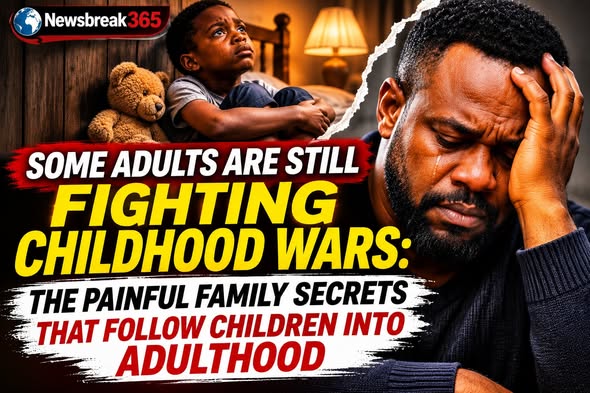
SOME ADULTS ARE STILL FIGHTING CHILDHOOD WARS: THE PAINFUL FAMILY SECRETS THAT FOLLOW CHILDREN INTO ADULTHOOD

Published

on

Some parents proudly boast about raising their children, but have they ever stopped to consider the emotional scars those children carried out of their childhood homes?**

Growing up does not automatically mean healing. Getting a job does not erase emotional wounds. Getting married does not suddenly teach someone how to love properly. And becoming a parent does not necessarily mean someone has overcome the pain of being a child.

There is a painful reality many families refuse to confront: some adults are still fighting battles that started behind the closed doors of their childhood bedrooms.

They are no longer children, but the memories remain.

Some learned to cry silently because nobody cared enough to ask what was wrong. Others learned to hide their feelings because expressing pain attracted punishment, insults or humiliation.

Some grew up believing they were never good enough. Others spent their childhood desperately seeking affection from parents who made love feel like a reward rather than something every child deserved.

And today, those children have grown into adults.

But what happened to them during childhood may still influence how they see themselves, how they trust people and how they build relationships.

## THE PARENTS WHO FORGOT WHAT THEY DID

Perhaps one of the most disturbing aspects of childhood emotional wounds is that the people responsible may not even remember what happened.

A parent may remember providing food, paying school fees, buying clothes and putting a roof over the family’s head.

But the child may remember something entirely different.

They may remember being constantly compared with other children, publicly embarrassed, called useless or made to feel unwanted.

See also  SOME PARENTS ARE NOT RAISING CHILDREN; THEY ARE USING GOD, FEAR AND BLESSINGS TO HOLD THEM HOSTAGE

They may remember being beaten for expressing an opinion, ignored when they needed affection or blamed whenever problems occurred in the household.

To the parent, it was just another day of discipline.

To the child, it may have been another day of feeling worthless.

And years later, when that child becomes emotionally distant, struggles with trust or refuses to maintain a close relationship, the same parent may ask:

“Why has my child changed?”

But perhaps the more uncomfortable question is:

**What happened to that child while you were busy raising them?**

## THE DAMAGE DOES NOT ALWAYS SHOW ON THE OUTSIDE

Not every wounded adult walks around looking miserable.

Some are successful businesspeople. Some are responsible husbands and wives. Some are hardworking parents. Others are the people everyone depends on when life becomes difficult.

They smile, laugh, work and appear perfectly normal.

But behind closed doors, they may struggle with insecurity, fear of rejection, emotional isolation and the constant feeling that they are not worthy of love.

Some find it difficult to accept compliments because they grew up being criticised.

Some become excessively independent because they learned that asking for help was pointless.

Others tolerate unhealthy relationships because emotional neglect became so familiar during childhood that they struggle to recognise what healthy affection looks like.

Of course, childhood experiences do not determine every adult’s behaviour. People respond differently, and healing is possible.

But pretending that childhood experiences have no lasting consequences is dishonest.

## WHEN THE VICTIM BECOMES A PARENT

Here is another uncomfortable reality.

See also  Actress, Doris Ogala cries out after police officers stormed her house to arrest her

Some adults who suffered emotionally during childhood unknowingly repeat the same behaviour with their own children.

The parent who was constantly shouted at may become a parent who shouts at every little mistake.

The child who was never allowed to express an opinion may grow into an adult who refuses to listen to their own children.

The person who grew up without affection may struggle to show affection to the next generation.

And suddenly, a painful family pattern continues.

This is how emotional wounds can travel from one generation to another.

However, childhood pain does not give anyone permission to hurt others. Every adult has a responsibility to recognise harmful behaviour and make an effort to break the cycle.

**You cannot change the childhood you experienced, but you can take responsibility for the childhood you give your own children.**

## SOME PARENTS WANT RESPECT BUT REFUSE TO ACCEPT RESPONSIBILITY

In many families, questioning a parent’s behaviour is treated as disrespect.

Children are expected to forgive, remain silent and maintain family relationships regardless of what happened in the past.

But respect should not mean pretending that painful experiences never happened.

Parents are human beings. They make mistakes. Many were themselves raised in difficult environments and never learned healthier ways of expressing love, discipline or disappointment.

That context matters, but it does not erase the consequences.

An apology does not make a parent weak. Acknowledging past mistakes does not destroy parental authority.

Sometimes, the most powerful thing a parent can say to a grown child is:

“I may not have understood what you were going through when you were young. I am sorry for the ways I hurt you.”

See also  OPM Pastor Offers Financial Support To Any Man Willing To Marry Autistic Daughter

Unfortunately, some parents would rather lose their relationship with their children than admit they were wrong.

## THE QUESTION EVERY FAMILY SHOULD BE WILLING TO ANSWER

We spend so much time discussing children’s education, discipline, financial security and future success.

But how often do we discuss their emotional security?

How often do parents ask their children whether they feel heard, appreciated, protected and loved?

A child needs more than food, clothing and school fees. Children also need patience, reassurance, emotional support and a home where they do not constantly feel afraid of making mistakes.

The scars left by childhood experiences are not always visible, but that does not make them insignificant.

And perhaps the greatest achievement of parenting is not simply raising children who become financially successful adults.

It is raising children who do not have to spend their entire adulthood recovering from the emotional environment in which they were raised.

**THE FINAL QUESTION:**

Should parents be held accountable for the emotional wounds they leave behind, even when their children have grown into adults?

Or should grown children simply forgive, move on and stop bringing up the past?

There are two sides to this debate, and many families have stories they have never dared to tell.

**What is your opinion?**

Share your thoughts. Your experience may help someone understand a battle they have been fighting silently.

— **Newsbreak365 | Real Stories. Uncomfortable Conversations.**

FOLLOW US ON:

FACEBOOK

WHATSAPP CHANNEL

TWITTER

PINTEREST

TIKTOK

YOUTUBE

LINKEDIN

INSTAGRAM

Continue Reading

Lifestyle

NOT EVERY PROBLEM IN YOUR LIFE IS AN ATTACK FROM THE ENEMY: SOMETIMES, YOU ARE FACING THE CONSEQUENCES OF YOUR OWN ACTIONS

Published

on

Before you declare spiritual warfare, blame your enemies or accuse someone of attacking your destiny, take a painful look at your own past. Could some of your present struggles be connected to the way you treated other people?**

There is something many people find difficult to accept: not every disappointment is an attack from the devil, not every closed door is the work of an enemy, and not every difficult season is caused by someone who is jealous of their progress.

Sometimes, the problem is much closer than you think. Sometimes, the uncomfortable truth is staring back at you in the mirror.

Unfortunately, some people have mastered the art of blaming everybody except themselves.

When life becomes difficult, they immediately begin searching for spiritual enemies. They organise prayers against imaginary attackers, consult spiritual advisers, accuse relatives of witchcraft and suspect friends of secretly plotting against them.

But have they ever paused to examine the damage they may have caused in other people’s lives?

Have they remembered the innocent people they betrayed? The hearts they deliberately shattered? The people they humiliated when they had power over them? The promises they made with confidence but abandoned when keeping them became inconvenient?

Or have they conveniently erased those memories?

## THE PEOPLE YOU HURT HAVE FEELINGS TOO!

One of the greatest forms of hypocrisy is expecting kindness from people after deliberately treating them with cruelty.

Some people want everyone to understand their pain, but they have never shown compassion towards the people they hurt.

See also  Freedom fighter Major Isaac Jasper Adaka Boro (Sept 10, 1938 – May 9, 1968) was a man ahead of his time.

They want forgiveness without admitting their wrongdoing. They want peace without making amends. They want respect without demonstrating respect.

They forget that the people they treated badly were human beings with emotions, dreams, families and expectations.

You cannot constantly destroy people’s happiness and expect everybody to celebrate yours.

You cannot make someone’s life miserable and then act surprised when your own relationships become difficult.

Your actions matter, even when you think nobody is watching.

## STOP TURNING EVERY CONSEQUENCE INTO A SPIRITUAL ATTACK!

There is a growing tendency to interpret every unpleasant experience as spiritual warfare.

A failed relationship becomes an attack. A lost friendship becomes witchcraft. A business failure becomes an enemy’s operation. A personal disappointment becomes evidence that somebody is fighting against one’s destiny.

But what if the relationship failed because of dishonesty?

What if the friendship ended because of betrayal?

What if the business collapsed because of poor decisions?

What if people walked away because they were tired of being disrespected?

Not everything requires a spiritual explanation. Sometimes, the answer is personal responsibility.

Faith is important, but faith should never become an excuse for refusing to examine one’s behaviour.

## YOU CANNOT SOW BITTERNESS AND EXPECT TO HARVEST PEACE

The Bible offers a powerful reminder in Galatians 6:7 (KJV):

*”For whatsoever a man soweth, that shall he also reap.”*

This principle challenges everyone to think carefully about their actions.

If you sow dishonesty, you may destroy trust. If you sow betrayal, you may lose meaningful relationships. If you sow cruelty, you may find yourself surrounded by broken relationships and resentment.

See also  Actress, Doris Ogala cries out after police officers stormed her house to arrest her

This does not mean every hardship is punishment for past wrongdoing. Good people also experience terrible difficulties, and innocent people sometimes suffer through no fault of their own.

However, nobody should use spiritual language to escape accountability for deliberate wrongdoing.

## SEVEN QUESTIONS YOU SHOULD ASK YOURSELF BEFORE BLAMING YOUR ENEMIES

1. **Who did I betray?** Have I ever abused someone’s trust for my personal advantage?
2. **Whose heart did I break?** Did I deliberately cause emotional pain and walk away without remorse?
3. **Who did I humiliate?** Did I use my money, position or influence to make someone feel worthless?
4. **Which promises did I break?** Did I make commitments I never intended to fulfil?
5. **Who did I abandon?** Did I turn my back on people who genuinely needed my support?
6. **Have I ever apologised sincerely?** Or do I always find excuses for my behaviour?
7. **Am I willing to change?** Or do I simply want my problems to disappear without accepting responsibility?

These questions may be uncomfortable, but honest self-examination can be the beginning of meaningful personal transformation.

## SOMETIMES, WHAT YOU NEED IS NOT ANOTHER PRAYER AGAINST YOUR ENEMIES

Sometimes, what you need is the courage to admit that you were wrong.

You may need to apologise to someone you hurt years ago. You may need to return what does not belong to you. You may need to stop manipulating people, abandon your pride and learn how to treat others with dignity.

Prayer and personal accountability are not enemies. You can pray for a better life while taking responsibility for the choices you make.

See also  Portable, Efe trade words ahead Chaos in the Ring

Do not spend your entire life fighting supposed enemies while refusing to confront the destructive habits within yourself.

The real question is not always who is fighting against you.

Sometimes, the more important question is: **WHAT HAVE I DONE TO OTHER PEOPLE?**

### THE FINAL QUESTION: ARE YOU REALLY UNDER ATTACK, OR ARE YOU REFUSING TO ACCEPT RESPONSIBILITY?

Before you blame the devil, your family, your friends or people who supposedly envy your progress, take an honest look at your past.

You might discover that some relationships were destroyed by your own behaviour, some opportunities were lost through your own decisions, and some people walked away because they could no longer tolerate how you treated them.

**Stop demanding mercy from others while refusing to show remorse for the pain you caused.**

Life is not always about identifying your enemies. Sometimes, it is about identifying your own mistakes, correcting your behaviour and becoming a better human being.

**What is your opinion? Do you believe some people blame spiritual attacks for problems caused by their own decisions and behaviour? Or do you think people are sometimes too quick to judge others without understanding their struggles?**

Share your thoughts in the comments.

*Newsbreak365 – Bringing You Stories, Opinions and Perspectives That Matter.*

FOLLOW US ON:

FACEBOOK

WHATSAPP CHANNEL

TWITTER

PINTEREST

TIKTOK

YOUTUBE

LINKEDIN

INSTAGRAM

Continue Reading

Trending