
Connect with us

News

Ibas defends six-month tenure as opposition demands probe on emergency rule

Published

on

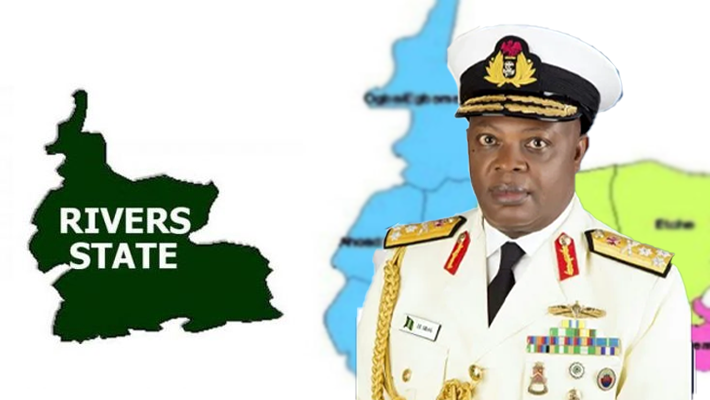
As Rivers State prepares for the return of Governor Siminalayi Fubara on September 18 following the six-month emergency rule in the state, the sole administrator, Vice Admiral Ibok Ete Ibas (retd), has defended his tenure, stating that he fulfilled President Bola Tinubu’s mandate and stabilised the oil-rich state.

However, the opposition parties called for an investigation into Iba’s tenure, particularly his management of the state’s resources during his six-month stay in Brick House.

The Peoples Democratic Party described Ibas’s six-month administration as a waste of time, declaring it unconstitutional, a violation of democratic norms, and demanding an investigation.

Meanwhile, the New Nigeria Peoples Party dismissed the entire six-month rule under Ibas as an exercise in futility, claiming it lacked legitimacy from the outset.

The Labour Party also criticised the emergency rule, alleging it was designed to protect the interests of President Tinubu and the Minister of the Federal Capital Territory, Nyesom Wike, rather than those of the people.

In contrast to the opposition’s stance, the All Progressives Congress praised Ibas for maintaining peace and upholding the rights of citizens during his time as sole administrator.

The party lauded his efforts in ensuring that democratic processes, especially the conduct of local government elections, remained intact, describing his leadership as a stabilising force in a previously tense political environment.

Rivers State had been engulfed in political turmoil for nearly two years, largely due to a power tussle between former Governor Nyesom Wike and his successor, Siminalayi Fubara, which resulted in a prolonged governance deadlock.

In response to the crisis, President Tinubu declared a state of emergency on March 18 and appointed Ibas as the sole administrator to manage the state’s affairs during the period.

Two days later, on March 20, both the House of Representatives and the Senate endorsed the President’s declaration, effectively suspending Fubara and the Rivers State House of Assembly away on forced holidays despite widespread public criticism.

Objecting to what they considered an unconstitutional move, 11 PDP governors filed a case at the Supreme Court, registered as SC/CV/329/2025. However, there has been no public update on the matter since then.

Following the reconciliation between Wike and Fubara, the political climate in Rivers has eased.

The state held its local government elections on August 30, with the ruling All Progressives Congress securing 20 seats and the PDP winning the remaining three.

With a few days to the end of his tenure, the sole administrator commenced the transition process ahead of the President’s reinstatement of the suspended governor by September 18.

Thanksgiving service

Speaking at the Interdenominational Thanksgiving Service in Port Harcourt on Sunday ahead of Fubara’s return to power, the sole administrator urged political stakeholders to lay down their differences, emphasising that the progress and prosperity of Rivers State must take precedence over personal or party interests.

However, notable politicians in Rivers, including Wike and Fubara, were absent at the event. Aside from the Chairman of the Rivers State Council of Traditional Ruler, many monarchs in the state were visibly absent at the thanksgiving.

However, Permanent Secretaries, local government chairmen, heads of boards, agencies, parastatals and service commanders in the state graced the occasion.

Ibas, who had last week said he has ‘successfully achieved’ the mandate given to him by President Bola Tinubu in Rivers State.

Ibas noted that his administration has laid the foundation for reconciliation and called on the people to nurture that effort so it can firmly take root.

He also appealed to all stakeholders, including leaders, elders, politicians, and citizens, to always prioritise the state’s well-being above all else.

Ibas stated, “Six months ago, His Excellency President Bola Ahmed Tinubu, GCFR, Commander-in-Chief of the Armed Forces of Nigeria, declared a state of emergency in River State. At that moment, our beloved state stood at a crossroad, torn by divisions, instability, and broken trust.  By God’s grace and with the support of Mr. President and all of you, we have worked through those difficult days together.

“Today, as a people, we return thanks to God for preserving our lives, granting us peace, and allowing the successful conduct of the local government council elections across the state and thus laying the foundation for the return of democratic governance in Rivers State.”

Quoting some Bible passages, he said thanksgiving was a solemn testimony of God’s faithfulness to the state, saying, “We have survived storms-political, social, economic, and through it all, God has been faithful.”

See also  Veteran Nollywood actor, Kola Oyewo, has passed away at the age of 80 years

Ibas added, “The seeds of reconciliation have been planted. These seeds need your deliberate nurture to take root. Our collective sacrifices and commitment to peace is what we must all strive to guide at this time.

“My brothers and sisters, this Ecumenical Centre (venue of the event) is itself a symbol of unity, different denominations under one roof, lifting one voice to one God. In the same spirit, Rivers people must rise above bitterness, rivalry and self-interest to pursue the greater good of our state.

“The progress and prosperity of the River State must be placed above personal and or partisan interest. I make a special appeal to our political actors, sheathe your sword. Politics must never be an excuse to destroy the very state we are called to serve.

“The progress and prosperity of the River State must be placed above personal or partisan interest. River State cannot afford another season of division and acrimony. We must forgive one another, reconcile with sincerity, and embrace tolerance. Let us remember that no political victory or personal gain is worth the blood of our brothers and sisters.’

He called on all stakeholders to focus their efforts on fostering and maintaining peace in the state.

Ibas added, “Let us forgive, let us reconcile, and let us heal. For where there is peace, there is progress, and where there is love, there is prosperity. To our youth, you are the strength of Rivers State. Do not allow yourselves to be used as tools for violence. Channel your energy into building, creating, and sustaining peace. Your future, our collective future, depends on it.

“While efforts at peace and reconciliation take hold, all stakeholders, leaders, elders, political actors, and citizens alike should put Rivers State first. Let us guide the peace we have, nurture it with love, and grow it with stability and prosperity for generations yet unborn.”

“Our elders must continue to guide with wisdom. Our faith leaders must sustain prayers for peace. Our young people must commit to learning, working, and creating so that Rivers State will continue to shine as the treasure base of the nation.”

In his sermon, Pastor Organ Barasin highlighted that every individual experiences a moment of intervention, noting that the emergency rule was implemented in the state due to prevailing challenges and instability.

“We must admit that we didn’t do well,” he said, pointing out that before the declaration of emergency rule, the intense political tension in the state could have led to a bloodbath if not for divine intervention.

He stated, “Some people may have been killed. The plan of the enemy was to destabilise Rivers State, but Rivers State belongs to God. The plan of the enemy will not stand.

“We are thanking God for his continued sustenance. There is peace in this land. Rivers State will grow industries.

“The peace we have now must be sustained, and God wants us to forget the past. If you don’t let go of the past, you can’t reach out for the future. Brethren, we must learn to forgive and forget the past so that we can move forward.”

The cleric, who lamented the losses the state has endured due to the emergency rule, called for a change in attitude upon Fubara’s return.

He stated, “As we prepare to hand over to a democratic government, if our attitudes don’t change, nothing will change in this state. Our leaders, service chiefs, judiciary and the legislature all have a role to play. Billions have gone.”


Opposition, APC clash

Reacting, the Deputy National Youth Leader of the PDP, Timothy Osadolor, condemned Ibas’s tenure as unlawful.

In an interview with The PUNCH on Sunday, Osadolor called for a comprehensive investigation into the governance in Rivers State under the sole administrator.

He stated, “Well, like I mentioned at the very beginning, he had no business being there as the sole administrator of Rivers State. Rivers State had an elected governor, so that six months of illegality should be corrected and documented, so that when he is there, he can be thoroughly investigated.

“More so, the numerous resources he expended and presided over belong to the Rivers State people, who did not elect him, who did not decide over their affairs or their resources. Therefore, his handover notes should be well-titled in everything they did because the six months must be probed.

“No matter what, we also believe that Mr. President has no right to truncate or suspend the tenure of an elected public officer that was elected the same way he was elected. For checks and balances, those powers should be vested in the Nigerian National Assembly and not in the office of the President.

See also  INEC assures Nigerians of readiness for 2027 polls

“More importantly, no elected officer should be made to stay out of the mandate for more than 90 days, if that makes any sense.”

He added that, “His (Ibas) appointment was built on illegality. So he did not achieve anything.”

Also, the National Publicity Secretary of the NNPP, Ladipo Johnson, said Ibas’s tenure lacked legitimacy ab initio.

“The tenure of Rivers’ military administrator is almost like an exercise in futility. This is because his take-off was an aberration of the constitution of the Federal Republic of Nigeria.

“We still maintain that it was an illegality. For one reason or another, they seem to have found some sort of political solution to the problem that was not even half as dangerous as what we had in some parts of Northern Nigeria, which needed a state of emergency to improve the insecurity they are facing.

“When we say a state of emergency, we are not talking about removing an elected government for one appointee. There is nowhere in the Constitution that allows it. We still maintain that. So, the earlier the illegal tenure comes to an end, the sooner we return to constitutional order and to the expression of the will of the people in Rivers State.

“How do you justify the administration of a military administrator? You look at things from a democratic value. It is just an exercise in futility,” Johnson told The PUNCH.

Speaking in a similar tone, the Interim National Publicity Secretary of the Labour Party, Tony Akeni, alleged that Ibas merely served as a placeholder for Tinubu and his political ally, Wike.

“There are two designs by President Tinubu and his favourite South-South sidekick, Wike, in the coup and siege against democracy in River state. The political and the economic designs,” Akeni claimed.

He alleged that the “political design” was to emasculate Fubara and secure Rivers for the ruling APC ahead of 2027, while the “economic design” was to divert state revenues through local councils loyal to Wike.

“To assess Sole Administrator Admiral Ibok-Eke Ibas’s performance during the period, his only achievement is that he did a good job standing in for his adopted new masters, Tinubu and Wike,” Akeni stated.

“In both plots, Tinubu and Wike fully succeeded. The only plot left they don’t know about is that they do not own tomorrow. Yes, they don’t. In 2027, Tinubu and Wike may wake up to find that it is God and Rivers State’s 7.2 million reborn citizens who actually own and will determine their destiny in 2027.

“Not the two clay emperors riding roughshod over their governor, Simi Fubara, and their treasury today.”

However, the APC Director of Publicity, Bala Ibrahim, praised the sole administrator for restoring peace and safeguarding the citizens’ electoral rights.

In an interview with The PUNCH, Ibrahim stated that only the President, who defined the administrator’s terms of reference, is in a position to properly assess Ibas’ performance.

He stated, “Well, you see, as a party, we are not privy to the terms of reference given to the administrator in Rivers. But whether he has achieved or acted according to the provisions or the expectation of the terms of reference is another thing.

“What matters to us as a party is the peaceful coexistence of the people and the freedom given to the people of Rivers State to exercise the franchise of election, as done during the local government election.

“That has been done peacefully, democratically, and in an era that shows that, yes, the people are happy with the dividend of democracy given to them under the national leadership of the APC.

“So, to that extent, we are happy with the conduct of the affairs of the administrator. But whether he has acted according to what he was sent to do is an assessment that can basically be given by the presidency, which gave him that task.”

The APC called on Fubara to embrace democratic principles once his suspension is lifted.

He added, “Well, if his suspension is lifted and he’s asked to resume, I think he must have learned. He would have licked his wounds so well as to leave no room for infection.

See also  Over 650 children di£d of malnutrition in Katsina in six months – MSF

“He should not allow anything to happen in a way and manner that would put him off the seat of power. As provided by the mandate given to him by the people, he should be a democrat. He should play democracy by the book and do as expected of him as a politician who was elected to serve the people.”

Groups demand probe

Additionally, the President of the Ijaw Youth Council, Jonathan Lokpobiri, alleged that the six-month emergency rule was marked by widespread corruption.

He added, “If you seek my honest opinion, Rivers State has lost not just the issue of governance, but investors’ confidence in terms of people’s perception about the stability in terms of polity.

“Also, I do believe that Rivers’ resources were plundered, which the man has no business having access to. It became private resources where he didn’t limit his tenure to doing the basics about governance in terms of maintaining the peace and all of that. He has gone into the dimension of an executive governor of Rivers State, where if the President did not make it clear to him, he would have wished to even continue.’’

Also commenting, the Publicity Secretary, Movement for the Survival of Ogoni People,  Oscar Imeabe, argued that the emergency rule impacted negatively on the state.

“The emergency rule has reportedly crippled economic activities in the state by chasing away investors and entrepreneurs. It has been a major setback to the history of Rivers State. The Administrator dissolved state institutions like the Rivers State Independent Electoral Commission, the Rivers State Micro-Finance Agency, boards of many tertiary institutions and agencies that were appointed by a democratically elected governor and proceeded to make illegal appointments which he wants to leave behind,” he stated.

Imeabe, who is also the Coordinator, South-South Youths Initiative,  called for an investigation into Ibas’ tenure.

“MOSOP is hereby calling for an investigation into the financial management of the state by the administrator. And my organisation, South-South Youths Initiative, the coalition of youths bodies, call on the EFCC and ICPC to probe the allegations of financial misappropriation by the state administrator.”

A former Senator, Lee Maeba, who represented Rivers South-East District in the National Assembly, described the situation during Ibas’s tenure as dire.

In an interview with our correspondent, he stated, “Rivers State has lost so much money, and we have to account for it. President Bola Tinubu has to account for our money. We have lost a huge amount of money. Six months of allocation, Internally Generated Revenue, and all other statutory earnings, I mean.

“How can you just suspend a governor and begin to play with all the monies meant for the state? The Administrator is behaving however he likes. An Administrator who was asked to go and restore security, but he went there and became completely in charge of politics.

“So, it’s a terrible thing to do. I don’t believe the President can go this low. It is the lowest level a President can go. He does not have any respect for anybody in Rivers because we elected him President. It’s a terrible thing to talk about.”

Maeba, who called for an investigation into the six months, stated that those who supported the state of emergency would face the consequences.

He stated, “The Constitution does not envisage that you will suspend a governor. There is nowhere in the Constitution that you will suspend a governor. And the terrible National Assembly stood by the President to do all the terrible things he did in Rivers. So, may that which happened in Rivers not happen in another state in Nigeria. I don’t pray it happens to any other state at all.’’

“And what has happened to Rivers is not gone. We will stand up to demand all the money that came to the state and the power of the Administrator to just jump into a state and start spending state money in the name of an emergency that does not exist. The State of Emergency that we hear is to restore security breaches or the breakdown of law and order. Now, in this case, the man just came for politics because there was no case of insecurity. He came and started using state resources without any constitutional powers or law allowing him to do that.”

FOLLOW US ON:

FACEBOOK

TWITTER

PINTEREST

TIKTOK

YOUTUBE

LINKEDIN

TUMBLR

INSTAGRAM

Continue Reading
Click to comment

Leave a Reply

Your email address will not be published. Required fields are marked *

News

Pentagon restores name of US Pacific Command

Published

on

The Pentagon is set to restore the name of the US Indo-Pacific Command to the US Pacific Command, it said on Tuesday, reversing a 2018 decision.

The renaming will not change the command’s area of responsibility, which stretches from the western part of India to America’s Pacific coastline, the Department of War said in a statement.

Its “fundamental mission and its unwavering commitment to maintaining a free and open theatre alongside regional allies and partners” also remain unchanged, it added.

The name change “honours the command’s deep historical roots, fostering a sense of pride and collective spirit among all who serve in the Pacific,” the department said, without giving additional details.

The US Pacific Command was established by former President Harry Truman after World War II.

It operated under that name for over 70 years before being renamed as the US Indo-Pacific Command in 2018, in a nod to the growing importance of the Indian Ocean in US strategic thinking.

The 2018 name change also came as part of broader efforts by Washington to counter China’s growing influence across the Asia-Pacific domain.

AFP

See also  Nigerians top list of asylum seekers in Ireland
Continue Reading

News

Labour to engage FG on minimum wage review

Published

on

The Nigeria Labour Congress and the Trade Union Congress said they will restart negotiations with the Federal Government over a new national minimum wage, warning that workers can no longer cope with rising living costs as inflation continues to erode real incomes.

The unions are pushing for what they described as a “genuine living wage” to replace the current framework, which they said no longer reflects Nigeria’s economic realities, particularly sharp increases in food, transport, housing, and healthcare costs.

The position was contained in a joint address delivered at the 114th International Labour Conference in Geneva on Monday, where the unions also rejected any proposal to tax the minimum wage or impose additional fiscal burdens on low-income earners.

Nigeria’s current minimum wage of N70,000 was signed into law on 18 July 2024, in an agreement between organised labour and the federal government. President Bola Tinubu formally announced the wage on 19 July 2024, and it took effect on 29 July 2024.

The agreement originally set a three-year review cycle, shifting from the previous five-year arrangement. However, in January 2025, the Federal Government adjusted the framework, announcing that the minimum wage would now be reviewed every two years, effectively setting 2026 as the next review point.

In light of this, labour leaders said they intend to formally open discussions with the federal government ahead of the July 2026 wage renegotiation deadline, in a bid to prevent the delays that have often hindered previous minimum wage reviews.

“The current Act expires early next year, and we have announced that renegotiation will commence by July 2026 to avoid the painful delays of the past. As soon as we leave here, we shall write again to the government demanding the commencement of the process for renegotiating the national minimum wage,” the unions said.

See also  Ogun lawmaker, community chiefs clash over monarch’s selection

The labour leaders said workers are already under severe pressure from inflation, currency depreciation, and rising costs across essential services, arguing that official economic indicators do not reflect the daily realities of most households.

They warned that taxing the minimum wage would worsen poverty and deepen economic hardship at a time when many citizens are struggling to meet basic needs.

“We demand nothing less than a genuine living wage that reflects today’s harsh economic realities. We also demand immediate relief measures by governments at all levels until a new minimum wage is signed into law. We reject outright any attempt to tax the minimum wage or impose further burdens on the poor,” the unions said in their communiqué.

The unions stressed that the upcoming negotiations must go beyond nominal wage adjustments and instead focus on protecting real incomes, which they said have been steadily eroded by inflation.

They also urged federal and state governments to introduce short-term relief measures pending the conclusion of negotiations, warning that delays could heighten industrial tensions across the country.

Beyond wage concerns, the labour movement used the Geneva platform to highlight broader economic and social challenges, including insecurity, unemployment, and rising poverty levels.

They said insecurity in several parts of the country has made commuting increasingly dangerous for workers, with killings, abductions, and displacement affecting productivity and livelihoods.

According to the unions, nearly 2,000 people were killed in the first quarter of the year, while millions have been displaced, with entire communities and economic activities disrupted by violence.

See also  Stop mistaking me for Anambra LP gov candidate– Kingsley Moghalu

They warned that worsening insecurity could force workers to remain at home as a survival response, escalating tensions beyond traditional labour action if not urgently addressed.

The labour leaders also said about 65 per cent of Nigerians, estimated at roughly 150 million people, are currently living in multidimensional poverty, driven by inflation, job losses, and declining purchasing power.

They argued that while macroeconomic reforms are aimed at stabilisation, they have yet to translate into improved living standards for ordinary citizens.

As the 2027 general elections approach, the unions said they are developing a charter of demands to shape their engagement with political actors and inform their support for candidates, noting that  only political actors who commit to improved security, functional public services, wage reforms, and protection of labour rights would receive their backing.

The labour movement also raised concerns over alleged interference in union affairs in some states, accusing certain governments of undermining democratically elected labour leadership structures.

They emphasised that organised labour would resist any attempt to weaken union independence or impose external control on labour organisations.

As the current wage regime approaches its 2026 review window, the unions said their priority remains securing a wage structure that reflects economic realities and protects workers from further erosion of income.

They maintained that the outcome of the upcoming negotiations would determine whether Nigerian workers receive what they termed a “living wage” or continue to endure worsening economic hardship.

punch.ng

FOLLOW US ON:
FACEBOOK

TWITTER

PINTEREST

TIKTOK

YOUTUBE

LINKEDIN

INSTAGRAM

Continue Reading

News

Ribadu, Akpabio advocate tech-driven border control over Insecurity

Published

on

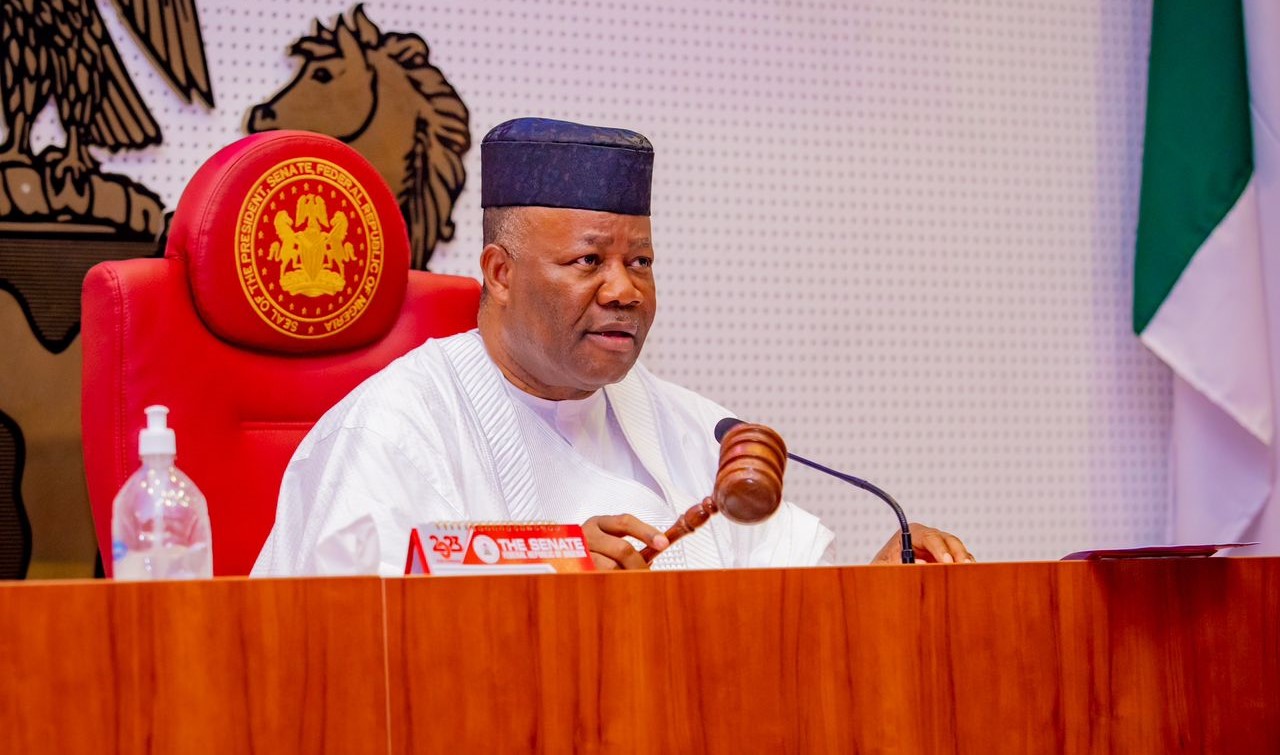
The National Security Adviser, Nuhu Ribadu, and President of the Senate, Godswill Akpabio, on Tuesday called for the deployment of modern technology and stronger regional cooperation to strengthen Nigeria’s border security architecture and address growing security threats across the country.

FILE: Akpabio

They made the call at the opening of the 15th National Security Seminar organised by the Alumni Association of the National Defence College in Abuja.

Represented by the Director of Policy and Strategy at the Office of the National Security Adviser, Yazid Gbemudu, the NSA said Nigeria’s territorial integrity and national stability were closely tied to the effectiveness of its border security framework.

He noted that while Nigeria’s extensive land and maritime borders facilitated trade, regional integration and socio-economic development, they also exposed the country to threats including terrorism, arms trafficking, smuggling, human trafficking, irregular migration and other forms of transnational organised crime.

According to him, weak border governance creates vulnerabilities that can be exploited by criminal and terrorist networks, thereby undermining national security and development efforts.

“A major pillar of Nigeria’s contemporary border security framework is the National Border Management Strategy, which promotes an integrated border management approach.

“The strategy seeks to enhance intelligence collaboration, strengthen border infrastructure, improve surveillance capabilities and modernise border management processes,” he said.

Ribadu said the deployment of Border Management Information Systems and other technological solutions at key entry and exit points had improved data collection, traveller screening and migration monitoring.

“These initiatives demonstrate Nigeria’s commitment to aligning its border management practices with international standards,” he added.

See also  Police brutality victims in Abia tells Otti to pay panel-approved compensation

The NSA stressed the need for the full implementation of an integrated border management system to improve coordination among security, intelligence and law enforcement agencies.

“Effective intelligence sharing, joint operations and harmonised border procedures are essential for addressing contemporary security threats,” he said.

He also advocated increased investment in technology-driven border security solutions.

“Expanding surveillance systems across land, maritime and coastal borders will significantly improve monitoring capabilities and reduce illegal cross-border activities.

“Modern challenges require modern solutions, including biometric identification systems, advanced border monitoring technologies and data-driven security frameworks,” Ribadu stated.

The NSA further emphasised the importance of regional and bilateral cooperation, noting that many of the security challenges confronting Nigeria’s borders were transnational in nature and required coordinated responses among neighbouring countries.

He also called for greater investment in border communities through sustainable development, improved infrastructure and economic opportunities to reduce their vulnerability to criminal exploitation.

“Strengthening Nigeria’s border security architecture is fundamental to ensuring national stability, protecting territorial integrity and promoting socio-economic development,” he said.

Ribadu, however, acknowledged challenges such as porous borders, inadequate infrastructure, limited technological capabilities and gaps in inter-agency coordination, saying they required urgent attention.

“Border security is a shared responsibility that requires the collective efforts of security agencies, government institutions, border communities and international partners,” he added.

Speaking at the event, Akpabio, who was represented by the Chairman of the Senate Committee on Defence, Ahmad Lawan, said Nigeria’s extensive land and maritime boundaries posed significant security challenges.

“As a country with extensive land and maritime boundaries, Nigeria faces significant challenges relating to border control, illegal migration, arms trafficking, smuggling and the infiltration of criminal and extremist elements.

See also  INEC assures Nigerians of readiness for 2027 polls

“It is, therefore, imperative that Nigeria prioritises the strengthening of its border security architecture through improved surveillance, enhanced infrastructure, better inter-agency coordination, technological innovation and stronger regional cooperation,” he said.

Akpabio noted that many of the security threats confronting Nigeria had transnational dimensions, making coordinated responses essential.

He stressed that peace and security remained prerequisites for meaningful national development.

“There can be no meaningful development without peace and security. Porous and poorly managed borders can become vulnerabilities that undermine national security efforts and national stability,” he said.

The Senate President also advocated a whole-of-government and whole-of-society approach to addressing insecurity.

According to him, government institutions, security agencies, civil society organisations, the private sector, traditional institutions, the media and academia all have critical roles to play in safeguarding the country.

Earlier, the Acting President of AANDEC, Commodore Amatare Kpou (retd.), described the seminar as a key platform for promoting informed discourse on national security challenges and opportunities.

Kpou said the theme of the seminar, “Strengthening Nigeria’s Border Security Architecture for National Stability,” was timely, given the growing threats of irregular migration, smuggling, trafficking and other cross-border crimes.

He expressed confidence that the deliberations would generate useful recommendations for policymakers and contribute to efforts aimed at building a safer and more secure Nigeria.

Nigeria shares over 4,000 kilometres of land borders with neighbouring countries and an extensive coastline, making border security a critical component of national security.

Authorities have repeatedly identified porous borders as channels for terrorism, arms smuggling, human trafficking and other transnational crimes.

The Federal Government has in recent years intensified efforts to strengthen border management through technology, intelligence sharing and regional cooperation.

See also  Veteran Nollywood actor, Kola Oyewo, has passed away at the age of 80 years

punch.ng

FOLLOW US ON:

FACEBOOK

TWITTER

PINTEREST

TIKTOK

YOUTUBE

LINKEDIN

INSTAGRAM

Continue Reading

Trending