Connect with us

News

Christian killings: FG disagrees as CAN backs US senator

Published

on

The Federal Government has again rejected what it described as “false and baseless” allegations by United States Senator Ted Cruz, who accused Nigerian authorities of orchestrating a genocide against Christians and allowing the destruction of thousands of churches.

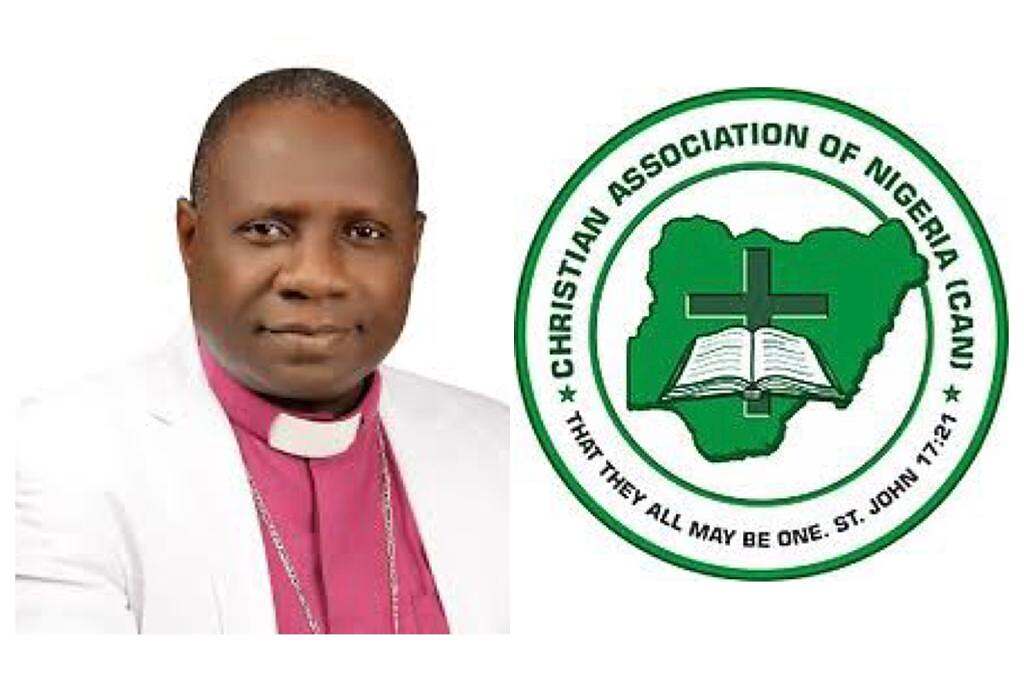
But in a statement on Wednesday by its President, Archbishop Daniel Okoh, the Nigerian Christian Association “affirms, without hesitation, that many Christian communities in parts of Nigeria, especially in the North, have suffered severe attacks, loss of life, and the destruction of places of worship.”

“Nigeria’s healing will not come from denial or blame, but from courage: the courage to face our collective failures, to grieve together, and to rebuild trust within our communities,” CAN stated.

Cruz, in an interview with Fox News Digital, alleged that more than 52,000 Christians have been killed in Nigeria since 2009, and over 20,000 churches and Christian schools have been destroyed.

He also announced the introduction of the Nigeria Religious Freedom Accountability Act in the US Senate,  a bill seeking sanctions on Nigerian officials he claims are complicit in religious persecution.

But reacting to the claims on Wednesday, the Minister of Information and National Orientation, Mohammed Idris, dismissed the senator’s assertions as “misleading, exaggerated, and not reflective of reality.”

“The Nigerian government rejects that. This is certainly not true,” Idris said in a statement issued through his media aide. “It’s false to claim that over 52,000 Christians have been killed or that 20,000 churches have been burned. Where did he get those numbers from? It’s absolutely absurd and unsupported by any credible evidence.”

Cruz, who chairs the Senate Subcommittee on Africa and Global Health Policy, had claimed that the alleged killings were “the result of decisions made by specific people, in specific places, at specific times,” vowing that the United States “knows who those individuals are” and will “hold them accountable.”

But Idris firmly rejected the notion that Nigerian authorities are complicit in any religiously motivated violence.

“No Nigerian officials will willingly or deliberately side with violent extremists to target any religion. That is absolutely false,” he said.

See also  30 dead, 58 rescued in Niger boat mishap -NEMA

Reaffirming Nigeria’s commitment to religious freedom, Idris emphasised the country’s long-standing diversity and coexistence.

“Nigeria is a multi-faith country. We have Christians, Muslims, and even citizens who subscribe to neither. Nigeria is a very tolerant nation, and the government remains committed to protecting the rights of all,” he stated.

While acknowledging that violent extremism remains a national security challenge, Idris insisted that such violence has affected both Christians and Muslims.

“It’s unfortunate that extremists have killed people of both faiths in areas where they operate. But it is wrong and misleading to claim there’s a deliberate plan to exterminate Christians. That is simply not true and very unfortunate,” he said.

He assured Nigerians and the international community that security agencies continue to combat terrorism and banditry in all its forms, without bias or discrimination.

But CAN, its statement, titled, “Christian Genocide” – CAN Clarifies Position, maintained that truly killings are facing persecution, saying,  “These realities are painful reminders of the urgent need for government and security agencies to act decisively to protect every citizen, regardless of region.”

The CAN President said, “Over the years, CAN and the wider Christian community have worked tirelessly to draw attention, both nationally and internationally, to the persecution of Christians in Nigeria. The association has established mechanisms for recording incidents of religiously motivated killings, engaged with international partners, written to the International Criminal Court in The Hague, and hosted global Christian organisations such as the World Evangelical Alliance and the Lausanne Movement. These sustained efforts demonstrate CAN’s consistent advocacy for justice, peace, and the protection of Christian communities under threat.”

The Christian body said its “concern remains that these cries for justice and protection are too often met with delay or denial.”

“We, therefore, renew our call on government and security agencies to take urgent, transparent, and equitable action to end the killings, safeguard vulnerable Christian communities from displacement, and ensure that perpetrators face the full weight of the law. The pain of Christian families torn apart by violence must never be treated as mere statistics.

“CAN acknowledges the efforts of government and security agencies in responding to the nation’s security challenges, but urges that these efforts be redoubled towards equitable protection for all. It is equally imperative that perpetrators of violence are brought swiftly and transparently to justice. We also appeal to all Christian leaders to continue to speak and act with wisdom, unity, and faith, knowing that peace is too fragile to be taken for granted.”

See also  Nigeria braces for possible Ebola outbreak, says NCDC

CAN said, “Nigeria’s healing will not come from denial or blame, but from courage: the courage to face our collective failures, to grieve together, and to rebuild trust within our communities. Only then can our nation rise from its wounds and embrace a future of genuine peace.”

However, the House of Representatives, at its plenary on Wednesday, aligned with the Federal Government in condemning a proposed United States Senate legislation which designates Nigeria as a “Country of Particular Concern” — a move that could trigger sanctions on Nigerian officials under Executive Order 13818 (Global Magnitsky Act) and related authorities.

The Nigeria Religious Freedom Accountability Act of 2025 (S.2747), introduced in the U.S. Senate on September 9, seeks to compel the U.S. Secretary of State to list Nigeria as a “Country of Particular Concern” (CPC) and to sanction officials accused of complicity in religious persecution.

Presnting a motion of urgent national importance, the Deputy Speaker, Benjamin Kalu, and other co-sponsors noted that the U.S. Commission on International Religious Freedom had, in recent annual reports, recommended Nigeria for CPC designation, citing alleged violations and failures to protect citizens from non-state actor abuses.

Kalu, speaking on the motion, argued that Nigeria’s Constitution “guarantees freedom of thought, conscience, and religion and bars the adoption of any state religion.”

He added that successive governments, security agencies, and faith leaders “continue to take measures to protect all worshippers and prosecute offenders,” as reflected in U.S. Department of State country reports.

“The House observes that insecurity in Nigeria is complex and multi-causal — driven by insurgency, criminal banditry, farmer-herder conflicts, separatist violence, and communal disputes — affecting citizens of all faiths,” Kalu said. “International reports attribute a significant share of fatalities to terrorist groups and criminal gangs rather than state policy or any single religious dynamic.”

See also  PHOTOS: Igbo Community in Osun Storms Streets for Egungun Festival

The lawmakers warned that “external legislative actions based on incomplete or decontextualised assessments risk undermining Nigeria’s sovereignty, misrepresenting facts, straining strategic relations, and unintentionally emboldening violent actors.”

Mindful of Nigeria’s long-standing partnership with the U.S. on counter-terrorism, human rights, and interfaith dialogue, the House “condemned the negative characterisation” of the country and rejected what it called an attempt to “profile Nigeria unfairly.”

Majority Leader Prof. Julius Ihonvbere described the move as part of a misinformation campaign “bent on demarketing Nigeria,” while Katsina lawmaker Sada Soli urged the Federal Government to “state strongly its disappointment at the deliberate attempt to dent the nation’s image.”

Edo lawmaker Billy Osawaru added that Nigeria must urgently strengthen its diplomatic presence, noting that “till now, Nigeria does not have an Ambassador to the United States,” and stressing that the country “cannot afford to fail the African continent.”

The House mandated its Committees on Foreign Affairs, National Security and Intelligence, Interior, Information, National Orientation and Values, Police Affairs, Civil Society, and Human Rights to, within 21 days, coordinate a formal diplomatic demarche to the sponsors of the U.S. bill and relevant congressional committees, transmitting empirical data and Nigeria’s official position.

It also urged the Committees to engage the U.S. Mission in Nigeria and interested legislators to propose a Nigeria–U.S. joint fact-finding dialogue.

In addition, the House called for the establishment of a mechanism on freedom of religion or belief — with participation from faith leaders and independent experts — and to invite the U.S. Commission on International Religious Freedom (USCIRF) to a briefing session to examine sources, methodology, and possible remedies.

The resolutions are to be transmitted to the Presidency, the Ministry of Foreign Affairs, heads of security agencies, the leadership of the U.S. Congress (Senate Foreign Relations and House Foreign Affairs Committees), the U.S. Department of State, USCIRF, the African Union, and ECOWAS Commissions.

punch.ng

FOLLOW US ON:

FACEBOOK

TWITTER

PINTEREST

TIKTOK

YOUTUBE

LINKEDIN

TUMBLR

INSTAGRAM

Continue Reading
Click to comment

Leave a Reply

Your email address will not be published. Required fields are marked *

News

Labour to engage FG on minimum wage review

Published

on

The Nigeria Labour Congress and the Trade Union Congress said they will restart negotiations with the Federal Government over a new national minimum wage, warning that workers can no longer cope with rising living costs as inflation continues to erode real incomes.

The unions are pushing for what they described as a “genuine living wage” to replace the current framework, which they said no longer reflects Nigeria’s economic realities, particularly sharp increases in food, transport, housing, and healthcare costs.

The position was contained in a joint address delivered at the 114th International Labour Conference in Geneva on Monday, where the unions also rejected any proposal to tax the minimum wage or impose additional fiscal burdens on low-income earners.

Nigeria’s current minimum wage of N70,000 was signed into law on 18 July 2024, in an agreement between organised labour and the federal government. President Bola Tinubu formally announced the wage on 19 July 2024, and it took effect on 29 July 2024.

The agreement originally set a three-year review cycle, shifting from the previous five-year arrangement. However, in January 2025, the Federal Government adjusted the framework, announcing that the minimum wage would now be reviewed every two years, effectively setting 2026 as the next review point.

In light of this, labour leaders said they intend to formally open discussions with the federal government ahead of the July 2026 wage renegotiation deadline, in a bid to prevent the delays that have often hindered previous minimum wage reviews.

“The current Act expires early next year, and we have announced that renegotiation will commence by July 2026 to avoid the painful delays of the past. As soon as we leave here, we shall write again to the government demanding the commencement of the process for renegotiating the national minimum wage,” the unions said.

See also  30 dead, 58 rescued in Niger boat mishap -NEMA

The labour leaders said workers are already under severe pressure from inflation, currency depreciation, and rising costs across essential services, arguing that official economic indicators do not reflect the daily realities of most households.

They warned that taxing the minimum wage would worsen poverty and deepen economic hardship at a time when many citizens are struggling to meet basic needs.

“We demand nothing less than a genuine living wage that reflects today’s harsh economic realities. We also demand immediate relief measures by governments at all levels until a new minimum wage is signed into law. We reject outright any attempt to tax the minimum wage or impose further burdens on the poor,” the unions said in their communiqué.

The unions stressed that the upcoming negotiations must go beyond nominal wage adjustments and instead focus on protecting real incomes, which they said have been steadily eroded by inflation.

They also urged federal and state governments to introduce short-term relief measures pending the conclusion of negotiations, warning that delays could heighten industrial tensions across the country.

Beyond wage concerns, the labour movement used the Geneva platform to highlight broader economic and social challenges, including insecurity, unemployment, and rising poverty levels.

They said insecurity in several parts of the country has made commuting increasingly dangerous for workers, with killings, abductions, and displacement affecting productivity and livelihoods.

According to the unions, nearly 2,000 people were killed in the first quarter of the year, while millions have been displaced, with entire communities and economic activities disrupted by violence.

See also  Five things to know as Africa hosts its first G20 summit

They warned that worsening insecurity could force workers to remain at home as a survival response, escalating tensions beyond traditional labour action if not urgently addressed.

The labour leaders also said about 65 per cent of Nigerians, estimated at roughly 150 million people, are currently living in multidimensional poverty, driven by inflation, job losses, and declining purchasing power.

They argued that while macroeconomic reforms are aimed at stabilisation, they have yet to translate into improved living standards for ordinary citizens.

As the 2027 general elections approach, the unions said they are developing a charter of demands to shape their engagement with political actors and inform their support for candidates, noting that  only political actors who commit to improved security, functional public services, wage reforms, and protection of labour rights would receive their backing.

The labour movement also raised concerns over alleged interference in union affairs in some states, accusing certain governments of undermining democratically elected labour leadership structures.

They emphasised that organised labour would resist any attempt to weaken union independence or impose external control on labour organisations.

As the current wage regime approaches its 2026 review window, the unions said their priority remains securing a wage structure that reflects economic realities and protects workers from further erosion of income.

They maintained that the outcome of the upcoming negotiations would determine whether Nigerian workers receive what they termed a “living wage” or continue to endure worsening economic hardship.

punch.ng

FOLLOW US ON:

FACEBOOK

TWITTER

PINTEREST

TIKTOK

YOUTUBE

LINKEDIN

INSTAGRAM

Continue Reading

News

Ribadu, Akpabio advocate tech-driven border control over Insecurity

Published

on

The National Security Adviser, Nuhu Ribadu, and President of the Senate, Godswill Akpabio, on Tuesday called for the deployment of modern technology and stronger regional cooperation to strengthen Nigeria’s border security architecture and address growing security threats across the country.

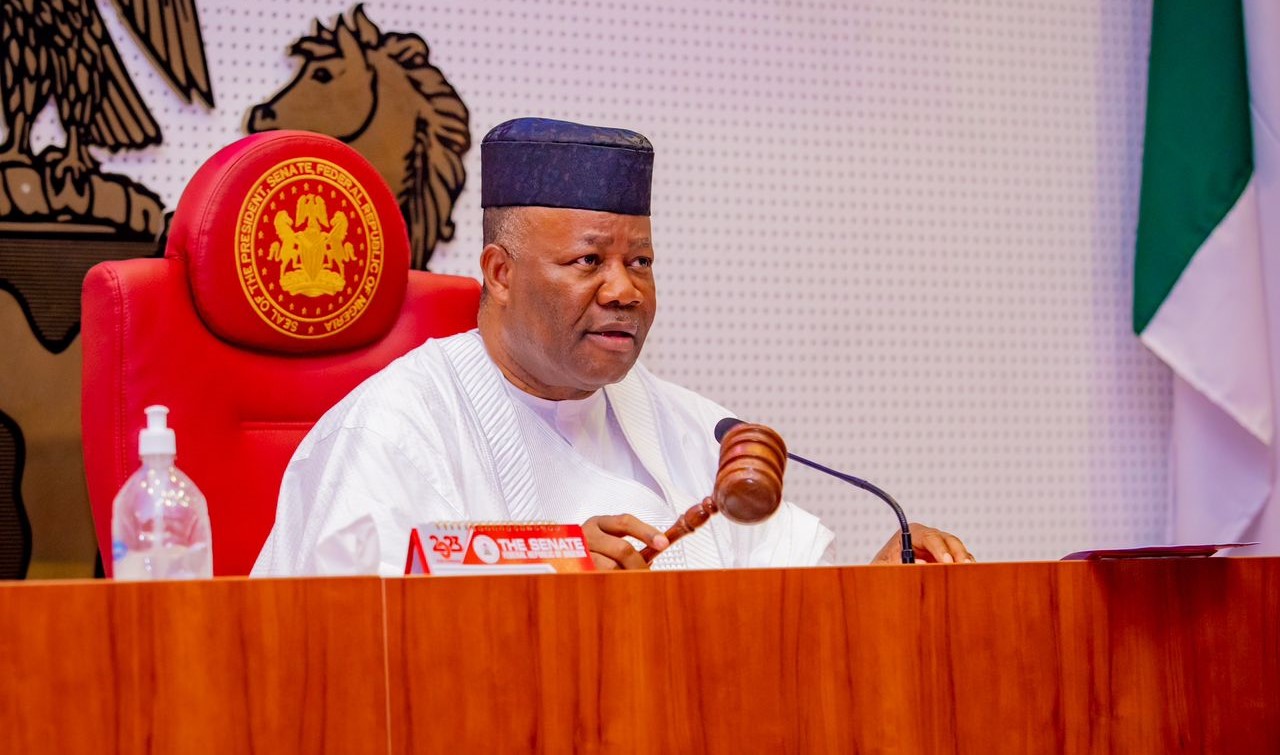
FILE: Akpabio

They made the call at the opening of the 15th National Security Seminar organised by the Alumni Association of the National Defence College in Abuja.

Represented by the Director of Policy and Strategy at the Office of the National Security Adviser, Yazid Gbemudu, the NSA said Nigeria’s territorial integrity and national stability were closely tied to the effectiveness of its border security framework.

He noted that while Nigeria’s extensive land and maritime borders facilitated trade, regional integration and socio-economic development, they also exposed the country to threats including terrorism, arms trafficking, smuggling, human trafficking, irregular migration and other forms of transnational organised crime.

According to him, weak border governance creates vulnerabilities that can be exploited by criminal and terrorist networks, thereby undermining national security and development efforts.

“A major pillar of Nigeria’s contemporary border security framework is the National Border Management Strategy, which promotes an integrated border management approach.

“The strategy seeks to enhance intelligence collaboration, strengthen border infrastructure, improve surveillance capabilities and modernise border management processes,” he said.

Ribadu said the deployment of Border Management Information Systems and other technological solutions at key entry and exit points had improved data collection, traveller screening and migration monitoring.

“These initiatives demonstrate Nigeria’s commitment to aligning its border management practices with international standards,” he added.

See also  Northern elders, govs plan regional development council

The NSA stressed the need for the full implementation of an integrated border management system to improve coordination among security, intelligence and law enforcement agencies.

“Effective intelligence sharing, joint operations and harmonised border procedures are essential for addressing contemporary security threats,” he said.

He also advocated increased investment in technology-driven border security solutions.

“Expanding surveillance systems across land, maritime and coastal borders will significantly improve monitoring capabilities and reduce illegal cross-border activities.

“Modern challenges require modern solutions, including biometric identification systems, advanced border monitoring technologies and data-driven security frameworks,” Ribadu stated.

The NSA further emphasised the importance of regional and bilateral cooperation, noting that many of the security challenges confronting Nigeria’s borders were transnational in nature and required coordinated responses among neighbouring countries.

He also called for greater investment in border communities through sustainable development, improved infrastructure and economic opportunities to reduce their vulnerability to criminal exploitation.

“Strengthening Nigeria’s border security architecture is fundamental to ensuring national stability, protecting territorial integrity and promoting socio-economic development,” he said.

Ribadu, however, acknowledged challenges such as porous borders, inadequate infrastructure, limited technological capabilities and gaps in inter-agency coordination, saying they required urgent attention.

“Border security is a shared responsibility that requires the collective efforts of security agencies, government institutions, border communities and international partners,” he added.

Speaking at the event, Akpabio, who was represented by the Chairman of the Senate Committee on Defence, Ahmad Lawan, said Nigeria’s extensive land and maritime boundaries posed significant security challenges.

“As a country with extensive land and maritime boundaries, Nigeria faces significant challenges relating to border control, illegal migration, arms trafficking, smuggling and the infiltration of criminal and extremist elements.

See also  Crackdown: US set to deport 79 Nigerians on criminal list

“It is, therefore, imperative that Nigeria prioritises the strengthening of its border security architecture through improved surveillance, enhanced infrastructure, better inter-agency coordination, technological innovation and stronger regional cooperation,” he said.

Akpabio noted that many of the security threats confronting Nigeria had transnational dimensions, making coordinated responses essential.

He stressed that peace and security remained prerequisites for meaningful national development.

“There can be no meaningful development without peace and security. Porous and poorly managed borders can become vulnerabilities that undermine national security efforts and national stability,” he said.

The Senate President also advocated a whole-of-government and whole-of-society approach to addressing insecurity.

According to him, government institutions, security agencies, civil society organisations, the private sector, traditional institutions, the media and academia all have critical roles to play in safeguarding the country.

Earlier, the Acting President of AANDEC, Commodore Amatare Kpou (retd.), described the seminar as a key platform for promoting informed discourse on national security challenges and opportunities.

Kpou said the theme of the seminar, “Strengthening Nigeria’s Border Security Architecture for National Stability,” was timely, given the growing threats of irregular migration, smuggling, trafficking and other cross-border crimes.

He expressed confidence that the deliberations would generate useful recommendations for policymakers and contribute to efforts aimed at building a safer and more secure Nigeria.

Nigeria shares over 4,000 kilometres of land borders with neighbouring countries and an extensive coastline, making border security a critical component of national security.

Authorities have repeatedly identified porous borders as channels for terrorism, arms smuggling, human trafficking and other transnational crimes.

The Federal Government has in recent years intensified efforts to strengthen border management through technology, intelligence sharing and regional cooperation.

See also  30 dead, 58 rescued in Niger boat mishap -NEMA

punch.ng

FOLLOW US ON:

FACEBOOK

TWITTER

PINTEREST

TIKTOK

YOUTUBE

LINKEDIN

INSTAGRAM

Continue Reading

News

FG releases barely 5% of N54.93tn three-year roads budget

Published

on

The Federal Government has released about N2.68tn for the construction, rehabilitation and maintenance of roads and bridges across the country between 2023 and April 2026, findings by The PUNCH from the Open Treasury Portal have shown.

The analysis, however, revealed a significant disparity between approved budgets and actual releases, with the government making provisions totalling N54.93tn for road-related projects within the period under review.

The figures highlight both the growing emphasis on infrastructure development and the persistent financing constraints that continue to affect capital project execution in the country.

The development also comes amid the ongoing Renewed Hope Media Tour organised by the Presidential Communications Team, designed to showcase projects being implemented under President Bola Tinubu’s Renewed Hope Agenda.

Data obtained from the Open Treasury Portal on Tuesday showed that road projects attracted a combined budgetary allocation of N2.53tn in 2023, out of which N631.51bn was released, representing an implementation rate of 24.95 per cent.

The Treasury data, however, did not specify the road projects to which the funds were released and did not indicate whether the government’s four legacy highway projects formed part of the expenditure.

A year-by-year breakdown showed that road construction projects received N280.14bn from a budget of N1.09tn during the year, while rehabilitation and repair works attracted N345.93bn from an allocation of N1.42tn. Road and bridge maintenance projects also received N5.44bn out of a total provision of N14.68bn.

In 2024, the Federal Government increased its budgetary commitment to the sector, making provisions amounting to N9.39tn for road-related projects. However, actual releases stood at N784.60bn, representing 8.36 per cent of the approved amount.

See also  Northern elders, govs plan regional development council

Road construction projects accounted for N383.74bn of the spending from an allocation of N5.05tn, while rehabilitation projects received N384.49bn from a budget of N4.32tn. The government also released N16.37bn for the maintenance of roads and bridges out of a total provision of N18.18bn.

The trend continued in 2025, with the government budgeting N7.22tn for road construction and rehabilitation projects. Treasury records showed that N670.68bn had been released during the period, translating to an implementation rate of 9.29 per cent.

Of the amount released, road construction projects received N269.75bn from an allocation of N3.42tn, while rehabilitation and repair projects attracted N400.94bn from a budget of N3.80tn.

The 2026 figures indicate a sharp rise in budgetary provisions. As of April 2026, the government had earmarked N35.79tn for road construction, rehabilitation and maintenance projects, the highest within the four-year period.

However, only N597.08bn had been released, representing 1.67 per cent of the approved budget. Specifically, road construction projects had a budgetary provision of N23.61tn, with releases amounting to N293.06bn.

Similarly, rehabilitation and repair projects received N300.80bn from a total allocation of N12.03tn. Road and bridge maintenance projects had an allocation of N144.64bn, but only N3.22bn had been released as of the end of April. Treasury records show that N26.54bn was released in April alone, leaving an outstanding budget balance of N23.32tn yet to be funded.

The data indicate that although substantial sums have been earmarked for road projects over the years, actual cash releases remain significantly lower than approved allocations, reflecting the financing constraints that often affect capital project implementation.

See also  PHOTOS: Osun hospital detains newborn, over mother’s N700k debt

Further analysis showed that road construction consistently attracted the largest allocations. Budgetary provisions rose from N1.09tn in 2023 to N23.61tn in 2026, reflecting the Federal Government’s increasing focus on large-scale highway projects.

Road rehabilitation spending remained substantial throughout the period. Allocations increased from N1.42tn in 2023 to N12.03tn in 2026, suggesting a parallel effort to repair existing infrastructure.

Maintenance received the smallest allocations but recorded the highest execution rate. In 2024, road and bridge maintenance achieved a 90.05 per cent implementation rate, compared to less than 10 per cent for construction and rehabilitation.

Overall, the Federal Government budgeted N54.93tn for road-related projects between 2023 and April 2026 but released N2.68tn during the same period.

The data also showed that while budgetary provisions expanded significantly over the years, the percentage of funds released declined. In 2023, about 25 per cent of the approved budget was released. This fell to 8.36 per cent in 2024 and 9.29 per cent in 2025.

As of April 2026, only 1.67 per cent of the total budgetary provision had been released. The development comes amid the Federal Government’s renewed focus on infrastructure as a catalyst for economic growth.

Several major road projects are currently underway across the country, including the Lagos-Calabar Coastal Highway, the Abuja-Kaduna-Zaria-Kano Road, the Sokoto-Badagry Super Highway and other strategic federal highways aimed at improving connectivity across Nigeria’s six geopolitical zones and stimulating economic activities.

The Minister of Works, David Umahi, recently disclosed that the Federal Ministry of Works would prioritise the completion of major highways and the execution of four presidential legacy projects in its 2026 capital plan.

See also  PHOTOS: Igbo Community in Osun Storms Streets for Egungun Festival

According to the minister, the ministry inherited over 2,000 ongoing projects in 2023, many of which have been rolled over into subsequent budgets due to funding constraints.

Umahi also told lawmakers during the defence of the ministry’s 2026 budget proposal that the Federal Government owed contractors about N2.2tn for certified works executed between 2024 and 2025, underscoring the financing challenges facing the road sector despite rising budgetary allocations.

He added that only a fraction of expected capital releases had been made, forcing the ministry to re-scope and prioritise projects.

The Open Treasury Portal, which tracks government revenues and expenditures, provides a snapshot of how much of the approved budgets for capital projects has translated into actual spending.

Although the latest figures point to an unprecedented expansion in planned spending on road infrastructure, the challenge, analysts say, will be ensuring that budgetary commitments are backed by timely releases to deliver the intended benefits to Nigerians.

punch.ng

FOLLOW US ON:

FACEBOOK

TWITTER

PINTEREST

TIKTOK

YOUTUBE

LINKEDIN

INSTAGRAM

Continue Reading

Trending