Connect with us

Business

Elon Musk becomes first person in history to be worth $500,000,000,000

Published

on

Elon Musk has reached a staggering new milestone, with his net worth briefly soaring to $500 billion, making him the first person in history to hit the half-trillion mark.

The Tesla and SpaceX boss, who also owns the social platform X and AI startup xAI, saw his fortune surge as Tesla’s stock value jumped roughly 14% this year, pushing his wealth to $499.1 billion after a brief peak at $500 billion.

The rise in Musk’s net worth is largely tied to Tesla’s strong market rebound. The company’s shares, which began the year at $427.90 before dipping to $220.67 amid controversy over Musk’s brief role in Donald Trump’s Department of Government Efficiency (DOGE), have since recovered sharply. After resigning from the government post in May, Musk returned full-time to leading Tesla, helping drive investor confidence.

Musk’s vast wealth is spread across multiple ventures including SpaceX, xAI, and Neuralink, all valued in the billions. On his current financial trajectory, experts suggest Musk could become the world’s first trillionaire within a few years.

To put his wealth in perspective, Musk’s $500 billion fortune would rank as the 31st largest economy in the world if it were a country, just below Austria and ahead of Norway, Malaysia, and his native South Africa. His net worth is 125 times greater than the estimated $4 billion value of Britain’s Crown Jewels, 20 times the cost of London’s Elizabeth Line, and ten times the estimated $45.5 billion value of the Louvre Museum and its contents.

Musk’s fortune is also 35 times greater than the combined market value of all Premier League football clubs, which stands at about $14 billion. With such immense wealth, analysts note he could theoretically buy the White House 1,250 times over, based on Zillow’s valuation of $398 million.

See also  NNPC, partners advance $21bn Bonga offshore project

Meanwhile, the tech world continues to advance around him. A rival firm, Science Corporation, recently announced a breakthrough in neurotechnology, developing an eye chip that can restore vision using a brain-computer interface called PRIMA. The technology, tested in a clinical trial involving 38 participants across 17 sites globally, including London’s Moorfields Eye Hospital, enabled 84% of patients to experience a significant improvement in visual function after 12 months.

As Musk’s financial empire grows through Tesla, SpaceX, and his AI ventures, the competition in technology and innovation continues to intensify; but for now, he stands alone at the top of the world’s wealth rankings.

FOLLOW US ON:

FACEBOOK

TWITTER

PINTEREST

TIKTOK

YOUTUBE

LINKEDIN

TUMBLR

INSTAGRAM

Continue Reading
Click to comment

Leave a Reply

Your email address will not be published. Required fields are marked *

Business

Personal loans hit new high N1.99tn

Published

on

Nigerians’ outstanding personal loans increased by an estimated N58.5bn in the second quarter of 2026, reaching N1.99tn at the end of June, as households faced persistent inflationary pressures and high borrowing costs.

An analysis by The PUNCH of the Central Bank of Nigeria’s Second Quarter 2026 Economic Report showed that personal loans rose by 3.03 per cent from approximately N1.93tn recorded at the end of March.

The development came as total consumer credit increased by 3.26 per cent to N3.17tn from N3.07tn in the preceding quarter, representing an increase of about N100bn within three months.

The CBN stated, “Consumer credit outstanding increased by 3.26 per cent to N3.17tn, from N3.07tn in the preceding quarter. The increase reflected growth in both retail and personal loans, which rose by 4.10 per cent and 3.03 per cent, respectively.”

According to the report, personal loans accounted for 62.87 per cent of total consumer credit, while retail loans constituted the remaining 37.13 per cent.

This means that nearly N63 out of every N100 owed by consumers to financial institutions was classified as personal borrowing, highlighting its dominance in the consumer credit market.

Retail loans also increased by approximately N46.5bn to N1.18tn at the end of June, compared with an estimated N1.13tn in March, representing quarterly growth of 4.10 per cent.

Although retail loans recorded a faster percentage increase, personal loans contributed more to the outstanding stock of consumer credit.

The increase in personal borrowing occurred amid renewed inflationary pressures, which continued to affect household purchasing power.

See also  FG seals Plateau mine after gas leak kills 37

The CBN reported that headline inflation rose to 15.91 per cent in June 2026 from 15.38 per cent in March, reflecting increases in the prices of essential goods and services.

The report attributed the development largely to higher energy and commodity prices associated with geopolitical tensions in the Middle East, which increased production and transportation costs.

These conditions placed additional pressure on household expenditure, particularly for consumers whose incomes had not increased sufficiently to offset rising prices.

However, the report did not establish whether the increase in personal loans was driven primarily by household financial difficulties, consumption needs or improved access to credit.

The growth in consumer borrowing also occurred despite elevated lending rates in the banking sector.


According to the CBN, the average prime lending rate declined marginally to 19.01 per cent in Q2 from 19.37 per cent in the preceding quarter.

In contrast, the maximum lending rate increased slightly to 34.37 per cent from 34.34 per cent, indicating that borrowing remained expensive for some categories of bank customers.

Although these rates reflect broader banking sector lending conditions rather than specific personal loan charges, they provide an indication of the financing environment confronting borrowers.

A recent report ‘Enhancing Financial Inclusion & Advancement’ noted that four in every 10 Nigerians borrowing from formal financial institutions now take loans mainly for consumption and coping needs, as rising financial pressures increasingly push credit away from productive activities.

The ‘2026 Access to Financial Services in Nigeria Survey’ revealed that 40.8 per cent of formal borrowers used loans for coping and consumption, up sharply from 31.7 per cent in 2023.

See also  US Government Warns American Business Executives About Investing In Nigeria

The 9.1 percentage-point increase made coping and consumption the largest purpose of formal credit, overtaking productive enterprise borrowing, which fell from 40.2 per cent to 34.3 per cent during the same period.

Borrowing for household assets also declined from 25.2 per cent to 23.4 per cent. The report warned, “Coping/consumption purposes rose from 31.7 per cent to 40.8 per cent; productive purpose fell from 40.2 per cent to 34.3 per cent. We need to ensure that credit builds productive capacity and does not produce distress.”

Formal credit use increased from six per cent of adults in 2023 to 10 per cent in 2026, with about 11.9 million Nigerians borrowing from regulated providers. When informal sources were included, 36 per cent of adults had access to some form of credit.

Credit use among informally employed Nigerians tripled from five per cent to 15 per cent, while borrowing among people aged 18 to 35 rose from four per cent to 10 per cent. Business owners recorded an increase from four per cent to 10 per cent, while farmers rose from two per cent to six per cent.

Source: punchng.com

FOLLOW US ON:
FACEBOOK

WHATSAPP CHANNEL

TWITTER

PINTEREST

TIKTOK

YOUTUBE

LINKEDIN

INSTAGRAM

Continue Reading

Business

FG saves N3.56tn despite borrowing, read full details

Published

on

The Federal Government and other tiers of government set aside a combined N3.56tn as savings from Federation Account revenue between January and September 2026, despite the Federal Government’s increasing reliance on borrowing to finance its budget deficit.

The amount represents a 95 per cent increase from the N1.83tn recorded in the corresponding period of 2025, raising questions about the country’s fiscal priorities amid mounting public debt and rising debt-servicing obligations.

A report by Agora Policy, titled Ten Insights from FAAC Disbursements for January-September 2026, analysed by The PUNCH on Friday, showed that savings and interventions accounted for N8.34tn of deductions from Federation Account revenue during the nine-month period.

The report put deductions for interventions at N4.78tn, making it the largest category, while savings accounted for N3.56tn. Together, the two categories represented 75.1 per cent of total deductions, compared with 39.9 per cent in the corresponding period of 2025.

The report read, “Interventions accounted for the largest deduction, at N4.78tn, followed by savings at N3.56tn. In nine months, refunds amounted to N1.21tn and collection costs to N1.09tn. Transfers, at N469.06bn, were the smallest category.”

The sharp increase in savings came against the backdrop of the Federal Government’s expanded borrowing plan for 2026. The government raised its borrowing target by N11.31tn to N29.20tn from the earlier N17.89tn projection, while the budget deficit stood at N31.46tn.

Under the 2026 budget, total expenditure is projected at N68.32tn against expected revenue of N36.87tn, leaving a substantial financing gap to be covered largely through borrowing.

See also  NAFDAC destroys 491,000 tramadol tablets worth N91m in Kano

The Agora report, however, showed that total deductions from Federation Account revenue declined slightly by 3.5 per cent, from N11.50tn in the first nine months of 2025 to N11.10tn in the same period of 2026.

Their share of gross revenue also fell from 41.1 per cent to 35.3 per cent, allowing distributable revenue before augmentation to rise by 23.8 per cent to N20.36tn.

Gross Federation Account revenue increased by 12.6 per cent, from N27.95tn to N31.46tn, during the period.

According to the report, the N3.91tn increase in distributable revenue exceeded the N3.51tn growth in gross receipts because deductions declined by approximately N400bn.

It stated, “The modest fall in total deductions conceals a substantial change in their composition. Refunds fell by approximately N3.99tn, moving from the largest deduction category to the third-largest.

“Meanwhile, interventions and savings increased by approximately N3.75tn, from N4.59tn to N8.34tn. Together, interventions and savings accounted for 75.1 per cent of deductions in nine months in 2026, compared with 39.9 per cent in the corresponding period in 2025.”

A further breakdown showed refunds declined by 77 per cent, from N5.20tn in the first nine months of 2025 to N1.21tn in 2026.

Collection costs increased by four per cent to N1.09tn, while transfers fell by 29 per cent to N469.06bn.

The increase in savings and interventions raises questions about the relationship between the resources being set aside from Federation Account revenue and the government’s continued borrowing to finance expenditure.

However, the deductions cover the Federation Account and should not be interpreted as savings retained solely by the Federal Government. The revenue is shared among the Federal Government, states and local governments under the existing allocation arrangements.

See also  US-Iran crisis: Nigerian crude oil nears $120

The Federal Government has defended its borrowing strategy, arguing that increased expenditure pressures have outpaced additional non-borrowed resources and that borrowing is necessary to finance infrastructure and other development priorities.

In its fiscal defence, the government has also pointed to rising personnel costs, debt-service obligations, electricity support and infrastructure commitments as major pressures on public finances.

A statement by the Presidency on its infrastructure investment strategy said borrowing was being redirected towards productive assets rather than short-term consumption. It also acknowledged the pressure of debt service, which stood at about 65 per cent of revenue in the first half of 2026.

Source: punchng.com

FOLLOW US ON:

FACEBOOK

WHATSAPP CHANNEL

TWITTER

PINTEREST

TIKTOK

YOUTUBE

LINKEDIN

INSTAGRAM

Continue Reading

Business

NAFDAC destroys N8bn products, targets sachet alcohol in N’Central

Published

on

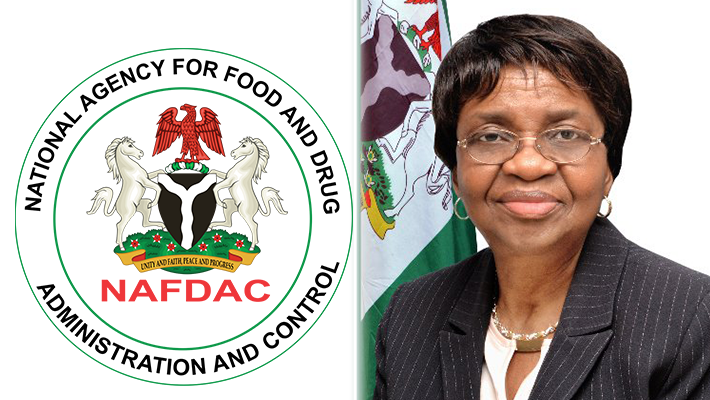
The National Agency for Food and Drug Administration and Control (NAFDAC) has confiscated and destroyed unwholesome, banned, fake and adulterated products worth more than N8 billion in the North-Central states.

Speaking during the destruction ceremony on Thursday in Lafia, the Nasarawa State capital, the Director-General of NAFDAC, Prof. Mojisola Adeyeye, said the products were seized from manufacturing outfits, sales outlets, markets and motor parks across the zone.

The DG, who was represented by a Deputy Director of NAFDAC in the zone, Joseph Edor, said most of the confiscated products were banned alcoholic beverages in small volumes of less than 200 ml (20 cl).

According to her, NAFDAC was established by Decree No. 19 of 1993, as amended, with the mandate to protect and promote public health by ensuring that only quality, efficacious and regulated products are manufactured, imported, distributed and sold in Nigeria.

She explained that the agency banned alcoholic beverages in sachets and glass bottles of less than 200ml due to their availability, affordability and portability, which have made them easily abused by youths and underage schoolchildren.

“Research has shown that early exposure to alcohol affects the brain and other vital organs such as the liver and kidneys.

“It stymies the brain, resulting in mental retardation, brain damage, poor performance of pupils in school, low productivity and several types of illnesses,” she said.

The DG said the ban and subsequent raids were based on these abuses, addiction and adverse health effects, while other seized items included expired, fake and unwholesome food, drugs and cosmetics.

“It is in the course of carrying out these activities that this heap of unwholesome, banned, fake and adulterated products worth about eight billion naira was confiscated from manufacturing outfits, sales outlets, markets and motor parks.

See also  US Government Warns American Business Executives About Investing In Nigeria

“The bulk of the products in that pile are predominantly banned alcoholic beverages in low volumes of less than 200ml (20cl),” she emphasised.

The Director-General further commended other law enforcement agencies, sister agencies and stakeholders for their continuous collaboration, especially in intelligence sharing and security cover during operations.

Also speaking at the event, the Nasarawa State Coordinator of NAFDAC, Dr Gyani Stephen, explained that the exercise was not targeted at hurting people but was intended to save lives.

He advised those in the habit of selling fake and banned products to desist or be ready to face the full wrath of the law, warning that the agency would come after them if they did not change their ways.

In his goodwill message, the Nasarawa State Commander of the National Drug Law Enforcement Agency, Daniel Saidu, represented by Yakubu Awoh, commended NAFDAC for saving lives through the regular seizure and destruction of expired and fake drugs.

He explained that if these dangerous products were allowed into the markets, they could have destroyed millions of lives and affected the mental health of many others.

Source: punchng.com

FOLLOW US ON:

FACEBOOK

WHATSAPP CHANNEL

TWITTER

PINTEREST

TIKTOK

YOUTUBE

LINKEDIN

INSTAGRAM

Continue Reading

Trending