Connect with us

Politics

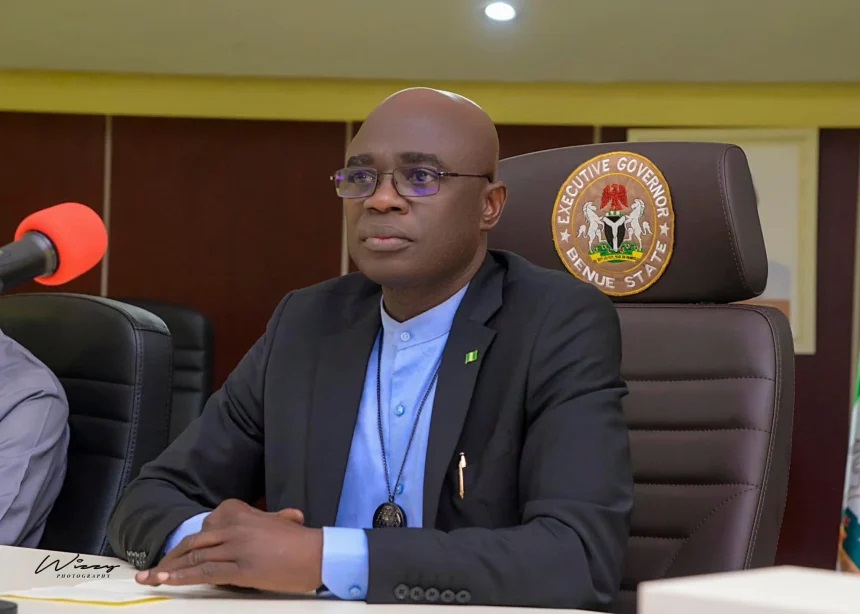
Alia dismisses rumoured ADC defection plan

Published

on

Benue State Governor, Rev. Fr. Hyacinth Alia, has reaffirmed his commitment to the All Progressives Congress, dismissing reports alleging that he plans to defect to the African Democratic Congress.

The governor was reacting to a social media claim accusing him of secretly visiting former Senate President in the aborted Third Republic, Senator Iyorchia Ayu, to perfect a defection plan.

Ayu, a former National Chairman of the Peoples Democratic Party, was removed after the party’s 2023 presidential primary crisis.

In a statement issued on Wednesday by his Chief Press Secretary, Kula Terso, Alia described the report as “laughable, wicked, mischievous, and a vicious smear campaign” aimed at distracting him from governance and misleading the Presidency for selfish political motives.

The statement was titled “Mischievous fake story on Governor Alia’s alleged defection to ADC.”

The governor explained that his recent visits to respected Benue elders, including Senator Ayu, had no political or religious undertone but reflected his administration’s inclusive approach.

He listed other prominent figures he had met—among them Senator Prof. David Iornem, Elder David Iorwashima Amo, and Ambassador Terhemen Tarzoor—as part of efforts to woo more stakeholders into the APC.

“Opposition structures across Benue State are collapsing daily into the APC,” the statement added, noting that defection ceremonies were taking place in virtually all local government areas, with influential figures joining the ruling party in large numbers.

Alia restated his resolve to build a united and dominant APC in the state, saying he was prepared to engage even “the fiercest political opponents” as part of a broader consolidation strategy ahead of 2027 for both his administration and President Bola Tinubu.

See also  Ekiti poll: APC adopts consensus as Oyebanji’s rival withdraws

He urged the public to disregard the rumour, warning that it was intended to sow confusion and undermine the party’s growing strength.

Governor Alia and the Secretary to the Government of the Federation, George Akume, have been locked in a protracted battle for control of the Benue APC, resulting in deep factionalisation.

A recent impeachment plot against Alia was foiled, leading to the removal and suspension of the Speaker of the Benue State House of Assembly, Hyacinth Dajoh.

Alia’s administration recently demolished a part of the campaign office of President Bola Tinubu in Makurdi, Benue State.

The building, which also serves as the state secretariat of the Ahmed Bola Tinubu Support Group, had its perimeter fence pulled down during the operation carried out by the Benue State Urban Development Board.

Alia also recently stirred controversy after declaring that there is no Christian genocide in Benue State, a position that put him at odds with the Catholic Church in the state.

punch.ng

FOLLOW US ON:

FACEBOOK

TWITTER

PINTEREST

TIKTOK

YOUTUBE

LINKEDIN

TUMBLR

INSTAGRAM

Continue Reading
Click to comment

Leave a Reply

Your email address will not be published. Required fields are marked *

Politics

Atiku, Obi absent as opposition begins single-candidate talks ahead of 2027

Published

on

The presidential candidate of the African Democratic Congress, Atiku Abubakar, and his Nigeria Democratic Congress counterpart, Peter Obi, were absent on Monday as opposition parties and presidential candidates opened fresh negotiations in Abuja on the possibility of presenting a single candidate against the ruling All Progressives Congress in the 2027 presidential election.

The presidential candidate of the Labour Party in the 2023 general election and a leading opposition figure ahead of the 2027 presidential election, Peter Obi.
The presidential candidate of the Nigeria Democratic Congress, Photo: X | Peter Obi.

The summit, convened by the G-100 political pressure group at the Yar’Adua Centre, brought together representatives of six opposition parties — the ADC, Allied Peoples Movement, NDC, Peoples Democratic Party, Peoples Redemption Party and Social Democratic Party.

Among those present were the PRP presidential candidate, Donald Duke; SDP presidential candidate, Adewale Adebayo; Democratic Leadership Alliance candidate, Moses Olusoji; and APM vice-presidential candidate, Lawan Daura, alongside other party leaders and stakeholders.

The absence of Atiku and Obi was not explained at the meeting. However, a source familiar with the discussions said the two leading opposition figures were watching the process closely and were likely to take a position after assessing the framework being developed by the G-100 organisers.

The source, who spoke on condition of anonymity because he was not authorised to speak on the matter, said the emergence of the G-100 after the various parties had already produced their presidential candidates could make the negotiations particularly difficult.

“While the goal of the G-100 is laudable, Atiku is perhaps thinking that they started quite late. He is in support of every legitimate strategy to unseat the APC-led government, but the fact that the group emerged after the parties had produced their respective presidential candidates didn’t make the work easier.

“The argument is, who will be willing to step down at this point in time? These are what I think Atiku is looking at at the moment, but I am not speaking for him,” the source said.

On Obi, the source said his absence was also understandable given the political calculations surrounding the reported alliance between the former Anambra State governor and ex-Kano State governor, Rabiu Kwankwaso.

“As for Obi, I would have been surprised to see him here. Unless others agree to put aside their ambition in support of the Obi/Kwankwaso ticket, I don’t see them backing out of the race.

“However, both men are likely to attend subsequent meetings if they are sure the G-100 is on track,” he added.

Although efforts to obtain official reasons for their absence from the camps of both presidential candidates were unsuccessful, the spokesman of the House of Representatives minority caucus, Afam Ogene, said their absence should not be interpreted as a lack of support for the initiative.

See also  Tinubu has genuine intentions for Nigeria’s security, prosperity — Lagos APC

Ogene said Monday’s summit was primarily to lay the foundation for the process.

“It’s just the laying of structures, so the party chairmen and officials largely handled that,” he stated.

Similarly, Atiku’s media aide, Phrank Shaibu, said the former vice president’s absence was unavoidable and should not be construed as a boycott or lack of commitment to efforts aimed at strengthening opposition unity.

Shaibu said Atiku remained fully aligned with the objective of the summit and supported efforts to build a broad and disciplined opposition ahead of the 2027 election.

“His Excellency’s absence was unavoidable and should not be mischievously interpreted as a boycott or lack of commitment to opposition unity.

“He is fully aligned with the objective of the summit and has made his position clear: Nigeria urgently needs a broad, disciplined and united opposition capable of ending the hardship, insecurity and economic mismanagement of the Tinubu administration in 2027.

“Atiku’s commitment to that cause is not in doubt,” Shaibu said.

Duke on consensus

Despite the absence of two of the opposition’s most prominent presidential contenders, Donald Duke pledged to support whoever emerges from the negotiations as the opposition’s consensus candidate.

Duke, a former governor of Cross River State, said his commitment to the process was not conditional on whether he eventually emerged as the candidate.

“We will support any political party that emerges in 2027. Whatever decision is arrived at today, I will not walk away but will strive all along because that’s what the people want to see,” he said.

The summit came against the backdrop of the opposition’s failure to coordinate its votes in the 2023 presidential election.

Opening the summit, the G-100 convener, Salihu Lukman, argued that opposition parties collectively secured about 13 million votes in 2023—substantially more than the less than nine million votes recorded by the eventual winner, President Bola Tinubu—but lost the opportunity to defeat the All Progressives Congress because the votes were divided among several candidates.

“Nobody stole 13m votes. We divided them ourselves, in public, and we did it knowing exactly what the consequence would be,” Lukman said.

He urged the parties to draw lessons from the negotiations that preceded the 2015 presidential election, when opposition parties eventually formed the APC and defeated the then-ruling Peoples Democratic Party.

According to Lukman, the success of the 2015 alliance was not based on personal affection among the political actors but on an agreed process.

See also  June 12: MKO Abiola refused to sell presidential mandate to Abacha – Oshiomhole

“What they had was not affection. What they had was sequence. They agreed on the rules before they knew the outcome,” he said.

He said the immediate task before the opposition was therefore not to compel parties or candidates to abandon their ambitions, but to establish a structure through which competing interests could be negotiated.

“What has been missing is not analysis. It is a table,” Lukman said.

Summit’s negotiation framework

At the end of the summit, the six participating parties agreed to begin a structured negotiation process on opposition cooperation ahead of the 2027 election.

A communiqué read by Ogene stated that the parties recognised that insecurity, the rising cost of living and limited employment opportunities required political cooperation that went beyond the interests of individual parties.

The parties agreed to establish three standing coalition organs: a Central Leadership Committee, a Publicity and Communication Committee and a Legal Committee.

According to Ogene, “The Central Leadership Committee will provide political direction and coordination, while the Publicity and Communication Committee will handle joint messaging and media engagements. The Legal Committee will advise on the constitutional and legal aspects of the negotiations and draft agreements arising from the process.”

The communiqué also approved five working groups, with each participating party expected to nominate a representative to each group.

The groups are to prepare proposals on a National Covenant for Democratic Renewal, a Single-Term Transition Charter, a National Reform Programme, a Framework for Opposition Unity and a Roadmap to a Common Presidential Candidate.

The groups have four weeks to complete their assignments, after which the opposition parties will reconvene for a second summit to consider the recommendations.

Lukman stressed that the initiative was not asking any party to dissolve or any presidential candidate to withdraw immediately.

“It is not asking any party to dissolve. It is not asking any party to disappear into another party. It is not asking any candidate to stand down this morning,” he stated.

Rather, he said the objective was to create an agreed mechanism for negotiating the interests and demands of the different parties before a final decision was taken on the presidential ticket.

G-100 four-year proposal

The summit also proposed a four-year transition arrangement as part of its broader political reform agenda.

The proposal is contained in the Single-Term Transition Charter to be developed by one of the five working groups. It forms part of the G-100’s plan for what it described as a “Government of National Competence” and a four-year National Reset Programme.

However, the summit’s communiqué did not provide further details on how the proposed four-year transition would operate or whether it would require constitutional amendments.

See also  PDP crisis: Wike camp rejects zoning talks with Makinde, Diri

The opposition parties also called for greater transparency and public accountability among persons occupying the highest offices in the country.

In a resolution that could trigger further political controversy, the G-100 called on the United States Government to process and lawfully disclose all non-exempt official records concerning President Bola Tinubu that are of legitimate public interest, subject to applicable law and ongoing judicial proceedings in the United States.

The communiqué specifically referenced Freedom of Information Act proceedings before the United States District Court for the District of Columbia. It, however, stressed that the demand did not presume the contents of any undisclosed records or amount to a finding of wrongdoing.

The G-100 also said it would communicate its position to the ECOWAS Commission and other relevant Community institutions, seeking diplomatic and institutional engagement on transparency and public accountability.

According to Lukman, “Someone will have to accept an outcome he did not want.”

He acknowledged that the search for a single opposition candidate would inevitably require some political actors to make sacrifices.

“There is no version of this that costs nobody anything. Someone in this hall will have to accept an outcome he/she did not want. That is what unity is. It is not a communiqué. It is somebody’s disappointment, borne well,” he said.

The group said its ultimate objective was not merely to create another electoral alliance but to provide Nigerians with a credible alternative to the ruling party.

“Our only interest is the one stated in the Doctrine we published in August, which is that a democracy is sustained not merely by holding elections, but by the credible possibility of an alternative government.

“Today, that possibility is in this room. It is in nobody else’s hands,” Lukman declared.

The latest initiative comes as opposition parties intensify efforts to avoid a repeat of the 2023 presidential election, when votes were split among Atiku Abubakar, Peter Obi, Rabiu Kwankwaso and other candidates, allowing the APC’s Tinubu to emerge with a plurality rather than a majority of the total votes cast.

With the major opposition parties already divided over their presidential ambitions, the immediate challenge for the G-100 will be to persuade the leading candidates and their parties to accept a transparent process capable of determining who eventually flies a common opposition ticket in 2027.

Source: punchng.com

FOLLOW US ON:

FACEBOOK

TWITTER

PINTEREST

TIKTOK

YOUTUBE

LINKEDIN

INSTAGRAM

Continue Reading

Politics

870 killed in election violence in 11 years despite Peace Accord

Published

on

Nigeria’s struggle with electoral violence has continued despite repeated peace accords signed by political parties and candidates, with no fewer than 870 people reportedly killed in election-related violence since the National Peace Committee began its intervention in 2015.

The figure has renewed concerns over the effectiveness of the peace agreements, particularly with political parties and presidential candidates preparing for the 2027 general elections.

Politics in Nigeria appears to have strayed far from political scientist David Easton’s description of politics as the “authoritative allocation of values”, with contests for political power frequently degenerating into violence, intimidation and destruction of lives and property.

The National Peace Committee, chaired by former Head of State, Gen Abdulsalami Abubakar and co-chaired by the Catholic Bishop of Sokoto Diocese, Matthew Kukah, introduced the peace accord ahead of the 2015 general election as an attempt to prevent violence before, during and after elections.

Ahead of the 2015 presidential election, the then presidential candidates of the All Progressives Congress, Muhammadu Buhari, and Peoples Democratic Party, Goodluck Jonathan, signed the agreement in Abuja, pledging to accept the outcome of the election and refrain from acts capable of undermining the democratic process.

Despite the optimism generated by the initiative, election-related violence persisted.

A 2016 report by the Council on Foreign Relations put the number of deaths recorded during the 2015 elections at 106.

The situation was considerably worse in 2019. The Nigeria Civil Society Situation Room, in its General Election Final Report, estimated that 626 people were killed in the six months between the commencement of electioneering activities and the start of the elections.

For the 2023 general elections, the Centre for Democracy and Development reported about 109 deaths, despite presidential, governorship and National Assembly candidates signing peace agreements in which they pledged to reject violence.

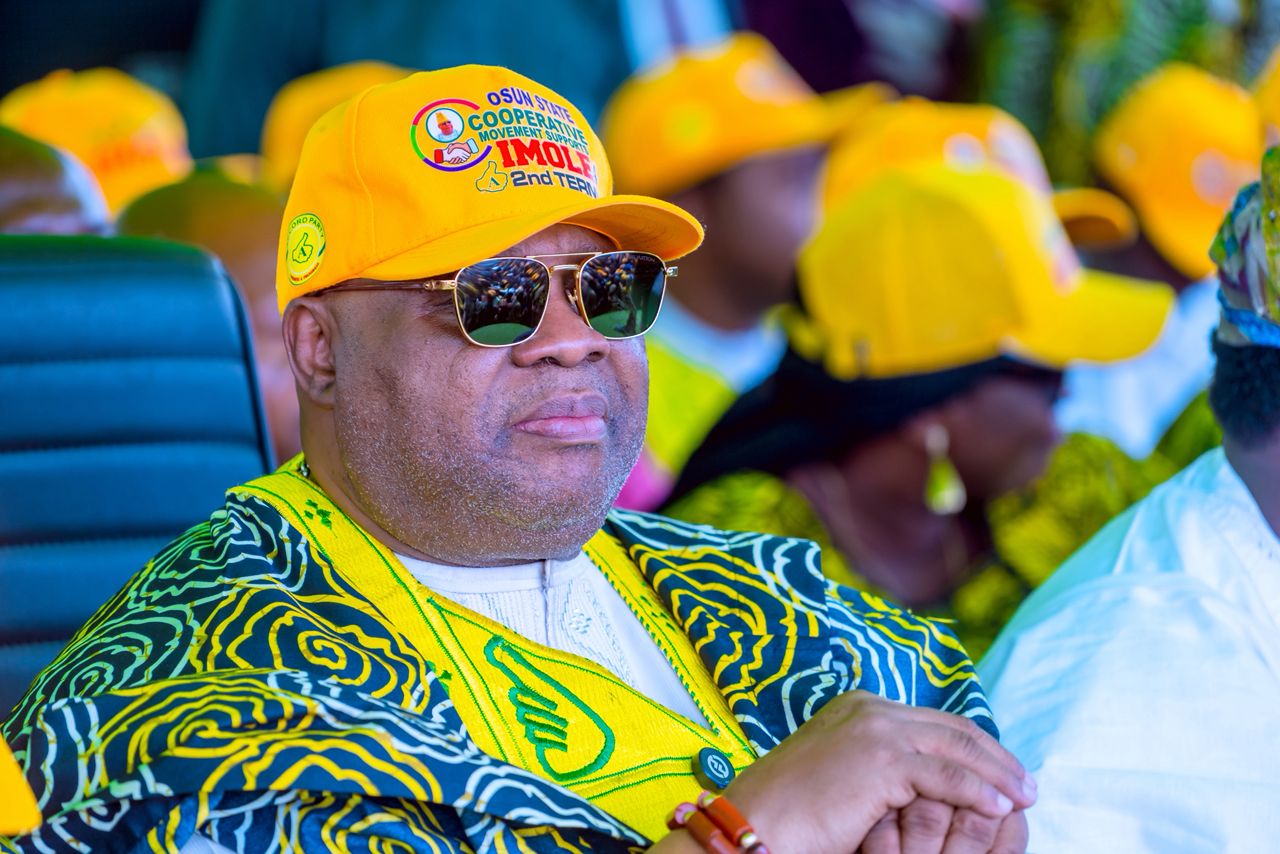
The trend, according to reports, continued during the recently concluded Osun State governorship election won by Governor Ademola Adeleke, where at least 29 deaths were reported.

The figures have consequently raised questions over whether the peace accords have evolved beyond symbolic ceremonies into effective instruments capable of preventing electoral violence and holding perpetrators accountable.

With the 2027 elections approaching, the National Peace Committee, a fortnight ago, brought political parties and prominent presidential contenders together to sign a fresh peace accord.

See also  June 12: MKO Abiola refused to sell presidential mandate to Abacha – Oshiomhole

President Bola Tinubu was represented at the ceremony, which was held in Abuja, by the Secretary to the Government of the Federation, George Akume.

Also present were the presidential candidate of the Nigeria Democratic Congress, Peter Obi, the Social Democratic Party candidate, Adewole Adebayo, Omoyele Sowore of the African Action Congress and former Cross River State governor, Donald Duke, who is contesting the presidency on the platform of the People’s Redemption Party, among others.

However, former Vice-President Atiku Abubakar, the presidential candidate of the ADC, was conspicuously absent.

Explaining the ADC’s decision not to participate, the party’s National Publicity Secretary, Bolaji Abdullahi, told The PUNCH that the committee needs to go beyond obtaining signatures from politicians and ensure that breaches of the agreement attract consequences.

“We felt the accord needs to go beyond ceremonial signing. The peace committee should be able to call out whoever violates the peace agreement in words and deeds. We recognise the importance of what they are doing, but we say they need to do more,” Abdullahi said.

The criticism has been echoed by international bodies and civil society organisations, which have questioned the absence of effective sanctions against politicians and their supporters who engage in inflammatory rhetoric or acts of violence.

The Country Director of Amnesty International, Isa Sanusi, said although the objective of the peace accord was commendable, previous agreements had done little to prevent electoral violence.

“The peace accord is on the surface good, but in reality, it never prevents or discourages anything. There must be sanctions, and there must be a mechanism for monitoring and documenting breaches of the peace accord,” Sanusi told our correspondent.

According to him, a peace agreement “is not supposed to be a mere public event,” warning that “early signs show the peace accord is weak and is not helping matters.

“Already, some politicians have started hateful rhetoric,” he said, adding that “politicians who incite hatred or cause violence must be held to account.”

The SDP also called for stronger enforcement of electoral laws, arguing that signing an agreement without consequences for violations would do little to change the behaviour of political actors.

The party’s National Publicity Secretary, Rufus Aiyenigba, said, “Our presidential candidate spoke the mind of the party on the matter on the sidelines of the event. The signing of a peace accord has become mere seasonal political ritual good only for its symbolism.

See also  APC rules out automatic tickets for defecting govs

“We need to enforce strong punitive measures against electoral offenders to sanitise our elections.”

The SDP had made a similar demand in the aftermath of the Osun governorship election.

However, security expert and Managing Director of Beacon Security and Intelligence Limited, Kabir Adamu, disagreed with the argument that the peace accords had become ineffective simply because electoral violence continued after their signing.

According to him, the question should not be whether a signed agreement, by itself, can stop violence, but whether the existence of the accord provides a stronger framework for monitoring political conduct and responding to violations.

“Those questioning the effectiveness of the peace accords and who believe that they are unnecessary given the scale of violence that has greeted elections in the past few years, are asking the wrong question,” Adamu said.

He continued, “The issue was never whether a signed accord, by itself, stops violence, as it doesn’t, and no one on the National Peace Committee has ever claimed it does. The real question is what happens to political conduct in the absence of one, and whether this year’s accord is materially different from the ones that came before it.

“We saw the old peace accord model’s limits play out in Osun, where a state poll with its own peace accord still recorded loss of lives. So I understand why some Nigerians, and even some candidates, ask what the point is.

“Omoyele Sowore called the August 18 signing a ritual. Adewole Adebayo argued past accords were violated without consequences. Peter Obi questioned why office-seekers need to sign a pledge to behave the way public office already demands. Those are fair criticisms.”

Adamu, however, said the 2026 accord introduced mechanisms that could make it more consequential than previous agreements.

In his words, “the 2026 accord is not the same instrument as 2019 or 2023. Two things changed. First, in March 2026 the National Peace Committee, working with the Kukah Centre, presented legal annotations tying the accord’s provisions directly to the Constitution and the Electoral Act and moving it from a moral pledge to an instrument with defined legal consequences for violation, including for the fake news and incitement that spokespersons and supporters, not just candidates, are typically responsible for.”

See also  PDP crisis: Wike camp rejects zoning talks with Makinde, Diri

He added that “the involvement of the Nigeria Police Force and the Independent National Electoral Commission,” which he described as “the two organisations with the most responsibility for ensuring compliance,” was another important development.

Adamu also pointed to the Kukah Centre’s Election Security Information Hub, which he said represented a significant departure from the traditional approach to election monitoring.

“Second, and more significant in my view, is the Kukah Centre’s Election Security Information Hub. The ESI Hub is a modern, technology-driven information collation and analysis centre that has logged over 2,500 security incidents and more than 380 electoral offences since mid-2025, mapped to specific hotspots, and that data is meant to feed public compliance scorecards and early-warning responses rather than sit in a drawer until after the vote,” he said.

For Adamu, the significance of the latest accord lies not in the ceremony itself but in whether the new mechanisms for monitoring, verification and sanctions are actually deployed.

“This is the real shift,” he said, arguing that verification and consequences had been built into the accord’s architecture, “making it not just a signing ceremony.”

The debate over the effectiveness of the peace accord comes against the backdrop of Nigeria’s long history of electoral violence, in which political competition has frequently been accompanied by intimidation, hate speech, attacks on political opponents, destruction of campaign materials and killings.

The latest agreement therefore faces a familiar test: whether political actors will merely sign another pledge or whether institutions responsible for electoral security and justice will act decisively when the commitments are breached.

With the 2027 general election drawing closer, the effectiveness of the new mechanisms will ultimately be judged by whether they can deter violations, identify perpetrators and ensure consequences for those who resort to violence.

For now, the central question remains whether the latest peace accord will become another symbolic political ritual or mark a genuine turning point in Nigeria’s efforts to curb electoral violence.

Source: punchng.com

FOLLOW US ON:

FACEBOOK

TWITTER

PINTEREST

TIKTOK

YOUTUBE

LINKEDIN

INSTAGRAM

Continue Reading

Politics

Subsidy row: APC attacks Atiku’s plan, ADC demands account for N15.8tn

Published

on

The controversy over petrol subsidy removal has intensified ahead of the 2027 elections, with the All Progressives Congress attacking former Vice-President Atiku Abubakar’s plan to restore the subsidy, while the African Democratic Congress challenged the Federal Government to account for the N15.8tn in additional revenues it said accrued from the reforms.

The National Chairman of the APC, Prof Nentawe Yilwatda, warned that Atiku’s proposal to return Nigeria to the old fuel subsidy regime could reverse the economic gains recorded under the ongoing reforms, with negative consequences for workers’ wages, education, infrastructure and the fiscal stability of states.

The APC national chairman, in a statement issued by his Special Adviser on Media and Information Strategy, Abimbola Tooki, on Sunday, said the former Vice President’s proposal to reinstate fuel subsidy would return Nigerians to fuel queues, threaten the payment of the current minimum wage and lead to the cancellation of education grants for Nigerian students, among other negative consequences for the masses.

On May 29, 2023, President Bola Tinubu, during his inauguration, declared that fuel subsidy was gone, in line with his campaign promise.

Although the removal triggered an increase in the prices of goods and services, the APC-led Federal Government has consistently maintained that the policy has yielded significant economic gains for the country.

Ahead of the 2027 election, the African Democratic Congress presidential candidate, who also promised in 2023 to end fuel subsidy if elected, last week pledged to reinstate the subsidy if elected in the January presidential election to cushion the effect of its removal on Nigerians.

His promise has, however, generated mixed reactions among Nigerians.

Reacting, Yilwatda, while receiving a delegation of economic stakeholders in Abuja, warned that the subsidy debate should go beyond political rhetoric and consider the fiscal burden and wider consequences for states, workers, education and infrastructure.

He stated, “The former Vice President Atiku Abubakar’s proposal to restore fuel subsidy raises fundamental questions about how such a policy would be financed and sustained without returning Nigeria to the cycle of fiscal pressures that characterised the previous arrangement.

“Subsidy may appear attractive because it promises cheaper petrol, but Nigerians must also ask the bigger question: who pays for the subsidy and what happens to the resources that government must divert to finance it?

“A policy cannot be judged only by its immediate benefit at the pump. We must examine its impact on government revenues, salaries, pensions, education, healthcare, infrastructure and the overall capacity of government to meet its obligations to citizens.”

Yilwatda said many states previously struggled to pay workers’ salaries and pensions, with some resorting to partial payments.

He said increased federal allocations following subsidy removal had improved states’ finances, urging caution against reintroducing subsidy and returning to past fiscal pressures.

The statement read, “The APC chairman also drew attention to the education sector, recalling the prolonged disruption of academic activities in Nigerian universities under the previous administration.

See also  ADC unveils Borno chapter, pledges strong opposition to APC

“Nigerians should be concerned about policies that could weaken the capacity of governments to finance education and other essential public services.

“A return to a fiscally unsustainable subsidy regime could have consequences far beyond the price of petrol. When government revenue is squeezed, the first victims are often the critical sectors that directly affect the welfare and future of our people.”

On the new minimum wage, Yilwatda said the sustainability of improved workers’ salaries must be considered in the subsidy debate, stressing that governments must have the capacity to meet their recurrent obligations.

He said higher wages should not come at the expense of funding infrastructure, education, healthcare and other essential services.

The APC chairman also said the ongoing reforms were improving Nigeria’s digital payment system, allowing more Nigerians, particularly young people, freelancers and content creators, to make and receive international payments.

He continued, “Our young people are no longer limited by geographical boundaries. A Nigerian content creator, software developer, consultant or freelancer can provide services to clients anywhere in the world.

“But that opportunity requires a financial and payment system capable of supporting the global digital economy.

“We must therefore be careful about policies that could undermine the progress being made in strengthening Nigeria’s financial and digital ecosystem.”

The APC national chairman also highlighted the Nigeria Education Loan Fund, describing it as an important intervention that has expanded access to tertiary education financing and reduced the immediate financial burden on many families.

He said sustainable financing for education was critical to ensuring that young Nigerians are not forced to abandon their studies because their parents cannot afford tuition and other educational expenses.

Prof Yilwatda said the subsidy debate should focus on building a strong and sustainable economy rather than relying on costly government interventions.

He acknowledged the hardship caused by subsidy removal, stressing the need for stronger measures to cushion its impact on vulnerable Nigerians.

The statement read, “The hardship Nigerians have experienced is real, and government must continue to respond to it. But the answer cannot simply be to return to a system whose long-term fiscal implications created serious distortions in our economy.

“What Nigerians deserve is an economy that can sustainably finance good wages, quality education, healthcare, infrastructure and social protection without depending on an opaque and expensive subsidy system.

“Whenever anybody proposes a return to subsidy, Nigerians should ask: how much will it cost? Where will the money come from? What programmes will be sacrificed to finance it? And for how long can the government sustain it?

“These are legitimate questions that must be answered before the country embarks on another expensive policy experiment.”

The ADC has, however, challenged the Director-General of President Tinubu’s 2027 re-election campaign, Abdulaziz Yari, to explain how Nigerians have benefited from the additional revenues generated by the removal of petrol subsidy and other economic reforms.

The opposition party said the Tinubu-led government must account for the trillions of naira that have accrued to the federal, state and local governments since the removal of the petrol subsidy in May 2023.

See also  Ekiti poll: APC adopts consensus as Oyebanji’s rival withdraws

The ADC’s position came in response to recent comments by Yari dismissing promises of relief from the economic hardship confronting Nigerians as unrealistic.

In a statement issued on Sunday by its National Publicity Secretary, Mallam Bolaji Abdullahi, the party said Yari’s position was significant because he was not speaking only as a senator of the All Progressives Congress, but as the official responsible for leading the president’s campaign for another term.

“If the message of the President’s re-election campaign is that Nigerians must accept today’s hardship as permanent and anyone promising relief is a liar, then Nigerians must be seriously concerned,” the party said.

The ADC said figures attributed to the Minister of Finance showed that the removal of petrol subsidy and foreign-exchange reforms generated about N15.8tn in additional resources for the Federation between June 2023 and December 2025.

According to the party, about N5.4tn of the additional resources accrued to the Federal Government, another N5.4tn went to the states, while local governments received about N3.9tn.

It further claimed that states received N47.25tn in allocations from the Federation Account Allocation Committee between 2023 and 2025, with the annual allocation increasing from N10.09tn in 2023 to N15.26tn in 2024 and N21.90tn in 2025.

The party said the increase in government revenue had not translated into a corresponding improvement in the living conditions of Nigerians.

“The contradiction is impossible to ignore. Government is counting trillions while Nigerian families are counting the meals they can afford.

“If governments are receiving substantially more money, why are Nigerians getting substantially less food to eat?” it asked.

Tinubu announced the removal of the petrol subsidy in his inaugural address on May 29, 2023, with the policy immediately triggering a sharp increase in petrol prices and a broader rise in the cost of transportation and goods.

The government has maintained that the reform was necessary to eliminate the huge fiscal burden associated with the subsidy regime and redirect public resources towards infrastructure, social investment and other development priorities.

The ADC, however, argued that the burden of the reform had fallen disproportionately on ordinary Nigerians.

It said petrol prices, which stood at about N185 per litre before the subsidy removal, had risen to more than N1,300 per litre in many parts of the country by August 2025, while food prices and transport costs also surged.

The party also questioned the pace of the Federal Government’s Compressed Natural Gas initiative, which was introduced as part of efforts to reduce transportation costs following the removal of the subsidy.

“Before asking Nigerians for four more years, Senator Yari and the APC must answer one question: after N15.8tn in additional resources, record FAAC allocations and three years of unprecedented sacrifice, are Nigerians better off?” the party asked.

See also  PDP crisis: Wike camp rejects zoning talks with Makinde, Diri

The ADC also raised concerns about borrowing by state governments despite increased FAAC receipts.

It claimed that about 20 states borrowed a combined N458bn in 2025, and challenged the Federal Government and the states to account for the additional revenues received since the reforms.

“After N47.25tn to states in three years, Nigerians have a right to ask: where are the results?

“Let the government publish the projects. Show Nigerians the schools, hospitals, roads, and mass-transit systems that their sacrifice paid for,” it added.

The party said it was particularly concerned that increased government revenue had not, in its view, produced sufficient improvements in public services or household welfare.

It further accused the APC government of relying on the payment of workers’ salaries as evidence of economic progress, arguing that salaries had lost purchasing power because of the rising cost of food, transportation and other necessities.

“Meanwhile, budgets remain unimplemented, local contractors remain unpaid, major public roads remain terrible, and Nigeria became one of the most dangerous places to live in,” the statement read.

The opposition party also questioned why the administration had taken more than three years after the subsidy removal to intensify efforts aimed at reducing transportation costs.

The Federal Government and state governors recently announced plans to expand the use of CNG-powered and electric vehicles under the National Affordable CNG Transit Programme, with the aim of reducing transport fares.

However, the ADC said the initiative should have been implemented earlier and at a scale capable of providing immediate relief to Nigerians.

“If Senator Yari says subsidy can never return, then he must tell Nigerians what the President’s campaign is offering instead.

“What is the plan to dramatically reduce petrol prices and bring down food and transportation costs before 2027? ‘Endure’ is not an economic policy,” it said.

The ADC stressed that its criticism of the subsidy removal should not be interpreted as a call for a return to the old subsidy regime, which it accused of being characterised by corruption and lack of transparency.

Instead, the party said its alternative would focus on increasing domestic refining capacity and providing targeted, transparent support to reduce fuel prices and ease the cost of living.

The subsidy debate is expected to remain a major issue ahead of the 2027 general election, with opposition parties increasingly making the cost of living, petrol prices, food inflation, unemployment and insecurity central to their campaigns.

According to the opposition party, the election would ultimately be determined by Nigerians’ assessment of their economic circumstances rather than political rhetoric.

“The 2027 election will not be about who shouted ‘liar’ the loudest. It will be about who can put food on Nigerians’ tables, create jobs, provide security, and reduce the cost of living.

“Nigerians have sacrificed enough. They need a break,” the party argued.

Source: punchng.com

FOLLOW US ON:

FACEBOOK

TWITTER

PINTEREST

TIKTOK

YOUTUBE

LINKEDIN

INSTAGRAM
Continue Reading

Trending